
June 9, 2024
The Christian Home part 10 – Colossians 3:18-4:1
Dr. Michael A. Bond · Colossians
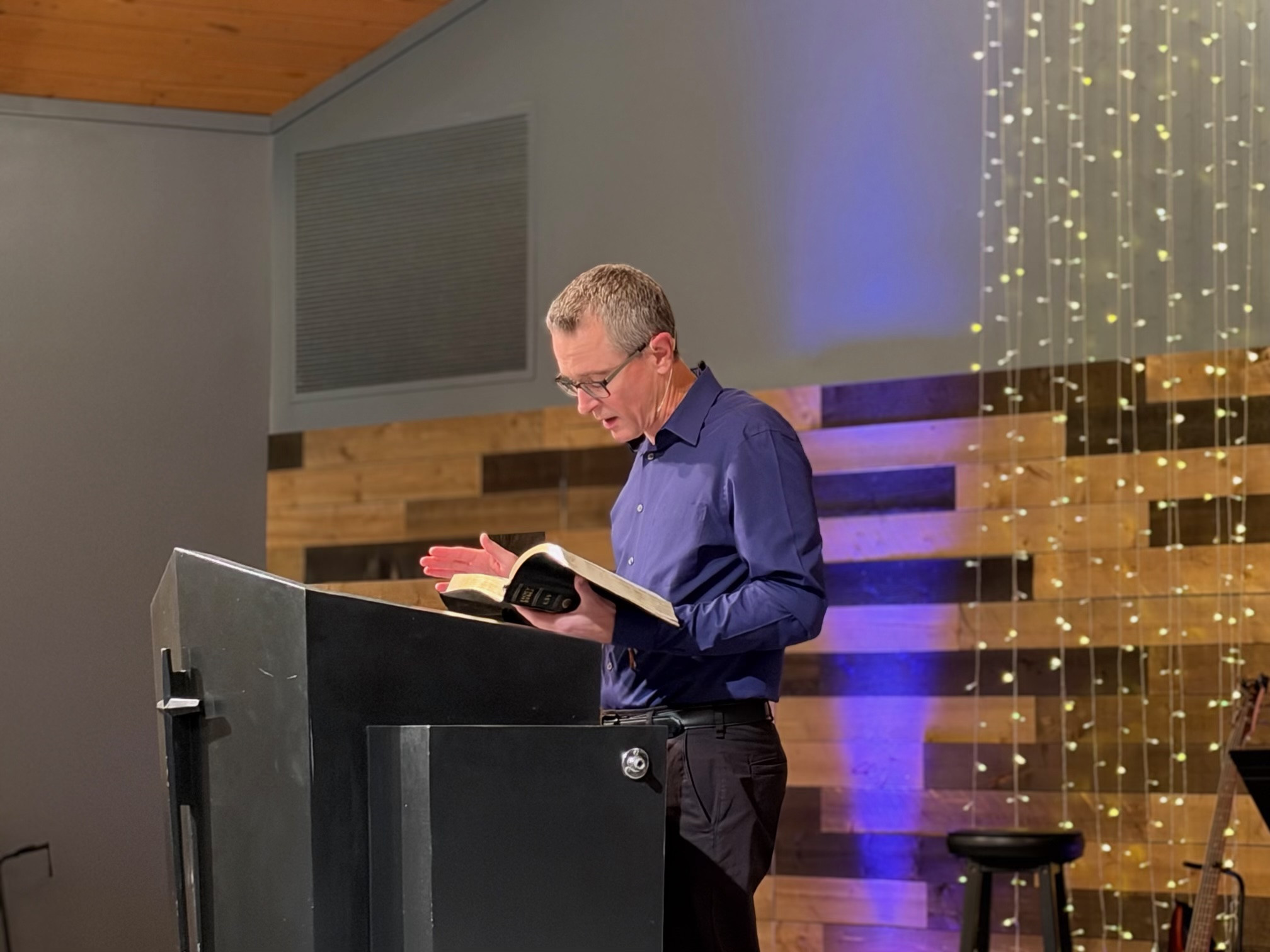
June 9, 2024
Dr. Michael A. Bond · Colossians
The following is a lightly edited transcript generated from the audio; it may contain small errors.
Good morning. How are you all doing? Good. Let’s turn to the book of Colossians. We’re going to start in Colossians 3, starting in verse 18:
Wives, submit to your husbands, as is fitting in the Lord. Husbands, love your wives, and do not be harsh with them. Children, obey your parents in everything, for this pleases the Lord. Fathers, do not provoke your children, lest they become discouraged. Bondservants, obey in everything those who are your earthly masters, not by way of eye-service, as people-pleasers, but with sincerity of heart, fearing the Lord. Whatever you do, work heartily, as for the Lord and not for men, knowing that from the Lord you will receive the inheritance as your reward. You are serving the Lord Christ. For the wrongdoer will be paid back for the wrong he has done, and there is no partiality. Masters, treat your bondservants justly and fairly, knowing that you also have a Master in heaven.
(Colossians 3:18–4:1)
Let’s pray. Father, we thank You for how good You are to us. We thank You that we’re privileged to come and sing about how awesome You are, how powerful You are, how gracious You are. We thank You for Your Son Jesus, for it’s in Him we have life. Lord, we pray for John Wilson who’s in the hospital now. God, we ask that You would heal him up, let him get transferred back here to St. Louis, and we pray that You would have Your hand upon him. Be gracious to him. Be with him, Lord, and fill him with Your Spirit, and give him peace, Lord. And pray that for the family as well. We pray, Lord, and thank You that You are our God, that we can lift up our prayer requests to You, and the God of the universe, our Father, hears us. We thank You for Your mercy and Your grace that rains down upon us daily, Father. Continue it, Lord, and may we continue in Your ways. We pray this in Jesus’ name. Amen.
All right, well, we’ve been going through Colossians and we’ve been in this passage for a bit, and we’re going to wrap it up here probably next week. Father’s Day seems like a good day to wrap up us going through the family. We’ve been looking at, for the last couple weeks, we’ve been looking at the roles of women, and we’re going to continue that on. The last few weeks before today, we looked at how women are co-rulers, so we looked in Genesis that the women are called to be co-rulers. Not just to Adam, but to Adam and Eve, to be co-rulers. They’re both given the command to have dominion. They’re both called to subdue the earth. So women and men, they’re given that command, be co-rulers. Then we looked at the special role given to women as helper for her husband, that word in Hebrew, the ezer. And we looked at the different examples in the Old Testament, how many times that Hebrew word is used to apply to Him. That He’s our ezer, our helper. And so how that is a role that God gives to the lady to come alongside her husband and be the helper. Then we also looked at the title of mother and everything that that involves. And today we’re going to look at three more titles, the first being the title of wife.
So look with me in Genesis chapter 2. And we’ll see a few things there. So, Genesis 2, God has created everything, and He has brought the animals to Adam, and we’re going to pick it up in verse 20:
The man gave names to all livestock and to the birds of the heavens and to every beast of the field. But for Adam there was not found a helper fit for him. So the Lord God caused a deep sleep to fall upon the man, and while he slept took one of his ribs and closed up its place with flesh. And the rib that the Lord God had taken from the man he made into a woman and brought her to the man. Then the man said, “This at last is bone of my bones and flesh of my flesh; she shall be called Woman, because she was taken out of Man.” Therefore a man shall leave his father and his mother and hold fast to his wife, and they shall become one flesh.
(Genesis 2:20–24)
All right, that’s that helper, that’s that ezer. Now, that word woman there and that word man — the word for man there in the Hebrew is ish. And the word woman there is just that word with a feminine ending, depending on how you want to transliterate it into English. So ish, and then the woman is ishah. And so here, God is laying out and instituting what we call marriage. He’s instituting the family, with a husband and a wife. This idea of one man and one woman, it rules out a number of things when we talk about human sexuality. The fact that no helper is found fit for him among the livestock, I mean, that rules out bestiality. The fact that it’s one man and one woman rules out polygamy. The fact that it’s a man and a woman rules out homosexuality. It is man and woman. The perfect complement to the man is the woman. Jesus reiterates this in Matthew 19. If we just turn there briefly, we’ll see it. Matthew 19, in verse 3:
And Pharisees came up to him and tested him by asking, “Is it lawful to divorce one’s wife for any cause?” He answered, “Have you not read that he who created them from the beginning made them male and female, and said, ‘Therefore a man shall leave his father and his mother and hold fast to his wife, and the two shall become one flesh’? So they are no longer two but one flesh. What therefore God has joined together, let not man separate.”
(Matthew 19:3–6)
So He affirms first the creation order, and He also affirms the righteousness of marriage. He affirms the very way that God set it up in the beginning. And of course that makes sense.
Look at Proverbs. We’ll start in chapter 1. We get a whole lot of Proverbs encouraging men to consider seriously different qualities in their own lives and then different qualities in the lives of the wife that they might be looking for. Why is that? Well, because we have to remember who Proverbs are written to. Look at verse 8, Proverbs 1: “Hear, my son, your father’s instruction, and forsake not your mother’s teaching.” And this phrase, “my son,” you’ll see that over and over again throughout the book of Proverbs. So Solomon was addressing his son. I’m sure he had many things to say to his daughters as well. But here, it’s geared towards his son. So that’s why you get to Proverbs 5 and 6. What’s it talking about? He is warning them about the adulterous woman. Are there adulterous men? Should they be warned? But he is addressing his son, and so a lot of the Proverbs end up being geared towards men, with applications that can also be taken for women, but some of them are quite pointedly talking to men as they consider, hey, what are the things I should look for in a wife? Solomon is instructing his son, hey, here are the things you should pay attention to. So some of the Proverbs, very generic, applicable in all situations to both sexes. Some of them kind of hone in more and address specifically the men. There are some also that hone in and address specifically the women.
So look at Proverbs 11, and we’ll see a couple examples of this. There’s two verses I want to look at here, and the first is verse 16. It says, “A gracious woman gets honor, and violent men get riches.” And then go down a few verses to verse 22: “Like a gold ring in a pig’s snout is a beautiful woman without discretion.” What’s the focus in both these verses? It’s on character. Character. A woman can look nice, that’s great, but what do the Proverbs continually emphasize for both the man and the woman? Character. Character. So as a wife, like, yeah, spend time dressing up and looking nice, but make sure the inside is looking nice, and reflecting who Christ is in you. But the focus is on character. Proverbs 12, in verse 4, it says, “An excellent wife is the crown of her husband, but she who brings shame is like rottenness in his bones.” This Hebrew word that we’re going to see a few times, that word excellent, is the Hebrew word chayil. And it has the idea of being strength or being of an upstanding character or being virtuous. One commentator said, to praise benefits is to speak of their value to oneself. Hence the verse speaks from the man’s perspective. This orientation is natural in a book that addresses males and exhorts them to cherish the right qualities in women. To call a woman her husband’s diadem or crown is not to trivialize her as a mere ornament. To be sure, an actual diadem is beautiful and expensive, and as a metaphor, it can signify any object of pride. So the idea as a wife is you want to be a woman who walks in the ways of the Lord, who walks in character, who is upright in heart.
Look at Proverbs 19, verse 14: “House and wealth are inherited from fathers, but a prudent wife is from the Lord.” Right, so God blesses men with amazing wives, right? Every husband should say amen for sure. But sometimes what you can do with the proverb here is like, hey, what are the takeaways for the ladies? Like a prudent wife is from the Lord — like, hey, I want to be prudent. I want to be someone who walks in wisdom. I want to be someone who walks with the character of Christ. Over and over. We see a few verses later in Proverbs 25 a similar thing, focusing — verse 24 of Proverbs 25: “It is better to live in a corner of the housetop than in a house shared with a quarrelsome wife.” What’s really the takeaway for the men? Hey, be wise with the wife that you choose. I mean, the same would go for the ladies as well. But here, it’s like anyone who’s been in an argument — it’s not very fun. And anyone who’s been married more than five minutes, you’ve been in some arguments, and they aren’t very fun. Well, if you’re continually arguing, does that help your growth in Christ or hinder it? I mean, it hinders it. So the takeaway for the men is like, be wise, and the takeaway for the women is also be wise in your choice, but also make sure you’re a lady that is not looking to continually argue. Men can continually argue, but women can be guilty of this. It is not fun for anyone to be around when you constantly have to argue or debate or have the last word or have the final point.
But I want you to notice something. Throughout Proverbs, what you do see is a woman is praised, specifically the wife, for a variety of strengths that she has, for her vigor, for her practical skills, for her kindness, for her wisdom, and for her piety. It kind of culminates here in Proverbs 31, picking it up in verse 10: “An excellent wife who can find?” That’s that same word we looked at earlier. It’s the same Hebrew word, chayil. And Proverbs 31, starting in verse 10, it’s actually a Hebrew acrostic poem. And while when we think about acrostic poems in English, a lot of them sometimes either spell out a word or a name or a phrase, in the Old Testament, all the acrostic poems are always alphabetic. And so what you’ll see, like even Psalm 119, each of the beginning of those verses starts with — it begins with the first letter of the Hebrew alphabet, aleph, and then the next verse, the word starts with beth, and then the next word starts with gimel, and so on. And so here you see the same pattern where each of the verses — sometimes it’s the verse, sometimes there’s aleph and beth in the same verse, and then it goes on to the next two letters in the Hebrew — but it starts each word of each verse alphabetically in the Hebrew with that. So we actually see that going on here. Here’s what’s interesting. It says, “An excellent wife who can find?” This communicates that faithful character is valuable. Why? Because it’s rare. It is rare, and brothers and sisters, it’s becoming more and more rare these days. Be the rare one, ladies. Be the rare one, wives. This Hebrew word, excellent, it denotes that strength and ability.
It’s interesting, our order for the Christian Bible is different than if you had a Jewish Bible. If you had a Jewish Bible, the order, once we got to Proverbs, the next book would be Ruth. So think about that. Here you get an excellent wife, and it actually lays that out. And then you go right into the first chapter of Ruth. And what do we see of Ruth? She’s an excellent wife. If you look at Ruth, we’re really close, so just turn to Ruth. You’ll have to go backwards instead of forwards. Turn to Ruth 3. Let’s start at verse 7 of Ruth, chapter 3:
And when Boaz had eaten and drunk, and his heart was merry, he went to lie down at the end of the heap of grain. Then she came softly and uncovered his feet and lay down. At midnight the man was startled and turned over, and behold, a woman lay at his feet! He said, “Who are you?” And she answered, “I am Ruth, your servant. Spread your wings over your servant, for you are a redeemer.” And he said, “May you be blessed by the Lord, my daughter. You have made this last kindness greater than the first in that you have not gone after young men, whether poor or rich. And now, my daughter, do not fear. I will do for you all that you ask, for all my fellow townsmen know that you are a worthy woman.”
(Ruth 3:7–11)
That word worthy — that’s that same Hebrew word. All the people knew that Ruth was an excellent woman. Why did they know that? Well, because they observed her life, right? I mean, they observed it. They observed her character. They observed how she walked. They saw how she was trying to provide for her mother-in-law. They saw her work tirelessly in the fields. They saw her be gracious over and over and over again. And the conclusion of the townspeople, of a foreigner, was what? She’s a worthy woman, she’s an excellent woman. So Boaz gets greatly blessed, ends up marrying her. So wives, strive to be that chayil.
The next title is daughter of God or child of God. Now, Israel in the Old Testament, it’s kind of interesting when you study this idea of God as Father. He initially calls the whole nation of Israel, collectively, His child. So if you look at Exodus chapter 4, you’ll see this. Verse 21:
And the Lord said to Moses, “When you go back to Egypt, see that you do before Pharaoh all the miracles that I have put in your power. But I will harden his heart, so that he will not let the people go. Then you shall say to Pharaoh, ‘Thus says the Lord, Israel is my firstborn son, and I say to you, “Let my son go that he may serve me.” If you refuse to let him go, behold, I will kill your firstborn son.’”
(Exodus 4:21–23)
So there’s this idea of Israel as the nation. Collectively, the people are God’s firstborn or His son. We see this also in Jeremiah, if you turn there, to chapter 31, starting in verse 7:
For thus says the Lord: “Sing aloud with gladness for Jacob, and raise shouts for the chief of the nations; proclaim, give praise, and say, ‘O Lord, save your people, the remnant of Israel.’ Behold, I will bring them from the north country and gather them from the farthest parts of the earth, among them the blind and the lame, the pregnant woman and she who is in labor, together, a great company; they shall return here. With weeping they shall come, and with pleas for mercy I will lead them back, I will make them walk by brooks of water, in a straight path in which they shall not stumble, for I am a father to Israel, and Ephraim is my firstborn.”
(Jeremiah 31:7–9)
So again, this idea that the collectively people of Israel are seen as God’s son. One more verse, Hosea 11. We’ll start in verse 1: “When Israel was a child, I loved him, and out of Egypt I called my son. The more they were called, the more they went away; they kept sacrificing to the Baals.” Again here, collectively, the people of Israel are called singularly, God’s son. But we also see, as we keep reading, that individuals in the nation of Israel — that God saw the nation itself, or the people collectively, as His son, but also the individuals in the nation were His children. So look at Isaiah, chapter 1. I know I’m having you do a lot of turning today, all right? I like you all to see these verses yourselves. Isaiah 1:2: “Hear, O heavens, and give ear, O earth; for the Lord has spoken: ‘Children have I reared and brought up, but they have rebelled against me.’” Well, who are the children? The Israelites, right? And what have they done? But He’s in the very beginning of Isaiah. This is the proclamation. Children I have reared have gone astray. Deuteronomy 14, verse 1: “You are the sons of the Lord your God. You shall not cut yourselves or make any baldness on your foreheads for the dead.” So now it’s getting to the individuals. The individuals are addressed as the sons of the Lord.
Now I’m going somewhere with this. Well, this is important because here’s the thing, y’all. When you talk about, there’s different types of theology. You can have systematic theology. You can have what’s called a biblical theology, which people misunderstand. But really the biblical theology is just like, how do we see a theme or idea played out? So even if you talk about the plan of salvation, you get the first glance or glimmer of the plan of salvation all the way in Genesis 3. All the way back then, the promise is given, like he’s going to strike your heel, but what is Jesus going to do? Crush his head, right? So, you know, and some people call that the protoevangelium, the first gospel, so to speak, or the first glimpse of the gospel. I mean, could you just read that verse and know, oh yes, He’s going to send His own Son to die on a cross for your sins? No, you couldn’t get that from that verse. But when you look at how salvation unfolds in the history of redemption, you can get all the way back to Genesis and see that. It makes it really clear to us. So even something like this idea of being a daughter of God or a son of God or a child of God, like this is something that God has made clear from the very beginning of the Scriptures. He’s had this theme going on, but He rolls it out even more. There’s like an idea of progressive revelation, even a term or an idea like the Trinity. Do you see glimpses of the Trinity? Yeah, I think you can actually make a pretty strong argument even from the Old Testament for the Trinity, but it becomes a lot more clear in the New Testament. So that’s the idea of biblical theology. But if we want to understand a concept of adoption, then we need to make sure we understand the fullness of what God’s talking about as He reveals it to us.
So go back to Hosea just for a moment. Hosea, let’s do chapter 1. So earlier, when we looked at Hosea, he’s again talking collectively. Here we’re going to see him talk individually. Hosea 1, let’s pick it up around verse 5–6 and following: she conceived and bore a daughter, and the Lord said to him, “Call her name No Mercy, for I will no more have mercy on the house of Israel, to forgive them at all.” And then, “When she had weaned No Mercy, she conceived and bore a son. And the Lord said, ‘Call his name Not My People, for you are not my people, and I am not your God.’ Yet the number of the children of Israel shall be like the sand of the sea, which cannot be measured or numbered. And in the place where it was said to them, ‘You are not my people,’ it shall be said to them, ‘Children of the living God.’”
Now, the people are unfaithful, and God says to Hosea, like you’ve had two kids, and He has them name them specifically regarding the faithlessness of Israel. But God says, hey, even though you’re faithless, I’m going to be faithful. And so even though He says originally, called Not My People, but then He goes back and says, guess what? They are children of the living God — the ones that aren’t His people, the ones that are faithless, the ones that haven’t been faithful to the covenant. He’s going to gather them back in. So the faithful God is faithful even to the faithless. That should give us some encouragement. Even when we’re not being faithful, and we will hit times we’re not walking in righteousness at times. Thankfully, we have a God who doesn’t just say, oh, you messed up, like you’re out. No, His mercy is endless. If you’ve been adopted into His kingdom, if you’re one of His children, God doesn’t disown His children. He doesn’t disown His children.
So that’s the Old Testament. We get to the New Testament, and we see Jesus using, when He addresses God, how does He address Him regularly? As Father. So look at Luke, Luke chapter 12. So in Luke 12, Jesus says, verse 27:
Consider the lilies, how they grow: they neither toil nor spin, yet I tell you, even Solomon in all his glory was not arrayed like one of these. But if God so clothes the grass, which is alive in the field today, and tomorrow is thrown into the oven, how much more will he clothe you, O you of little faith! And do not seek what you are to eat and what you are to drink, nor be worried. For all the nations of the world seek after these things, and your Father knows that you need them.
(Luke 12:27–30)
I mean, here He is instructing the people. And how does He refer to the Lord? As Father, as Father. And then in the Lord’s Prayer, Matthew 6, how does He begin it? Our Father, our Father. So He is teaching the disciples:
And when you pray, you must not be like the hypocrites. For they love to stand and pray in the synagogues and at the street corners, that they may be seen by others. Truly, I say to you, they have received their reward. But when you pray, go into your room and shut the door and pray to your Father who is in secret. And your Father who sees in secret will reward you. And when you pray, do not heap up empty phrases as the Gentiles do, for they think that they will be heard for their many words. Do not be like them, for your Father knows what you need before you ask him. Pray then like this: “Our Father in heaven…”
(Matthew 6:5–9)
So He’s instructing them on how to pray. He wants to give instruction to them on how to come before God and address Him. And how does it begin? You get into your prayer closet, brothers and sisters. That’s what should come out of your mouth. Now, you can put other titles there. And when you all pray, I hear you put other titles. But one of those titles should be Father. Why? Because that’s who He is. That’s who He is to His children.
So this idea of adoption, a lot of times people know — some people know about justification and have a good understanding of that. Some people know about sanctification and have a good understanding of that. Some people know about regeneration, probably less, and have a good understanding of that. We talk about adoption though, like that kind of gets left to the wayside a lot. And that’s really sad, because the primary way, the primary way, the primary way you should relate to God is as a child. Yes, servant. Yes, friend. Yes, He’s your Master. All those are, that’s fine. But the primary way we are commanded to relate to our Heavenly Father is as a child. We are adopted into the kingdom. So look at Romans chapter 8, verse 12:
So then, brothers, we are debtors, not to the flesh, to live according to the flesh. For if you live according to the flesh you will die, but if by the Spirit you put to death the deeds of the body, you will live. For all who are led by the Spirit of God are sons of God. For you did not receive the spirit of slavery to fall back into fear, but you have received the Spirit of adoption as sons, by whom we cry, “Abba! Father!” The Spirit himself bears witness with our spirit that we are children of God, and if children, then heirs — heirs of God and fellow heirs with Christ, provided we suffer with him in order that we may also be glorified with him.
(Romans 8:12–17)
So how do we cry out? What is the crying out? What’s the words there? Abba, Father, right? Yes? So we’re addressing the Lord. He is our Father, because we’ve been adopted into His kingdom. And if you study adoption — and we’ve had people over the years adopted — it’s a beautiful picture of what the Lord does for us. Not a part of the family, now a part of the family. And much like today, in Roman times, when you were adopted, you had the full rights of any natural-born children. And you didn’t get any less of an inheritance as it was given out. So yes, we are adopted, and who does the adoption? I mean, it’s the Lord, right? I mean, kids might want to be adopted, but they can’t force themselves into a family. Ultimately, who does the decision lay with? It lays with the parents. They get to decide. What’s the same with our Heavenly Father? He decides, and what does He decide? Hey, I want to adopt you and you and you and you. He adopts us into His family. Other verses like Galatians 4: “And because you are sons, God has sent the Spirit of his Son into our hearts, crying, ‘Abba! Father!’” I mean, it has that word cry there. Like we’re seeking after Him. We’re giving Him our requests. We’re beseeching God, but how are we beseeching Him? As His children. As His children.
And so look, I want you to see 2 Corinthians. It’s the same thing, but it’s important to see. Listen, if you’re dealing with identity issues in our culture, it definitely is. And even parts of the church are. If you’re dealing with identity issues, like this is important stuff. This is key. Because your identity is that you are a child of God. If you’ve placed your faith in Christ and repented of your sins, then your identity is a son of God. It’s a daughter of God. So God is the one — it’s either God or man, but God is the one who declares who and what we are. What does He declare over us? That you are My children. I’ve adopted you into the family. You get the rights.
One of my favorite things when I was — I mean, I was probably in my late teens — but if I ever had to call my dad at work, the lady at the front desk would answer, and I’d be like, my dad’s name was Terry. And she’d be like, hold just a second. And sometimes she’d come back and be like, he’s not available right now, and I’d be like, oh well just tell him his son called, and she’s like, oh hold on just a second, and then the next thing I know my dad was on the phone. Why? Because the father makes time for the son that he doesn’t make time for other people. He’s got different things going on and he’s busy. He doesn’t have time at that moment maybe to talk to a client or a potential client, but he always has time for his children. Always has time. That’s our Heavenly Father.
Like it’s a different relationship. Believers have a different relationship with the Father than unbelievers. Unbelievers, they can’t call God their Father. Why? Because they haven’t been adopted into His family yet. Now they can be. They can trust and repent. They can be adopted into the family. But if they’re unbelievers, they’re not a part of the family. And so brothers and sisters, you get the privilege to address God as Father. It’s a privilege that none other than God Himself gives you. Are we in 2 Corinthians? Okay good, let me turn there. 2 Corinthians 6, verse 14:
Do not be unequally yoked with unbelievers. For what partnership has righteousness with lawlessness? Or what fellowship has light with darkness? What accord has Christ with Belial? Or what portion does a believer share with an unbeliever? What agreement has the temple of God with idols? For we are the temple of the living God; as God said, “I will make my dwelling among them and walk among them, and I will be their God, and they shall be my people. Therefore go out from their midst, and be separate from them, says the Lord, and touch no unclean thing; then I will welcome you, and I will be a father to you, and you shall be sons and daughters to me, says the Lord Almighty.”
(2 Corinthians 6:14–18)
The Lord reaches out and says, come into the family. I’m adopting you into My family. You get the rights and privileges of the children. So we shouldn’t take this for granted. We should not take it for granted. But it is why we get verses in Hebrews that says, you can approach the throne, how? Boldly or with confidence. Why? Because you’re the child. You’re the child that’s going to the Father. You’re not the peasant that’s trying to get access to the king. The child gets access to the Father that the non-children don’t, that the regular kids that aren’t the children of the king, they don’t get the access. So I’m sure King David, when his kids were younger and he’s sitting on his throne, I mean they probably interrupted all sorts of meetings and came in and sat on his lap or whatever. I highly doubt that the rest of the Israelite children did, right? And even his elected officials or appointed officials, like, they wouldn’t just wander in and just be like, hey David, what’s up? True? There was some decorum about it. But the children, it’s like an unrestricted access, unlike any other position or title. Do you think about it? The child of the king, that’s a pretty high position. It’s a pretty high position because you get the king in ways that no one else does. That’s the same with us, brothers and sisters, like we get access to the King, who’s our Heavenly Father.
This, I would put before you, is the singular, most important way you should see God. Yes, He’s the righteous one. Yes, He’s the ruler of the universe, but He’s your Father. He is your Father. What does John 1 say? “But to all who did receive him, who believed in his name, he gave the right to become children of God.” And when we think about the nature of God’s love towards us, I mean, what kind of love is it? It’s a father’s love. God reveals Himself to us, primarily as a Father. Of all the names, titles, descriptions, Father is used about 245 times in the New Testament. I mean, God didn’t stumble upon it by accident. In fact, love is part of the very character of who God is. It’s found in Himself. God is love. And this love, it is holy. And it is perfect. And it is selfless. And Jesus showed us, again, how to interact with the Father. When He says, “Our Father,” and in John earlier, we could look at it, but we won’t, like the Jews are ready to stone Him. He’s like, “My Father,” and they’re like… But here when He’s teaching them in Matthew 6, it was unthinkable. I mean, He was known to the Jews with many different titles and descriptions, including Father as we’ve seen, but to call Him our Father made the relationship rather personal and intimate. So to have a relationship with God that was personal was considered blasphemy, if not equal to it. Think about the priesthood back then. Well, you had to go through the high priest. He’s the one that had to intercede for you. Other priests making the sacrifice, but once a year access to God in the Holy of Holies. So to say “Our Father,” yeah, Jesus was kind of turning things upside down. And He’s not just claiming, oh, just I can do that. Yes, He has a particular special relationship with the Father. But He’s teaching His disciples and says, this is how to pray, “Our Father.” It’s a term we should be familiar with and regularly use. So it’s the Father who shows us what love is. And yes, it’s the love of a king, but it’s more than that. It’s more than the love of a powerful ruler. It is the love of a father.
So what am I getting at? That when God says He loves us, He’s choosing to do that in a particular context. And what’s the context? The context of a father loving his child. It’s a powerful image for us to try and wrap our minds around, but His love nurtures us, and this powerful, all-knowing God is willing to make us His children. I mean, being called servants, hey, that’d be great, which we are called that, or even being called a student or a disciple, which we’re also called, that’s pretty great, but children — what a privilege. The first and most important commandment. Even if you think of it, He could have said, serve the Lord your God, He could have said, worship the Lord your God, but the first and greatest: love the Lord your God. Why? Love is foundational for any true relationship. It’s foundational.
So, so far, we’ve looked at the role of women as co-ruler, as helper, as mother, as wife, as a child of God. We’ll look at one more next week. I want to encourage the women, listen, God is the one that does the work. He adopts you. He sanctifies you. He justifies you. He regenerates you. God does the work. But Philippians lets us know, like when it comes to our sanctification, like we’re doing the work as well. We’re working with Him. A synergism of sorts. Salvation is more monergistic. But our sanctification, God is molding us and shaping us. Here’s the thing. There’s two types of clay. Well, there’s probably really only one type of clay in one sense. But the end result of clay, if you have the clay when it’s on the potter’s wheel, it’s right, you can do — it’s also kind of fun to watch those videos sometimes. Not for very long, but I mean it’s kind of interesting what they do with that, make bowls and cups and different things. But when you put it in the fire and it comes out, is it moldable? I mean, is it? It’s not moldable. It’s not moldable. It’s not moldable. Well, I mean, we’re called the clay. True? We’ve got to make sure that we’re the moldable clay. We’re still on the wheel. Some of us, it’s like we’ve already been in the fire, and we got kind of hardened. Now, we need to get ourselves back on the wheel if that’s us. However God wants to shape the vessel, whatever He wants to do, wherever He wants to put us, however He wants us ministering to Him in whatever capacity, whatever place, like we’re moldable, and what do we say? What’s our response to our Heavenly Father? Yes. Like wherever He sends us. So we want to be the moldable clay. Whatever role that we’re given, whatever task that’s been assigned to us, we want to be faithful in it, and we want to be moldable, so that we can be shaped by God exactly how He wants us to be shaped. However He wants it to look. And what is He doing? Bit by bit by bit. He’s conforming us to the image of His Son. He’s making us more and more and more like Jesus. A little bit of clay off. He has to take a little bit off here. You’ve got to shape that a little better. You’ve got a little bump. We’re letting Him do that. We’re making sure that we’re willing to be shaped. Okay, some are made for bowls and glasses and cups. We want to be shaped however the Lord wants us. He knows, and He’s got a task or tasks for us, and He’s got plans for us, and He wants us to be best prepared to fulfill what He calls us to do and whatever role He calls us to. So let’s be faithful, brothers and sisters, and let’s continue to be moldable.
Let’s pray. Lord, we say that You are the potter, and we are the clay. So soften us, Lord. Soften our hearts. Soften us to Your Spirit. Soften us to Your ways. Soften us to You. And Lord, I pray, Lord, for anyone here maybe struggling with any type of identity issues. Let them get their identity from You and what You say they are. Help them to better see themselves more clearly as a child of God. That You would grow them in that area, that they would see the sweetness of calling You Father. I pray, Lord, for anyone, maybe their dad has majorly fallen short. May they, God, not cast that image upon You, Lord, but may they see the real picture of the best Father, You. Heal any wounds or hurts there, God. Don’t let it be an impediment any longer for them relating to You as a child. And we do thank You for adopting us into Your kingdom as children. You are a good and gracious Father. Thank you for sending Your Son for us. We love You. Amen.