
June 2, 2024
The Christian Home part 9 – Colossians 3:18-4:1
Dr. Michael A. Bond · Colossians
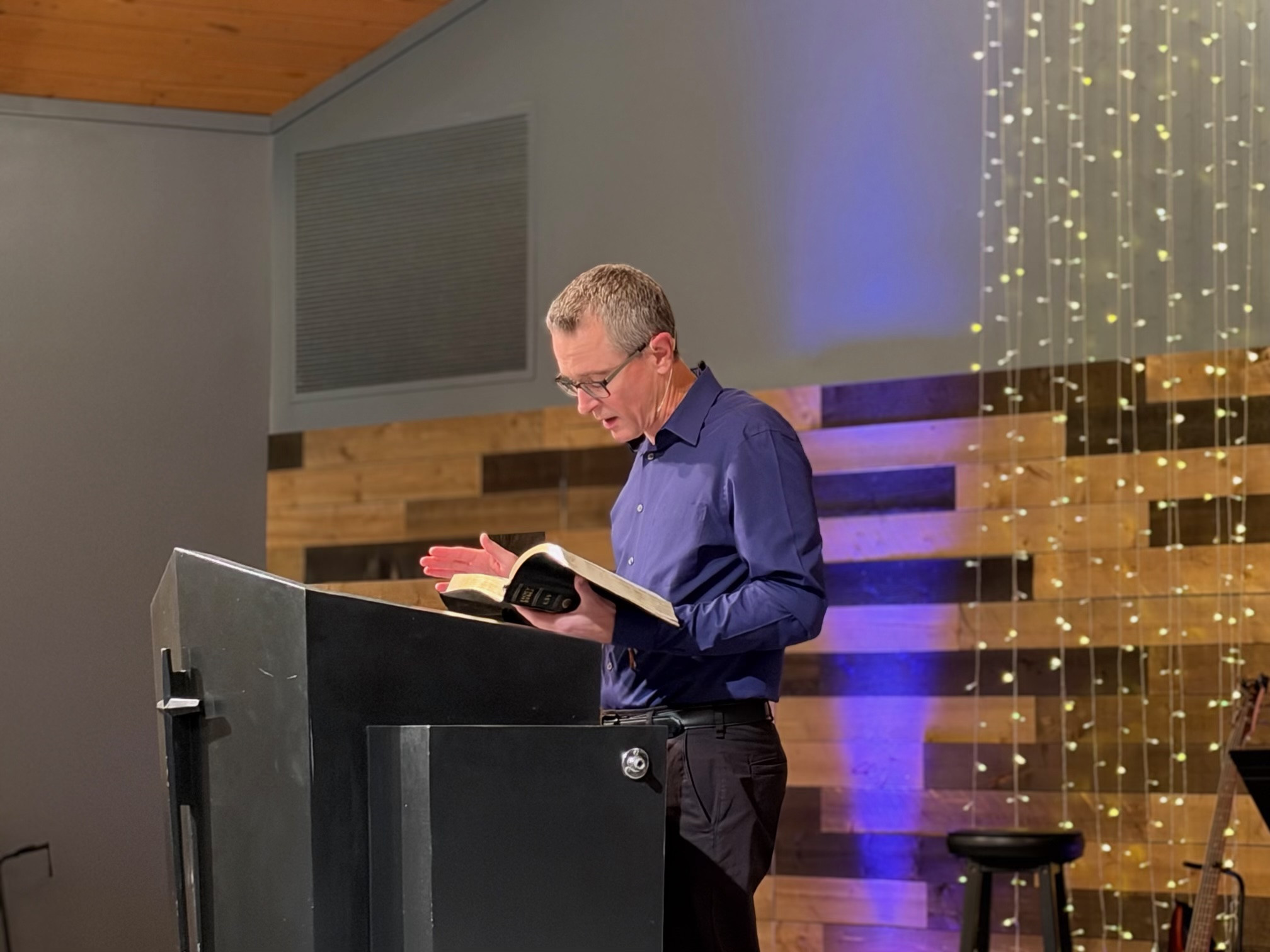
June 2, 2024
Dr. Michael A. Bond · Colossians
The following is a lightly edited transcript generated from the audio; it may contain small errors.
Colossians — so if you want to turn to Colossians chapter 3, that’s where we’ll be picking it up. Colossians 3, starting in verse 18. It says:
Wives, submit to your husbands, as is fitting in the Lord. Husbands, love your wives, and do not be harsh with them. Children, obey your parents in everything, for this pleases the Lord. Fathers, do not provoke your children, lest they become discouraged. Bondservants, obey in everything those who are your earthly masters, not by way of eye-service, as people-pleasers, but with sincerity of heart, fearing the Lord. Whatever you do, work heartily, as for the Lord and not for men, knowing that from the Lord you will receive the inheritance as your reward. You are serving the Lord Christ. For the wrongdoer will be paid back for the wrong he has done, and there is no partiality. Masters, treat your bondservants justly and fairly, knowing that you also have a Master in heaven.
(Colossians 3:18–4:1)
Let’s pray. Father, we thank You, God, for blessing us with new members this morning, and I pray, God, that this church would be a blessing to them, that the other members would be a blessing to them. Thanks for how they’ve already gotten involved and plugged in and are looking to serve You. I pray Your blessing upon each one of those families. We thank You, God, that You are a God who loves us so much, who cares for us so much, who has us, Lord, exactly where You want us. So I pray, God, we will continue to be faithful, continue to walk after Your ways. Lord, we pray Your blessing on our children. We want to see each one of them — not just the ones that just left or even the ones that are staying here, God, but we want to see all the children represented here come to know You. So we ask for Your grace and mercy on all the children represented here by the families, that You would do Your work and bring each of those kids to know You. Bring them to know You in a real and powerful way, whether they’re just three or four years old, Lord, or they’re 40 or 50 or 60 years old, God. We pray You’d be gracious to send believers in our lives. We pray that those that have relationships with them, that the moms and the dads would know what to say, when to say it, and how to say it. God, give them the words. And we pray that Your Holy Spirit will be working all along. Father, we do thank You that You’ve instituted the family, that we get the rules from You on how to set it up, how to walk it out, and how to live in community within the family. We thank You that You are a good and a gracious God. And as we read from Psalm 18, Lord, the steadfast love that You have for us, that You give us over and over and over and over again. We thank You for Jesus. Amen.
And we’ve kind of, in a sense, when we got to this passage, I’ve kind of been slowly going through it. And so it’s almost like we’ve hit the pause button. But here’s the thing: generally, I like to work through a book of the Bible. Usually that’s referred to as expositional preaching. I think it’s good to go verse by verse, take it by sections or passages. But really, the last few weeks or so, it’s kind of been more, in a sense, using this passage as a place to do some in-depth teaching on the family. And the reason is, is because that’s where I feel like one of the key areas is under attack today, is the family. And so I want to make sure that all of us, all of us, are trained and understand and know what the Scriptures say in regards to the family, have a biblical understanding of the family, and are willing to stand for the truth that God tells us when it comes to walking out what it means to live in a family, whatever our role might be, whether we’re the mom or the dad or the child, the wife, the husband, whatever it is, we want to be faithful in that role. So that’s kind of why we’re doing a deep dive of sorts. We’ll probably wrap up here in the next week or so, a little more in depth because of those reasons.
I ran across a leaflet that was passed out to young single women back in 1918. And here’s the title of the leaflet. It’s titled “Advice on Marriage to Young Ladies.” You all ready to hear it? Here’s what it says: “Do not marry at all.” This was a leaflet, 1918. It goes on, “But if you must, avoid the beauty men, flirts, and the bounders, tailors’ dummies, and the football enthusiasts.” Yeah, a lot of us are just knocked out there. “Look for a strong tame man, a firelighter, coal-getting, window cleaner, and yard swiller. Don’t expect too much. Most men are lazy, selfish, thoughtless, lying, drunken, clumsy, heavy-footed, rough, unmanly brutes and need taming. All bachelors are, and many are worse still. If you want him to be happy, feed the brute. The same remark applies to dogs. You will be wiser not to chance it. It isn’t worth the risk.” That was over 100 years ago. Leaflet being passed out. So pushing against the idea of the family is nothing new. Marriage is a good thing, right? We’ve talked about that. Marriage is a good thing. Can it be very challenging? Yes. And not that I know that experientially — that’s what I’ve heard from you all. No, it can be very challenging, but it can be very beautiful, amazing, and delightful. Yes, yes. And God instituted it.
So last time we started to look at roles that God assigned to women. I want to keep looking at that today. So just as a review from last time, one of the roles, and I think it’s actually forgotten about sometimes, and we can overlook it — I’d like you all to see the passages in Scripture yourself most of the time. If you look at Genesis 1, the first point I made was that women are co-rulers. They’re co-rulers. Genesis 1, verse 26:
Then God said, “Let us make man in our image, after our likeness. And let them have dominion over the fish of the sea and over the birds of the heavens and over the livestock and over all the earth and over every creeping thing that creeps on the earth.”
(Genesis 1:26)
Right? You’ve probably heard that verse a thousand times, and probably 900 have been from up here. That’s awesome. That’s okay. Notice though, sometimes we hear these verses and we just kind of glance over them. We hear them so often we just don’t even really give much thought to them. Dominion. “Let them.” He goes on, verse 27:
So God created man in his own image, in the image of God he created him; male and female he created them. And God blessed them. And God said to them, “Be fruitful and multiply and fill the earth and subdue it, and have dominion over the fish of the sea and over the birds of the heavens and over every living thing that moves on the earth.”
(Genesis 1:27–28)
Again, notice, so He’s blessing them, and this is the command that He gives to who? So the command is to them: be fruitful, multiply, and subdue the earth and have dominion. So they are co-rulers, co-rulers. You hearing me? So that was my point from last week.
Second role for women. We see it actually just one chapter later in Genesis 2. They’re called to be a helper. Genesis 2, let’s look there. Then the Lord God said, verse 18, “It is not good that the man should be alone; I will make him a helper fit for him.” Well, what does it mean to be a helper? Right? We need help. And every wife knows this. Men need help — it’s true. But this word helper in Hebrew is the Hebrew word ezer. And it means a person who provides needed help and assistance. Here’s the thing, brothers and sisters, it is not a bad word. It’s not a bad word. It’s not offensive. The helper providing assistance should not be seen as demeaning. So God created, and hear me out, God created, listen to this, God created the perfect counterpart to man, the perfect counterpart. He made the man perfect, He made the woman perfect, and He made them to be together perfectly.
What does He say? It is not good that man should be alone. It’s not a good thing. It is not a good thing. So what does He do? He provides a helper. And here’s the thing, ultimately, this is what it gets down to: if the Lord gives an assignment, if He gives you a role, then we trust Him with the assignment, right? We trust Him with the assignment. So if He assigns married women to a task, then trust the Lord that that’s a good task. You’re like, I don’t know about that. So listen, there will come a time when you’re not sure. Every person will go through that at some point. Maybe you’re reading the Old Testament, and you’re seeing some of the different actions. Maybe in the New Testament, some of those sayings. There’s going to come a time where you’re going to be like, oh, I don’t know about that. Well, that’s okay to come to that point, to not be sure. Being unsure of something is okay. And the path you take from there is really important, because you’ve got one of two directions. And so if you’re unsure, you have to think about something. We either affirm this as God’s Word, it’s infallible, inerrant, completely sufficient for us, no error in it, and what God says goes. That can be the guiding principle or the guiding rule or the guiding law. I’m not sure about that, but I know that God’s ways are perfect. I’m not sure about that, that saying or that word, but I know that God is true, though every man be a liar. And I’m not sure about that, but I know that God is righteous and holy and pure. So every action that He does is holy and righteous and pure. So we can either be in a position where then we submit ourselves to the Word, which is really submitting ourselves under the Lord because it’s His Word. Or we can say, I’m not sure about that, and I think that the Lord did it wrong. If we come and take that path, what ends up happening? Well, we’ve really put ourselves in the position of judge, and we put ourselves to judge whether we think God’s actions or words are righteous and pure and just. And all of a sudden, we’ve put God under us. What do we call that? We call that idolatry, right? If we start making the calls and the shots, we’re no longer following the Word. We’re just following the Word that agrees with what we want. No, we have to follow the Word when it agrees with us or when it doesn’t. The Word is at the top. Why? Because God is at the top. So He makes the rules, we submit to them.
So ezer, let’s go back to this Hebrew word, ezer. It’s used 21 times in the Old Testament. The vast majority of the times that it’s used, it’s actually used about God. Over and over and over and over and over again, God is called an ezer. Let’s look at just a couple places. Exodus 18, we’ll pick it up in verse 1:
Jethro, the priest of Midian, Moses’ father-in-law, heard of all that God had done for Moses and for Israel his people, how the Lord had brought Israel out of Egypt. Now Jethro, Moses’ father-in-law, had taken Zipporah, Moses’ wife, after he had sent her home, along with her two sons. The name of the one was Gershom (for he said, “I have been a sojourner in a foreign land”), and the name of the other, Eliezer (for he said, “The God of my father was my help, and delivered me from the sword of Pharaoh”).
(Exodus 18:1–4)
So this is Moses — for Moses said, the God of my father was my ezer. He was my help and delivered me from the sword of Pharaoh. So he names one of his kids, and part of that title is God being — you can even hear it in there, Eli, and depending on what version you’re using, the last four letters are actually ezer, Eli-ezer. That God of my father was my help. So he’s given that ascription to none other than God Himself. Look at Psalm chapter 33, verse 20: “Our soul waits for the Lord; he is our help and our shield.” Again, that word help is that Hebrew word ezer. He is the helper. Look at Psalm 115, starting in verse 9:
O Israel, trust in the Lord! He is their help and their shield. O house of Aaron, trust in the Lord! He is their help and their shield. You who fear the Lord, trust in the Lord! He is their help and their shield.
(Psalm 115:9–11)
So three times in these three verses, He’s their ezer. He’s their ezer. Is it an insult to God to be our ezer? Well then it’s not an insult for a wife to be her husband’s ezer. She gets the same title that God Himself gives Himself in the Bible. Think about that. So a wife’s role is not diminished because she’s an ezer. And again, think about man’s condition without the woman. Genesis 2:18, it is not good. So God created the woman for the man, so the two would be partners in stewarding God’s creation. And just think about it, there’s nothing negative about helping someone. I mean, you ever helped someone? I hope you’ve helped someone, right? Even if you think about it, one of the spiritual gifts is what? Service. So one of the gifts that the Holy Spirit gives is the gift of serving or help — some versions call it helps, right? And even more, if you think about it, how many offices are in the church? Two, right? And what are they? Yeah, elder or pastor if you want, and deacons. You’ve got two offices, but the word deacon itself means servant. So the Greek word is diakonos. We just literally transliterate that word from the Greek into English, diakonos, deacon. You can hear it. You can see it on paper pretty easily. But many times in the New Testament, that word diakonos is actually translated servant. So sometimes it’ll say deacon when it’s talking about the office, but a lot of times in the New Testament when you read that word servant, it’s that word diakonos. Because that’s what the deacon’s role is. It’s a role of physical service, physical help.
We could take it even a little bit further. Look at Matthew chapter 20. We’ll start in verse 20:
Then the mother of the sons of Zebedee came up to him with her sons, and kneeling before him she asked him for something. And he said to her, “What do you want?” She said to him, “Say that these two sons of mine are to sit, one at your right hand and one at your left, in your kingdom.” Jesus answered, “You do not know what you are asking. Are you able to drink the cup that I am to drink?” They said to him, “We are able.” He said to them, “You will drink my cup, but to sit at my right hand and at my left is not mine to grant, but it is for those for whom it has been prepared by my Father.” And when the ten heard it, they were indignant at the two brothers. But Jesus called them to him and said, “You know that the rulers of the Gentiles lord it over them, and their great ones exercise authority over them. It shall not be so among you. But whoever would be great among you must be your servant, and whoever would be first among you must be your slave, even as the Son of Man came not to be served but to serve, and to give his life as a ransom for many.”
(Matthew 20:20–28)
You could stop the teaching right there. Jesus could have stopped and it all would have been true. Great info and great insight, right? But He goes on. Even as, verse 28, the Son of Man came not to be served, but to serve, and to give His life as a ransom for many. So Jesus Himself, the Son of God, the King of kings and the Lord of lords — what did He come here? Not to be served, but to serve. And what do we see Him doing over and over again? He’s ministering to people. Even very early on He’s ministering to people — you know, Simon’s mother-in-law, taking the fever away. His whole life is characteristic of service. So you’re in good company if you are an ezer. And even at the end of His life, what does Jesus do in the upper room? John 13, He washes the disciples’ feet. It was a task that was reserved for the lowest of servants. Yet the Son of God did not consider that below Him. Brothers and sisters, like if we’re going to walk in service in ministry, regardless of our role, that has to be our heart. We have to have a heart of service. If the Son of God doesn’t see any role too low for Him to do, then when we get opportunities, we shouldn’t think, hey, that’s below me. No, I’m better than that, or I’m too good for that. Like your Savior never said that at all. Ever. What did He do? He served. And we see it, and we see it, and we see it. Additionally, the Holy Spirit is called a helper. John 14, you can just listen, verse 26: “But the Helper, the Holy Spirit, whom the Father will send in my name, he will teach you all things and bring to your remembrance all that I have said to you.” So the Holy Spirit’s a helper.
And here’s the thing, as I mentioned at the beginning, biblical roles of the family are under attack. And the family is under attack. So don’t let the enemy try and steal truth from you. And don’t let the enemy try and shame you in the name of Christ. And don’t let the enemy try and embarrass you for being a child of God. You are the Lord’s. Take delight in that. And don’t let anyone take that from you. You know in the Old Testament, on the night of the first Passover, if you wanted the wrath of God to pass over you, what did you have to do? You had to take the blood, right? Put it around, put it around the doorposts. The wrath of God passes over you. For the next 30 days, Pride Month, if you want the wrath of man to pass over you, you have to paint everything with the rainbow. If you’ve been on social media at all, every single company already came out. Brothers and sisters, don’t do it. Don’t give in. Here’s what Greg Koukl, he’s president of Stand to Reason, this is what he says: Are you willing to be called a bigot for Christ? Paul was called a fool. He said the gospel is not foolishness to people who are perishing — it is foolishness, but the power of God to salvation is what it really is. God was well pleased by the so-called foolishness of the message preached to save those who believe the message. Paul was willing to be called a fool. He was willing to wear that label to be faithful to Christ. Are you willing to be called a bigot? And he goes on, I’m convinced most of you are not. Will you wear that label to be faithful to Christ, or will you shrink? Will you say, oh my gosh, she called me a name, I can’t bear it, and abandon Christ? There are thousands and thousands of Christians who are doing that. It’s faithlessness to Christ because it is contrary to what He teaches in the Bible. If we can’t stomach being called a bigot with regards to homosexuality, do you think we’re going to fare much better when we are called names regarding Jesus being the only way? I’d like to think we would fare much better, but I don’t have the confidence. I think homosexuality is a watershed issue because if we cave into cultural and peer pressure on this issue, it’s just that much easier to do when we’re called names for preaching Jesus. That’s why I think this issue of homosexuality is so important. It’s a test by the culture to see whether you will stand by your convictions, where your faith really lies, how weak your spine actually is, and how easy it will be to knock you over. We’ve got to stand firm, brothers and sisters, in what the Word of God teaches. 1 Corinthians 13 verse 4: “Love is patient and kind; love does not envy or boast; it is not arrogant.” As I’ve said before, I’ll keep saying, you’ve got to get rid of the progressive that’s sitting on your shoulder. Because you’ll end up listening to him. He’s whispering in your ear, making you afraid. It does you no good.
Recently, the kicker for the Kansas City Chiefs, his name’s Harrison Butker, he’s a staunch Catholic. He gave a commencement at a Catholic conservative college. And he said in his commencement speech, the vocation as a wife and mother is more important than a woman’s corporate career. And the media went crazy. They went berserk, calling for his firing. He’s saying Catholic things at a Catholic university to Catholic people. Now, I listened to the whole speech. You can easily find it on the internet. And much of what we might even call first-tier issues, I would disagree with on some of those things. I probably disagreed with a number of key points in his speech. Was I freaking out, flipping out, going berserk? No. But the things that he was saying regarding the family, I mean, just a couple generations ago was considered mainstream thought in our culture. Yet here we are a couple generations later, and he’s saying and encouraging women. And if you read the headlines, he was not represented well and he was misquoted and misrepresented. That’s one of the reasons I went and listened to the speech. Of course, the media never twists anything or puts words in anyone’s mouth. But if you want a tale of two cities, or maybe a tale of two Chiefs: Travis Kelce, who’s also a Kansas City Chiefs player. Anyone know who he is? Who is he? Taylor Swift’s boyfriend, yeah, that’s right. So he’s at a commencement ceremony, a graduation ceremony, and he’s encouraging the graduates to party and drink alcohol. Harrison Butker encourages graduates to get married and start a family. Travis is praised by the media. Harrison is ridiculed. Here’s what Kelce said. He didn’t speak long, honestly, thankfully. But this is what he said: “Before we make it official, I thought I’d give you guys some advice. You got to fight for your right to party.” He said that with a beer in his hand standing up on stage and he chugged it. He was so intoxicated that the script in front of him that he’s reading from, he starts to read the president of the university’s lines and doesn’t realize it for a bit that he is supposed to be done with his part. But what does everyone do? Brothers and sisters, if you want that, the world will give it to you today. Or you can be the unpopular one that says the unpopular things but hold to biblical fidelity. And that would be Harrison in regards to the family. It’s tough to stand firm. But we’re called to stand firm on biblical truth. We cannot compromise.
The next title given to women is mother. And we see an interesting pattern. Anybody ever read 1 Kings, 2 Kings in the Old Testament? We see an interesting pattern there. We see this phrase, and it appears over and over and over. And the phrase is, “his mother’s name was.” So we get the king, and then it goes on and it’s like, and his mother’s name was. Let’s look at maybe one or two examples, 1 Kings 15, verse 9:
In the twentieth year of Jeroboam king of Israel, Asa began to reign over Judah, and he reigned forty-one years in Jerusalem. His mother’s name was Maacah the daughter of Abishalom.
(1 Kings 15:9–10)
And over and over we can look a couple chapters later, 1 Kings 22, verse 41:
Jehoshaphat the son of Asa began to reign over Judah in the fourth year of Ahab king of Israel. Jehoshaphat was thirty-five years old when he began to reign, and he reigned twenty-five years in Jerusalem. His mother’s name was Azubah the daughter of Shilhi.
(1 Kings 22:41–42)
Over and over you will see this said about the kings. Why is it recorded? Because it’s showing the importance that the mom played in her son’s life. You’re like, I don’t know about that. We already talked about that right now. I’m just kidding. But here’s the thing, and this will drive home the point. In some instances, the mothers of the bad kings are listed. And in these cases, when they’re listed, it becomes apparent as you read the story that they have influence on their son, the king. But even more significant is that every king that ruled well, the mother is listed. The mothers of the bad kings are not usually recorded. The mothers of the good kings are always recorded. This is significant. This is not a mere coincidence. What are the biblical writers doing? They’re giving credit where credit is due, even on the highest-ranking official in the land.
King David himself, twice in the Psalms, gives credit to his mother. Let’s look at Psalm 86:
O God, insolent men have risen up against me; a band of ruthless men seeks my life, and they do not set you before them. But you, O Lord, are a God merciful and gracious, slow to anger and abounding in steadfast love and faithfulness. Turn to me and be gracious to me; give your strength to your servant, and save the son of your maidservant.
(Psalm 86:14–16)
So that last part there, “save the son of your maidservant.” Now that might not be as clear in some versions. For example, the NIV says, “because I serve you, just as my mother did.” But commentaries, and if you think about it, the maidservant — so he’s calling his mom a maidservant, but who is she the maidservant of? So here’s what Albert Barnes, one of my favorite older commentators, says. He says, “the son of thine handmaid” — he’s quoting King James — “I see now the result of my training. I call to my recollection the piety of a mother. I remember how she served thee, how she trained me up for thee. I see now the evidence that her prayers were heard in endeavoring to train me up for thee.” The psalmist saw now that under God, he owed all this to the pious efforts of a mother, and that God had been pleased to bless those efforts in making him His child and in so guiding him that it was not improper for him to speak of himself as possessing and carrying out those principles. It is not uncommon, and in such cases it is proper, that all the evidence which we may have that we are pious, that we are living as we ought to live, that we are receiving special favors from God, recalls to our minds the instructions of early years, the counsels and prayers of a holy father or mother. Matthew Henry succinctly said, and it is a great mercy to be the children of godly parents. So moms, train your children well. Be awesome and amazing examples to them when it comes to walking with Jesus. You are training future wives, mothers, husbands, fathers. You are raising kings and queens of sorts; they will rule and oversee some area. Trust the Lord, look to Him, lean on His Word in this area.
And think about it, mothers, this is important. What is the message you want communicated to your family? My guess is if we polled all the mothers here, every single one of them, if called on, would lay down their life for their children. True? Every single one. Well, that’s what needs to be communicated to them. Now you don’t have to say that to them. But every action, right, should show that they are important. That they come first. So when it comes to, when we think about roles and we’re thinking about roles in the home, you want to communicate to your children and to your husband that they come first, above anything else. Not that, oh, that role is below me. Now, I think the title of mother is the most prestigious in the world. Okay, doctor, PhD, all those letters behind names, pale in comparison to the title mother. What a privilege, what an honor, what a blessing, what an undertaking. So don’t think, that’s below me, or I’m better than that, or I’m more gifted than that. You have to be pretty gifted to be a good mom. It just doesn’t naturally happen. And what you want to communicate is, you’re more important. If you have to have a job outside the home, you want to communicate, you’re more important than my job. Not my job is more important than you. And you want to communicate you’re more important than my career. Not my career is more important than you. You want to communicate you’re primary. Not that you’re secondary. So the primary place for moms is the home. It’s not the only place, but it’s the primary place. The Scripture teaches us, as we’ve seen, even Titus 2 calls the women to be “self-controlled, pure, working at home, kind, and submissive to their own husbands, that the word of God may not be reviled.” So your kids come first. Now, I think many unbelievers would probably agree with that statement. Your husband comes first. But when you have to live it out practically, their actions show that’s not the case. You have been privileged in the roles that God has given. So take delight in those roles. Walk in the roles that the Lord has assigned to you. We’ll look at them next week. But what a privilege to be a mom. Don’t discard it or brush it off. It is a high calling. There are important positions. Pastor, that’s an important position. President, that’s an important position. Elected officials, important positions. What’s that saying, that the hand that rocks the cradle rules the world? You will influence your children, along with your husband, more than anyone else will. That’s just a fact. And the best person for your kids, the best person to be with them, the best person to love them and nurture them and help them is you, mom. It’s you. Yes, the dad as well, but it’s you, mom. It’s you, the nurturer. So embrace that. Embrace it.
We are privileged when you have a church where you have different generations, we can see the efforts and the results of parents that have labored well. And we can see how their kids are turning out. We can see that. And that should be an encouragement to the younger moms to labor well. And if you talk to those older moms, I mean, they put in a lot of effort. They put in a lot of effort, a lot of sweat, a lot of toil, a lot of tears, a lot of prayer. And every single step of the way you talk to them, right? They’re relying on the Lord, they’re leaning on Him, they’re begging Him to be with them. And then what? At some point, like those kids have to make their own decisions, right? But we can labor and labor and labor well. And we can impact them. And even some of the youth that I’ve known, that have grown up and walked away from the Lord, it is interesting to still see the impact that growing up in the church and with parents has. And guess what? There’s a short Latin saying, dum spiro spero. And I take that in that, hey, if they’re not walking with Jesus or they don’t know Him, as long as they’re alive, God can do His work and there is a chance for redemption. So you don’t give up. You don’t give up. You pray and you pray and you pray. All right, this reprobate right here, for 18 years was not walking with Jesus. I might have given flashes or elements or aspects of it, but I wasn’t walking with Him, and my mom prayed me into the kingdom. I really believe that. Other people played roles as well, as I’ve talked about in the past. But praying and praying and praying — moms, you’ve got to be praying for your kids regardless of their ages. You’ve got to be praying for them. Their names should be daily on your lips, lifting up a prayer of sacrifice to the Lord on their behalf. Being like Job, right? Interceding for your kids. You’ve got mighty weapons you’ve been given, including prayer, so take advantage of them and wield them for His glory. Each one of these roles, God’s assigned. And now, the mother. Next week, we’ll look at a couple others and wrap up this section. I just want to encourage, ladies, God has gifted you with tremendous giftings and abilities and talents. And we see it on display. Something I see, I get the benefit of seeing some of it on display behind the scenes, because you don’t always get to see that. We see it on display even up here on the stage. We see it displayed throughout the service, what’s going on in our church community — giftings and giftings and giftings, people glorifying the Lord, people walking with Jesus, people putting Him first, people making their priorities set exactly how God wants them. And guess what? That makes your Heavenly Father smile. It makes Him smile. He gets great delight. Parents know, you know, sometimes, especially when they’re younger, like you just get delight in just kind of watching your kids. And even if they get older, like you go and you watch them play sports or whatever, like you’re literally just watching your kid, right? You’re not there for the other kids, really. Right? Like if that game didn’t have your kid in it, you wouldn’t be showing up for it. You’re there to watch your kid, and you take delight in them. And that’s how our Heavenly Father sees us. He takes delight in us. He takes delight in watching us and how we walk according to what He set before us.
Let’s pray. Lord, we thank You that You are a God who does take delight. You’re not a far-off God, but You’re a God very near, and You’re our Heavenly Father. And You delight in Your children. And I pray, Lord, for Your hand of blessing on each of the women here, on each of the wives here, on each of the moms here. They’ve been given a tremendous task, and they need Your help every single day, every single minute, in the roles that You’ve placed them in. So I pray that they would be fruitful. I pray, Lord, just as Jacob, it seemed like whatever he put his hand to, Lord, You prospered it, that whatever they’re doing, Lord, You would prosper it, and they would shine that glory onto You. Lord, let them know You will be with them in the tough days, the challenging days, the days that seem endless, the days that are tiresome, that You see and You smile and You’re glorified. May they continue to walk faithfully before You. May they continue to put their hand to the plow and not look back. Amen.