
June 16, 2024
The Christian Home Part 11 – Colossians 3:18-4:1
Dr. Michael A. Bond · Colossians
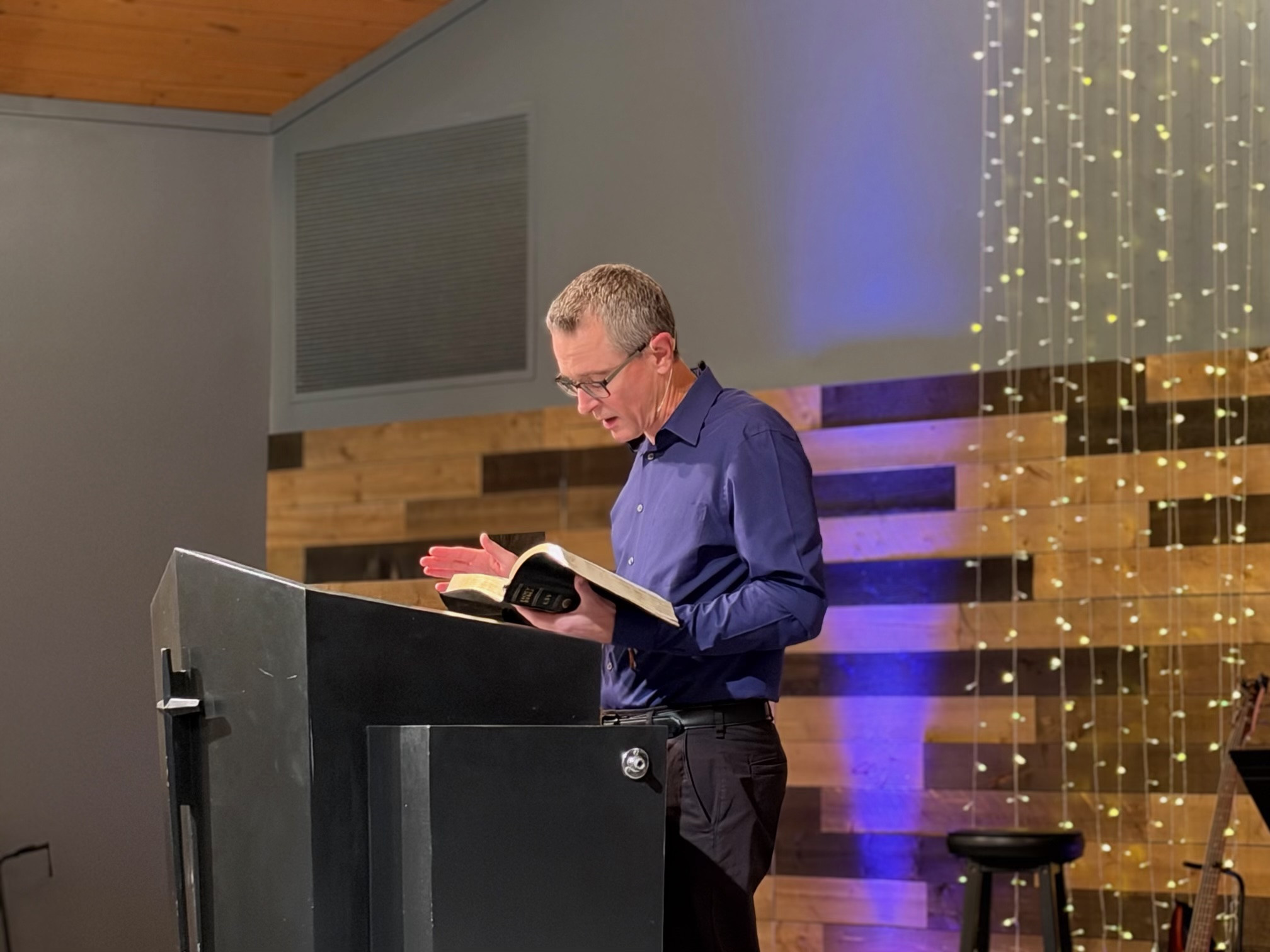
June 16, 2024
Dr. Michael A. Bond · Colossians
The following is a lightly edited transcript generated from the audio; it may contain small errors.
We are going to look at the book of Colossians chapter 3. I know that comes as a surprise to many of you. Colossians 3, starting in verse 18:
Wives, submit to your husbands, as is fitting in the Lord. Husbands, love your wives, and do not be harsh with them. Children, obey your parents in everything, for this pleases the Lord. Fathers, do not provoke your children, lest they become discouraged. Bondservants, obey in everything those who are your earthly masters, not by way of eye-service, as people-pleasers, but with sincerity of heart, fearing the Lord. Whatever you do, work heartily, as for the Lord and not for men, knowing that from the Lord you will receive the inheritance as your reward. You are serving the Lord Christ. For the wrongdoer will be paid back for the wrong he has done, and there is no partiality. Masters, treat your bondservants justly and fairly, knowing that you also have a Master in heaven.
(Colossians 3:18–4:1)
Let’s pray. Father, we thank You that You are our Heavenly Father. We thank You for all the fathers here, God, and pray You bless them. We thank You, Lord, that You are good and gracious to us every single day. We thank You for sending Your Son Jesus to redeem us, to rescue us from Your wrath. And we pray, Father, that You would continue to be with us, continue to inhabit the praises of Your people, continue to inhabit the preaching of Your Word. Lord, I pray for our children going back to class. I pray that they wouldn’t just have head knowledge, but they’d have heart knowledge. Lord, they would learn to know what it means to trust You and to seek after You and to love You with everything they’ve got. So be gracious to them and give them the gift of faith. Lord, let them trust in You at an early age. We pray, Lord, for the infants in our midst, that they would grow. Be with the new moms, as that can be a challenging time. Pray Your blessing upon them. And we thank You, God, for new life. We thank You for new physical life. Even more importantly, we thank You for the new birth that we have in Christ. Each one of us has that available to us, that we can believe, be forgiven of our sins, and have the new life. So may each person here today hear that word and accept it and receive it, Lord, all for Your glory. Amen.
Okay, we’ve been looking at men’s roles, which it’s been a little bit now, and now recently we’ve been looking at women’s roles and the roles that we’ve been looking at so far. Co-ruler — we looked at women as co-rulers as seen in Genesis. We looked at them as helpers as seen in Genesis. We looked at them as mothers and wives. Last week we looked at child of God. This week we’re going to look at women as co-heirs with Christ. They are co-heirs with Christ. So Colossians is kind of our starting point. We’re actually going to come back to verse 24 in a little bit, where it talks about the inheritance, because that makes sense — if you’re an heir, you have an inheritance that you receive. But look at Romans 8, because there’s sort of an order that’s going on here that I want us to see a little bit more clearly. We’re going to see that in Romans chapter 8. So we looked at this verse last week. We’re going to pick it up there again in Romans 8:12. It says:
So then, brothers, we are debtors, not to the flesh, to live according to the flesh. For if you live according to the flesh you will die, but if by the Spirit you put to death the deeds of the body, you will live. For all who are led by the Spirit of God are sons of God. For you did not receive the spirit of slavery to fall back into fear, but you have received the Spirit of adoption as sons, by whom we cry, “Abba! Father!” The Spirit himself bears witness with our spirit that we are children of God, and if children, then heirs — heirs of God and fellow heirs with Christ, provided we suffer with him in order that we may also be glorified with him.
(Romans 8:12–17)
So notice what he says towards the end there in verse 17. He says, if children, then heirs. Why would he say if children, then heirs? Because children inherit from their parents, right? Each one of you hopes that — I mean, you don’t want your parents to pass away, but you hope that when they do, perhaps there’s an inheritance for you. True? Some of you get one and some of you don’t. But here’s the thing. Your biological parents, they might pass on something to you. Some of them, God’s blessed them with great wealth. Others, not so much. But if you have a spiritual Father, guess what? Every single person gets an inheritance. Every single one of us. If you have God as your Father, you have an inheritance waiting for you. This is true of all the heirs, all the heirs, whether they’re male or female, young or old — every single person has an inheritance if they’re part of our Heavenly Father’s kingdom.
In the Old Testament, the inheritance was particularly what? The land. That was the inheritance that’s talked about over and over in the Old Testament. The land, the land. That’s the promise that’s given initially to Abraham. What? Oh, you’ll get land. He gets actually four promises, but one of those promises that he’s given is the land. When do we see that come to fruition? Some of these are rhetorical questions, but some of them aren’t. Okay. We see it come to fruition when the Exodus occurs, the Israelites come out of Egypt, and then they take the land, right? Where do we see that come in? What book? The book of Joshua. And they’re in the land, right? Then they end up getting exiled, but they’re in the land. So the promise is fulfilled. It’s a whole lot of land. I mean, you ever read it in Joshua? Lots of, lots of, lots of, lots of land. Like God is faithful to His promise. That’s one of the promises. Then He promises again, like they’re exiled. They’re disobedient. They get exiled. Where do they get exiled to? The northern kingdom? To Assyria. And where does the southern kingdom get exiled to? Babylon. And how long are they in exile in Babylon? 70 years, right? 70 years. So they’re there for 70 years, but God promises them, Jeremiah 29:10, “For thus says the Lord: When seventy years are completed for Babylon, I will visit you, and I will fulfill to you my promise and bring you back to this place,” meaning the land. That’s what they were to inherit. They inherited it. Were they faithful with the inheritance? Not at all. No, they weren’t faithful. But what we see is while part of the inheritance for Abraham was the land, part of it was just him being blessed, part of it was what? All the nations in you will be blessed, right? That’s part of the inheritance as well.
But I want you to notice something here when that idea of inheritance and heirs is being discussed, back again, verse 17. “And if children, then heirs, heirs of God, and fellow heirs with Christ.” Here’s what one theologian said: Paul says something here even more stunning. Believers are heirs of God Himself. The wording suggests that believers are heirs not merely of what God has promised, which is true, but of God Himself. The supreme benefit of the covenant with Abraham is not inheriting the land, but having God as one’s God. We are heirs of God — like we get the one true God. That’s a great inheritance. It’s amazing that we have the one true God who has adopted us into His family, and He gives us inheritance rights, and one of the inheritances is none other than God Himself. Like we get to be His children. He’s our God. We acknowledge Him and see Him as the one true God. We’re adopted into His family. So then we get a verse like Galatians 3:29:
And if you are Christ’s, then you are Abraham’s offspring, heirs according to promise.
(Galatians 3:29)
He’s not talking about DNA here. He’s not talking about a bloodline. No, when you get saved, it’s not all of a sudden you have Jewish blood running through you. That’s not what he’s talking about. What is he talking about? Abraham’s offspring is not Jewish bloodlines — those who get the promise that Abraham got as well. Only those in Christ. So how do you become an heir? You belong to Christ. I mean, that’s one of our key at Liberty: belong, flourish, go. I mean, you belong to Christ. So if you belong, what does it say you are? It says you’re Abraham’s offspring. So you’re like, well, I’m not Jewish. Well, blood doesn’t matter. Faith does. Ethnicity doesn’t matter. Faith does. Family lineage, it doesn’t matter. Faith does. Listen to Colossians 3, and we’ve looked at it previously:
Here there is not Greek and Jew, circumcised and uncircumcised, barbarian, Scythian, slave, free; but Christ is all, and in all.
(Colossians 3:11)
If you have Christ, you are Abraham’s offspring. As one theologian said, therefore the only way one can legitimately be called the offspring of Abraham is if one belongs to Christ. Union with Christ, being clothed with Christ, and being baptized into Christ are all different ways of portraying the same reality. The heirs of Abraham are those who belong to Jesus Christ by faith. Amen? I mean, remember how the song goes? Father Abraham had many sons, and many sons had Father Abraham. I am one of them, and so are you. Maybe we should sing that afterwards. That would be the first time we ever did that. But it’s heirs, right? Heirs according to the promise. We’re heirs according to the promise. Galatians 3:29 says, the promise, all the nations blessed through Abraham. That’s part of the promise. There’s four promises. We could actually look at it. It’d be kind of cool. We’ll do it sometime. But the four promises are the offspring — he’s going to have offspring as numerous as the sand — the land, there’s the blessing of Abraham himself, and then the blessing of the nations through Abraham. We’re blessed because of his faithfulness. That’s the promise that God makes to Abraham.
Look at Romans chapter, just a couple chapters back, Romans 4. Romans 4:13: “For the promise to Abraham and his offspring that he would be heir of the world did not come through the law but through the righteousness of faith.” So how is that promise appropriated to us? Not through doing good works. That’s his entire argument that he leads up to, and he continues it on for a few verses. But how is it appropriated? How did we receive it? It’s not through good works. It’s not through the law. That’s what he’s saying there. Look back at it. It did not come through the law. It doesn’t come through the law. It doesn’t come through the law. You can obey and obey and obey and obey and obey. That doesn’t get you the promise. What gets you the promise? Well, what Christ already did for us. That’s what gets us the promise. So trusting the promise to Abraham and his offspring that he would be heir, look at this, heir of the world — it comes through the righteousness of faith. And what does it say in Genesis? Abraham believed, and it was credited to him as righteousness. He believed, what does God do? Righteousness. He gives them the righteousness, not a righteousness that Abraham had on his own, but the righteousness of Christ Himself. So believers have inherited the promise of Abraham.
Look at Ephesians 3. We’ll see a similar idea. We’ll start in verse 1, Ephesians chapter 3:
For this reason I, Paul, a prisoner of Christ Jesus on behalf of you Gentiles — assuming that you have heard of the stewardship of God’s grace that was given to me for you, how the mystery was made known to me by revelation, as I have written briefly. When you read this, you can perceive my insight into the mystery of Christ, which was not made known to the sons of men in other generations as it has now been revealed to his holy apostles and prophets by the Spirit. This mystery is that the Gentiles are fellow heirs, members of the same body, and partakers of the promise in Christ Jesus through the gospel.
(Ephesians 3:1–6)
Now today we hear that and we’re like, oh duh, like of course the Gentiles are included. But that was revolutionary to the Jews back then. And it took them a while to get it. In the book of Acts, over and over, the Jews were like, hey, I thought the message was just for us. What’s going on here? And then Peter ends up going to Cornelius. Even Peter’s like, I don’t know about them Gentiles, but what happens? He ends up going to Cornelius. He has the vision. And Cornelius has the vision. And he ends up going to Cornelius. And what ends up happening, like Cornelius gathers his whole family and Peter shares the gospel. What happens? Gentiles get saved. So then Peter goes back and he starts like recounting to the Jews, the believing Jews, what’s happened. And they’re just like, what, what, what, what, what? Like they can’t believe it. But then at the end, because at first they’re kind of incensed about it. But then at the end, it says, when they heard these things, Acts 11, they fell silent and they glorified God, saying, “Then to the Gentiles also God has granted repentance that leads to life.” We’ve been grafted in, right? We’re grafted in. We’re grafted in, it’s a beautiful thing. So here’s the amazing thing, like God doesn’t make distinctions between His heirs. Again, Jew or Gentile, male or female, barbarian, Scythian, slave, free, in Christ receive the same inheritance, which is none other than God Himself.
Look at 1 Peter 3. 1 Peter 3:7:
Likewise, husbands, live with your wives in an understanding way, showing honor to the woman as the weaker vessel, since they are heirs with you of the grace of life, so that your prayers may not be hindered.
(1 Peter 3:7)
So the men are heirs and the women are heirs. No distinction. Men and women, both heirs. Women are saved apart from their husbands. Salvation is not based on anyone else’s decision but yours. You have to decide. It’s up to each one of you. Each one of you has to decide. Your husband can’t save you, your wife can’t save you. Only Jesus can save you. Amen? And you have to stand before the Father to account for your sin. Will your spouse be there to stand in your place? No. It’ll just be you and God. So your husband might be an unbeliever, your wife might be an unbeliever, but guess what? You can still know God and you can walk with Him. He can be with you to face whatever comes into your path.
So what does it mean to be a co-heir? That’s what it says. Co-heir. They’re heirs with you. You’re co-heirs. It’s not a subordinate heir. The woman doesn’t receive a lesser portion. No, ladies, you’re a co-heir. Women inherit exactly what men inherit. And God has set up His economy righteously, making sure the children all receive the same inheritance. The same inheritance. So if you have Christ, you have the best inheritance possible. None other given by God Himself to us.
So notice as we’ve looked at these different roles — co-ruler, helper, mother, wife, child of God, co-heir — notice the progression of the roles here. All of these roles, if you think about it, every single one of these roles is done in community. It’s done in community. Whether it’s with other citizens, co-ruling, or with family members, or with church members. You co-rule with your spouse, you’re doing it with someone else. That’s why you’re a “co.” So that’s the civil role. You’re ruling, you’re subduing, but you’re doing that with others. And you’re a helper to your husband. You’re a mother to your children. You’re a wife to your husband. These are all family roles. So you’ve got the civil role, now you’ve got the family roles. And these roles, again, they’re done with others. They’re done with others, with other family members. It’s the husband and the wife working together.
Herman Bavinck, well-known 20th century theologian — this is what he said: If the husband is the head, then the wife is the heart of the family. The husband establishes the family, the wife preserves the family. They’re working, they’re working together, working together to build up and strengthen the family. And even being a child of God, this isn’t you by yourself. But guess what? There’s many other children. Many, many other children, right? Father Abraham has got many children. But you’re also the co-heir, but you reign with who? With other believers, right? Other believers. So child of God, co-heir, those are church roles. So you’ve got the civil role, you’ve got the family role, you’ve got the church role. And how can we even imagine to rule? We can rule because Christ’s rule is over all. Because His rule is over all, then guess what? He can appoint us to be His mini-rulers, so to speak, or His vice-rulers.
But look back in Colossians, chapter 1. We looked at it a while back when we went through Colossians 1. But this is what we see. Verse 15, Colossians 1, he is talking about Jesus:
He is the image of the invisible God, the firstborn of all creation. For by him all things were created, in heaven and on earth, visible and invisible, whether thrones or dominions or rulers or authorities — all things were created through him and for him. And he is before all things, and in him all things hold together. And he is the head of the body, the church. He is the beginning, the firstborn from the dead, that in everything he might be preeminent. For in him all the fullness of God was pleased to dwell.
(Colossians 1:15–19)
Christ is over all. He’s over it all, right? Yes? He’s ruling and reigning over it all. So this is what we see right there, like He’s the preeminent one. He’s the head of the church. Ephesians 1 says something similar: “far above all rule and authority and power and dominion, and above every name that is named, not only in this age but also in the one to come.” Far above, right? I mean, it’s not just like you’ve got all the rulers of the world right here, and then Christ is like just barely above them. No, He’s far above. Far, far, far above. And what is He doing? Exercising His sovereign rulership over all. So He appoints us, Christ does, as His mini-rulers, if you will. This includes families. This includes the church. This includes society. So it makes sense that He would set it up that there would be rulers in the home. Men called to lead. Men and women together called to shepherd the children. Rulers in the church — pastors or elders, synonymous terms — to rule. Rulers in society: presidents, magistrates, mayors, and so forth. Are they supposed to fear the Lord? Yes, right? In all aspects, in all aspects, you want to appoint, choose, vote for men who fear God, who will put God first in everything. So we have rulers in the home, rulers in the church, we have rulers in society.
Now there’s some dangers in certain areas when we talk about the family. We’ll probably get into it a little bit next week. But here’s the thing. Why have I focused for the last 11 weeks on the family? 11 weeks. This is the 11th sermon in this series. Why for 11 weeks? Because listen, you can’t stand up for orthodoxy if you aren’t standing at the point of attack. Now, I could stand up here and say many things and defend the doctrine of the Trinity, which I have before. I could stand up here and defend all sorts of biblical doctrines and teach those truths, and I have and I will continue to. But guess what? You can’t just teach those things that aren’t really currently being attacked in our society and then ignore the things that are greatly being attacked. It doesn’t make sense. And the point of attack currently — it’s not justification, it’s not God in three persons — the attack currently is gender. It’s human sexuality. It’s the family. So yeah, we come to a point, that’s the great thing about working through a book expositionally, like it just naturally, you come to that section and we have hit pause for a bit. Why? Because that’s where the point of attack is. So when it comes to orthodoxy, standing for the truth, you have to take your stand where the enemy army has his arrows pointed. That’s what you’ve got to do. It would make no sense if you were being besieged to put all your army on the north wall if the enemy is attacking at the south wall. That would not make sense. It’d be foolish, it’d be unwise. So you have to stand firm at the point of attack, and right now the attack is on gender, the attack is on human sexuality, the attack is on family. Why weren’t people preaching about this as much 100 years ago? It wasn’t the point of attack. So you can go back and you can see throughout the history of Christianity, different things that have been attacked. I mean, so for the last however many years, decades now, but increasingly, the attack is on the family. So we must stand firm right here, right now, on the issue. Why? Because we want to be faithful.
And listen, again, sometimes people will argue, people will say, hey, like some of these things you really shouldn’t talk about in the pulpit. Well, brothers and sisters, let me just tell you, the world is screaming it. And so you and your kids and your grandkids are hearing a worldview propagated by the culture. It has to be combated. It has to be combated. How foolish to talk about all the things of Christ and of God and all the areas that He influences and then not talk about the one that the world is influencing you and your children and your grandchildren. That would be foolish. It would make no sense whatsoever. Is it popular to do so? No, but it’s right to do so. You have to stand where the point of attack is. So everyone’s going to hear a worldview from the culture and from the world, you’re going to hear a worldview. And listen, here’s the thing, if that’s the only worldview that you or your kids hear, guess what that worldview does? It starts to influence you. Think about it. If you go back a hundred, 150 years in this nation, was every single person a believer? No. But was there a great Christian influence? Yes. And did that great Christian influence and worldview that people heard about regularly impact those unbelievers? Absolutely. Some of them got saved. But the ones that even didn’t — that worldview was the predominant worldview that impacted those people. Now there is a different predominant worldview, and it’s impacting people. It’s impacting us. It’s impacting your children. It’s impacting your grandchildren. It’s impacting. So if that is the only view, then guess what? It influences, and it impacts. That means you, moms, dads, that’s what your kids are going to hear. So guess what? Instruct them in righteousness and truth. Me, speaking on this for 11 weeks, that’s good. But your kids need to hear about it regularly, all the truths, but also this truth. Why? Because the world will scream at them. You can’t even walk into a store without seeing worldview put before you. So they need to hear it. You need to hear it and they need to hear it. So you need to make sure, just like Deuteronomy, like you’re taking those opportunities to talk. Talk, talk, talk, train, train, train, educate, educate, educate. You want to do that. Why? Because you want them to know the truth. You want them to know the truth.
So yeah, why do we have our kids go? You know, because we want age-appropriate education. Some parents decide to leave them in here, that’s fine too. But we want age-appropriate education. We want them to be able to hear those stories. We want them to be able to get a biblical education. We’re not just — trust me, back there, we’re not just giving them facts. We’re not just giving them information. That’s part of what we’re doing. But we’re also giving them the gospel. We’re also showing them the beauty of Christ. We’re also showing them how they need Jesus. My experience growing up in the church, it wasn’t like that. I got all the facts, which I’m thankful for the facts that I was given. But I got all the facts, but I never got the shepherding part. I never got the part about how I needed to trust in Christ from my Sunday school teachers. I never had anyone pointing out my sin. I didn’t get that. I needed it. But I didn’t get that. I mean, so that’s what we’re doing, but we’re coming along, parents, moms, dads, we’re coming along to complement what you’re already doing. If your kid someday is not walking with Jesus, don’t point your finger at the church, because it rarely should be pointed that way. There are churches I’m sure sometimes it should be. But the person who influences whether your kids are walking with the Lord, who gives them the best opportunity to trust in Christ, it’s you and your spouse. You and your spouse. So it is a lifelong endeavor. It’s challenging, it’s hard. And you have to trust in Christ daily and plead before His throne daily for your children. But guess what? We want to keep this before them. We want to keep it before them. And one of the best ways to keep it before them for you and your spouse is to have a great relationship with one another. Why? Because what is the image of the husband and the wife in Scripture? What is the comparison in Ephesians? Between Christ and the church, right? So they’re seeing a living example of Christ and the church. If but for no other benefit or reason, have a great marriage for the benefit of your children. Why? So that that’s what my parents believe about Jesus, and they’re wooed by that. They see that as something that they want.
Let’s have the men — anyone 18 and older — come on forward. I want to pray over the men. Come forward right here.
All right. Men, if you’re married, you are the head of your home. You’re the head of your home. So I exhort you to lead well. And I exhort you to lead humbly. And I exhort you to lead on your knees. All right? It is challenging. It is challenging in today’s culture to be a godly man, and to be a godly husband, and to be a godly father. And a mischaracterization is given to men who try to lead biblically. And you have to stamp that out and ignore it. And you have to get on your knees daily before Christ and beseech Him and beg Him and ask Him to give you the grace and the strength to lead your family in a Christ-like way. You can only do that with Christ. So if you think you’ve got it figured out, you need to get back on your knees. Because you have to do it with Christ, humbly and graciously. Let me pray over each of you.
Lord, I pray for the men here. I pray for the men here that aren’t yet married. Pray to bless them with a godly spouse. May they choose wisely. May they trust You. May You give them a profession where they can provide for their family. Bless them in whatever, Lord, area You lead them into. I pray for the married men here, that they would be servant leaders in their home. They would be willing to serve and not afraid to lead graciously, but also boldly at times. And Lord, I pray for those that are fathers here. Let them love their children as You love us, and let them be men enough when they mess up to humble themselves and go to their spouse and ask for forgiveness and admit they’re wrong. Let them be humble enough when they mess up and sin against their children that they would go to their children and confess it and admit they were wrong and ask for their forgiveness. Lord, that’s part of what being a godly man is — walking in humility, walking in forgiveness. And we thank You, Lord, You don’t just give us a bunch of rules and leave us on our own to try to figure this out or do it, but we have Your very Spirit. The promise of the inheritance to come, Ephesians says, we have Your Spirit that You give us to live inside us to produce the fruit of the Spirit. So by Your Spirit we can be a godly husband and we can be a godly father. So I pray Your blessing upon each of these men. Lord, we want to be men that are after You, that have You first, number one, above all else. So may we continue to endeavor to do that by Your Spirit and by Your strength. May we all do this for Your glory. Amen.
Amen. I’m going to have the men stay up here. We’re going to sing “Before the Throne.”