
July 17, 2022
Judgment for Edom
Dr. Michael A. Bond · Obadiah 1:1–3
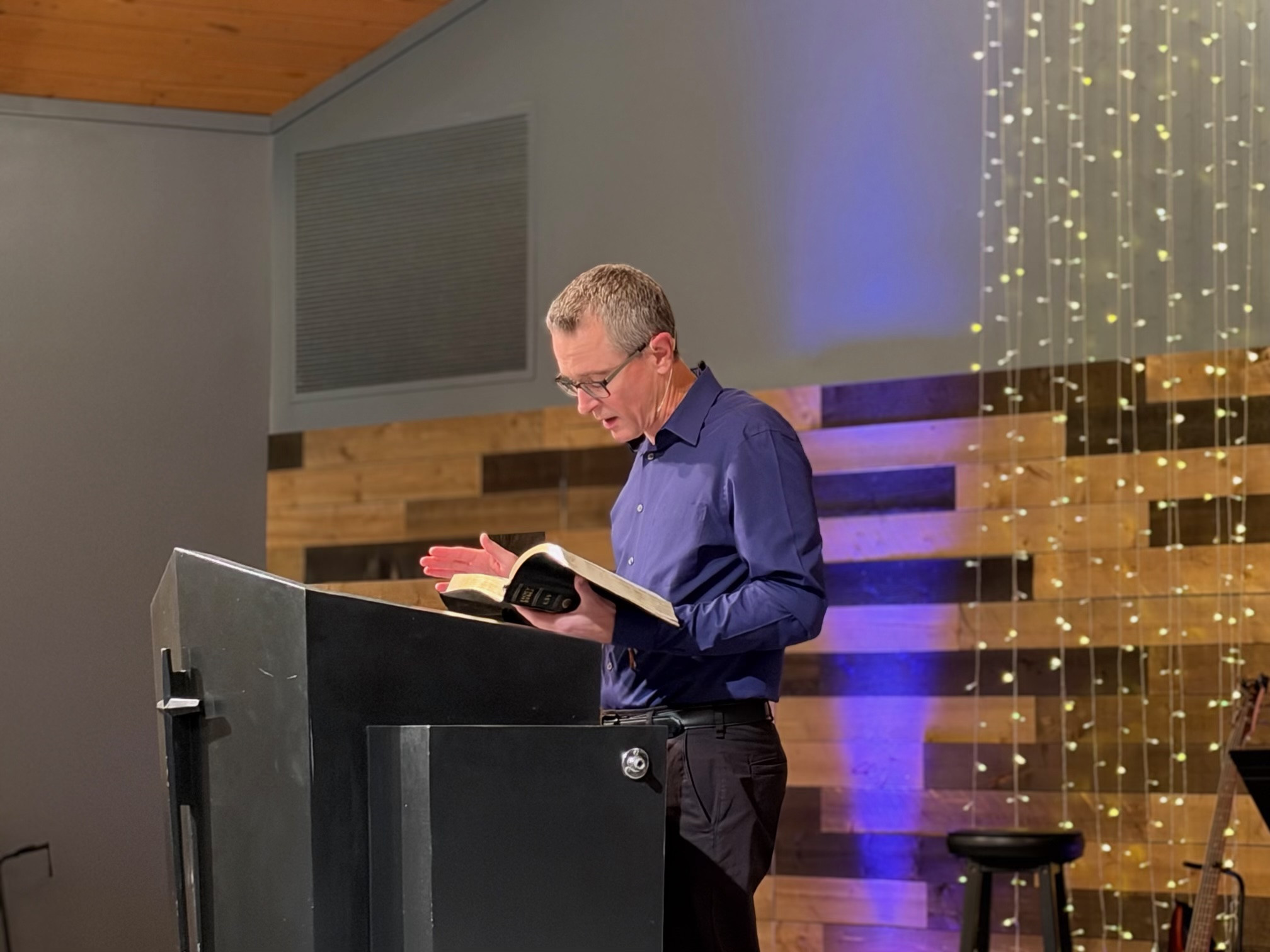
Obadiah 1:1-3
The following is a lightly edited transcript generated from the audio; it may contain small errors.
How’s everyone doing? Good. All right, turn to the book of Obadiah. Starting in verse 1 it says, The vision of Obadiah. Thus says the Lord God concerning Edom: We have heard a report from the Lord, and a messenger has been sent among the nations: “Rise up! Let us rise against her for battle!” Behold, I will make you small among the nations; you shall be utterly despised. Let’s pray.
Father, thanks for all the work that You’re doing in this church and through this church. We do pray Your blessing upon the Link VBS this week. Bring many kids from the subdivision that Link ministers to right next to them. We pray it’d be an amazing week. Give each of the teachers sharing the Bible stories an extra measure of grace and wisdom. Lord, give them Your Holy Spirit to speak Your truth in their words. We pray that Your Word would be planted in the hearts of these kids that will be attending this week, Father. And Lord, thanks for the privilege of gathering together as the saints, Lord, as Your sons and daughters. I pray, God, we’d be fast right now about Your Word, quick to listen, that we’d have ears to hear. We thank You, Lord, that You are such a good God. And time and time and time and time again, You forgive us our sins. The blood of Jesus is more than enough. It is always more than enough. So we thank You for the blood that covers our sins. We thank You that You are a good and gracious God who is slow to anger but abounding in steadfast love. Bless our time now, we ask in Jesus’ name, amen.
So let’s do a little recap from last week as we opened up the book of Obadiah for the first time. If you remember, the book of Obadiah is primarily and really singularly focused, in terms of who the word is being given to, to the land or the country of Edom. And the Edomites were from the lineage of Esau. If you remember Isaac and Rebekah, they have two children, Jacob and Esau. And if you remember all the way back in Genesis, there’s that little passage where it talks about like even in the womb, they kind of were like going at it, all right? Well, guess what? That going at it continued for centuries and centuries and centuries. So the Edomites are related to the Israelites. They’re like the long-lost brothers, so to speak. If you remember when the Israelites were rescued from Egypt, God takes them out and they cross the Red Sea, they’re traveling around, they come up to the land of Edom and they ask for basically safe passage. Can we pass through the land? We won’t use any of the resources you have, but we just wanna pass through the land, and the king of Edom’s like, no, right? So that kind of enmity and kind of bad blood was still there all this time later.
There’s a few challenges when we look at the book of Obadiah to understanding it. One, because it’s short, it can be a little more challenging for us to get the context. We can’t use chapter 5 to help us understand chapter 3. There’s no chapter 5 and no chapter 3, right? We have 21 verses that we’re looking at. The other challenge is we don’t know much about the author. And then the last challenge is there’s kind of two views of thought of when it was written and what is it specifically referencing in regards to what the Edomites did. But here’s the beautiful thing. We talk about the science and art of understanding the Bible, right? One of the key things is letting other parts of Scripture shed light on the parts of Scripture that maybe aren’t as clear. So let the clear parts help you understand the parts that maybe aren’t as clear. Let other resources that we have in the prophets, that the writers of the Bible, New Testament, help. If we just had this book by itself, we’d be asking questions like, well, who are the Edomites, right? What’s occurred that is so horrible that they’re being now judged for their sin? Well, we have enough from all the other prophets and the historical books and in 1 and 2 Kings that we have a really clear picture of who the Edomites were and we can figure out pretty, pretty well what exactly is going on.
The larger picture is—because one of the questions we should ask is, why is Edom being judged? And I guess the largest picture is like, because of their sin. Okay, well yes, right? As for all of us, why is Edom being judged? But why is there this singular focus, an entire book devoted to Edom? Well, the larger picture is the sheer, really the chronological length of the enmity that Edom had towards Israel. Look at Ezekiel, and hold your place in Obadiah because we’ll be coming back, but look at Ezekiel chapter 35.
Starting in verse 1, Ezekiel 35: The word of the Lord came to me: “Son of man, set your face against Mount Seir, and prophesy against it.” Now without getting into it too much, Mount Seir was a location, a key location in the land of Edom. So here they’re talking a specific city to represent the entirety of Edom. Just like numerous times the prophets will maybe call out against Jerusalem. “Set your face against Mount Seir, and prophesy against it, and say to it, Thus says the Lord God: Behold, I am against you, Mount Seir, and I will stretch out my hand against you, and I will make you a desolation and a waste. I will lay your cities waste, and you shall become a desolation, and you shall know that I am the Lord.” And then look what it says in verse 5: “Because you cherished perpetual enmity and gave over the people of Israel to the power of the sword at the time of their calamity, at the time of their final punishment.” So there’s this idea of this sheer chronological length of enmity, this perpetual enmity, on and on and on and on and on and on and on, from the time there was just two of them, Jacob and Esau, all the way down throughout history. So that’s part of the larger picture. It’s also the consistency and intensity of its enmity. Look back at Obadiah.
And we see in verse 10 a description of Edom’s violence. “Because of the violence done to your brother Jacob, shame shall cover you, and you shall be cut off forever. On the day that you stood aloof, on the day that strangers carried off his wealth and foreigners entered his gates and cast lots for Jerusalem, you were like one of them. But do not gloat over the day of your brother in the day of his misfortune; do not rejoice over the people of Judah in the day of their ruin; do not boast in the day of distress. Do not enter the gate of My people in the day of their calamity; do not gloat over his disaster in the day of his calamity; do not loot his wealth in the day of his calamity. Do not stand at the crossroads to cut off his fugitives; do not hand over his survivors in the day of distress.” So the consistency, and not just a consistency, but the intensity from which they came after the Israelites here—I mean, it was just not normal. It was like enmity on steroids. So they were just intense, just in their hatred and how they treated Israel and how they took advantage of the situation that they found themselves in to basically give Israel all and more than they could handle.
Finally, it’s the treasonous nature of its enmity. Israel and Edom were brother nations. Amos 1, if you look there, hits upon this idea. Amos is right before Obadiah. Amos 1 verse 11: Thus says the Lord: “For three transgressions of Edom, and for four, I will not revoke the punishment, because he pursued his brother with the sword and cast off all pity.” So notice that it says there, what did he do? He pursued who? His brother. Most of the other nations, except for Moab, but most of the other nations, there’s not much of a relation there. So in some sense, it’s like, wow, I mean, your own blood, you came after. That’s pretty low. “So he pursued his brother with the sword and cast off all pity, and his anger tore perpetually.” There’s that idea again of the sheer chronological length. Perpetually, the anger was there. “He kept his wrath forever. So I will send a fire upon Teman, and it shall devour the strongholds of Bozrah.” So no other nation quite shared these characteristics. What’s the smaller picture? That’s the larger picture. The smaller picture is in this specific instance when Israel was basically downtrodden and hurting because they had already been ransacked. Well, here comes the Edomites and they mock, they despise, and they hurt God’s covenant people in their time of need. They took advantage of a situation when Israel was disadvantaged and they used it to their advantage. They even participated in what was already occurring in the city and took advantage even more so when Israel was at a position of not being able to defend itself. That’s the smaller picture.
But let’s step back for a moment and think about the biblical understanding of judgment, because this book is a book of judgment. A lot of the prophets are foretelling judgment that is to come. When we talk about the understanding of judgment, it’s a two-edged principle. A two-edged principle. First, the aggressor will reap what he has sown. The aggressor will reap what he has sown. So Edom is the aggressor. They’re gonna reap what they’ve sown. They’ve done great damage, even killed, murdered, savagely—they’re gonna reap what they’ve sown. But second, the other side of that edge is the innocent victim will be exalted over his aggressors. Look back in Obadiah and we see this in verse 17. Verse 17: “But in Mount Zion there shall be those who escape, and it shall be holy, and the house of Jacob shall possess their own possessions. The house of Jacob shall be a fire, and the house of Joseph a flame, and the house of Esau stubble; they shall burn them and consume them, and there shall be no survivor for the house of Esau, for the Lord has spoken.” Okay, so there’s like a role reversal going. The innocent here, the innocent victim, ends up exalted or restored. So when we talk about biblical judgment, there’s punishment and restoration.
Something to be crystal clear about in the section that we previously read, verses 10 through 14: you can read that and read that and read that as many times as you want. And there is nothing in any of those verses mentioned—this is important—about the Lord. And this is intentional. The Lord is talked about after it, but in those sections where it describes what Edom did, God’s name is left out of it. It was not God’s will to carry out the crimes the Edomites carried out against Israel. They acted on their own. He had not declared for Edom in any way to participate in any type of judgment against the Israelites. This section, verses 10 through 14, details Edom’s specific crimes. In other words, the destruction is not sent from God. It’s not decreed by Him. God makes it crystal clear when He is using a nation to discipline Israel. Look at Habakkuk chapter 1.
It says in verse 12, Habakkuk 1: “Are You not from everlasting, O Lord my God, my Holy One? We shall not die. O Lord, You have ordained them as a judgment, and You, O Rock, have established them for reproof. You who are of purer eyes than to see evil and cannot look at wrong.” What is Habakkuk saying here? He’s saying that this nation has been ordained to bring judgment against Israel. Jeremiah, time and time again, Isaiah, time and time again, make it clear that the conquest by the Assyrians on the northern kingdom, the conquest on the southern kingdom by the Babylonians—where is that coming from? Ultimately, God’s hand of discipline. God’s hand of discipline upon Israel. Think about this for a minute. Think of, if a mom and dad, they have a couple children and the one son is disobeying. So the mom and dad get, you know, talking, okay, the dad’s gonna discipline the son and he goes and disciplines the son, right? And he comes downstairs and all of a sudden he hears, you know, screaming and crying upstairs. And as he’s going upstairs, the other son is coming down the stairs and he’s like, I gave it to him too, Dad. Like, that is not the place for the other son to take a role in the discipline. Well, that’s kind of what’s going on here. Whose role is it to take care of the discipline? It’s God’s role, right? Now He can use whatever means He wants, and He used the foreign nations. But Edom can’t just be like, oh, we’re gonna participate too. We’d like to be a part of that. No, it’s not their place to do that. So nothing is involved with the Lord. He did not give them any type of directive to do it, which is why they are being judged for what they did. Which is why Edom can’t claim exoneration as an instrument in God’s hands. They can’t be like, oh, we’re just being like the Assyrians, we’re just being like the Babylonians. They can’t say that. They were not given that task.
So notice, getting a little bit now into the specifics, the book starts out “the vision of Obadiah” in verse 1. Notice that it is vision and not visions. So it specifies a single vision and hereby encourages the reader to interpret the book as a unified whole. What we’re about to get is the vision from Obadiah, all 21 verses, all related and linked together. It also designates this material as prophetic discourse. These are utterances spoken by Yahweh through His mouthpiece, Obadiah. These aren’t Obadiah’s thoughts, these are God’s words. That the prophet’s personal name is recorded, it does signify something very important about the nature of divine utterances in the Hebrew Bible. Think about this for a moment, when you think about prophecies and divine utterances where it says, “Thus says the Lord.” They were not thought of as abstract ideas just like suspended in the air. On the contrary, they came into concrete historical situations within space and time and were proclaimed through specific persons. Are they timeless in one sense? Yes, but they are maybe time-full in another sense. They are directed in a specific context towards specific people regarding specific things that occurred. What did it serve for the prophet to put his name to the words? Well, he was held accountable for what he said, right? We looked last week briefly at Deuteronomy. What happens if a prophet gives a false word? Death. So the record of the prophet’s name, it really served to hold him accountable. Anyone who’s going to speak and claim to speak for the Lord, better be prepared to stand behind that word.
What’s the historical context then that Obadiah is speaking to? Well, we have specific certain events that occur. We have the attack of strangers and foreigners against Judah and Jerusalem—not just Edom, but another attack had occurred. Edom just takes advantage of the fact that an attack had occurred. And it’s kind of like they just kind of pile on. We also have specific acts of violence done by Edom to Israel. We read that description in verses 12 through 14. But here’s the thing. We have past events that have occurred. So Obadiah is referencing events that already occurred. And he’s basically explained, this is what you’re being judged for. But then we also get future events that Obadiah discusses, promising Israel’s restoration. Look at verse 17, we already read it, but we’ll read it again. “In Mount Zion there shall be those who escape, and it shall be holy, and the house of Jacob shall possess their own possessions.” And then again in verse 19: “Those of the Negev shall possess Mount Esau, and those of the Shephelah shall possess the land of the Philistines; they shall possess the land of Ephraim and the land of Samaria, and Benjamin shall possess Gilead.” So there’s this promise of restoration, even as Israel is recovering, even as they’re still in distress. I just love it that even as sometimes even in our own lives, like we go through horrible, awful things, like there’s always a glimmer of hope that the Lord gives us. Always a glimmer of hope. Even in the worst of the worst of the worst of the worst, and some of us have been there, like the faithfulness of God always shines clearly. Hold on to that faithfulness, brothers and sisters. Whether you need it right now or tomorrow or next week or next month, hold on to it, because you will need to be reminded time and time again of the faithfulness of the Lord. He might discipline us, and He does. Look at Hebrews chapter 12.
Hebrews 12 verse 5: “And have you forgotten the exhortation that addresses you as sons?” And then the writer of Hebrews, he’s gonna quote from Proverbs, and this is what he says: “My son, do not regard lightly the discipline of the Lord, nor be weary when reproved by Him.” Why is that? Well, we get the answer. “For the Lord disciplines the one He loves, and chastises every son whom He receives.” So really, if you want to distinguish between words, when we talk about discipline in the biblical sense, that’s what the Lord does towards His children. He punishes those that are not His children. It’s probably a study for a different day, but discipline is for those that are His children. So He disciplines those whom He loves. He disciplines His children. Where’s the punishment? For those that are not His children. Discipline has the idea of restoration. If you’re parents and you discipline your kids, the end goal is restoration. It’s not just to punish them for something bad they did. No, it’s to restore them. Discipline, I mean, if you even think of where the word comes from, you’re discipling, all right? You’re training. You’re teaching. So it has to have a restorative act as its intended goal. Otherwise, you’re just punishing, okay? The idea is to restore.
And when you think about it, when you’re disciplining, you’re giving, or you should be giving, your kids—it should be a gospel message every time you discipline your kids. Because there’s a broken relationship that’s occurred. And what do we have if we don’t know the Father? We have a broken relationship with Him that needs to be restored, right? From our rebellion and sin, we have a broken relationship and it needs to be restored. So if our children are disobeying and there is a broken relationship, then we are giving them a picture of the gospel. So we better make sure that it is a real clear biblical picture that we’re giving them with the restoration. There shouldn’t be any type of anger involved, nothing displayed out of hatred or anger. They should be loving, kind, compassionate, filled with grace. If you are disciplining your children and at times you’re not fighting back tears, then I would suggest that you’re not disciplining accurately or appropriately. When God disciplines the southern kingdom of Judah, the northern kingdom of Israel, He’s not up there just like, man, give it to them, Assyrians. That’s not His heart. It breaks His heart that He has to bring discipline against His children. He does it because He loves us. He does it because He loves us. And even amidst any type of discipline, there’s a similar disclaimer of hope. That’s why you got to take the whole book of Obadiah. You got to take that whole book and read the whole thing. That’s why the context is important, because He gives much, much hope at the end. Much, much hope. It’s talking about the kingdom being the Lord’s. Israel is restored. They’ve been disciplined from the Assyrians, from the Babylonians and others, and God restores them. It’s a beautiful picture.
So the vision of Obadiah. It starts out “the vision of Obadiah,” and guess what? We actually don’t get the vision right away. We get this little insert, “Thus says the Lord God concerning Edom,” and then all of a sudden there’s this interjection. We’re gonna see some intentional surprises from Obadiah throughout the book like that. You wouldn’t expect it to say, “We have heard a report from the Lord, and a messenger has been sent among the nations.” We’d really just expect it says, “Thus says the Lord God concerning Edom: Rise up, let us rise against her for battle.” So why do we have that little insert, “We have heard a report from the Lord”? That’s not the judgment yet. That’s not the command that’s gone forward yet. So we get these, I call them intentional surprises, because Obadiah has this penchant for surprising his readers with what might appear to be misplaced clauses, but they’re not misplaced. What’s the result and the focus and the idea is to keep the audience alert, and it contributes to what you might say is like the rhetorical force of the whole thing. So a messenger has been sent among the nations. God calls the nations to action, and guess what? They respond. Has God ever called the nation to do something? Has He ever said, this is how I’m gonna use you, this is the task that you have, and that nation hasn’t responded? Well, maybe in one sense, yes, because Israel was called to do many things, right? And they didn’t do it. But when God says, I’m gonna use Assyria as an instrument in My hand, Assyria can’t be like, oh, no, yeah, we’re gonna pass on that. No. When God’s like, I’m gonna use Nebuchadnezzar and Babylon to bring judgment on the southern kingdom, I mean, Nebuchadnezzar can’t be like, nah, we’re gonna pass on that one. No, why not? Because God does what He wants to do. God is sovereign over the affairs of men. He is in control of the affairs of men. If He wants to use this nation for whatever purpose, guess what? He can use that nation for whatever purpose He deems fit. Sometimes I think we just think we kinda put that in the Old Testament, and then in the New Testament, we’re like, oh, it’s all about little individual people. That’s true. But God’s still using nations to do His work. He’s using people and individuals. He’s using cities and He’s using the states, but He’s using entire countries as well. We don’t have prophets today that God’s specifically speaking and saying, here’s how I’m using this country. It doesn’t mean He’s not. He’s not revealing that at this time. The point is this: whatever God’s sovereignty was in the Old Testament, it’s still there in the New Testament and it’s still here today.
So we get two messages delivered by Obadiah, and we’ll focus at different times on the different messages. The first message is one of death and doom. I mean, God is not happy with Edom. He’s not happy with the Edomites. But here’s the thing, and I’ve said it before and I’ll say it again. This message of death and doom is also a message of a call to repentance. Because anytime someone is warned of impending doom, it is a call by God to turn away from their unrighteousness and repent. So God never destroys a righteous nation, nor does He bring destruction on a nation that is rather neutral in moral things. But what do we learn? Nations are not morally neutral, nor are they quite righteous. So the first message is one of death and doom. But even then, there’s a glimmer of hope. Think of Jonah goes to the Ninevites, right? What’s the message? You’re gonna be destroyed. What do they do? They repent. Does God destroy them? No, they repent. So there’s still that glimmer of hope. So the first message, one of death and doom; the second message is a message of hope for Israel. I mean, they get this word, and I mean, they’re not just licking their wounds. I mean, they’ve just been demolished and destroyed and decimated. But even in the midst of that, there’s a message of hope for Israel. God: those who oppose the Lord will meet their end, while the righteous, who have been oppressed, will be both preserved and exalted.
Obadiah, we can break it down into three sections. The first nine verses talk about what will be done to Edom. Then, verses 10 through 14 specify what Edom specifically did. It details how they treated Israel and the things they did to them. And then verses 15 through 21 are what the Lord will do. How does the Lord respond? Well, we see it at the end of the book. But the central section, the key passage in Obadiah is really verses 10 through 14. A lot of times, you know, in our English minds and when we go to the movies, right, the climactic ending is always at the end, right? That’s not how the Hebrews wrote, okay? The climactic part was like right in the middle, all right? So you kind of build up to it, there’s a crescendo, and then you back away from it. So the central section is 10 through 14. And that’s what we’ll look at in the weeks to come. We’ll also see that the first and third passages correspond closely in a variety of ways. Here’s the thing. While Obadiah does speak about a specific event that occurred and delivers a word for the people of Edom and for the people of Israel, we also have to see in this word that the timelessness of God’s Word is always true. It always applies to us as well.
Look back at Obadiah verse 1. Notice what it says. “We have heard a report from the Lord, and a messenger has been sent among the nations.” Listen, when the Word of the Lord comes, one, it’s not just for individuals. Notice the plural there, “we have heard a report.” It’s not just for individuals. Obadiah there is speaking, and he’s speaking for himself, but also on behalf of the Israelites. But God’s Word is not just for individuals, but it’s for His people. But guess what? It’s also for the nations. So this word, the messenger’s been sent among the nations. Now here it’s to, you know, gird your loins for action, for battle. But I think there’s a broader application here that we can glean from Obadiah, is that God’s Word is for all, okay? Israel’s call, it was not a hidden call. Israel’s call was to be a light to the nations. They failed miserably. But that was their call. And friends, brothers and sisters, if you look at it, it is crystal clear. It is crystal clear. There is a part of yes, come and see, but there’s also a part of go and tell. And really when you think about it, that kind of needs to be how believers walk with their faith. There’s a come and see, like hey, invite people in, but guess what, there’s also a go and tell. All right, this week with the Link VBS, that’s like a go and tell. When you’re out talking with your neighbors, that’s a go and tell. When we’re inviting people in here and there’s visitors or guests, that’s like a come and see. Come and see how good the Lord is. Come and hear how amazing He is. So there’s come and see, but there’s go and tell as well. And here we have the go. A messenger has been sent among the nations. Brothers and sisters, let’s not forget that we are the branch that was grafted in. That should strike down any sense of pride that we might ever have. Regardless of our position of how we choose God or He chooses us, the bottom line is we are grafted in. We’re grafted in. What a beautiful thing that God has done. We’re like this wild, nasty old branch. It’s all scrawny looking, and God takes us and grafts us in to His amazing little tree. That’s pretty amazing, right? We’re pretty scrawny, right? But by the blood of Jesus, by the love of the Father, by the power of the Spirit, God does the work in us.
So what do we see in the book of Obadiah? Well, one, we see the eventual and final fate of Edom is the fate of all the wicked. Death. And that should sober us. Because guess what? We should not want that for anyone. God’s own Word says He doesn’t want any to perish, right? But for all to what? Come to repentance. He doesn’t want people on the path and choosing and putting themselves in unrighteousness. He doesn’t want people going to hell. No. But the truth of the matter is the eventual and final fate of the wicked is death. Guess what? That’s why it’s a come and see and it’s a go and tell. We want to be used by God to snatch people from the fire. That’s what Jude says. Second, we’re reminded, and we see clearly, the Lord is an avenger. As 1 Thessalonians 4 says, the Lord is an avenger in all these things. He’s an avenger. It’s His to avenge. Not ours, but it is His. But second, the message from the book of Obadiah, is it doesn’t mean that bad things won’t happen to us. I mean, horrible things happen to the nation of Israel. And we see Edom was not God’s instrument to bring discipline to Israel, but Edom still did their own thing. It wreaked havoc on Israel. But who has the final say? The Lord. So listen, whatever might come, our focus in that sense is not on tomorrow, or next week, or next month. It’s, hey, what will the Lord do with me over the next 50 years? Where will the Lord safely deliver me to? His heavenly kingdom. Okay. So the enemy can do what he wants. The world can do what they want. But listen, God has His plan and purposes, and He will see His bride through to the end. Might not be pretty at times. It might get pretty ugly. We’ve got brothers and sisters across this world where it already is pretty ugly. But they march on in faith, they trust their Redeemer. Guess what? So do we. We need to do the same. So whatever might come, the Lord has all this. He took care of Israel in the Old Testament, He takes care of us today. God doesn’t abandon His children.
Two truths we see as we wrap up. When people remove themselves from or place themselves in opposition to God’s people, they can expect judgment. When God used Babylon, even when He used Assyria, guess what? He brought judgment upon them. They can expect judgment rather than restoration at the end of life. When people remain faithful to God, they can expect restoration. They can expect wholeness and righteousness at the end of life. Not death, but life. “O death, where is your sting?” Right? Where is the sting? Well, Christ takes it away. He takes it away. Praise the Lord that through His Son Jesus He has dealt with it. He has dealt with sin. Not just sin, but He’s dealt with the power of sin. Not just sin, but the destruction from sin. And He promises to His children restoration. He promises to His children wholeness. We might not see that for many, many weeks, many, many months, many, many years, not till the end fully, but that’s what He commits to. And He’s a faithful God. If you need proof of His faithfulness, just read the Old Testament. Time and time and time again, He is faithful to His children. Just read through the New Testament, read through Acts, time and time again, He is faithful to His bride. God is an ever-faithful God. We can trust in Him, we can walk with Him in the hope that He will see us through whatever might come. Let’s pray.
Lord, we thank You for Your faithfulness. You are such a good God. Even at times with Your hand of discipline upon us, it is a loving hand. Lord, help us to see You as a faithful God. Help us to know You as a faithful God. Lord, forgive us our sins. Whatever discipline You might even have upon us right now, let us receive it and accept and know You do it out of love. Forgive us, Lord, where we’ve fallen short. We thank You that Your mercies are new every morning. We thank You that You are a God quick to forgive over and over and over again. You truly are merciful and we love You. Amen.