
July 24, 2022
God’s Ruling and Judgement
Dr. Michael A. Bond · Obadiah 1:2–3
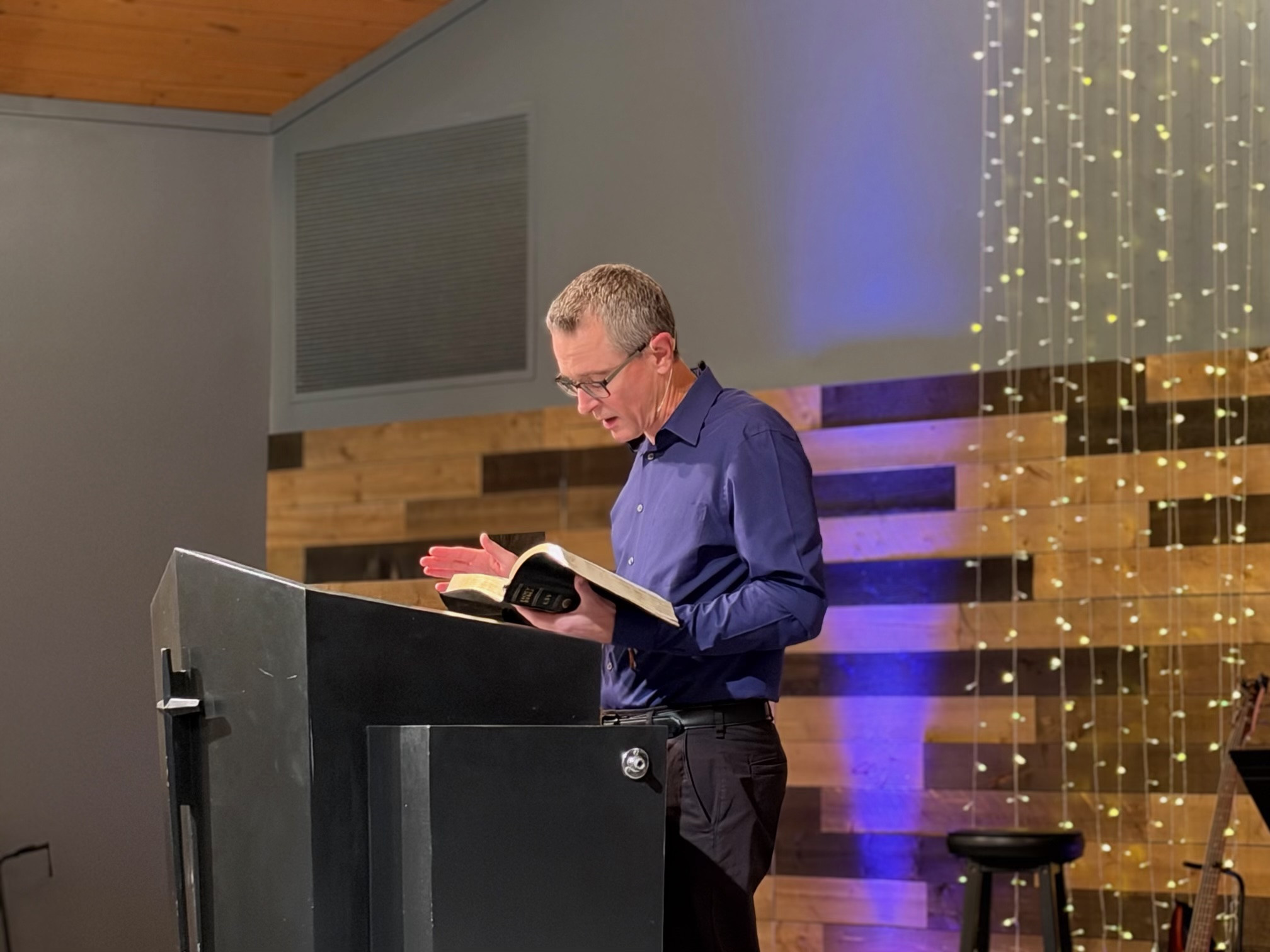
Obadiah 1:2-3
The following is a lightly edited transcript generated from the audio; it may contain small errors.
…about this past week with our Link VBS. Yeah, which many of you helped with, and it was an awesome week. We started on Monday and went for a couple hours each day and had kind of your typical VBS setup with crafts, Bible message, games, snacks, and it was just a great opportunity for us to minister with Link and to the main subdivision that Link kind of works with. Link stands for Love In the Name of Christ. It’s a parachurch organization out in Wentzville. And someone was asking me during the week, what does Link do? And my response was, what does Link not do? Like, if you name it, they’re doing it, okay? They’re training single moms to be able to have vocations where they can get jobs. They run a daycare that they have greatly reduced the price so that those moms can go to jobs. They have a huge food pantry. They have, normally before COVID, a lunch program. The list just goes on and on and on. So we were asked to basically run a VBS this week. I found out, and I think I have it right, we were the first church to come in since COVID. So they had not had a program. COVID has hit Link and that community pretty hard. So their numbers are down. So we can definitely be praying for Link. We will in a second. So we were blessed to come in and be the first church to do a kids program basically in about three years. And we had an amazing week. We had kids come and hear the gospel, hear Bible messages. Our kids got to be a part of it as well. Probably my favorite part was the last day when I was reviewing the Bible verses. We had Bible verses each day for the kids to memorize. At the end of the week, if they had them all memorized, they got a little prize. I was going through the Bible verses, and this one little girl was nailing it each time. And it was just so cool to see them hiding God’s Word in their heart. Which really goes along with the Bible quiz that we had yesterday. I came up at the tail end of it. It sounds like they had an awesome kickoff for the Bible quiz season. So those kind of go hand in hand with God’s Word is powerful, right? And there’s a reason we memorize it. I talked to a young man right before the service for Bible quiz, and he’s already got 18 chapters memorized for this upcoming Bible quiz season. That’s impressive. All right. I’m actually talking one verse from Acts, so maybe we should see if he knows it. All right. I won’t tell him the chapter yet. But God is doing some good stuff. Let’s turn and get into the book of Obadiah today.
Y’all liking our study in Obadiah? Well, that’s good, because we’re going to do it whether you liked it or not. All right, before we read from Obadiah, let’s go to the Lord in prayer. Father, thanks so much for what You’re doing in this church and through this church, Lord. We pray for Link. They’ve been such a blessing to many, many, many people, and we’re privileged to be able to support them financially. God, continue to use them to minister to people that need to hear Your truth. Thank You that they stand unashamed of the gospel. It’s right there in their name, Love In the Name of Christ. They’re giving the gospel left and right. They’re ministering to people’s physical needs. Lord, I pray You’d help them continue to bounce back and recover from COVID, the numbers would increase at their daycare and the children’s program. I know another church I believe is coming in this week. Bless that church and bring those same kids back and even more kids, Lord, that they would hear Your Word and respond to You in faith. Grab them with Your gospel at an early age, Lord. Thank You, Lord, that we’ve got people that want to memorize Your Word. Bless the Bible quiz season, and bring along who You want to be a part of that, God. And those verses, just plant them deep in their heart, not just for answering questions on Saturdays, but to minister Your truth to others and to minister Your truth to themselves, Lord. Plant it deep in their heart that it might change them from the inside, Lord. Thanks for the privilege of having Your Word, Old Testament and New Testament, it’s Your Word. Bless us now as we get into Your Word. Let us hear from You today, amen.
All right, we’re in Obadiah chapter 1, because there’s only one chapter. Here’s what it says. We’re gonna read a few verses. It says, The vision of Obadiah. Thus says the Lord God concerning Edom: We have heard a report from the Lord, and a messenger has been sent among the nations: “Rise up! Let us rise against her for battle!” Behold, I will make you small among the nations; you shall be utterly despised. The pride of your heart has deceived you, you who live in the clefts of the rock, in your lofty dwelling, who say in your heart, “Who will bring me down to the ground?” Though you soar aloft like the eagle, though your nest is set among the stars, from there I will bring you down, declares the Lord.
So we’ve been getting into Obadiah the last few weeks. I wanna take a step back just for a moment and do a little bit of an overview in terms of understanding any time we come to any biblical passage, we have a couple goals that we want to keep in mind. One, we always want to understand the historical context. That’s why whenever we start a book, I’ll spend at least one week, and maybe even two, looking at what’s the historical context, what’s going on. We’ll look at what we can learn about the writer, Obadiah in this case, what is going on at that time, who are the key people, what is the significance in Israel’s history of the context in which this occurred. So we want to understand the historical context. Then we want to understand the grammar. That’d be any literary features. In this case we get a lot of poetry, and probably not this week but next week there’s actually a pun in Obadiah. Okay, if you know me I love puns, so I was very excited when I saw that there, right? So we want to understand the grammar, whatever literary features, and then this is key: we want to understand what it meant for the hearers, the listeners, maybe the readers, okay? Because here’s the thing, what it meant for them, it means for us. What it meant for them, it means the same thing for us. Then we want to understand what the implication and application is for us today. The meaning is not different, but the application might be in different contexts. So that’s what we want to do any time we’re studying really any passage, any book.
That’s what we want to do when we think of theology. What does theology mean? The study of God, right? This is more important than any other study. OK, biology, psychology, sociology, engineering, computer science, whatever degree you might have—throw it in there, it’s more important than any other study. Why? And this is key. Because our life revolves around our Creator. If God is God, and He is, then what He says goes. If God is God, then He’s created it all, and we need to understand who He is, so we can understand His creation. I’d submit that we can’t fully understand biology unless we understand theology. We can’t fully understand sociology unless we understand theology. We can’t understand psychology unless we understand theology. We have to understand what God says about Himself and what He says about us and what He says about His creation.
So different theologians use some different fancy Greek words when they talk about, hey, what does it mean for us to have interaction and relationship to God? Theology is the one we normally hear about, but there’s also theosebeia, which means a living to God. And all of us are in relationship to God in some way or another. That doesn’t mean we’re His children, but we have some sort of relationship. We might be His enemies. If we’re not a believer, we’re an enemy of God. That’s our relationship status before Him. So when we talk about a living to God, a lot of times we think we can study all about God that we want to know. And we can study and study and study. Brothers and sisters, at some point we have to actually have a living to God. We have to live it out. So not just what we might call orthodoxy, which would be literally straight teaching, but orthopraxy. Okay? Straight doing, or straight living it out. The theosebeia, the living to God. But then there’s also a theourgia, which would be a working for God, a working for God. Like we’re living in right relationship with Him. If we’re a believer, we’ve been brought into right relationship with God. We have fellowship with the Son, with the Father, and with the Spirit. If you’re not sure about that, just read the first chapter of 1 John; it makes it crystal clear. In fact, let’s just turn there because it’s such a good little passage. 1 John 1, we’re coming back to Obadiah, so don’t lose your spot.
So 1 John, it starts out, “That which was from the beginning, which we have heard”—I’m in verse 1 of chapter 1—“which we have seen with our eyes, which we have looked upon and have touched with our hands, concerning the word of life—the life was made manifest, and we have seen it, and testify to it and proclaim to you the eternal life, which was with the Father and was made manifest to us—that which we have seen and heard we proclaim also to you, so that you too may have fellowship with us.” And then notice here what he says: “and indeed our fellowship is with the Father and with His Son Jesus Christ.” So we have fellowship with the Father and the Son clearly seen here, and other verses talk about our fellowship with the Spirit. Like we as believers get to commune with the triune God. Anywhere we want. Anywhere. You know, I’m driving my truck the other day and sometimes I’m like, man, I haven’t talked to the Lord for a little bit today. I’ll just turn down the volume and talk to Him. Any place. So we have this beautiful fellowship with Him. That’s the theosebeia. Then we have the theourgia, which is us working for God. Like He has called us into His kingdom, not just to be like floating on clouds, eating like strawberries or something like that. No, He wants us to serve Him as part of His kingdom. The king has people in his kingdom, citizens. We’re called citizens of heaven in Philippians, citizens, and guess what He wants the citizens doing? He wants them being righteous citizens, living under the decree of the king. So there’s a working for God. Then some theologians will talk about the theologia, which is a speaking or writing about God, all right? Obviously the Scriptures are in their own category, but man, God has blessed some people obviously to write some amazing writing on God. But I want you to notice something. All those words, all those terms, that entire idea, it’s all centered on God, all centered on God.
Look at the Areopagus. Let’s just turn there briefly. Now this is Paul at the Areopagus, and we’ll pick it up in verse 26, Acts 17: “And He made from one man every nation of mankind to live on all the face of the earth, having determined allotted periods and the boundaries of their dwelling place, that they should seek God, and perhaps feel their way toward Him and find Him. Yet He is actually not far from each one of us, for ‘In Him we live and move and have our being.’” Like all of life is about God. We can deny God all we want, but all of life is about God. In Him we live and move and have our being. Listen, when I got saved down at college, I mean, honestly, it was like I woke up to a whole new world. I was watching this movie the other day, it was halfway decent. It wasn’t The Wizard of Oz, but it’s got this part where it goes from black and white into color. And I was like, man, that describes perfectly what I felt like when I got saved. All of a sudden the whole world looked vastly different. It was like the same world, but it wasn’t. Like the lights went on, right? I saw everything more clearly. I saw everything in its proper context, and studying, which I was not bad at, but now, like I was excited to learn and study. So biology took on a whole new meaning for me. Now I’m learning about God’s creation, how He set up His world, all those different things. Biology wasn’t just biology. Geology? Okay, that was still a struggle for me, okay? Some people think it rocks, but it was boring to me, all right? But every category was now really under the umbrella of theology. It always was, but now I realized it. Now I saw it. And as I learned about creation, I knew I was learning something about the Creator. The awe, the wonder, the amazement of how God designed this world, how He designed us, it blew my mind and it still does. Like we serve an amazing God. He is not just good, which He is, but He’s great and He is awesome and He is majestic and He’s beautiful. And anytime we’re studying anything, students in here, whether you’re in elementary, high school, college, post-college, like you’re learning something about God’s universe. And what a privilege, what a privilege to be able to study and learn about things God has already declared to be true. We’re just coming along and seeing what He’s already said. And we’re discovering ourselves sometimes for the first time. That was me. It was like I was on a whole new journey for months, and I still feel like I’m on a whole new journey, right?
So where’s Edom in all this? Where’s Edom in their relationship to God? What was their theology? Well, plain and simple, Edom turned away from God. Now who is Esau? Esau was Isaac’s son. It was him and Jacob, right? And they’re fighting even in the womb they’re fighting. But here’s the thing, think about that: Esau, which is where we get the Edomites from, he knew the stories. I mean, he heard them. He was living them, right? His grandfather was Abraham. Right? You know, Father Abraham had many sons. Many sons had Father Abraham. Like when he sung it, I mean, I bet that song was even cooler than it is. All right? But that was lost. It was lost somewhere along the way. It didn’t get handed down. Right? So the Edomites worshiped other gods. They were given a great foundation and they turned away from it. They walked away from it. Let me just say something. Some of you have been given a great foundation and you don’t even realize how great it is. You know. But it’s a great foundation that God has blessed and privileged you with. Don’t walk away from it. Don’t end up like the Edomites.
In 2 Chronicles, you don’t have to turn there, you can just listen, it says in 25, it says, after Amaziah—he was one of the kings—came from striking down the Edomites, he brought the gods of the men of Seir, which Seir is part of Edom, and set them up as his gods and worshiped them, making offerings to them. Now, if you know your history of the Chronicles and the kings, you know that there were many bad kings along the way. And usually they’re just like, oh, come on in, come on in. Other gods, we’ll just worship you too, right? Well, here we see Amaziah doing the same thing. And we see he brings in the gods of the Edomites. So here’s the thing. The Edomites had not only forsaken their lineage and ancestry by betraying and attacking Israel, where we find ourselves in Obadiah, but they had forsaken Yahweh Himself. They had forsaken Him. They worshiped a god called Qos, Q-O-S. He’s not mentioned. Now, other gods are mentioned in the Old Testament. He’s actually not mentioned, but that’s his name. And the Edomites, think about it for a second, they cared for none of these things regarding Yahweh. They didn’t care about the theology, the theosebeia, the theourgia, the theologia. I mean, they didn’t. They just did their own thing.
But here’s the thing. When we talk about who rules over a nation, there’s only three options. All right, I’m indebted to a theologian for this section and some of the wording he used. Option one: if there is no God above the state—when I’m using the state, you could substitute country, nation, government, whatever you want—but if there is no God above the state, then the state is God. And one theologian said it like this: if the state is the highest authority in the lives of those governed, meaning that there is no authority above the state, beyond the reach of that state, then the state is the God of that system. So the state is God. That’s option one. That’s not a good option. I hope we all see that. Okay. And I hope we see that during COVID, we’ve seen many politicians and government agencies act this out. They’ve been acting like God. They’ve been acting like they’re the end-all be-all. Option two and three. If there is a God above the state, then that God will either be the true or it’ll be a false god. Right? So if there is a God above the state, then He either should be there or He shouldn’t be there. Right? If He’s the true God, He should be there. If He’s the false god, He shouldn’t. So option two, we’re gonna say option two is the one where it’s the one true God over the state. What’s option one? The state is God. Yep. You can’t really have a system where there is no God, because what happens when you have that? The state becomes God, okay? Someone has to be at the top, calling all the shots. So option two would be it’s the one true God over the state. Option three would be it’s a false god over the state. Muslim nations that are truly Muslim nations, they have Allah as their god. Albeit a false god, he is their god. Those are the three options. State is God, the true God is God, or a false god is God. So which do you want?
Now, this is not an argument for theonomy or theocracy. It is not an argument for theonomy. It’s just a statement of facts. To let you know, there will always be a God at the top. Always, always. It’s just a matter of which one. So I believe in option two. Option two is the best option, that the true God is the one that should be at the top. That doesn’t mean you think the church should be in control of the nation. That doesn’t mean you believe we should be governed as Israel was originally without a king, in a theocracy if you will. No, it’s just saying that you believe God is sovereign and that He should be at the top of this nation. There’s nothing wrong with that. Now, in the past couple years, I think that we’ve been trying to be shamed into thinking this is not even a biblical option, and I’d say that’s wrong. There’s going to be one of those. I’m going with option two. What did the Edomites do? They opted for option three. Right? They put a false god at the top. Qos. And here’s the thing. Decisions have consequences. What is America largely opting for? Option one, the state is God. What is the church in America largely opting for? I’m going to say option one. Even our evangelical thought leaders are opting for that, because that’s the easy path to take. It’s the easy path. There’s a lot less pushback, and that’s sad and that’s pathetic, because as believers we already know Christ is King. But guess what? He’s not just King in our hearts. All right. He’s not just King of the church. Not just the local church, not just the church, but He is King, not just of the nations, but of the worlds, of the universe. All right. If that is true, let’s act like it is. Let’s not be ashamed of it. Look at Psalm 33.
Psalm 33 verse 10: The Lord brings the counsel of the nations to nothing; He frustrates the plans of the peoples. The counsel of the Lord stands forever, the plans of His heart to all generations. Blessed is the nation whose God is the Lord, the people whom He has chosen as His heritage. Did you catch that at the beginning of verse 12? Blessed is the nation whose God is Yahweh. Now, I’d like our nation to be blessed. You want our nation to be blessed? All right, blessed is the nation whose God is Yahweh.
Now some people will say Christians shouldn’t be involved in politics. Now think about this just for a moment. Was the issue that Obadiah addresses a political issue? Yes. Now was it more? Oh yeah, absolutely. But it was political. You had warring countries. That’s politics. All right. So it was definitely more. It was economical, financial, spiritual, a host of other categories. But here’s the thing. If we tell the state—and I was reading, it was probably dangerous, but I was on Facebook the other day, and someone was like, you know, Christians really shouldn’t speak on political issues. Everything’s political. Okay? So if we don’t speak on political issues, guess what? We’re going to be quiet. And if we tell the state we’ll be silent on political issues, yes, what the state will do: it’s going to become God, that’s right. But it’ll just move into more and more areas, right? If we tell the state, hey, any issue that’s political, we’re just going to stay silent, we’re not really supposed to be there. What’s the state going to do? It’s just going to keep expanding, expanding, expanding its reach. It’s going to be like, that’s cool. We’ll take you up on that offer. Okay? And guess what it does when it moves into those areas? It’s turned it into politics. It’s political, and now we can’t address that area. So if we take that approach, we concede that wherever Caesar flexes his muscles and gets involved in an area, it’s now a political issue, which we’ve already decided a priori we won’t get involved in or address. Think about that. Don’t you think Caesar would just love that approach? Absolutely. He’ll end up shrinking our sphere of influence, making it so small, we have no influence. There’s no area that Jesus isn’t Lord of.
There’s no area He hasn’t commissioned us to go and be salt and light. When He gave the dominion mandate all the way back in Genesis 1, He’s like, go be fruitful and multiply and subdue the earth. And He’s like, oh, except for like ruling nations, except for being involved in politics? No, there’s no exception clause. There’s no exception clause. It’s all, it’s all, it’s all. Think, you know, I shared a few weeks ago about the mission trip I served on and the gentleman that was a youth pastor and the pivotal role he played in overturning Roe v. Wade, because he went into politics. I mean, think about that. The Lord used him. God called him, and now he’s still in the ministry, but God was like, hey, this is where I want you serving. As a state rep in the state of Mississippi, he ends up getting elected and he uses his sphere of influence, and God ends up using that to ultimately take down Roe v. Wade. Out of obedience, right? God’s kingdom knows no bounds. So no area is off limits to a Christian’s influence.
And let me just say, brothers and sisters, you all got salt shakers in your house at home? OK? Now, I don’t know why, but it seems like the smaller you are, the less likely you are to use that salt shaker, OK? But as you get older and you’re my age, like you start putting salt on a lot of stuff. I don’t know why. I just remember my dad was like that, and my grandpa, and I don’t know, maybe it runs in the family. But here’s the thing. That salt doesn’t do any good in that salt shaker. Right? It’s not preserving that little plastic thing. What’s it preserving? That plastic thing’s just fine holding that salt without the salt in there. It’s not doing anything. It’s no good when it’s in the shaker. What happens? It needs to be applied to different areas, to different things. In the specific case with salt, to food. In the specific case with us being called, the salt is the metaphor. We’re the preservers. But guess what? We don’t do much good if we’re just here, right? Just here in the church. Not out there making a difference. We’re just like salt in the salt shaker. No, we gotta get shaken out a little bit. Sometimes the Lord’s willing to do that in some pretty drastic ways. You read—you guys are reading the Acts and that’s what you’re memorizing. You read that, how that story runs, and God’s like, hey, they’re not fully getting the message that I told them to take the message everywhere. And so He uses the persecution to drive people out of Jerusalem, right? So if we’re not gonna be obedient to the message, God’s gonna use means to get us obedient to the message. He’s gonna use us to be that message. Let’s just go along and be the salt to begin with, all right? So let’s be the salt.
God here in Obadiah, He’s not pulling any punches. He’s telling Edom that judgment is coming. Look back in Obadiah, in the middle of verse 1: “We have heard a report from the Lord, and a messenger has been sent among the nations.” Everyone hears this message about Edom. “Rise up! Let us rise against her for battle.” And then here’s the judgment: “Behold, I will make you small among the nations; you shall be utterly despised.” So the report comes in about what Edom did. The messenger is sent out. What’s the judgment? It’ll be small among the nations. Now, if you took it literally, what would it be saying? Well, that the nation’s gonna like physically shrink. That’s not what it means. The Hebrew article and the word order here indicates the emphasis is not on the numbers, but in regards to its significance, how it’s viewed by others. It’s gonna be small regarding its influence. It’s gonna be despised and looked down by others. They’re gonna look down upon Edom for what they did. This, if you think about it, is really a fulfillment in Deuteronomy 30. God’s given the blessings and the curses, and if you do this, Israel, you’re gonna be blessed, and if you do these things over here, you’re gonna be cursed. But here’s what it says as He’s wrapping up the blessings and the curses in Deuteronomy 30: “And the Lord your God will put all these curses on your foes and enemies who persecuted you.” I mean, this story, and as we kind of talked about last week, God protects His children. Ultimately, to glory. Right? Because we got martyrs, right? We got people being persecuted for their faith. Today, we have brothers and sisters that will lay down their life in some part of this world for the gospel. That’s true. Right? Was God faithful to protect them? Absolutely. He took them into His kingdom, into His heavenly kingdom. He is faithful. Does He promise us health and wealth? No. Okay. And if He did, some of us needed to figure something out, we’ve got it wrong, okay? But He doesn’t. We’re not promised that. We’re not promised the next 45 minutes. We’re definitely not promised next week, next month, or next year. What we are promised, through Christ, is eternal life with our heavenly Father forever. That’s what we’re promised. So the punishment is pronounced.
That’s what He says: “I will make you small among the nations, and you shall be utterly despised.” Why this punishment? Because God always deals with sin. And what does He do with it? He punishes sin, right? Sin is punished, which means He punishes the sinner. If you’re apart from Christ, there is a punishment and a judgment that is coming. But brothers and sisters, God says what? There’s a way that the punishment can be paid for already through Jesus. You don’t have to be punished. There is a punishment to be paid. And it’s either Christ who already paid it, or you will pay it. You gotta make a decision. But here’s the thing. Sometimes it seems like God can’t seem to win. Because sometimes things are going on and people are like, well, why doesn’t God do anything? Why doesn’t God do anything? Bad things happen and God lets them happen. And then God intervenes, and then when you hear people knocking the Old Testament, why did God do that thing? Why did He intervene in the situation and deal with those people? I mean, which way is it, all right? Which way is it? Here’s the thing. Do we want Him to deal with sin or not? I mean, we want Him, and sometimes in our flesh, we want Him to do it on our timeframe, we want Him to do it when we want it, how we want it, where we want it, but guess what? If He’s God, and He is, He gets to choose when, where, and how. And guess what? He’s chosen a day to do that. It’s called Judgment Day. What we see and we know is that on Judgment Day, guess what? No one escapes. No one escapes. We studied that in 1 and 2 Thessalonians the last couple of years. No one escapes. God deals with sin. Look briefly at 2 Corinthians 5. 2 Corinthians 5 verse 10 says, “We must all appear before the judgment seat of Christ.” Who’s going to appear? All. Notice the language. We—Paul is including himself. “We must all appear before the judgment seat of Christ, so that each one may receive what is due for what he has done in the body, whether good or evil.” Right? Judgment comes to all. Someday we’re going to stand before Christ. I’m going to be pleading the blood of Jesus, all right? I’m going to be like, I trusted You. You’re my Savior. Your blood covered my sins. Some people are going to be standing before Him on that day and won’t be able to say that. They did not trust in Christ. They have to atone for their own sins. Praise God that He sent His own Son to be the atonement for our sins. Right? So why not trust? Because as we’re going to see in the future weeks, some of us are like Edom. We’re like Edom. We don’t want to trust. We don’t want to change. We don’t want to turn. OK, well then you’re on the road to destruction, if that’s you. But God offers redemption through His Son, Jesus. So the judgment is coming. My question is, are you prepared? Are you prepared?
We were doing the Link on Monday. That was our first day. Guess how many kids from that surrounding subdivision came on the first day? None. That’s kind of discouraging. So the next day, we’re like, hey, we’re going to go into that neighborhood and we’re going to knock on doors and hand out flyers. And we made the really great decision to do the VBS at the coolest part of the day at one o’clock in the afternoon. Now praise the Lord, we were inside the whole time, all right? But we decided to go at one o’clock when there was zero kids again on Tuesday. We decided to go door to door. So we split up. There’s about 200 homes in there. So we’re going door to door. We’re knocking, different things. It’s hot, y’all. It is hot. At one o’clock last week on any of those days, it was hot. And we’re finally wrapping up and we’re walking back. And I’m just like, Lord, like, man, this is horrible. This is just miserable. And it seemed like maybe there was some interest. And so we had sent some people back just in case some kids showed up. But as I was walking back, I’m like, man, here we are going out and knocking on the doors. I’m like, is this all for naught, Lord? Like, what are we doing? And then the Lord spoke to me and was kind of like, hey, you know what? That’s what I did for you. You know, think of Luke 19 where it says, the Son of Man came to seek and to save the lost. And I just had this picture of like, you know, none of us lined up to be first in line to repent of our sins and meet Jesus on our own. Now, what did God do? Sent His Son to seek and save us. And I just got this picture of like, here we are, we’re going out. I mean, that’s who the Lord wants us ministering to for that week. What are we doing? We’re going out and we’re seeking them. We want to see them get saved, right? And some of them, praise the Lord, that last day, they got saved. We had some kids raise their hand that trusted in Christ for the first time. It was very cool. And we had some kids show up Tuesday, Wednesday, Thursday, Friday. I was talking with the lady who leads Link, and it looks like if we didn’t set the record, we came close to setting the record with the number of kids we had that week. Yeah. Okay. And that’s all for Jesus. Their numbers have been down with anything they’ve been doing. Guess what? I’m praying and hoping and believing that the Lord used our church to kind of kick-start things again for the ministry they have going. We don’t ever know the full impact that we’ll have this side of eternity, but we will see it on the other side of eternity. And I believe last week we made an impact and that lives were touched. I’m praying for the other churches that continue to go. I know they have some others going, and I believe this week that they continue that ministry.
Whatever piece of the puzzle, so to speak, that we’re supposed to play, whatever, I wanna be that piece that gets put wherever it needs to be. Maybe we’re far off in the corner, maybe we’re right in the middle. I don’t care. Wherever the Lord wants to place us, I wanna be that little piece of the puzzle, right? Sometimes, what do we try to do? You ever put puzzles together? Some people like that, that’s not my thing, okay? But when I was in high school, I had friends, for whatever reason, they like love putting puzzles together, okay? So we put some puzzles, like two o’clock in the morning, like other people are doing probably things they shouldn’t be doing and we’re putting puzzles together, okay? Anyway, you know, you’re always trying to make that little piece of the puzzle like fit where it shouldn’t fit. Like, oh, I want it to go here. That’s sometimes how we are, right? Like, Lord, I’m gonna be right here. I’m gonna serve. Like, we gotta be a willing vessel when God says, hey, I need you over here, this is the piece I want you to play, we gotta be willing to be that piece, okay? So I understand some of the ladies showing up last week maybe doing a VBS wasn’t their jam, but guess what? They saw that that was the heart that God wanted for this church to participate in, and so they showed up and they were that little piece. And I think they’re blessed for obedience to Christ because of that, all right? Whatever piece the Lord wants us to play, that’s what He wants us to do. He wants us walking in that obedience.
Brothers and sisters, the gospel of Jesus Christ is the good news that He came and He laid down His life for you. And if you’re not a believer here, that good news is for you as well. He laid down His life for you. What does that mean? It means He took your sins upon Him so that you could have His righteousness, so that you could live for Him, so that you could be forgiven of your sins. That is the offer of the gospel, the good news of Jesus Christ. It’s called the great substitution. Christ takes your sins, you get His righteousness. It’s a beautiful thing. If you’re a believer here, guess what? You have the righteousness of Christ. That’s what the Word says. You’re just not morally neutral. You have the righteousness of Christ. It’s amazing. It’s beautiful. God does an amazing work in us, through us, instantaneously. And then He keeps working on us through sanctification the rest of our lives. But if you’re hearing me and you haven’t trusted in Christ, today is your day. Don’t wait any longer. Make today the day you trust in Him. Let’s pray.
Lord, we do, we do pray for those kids that raised their hands. You know their hearts, and You use the day of small things to do big things, and You use small events to change lives and to grab hearts and to transform people. So we pray for those kids that trusted in You, that our ministry which has been put on pause at Link, that we’d hit the unpause like we did this past week, and You’d show us what we’re supposed to continue to do there, how we’re supposed to continue to support Link. I pray for its leadership, that You continue to lead and guide them, and pray for the surrounding area and the subdivision that they serve and all really of St. Charles County, that You would continue to bless Link in their ministry, give them the funds that they need, Lord. Let them continue to be used by You and be the piece of the puzzle that You want them to be. And Lord, I pray for this church, that we would be whatever pieces of the puzzle, fit in place right where You want us to fit. Thank You for us doing that last week at Link, for having the privilege of ministering to the children, Lord. They are precious in Your sight. They are precious in Yours. You said, “Let the little children come unto Me,” God. Thank You for Your heart for them. Thank You for Your heart for us. And I pray, Lord, for anyone here who’s never trusted in You, may today be the day of salvation. May they hear Your words and trust in Your Son. May they receive eternal life today. May they be adopted into Your kingdom, the kingdom of light, God. Show them that You will wipe away their sins if they but humble themselves and trust in You. Do this for Your name’s sake. We pray this with the authority You give us in Jesus. Amen.