
June 10, 2026
Session 2 – Theology Proper (Abstract of Systematic Theology by James P. Boyce)
Dr. Michael A. Bond
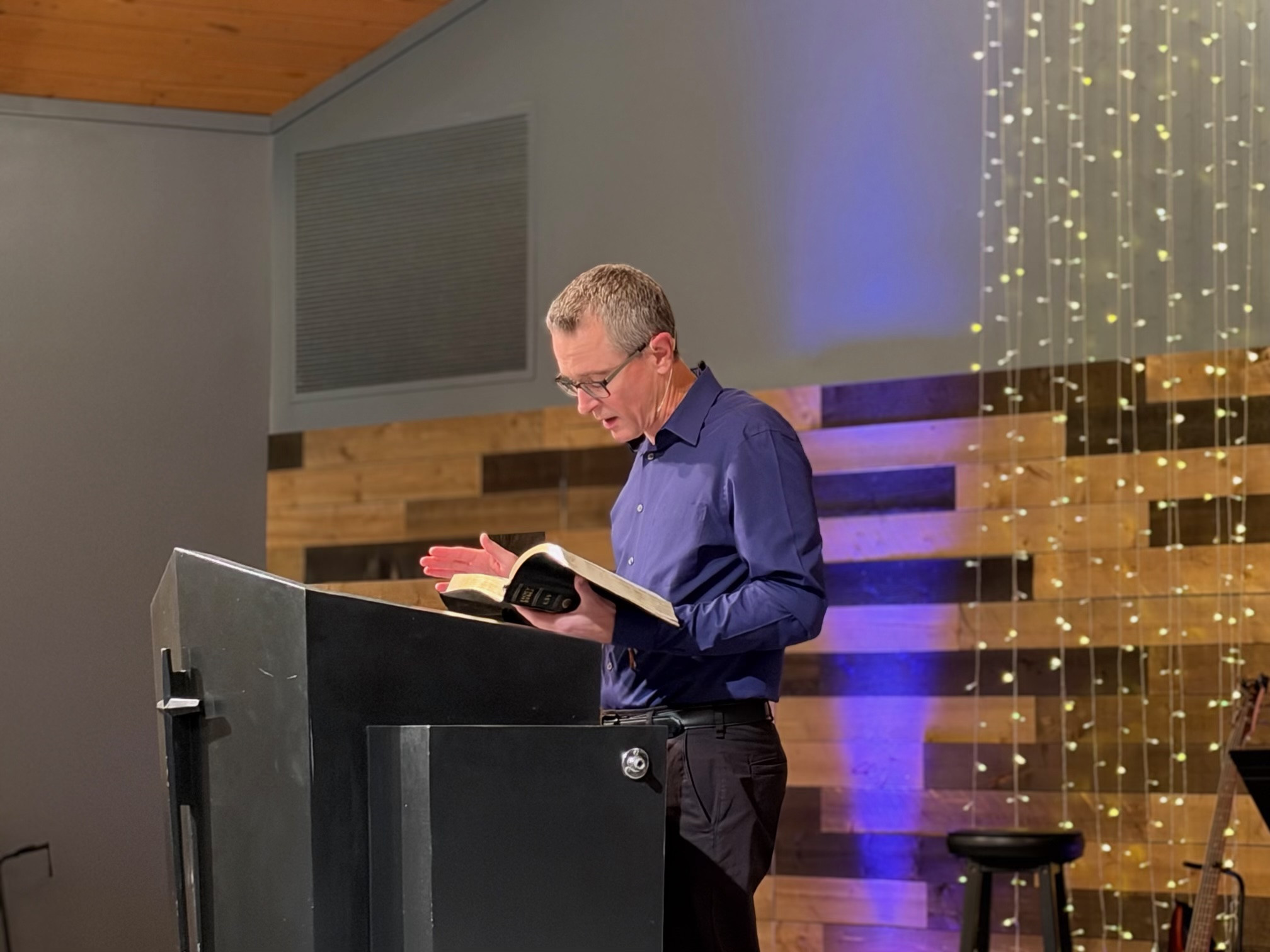
June 10, 2026
Dr. Michael A. Bond
Video: https://youtu.be/rXBfeOrwE3c
Abstract of Systematic Theology by James Petigru Boyce
Session 2 – chapters 2, 4, 5
Subject: Theology Proper (classical arguments for God, attributes of God)
Wednesday Logos – 6-10-26
The following is a lightly edited transcript generated from the audio; it may contain small errors.
How’s everybody doing? You guys ready for round two? Okay, very good. We are going to be covering chapters somewhere between chapters 2 and 16 tonight, okay, and we’ll pick up the rest next week. But this is what we call theology proper. And I like how Pastor Vaughan kind of gave us kind of an overview of some things last week, but I want to give us an overview this week as well, because I think it’s important when we’re talking about the attributes, when we’re talking about the being of God, to talk about what does it look like for us in relationship to God. And so one of the things that’s important for us to acknowledge is that we can never fully understand God. We’re probably going to look at a few verses, so if you got your Bibles, let’s turn to some of those verses. Psalm 145:3.
So it starts out verse 1, Psalm 145, a song of praise of David.
I will extol you, my God and King, and bless your name forever and ever. Every day I will bless you and praise your name forever and ever. Great is the Lord, and greatly to be praised, and his greatness is unsearchable.
(Psalm 145:1–3)
So if God’s eternal, right, a finite being can’t fully know an infinite being. That’s basically the idea. So we can never fully understand. Look a couple chapters later, 147. Starts out again verse 1. Praise is due to our God, for it is pleasant, and a song of praise is fitting.
The Lord builds up Jerusalem; he gathers the outcasts of Israel. He heals the brokenhearted and binds up their wounds. He determines the number of the stars; he gives to all of them their names. Great is our Lord, and abundant in power; his understanding is beyond measure. The Lord lifts up the humble; he casts the wicked to the ground.
(Psalm 147:2–6)
Right? So His understanding is beyond measure. There’s probably about five or six attributes actually we just read in there. But the one that we’re looking at here is His understanding. Like this idea that we can’t fully understand God. Let’s look at a couple of verses in the New Testament, 1 Corinthians 2. We’ll start in verse 9:
But, as it is written, “What no eye has seen, nor ear heard, nor the heart of man imagined, what God has prepared for those who love him”—these things God has revealed to us through the Spirit. For the Spirit searches everything, even the depths of God. For who knows a person’s thoughts except the spirit of that person, which is in him? So also no one comprehends the thoughts of God except the Spirit of God. Now we have received not the spirit of the world, but the Spirit who is from God, that we might understand the things freely given us by God.
(1 Corinthians 2:9–12)
So only the Spirit knows, right? But we have the Spirit, and then the Spirit, what does he do? He shares some of that stuff with us. Pretty cool. One more verse, we’ll look at Romans chapter 11. An excellent passage here. Romans 11 starting in verse 33:
Oh, the depth of the riches and wisdom and knowledge of God! How unsearchable are his judgments and how inscrutable his ways! “For who has known the mind of the Lord, or who has been his counselor?” “Or who has given a gift to him that he might be repaid?” For from him and through him and to him are all things. To him be glory forever. Amen.
(Romans 11:33–36)
Right? So how unsearchable are his judgments and ways? Now, when I first realized this, I was kind of bummed out. I was like, man, I’ll never fully understand the Lord. I felt like I was getting a little shortchanged. But then I realized it was a good thing. One, God is infinite, I’m not. So the finite, again, can’t fully understand the infinite. Second, think about this. It means when we get to eternity, we’ll spend eternity getting to know the Lord better and better and better and better. Now, if you aren’t married in here or you haven’t been married for long, you probably have heard people say, oh, like the more I’ve been married, the more I’ve gotten to know my wife, and I’ve been married for 27 years and I’m still getting to know things about my wife, right? Yes? Yes. Well, the same, much more so, of us with the Lord. And we will have all eternity to get to know him better and better and better. So it’s actually kind of exciting when you think about it that way. Third, this is due to the fact of God’s infinite greatness. This is important, not due to our sinfulness. So you’re like, oh, well, maybe it’s because we’re fallen. Well, no, even in our perfected state, even in our glorified state, we’re still going to have a limited knowledge. A knowledge that can grow, but it’s still going to be limited. So it’s because of God’s greatness, not so much our sinfulness. He is so great that we will never fully understand.
Here’s the thing though, and this is kind of like part two. We can’t fully understand God, yet we can know God truly. We can have relationship with Him, we can have true knowledge. It’s not an exhaustive knowledge, but it is true knowledge. For example, I have four kids. I have true knowledge about them. I do not have exhaustive knowledge about them. I don’t even have exhaustive knowledge about myself really. So we can know things about the Lord. We can know the Lord. We can know 1 John 4:8. What does it say? God is love. Good job. Whoever said that. We can know 1 John 1:5. God is light. We can know John 4:24. God is spirit. We can know Romans 3:26. God is just, He’s righteous. Saying these things doesn’t imply or require that we know everything about God, or everything about His love, or everything about His righteousness, or any other attribute. But it does mean that we can know Him. So, even though we can’t fully know Him, we can know Him personally. And that’s honestly the best thing. Like, we can know this God of the universe, and we can know Him personally, not just as Lord, not just as Elohim or Yahweh, which is great, but we can know Him as Father. So we can have that intimate relationship. Just as a father and a son or a father and a daughter have, we can have that intimacy with our heavenly Father. Let’s look at a couple of verses that talk about this. Jeremiah chapter 9, verse 23:
Thus says the Lord: “Let not the wise man boast in his wisdom, let not the mighty man boast in his might, let not the rich man boast in his riches, but let him who boasts boast in this, that he understands and knows me, that I am the Lord who practices steadfast love, justice, and righteousness in the earth. For in these things I delight, declares the Lord.”
(Jeremiah 9:23–24)
Right? So, I mean, God blesses us with all sorts of things, and our boasting is in Him. But what we should boast the most about is we get to know God himself. What a blessing. Turn to John 17. We’ll see something similar stated a little bit different. John 17:3. Here’s a picture of what it says:
And this is eternal life, that they know you, the only true God, and Jesus Christ whom you have sent.
(John 17:3)
Now think about it for a minute. If God were utterly unknowable, theology and relationship with Him would not be possible. If he were fully comprehensible, he wouldn’t be the transcendent God of the Bible. If we can wrap our mind completely and fully around him, then he is just like any other finite being.
Part of what we’re going to look at tonight are what’s called the classical proofs of theism, or the classical proofs of God, or the arguments for God. There’s really three major ones. Now some people totally get into this and they dive in and this is like the philosophy of it. If you try to boil it down to a couple sentences or a paragraph, that’s pretty impressive. Because a lot of these are long theses, pieces or chapters or even books. We’re going to look at one a little bit in depth tonight, and the person who explained it, he spent about 50 pages and felt like he didn’t do it justice. So if you kind of walk away and we’re like, wow this is like the surface, you’re just getting the surface view, kind of like dipping your toe in the water so that you realize there’s some classical proofs for God’s existence. We’re going to talk about how they benefit, why they benefit, in a second, but at least you get some exposure to it. So if sin causes us to think irrationally, which it does, then the proofs for God’s existence were meant in part to make people pause and try to think rationally about the existence of God.
The first one that we’ll look at is the ontological argument. This was developed, at least this form of it was developed by Anselm of Canterbury around 1033 AD. And it starts with the idea of God as a being greater than which nothing can be imagined. It then argues that the characteristic of existence must belong to such a being since it is greater to exist than not to exist. That’s kind of actually in the simplest language it can be possibly, possibly put. But here’s Anselm’s words. Here’s what he says. You can read it for yourself. Hence, even the fool is convinced that something exists. I translated it from the Latin for you. No, I’m just kidding. “Even the fool is convinced that something exists in the understanding, at least, than which nothing greater can be conceived. For, when he hears of this, he understands it, and whatever is understood exists in the understanding. And assuredly that, than which nothing greater can be conceived, cannot exist in the understanding alone. For, suppose it exists in the understanding alone, then it can be conceived to exist in reality, which is greater. Therefore if that than which nothing greater can be conceived exists in the understanding alone, the very being than which nothing greater can be conceived is one than which a greater can be conceived. But obviously this is impossible. Hence there is no doubt that there exists a being than which nothing greater can be conceived, and it exists both in the understanding and in reality.” Kind of a mouthful. After you read it about the 21st time, it starts to make a little bit of sense. What’s that? Yeah. He goes on a little bit further: “And it assuredly exists so truly that it cannot be conceived not to exist, for it is possible to conceive of a being which cannot be conceived not to exist.” You know, all those knots really are hard to line up, I get it. “And this is greater than one which can be conceived not to exist. Hence if that than which nothing greater can be conceived can be conceived not to exist, it is not that than which nothing greater can be conceived. But this is an irreconcilable contradiction. There is then so truly a being than which nothing greater can be conceived to exist that it cannot even be conceived not to exist. And this being thou art, O Lord our God.”
Now if we try to put it more in a simplistic form, here’s kind of what it would look like. A step-by-step reconstruction in a standard modern form. By definition, God is a being than which none greater can be conceived. So if you tried this in your mind, the idea is like try to conceive of the greatest being possible. Well what would you end up conceiving? God. So you can’t conceive of a greater being than God. If you could, that’s actually where he’s going to go. This concept exists in the mind. So you’re thinking of that concept and you’re like, oh yeah, I got this concept of this great being. And he says, even someone who denies God’s existence can at least understand the idea. Then his next part is a being that exists in reality is greater than that that exists only in the mind. So you’ve conceived in your mind, but it’s greater to exist in reality than to exist in your mind. So he says, therefore, if God existed only in the mind, we could conceive of a greater being, one that also exists in reality. But this contradicts the definition of God as the greatest conceivable being. Conclusion, God must exist in reality. That’s a very watered down sort of simplistic 100 pages in about two paragraphs. We’re just going to highlight some of these and look at them just so you have some exposure to them.
So that’s the ontological argument. The next one is the cosmological argument. Anyone know who kind of basically sort of reformulated it into what we use today, the well-known person who put that forth? That was Aquinas, Thomas Aquinas, around 1225, 1274. He gives it the most influential formulation. Here’s what he says, this is the cosmological. So every known thing in the universe has a cause. The universe itself must also have a cause, and the cause of such a great universe must be God. The next is the teleological argument, in the classical formulations. It focuses on the evidence of harmony, order, and design in the universe and argues that its design gives evidence of an intelligent purpose. This is kind of where the intelligent design movement is riffing off of, of this idea of it has to have purpose. It has design, it has order, well there must be an orderer. If you heard of the watchmaker, you guys know the watchmaker, that illustration. So, William Paley, 1802, he says, suppose I found a watch upon, you know, you’re walking in the desert, you find a watch upon the ground. He says, I hardly think the answer which I had before, basically, where did this watch, you would ask, where did this watch come from? You would not be like, oh, look at this thing that just popped into existence. He’s like, no, that’s design, there’s order, right? Something put this thing together, it just didn’t sprout up. So that’s kind of the watchmaker. And he says, we see that things which lack intelligence such as natural bodies act for an end. Now whatever lacks intelligence cannot move towards an end unless it be directed by some being endowed with knowledge and intelligence. Therefore some intelligent being exists by whom all natural things are directed to their end, and this being we call God. That’s Aquinas. So those are the major three. Now there’s sometimes a fourth one that people will talk about. And that’s the moral argument. And that begins from man’s sense of right and wrong and of the need for justice to be done. A lot of times if you’re talking with someone who’s claiming there is no God, you’ll get them, you’ll start talking to them about morals and be like, oh, what do you think about this? Oh, yeah, that’s wrong. Well, why is it wrong? And you try to get them to acknowledge that there is an objectivity to wrongness and rightness. It’s not just, oh, you think it’s wrong, or I think it’s wrong. And the fact that they’re acknowledging that something is wrong means what? There’s a good and a bad. There’s a wicked and evil, a good and a bad, right? Well, where does that, how is that even possible if we just, everything goes? No, there has to be someone who’s setting the rules, who’s setting the order, who’s putting things into motion. That would be obviously the Lord. That’s the moral argument.
There’s variations of each argument. One I just want to look at briefly, I actually think it’s kind of cool, is the cosmological argument, and it’s called the Kalam cosmological argument. It looks at it more from a time perspective than maybe a spatial perspective. And it has roots, really, a 6th century Christian thinker kind of formulated it. Actually, some Islamic theology kind of helps develop it a little bit. And then William Lane Craig, who sadly has kind of gone off the deep end the last five or ten years, but he kind of brought back its popularity. And it really influenced the medieval Christian thinkers, but it kind of falls out of use for a while, so Craig gives it some notoriety, so to speak. But it has a few important, I’d say, distinctives. Usually when people talk about the cosmological argument, they’re talking about the one Aquinas put forth. So usually if you’re talking about this one, you’ll preface it with the Kalam cosmological argument. Kalam argues that the universe had a temporal beginning. Aquinas is more concerned with sustaining causation. So even if the universe always existed, he’s not really concerned with the universe having a beginning. He’s saying, hey, even if the universe always existed, something had to exist to keep it going. Something had to exist with it that was there sustaining it, for lack of a better word.
So the cosmological argument, different than the Kalam, just slightly, we’ll just look at it. I think we can break it down somewhat basically. It goes like this: whatever begins to exist has a cause. You with me so far? The universe began to exist. Therefore, the universe has a cause. So this one with the Kalam, it’s really getting people to the point of being like, okay, and what caused it, right? It wants to bring people to ask that question essentially, but it’s a pretty straightforward, it’s a valid and truthful syllogism. So if we go back again, whatever begins to exist has a cause. The universe began to exist. Therefore, the universe has a cause. Here’s your entire argument. Now, that seems kind of obvious. Whatever begins to exist has a cause, I mean that seems obvious. We wouldn’t just suggest things magically pop into existence. Back to the watch you find in the desert, no one in their right mind is thinking that thing just popped into existence and you just ran across the watch in the middle of the—no, you’re going to be like there’s a creator somewhere that created this particular watch, right? And there’s a story behind the watch ending up in the desert. You wouldn’t walk out in your backyard and be like, wow, there’s a new rose bush or something, right? Unless your spouse was trying to surprise you over the weekend and doing up the landscaping. But you wouldn’t come to church and there’s just all of a sudden a giant elm tree in the front yard of the church. Things simply don’t pop into existence. And if things can come into existence without a cause, as some people potentially could argue, then why don’t we see this happen on any type of regular, like where’s the proof of it happening anywhere? So experience continually confirms this first premise, whatever begins to exist has a cause. The universe began to exist, that’s premise two. There’s many good philosophical arguments. They can be actually pretty hard to follow and somewhat complex and involve the discussion of infinite numbers and the possibility of actual infinite numbers. So if you’re into math and stuff like that, you might be into some of that stuff. Part of which is an infinite universe involves an infinite set of complete events or moments. Anyway.
But let’s talk about the expansion of the universe. Has anyone ever heard of this guy, Albert Einstein? I heard he knew a thing or two. What’s he most well known for? Relativity. Okay. Yeah, it’s relative, right. Your answer is, yeah, the general theory of relativity. But did you know that he fudged the equation? Truly, fudged the equation. So when he published his General Theory of Relativity, 1915, the equations naturally predicted that the universe should be expanding or contracting. What does an expanding universe imply? A start. A start. Right? Well, back then, which really wasn’t that long ago, that was not the prevailing view. So at the time, everyone, including Einstein, believed the universe was static and eternal. It had always existed and wasn’t changing overall. So to force his equations to match his belief, he added a new term called, anybody? The cosmological constant. I think I have, let me see if I got it. So this is going to be, unfortunately, transliterated. I didn’t have time to put in the Greek. Don’t try a letter at home. It should be Greek letters. That gives you an idea of what he added. Where is my little pointer? It doesn’t work on that TV. B is the upside down V. That’s what he added to the equation to make it work. So this was his mathematical fudge factor, if you will, because he inserted it to counteract gravity and keep the universe perfectly balanced and unchanging. Well, you have to do that if the universe is expanding or contracting. So in short, his original equations pointed toward an expanding universe with a beginning. And he added the cosmological constant to fix that and preserve an eternal static universe. [audio unclear] an eternal static model of the universe, unless he fudged the equation in order to offset the gravitational effect of matter. As a result, his universe was balanced on a knife-edge. Few took the implications of Einstein’s model seriously. The Russian mathematician Friedmann and the astronomer Lemaître were able to formulate independently in the 20s solutions to his equations, which predicted an expanding universe. He goes on, on such a model, the universe originates ex nihilo, which means out of nothing, in the sense that, at the initial singularity, it is true that there is no earlier space-time point. Now such a conclusion is profoundly disturbing for anyone who ponders it, for the question cannot be suppressed: why did the universe come into being? So all sorts of papers from many learned men have been written. One gentleman wrote, I feel almost an indignation that anyone should believe in it. Talking about this idea that it expands, except myself. He says, so I feel almost an indignation anyone should believe in it except—he should believe in it. He sees the evidence. He goes on, “The beginning seems to present insuperable difficulties unless we agree to look on it as frankly supernatural.” These are guys writing back in the early 1900s. The problem of the origin of the universe, in the words of one astrophysical team, thus involves a certain metaphysical aspect which may be either appealing or revolting, meaning the fact that you have to bring in the supernatural to start trying to explain things, right? That is appealing to some, revolting to others. Most, many scientists and secularists don’t want to admit God is in the picture.
The other problem with this idea of an eternal lasting, an eternity that the world has eternally existed, is the second law of thermodynamics, which is what? Yeah, things break down over time, all right? Anyone over the age of 35 just knows this, okay? Things break down over time, including us. Again Craig says, this apparently from projection raises an even deeper question. If given sufficient time, the universe will suffer heat death, which it will, then why, if it has existed forever, is it not now in a state of heat death? All right, just think about this for a moment. If in a finite amount of time, the universe will inevitably come to equilibrium, from which no significant further change is physically possible, then it should already be at that point now, essentially. So like a ticking clock, that clock, if it’s been running since eternity, it should have ran out a long time ago. Since it’s not yet run down, this implies in some way the universe must have been wound up. Now it’s commonly accepted among scientists that the universe did come into being. Of course then they come in with the big bang and still try to keep God out of the picture. But if we have those two premises, then we can get to our conclusion. Therefore the universe has a cause. Right? So if we go back, whatever begins to exist has a cause, the universe began to exist, therefore the universe has a cause. So it brings up the question, what caused the universe? What brought the universe into being?
Now here’s the thing, these arguments, all these different classical proofs, when you read them, like I said, they can be very lengthy, they can be very tricky to follow. If you’re really reading their entire argument, at some point you literally just are like, I think they just said this a paragraph ago. It just feels like they’re just repeating themselves. They’re really not, but it sure feels like that. But the arguments for the proofs, they are valid. So the syllogism, A is B, B is C, therefore A is C. I mean, it’s valid. The reasoning is sound. The only place the arguments could be challenged is to try to disprove the premises. Here’s some of the issues just to mention them that some people have with classical theism proofs. One, it’s usually most helpful for those already believing. Like, it just kind of maybe encourages you, or you think it’s cool. Sometimes people see some of the arguments as tautologies. You’re using the premises and you’re repeating them to prove the conclusion. Some of the arguments don’t go far in our explanation, you know, the cosmological argument doesn’t show that God didn’t come from anywhere. It’s just the basis of this argument is that something can’t come from nothing. It’s also based solely on the natural world. So Pastor Vaughan talked last week, you know, natural revelation, supernatural revelation. Well, these proofs can’t show the God of Christianity. Why is that? Because he reveals himself through special revelation. So ultimately, only God can convict us of our sin and enable us to be persuaded of his existence. Here’s what Wayne Grudem, I believe it was him that said this. “The value of these proofs then lies chiefly in overcoming some of the intellectual objections of unbelievers. They cannot bring unbelievers to saving faith, for that comes about through belief in the testimony of Scripture. But they can help overcome objections from unbelievers, and for believers they can provide further intellectual evidence for something they have already been persuaded of from their own inner sense of God and from the testimony of Scripture.” Questions on that section? We’re almost at the halfway point, so why don’t we take a five minute break, get some snacks, and we’ll be back here around 7:13, 7:14.
I think sometimes it can be helpful to put like a great focal thing, put a stone in their shoe, like something for them to think about, something for them to consider. It seems like it leads to, there has to be a God. The idea would be at least acknowledging some type of God, then the question becomes, okay, which God then, right? Most times when you’re talking to people, I mean, it is like Ecclesiastes talks about, I mean, God has placed eternity in their hearts. I mean, it’s like they do have that a priori knowledge of God, or in a denial, or they’re blinded by the god of this age, right? The God that people are rejecting, it really is the God of the [audio unclear].
[audio unclear — class break; the recorder was left running through informal conversation]
All right, it’s been, I gave you an extra minute, so we’re going to get back to rolling. I want to try to get us out of here on time. When does this end? Nine o’clock? Is that? Okay, ten, David said.
All right, the attributes of God. Let’s define it. It’s a quality or feature regarded as an inherent part of someone or something. So basically a character trait or characteristic of something. Can you guys list some of the attributes? Good, love, holy, yeah actually, simplicity, jealous, immutable. What’d you—some will use absolute and relative, some will do original and derived, some will do active and inactive, some will do intransitive and transitive. I prefer, you can prefer whatever one you want, but I like communicable and incommunicable. Yeah, thank you. All right, I got one fan back there. You can get my signature afterwards. Here’s the thing, these classifications are man-made. Communicable and incommunicable just comes from the Latin word communico, I share. Some of them, the idea is like which ones does the Lord share in the sense that we have as well? Which ones do we not have? So it kind of helps us distinguish between the attributes we share with God, attributes we don’t share. But here’s the thing, when we talk about the communicable attributes, whichever ones we say are communicable, we’re clearly not saying that we’re deity or have the same attribute in the same measure. So we would say that love is one of the communicable ones, right? God is love, right? I mean, we can have love. Do we have love in the same measure? Clearly not. So we’re not saying, so I don’t hear that. But here’s the thing, we can only understand the divine attributes because of the experience we ourselves have with them in our own lives. So we can understand God being love because we’ve experienced love. We can understand God being just because we’ve seen justice or maybe we’ve been just. We can even understand some of his incommunicable ones like being all powerful, as we know what it means to have power and we probably have power to some extent even in the idea of authority but also in like physical power. So we can understand them because we’ve seen it displayed in some shape or form. So if we think of the communicable attributes, those would be things like love, knowledge, wisdom, mercy, justice. When we think of the incommunicable attributes, those are going to be the omnis, omnipotence, omniscience, omnipresence, also ones like immutability, which means what? Right? Doesn’t change. Eternality, clearly not us.
Now I’ve had people at times push back like, well we do have knowledge. But usually the idea is like, well, we don’t have the all knowledge. We have power, we don’t have the all power. So when we see those things with omni, that’s going to not be something that he shares with us. None of us have existed from before time began. None of us have all power. None of us stay the same forever. None of us have all knowledge. None of us are present everywhere. But we do have a concept of existing a long time. We do have a concept of power. Do you have a concept of knowledge? Again, if we didn’t have these concepts, we wouldn’t be able to understand what it means when God describes Himself with these words. Here’s what Berkhof says. He says, remember that none of the attributes of God are incommunicable in the sense that there is no trace of them in man, and none of them are communicable in the sense that they are found in man as they are found in God. Does that make sense? So, yeah, do we have power? Yes. Do we have knowledge? Yeah. So in that sense, yeah, they’re communicable. But in the sense that, do we have them anywhere close to the measure that the Lord has? Absolutely not.
All right. Understanding the attributes. This is important. How do we understand the attributes? God’s being is not a collection of attributes. So this is not the proper view here. So it’s not like, oh, love’s over here. If the circle, the giant circle represents God, it’s not like, oh, there’s a part of him that’s love, and there’s a part of him that’s justice, and there’s a part of him that’s mercy. That’s not accurate. He’s not a collection of attributes. We would not want to say these attributes are only characteristic of some part of God. We wouldn’t want to say that, but rather they are characteristic of God Himself, and therefore characteristic of all of God. He’s not compartmentalized in those things. Why is that important? Because when the Scripture describes God’s attributes, it does not put one attribute as more important than the other. Every attribute is completely true of God, not just part of God. All right, let me say that again. Every attribute is completely true of God, not just part of God. So 1 John 1:5, “This is the message we have heard from him and proclaim to you, that God is light, and in him is no darkness at all.” 1 John 4:8, “God is love.” Nothing indicates to us that God is part light, and part love, and part this, and part that. That’s this incorrect view that you’re seeing before you. He’s part this, part that, and all these things you add them together, and there you get God, no. He’s not part of anything. God himself is light. God himself is love. And nothing indicates that he’s more light than more love. You know, you could have one where maybe some of the circles were bigger. That would be incorrect as well. So he’s not more light or more love. Every attribute is completely true of all of God’s character. In this view, it’s just part of his character is love. Part of his character is just, part of his character is grace. Not true. It’s also not that God’s attributes are, and this again is an incorrect view, it’s not that his attributes are additions to his being. So again, the big circle represents God and it’s not like, oh, holiness is on the outside and that is added to him, jealous he’s on the outside, that’s added to him. It’s nothing like that. The attributes are not additions to his being. God is entirely just. He’s entirely holy. He’s entirely love. He’s entirely wrathful. He’s entirely merciful. Not just, again, attitude or compartmentalized. Each attribute is simply one way of describing an aspect of God’s complete character. Now any illustration, any time you’re trying to do is probably always, especially a graphic, is probably still going to fall short in some sense. But this will at least maybe help you grasp that concept that love runs entirely through his being. It is entirely of him. So here we go with the first one. So you have love, love, love, all through his being, there’s love. And then we have mercy, right? All through his being. And then we have justice, all through his being. That’s what the lines represent. It’s not just like a little slice, a little portion, it’s just all through his being is justice. All through his being is mercy. All through his being is love. So then we end up with, we just end up with it giving us a complete, if he just kept putting the lines in, right? It’s just all of him. So what does that have to say? If you take one attribute away, you don’t have God away. Because why? Because He’s one being. And everything He does is an act of the whole person of God. That’s probably hard for us to kind of wrap our minds around. But you could say it is very much when He is displaying love, right? He’s also displaying justice and mercy. You could even say wrath, justice, and all those different things. He is infinitely merciful and infinitely just, infinitely wrathful and infinitely love, infinitely wise, all of those things.
So why is it important to study and understand the attributes? Because here’s the thing, each one reveals something to us about the Lord. Each attribute is like, God has given us a little window into who he is. You are seeing the character of God. So it shows us an aspect of His character. Our goal is to know God, right? And do what? And glorify Him. And we have attributes in detail and studying them individually, to enable us to know Him better and to have a clear picture of exactly who He is. Like I said at the beginning, we’re going to spend all eternity doing that. So if you think theology is boring, well, you better get ready for heaven. I mean theology is really, in layman’s terms, is just getting to know God better. I mean you’re studying Him, yes. If you’re studying Him like some people do wrongfully, it’s like you’re putting Him like on the surgeon’s table and you’re trying to slice and cut and figure out what lies behind, that’s the inappropriate, right? That’s what the intellects who don’t fear God and don’t love Him try to do. That’s what my bachelor’s education largely consisted of was slicing and dicing God up from all sorts of different aspects and views and things like that. No, when we come to it, like we’re wanting to know the Lord better. So we’re going to see all these attributes in the Scriptures and that’s to illuminate our heart so that we can see him more clearly. What does 1 Corinthians talk about? We’re seeing through what right now? The glass dimly, right? I always think of that, you know, glass in our sanctuary behind the sound booth, right, or when you first walk into the, you know, the entrance, right? I mean you can see through it, you can see some stuff going on on the other side, but you definitely don’t see [audio unclear]. I believe as you study the attributes, you’re growing in sanctification. You’re seeing Him more clearly, which is amazing. You’re also seeing yourself more clearly, which ain’t so amazing, right? Because you’re seeing like how sinful you are and how fallen you are and how much you need God, right? And you see that, you know, maybe when you first got saved, you’re like, oh, that’s kind of cool. Like you think the gap is pretty short. And the more you walk with Him, you’re like, that gap is—in another sense, like the Lord closes that gap, right? And we’re right next to Him. It’s kind of the transcendence, immanence we might get to talk about next time. So it should bring you to the point of what Exodus 15 says, and here’s what it says: “Who is like you, O Lord, among the gods? Who is like you, majestic in holiness, awesome in glorious deeds, doing wonders?” It should blow your mind when you see the Lord reveal himself to you in his word.
But what do we need to do? We need to handle the attributes with care. I would say, if you overemphasize one attribute against another, it’s going to lead to a misunderstanding of God. So in our culture today, what’s the attribute everyone? Right? So our culture, like nobody is going to hell, right? You ever been to a funeral where it’s ever been suggested the person is in hell? Right? Every person you talk to, like, oh, they’re in a better place, or in a better place, like people that have lived like the devil. In a better place. And people that, literally been to funerals of people that were atheists. The guy lying in the casket is probably insulted that you’re saying he’s in a better place because he doesn’t think he’s in a better place. He didn’t believe in a better place. But he’s in a better place, right? So we have to be careful with overemphasizing one attribute to another, at least to a misunderstanding of God. I mean, is God love? Yes, absolutely. Does that mean just everything goes? No, that’s not what his word shows. That’s not what we see. Does that mean everyone gets into heaven? No, that’s not what his word shows. To be even more straightforward, if we overemphasize one attribute of God against another, it means you no longer have God. You’ve missed, you’ve basically taken God and shaped him into your own image. You’re just like—it’s like a cheap grace or a soft gospel. You end up with like antinomianism, like no law. Just like, okay, yeah, God forgot about that. He doesn’t care if you did that. He doesn’t care if you cheated on your spouse. Don’t worry. What happens if you overemphasize wrath, justice? What’s the result then? Like no mercy, forgiveness, patience, longsuffering. Yeah, you’re pretty stern, you’re pretty rigid, there’s no mercy, there’s no grace, you end up with legalism, right? Now, every household, I’m just telling you, every household will lean one of these two ways. I mean your job is to balance, but I’m just letting you know your personality is going to lean you one of two ways. You should at least recognize which way you lean. Now when you do that, then what’s the mistake some people make? They realize they lean this way. What do they do? Yeah, swing the pendulum back way too much the other way. Realize which way you lean, do some self-introspection, right? And then try to that proper balance. It’s important to have the love, mercy and grace with your kids. Absolutely, but they need that justice. They do need the discipline, they do need order. They do need those things in place. So, handle attributes with care.
All right, we’re going to look at at least one or two attributes. All right, we’re going to look first. But first, we’re going to try to look at a couple that maybe you don’t hear too much about or maybe haven’t explored much, hopefully. So the first is eternity. Some people call it God’s eternality. Some say his eternalness, all those are fine. Eternity, eternality, eternalness. The definition is this. God has no beginning, end, or succession of moments in his own being. He sees all time equally, vividly, yet God sees events in time and acts in time. Now here’s the thing, even with this one, some of these attributes are going to really trip your mind a bit. You try to wrap your mind around eternity. I’ve yet to accomplish it yet. It kind of gets, trying to think of something that never ends.
Studying these things, right? So there’s a book, I’ll try to bring it maybe next time, but there’s—I may have just like kicked my tail in college, right? It was like the hardest book I’d ever read in my entire life. And I was like, this thing’s either going to conquer me or I’m going to conquer it, all right? And I don’t know who won, but I think I did, okay? I finished the book at least. But here’s what I realized after reading that book when I went on to the next book that was maybe a little bit close to being as hard, that book was just a little bit easier to read. Just a little bit, but it was easier. And then I read that book which was really hard and then I noticed, oh, the next book I read that was super hard was just a little bit easier. Right? Well why is that? Because it’s kind of like you’re lifting weights with your mind. Right? So what happens if you lift weights physically? Like what happens to those muscles? You hope. They get bigger. Right, Ethan? You can do different things to help that out. Supplements and different things and days on, days on, all that different stuff, right? I mean, you’re training the body. Well, guess what? You can train the mind. You can have the mind lift weights. Even some of those stupid apps, which actually I don’t have, but if you know of a good one, let me know. But, you know, they’re supposed to like help your memory and help you stay focused. You can train the mind. They’ve even done research with Alzheimer’s patients, right, keeping that mind active, can slow down the Alzheimer’s from completely taking over. The more that mind is active, it can more not essentially like regress, so to speak. So we can, that’s why you hear the term, let’s stretch our mind a little bit, right? So I mean, part of what we’re doing here is we’re doing some weight lifting, right? I mean, you don’t, now some people lift weights, because they actually enjoy lifting the weights. But if there was no return from lifting the weights, they probably wouldn’t lift the weights. They’re going for a return, right? They’re in the gym, not just because, you know, they like moving steel around. They’re looking for a return. Well, I mean, it’s kind of the same thing here. Like, we’re looking for a return. Ultimately, to know the Lord better, to grow in grace, to grow in sanctification. But it takes some work. So I get it. If this is maybe some of your first exposures to some of this stuff, it might be a little challenging to grasp it. That’s OK. Look, when I first got saved and I started coming to church here, listening to Pastor Vaughan preach, I was like, dude, if I can just catch like 10% of what he’s saying, that’s mission accomplished. The other 90%, not on him, on me. The other 90% was just, I was just too young, immature, not wise at that time, not knowledgeable. It was, oop, right? But through effort, through listening, through being under the word, through being discipled, all those different things, right? The mind is, it’s working out, it’s working out. The same can be true for you all and should be true for you all, right? So whatever percent you might think you’re walking out of here with, that’s okay. Then make it your goal through effort and study and prayer, to next time, you know, bump it up 5%. So if you have 10%, go to, you know, aim for 15%. If you have 50%, aim for 55%. I mean, just to continue to take in, right? All of us basically started at 0%. We started at 0%, God saved us, boom. Right, and we’re gracious and we’ve been growing, we want to keep growing.
We defined it good. So the idea is God is timeless or eternal in His being. Let’s look at some verses. Look at Psalm chapter 90. Psalm 90 verse 2:
Before the mountains were brought forth, or ever you had formed the earth and the world, from everlasting to everlasting you are God.
(Psalm 90:2)
Right, eternity to eternity, there you are. Let’s look at 1 Timothy, we’re probably going to be skipping around a little bit, 1 Timothy chapter 1, verse 17:
To the King of the ages, immortal, invisible, the only God, be honor and glory forever and ever. Amen.
(1 Timothy 1:17)
Again we see a couple attributes in there, but we’re focused on eternally King. Chapters later, 1 Timothy 6, verse 15 and 16, it says:
He who is the blessed and only Sovereign, the King of kings and Lord of lords, who alone has immortality, who dwells in unapproachable light, whom no one has ever seen or can see. To him be honor and eternal dominion. Amen.
(1 Timothy 6:15–16)
More verses, Revelation chapter 1:
John to the seven churches that are in Asia: Grace to you and peace from him who is and who was and who is to come, and from the seven spirits who are before his throne.
(Revelation 1:4)
Right? So who is, who was, who is to come. Right? This idea of always being there. [audio unclear] And thus he existed before any succession of events. So if you were like, what was he doing one second before creation, it wouldn’t be a proper question to ask. This is important because if he is bound by time, it would mean some things. One, it would mean he could learn things, which would be a knock against what attribute? Omniscience, right? It also means if he was in time he could potentially forget things. And some of this gets into what’s called the open view of God. I would definitely—it borders on heresy, it probably is the heresy. God can find limits and it gets real crazy on some stuff, but he’s always learning and growing because he bound himself by time. [audio unclear] There on the sidelines, on the sidewalk, watching the fire truck go by. We just see event after event, after event. Up above, you’re seeing it all, all at once. Well, he’s in it, but [audio unclear] his decree come in then? His decree? He must decree all things. In what sense? [audio unclear] That’s the idea of like, hey, he’s here with us now.
But it doesn’t mean he’s not actively involved in time. I like Galatians 4. You can just listen. It says, “But when the fullness of time had come,” right? So I mean, God’s seen it all, right? He’s got the plan. The fullness of time had come. Galatians 4, verse 4: “God sent forth his Son, born of woman, born under the law, to redeem those who were under the law, so that we might receive adoption as sons.” So like God had that specific time, the fullness of what fullness? The time for his Son to come to this earth. So when we talk about like God being in time, well what’s the best example of all? The incarnation, right? God literally enters into time. Acts, Acts 17, again just listen. [audio unclear] “He who is the blessed and only Sovereign, the King of kings and Lord of lords,” right? So this idea, right? He’s in time and he’s doing things in time. There’s a proper time for that. There’s the fullness of time that comes. His Son enters into the world. So God’s active in the world.
The scientists used to believe the universe was eternal. We’re just talking like just a little over a hundred years ago, 1917, 1920, there’s still, I mean, sheesh. That’s why we need to be careful when we say, trust the science. Trust the science. I’d say even there, he makes the point that there was some beginning, there was some great first cause. That first cause was outside of time. [audio unclear] If you had to go to the doctor and you’re like, please base your scientific knowledge on how you’re going to treat me today on science from the 1800s or the 1900s, the 2000s, I’m going to choose the 2000s by and large. I understand they’re off on some stuff, I get it. We went, when Andrea and I were on our little anniversary trip, we went to this mansion and took a tour of this awesome mansion that rested at one point on 5,000 acres. It’s like eight and a half miles, square miles. [audio unclear] died from asthma. All right, be careful of the science. Right? So what does this say about creation? If it’s created, it’s not the pinnacle, right? It’s not to be worshiped. If something came into existence, the thing that brings it into existence is greater than the thing brought into existence. Thus, if God created the universe and brought it into existence, He is greater than the universe and everything which exists in the universe, with intentionality.
And enjoy him forever, so—where is attention? Oh, we only got two minutes. Maybe I need to save this for next time because I do want to be respectful of time. So maybe we will save that. We only really got to one. And next time we’re probably going to spend a lot on the Trinity because there’s a lot to cover. So, hmm, yeah, let’s wrap it up there. And next time we’re going to cover, let me see if I can get to it. We are going to cover some parts of, some parts of those chapters. If you wanted to focus on something [audio unclear].
[audio unclear — recording resumes in the closing prayer] God, and that you are our Heavenly Father. We thank you for sending your Son Jesus. We thank you that we can dive into these things to seek to know you more and understand you better, to know your ways better, Lord. Help us to submit unto you and unto your word in the areas that maybe we don’t feel are as clear or don’t seem as clear to us, Lord, help [recording ends].
Look at 2 Thessalonians chapter 1. He starts out verse 4:
Therefore we ourselves boast about you in the churches of God for your steadfastness and faith in all your persecutions and in the afflictions that you are enduring.
(2 Thessalonians 1:4)
Here he breaks out persecutions and afflictions. There are two different things right now. Whenever you hear the word persecution, that clearly is talking about receiving something ill because of standing for Christ. Sometimes when he uses words like afflictions, tribulations, suffering, it’s not always clear if it’s just like the normal woes of life or if it’s specifically because of standing for Christ. You kind of have to look at context to see what’s going on. So there is a suffering because you’re a Christian. There’s also just a suffering for going through the daily woes of life. So he says, “in all your persecutions and in the afflictions that you are enduring.” Look at what he says: “This is evidence of the righteous judgment of God, that you may be considered worthy of the kingdom of God, for which you are also suffering.” This is evidence of the righteous judgment of God. Right? What’s going on, these persecutions and afflictions, right? That you may be considered worthy. Why are you going through that stuff? That you’re considered worthy for the kingdom. God’s preparing you for the kingdom. “Considered worthy of the kingdom of God, for which you are also suffering.” And then I’m going to put a real interesting verse right after that: “since indeed God considers it just to repay with affliction those who afflict you, and to grant relief to you who are afflicted as well as to us, when the Lord Jesus is revealed from heaven with his mighty angels.” Over and over again we see this. Over and over again, suffering goes with being a believer. Consider this, one theologian said: If our requests to God, which so often arise from our afflictions—you know, so we’re praying—are to be brought with thanksgiving. I mean, so many passages, right? When we’re praying, we’re supposed to be coming to the Lord with thanksgiving, correct? If our requests to God, which so often arise from our afflictions, are to be brought with thanksgiving, then clearly the believer is being taught to view sufferings in a positive light. Therefore, when Paul in Philippians 1:29 sets up affliction as a correlative of faith, a necessity and a gift, he is giving vivid expression to a recurring, though underlying, biblical theme, indeed to a fundamental truth of Christian citizenship. What’s that truth? That of suffering. And suffering is shared by all of God’s people. The Philippians, the same conflict, Paul says. It’s nothing new. It was going on for 2,000 years. It’s going on today. It’s going to be going on until Jesus comes back. God’s children don’t escape it. But what about suffering? Listen, God uses it and he redeems it. And think about David, King David. You know, they do the census and he sinfully chooses to have the census done. And the Lord sends a prophet, and the prophet’s like, you can pick your punishment. I mean, this is what he says. Here’s the three things that are going to happen, right? And the last one is, or you can be smitten by the Lord. And David’s like, I’ll take the smitten by the Lord, because even in his wrath might there be mercy. I mean, so we see it with the saints, they’re going through different things, right? But God, in the midst of the suffering, he’s there, very much present in it. If I ask the question, who wants to be conformed to the image of Christ? I mean, every person’s hand is going to go up. I mean, you have to raise it, even if you don’t think so. But here’s the problem. Like we’ll say we want to be conformed to the image of Christ, but we don’t want to go through the process to get there. I mean, sanctification, it’s not some smooth, easy process if we’re supposed to be doing it. No, it’s challenging. It’s hard. There’s a lot of pain. There is suffering. And if we talk about, oh, I want to be conformed to the image of Christ, and we’re like, well, suffering is a major dose of that, you’re like, eh, I don’t know. We say that, but we have to believe and trust.
Like the way for sanctification is the trials, the tribulations, the afflictions. You talk to the great saints, even people today, and some of the greatest times they’ve had with the Lord, some of the greatest growth they’ve had, is in the midst of some of the most challenging and worst times of their life. Why? Because God ministered to them and they received it. They continued to press on. They continued to persevere. They continued, you know, it talks about intimacy. 2 Timothy, if we endure, we’ll receive the crown. We will receive the glory, but we have to endure. We have to endure. But the work of suffering in our lives, what does it produce? Well, one, it produces trust. Yes, we’re just like Job. Yes, we want to say, why is this happening to me? And guess what? Very rarely are you going to get an answer, at least not one that is satisfactory to you. You have to trust. You have to trust. It also produces in you compassion. Now, young—I’m just going to broad brush, but young people as a whole, they’re not very compassionate. Part of the reason is because they don’t know what it means to suffer. They’ve not gone through the hard times or the challenging times. You’ve gone through those hard times and challenging times, and then you see someone else going through it and you’re like, I can totally relate, and it was horrible and it stunk. Let me come along and put my arm around you and love you and help you and encourage you. Well, I mean, young people, they just don’t know that, they haven’t experienced it. So it produces compassion. It also produces, I would say, like a forbearance or patience. I mean, the word patience in the King James is literally “long-suffering.” Long-suffering. It’s probably a really great word for us to bring back. These patients are outpatients, right? No, long-suffering. So yeah, it produces patience in us. It produces a forbearance. It also produces a humility. It reminds us that we can’t do it on our own, that we are mortal. Nothing like being in a hospital bed, you know, wearing some gown where people can see your backside to humble you a little bit, right? You’re laying there and all sorts of doctors coming in the room and different things, that’s humbling. But that’s good for us. And it produces sanctification. God wants to see his people. He wants to see his people growing in Christ.
So what should our attitude be? We’ve seen what it produces, but the attitude, we’re going to just check a couple of verses. What’s our attitude? Look at 1 Peter. 1 Peter 1, verse 3:
Blessed be the God and Father of our Lord Jesus Christ! According to his great mercy, he has caused us to be born again to a living hope through the resurrection of Jesus Christ from the dead, to an inheritance that is imperishable, undefiled, and unfading, kept in heaven for you, who by God’s power are being guarded through faith for a salvation ready to be revealed in the last time. In this you rejoice, though now for a little while, if necessary, you have been grieved by various trials, so that the tested genuineness of your faith—more precious than gold that perishes though it is tested by fire—may be found to result in praise and glory and honor at the revelation of Jesus Christ.
(1 Peter 1:3–7)
When I first read this, when I first got saved, verse 7, when it says, like, “more precious than gold,” I was like, yeah, man, my faith, it’s like more precious than gold. It’s so good, my faith, like, God’s giving me this amazing faith. That’s not what the verse is talking about. I was really bummed out when I found that out. Now, what is more precious than gold? It’s actually the testing of your faith. That’s the only way you can read it in the Greek. Some of our versions maybe don’t do the greatest job of bringing it out. Some others do. But the preciousness, more precious than gold, it’s the testing of our faith that Peter’s saying, that’s the gold. You’re like, no, you can keep that gold. Keep that gold, Peter. No, that’s the gold. It’s gold to have our faith tested. Why? Because look at what the result is: “it may be found to result in praise and glory and honor at the revelation of Jesus Christ.” That’s what we want, right? So if us going through trials or tribulations or afflictions or sufferings results in this, then our attitude in a humble sense should be, bring it on. Because that’s what we want to happen. We want at the revelation of Jesus Christ there to be praise and glory and honor from what we did and how we walked. That’s going to happen. That’s what the verse is saying. So we rejoice.
Earlier we see something similar. Romans 5, turn there. Verse 1, therefore, Romans 5: “Therefore, since we have been justified by faith,” [audio unclear]
we rejoice in our sufferings, knowing that suffering produces endurance, and endurance produces character, and character produces hope, and hope does not put us to shame, because God’s love has been poured into our hearts through the Holy Spirit who has been given to us.
(Romans 5:3–5)
So I mean, you get to see God makes it very clear what the path of suffering is right here. We rejoice in the sufferings. Why? Because it produces endurance, the endurance produces character. That’s the sanctification. The character produces hope. The more you become conformed to the image of his Son, the more you become closer to God, like the greater the hope grows inside of you. Of Christ coming back, of the bride being claimed by the groom, the marriage supper of the Lamb, right, becomes much, much, much more of a reality and something that you look forward to. So we rejoice in our sufferings.
Again, Peter says—we probably should have just stayed there, but turn back to 1 Peter. 1 Peter 4. He says a similar thing. Verse 12: “Beloved, do not be surprised at the fiery trial when it comes upon you to test you, as though something strange were happening to you. But rejoice insofar as you share Christ’s sufferings.” I mean, that’s what we’re going to look at when we get to Philippians 3:10, right? “That I may share his sufferings.” “But rejoice insofar as you share Christ’s sufferings, that you may also rejoice and be glad when his glory is revealed.” I mean, so there’s this idea of rejoice. Rejoice insofar as you share Christ’s sufferings. I mean, if you’re sharing it, it means you’re one of his. What does James talk about? “Count it all joy, my brothers, when you meet trials of various kinds, for you know that the testing of your faith produces steadfastness.” We’re supposed to count it all joy, or we’re rejoicing. And what happens? We see the apostles. They put this into practice immediately in the book of Acts. It says in Acts chapter 5. You can just listen: “When they had called in the apostles,” it says they beat them and “charged them not to speak in the name of Jesus, and let them go. Then they left the presence of the council, rejoicing that they were counted worthy to suffer dishonor for the name.” For Jesus, right? It’s for Jesus. That’s who we’re supposed to be living for, for Jesus.
When does the relief come? When does the relief—I mean, we’re suffering, there’s afflictions, there’s tribulations—when does the relief come? I mean, it’s heaven, right? We already read it. 2 Thessalonians 1: “and to grant relief to you who are afflicted as well as to us, when the Lord Jesus is revealed from heaven with his mighty angels.” Now, that might seem like a long way away. But it is coming. And it’s a guarantee to come. And relief is on the way. And it will be the best relief ever. All right, we got to keep pressing on, brothers and sisters. We got to keep pressing on. Giving up, it’s not an option. It’s not an option. We’re running a race. We’re running a race, all right? So we’ve picked up the baton, and we’re running, let’s continue to run. Everyone has a race to run. We’re really in the same race together, but we’re at different points in the race, right? And some people are close to the finish line. Some people are just starting. That’s okay. All of us have to finish. We have to finish. Or we want to be able to say like Paul, right? I’ve run the race. I’ve fought the good fight. You want to be able to say that towards the end? Look, if you haven’t been a believer for very long, I mean, you’re going to see many people start well and then fizzle out. I don’t want to be that. I don’t want you to be that. And some of this is having a proper understanding of what the Word says. But again, the issue isn’t always knowledge, it’s illumination. We need the Lord to illuminate our hearts on some of these issues. So instead of being tempted or even shaking our fist at him, when we’re going through the suffering or affliction, right, having a heart change on that. And if you’re going through that, you should be camped in the book of Job, right? I mean, he should be your right-hand man. But the attitude should be the same that Job has at the end of repenting of the bad attitude that he had. Did he do anything to deserve it? No. Much of the afflictions, tribulations we go through, the trials of suffering, sometimes it’s self-inflicted on us. You make poor choices, poor choices result in poor consequences, right? You play stupid games, you win stupid prizes. Okay? So, I mean, sometimes that’s true, but other times, look, we’ve got frail bodies ravaged by sin, so our bodies are going to break down and some of us are going to have different sufferings because of it. Probably all of us at some point will. Enjoy it while you don’t, okay? I mean, we’re on a path. Our bodies are breaking down. That should remind us of a glorified body that awaits us. It’s going to be good, gracious, kind, that comes from our Savior. We got to make it to the end though, brothers and sisters. We got to press on over and over again, even in Ephesians 6, right? Stand firm, stand firm, stand firm. You know, he says it over and over in the same passage. We got to stand firm, continue fighting. Whatever might come our way, whether it’s just the natural courses of life, whether it’s the enemy throwing his fiery darts, walk according to the Word. Stay steadfast. The Lord is doing and wants to do a good work in each one of us, and he uses the gift of suffering to accomplish that. Let’s trust him. Let’s trust him and walk in that way. Let’s pray.
Father, we thank you for the gift of faith. We also thank you for the gift of suffering. Lord, I pray we would receive this word. We’d hear it. We’d see it in your Word. We’d realize the truth of it. Help us in the midst of our suffering. I pray, Lord, for anyone that is in the midst of affliction, suffering, persecution, trials, tribulations. Let them be like that seed planted on the good soil. Let them stay steadfast. Minister to them where they’re at, Father. Be gracious to them. Show them your goodness. Show them your hesed love. Show them how much you care for them, be gracious unto them. Minister your truth to them. Fill them with your Holy Spirit. We thank you that you are a good and gracious God. That you love us beyond what we can fully understand or imagine. An infinite love, an agape love. Continue, Lord, to do your work. Help us to receive it from you. Continue to sanctify us and conform us to the image of your Son. We do want that. We truly want it. Help us to receive it, Lord, and may it all be for your glory. Amen.