
June 14, 2026
Are You Anxious?
Dr. Michael A. Bond · Philippians 4:6–7
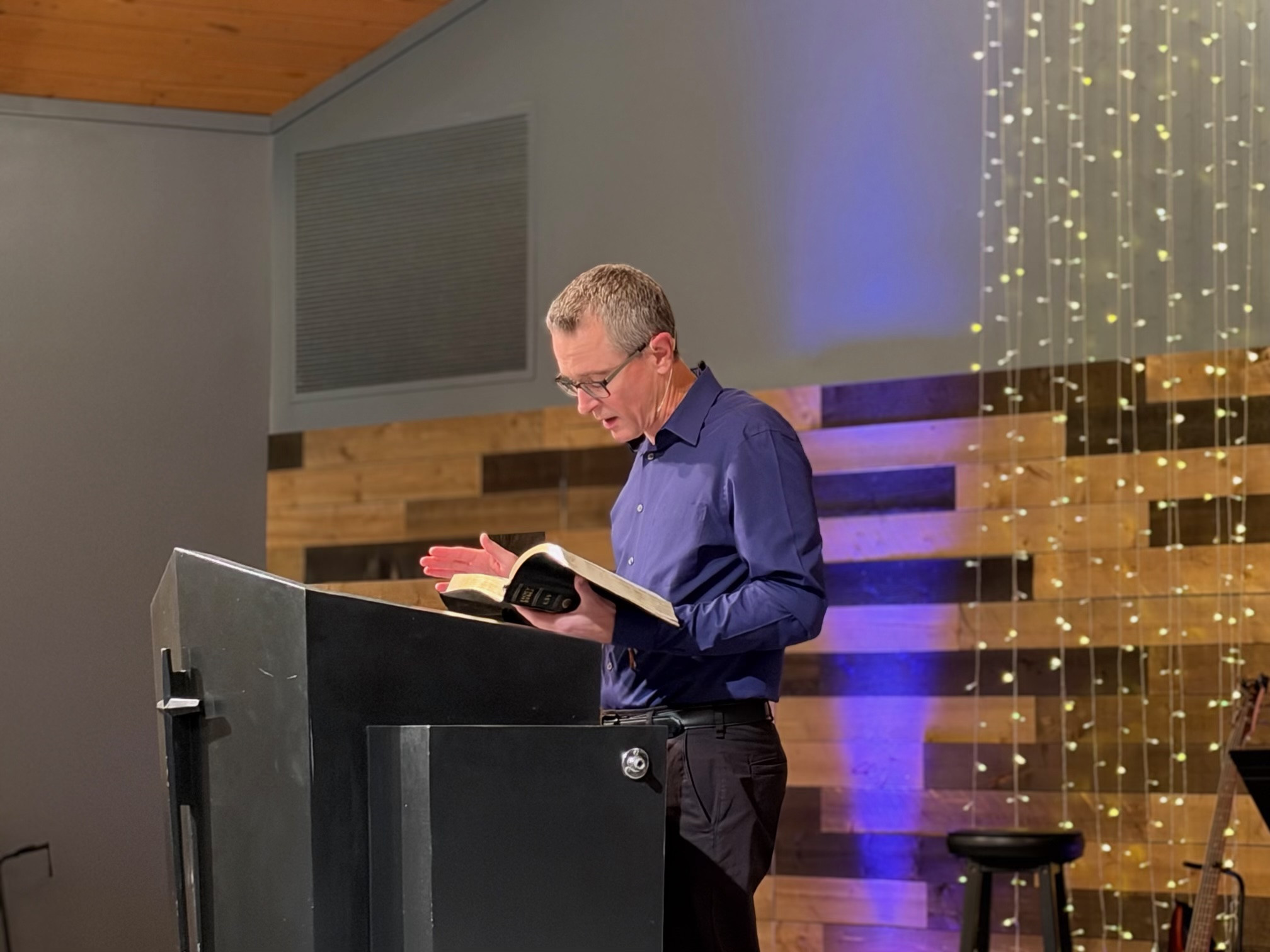
Philippians 4:6-7
The following is a lightly edited transcript generated from the audio; it may contain small errors.
Philippians 4, starting in verse 6:
Do not be anxious about anything, but in everything by prayer and supplication with thanksgiving let your requests be made known to God. And the peace of God, which surpasses all understanding, will guard your hearts and your minds in Christ Jesus.
(Philippians 4:6–7)
Let’s pray. Lord, we do pray that we would put into action today this passage as we learn about it, the different commands that are in it and the promise that is in it as well. Help us to receive it. Help us to hear it and do it, God. We pray, Lord, that your hand would continue to be upon us as we look into your word. Let us be like the man who looks in the mirror and walks away and still remembers what he looks like. Lord, help us to hear this, walk away, continue to remember it, and then put it into action. We pray these things in Jesus’ name. Amen.
Okay, the title of my sermon today is, “Are You Anxious?” And we’re going to be looking at this passage. Let’s just briefly outline it and then we’re going to get into it. So notice how it starts out in verse 6. It starts with a prohibition, basically a negative command: do not be anxious. But then it follows it up with a positive command: tell God what your requests are. And then here’s the thing, we’re given specific instructions for the proper fulfillment: in everything, it says, by prayer and supplication, with thanksgiving, present your requests. Right? That’s the command part. And then it ends with a comforting promise: the peace of God will guard your hearts and your minds in Christ Jesus.
Most versions translate this in verse 6, “do not be anxious.” And that’s a good translation. The King James says “be careful”; that works as well. What are things that Christians are anxious about? Tomorrow, children, pretty much anything, right? Job, relationships, family, tests, sickness, the world at large—the list goes on and on. It’d probably be easier to say, what aren’t we anxious about?
Let me just ask you this. There’s different types of anxiety. Do any of you get even just a little bit uncomfortable in social situations where maybe you don’t know many people? Yeah, right? Most of us, probably. What should you do in those situations? The anxious person’s like, avoid them. But it’s not possible, right? That’s why even if you just think about, like if you’re trying to find, if you go into a new group or a new church or whatever, that’s why you want to try to be, if you’re already there and you’re a member of that group or church, like you want to make people’s experience as pleasant as possible. You want to be friendly. Why? Because we all know the feeling of being that person who’s not a part of the group yet or is visiting or whatever. Like they’re kind of feeling on the outside. They might not be on the outside, but they’re feeling on the outside. Here’s the thing: a person who can avoid those situations—one, a lot more people deal with anxiety than you realize. So you’re not alone. Many people deal with anxiety to some extent, an anxiousness, a feeling or worry.
Now years ago, actually not too many years ago, just a few years ago, Ligonier Ministries and Lifeway Research did a survey of believers. And the definition that they used for their markers as they were asking people questions, because they only wanted to ask a specific group of people questions, was these people agree that the Bible is the highest authority for what they believe. They believe that it’s very important for them personally to encourage non-Christians to trust Jesus Christ as their Savior. They believe Jesus Christ’s death on the cross is the only sacrifice that can remove the penalty of sin, and they believe that only those who trust in Christ Jesus alone as their Savior receive God’s free gift of eternal salvation. That was the qualifier. In order to take the test, that’s what you had to agree with, right? That was the sample group, so to speak.
When the question was, sex outside of traditional marriage is a sin, 94 percent said yes. Abortion is a sin, 91 percent said yes. The Bible is 100 percent accurate in all that it teaches, 95 percent said yes. Then notice what starts to happen here though. “Jesus is the first and greatest being created by God.” Seventy-three percent said yes. Jesus isn’t created. He’s part of the Trinity. He is and was and always has been, right? God does not create himself. John 1:3: all things were made through him, and without him was not anything made that was made. Next question or statement: “The Holy Spirit is a force, not a person.” Sixty percent said yes. Which you can just easily disprove with a number of Scriptures, but one Scripture that I like to use is Acts 5:3, where it says Peter said to Ananias—remember what Ananias did, and his wife, right? They sold the land. What’d they do about the purchase price? They lied. Peter said, Ananias, why has Satan filled your heart to lie? Who does he say Ananias is lying to? The Holy Spirit. Last statement: “Jesus was a great teacher, but not God.” Forty-three percent said yes.
All things were made through him, and without him was not any thing made that was made.
(John 1:3)
But Peter said, “Ananias, why has Satan filled your heart to lie to the Holy Spirit…? You have not lied to man but to God.”
(Acts 5:3–4)
This is what happens when you emphasize morality apart from theology. This is what happens when you repeatedly say theology isn’t important, the heady stuff doesn’t matter. This is what happens when you have sermons that focus on morality and living better, which is good, but not about getting to know God more profoundly. Orthopraxy is present—doing—but not orthodoxy, teaching, proper thinking. People aren’t being taught biblical theology. Doctrine doesn’t matter. You’ve heard it before. But here’s the thing: knowing the word is so important. So we don’t want to take that for granted. And what I’m trying to do requires you to take the word that’s being preached right here and apply it to your life. But not just be against certain things. We want to do whatever the Bible says to be against. We want to be against it. And not just be in favor of certain things. If the Bible says to be in favor of it, we want to do that. But more importantly, know the one who tells us what is right and what is wrong. That’s way more important. And guess what? If you want to know the one who tells us the right from the wrong, that’s theology. That’s the study of God, literally what theology means. And Jesus says in John 17, this is eternal life. I mean, he defines it for us. What’s his definition? That they know you, the only true God, and Jesus Christ whom you have sent. That’s eternal life. So if eternal life is to know God and to know Jesus, then getting to know him better and getting to know his Son better is a very much worthy thing for us to do.
And this is eternal life, that they know you, the only true God, and Jesus Christ whom you have sent.
(John 17:3)
So when we’re having the Wednesday Logos, I mean, we’re not just doing that because that’s like heady stuff to do. No, we are wanting to help you grow in your relationship with the Lord. Yes, we want you to do the right things. Yes, we don’t want you to do the wrong things, but we want you to know God. And I believe that you can know him better than you currently do. That’s true for all of you. It’s true for me. We should continually grow. I mean, Peter talks about it: grow in the knowledge and grace of our Lord Jesus Christ. You’re growing in the knowledge. So when we come to something like this, like some of these answers might seem kind of straightforward and easy, but that’s why we study the word and that’s why we know God, so that when he says something, we can trust what he says is true. He says it is good enough for us. We believe it.
So what’s the answer to anxiousness? Well, we’re going to see here. Let me start by answering it this way. What’s the opposite of anxiety? It’s peace, right? Maybe relief, right? The person who’s super anxious, they are looking for peace. They are looking for some type of relief or rest. The person who’s anxious, they want, they literally at times, they want to calm down. They’re freaking out; they want to stop freaking out. But when we talk about anxiety and worry, what can happen is this: the soul becomes so burdened for whatever reason. Sometimes it might not make sense, sometimes to you it might make perfect sense, but the soul becomes so burdened and distraught, it causes a physiological response in the body. So even if you just think like a person who deals, who is stressed a lot, like what’s one of the things you hear that they develop? Ulcers, right? And sometimes, you know, you’re stressed and people develop like a rash or hives. I mean, so the inner man is stressed, and what happens? The body is trying to deal with it.
Now think about it. You go to the doctor sometimes and you’re like, I’m breaking out in hives, I’m breaking out in a rash. If he’s a good doctor, what is that doctor going to do? He’s going to start asking about your personal life. Well, why does that matter? Well, because he realizes, if he’s a good doctor, the things going on inside of you affect the body. So he’s going to ask about your personal life. He’s going to ask what’s going on. He’s going to ask, how’s your marriage doing? He’s going to ask how your children are doing. He’s going to ask about your job. Why does he ask? Because if those things have challenges, if there’s things going on or unrest or stress, they affect you, which makes sense. And the mind and the body are linked. The mind and the body are linked. All right, we’re not just like souls stuck in the body. No, we’re linked. All right, the only thing that separates it is death, and it’s really just for a short period of time, because one day when Jesus comes back, we get a glorified body and the soul’s reunited with the body. Right? So there’s this short period of death from when we die to when Jesus comes back, but apart from that, we will be souls that have bodies, or we will be bodies that have souls. You could actually say it either way.
So here’s the thing. You go to the doctor and you give that. What do doctors do? What’s their job? They’re going to try to fix you. And doctors have been trained to fix you with medicine. You go to an attorney with a problem, how’s he going to try to fix you? With a lawsuit. People who have fields that they specialize in, that’s the thing that they’re going to be best known. You go to a chiropractor, right? He’s going to be trying to adjust you. You go to the doctor, his answer is going to be medicine. Now, is there a place for medicine? Yes. But here’s the thing: if you take the medicine for a particular issue, especially if it’s a soul issue, has it fixed the soul issue? No.
So if you just think about it, like if at the end of the day I come home, and I just want to forget about life, like there’s certain things that we can do, right? Some people just binge out on Netflix; they just want to kind of zone out. Some people use alcohol; that’s not good. Some people mindlessly scroll social media. Really, none of those things are good. We’re trying to forget our problems. We’re trying to ignore them. But once that binging stops or the alcohol wears off or we’re done scrolling, what do we find out? The problem’s like right there waiting for us. So that doesn’t address the root problem. I might forget about my problems, but it doesn’t fix them. The doctor isn’t shocked; he’s trying to address it from his field of knowledge. But the medicine can help steady yourself so that you can get to a place of focusing on the problem and the root issue. So if you’re in a constant state of anxiousness or always dealing with it, it can be hard to slow down. It can be hard to get a breath to give attention to your soul. The medicine can provide a place to help you deal with the root problem. The root problem isn’t physical. The medicine is dealing with the physical. The root problem is the soul. What’s going on here that needs addressing?
And sometimes we can actually—there’s actually three different, let’s say, ways you can have anxiety. Some people actually have anxiety. Think about this for a moment. Some people have anxiety over the past. And they constantly fret: did they do the right thing yesterday? You know, they replay that conversation a thousand times in their mind, I should have said this, I should have done that, right? We’ve all been there. But we’re fretting about yesterday’s issue and problem, and we’re second-guessing ourselves. We stress and worry about it. We can also have anxiety over the present, like the here and now, current situations going on. There’s unrest at work, there’s unrest in our marriage, our kids are dealing with something—that can cause anxiety, that can cause stress, that can cause worry. And then there’s anxiety over the future. Sometimes just the uncertainty of it causes people stress or anxiety.
Well, here’s the thing: look back at the verse so you can see it for yourself. Verse 6: do not be anxious—what does it say?—about anything. That means the past, that means the present, that means the future. We’re commanded not to be anxious about any of it.
Let’s talk about some things that can help us deal with anxiousness. One, we need to begin with—and this goes back to that survey that I was talking about—we need to go back to believing that God is sovereign and seeing how sovereign he is. Well, if you’ve never studied God’s sovereignty or never studied how he rules over the affairs of men, you’re going to be lacking in this area. You’re not going to be as equipped as you can be to address something that maybe is very near to you or very near and dear to someone else who’s struggling with it. Keep your place in Philippians. We’ll look at a well-known passage on this in Matthew chapter 6. Matthew 6, it’s a little bit longer of a section, but we’re going to read it all. Again, this is Jesus, Sermon on the Mount. This is what he says:
Therefore I tell you, do not be anxious about your life, what you will eat or what you will drink, nor about your body, what you will put on. Is not life more than food, and the body more than clothing? Look at the birds of the air: they neither sow nor reap nor gather into barns, and yet your heavenly Father feeds them. Are you not of more value than they? And which of you by being anxious can add a single hour to his span of life? And why are you anxious about clothing? Consider the lilies of the field, how they grow: they neither toil nor spin, yet I tell you, even Solomon in all his glory was not arrayed like one of these. But if God so clothes the grass of the field, which today is alive and tomorrow is thrown into the oven, will he not much more clothe you, O you of little faith? Therefore do not be anxious, saying, “What shall we eat?” or “What shall we drink?” or “What shall we wear?” For the Gentiles seek after all these things, and your heavenly Father knows that you need them all. But seek first the kingdom of God and his righteousness, and all these things will be added to you. Therefore do not be anxious about tomorrow, for tomorrow will be anxious for itself. Sufficient for the day is its own trouble.
(Matthew 6:25–34)
So we get the command, right? Then he gives a couple examples about it, and then he’s going to make an application really using the illustration of just everyday things around. I mean the birds, they’re taken care of. And what’s Jesus’ point? Are you not of more value than they? And you are. And which of you, verse 27, by being anxious can add a single hour to his span of life? Like, does being anxious ever help you out? Not really. Right? Can you do it? Does it help solve the issue at hand? No. Sometimes you’re worried, but is your lack of time? Well, worrying about it ain’t going to help that time. I mean, he uses the illustration of the flowers, right? I mean, they’re clothed. God takes care of them. Therefore, do not be anxious. So he says it again, just like verse 25. So what do we see about God here? I mean, we see a few things, but he is providing. He provides what? Oh, the food, he provides clothing. What should we eat? What should we drink? What should we wear? No, the point is, hey, God has this. He’s going to take care of you. He’s sovereign. He’s in charge. He definitely knows that you need—he knows what you need—and he’s going to make sure you get it.
Listen, every single one of you is bulletproof until the day and the second the Lord says it’s your time. You’re bulletproof. You’re bulletproof. So you will not die a year, a month, a day, an hour, a second earlier than when God says, now’s the time. All right, that should be comforting. God is in control. You will not die one second sooner. Not one hair on the head—he’s got them all numbered. People make all sorts of promises to you, and they sometimes don’t fulfill them. Why? Well, for a variety of reasons. But when God makes a promise, he fulfills it every single time. Right? He’s got the power to do it. He’s got the knowledge to do it. He’s got the wisdom to do it, and on and on and on. So he can make sure you have the food, expressly. He’s all-powerful. He can make sure you’ve got the clothing. He’s all-powerful. He can take care of whatever stressful situation. He will walk with you through it. Trust in the Lord that he’s going to take care.
Even the hairs of your head are all numbered.
(Matthew 10:30)
Second, here’s what he says, a very well-known passage. You’ve heard it before. Verse 28, chapter 11:
Come to me, all who labor and are heavy laden, and I will give you rest. Take my yoke upon you, and learn from me, for I am gentle and lowly in heart, and you will find rest for your souls. For my yoke is easy, and my burden is light.
(Matthew 11:28–30)
So my second point is, go to Jesus for rest. In this passage there’s a promise: and I will give you rest. But what do you have to do for the rest? You have to go to Jesus. What do you—in the Philippians passage we’re going to see what we have to do—but you have to do something. So rest is found in Jesus. Now what does that require of us? He gives an invitation, but we have to accept the invitation. Right? Come. That’s the invitation. Come find rest. Come to me.
The next point, and look back in Philippians because I want you to see it. And it goes well with God being sovereign. It goes well with the invitation for us to come and rest in Jesus. And it’s at the very end of verse 5: the Lord is at hand. So the last sermon we looked at, well, why is it sandwiched between this? Let your reasonableness be known to everyone. The Lord is at hand. We looked at how it applies to that, but it also applies looking forward. The Lord is at hand; do not be anxious about anything. The fact that the Lord is very present is one of the keys for addressing anxiousness. We talked about it at the time, but it’s that word called immanence. So you talk about sovereignty, that probably emphasizes more his transcendence: he is above all, far removed from us. But then this idea of God’s immanence: he is very near to us. Where do we see it displayed most clearly? In the incarnation. God became man. So the Lord is near. So he’s sovereign and bigger than our concerns. He can handle it all. He’s Lord over all, but he’s also very near. When you are anxious, stressed, and worrying, the Lord wants you to know he’s right there. And you can turn and you can talk with him. And that’s what he wants you to do. But he’s right there in the midst of the relevant situation. That should be a comforting thought.
I mean, you think about it, like earlier before the church started, Anya was on the back blanket there, and Justus and Laura were gone, and she started, you know, crying. Then Laura walks in, everything’s fine. Why? Because it’s comforting to have your parent around. Well, brothers and sisters, let’s not think so much of ourselves. He’s right here. And in this passage we do see what the answer is for the anxious heart. Verse 6: in everything by prayer and supplication with thanksgiving let your requests be made known to God.
Paul uses four different words here to talk about prayer: prayer, that’s the first one; supplication, that’s the second; thanksgiving, another form of prayer, is the third; and then requests is the fourth. Do you think he’s trying to emphasize something to us here in this passage? The focus here is prayer. Four different words for prayer. There couldn’t be a stronger emphasis on prayer. It sounds simple. It sounds so simple. But if you have a struggle with anxiety or worry, prayer will be key to fixing it. You’re like, that’s too simple. I get it. But I mean, that’s what it says, right? It’s not even complicated or hidden or something I have to unpack for you. Present your requests to God. You’re anxious; don’t be anxious; present them to God. So the Lord shows us how to handle anxiety. Here’s what one theologian said: there is nothing which pertains to body, mind, estate, friends, conflicts, losses, trials, hopes, fears, in reference to which we may not go and spread it all out before the Lord. Amen.
Well, what kind of prayer? Well, honestly, [audio unclear]. Now, we would prefer the Lord to kind of act in a certain way sometimes, and especially in a lot of areas where we’re struggling, what do we want him to normally do? We just want him to, you know, metaphorically snap his fingers and all is well and we’re healed. True? That’s not normally how the Lord works.
There’s a story in 2 Kings. Verse 1, 2 Kings 5:
Naaman, commander of the army of the king of Syria, was a great man with his master and in high favor, because by him the Lord had given victory to Syria. He was a mighty man of valor, but he was a leper. Now the Syrians on one of their raids had carried off a little girl from the land of Israel, and she worked in the service of Naaman’s wife. She said to her mistress, “Would that my lord were with the prophet who is in Samaria! He would cure him of his leprosy.” So Naaman went in and told his lord, “Thus and so spoke the girl from the land of Israel.” And the king of Syria said, “Go now, and I will send a letter to the king of Israel.”
(2 Kings 5:1–5)
So he went, taking with him ten talents of silver, six thousand shekels of gold, and ten changes of clothing. And he brought the letter to the king of Israel, which read, when this letter reaches you, know that I have sent to you Naaman my servant, that you may cure him of his leprosy. And when the king of Israel read the letter, he tore his clothes and said, am I God, to kill and to make alive, that this man sends word to me to cure a man of his leprosy? Only consider, and see how he is seeking a quarrel with me. So the king of Israel, I mean he doesn’t have faith, right? He’s like, this guy is trying to start a fight. He’s trying to start a war. Like, how am I supposed to cure this guy? But listen, when Elisha the man of God heard that the king of Israel had torn his clothes, he sent to the king saying, why have you torn your clothes? Let him come now to me, that he may know that there is a prophet in Israel. So Naaman came with his horses and chariots and stood at the door of Elisha’s house. And Elisha sent a messenger to him saying, go and wash in the Jordan seven times, and your flesh shall be restored, and you shall be clean. But Naaman was angry and went away saying, behold, I thought he would surely come out to me and stand and call upon the name of the Lord his God and wave his hand over the place and cure the leper.
Now, one, there’s a lot of lessons here, but one, Naaman had the truth and he didn’t like it. He had the truth. Was it true that if he did that, he’d be healed? Yes. He also is offended. This whole thing is a huge test for Naaman, and he fails miserably, and God is still gracious at the end to heal him. Right, because Elisha, it doesn’t say Elisha goes to him. Elisha sends a messenger to him. You know, Naaman’s all like, hey, I’m this great warrior. I’m basically like second in command. And here I am coming, and the guy doesn’t even have the decency to come out and talk to me. He sends one of his messengers. I mean, so he’s insulted, right? The Lord’s testing him. The Lord tests us; the Lord’s testing him. So he’s like, surely I thought he would come out to me. I’m insulted; he doesn’t even come out to me, and stand and call upon the name of the Lord his God, wave his hand over the place and cure the leper. Are not Abanah and Pharpar, the rivers of Damascus, better than all the waters of Israel? Can I not wash in them and be clean? So he turned and went away in a rage. Then he’s insulted that he would even be suggested that he’d bathe himself in that dirty Jordan River. But his servants came near and said to him, my father, it is a great word the prophet has spoken to you; will you not do it? Has he actually said to you, wash and be clean? So he went down and dipped himself seven times in the Jordan, according to the word of the man of God, and his flesh was restored like the flesh of a little child, and he was clean. It’s a great story. But what did it take for Naaman to be healed? I mean, he heard the truth, but he had to receive the truth. He had to act on the truth. He also had to humble himself. Apparently the Jordan was dirty. Somebody had to do something. He had to humble himself and he had to do something.
Let me just say this: don’t create anxiousness where it doesn’t exist. Some people are great anxiety creators. That’s not a spiritual gift, okay? But you can work yourself up into a frenzy all on your own. Sometimes it’s just by asking questions. Am I at the wrong job? Did I make the right decision? Should I have said something different to that person yesterday? We can work ourselves up over the most basic questions, asking them over and over and over. Should I go to school? Should I quit school? Should I go back to school? Did I make the right decision to do this form of education? Are the kids’ schooling in place? Are they really learning? Can I be doing more? Are they going to be okay? Can I handle it? Should I sell my house? Should I quit my job? Should I take a different job? Should I get married? I’m probably stressing some of you out. I’m stressing myself out. But you bombard yourself regularly with questions. Like, why do you do that to yourself? It’s clearly not beneficial. There’s nothing wrong with asking those questions at times. But asking them of yourself all the time is not good. And so you can make yourself anxious just by asking questions that the average person really doesn’t ask themselves too often. It’s like they nag themselves to death. What is the result? Well, they’re anxious. Anxious about church, anxious about their job, anxious about their marriage, anxious about their children, anxious about their parents, anxious about life. So you can make things anxious that have no need to be anxious. Again, self-reflection, good thing. But you will create anxiousness continually questioning all facts and facets of your life. And you don’t get the idea from Scripture you should go around constantly questioning everything you’re doing. If you’re a believer, brothers and sisters, and you’ve been growing in your faith, then you should be walking in wisdom and knowledge. And if you don’t have the wisdom and knowledge, then go ask someone else. In fact, that’s what James says: go ask the Lord if you’re lacking in wisdom. He’s actually not saying only to pray there—you should pray—he’s saying to pray here if you’re lacking a serenity and calmness and peace of mind. But when he talks about it in James, he’s actually saying the actual skill of godly living. That’s wisdom in the book of James. If you’re lacking that, right, you’re looking to the Lord and being like, I need this, Lord. I need to know how to rightly live. Give me that wisdom. Give me that knowledge.
If any of you lacks wisdom, let him ask God, who gives generously to all without reproach, and it will be given him.
(James 1:5)
Well, we have the answer, as I’ve alluded to a couple times, and it’s in verse 7, back in Philippians. So what do we do? We present the requests with thanksgiving, and then we have verse 7: and the peace of God. Whose peace is it? It’s God’s, and it’s God’s to give. It’s his peace, and since it’s his, he has it in fullness, entirety, and unendingness. All right, his love is unending, his mercy is unending, his peace is unending, so he has plenty to give out. The peace of God which surpasses all understanding will guard your hearts and your minds in Christ Jesus. What’s interesting here is that the whole person, listen to me, the whole person is in view here, the whole person, right? The peace of God which surpasses all understanding—at other places, that’s the word that is usually translated mind, right?—will guard your hearts, and then here it’s a different word, but in your minds in Christ Jesus. The point is this: it’s expansive. When Jesus says, oh, love me with all your heart, soul, mind, strength, what is he communicating? Everything. What’s this communicating? The peace of God, which surpasses all understanding, will guard your hearts and minds. It will blow over you. That’s the promise. But what’s the condition? Prayer. That’s the condition. So his peace is expansive. And the idea here with everything—same word again, right? Let your requests be made known to God, and the peace of God will guard your hearts and minds in Christ Jesus. It’s in verse 6, it’s in verse 7, it’s in verse 4, it’s in verse 5. I mean, God’s concerned about the entirety of you, and he wants all of this to be occurring for you. That’s what he wants for you.
Well, what does that mean? Well, you need to be engaged in prayer. That’s not prayer like when you’re traveling to work in the morning—that’s great. Or you’re taking the kids to school—that’s great. Definitely pray at that time. But when you’re really dealing with something, brothers and sisters, when Jesus is saying, come to me, that’s not you raising your hand like 15 years ago. That’s not that come. That might be an application of it, but it’s coming and resting in his presence. It means you setting aside some serious time to spend some time with your heavenly Father. Setting some time aside, being like, honey, I need like a couple hours to spend with Jesus. And, you know, she’s watching the kids, you’re doing, and maybe then you switch, right? You’re getting away. Maybe you need to go somewhere quiet outside your house. But the point is you’re really seeking him. This ain’t 30 seconds of prayer. This ain’t even five minutes of prayer. Those that are desperate will desperately seek the Lord. Those that are desperate will desperately seek the Lord. So the Scripture gives us the answer how to deal with it. We might not like it. We might not see it. We might not hear it. We might not accept it. But Scripture does give us the answers for all of life, including this one. We might not think it’s helpful. Doesn’t matter. It’s helpful.
Listen, think about this, brothers and sisters. You are God’s special creation. You’re his special creation. And where does he give attention in creation? Like wherever attention is given, we should pause. Why? Because God wants us to pause. He wants us to take notice. So if you think about what happens with creation, right? God speaks. We get land. God speaks. We get water. God speaks; he pays a little bit more attention with the animals. But what happens with man? There’s a whole lot of attention given. Chapter 1 spends a lot of time on the man and woman being created. Chapter 2 of Genesis, I mean it’s primarily about the man and woman. Now the Genesis passage, it’s not even concerned about the creation of the spiritual world. It’s focused on the physical world. Right? It’s meant to explain to us humans where we came from, how we got there. But notice what he does. When he gets to man, what does he do? He doesn’t just speak and bring man into existence. He could have done it; he did it with everything else. He actually fashions man into existence. Why? I mean, can you ever wonder why? He wants to make us distinct from the rest of creation. We’re still part of creation, but he wants to make us distinct. In a sense, he took his time, not that he needed to. But the point is, he slowed down. He stopped and made time to make the man. We’re distinct and we’re set apart from the creation. Still a part of the creation, but set apart.
Then the Lord God formed the man of dust from the ground and breathed into his nostrils the breath of life, and the man became a living creature.
(Genesis 2:7)
And he does the same for the woman. He slows down. What does he do to Adam? Deep sleep. And then he fashions the woman. Again, could he have just used words? Yeah, sure, absolutely. So why not? Well, because the man and the woman, they get extra special creation attention. Why? Because they’re extra special. Not just the man, not just the woman, it’s both. This is God’s pinnacle of creation. Not just another vegetable or fruit or plant or fish or animal—the pinnacle. This is his image, and that’s us. His image. He wants us all to know this image is set apart from the rest of creation. It truly is special.
And the rib that the Lord God had taken from the man he made into a woman and brought her to the man.
(Genesis 2:22)
Again, he doesn’t just speak. He forms and fashions and takes his time.
Let me say a word to those who maybe really don’t struggle with anxiety. I want to speak to both of you today. One, praise the Lord, right? Like if that’s not your struggle, everyone has their own struggles. Maybe that’s not your major struggle. So if you’re not someone that deals with that, you need to have grace on people. Especially if it’s your spouse, or your kids, or your parents. You need to have grace. You need to have grace on those who struggle, and those who suffer. The Matthew 11 passage is like, Jesus is like, I’m gentle and lowly. It’s like you’re going to come to him and he’s not going to give you a lecture, he’s not going to give you a rebuke, he’s going to be gracious and kind. You’re coming with this heavy burden and he’s there to receive you and comfort you. Well, that needs to be our approach. When we’re ministering to people that maybe are dealing with anxiety, anxious people don’t want to be anxious. No one wakes up in the morning like, I want to be anxious today. They don’t usually thrive in their anxiousness. Years ago I talked to a man, shared with me his temptation. I was not tempted in that way in the least, but I could at least understand and sympathize with his temptation and help walk with him however I could through his temptation.
Michelangelo, when he completed the Sistine Chapel, it was used as a house of worship from that point on, 1512. Well, how did they illuminate it? Candles. So over the years, what is it? Candles, what does it do? Yeah, you get soot. Where’s his masterpiece? Yeah. So that black sooty layer of grime on the ceiling created a veil that obscured the elaborate details of the artist’s work. Now actually in many of our lifetimes, they restored them. So when they restored the frescoes to their original state, everyone can see the beautiful, fresh, and spring-like colors. Well, one application for us is when the Maker’s true brilliance and goodness is revealed, you have to change assumptions, right? People saw that and it changed their assumptions about Michelangelo. Well, we have a true brilliance and goodness. Now, it’s marred by sin, but it doesn’t take away the image that we’re created in. And God reveals his purposes clearly. We may not choose to see them. We can actually see them miscolored. Not because of his coloring, but because of our own sinful, willful coloring. And let me just say, some of you have a view of yourself like that Sistine Chapel before it was restored. That was like nice work, but kind of blah. Nothing special—that’s a lie. Don’t believe that. God has not made you bland; he’s made you special. Some of you believe the lie, there’s nothing special about you. That’s not true. Don’t believe that lie. You are God’s special creation with infinite worth. The Sistine Chapel people travel to from all over the world to go see that. Well, it pales in comparison to you as God’s creation and image.
So realize, as we’re going back and wrapping this up, realize a few things here. One, as you are dealing with anxiety, realize the Lord is with you. He’s going to walk with you through it. He is very near. The Lord is at hand. Then accept his invitation. Come to me. Accept his invitation and rest in him. And then do what this passage says. Go to your heavenly Father in prayer. Fully present your requests to him. And what’s the promise? God’s peace will cover you.
Now let me just say this, if you’ve been struggling with anxiety for a while, again, God, sometimes I’ve seen it, it’s an amazing thing. Sometimes he does do the finger snap, so to speak, and he heals people of various things. Sometimes physical illnesses, sometimes more spiritual or mental illnesses, he can do that. But a lot of times, I’m just letting you know, it’s like Naaman. And he wants to know, what are you willing to do? There’s a lot of you, a lot of us, at times, we’re like Naaman. It’s like he lays out the plan, but we’re not willing to get wet. We want a different plan. And we won’t humble ourselves. We want a different plan, we want a different way, we want different steps. You’ve got to follow the Lord and follow his steps. You have to learn the lesson of Naaman. Humble yourself. Be willing to get into his presence to truly seek him. Sometimes you’re going to have to ask your brother or sister to come alongside you and walk with you through it. You probably should if you’re really dealing with it. But believe the promises of God. One of my favorite verses, 2 Corinthians: all the promises of God are yes in Christ Jesus. Even at the end of verse 7, he says, it will guard your hearts and your minds in Christ Jesus. There’s that idea again of unity, the union with Christ; you’re united with him, right? So that peace comes, not just you doing your own thing and hanging out, no, you being connected to the vine, walking with him, basking in his presence.
For all the promises of God find their Yes in him.
(2 Corinthians 1:20)
So I encourage you to receive it today. Be like that man who looks in the mirror, walks away, still remembers. Practice this. It’s not a formula, so to speak, but it is the prescription that the Lord lays out for us. I believe if you’re dealing with it, that the Lord can help you to walk in freedom and holiness and purity and truth in this area. Why do I believe that? Because that’s what the word says. Will it be easy? Probably not. It’ll be a struggle. And it will start just like Naaman. Will you humble yourself? Will you trust? Will you believe? Will you come to the Lord and put yourself under his authority and in his presence? And really seek his face. That’s what it takes. Let’s pray.
Lord, I do pray for anyone who’s dealing with any type of anxiety or worry or stress. Maybe they’ve been dealing with it for weeks or months or even years, Father. And I do pray, God, that you’d set them free, and you’d even be gracious to do this, the finger snap. You’d set them free. And if not fully right now, Lord, by your mercy and grace, by your wisdom and knowledge, then let that first chain in the link that has them in bondage, let that first link be snapped, God. Let them see and taste just a small taste of your presence and of the freedom that’s found in you. I pray that it would no longer have them in bondage, that you would be gracious to do that. And I do pray, Lord, that they would humble themselves and come before you and truly seek you, getting in your presence. Maybe you want to do a work in their life in this area. Let them truly seek you. You are a good and gracious God. You are sovereign over all. And Lord, we are your special creation. We are way more valuable than any flowers, even the animals, Lord, way more valuable, created in your image. So let us set aside the lies and let us believe your word. Let us trust you in your goodness. I pray this for your glory. Amen.