
March 13, 2022
The Word of the Lord Echoes Forth
Dr. Michael A. Bond · 2 Thessalonians 3:1
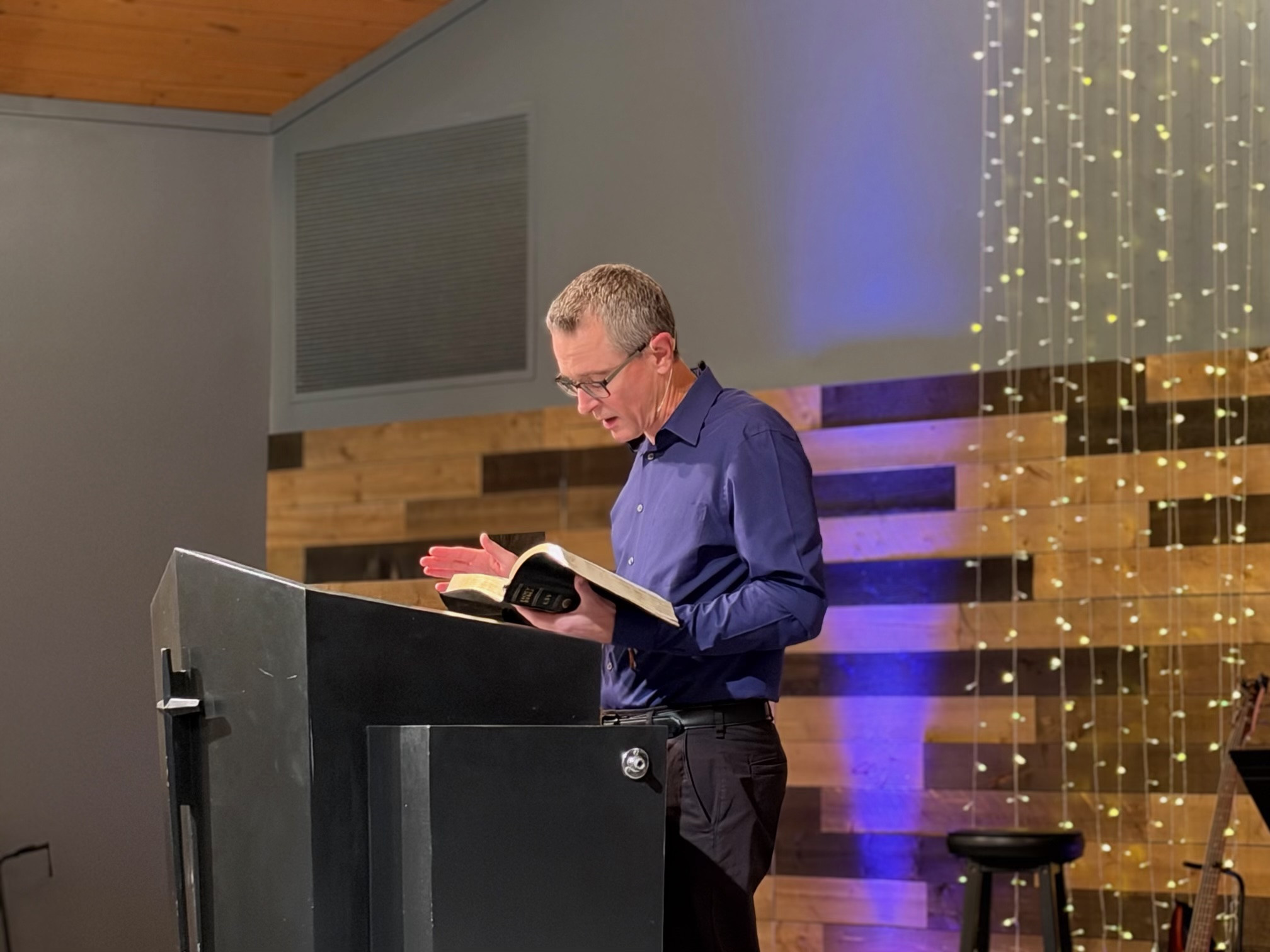
March 13, 2022
Dr. Michael A. Bond · 2 Thessalonians 3:1
2 Thessalonians 3:1
The following is a lightly edited transcript generated from the audio; it may contain small errors.
Give it up for the cooks. All right, have we let the kids go yet? The kids can go. All right, let’s turn to 2 Thessalonians chapter 3. In Thessalonians 3 starting in verse 1, it says this, Finally, brothers, pray for us that the word of the Lord may speed ahead and be honored as happened among you, and that we may be delivered from wicked and evil men, for not all have faith. But the Lord is faithful. He will establish you and guard you against the evil one. Let’s pray, Father. We thank you for the new members that you’ve blessed Liberty with. I pray that they’d be blessed to be here, and they’d be a blessing to others God, that they would use the spiritual gifts that you’ve blessed them with to minister to others and to glorify your name God. We thank you Lord that you are a God that’s always working, that is always working God in our lives and in the lives of our brothers and sisters here. We thank you that Elohim can join us again this morning. We thank you for the partnership that we have with them and the fellowship Lord. And God, I pray that you’d open the door for us to get back to see them in person very soon, Lord. Thank you, God, that we are separated by thousands of miles, Lord, that our hearts are still knit together by the truth of the gospel, by the love of your son, Jesus, and by how you are the one and only God that we serve you, God.
Thank you now, Lord. Help us to hear from you. Help us to have hearts to receive. Send your spirit to fill this Lord, to walk in your ways, to hear your word and then apply it for your glory. And then my cousin recently accepted a pastorate to be a pastor in Kansas. And so we had a family gathering yesterday to kind of send them off. And if you don’t know too much about me, know that there’s something I like about Kansas and that’s the sports team there the Kansas Jayhawks he’s only about 30 minutes from where they play their basketball games every week so I’m a little jealous might have to visit him a few times but anyway when we got together and my dad’s out of the family it’s like we all know how to have kids okay because my dad and you know I
I have four and then I got three cousins and I think the lowest number on that side is like four and then I think that it was like seven or eight or something. I lost track, okay, it’s really hard. Which I found out quickly yesterday because even though we live somewhat local, when you have big families like that, it’s just hard to see each other on a regular basis. So I think if I was doing my genealogy right, like my first cousin twice removed, if that’s even a thing, like was there running around like probably a fifth or something like that. But when I was thinking about that today in regards to this passage, when you think about different terms like uncle and aunt, those can mean different things depending on like what our influence or lack maybe they had in our lives. My aunt and uncle on my dad’s side, I just have one uncle on that side, but my aunt and uncle, they’re amazing people, played a huge, huge role in me coming to know Jesus. I’m very thankful and they prayed and prayed and prayed for 18 plus years and did all sorts of things to get me involved with church and Awana and different things and so I owe them a debt of gratitude that I won’t be able to ever repay so I’m thankful for them but when you think of other terms like cousin and uncle those can mean different things but when you really start thinking about terms like brother, sister, mom, and dad.
Those are definitely, definitely, more terms of endearment, definitely more terms of intimacy and have meaning usually of some context that we know those people, we have a relationship with those people. Hopefully, it’s a good one. But it’s interesting here, look with me in verse one where Paul starts out. Finally, he says brothers. Now we’ve been looking at first and second Thessalonians for a bit now and 19 times, 19 times he uses this word brothers. Why? Because there’s a familiarity he has with the church at Thessalonica. There’s an intimacy of a relationship. But pause here for a minute and think about it because that relationship and that familiarity was formed one in a very short amount of time, if you remember, over just maybe a few short weeks, a few months at the very most, and then he’s kept up the relationship through correspondence, through instructing them as an Apostle should. But here’s the thing that I want to emphasize. One, a couple things. When we’re interacting with other believers, the grounding of our relationship with one another is always with God as our Father. Because God is our Father, then we can be brothers and sisters. So it starts always with the foundation of God as Father, and then that spreads out with one another as brothers and sisters. And part of this is, like who we are, we’re brothers and sisters. That’s how we’re supposed to be interacting with one another. So there should be a familiarity of sorts. And let me just make a little side comment like let’s make sure that we’re the brothers and sisters that are involved in doing life together.
But who we are is going to end up begetting how we act. If we were acting from that foundation of God as our father, if we’re acting from the foundation from that, then we therefore act. Then our grounding Being in God as our Father will influence how we treat one another. So who we are, but yet how we act. But look here at the humility that I want to notice from Paul and I want to encourage us to adopt that humility. Was he above them? Don’t answer this question because you might get it wrong. Was he above them? In terms, I told you not to answer it. Was he above them in terms of his office? Yes. All right. He still answered it. Okay. I’m gonna forgive you all. Yes. Why? Because what was his office? Apostle. Okay. Were they Apostles? No. But was he above them in terms of their standing before God? No. Okay. They were all children of of God covered by the blood of Jesus. On the day of the Lord, Paul will not get preferential treatment. He won’t. He will stand before God on his own, just like you will stand before God, and just like you will stand before God, and just like I will stand before God. There will be no preferential treatment other than God will treat his children as he treats his children. He will treat those that aren’t his children as he treats those that aren’t his children. But there will be no preferential treatment specifically singled out for any of God’s children, not even someone like the apostle Paul.
We will all stand equally before him. So part of this is I want you to notice he uses the term brothers here and the interaction, read through first Thessalonians and second Thessalonians, I’m sure you’ve had, but his interaction as you read through it and the other letters as well, even with what David was reading today 1 Corinthians 11, there’s a marketness of humility in his letters. There is a marketness of humility in how he interacts. Even the fact that he says this term brothers really placing himself in that same category, he’s letting them know that in one sense he is on the same level with them. When we We talk about words like submission and headship and office. We want to talk and distinguish between two things. One we want to talk about the idea of entas and being ontologically having value. So entas just means our being, just who we are ontologically. Then you might use a term when we talk about hierarchy and positions. You would use the term, and it’s a bit of an older term that people probably misunderstand today, but it would be economically. The challenge today with using that term is usually when people think economics, they start thinking finances. That’s not the case. So sometimes you’ll hear the word economically or the economics, and then some might use a very similar word that makes maybe better sense for some people today functionally. So when we’re talking about Paul in terms of his office, yes, he was above the Thessalonians.
He was in the office of Apostle. That places him above them economically, functionally. But in terms of his worth, in terms of the worth of the Thessalonians, ontologically, that’s the being in terms of their essence or being, they were equal. one higher than the other. Part of this understanding and wrapping your mind around it a little bit helps us understand how God the Son can submit to God the Father. How can Jesus who is God submit to his Father and still be equal? Well because ontologically in terms of their being or essence they are equal. They are the same. But in terms of their function, one is the son and one is the father. And the son submits to the father. So ontologically equal, economically different. Like some of you have a boss at work. He’s above you. But that does not mean he is better than you or greater than you. He has a higher position. Economically, He is above you. Ontologically, you are equal. Paul here makes it clear that He is a brother. There’s the auntas. He is just like them. So in that sense, He’s not seen Himself as morally superior or better than them. Think about that. An Apostle. Wielding great authority given by God himself to a very very very few select men back then and yet there is marked humility in Paul. Even as we go on one with this term brothers but two look
what it look what he says in verse 1. Finally brothers pray for us. Now there’s different ways to give different commands this is in the present tense so So the idea is is there’s an ongoing nature of the request. And really we want to adopt that language for ourselves. So. When someone says, Hey, would you pray for me on this issue? Yes. They’re wanting you to pray that particular moment or time for that particular issue, but really the idea should be like you keep on praying for them. So, you know, when, when we are taking prayer requests at our men’s prayer meeting, or they’re taking it at the women’s Bible study, or you’re taking it in life groups, yes, pray for it then, but keep praying for it. That’s Paul’s idea here, pray for us and keep praying for us. But even if you think about it, the request for prayer is a sign of humility. Some people have problems asking others to pray for them. That’s pride. Because when you ask for prayer, you are acknowledging that someone else’s help. You need assistance of some sort from someone and that you can’t fully do it. So he lets the need be be known and then asked for help in accomplishing it. Paul is willing to do this like time and time and time again. We’ll just look at a couple places. Flip like one three chapters backwards. We’ll go to 1st Thessalonians 5 and as he’s wrapping up the letter in 1st Thessalonians in chapter 5, just this nice little short little verse, verse 25, brothers pray for us.
I mean, he’s requesting prayer. And after they’ve read the whole letter, they’re going to know how to pray. They know where Paul’s at and what’s going on. Look at Colossians chapter 4. Here we see a similar thing. He says in verse 3, Colossians 4, to declare the mystery of Christ on account of which I am in prison. I mean over and over he asked for prayer. Look at Ephesians chapter 6. We’ll pick it up in verse 16. Look at Ephesians chapter 6. We’ll pick it up in verse 16. Look at Ephesians chapter 6. And all circumstances, take up the shield of faith with which you can extinguish all the flaming darts of the evil one and take the helmet of salvation and the word of the spirit, which is the word of God, praying at all times in the spirit with all prayer and supplication. To that end, keep alert with all perseverance, making supplication for all the saints and also for me. Right, so he’s talking about prayer, right? Praying for the saints, and then he says, verse 19, and also from me that words may be given to me and opening my mouth boldly to proclaim the mystery of the gospel for which I am an ambassador in chains that am I declare it boldly as I ought to speak. And what an example that he sets for us, in terms of walking in humility and going to our brothers and sisters and being willing to ask for prayer. Humble yourselves to do that.
When asked for prayer, the idea is to pray for that person to keep praying don’t just say it and forget it you keep praying So Paul is only asking us to do That which he already does himself he asked for prayer, but here’s the thing He’s already been praying for them go back to second Thessalonians 2 Thessalonians chapter 1 verse 11 To this end, we always pray for you that our God may make you worthy. worthy of his calling and may fulfill every resolve for good and every work of faith by his power. What’s he doing? He’s praying, but he’s always praying, right? To this end, we always pray for you. Okay, when you command that to which you already do, basically like when you’re living out, the very thing you’re asking other people to do, the strength of that command is greatly enhanced for others by us. Basically we want to speak out of fullness. When we are asking or commanding or instructing or exhorting or encouraging, we want to make sure that we’re first doing it. It’s kind of like the mom at home and she’s like talking to one of her sons and she’s like, stop yelling at your kids or your brother, sorry. Not really backing up exactly what she’s asking to do. I’m never guilty of that, by the way, okay? Never. But the point is, like, what we want them to do, we better make sure that we are first walking it out. So what’s the request for prayer?
Well, he tells us, pray for us what? That the word of the Lord may speed ahead and be honored as happened among you. This phrase, the word of the Lord, occurs over 250 times in the Old Testament.
Whenever it’s used, it is always with the sense of a message originating from God. Here’s how one author said it. The Apostles wording here refers to the fact that the gospel message he proclaims originates not from him or any other human source, but from a divine source, from God Himself. So Paul doesn’t speak man’s word. He doesn’t speak some word he made up, ha-a-a-a-a-a-a-n, God’s word. It is the word that was given to him. It is divine in origination. when we are talking with other people, when we are sharing, when we are exhorting, when we’re encouraging, when someone comes to us, if a brother comes to us or a sister and they’re needing help, I mean this needs to be the basis for the counsel that we’re giving. That’s just something that we’re just making up. Man’s words don’t help anyone. God’s words help people. So we don’t proclaim our Our message, we proclaim God’s message. And when we’re sharing, which I hope we are on a regular basis with unbelievers and we’re looking for opportunities, to the bank occasionally so they know your face. I didn’t realize how good of advice that was at the time, but I’ve had different issues over the years. You wouldn’t think it’s not like I’m rolling in the dough, but maybe that’s why I’ve got all the issues. But I’ve been in there so this one lady in particular has been very helpful and I had to go back for something and I’m praying I’m like I’m gonna.
And I’m like Lord like help me to know what to say I, I don’t just want to like shoot from the hip, I want it to be from you and I want it to be like whatever you think would best suit her. So knowing we had talked a little bit the last time I was there so I kind of knew just a tiny bit about her background or her religious background, you know, so I ended up talking about and encouraging her to read Ephesians 2 verses 8 and 9. And you know and I even you know wrote it down for her and she’s like well would Ephesians be a good place to start and I was like well I mean that particular verse would would be a good place to start. But maybe the book of John would be good for you as well. But she was writing that down. But the point is this, when we’re talking to people, brothers or sisters, or when we’re talking to people who are not brothers and sisters, or maybe we’re not sure, we are encouraging them from a point of this book, the word of the Lord, not the word of us. So we don’t proclaim our message, we proclaim God’s message. We don’t proclaim our word. You ever tried to proclaim your word before? It doesn’t go very well. There’s not much fruit. Okay, there’s a lot of weeds, but there’s not much fruit. So we proclaim God’s word. It’s, not ours. It’s not something we made up.
It comes from God, it’s his word. Amen. Here’s the thing I want you to notice. Paul differs here from the Old Testament usage. When you look in the Old Testament, we’re going to actually probably look at a couple of passages. And it’s the Word of the Lord, the Word of the Lord, the Word of the Lord, right? In Hebrew, you know that would be the Word of Yahweh, the Word of Yahweh, 250 plus times, right? The Word of Yahweh. I mean, if he wanted to say that here, Paul could have said that here, but he doesn’t say that here. they hear. He says the word of the Lord. And we know from our studies with 1st and 2nd Thessalonians and other books, whenever that word Lord and the New Testament is used, who’s that reference the vast majority of the time? Jesus, right? So here, notice he’s making a slight switch because he’s wanting to emphasize something very clearly to us as he has in 1st and 2nd Thessalonians time and time again about the deity of Jesus. Whose words is he speaking? Yes, he’s speaking the word of God, but it’s the word of Jesus. So we hear again see an attribution of deity to Jesus. What was the word of the Lord or Yahweh in the Old Testament is now the word of the Lord in the New Testament. Paul sees them as one is the same. Why? I mean Jesus is Yahweh. Jesus is God. To say the word of the Lord and the word of God are synonymous, but he wants to make an emphasis to them regarding who Jesus is.
So what is this word? Like God speaks, it’s His word. It originates from Him. I just want to look at a couple passages in the Old Testament so we see this emphasis that when God speaks things happen. Look at Exodus chapter 9. This is talking about the seventh plague in Exodus 9 verse 13. Then the Lord said to Moses, Rise up early in the morning and present yourself before Pharaoh and say to him, Thus says the Lord, the God of the Hebrews, let my people go that that they may serve me. For this time I will send all my plagues on you yourself and on your servants and your people so that you may know that there is none like me in all the earth. For by now I could have put out my hand and struck you and your people with pestilence and you would have been cut off from the earth. But for this purpose I’ve raised you up to show you my power so that my name may be proclaimed in all the earth. You are still exalting yourself against my people and will not let them go. Behold, about this time tomorrow, I will cause very heavy hail to fall, such as never has been-in Egypt from-from the day it was founded until now. Now, therefore, send, get your livestock and all that you have in the field into safe shelter, for every man and beast that is in the field and is not brought home will die when the hail falls on them.” Then notice what it says in verse 20, “’Then whoever feared the word of the Lord among the servants of Pharaoh, hurried his slaves in his livestock into the houses.
Whoever feared the word of the Lord. Doesn’t say the word of Moses. Did it come from Moses’ mouth? Yes, but whose word was it? It was the Lord’s. It was God’s. Why did the people people act? Just because Moses said something? No, because they believed that that was from God Himself. Even the servants of Pharaoh. Of course, they had like six plagues before that, so some of them are finally starting to get the message. Look at Joshua chapter eight. This is talking about the city of AI. They get routed the first time, but now they’re gonna conquer it. They go back. And there’s some great strategy here. Let’s pick it up in verse one. And the Lord said to Joshua, do not fear and do not be dismayed. Take all the fighting men with you and arise. Go up to Ai. See, I have given into your hand the King of Ai and his people, his city and his land. And you shall do to Ai and his King as you did to Jericho and its King. it spoil in its livestock, you shall take as plundered for yourselves, lay an ambush against the city behind it. So Joshua and all the fighting men rose up to go up to AI, and Joshua chose 30,000 mighty men of valor and sent them out by night. And he commanded them, behold, you shall lie in ambush against the city behind it. Do not go very far from the city, but all of you remains ready, and I and all the people who are with me will approach the city, and then when they come out against us just as before, we shall flee before them.
And they will come out after us until we have drawn them away from the city, for they will say they are fleeing from us just as before, so we will flee before them. Then you shall rise up from the ambush and seize the city, for the Lord your God will give it into your hand. And as soon as you have taken the city, you shall set the city on fire. You shall do according to the word of the Lord. See I have commanded you.” So Joshua sent them out. What happens? comes from God and what do they do? They listen to it. They obey it. They enact it. What got them into trouble earlier? Why were they defeated? We find out in chapter 7. Disobedience. When we follow the Word of the Lord, we are in the path of righteousness. When we disobey, 1 Samuel 15, this is where the Lord is rejecting Saul as king. Verse 10 it says, the word of the Lord came to Samuel. I regret that I have made Saul king for he has turned back from following me and has not performed my commandments. And Samuel was angry and he cried to the Lord all night. Why was he angry and crying? Because he knew that that word was true and Samuel had hopes for the kingdom and God was saying there’s a different direction we’re gonna go, I’m rejecting Saul as the king. He knew when once God spoke, God would follow through with it. The Word, word of the Lord.
So listen, in each of these passages, like Moses didn’t make up these words. Joshua didn’t make up these words. Samuel didn’t make up these words. Paul in 1st Thessalonians and 2 Thessalonians, he’s not making up those words, but notice their approach, and this is important, notice their approach to the word of the Lord. They don’t add to it. They don’t subtract from it. But guess what else? They don’t nuance it and try to make it more easy to swallow. Why is Samuel angry and crying because he knows that’s a tough word that he was just given and then he’s going to have to follow it out and put it into motion. And he can’t nuance that. There’s no swallowing that very easily. And notice, they don’t water it down, but they also don’t sugar it up. They give the word of the Lord. And we, we, we, we have no authority outside what God has spoken. You want to talk about the truths of scriptures. You want to talk about a pastor’s authority. There is no authority outside what God has spoken that the pastor can say or speak. You talk about different matters and give his opinion, but that which he can stand firm on is right here, and that’s what he must address. And he cannot add to it, he cannot subtract from it, he can’t nuance it, he can’t dress it up, he can’t water it down, he can’t do any of those things. And so when he stands and says, thus saith the Lord, he better be pointing at some verse in here and not just coming off something off the top of his head.
That’s a dangerous place to be. Notice back in 2 Thessalonians what this word is doing. What has this word
been doing? It has been doing the same thing it has been doing for millennia. As it begins to wrap this up. Paul actually brings this full circle. Look back at 1 Thessalonians 1. So back in 1 Thessalonians chapter 1, he’s commending the Thessalonians and here’s what he says in verse 8, for not only has the word of the Lord, well there’s that phrase again, not only has the word of the Lord sounded forth from you in Macedonia and Ikea, those were giant regions, by the way. The word of the Lord from this city, strategically placed city of Thessalonica, it sounded forth right from there all the way throughout Macedonia, this large region, all the way through Achaia, this large region. But your faith in God has gone forth everywhere so that we need not say anything. So he’s talking about the reverberation of God’s word through the Thessalonians. What is this word doing? It is sounding forth. It is echoing throughout. There’s an image here of this powerful sound being made, which is the gospel message, the word of the Lord, that emanates from the Thessalonian Christians. Who knows where they were meeting? Maybe a little house church or something like that. It had nothing to do with the building. everything to do with the people in the building. So it’s emanating from the Thessalonian Christians and reverberates on throughout the hills and valleys of Macedonia and Ikea. That’s how faithful they were to the Word. That’s how faithful they were to preach it, to share it, to witness to their neighbors, and to get that Word out.
And look what it says. I mean, it’s almost like, kind of shocking a little bit, your faith has gone and God has gone forth everywhere so that we need not say anything. You could maybe take that two ways. Because they’re going to keep preaching, but they’re like, man, you’ve done a great job. Macedonia, Acadia, right here, everywhere. Think about that. And here’s my question, like, can you hear it echoing and reverberating? Can you hear it? Because guess what it’s saying as you listen to it? It’s saying, Jesus saved. It’s saying, there’s no other name under heaven by which we must be saved except at the name of Jesus. It’s saying, repent and believe in the good news of Jesus Christ. Can you hear it? That is the message of the gospel. That is the word of the Lord. May that be true of this church. May it echo forth from each one of us. I mean, it’s not about this building. It’s about the people in the building and what they’re doing with the word of the Lord that they have been given. We have to put feet to the gospel. But guess what, friends? We also have to put voice to the gospel. Because guess what? No one’s neighbor ever got saved. Just watching a believer act like a believer, you know? Like, you know, your neighbor comes over and he’s like, I got saved last night. And you’re like, oh, well, how’d that happen? He’s like, oh, I just walked how you treated your children.
That’s not gonna save anybody. Now that might lead him to ask you what’s different about you. But there’s no gospel in that. There’s no, you might be living out the gospel. Not even a big fan of that term because it takes away from the emphasis of using words with the gospel. Without words, there is no gospel. That’s how we share it. Look at Romans 10. Paul’s instructing the Romans here. We’ll pick it up in verse eight, but what does it say? The word is near you, in your mouth and in your heart. That is the word of faith that we proclaim because, and here’s like a little short gospel presentation. You’re not sure if you know Jesus, read this with me. Because if you confess with your mouth that Jesus is Lord and believe in your heart that God raised him from the dead, you will be saved. For with the heart one believes and is justified. And with the mouth, one confesses and is saved. For the scripture says, everyone who believes in him will not be put to shame. For there is no distinction between Jew and Greek. For the same Lord is Lord of all, bestowing his riches on all who call on him. For everyone who calls on the name of the Lord will be saved. And then look what he goes on to say. How then will they call on him in whom they have not believed? And how are they to believe in him of whom they have never heard?
And how are they to hear without someone preaching? What’s he saying? People get saved from hearing the word preached. People get saved from you going to your neighbor, your coworker, your family member, and sharing that word. That’s what it takes. So, you know, the banker gave her Ephesians 2, 8, and 9. I’m praying for her, looking for opportunities. As I go back, I hope I don’t have to, but it’s God’s Word. That’s what’s going to save. And me just going in there and acting like a nice person, we were kind of talking and she was asking like, oh, how many years have you been, you know, married? I was like, you know, 23 years. And she’s like, I figured. I don’t even know what that means. I think it’s a compliment. But just because she like noticed how I was like treating her nicely, that doesn’t mean anything for her salvation if I don’t start using words about Jesus. Now that might give me a way to take it to the gospel and have her be a little more open to hearing from it since I’ve maybe established that relationship. I don’t think you You have to do that to share that, by the way. But my point is, at some point, I gotta open my mouth about Jesus. I gotta share with her about Jesus. That’s what’s gonna save her. Not knowing that I’ve been married for 23 years and have four kids and they’re doing great. That’s all fine and dandy. But that doesn’t save anybody.
And that’s what Paul’s saying here. It goes on, verse 15. How are they to preach unless they are sent As it is written, how beautiful are the feet of those who preach the good news. So people get saved from hearing the word. That’s what they need. They need preachers. And guess what? I mean, you’ve all been semi-commissioned by God himself to be like many preachers. You’re taking the word. The karouso is the Greek word. You’re taking it. And you’re preaching. We don’t want to use words like that today for some reason, like, oh, share or something. Okay, whatever. As long as you’re talking about Jesus and talking to people about how they need to trust in him and repent of their sins, you can use the different words that you want as long as they fit. So this word, it’s sounding forth. It’s echoing. But what else is it doing? Look back in 2 Thessalonians. He says that the word of the Lord may speed ahead and be honored as happened among you. So it’s echoing forth, yes, but it’s also speeding ahead. Man, it’s like you can’t outrun the word of God. It’s speeding ahead. It’s similar to what it says in Psalm 147. It says this. The Lord sends out His command to the earth. His word runs swiftly. And one theologian said it like this. The combination of run and be honored here suggests that the apostle visualizes the word as a runner who competes in the games and wins the prize And so receives the honor that is due.
I mean, and there’s all sorts of competition out there. When you want to take God’s word, there’s all sorts of competition that’s going on. What word are you going to listen to? You got words of false religions, words of false philosophies, words of false narratives. But here’s the thing. Any time you want to line those up for a race, the word of the Lord is going to win hands down every single time. Here’s what it says in Colossians 2, see to it that no one takes you captive by philosophy and empty deceit, according to human tradition, according to the elemental spirits of the world, and not according to Christ. Like God’s word knocks those things down. If you’re grounded in it, if you’re standing on it, if you’re reading it, if you’re knowing it, all those false religions, those false philosophies, those false narratives. Friends, if the gospel can go into pagan Thessalonica and change lives, then it can do so here in this city. But it must sound forth. It must echo throughout this city. Guess what? You guys are the ones that it reverberates through, each one of us. I mean, it’d be great to get to the point where we’re sharing with people in this city. And they’re like, you know, someone was just telling me about Jesus last week. That’s only happened to me once. And all my years of being saved. But wouldn’t that be cool if we’re like, we start sharing with someone, you know, just a couple of weeks ago, someone was telling me something like this.
Why? Because that’d be the believers in St. And St. Charles, the believers in O’Fallon, believers in St. Peter’s, Lake St. Louis, Wentzville, like we’re getting serious about doing the work God calls us to do. We’re sharing the Word. But we got people that are 25 years old, we got people that are 45 years old, we got people that are 65 years old, living, we passed them at Walmart and Schnucks and Dearbergs, and they’ve never heard the gospel before. They’ve never heard it. People are growing up, they’re not going to church anymore. I mean, you can just look at the stats. Falling away, falling away, falling away. People are growing up in a society where they’ve never once been presented the gospel. Friends, wouldn’t you like that opportunity to be presented the gospel? I wish I would have gotten a 10 years, 15 years, 20 years beforehand. Now I look back and I see that I was given it and guess what I did? I rejected it and rejected it and rejected it. My uncle I mentioned earlier, that he shared that gospel with me numerous times. He was faithful. But there’s people out there, they’ve not even heard it once. Not just once. But it should be echoing through us. Verbally echoing through us. you in the grace of God. The next Sabbath almost the whole city gathered to hear the word of the Lord. There’s that phrase again the word of the Lord. Jesus’ word. Verse 45. But when the Jews saw the crowds, they were filled with jealousy and began to contradict what.
Was spoken reviling him and. Paul and Barnabas spoke saying it was necessary that the word of God be spoken first to you. Since you thrust it aside and judge yourselves unworthy of eternal life, behold we are turning to the Gentiles. For so the Lord has commanded us saying, I have made you a light for the Gentiles that you may bring salvation to the ends of the earth. And then notice the response of the Gentiles. That’s us by the way. Verse 48, and when the Gentiles heard this they began rejoicing and glorifying the Word of the Lord. And as many as were appointed to eternal life believed. That word glorifying there it’s the same one as honoring in 2nd Thessalonians that just looked at. They’re honoring the Word of the Lord. They’re glorifying God. Why? Because they’re excited that they are part of the kingdom, that it’s open to them. And I mean, isn’t that… I mean, you talk about good news. Like every single person has an invitation to trust in Jesus for salvation. No one is shut out. No one. Everyone gets the call. receives an invitation. Let’s be faithful to, make sure that we’re sending out those invitations, us speaking the invitation to others. So these Gentiles, they recognize it for what it was, that’s why they rejoice. That’s us. We’re part of the kingdom. We’re the Gentiles. We’re still rejoicing today. Amen. I mean, And didn’t y’all rejoice at the word you first believed? You were welcomed in. We all were welcomed in.
And it says here, and as many as were appointed to eternal life believed. Friends, brothers and sisters, there’s many, many, many more that are appointed to believe. wants us to go, go out and preach that word to bring those people into the kingdom. It’s not our words, it’s the word of the Lord. Let’s take that word and be faithful with it. Let’s pray. Lord, we do want to be your witnesses. We want to be your preachers that
to take your word and share it. And we thank you that someone shared it with us at some point. We’re faithful to share it. And we received it. Give us the words now to go and share it with others. Not our words, but your words, the word of the Lord. May we be faithful to share that. And God, the ones that you’ve appointed, that you’d bring them in. I pray for anyone here, Lord, right now that might not know you in our midst. May they trust you and be appointed for the eternal life that is offered to them in Christ Jesus. And Lord, may your word echo through us, may it reverberate throughout this city. as we share with people, as we are faithful, as we go to our workers, our coworkers, our neighbors, our lost family members, and share the hope of the good news Jesus Christ with them. Even now God set up those conversations to finally set them Lord and let us take them and speak your truth. May we do this for your glory in all things.