
October 20, 2013
The Wheel: Witness Part V
Dr. David J. Vaughan
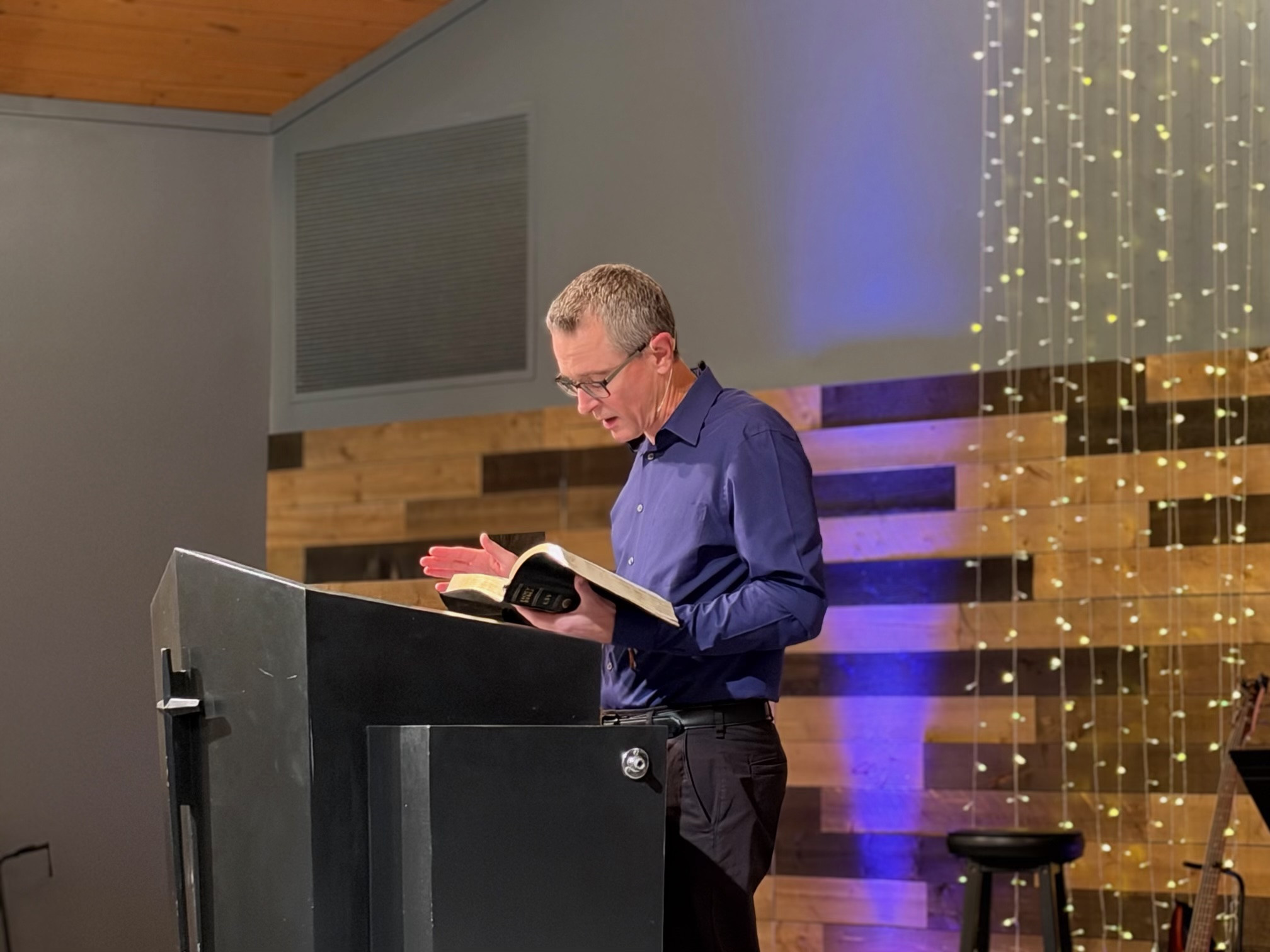
The following is a lightly edited transcript generated from the audio; it may contain small errors.
If you would open your Bibles to—so many Scriptures to look at. Deuteronomy 6. Let’s pray together. Father, we thank You for Your Word. We ask that You would open Your Word to us today, Lord, that You would teach us the Word. We thank You that we not only have Your Scripture, but we have Your Holy Spirit, that You have promised Your church to instruct, to guide, to illuminate the Word so that we can not only know the truth, but know You, the truth. And so I pray, Lord, that as we look at Your Word today, we would come to a better understanding of our calling, of our calling to be witnesses for You, but really ultimately of our calling to be like You and to glorify You. Remind us, Lord, why we are here, why we are even looking at Your Word, Lord: to bring You honor and glory and praise. We pray all these things in Jesus’ name. Amen.
By the way, don’t text me during the sermon. I bet I get a bunch of texts. I just bet. It’s going to happen. I know you guys. It’s going to happen. If you want me to answer it during the sermon, it has to say “From God” in the subject line. Otherwise, I’m going to ignore it.
Deuteronomy 6, a well-known passage on parenting, it says in 6:1:
Now this is the commandment, and these are the statutes and judgments which the Lord your God has commanded to teach you, that you may observe them in the land which you are crossing over to possess, that you may fear the Lord your God, to keep all His statutes and His commandments which I command you, you and your son and your grandson, all the days of your life, and that your days may be prolonged. Therefore hear, O Israel, and be careful to observe it, that it may be well with you, and that you may multiply greatly as the Lord God of your fathers has promised you—“a land flowing with milk and honey.” Hear, O Israel: The Lord our God, the Lord is one! You shall love the Lord your God with all your heart, with all your soul, and with all your strength. And these words which I command you today shall be in your heart. You shall teach them diligently to your children, and shall talk of them when you sit in your house, when you walk by the way, when you lie down, and when you rise up. You shall bind them as a sign on your hand, and they shall be as frontlets between your eyes. You shall write them on the doorposts of your house and on your gates.
(Deuteronomy 6:1–9)
Of course that’s your daughters and your granddaughters also. We’ve been talking about the Christian wheel over the past several months, and we’re on the witness spoke. We’ve been talking about evangelism, witnessing, and outreach. And in this discussion of witness, this may seem like an odd text in the context of witnessing, but in fact, one of the primary focuses of our witness as parents needs to be our own children. So when we think of going to the ends of the earth, we should go. When we think of going door to door in our community, we should go. We should go to our coworkers, we should go to family members or siblings, we should go to acquaintances at the ball field or the gym, we should go. But the fact of the matter is, we also have a mission field in our own home, and it’s called our children. So we need to go to them too. We need to be a witness to them also. That is to say that in parenting, one of our primary objectives—really it’s a fundamental objective—is to lead our children to a saving knowledge of Jesus Christ.
So the first point I want to make is that if you have children, your children need Jesus. They need Jesus. Now, one of the challenges of parenting—let me rephrase it, one of the problems that I think we encounter—is that many Christian kids grow up thinking that Christianity is about being good. Now, when you’re raising kids, and the kid’s sticking his finger in the socket, you got to say bad. Don’t put your finger in the socket, that’s a bad thing to do, okay? So when they’re real little, there’s good things and there’s bad things, you talk in terms of good and bad and all that. And as our kids get older and we try to talk about the things of God, they think the things of God can be summed up as keep your zipper up. That’s what it is. If my kid just gets married without, you know, if I can just get them off before the train goes off the track, that’s success. And so parenting becomes this—from the kid’s perspective, and this is the hard thing for us to remember as parents, even though for some of us it wasn’t that long ago—they think of Christianity simply, and the word simply is important, as a moral code. As a moral code. Now it’s clear in Scripture there is right and there is wrong. There are right things to do and there are wrong things we should not do. And parents have an obligation to teach their children right from wrong. There’s no question about this, right?
[audio unclear]
Hear, O Israel: The Lord our God, the Lord is one! You shall love the Lord your God
(Deuteronomy 6:4–5)
[audio unclear] of the Paschal Lamb. Where the Pharisees, then the Sadducees, then the lawyers, they all challenge Jesus. And so He answers the Pharisees in verse 34. It says, 22:34:
But when the Pharisees heard that He had silenced the Sadducees, they gathered together. Then one of them, a lawyer, asked Him a question, testing Him, and saying, “Teacher, which is the great commandment in the law?” Jesus said to him, “‘You shall love the Lord your God with all your heart, with all your soul, and with all your mind.’”
(Matthew 22:34–37)
By the way, that’s why they were sad, you see? Jesus quotes the Shema. That’s the great commandment. The commandment isn’t “be good.” The great commandment isn’t “be moral.” That’s not the great commandment. The great commandment is to love the Lord your God with all your heart, soul, mind, and strength. When someone loves God and it’s really in their heart and they really love Him, guess what? They don’t do certain things and they do do other things. Why? Because they have to conform? No, but because they love God. And the problem that we encounter in so many Christian homes is that our children are growing up feeling like they have to conform, but they don’t love God. That’s a problem. Now, ultimately, no parent can just zap their child’s heart with a love for God. You can’t do that. But you can do things and not do other things which encourage a love for God. And this is what we’re going to talk about this morning, some very simple things to do or to not do as parents because [audio unclear] Love God, [audio unclear] good, not just conform. That’s moralism. Christianity, true biblical Christianity, is a love relationship between the individual and God through Jesus Christ. That’s what it really is.
And so, if our kids grow up thinking that Christianity is simply rules, guess what people do in the face of a bunch of rules? Yeah, they rebel. They just rebel. They feel oppressed, they feel choked, they feel like they’re suffocating, and so they rebel. So loving God is the great commandment. This is the goal for all of us, whether you’re a parent or not. We are to love the Lord our God with all our heart, mind, soul, and strength. And when we truly love God, many of the externals take care of themselves because the internal is right. I’m so fortunate I got saved in a ministry that wasn’t legalistic, because it took me a while to shed a bunch of stuff that I was involved in. And they had a very cool attitude, you know? And because they knew if God doesn’t change the heart, any external change is ultimately just legalism. It’s just legalism. And so what we don’t want to do, parents, is just make it all look good on the outside for other people, when in fact it’s not good on the inside. And that can happen. It’s very easy to, if you will, play to your Christian friends, so it all looks good to your Christian friends, when in fact things are not well on the inside.
So let’s mention a few things we need to do as parents. One is, we need to teach our children the gospel. So do teach the gospel; don’t presume that our kids are going to hear it somewhere else. This is a common problem, but maybe less common here, but it is a common problem. We should not assume anything. Don’t assume that your children know the gospel. Do not assume because they prayed a sinner’s prayer [audio unclear] Jesus Christ. You can’t assume any of this. It’s clear in the Bible here and in many other texts that the primary duty of instruction falls on the father. Amen? At a minimum, that means he needs to set an example for his children and he needs to ensure that they’re instructed in the Word of God. This does not mean that he has to be the primary teacher of his child in all of his or her subjects. That would be impossible, because then he would be at home all day teaching the kids and he wouldn’t be able to go to work. So what the father must do is he must delegate and he must oversee. And the father often delegates to the mother. He may delegate to a teacher, but ultimately he’s responsible to God for the education of his children in the things of God. He is the one who’s ultimately responsible to see that his children are familiar with the clear gospel.
Now when I say familiar with the gospel, a father can’t make his child accept the gospel. No one can do that. As a matter of fact, if you try to cram the gospel down your kid’s throat, they’re probably going to reject it. Okay. But you can clearly explain it. You can invite. [audio unclear] God through grace. I’m going to talk about that a little bit more in a moment. I’m going to skip over a bunch of this for the sake of time. The parents, primarily the father, must see that his children understand clearly the gospel, and I would say even basic tenets of the Christian faith.
Secondly, the second thing we need to do as parents is we need to bring up our children, bring them up and not tear them down. Bring them up, not tear them down. Look at Ephesians 6. It says, “Children, obey your parents in the Lord, for this is right.” How many of you here are still living at home with your parents? Raise your hand. Okay. Well, here it is.
Children, obey your parents in the Lord, for this is right. “Honor your father and mother,” which is the first commandment with promise: “that it may be well with you and you may live long on the earth.” And you, fathers, do not provoke your children to wrath, but bring them up in the training and admonition of the Lord.
(Ephesians 6:1–4)
God wants to bless you. He wants to bless your life. And the blessing on your life is related to your treatment of your parents. Treat them well. God will treat you well. There’s an exhortation to the children to be obedient, to honor their parents. But then there’s an exhortation to the fathers to make it easy for them to do that. Make it easy for your kids to honor you by how you live. Here, the fathers, and this by course of analogy the mothers also, not just the fathers, they’re to bring up their children, which means to nourish. According to Calvin, the word means to train by nurture, with an emphasis on gentleness and forbearance. Gentleness and forbearance. So in other words, do be kind, gentle, patient, and understanding. Remember, your children, like you, are mere dust. Mere dust. Look at Psalm 103. I would quote it for you, but I want you to see it in print. Psalm 103. He’s talking about God’s goodness. God’s goodness—talks about all things, not to forget His blessings in Psalm 103. And then it says in verse 8:
The Lord is merciful and gracious, slow to anger, and abounding in mercy. He will not always strive with us, nor will He keep His anger forever. He has not dealt with us according to our sins, nor punished us according to our iniquities.
(Psalm 103:8–10)
Amen. Aren’t you glad we didn’t get what we deserved? Amen.
For as the heavens are high above the earth, so great is His mercy toward those who fear Him; as far as the east is from the west, so far has He removed our transgressions from us. As a father pities his children, so the Lord pities those who fear Him. For He knows our frame; He remembers that we are dust.
(Psalm 103:11–14)
The assumption of the psalmist is that a father naturally is understanding and pities. We would say he’s kind, he’s merciful to his own child. So he says God is like that. Why? For He knows our frame and He remembers that we are dust. We parents need to remember that our children are dust. And it’s very easy when you are a committed Christian and you’re serious about the things of God to raise the bar so high that, guess what, no one can meet it. Not even you. And your kids can’t meet it because they’re mere dust. And we can set unrealistic expectations for our children. And what happens by doing that is we discourage them. They get provoked to anger, to rebellion. Children are provoked, as it says in Ephesians 6, when we are too strict, we’re too critical, when we are unfair, and there’s many different ways we can provoke them, but we have to be realistic in our expectations. I know parents that expect their four-year-old kid to be like a 40-year-old man. It doesn’t work that way. Maturity takes a long time, a long time. And the important thing for parents here is we need to remember that not only our kids are dust, but we are dust. And we need to think about the expectations we’re placing on them in light of our own lives. And many times, as parents, we expect our kids to be better than us. And that’s not fair, is it? And when there’s unfairness, it provokes our children.
John Eadie, the great commentator, said this on the Colossians passage, which is similar. He says, the fathers are spoken to since training is their duty, and because this peculiar sin of provoking them, which the apostle condemns, is one to which they and the mothers are peculiarly liable. Now mothers can do this too, and I’ve seen mothers do this, but it’s often the men who do it. “The paternal government must be one of kindness, without caprice, and of equity without favoritism.” The term includes greatly more than [audio unclear] And when the child obeys, [audio unclear] obedience should not be prompted or rather forced by menaced infliction. [audio unclear] If they never please their father, if they’re teased or irritated by perpetual criticism, if they’re kept apart by uniform sternness, if others around them are greeted with a parental frown but are never greeted with a parental smile, then their spirit is broken and they are discouraged.
We need to understand that our children are children. Our children are going to make mistakes. Our children are going to sin. Your child is going to sin. Is there any question about this? I’ve heard parents say when they were informed of a sin their child committed, “My child would never do that.” Okay, have you like read Genesis, the fall of man? I mean, we’re all fallen in Adam, right? That means we are all capable of the most heinous crimes, every one of us. And if you think your child is not capable of sinning or doing that sin, then you’re not understanding one of the most fundamental doctrines in the Bible. There lurks in your child’s heart and my child’s heart, and not only in our children’s hearts, there lurks in my heart and your heart the most horrifying monster capable of the most cruel, despicable deeds that can be imagined. And that monster is called sin, or the flesh. And it’s in every one of us, even if we’re born again. So we have to understand that our children will sin. And I say that because some parents not only will they justify their children to everybody else, like, well, my child, whatever, my child is just like this perfect angel, you know. But the problem is that if we expect our kids to be [audio unclear] they’re going to not only disappoint us, but we’re going to end up, I believe, embittering them in some way. Because the expectation is unrealistic. It’s not going to happen. And very often what happens in Christian homes is what? Our expectations, being unrealistic, can’t be met. And so we drive this sin underground.
And so the kid learns. I was watching my wife this morning put on her makeup. Isn’t my wife beautiful? And I was thinking about how easy it is to just put on your game face for church. You know what I mean by that? And so our kids do that too. And so they learn, oh, if I say yes sir and no sir, if I say yes ma’am and no ma’am, they’re going to think I’m real respectful and everything. And then they slink off and do their thing. And so the sin gets driven underground. You know, our kids learn to put up a good Christian front to their parents. And so, part of the reason—it’s not only human nature to do that, but part of the reason is unrealistic expectations placed on the kids by the parents. When your children sin, you shouldn’t be, “I can’t believe you did that,” as if you, the godly one, certainly could never commit that sin. Well, of course you could. And if you haven’t committed that exact sin, you’ve committed sins just like it in some form or fashion. And so we need to remember that in our parenting, we’re instructing, but we’re not just instructing, we’re nurturing and we’re building up and we’re hopefully building a relationship with our children. We can parent in a way that they feel driven from us, or we can parent in a way that in spite of their sin, they feel drawn to us.
And this leads to my third do and don’t. Do set an example, and don’t make your child stumble with your hypocrisy. I’ve got to read a great quote by Lewis. It’s kind of long, but it’s really good. You all know C. S. Lewis, right? Narnia, all that jazz. The Narnia guy. That’s how the new generation knows him. The Narnia guy. You know the Narnia movie. So this is really, really—this is wow. He says, if Christian teachers wish to recall people to domesticity—that’s a big word for home life—if we want to nurture home life, and I for one believe that we should, that people should be recalled to it, the first necessity, are you listening? It’s important. The first necessity is to stop telling lies about home life and to substitute realistic teaching. Stop telling lies. I’m so tired of seeing the Victorian photographs on Christian family stuff as if the Christian home is this thing like we’re living in the 1850s and everybody’s wearing lace. It’s all a lie. It’s not the way it is. So Lewis says, we need to stop lying to people. “Perhaps the fundamental principles would be something like this.” So he lays out three principles. Well, actually four, but I’m going to try to reduce this.
Principle number one, and this does relate to my sermon, by the way. Since the Fall, no organization or way of life whatever has a natural tendency to go right. The family, like the nation, can be offered to God, can be converted and redeemed, and will then become a channel of blessing and grace. But, like everything else that is human, it needs redemption. Unredeemed—meaning the unredeemed family—will produce particular temptations, corruptions, and miseries. Charity begins at home, and so does uncharity.
We hear a lot of slogans about the family. And I’m as pro-family as the next guy. We’re a homeschool family. Family is great. Family is good. But family isn’t God. Family isn’t perfect. Family, in and of itself, is an institution that God designed, but as Lewis points out, it’s a fallen institution, just like the church has fallen and just like the state has fallen. Everything in our world has fallen.
Secondly, he says, by the conversion or sanctification of the family, we must be careful to mean something more than the preservation of “love” in the sense of natural affection. This is a very important thing. I pray to God you will hear this. Love in the Bible—there are several kinds of love. And one of those loves is called storge. And this is the natural love that a parent has for its child and vice versa. It’s home love, if you will. It’s a very natural thing. Many of you would probably kill somebody who attacked your family. It’s called the mama bear syndrome, right? Someone’s sweet and nice, you touch my Johnny, rargh! You see the claws come out, right? That’s a natural affection. We call it love, and it’s love in the sense of natural affection. But that is not agape. Agape is higher than storge. And many Christians—and I’ve given numerous sermons over the years, I don’t know how many, if I had a dollar for every one, I’d probably be rich—and I’ve talked about the family, and I’ve talked about love in the family, are hearing the word storge when I’m talking about agape. They’re confusing their natural affection for their children with biblical agape love. They are not the same thing. The fact that you love your children in a natural way doesn’t mean you’re loving them according to the great commandment. Because the great commandment of Jesus, the Shema of Israel, is agape love. Okay? It’s a higher love. Natural affection simply has a tendency to protect the object of one’s affection. Agape will go beyond that, and agape is willing to sacrifice for the sake of the object of our affection. Agape will do the hard thing. And natural affection is not agape love. They’re often confused. They’re not the same.
He says this: affection, meaning this natural love, is distinct from charity. Now he’s using the word charity, that’s the word for agape, is not a cause of lasting happiness. Left to its natural bent, affection becomes in the end greedy, solicitous, jealous, exacting, timorous. It suffers agony when its object is absent, but it is not repaid by any long enjoyment when the object is present. The greed to be loved is a fearful thing. We need to realize as parents, we need to ask God for the grace to love our children with more than a natural love. We need to ask God to give us agape for our children, because that’s the love which will enable us to make the really hard decisions. The really hard decisions in parenting. That means agape love is the love which loves God first. That’s Matthew 22. Jesus said, love the Lord your God. Then He said love your neighbor as yourself—that includes your family. Love God first. Agape is the love that puts God first over our children. God first, our children second. And we conservatives need to be very careful of reversing that and putting our children first and our family first, all in the name of some kind of defending traditional marriage and defending the traditional family, and we’re the remnant, rah, rah, rah. Okay? And you can make an idol of family as you can make an idol of anything else. God is to be loved supremely over our spouse, over our children, over every other relationship. God first. It’s a tough thing. But agape enables you to do that. It enables you to make the tough decisions. And in parenting, there’s a lot of tough decisions, amen? I mean, you’ve got to make some hard calls regarding your kids, and your natural affection is, I don’t want to do that, because that’s going to be painful. But agape enables you to do that.
Here’s another thing Lewis says, and this is where it relates to my point about setting an example of not being a hypocrite. He says, three, we must realize the yawning pitfall in that very care of home life which is so often glibly advertised as its principal attraction. Quote: “It is there”—meaning in the home—“that we appear as we really are. It is there that we can fling aside the disguises and be ourselves.” End quote. He, that person who says such a thing, values home as the place where he can be himself in the sense of trampling on all the restraints which civilized humanity has found indispensable for tolerable social intercourse. And this, I think, is very common. What chiefly characterizes domestic, meaning home, from public conversation is surely very often simply its downright rudeness. What distinguishes domestic behavior is often its selfishness, slovenliness, incivility, and even brutality. I have heard parents talk to the kids in ways they would never talk to anyone else, ever. And for some reason, they think it’s okay. I don’t know why. But it’s not okay. It’s never okay to be rude. It’s never okay to be unkind. It’s never okay to speak words harshly. That’s never okay. Being a parent doesn’t give you the right to trample on the hearts of people, especially your children. And Lewis is right. He is absolutely right. In too many homes, even Christian homes, the way people interact is at best uncivil, if not literally brutal, at least brutal to the emotions. That is not agape love.
He says, how then are people to behave at home? He says, if a man can’t be comfortable and unguarded, can’t take his ease and be himself in his own house, where can he be? And Lewis says, that is, I confess, the trouble. The answer is an alarming one. There is nowhere this side of heaven where one can safely lay the reins on the horse’s neck. It will never be lawful simply to be ourselves until ourselves have become sons of God. Amen? The problem with being yourself is a part of yourself is still your flesh. And so there is no place where God says, oh, in that place it’s okay to indulge the flesh. There is no place. Your home is to be, as the Puritans used to love to say, a little church. It’s to be a little sanctuary. It’s not to be a den of iniquity. It’s not the place where you can throw off restraints, throw off civility, throw off kindness, and come to church and praise the Lord and go home and cuss at your kids. That is not permissible. A great way, a great guard against hypocrisy is simply this. Interact with your children, speak to them as if Jesus were present. Oh, He is. He is. He is present because He’s omniscient and He sees and He hears all that we do in our homes and outside of our homes. Lewis says, must we not [audio unclear] and begin to give practical advice on the high, hard, lovely, and adventurous art of really creating the Christian family. Isn’t that good? It’s a glorious thing, but it is a hard thing. It takes a lot of work. It’s a hard thing to do. Platitudes will not do it.
So we parents need to work on ourselves as much, if not more, than we work on our kids. Because the great challenge of parenting is the parent. It’s the parent. We can only pass on what we are. Think about that. We can only pass on what we are. So, if I want my kids to love God, do I love God? If I want my kids to obey Jesus, do I obey Jesus? Or do I just preach? Do I just lecture? I need to be whatever I expect them to be. That simply means I need to be genuine. I need to be real. Your children don’t expect you to be perfect. So don’t try to give them the impression you are, because they can see right through that. None of us are perfect as Christians and none of us are perfect as parents. And let me just say this to the parents: one of the most powerful weapons you have in your arsenal is the word “I’m sorry.” And if you can’t say that to your kids, then you don’t understand grace. You do not understand how gracious God has been to you. True piety at home means genuine Christian living in its glories and in its failures. It’s good and it’s bad. Its successes and its failures. And when you fail, you can say, I’m sorry. And that will earn more respect from your children than any amount of lecturing will ever do. Amen? You have to learn to say, I’m sorry.
Last point I want to make. Do believe and don’t doubt. Do believe and don’t doubt. There are many, many, many glorious promises to parents. And I want to look at a few as we close. Go back to Deuteronomy. Deuteronomy 7:9. Therefore know the Lord—remember we just looked at Deuteronomy 6, this is all kind of one long discourse by Moses here.
Therefore know that the Lord your God, He is God, the faithful God who keeps covenant and mercy for a thousand generations with those who love Him and keep His commandments.
(Deuteronomy 7:9)
Have you ever wondered why you got saved? Like, I wonder that. Because my family wasn’t a saved family. I grew up in basically a weird family, actually. It wasn’t a Christian family. And you know, I think that often God works in our lives in response to prayers that people prayed for us, generations back. We don’t even know that God is keeping a promise to someone else, and the result is a blessing on us. So, you know, my parents weren’t saved. Well, my mom got saved by the grace of God at the end. My parents weren’t saved. My grandparents, I don’t think, were saved. And I don’t know how far back, but I believe that there were people in my family that were true believers and probably prayed for their posterity. And so that’s the way we need to pray down the line. Because God keeps covenant, and He says for a thousand generations, that’s mercy, man. Amen. And then He says, and He repays those who hate Him to their face, to destroy them. He will not be slack with him who hates Him. He will repay him to his face. So God keeps His covenant. God is faithful.
We need to parent in faith, relying on God’s faithfulness. Psalm 103, which we looked at a little bit of. Go back there. Psalm 103, this is a beautiful psalm. And here’s what the psalmist says about God in verse 17. He says:
But the mercy of the Lord is from everlasting to everlasting on those who fear Him, and His righteousness to children’s children, to such as keep His covenant, and to those who remember His commandments to do them.
(Psalm 103:17–18)
Not only your children’s children, but your children’s children. God keeps covenant. God is faithful to show mercy to such as keep His covenant and to those who remember His commandments to do them. Look at Luke chapter 1. These are promises that we as parents need to cling onto, hold onto, promises that ought to be motivating faithful parenting and promises that ought to be motivating consistent prayer. Luke chapter 1, this is Mary’s Magnificat. Let’s just start in verse 46.
And Mary said: “My soul magnifies the Lord, and my spirit has rejoiced in God my Savior. For He has regarded the lowly state of His maidservant; for behold, henceforth all generations will call me blessed. For He who is mighty has done great things for me, and holy is His name. And His mercy is on those who fear Him from generation to generation.”
(Luke 1:46–50)
Acts chapter 2. By the way, Acts was written by Luke. Acts chapter 2. Peter is preaching the gospel. He says, after he talks about Jesus being ascended, seated at the right hand of the Father. He says in verse 37:
Now when they heard this, they were cut to the heart, and said to Peter and the rest of the apostles, “Men and brethren, what shall we do?” Then Peter said to them, “Repent, and let every one of you be baptized in the name of Jesus Christ for the remission of sins; and you shall receive the gift of the Holy Spirit.”
(Acts 2:37–38)
[audio unclear] Don’t parent in fear. Parent in faith. If we do our part, that is to say, if we as parents will simply do what God calls us to do, if [audio unclear] The great epiphany of parenting is to realize that there’s only so much you can do, and there’s a place in your child’s heart that you can never reach. That God has to do a work in them, because you can’t stick your hand in there and grab their heart and turn it toward Jesus. But we have promises in the Word. And if we will be faithful, if we will be faithful in our walk with the Lord—not perfect, but faithful—we have promises in the Word that God will be faithful, because He’s a covenant-keeping God. And He is a faithful God. And He says that He will be faithful to our children and to our children’s children. So we need to parent in faith, not parent in fear. We need to parent relying on the grace of God. And we need to be parents who pray. Pray. And I mean pray. Because ultimately, our kids need a work of grace in their hearts. And as parents, we ought to be praying daily for our children to know Jesus Christ. And if they know Him, praying daily that God will work grace in their hearts to follow Him and to want to serve Him. We need to pray. But we pray in faith, believing the promises of God. Amen.
Let’s stand together and pray. Father, we thank You for the blessing of calling so many of us to be parents. We thank You that our children, in spite of the challenges of parenting, Lord, our children are a great blessing, and Your Word says they are a reward from You, and we want to acknowledge that. We want to acknowledge, Lord, that our children are a great blessing, and I pray, Father, that we would learn to treat them as a great blessing. I pray for us to walk in integrity with our children. I pray that we would learn to walk in humility. And I pray that as parents, where we have failed, that we would have the humility to apologize. I pray, Lord, that You would convict us when we’re being disingenuous or being hypocritical at home. I pray that You would convict us when we’re being condescending or insulting to our kids. I pray, Lord, that we would just have a much greater sensitivity to Your Holy Spirit in our homes. Lord, I thank You that You are present in our homes. And Your Word says that the eyes of the Lord are in every place, beholding the good and the evil. And I pray that You remind us, Lord, that You’re present, not just watching, but You’re present, You are there to sustain. You are there to bless. You are there to give grace to parents, to give them patience, to give them wisdom, to give them strength. You are there to give our children the ability to submit when it’s hard. Lord, I thank You that this work in our homes is not just our work, it’s His work we do with You. We cooperate with what You’re doing in our lives and in our kids’ lives. So remind us, Lord, of Your presence and help us as parents to really rely on You, Lord, to walk with You. And by doing so, to bring our children to a saving knowledge of Jesus. And we ask it in Your name, amen.