
March 15, 2026
The Real Deal – Part 3
Dr. Michael A. Bond · Philippians 3:1–11
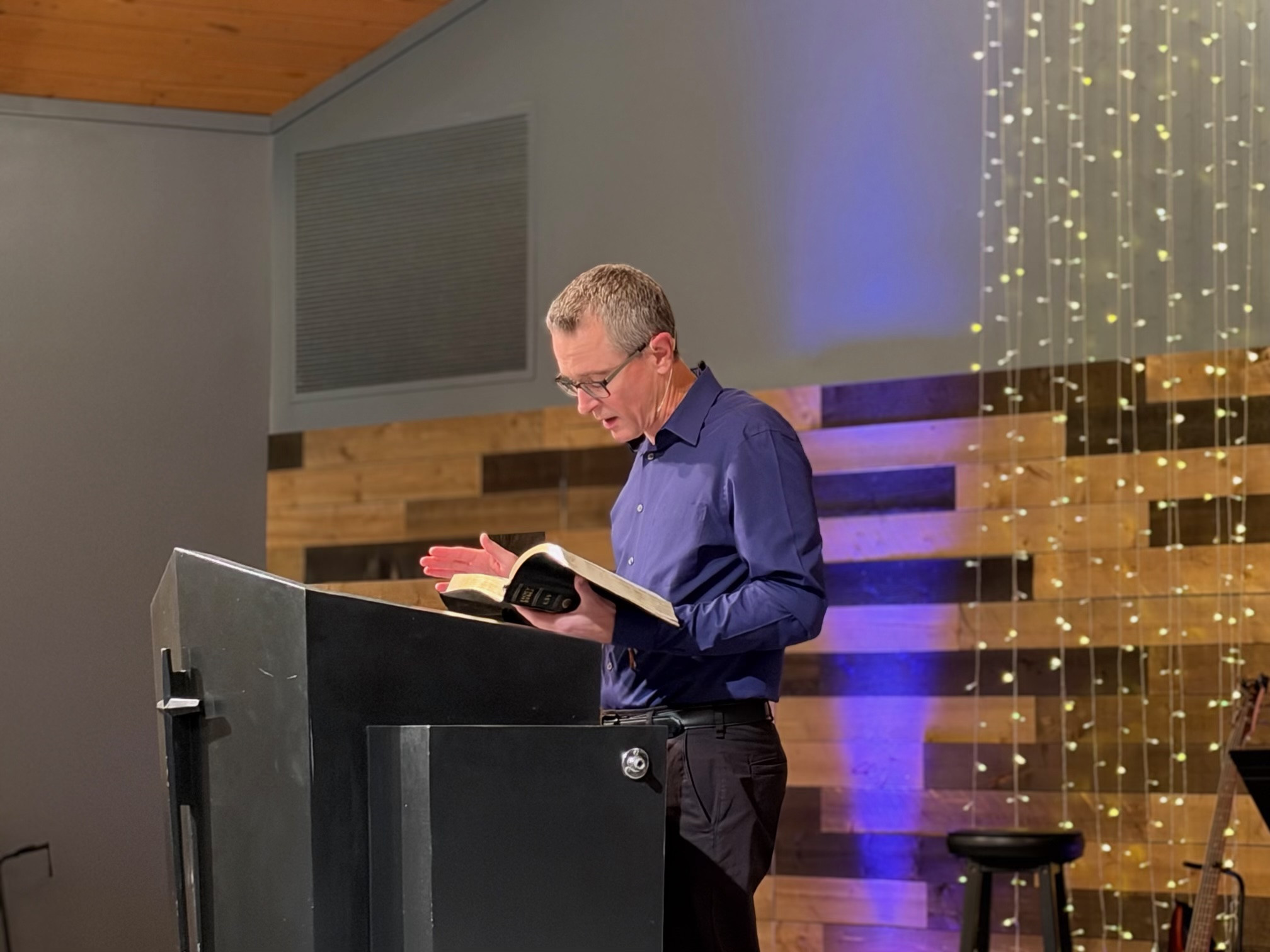
Philippians 3:1-11
The following is a lightly edited transcript generated from the audio; it may contain small errors.
Good morning. How is everyone? Good to see you all. We’re back in Philippians, chapter 3, if you want to turn there with me. Starting in verse 1:
Finally, my brothers, rejoice in the Lord. To write the same things to you is no trouble to me and is safe for you. Look out for the dogs, look out for the evildoers, look out for those who mutilate the flesh. For we are the circumcision, who worship by the Spirit of God and glory in Christ Jesus and put no confidence in the flesh—though I myself have reason for confidence in the flesh also. If anyone else thinks he has reason for confidence in the flesh, I have more: circumcised on the eighth day, of the people of Israel, of the tribe of Benjamin, a Hebrew of Hebrews; as to the law, a Pharisee; as to zeal, a persecutor of the church; as to righteousness under the law, blameless. But whatever gain I had, I counted as loss for the sake of Christ. Indeed, I count everything as loss because of the surpassing worth of knowing Christ Jesus my Lord. For his sake I have suffered the loss of all things and count them as rubbish, in order that I may gain Christ and be found in him, not having a righteousness of my own that comes from the law, but that which comes through faith in Christ, the righteousness from God that depends on faith—that I may know him and the power of his resurrection, and may share his sufferings, becoming like him in his death, that by any means possible I may attain the resurrection from the dead.
(Philippians 3:1–11)
Let’s pray. As we come before you, we want to thank you for your goodness to us this morning. We want to thank you for the worship. We want to thank you that we can gather together. Lord, we thank you for John and Sarah’s new baby Daphne. We pray that you’d be with them as they get some rest. We pray for your hand of blessing on that little baby, that she would grow up to know you, to fear you, to love you, to seek you. Lord, we also pray for Sarah’s husband Dennis. Thank you for bringing him home from the hospital, God. We pray that he’d get rest and that everything would be fine. Lord, we thank you for your goodness and grace upon him. And also, Lord, we thank you that we have a senator in this state who is staunchly pro-life and is willing to stand firmly for you. Lord, we pray that the bill that he introduced this past week in the Senate would pass, which would ban the abortion pill in this land. God, forgive us for the many, many, many deaths through abortion that are on this land. God, we pray that you would completely eradicate that—completely eradicate it, Lord. Take it out of this land, Lord. Let the bloodshed be gone. Lord, we also pray for our military, for the lives lost in the last few weeks in the conflict with Iran. Be with those families, Lord. Thank you for them, for those men and women placing their lives on the line. We thank you for them defending the freedoms here and wanting to get the captives free in Iran. And we pray, God, that you would be with their families, Lord. Use it to bring people to know you. Use it for your glory, God. And now, Lord, help us. We want to be a people that hear from you in all things. We want to be a people that are praying. We want to be a people that aren’t just centered on our own needs, but on the needs of those around us, as Philippians talks about. Help us to hear today from heaven, Lord, and cry out to you. Help us cry out for your mercy and grace. Be with us as we continue on, we pray in Jesus’ name. Amen.
All right, so we’re picking back up where we were last week. Just a quick recap. We looked at the attack that the Philippians were under in regards to their faith, and how a group called the Judaizers had been trying to put the Philippians’ focus on external regulations—that regarding the law and not that regarding Christ. So Paul enumerated three things that we see here, all of them mentioned in verse 3, of what true believers have as opposed to the false, the Judaizers. So we talked about the real and the false. This week, we’re going to talk about the real glory. Then after that, we’ll look at the real confidence.
So let’s talk first about false glory. Paul states not only that true believers worship by the Spirit of God—look back in verse 3, “who worship by the Spirit of God”—but notice what he also says: they glory in Christ Jesus. Now, depending on what version you’re using, it might say rejoice. Some versions say boast. That’s all fine. The Judaizers had a false glory. What was that false glory in? Well, it wasn’t Christ. It was in the law. They boasted in the Old Testament, specifically the ceremonial laws—all the sacrifices, all the festivals, and of course circumcision. So they gloried in the law and how by it they were righteous before God. Now, were people in the Old Testament justified by works of the law? No. But did people get confused at times? Yeah. Was that because the Scripture wasn’t clear? No. Listen, fallen man always wants to be able to control his own destiny. We want to be able to control our own destiny—where we go, what we do, how we do it, when we do it, where we do it. We want to be able to control that. And it’s very hard for anyone to admit God is in control. It’s very hard for us to pour our life, completely and entirely, into God’s hands. It’s hard for us to do it. It’s hard for us to do that for our children. We’re called to do that, but it’s hard for us to do it for them. So the Judaizers—it’s very easy to take the path of works. [audio unclear]
Even if you think of the parable in Luke 18, you remember the parable of the two men. They go up to the temple, one’s a Pharisee, one’s a tax collector. What does the Pharisee say? I’m glad I’m not like that guy. What does the tax collector say? God, be merciful to me, a sinner. Jesus says, which one went home justified? The tax collector, right? So they felt righteous by following the law, and that’s what they boasted in. Again, no one keeps the law very well. What does James tell us, chapter 2: “For whoever keeps the whole law but fails in one point has become guilty of all of it.” Guilty of one point, you’re guilty of all points. So if we could, we could take just one. We could just take one of the commandments. We’re not going to do it, but we could take one commandment and actually see just by breaking one of it how really they all interlace together. Even if you just take one of the Ten Commandments. But if you’re guilty at one point, you’re guilty at all points.
Over and over and over the Scripture emphasizes that it’s not about works. Think of Ephesians chapter 2, right? We’re saved by grace through faith, and the question literally says, not by works. Not by works. So they miss the big picture—the Judaizers, the Pharisees, they miss the big picture time and time again. Keep your place in Philippians; we’ll come back to it, but look at Mark chapter 3. Mark chapter 3, it says, verse 1:
Again he entered the synagogue, and a man was there with a withered hand. And they watched Jesus, to see whether he would heal him on the Sabbath, so that they might accuse him. And he said to the man with the withered hand, “Come here.” And he said to them, “Is it lawful on the Sabbath to do good or to do harm, to save life or to kill?” But they were silent. And he looked around at them with anger, grieved at their hardness of heart, and said to the man, “Stretch out your hand.” He stretched it out, and his hand was restored. The Pharisees went out and immediately held counsel with the Herodians against him, how to destroy him.
(Mark 3:1–6)
First of all, why are they watching Jesus? It’s the Sabbath. What should they be doing? They should be worshiping, right? But I mean, they’re focused on that guy over there. So they watch Jesus to see whether he would heal him on the Sabbath so that they might accuse him. Isn’t that horrible? Like this guy has a disability and they’re like, Jesus better not heal him. That’s horrible. They’re more concerned about the law: no work on the Sabbath. Of course, does it say don’t heal on the Sabbath? It doesn’t say that. And Jesus kind of turns it around in another passage, you know, where he talks about, look, if your ox was in trouble, like you’d do something about your ox, right? How much more a person made in the image of God should you do something to help them out? So healing is work. That’s what they’re concerned about. Work is being done. But think about it, they’ve missed the whole picture. Jesus is right in front of them. This amazing work is going on. God in the flesh, he’s right there, and what do they do? They’re focused—they’re not even really focused on the written law. There’s no law that says you can’t heal. The law is no work. So then they started, because they were concerned, they started making up, oh, what does work mean? And they got so precise about it, they’re like, well, you can only carry your wood, you know, because you need a fire, you can only carry your wood x number of steps, you know, whatever it might be. Let’s say 50, 51, that’s work; 49, you’re good. They were so concerned about that. They got focused on the external and they missed that it’s about the internal. So Jesus is right in front of them. They totally miss the very Messiah they proclaim to be waiting for. Why? Their focus is on the law. Where should it have been? On the Lord.
In contrast, think about this: the believer doesn’t glory in the law or works. Even our best works done without the Spirit, the Bible calls them filthy rags. Isaiah 64:
We have all become like one who is unclean, and all our righteous deeds are like a polluted garment.
(Isaiah 64:6)
All our righteous deeds are like a polluted garment. The believer realizes he can do nothing to be righteous in God’s sight. Apart from Christ, we can’t do anything. Think of what it says in Romans 3: “None is righteous, no, not one.” Galatians 2:20:
I have been crucified with Christ. It is no longer I who live, but Christ who lives in me. And the life I now live in the flesh I live by faith in the Son of God, who loved me and gave himself for me. I do not nullify the grace of God, for if righteousness were through the law, then Christ died for no purpose.
(Galatians 2:20–21)
Christ died in vain if we’re justified by works. Why did he need to come and lay down his life? If it’s just about works, what was the purpose of Christ’s sacrifice?
So when we’re talking about these things, I think there’s sometimes a mistake that we believers make. When we’re talking about Jesus—and we really looked at it already in Philippians 2—go back to Philippians 3 and then go back a chapter to Philippians 2, because I want you to see this in Philippians 2. We’re told in verse 5:
Have this mind among yourselves, which is yours in Christ Jesus, who, though he was in the form of God, did not count equality with God a thing to be grasped, but emptied himself, by taking the form of a servant, being born in the likeness of men. And being found in human form, he humbled himself by becoming obedient to the point of death, even death on a cross.
(Philippians 2:5–8)
When we talk about Christ, we could talk about what some theologians call the two states of Christ. There’s the state of humiliation, basically everything from the incarnation until the resurrection. The state of humiliation. It encompasses his voluntary self-lowering from his divine glory. We looked at this passage in depth already, right? Did he set aside his divine attributes here? No. He did set aside his divine privileges, right? That’s what he set aside. So he comes down here. You have the incarnation. You have his obedience and suffering. He lived a life of perfect obedience to God’s law. What was the result? What did men do? They rejected him. He’s betrayed. He goes on trial. They crucify him. Well, what’s the theological significance? This state highlights his humility and solidarity—listen to me—with us. He fulfills the role of the suffering servant, Isaiah 53, in a state of humiliation. He’s atoning for sins. Whose sins? Yours and mine. Christ set aside the divine privileges, right? He doesn’t lose his divinity. He sets that aside. God becomes flesh, the God-man. That’s the state of humiliation. That’s what Philippians 2 is really talking about. Then when you go on, though, therefore, verse 9, Philippians 2:
Therefore God has highly exalted him and bestowed on him the name that is above every name, so that at the name of Jesus every knee should bow, in heaven and on earth and under the earth, and every tongue confess that Jesus Christ is Lord, to the glory of God the Father.
(Philippians 2:9–11)
This is what we would call the state of exaltation. Some might call it the state of glorification. That’s fine. So following his humiliation, he enters a state of triumph. Triumph. What are the aspects included in this? Well, the resurrection, right? Power over the grave. His ascension. Forty days after the resurrection, he ascends to heaven. What else does it include? We forget about this sometimes. His session and intercession. What is the session? He is seated in authority. Christ rules over all creation and intercedes for believers as high priest. Just listen to these verses. Hebrews 7, verse 25:
Consequently, he is able to save to the uttermost those who draw near to God through him, since he always lives to make intercession for them.
(Hebrews 7:25)
Christ is making intercession. That’s part of the state of exaltation. Romans 8 says a similar thing, verse 34:
Who is to condemn? Christ Jesus is the one who died—more than that, who was raised—who is at the right hand of God, who indeed is interceding for us.
(Romans 8:34)
Interceding, present tense—that’s what he’s doing. Then you have the second coming. The exaltation will be fully realized at his return in glory to judge the living and the dead. This state of Christ begins with the resurrection and it really continues eternally. What’s the significance? Well, it affirms Christ’s victory. He’s victorious. His ongoing reign, the hope of eternal life for believers—it demonstrates the union of his divine and human natures in eternal glory.
But here’s the thing: don’t confuse the two states. I believe most believers primarily focus on the first state of Christ. We think, when we think about Christ, a lot of times we’re thinking about, oh, his death and his earthly life. There’s nothing wrong with that. But you can’t forget his heavenly ministry, that he’s interceding now. You can’t forget that he rose from the dead. You can’t forget that he has victory over the grave, that he is ruling and reigning right now. And one day he’ll come back to claim his bride. That’s us. That’s some pretty good news, brothers and sisters, right? Don’t forget about that. So we think a lot about what he has done instead of what he is doing and what he will do.
So if we’re talking about glory in Christ, or we could say rejoicing in Christ, or we could say boasting in Christ, what are these things? Well, it really ties back into what I was talking about last week with the real worship. The real worship goes along with this. We have to have real worship and we want to have real glory. The glory, to boast, is to put Christ at the center. Let me ask you a question. Who owes worship to God? Everyone, right? We can put it a different way. Who does the Lord demand to worship him? Now, some of you probably don’t like that word demand. Like, God demands that? Yes, he does. Modern sensibilities don’t like that word, but he demands a hundred percent allegiance. Is there any other option for a person? What does a hundred percent allegiance look like to God? I mean obedience, submission, trust, and worship. So we can put it another way. Is it okay for anyone to disobey the first of the Ten Commandments—“You shall have no other gods before me”? No. What is that saying? No other gods. What is that saying? God must be what? He’s got to be first. What does that mean for God to be first? Well, he’s demanding allegiance. If you can’t have anyone else at the top, and God is telling you that, guess what he’s telling you? I want to be at the top. You need to put me there. So he’s demanding an allegiance.
Listen, was the demand in the Old Testament—hear me out—was the demand in the Old Testament for Israel alone? No. Did the other nations not have an obligation to worship the Lord? No, they very much had an obligation to worship the Lord. If you say no, then really what you’re saying, just a small step, it’s logical, is that it’s not a sin for them to worship Baal or Molech or any other false god. Right? Like the nations, all the nations owed allegiance to God. That’s kind of why it’s the first commandment. Did Jacob have an obligation? Yes. Did Esau? Yes. Did Ruth have an obligation? Yeah. Did her sister-in-law Orpah? Yes, she had an obligation. One did it, the other didn’t. Jacob—one did it, the other didn’t. What about Rahab? Did she have an obligation to submit to the one true God? Right? She did. Did the other inhabitants of Jericho? Yes. All people honor and worship him alone.
Brothers and sisters, the Almighty is a jealous God. He is a jealous God. Exodus 34: “You shall worship no other god, for the Lord, whose name is Jealous, is a jealous God.” And just think about it: what was Jonah doing going to Nineveh? There’s a whole book about it. I know it’s kind of short, but there’s a whole book about it. Jonah’s going to Nineveh. What’s he doing? [audio unclear] to the people, right? But what’s the message? It’s a simple message. The message is repent. But it wasn’t “stop doing bad stuff.” That’s not the message. It’s like, okay, stop the murdering, stop the adultery, stop doing this, stop being mean, but you can still worship those false gods—that’s great. No. Why did God—it says God relented of what he was going to do to Nineveh. Why did he relent? Because they repented. What does that mean, though? They made God the number one. They got rid of the false. You can’t repent if you still have false gods, right? So, yeah, it was a pretty simple message. And what happens? I mean, Jonah’s saying there’s a God in heaven and your wickedness has disgusted him. He’s about to destroy you, unless you repent. Now, what could they have said? Well, who is he to tell me what to do? Did they do that? No. I mean, so Jonah’s pretty clear with them. He’s the God of heaven. You owe allegiance to him and not to these false gods.
We need to reclaim the glory of the triune God for what it truly is, in all places, in all times. This allegiance is, was, and will always be due. And there’s a right way to glorify him, and a wrong way to glorify him. You know, you think about the laws for sacrifices and all these laws, all these laws, all these laws. There’s a lot of laws just regarding sacrifices. Well, the sacrificial system, it was a part of worship, right? So God wanted it clear: there’s a right way to worship him, and there’s a wrong way to worship him.
We have to be careful that we don’t shape God into an image of our own choosing. When we start saying and setting up worship the way we want it to be, or how it makes us feel, or how it helps us out—when we start to put an image of God in our minds that is not what the Scriptures talk about or display—we’re guilty of breaking the second commandment, no graven images. And sometimes we just try to bring God down to our level. But we’re trying to do more than the incarnation. Like God already came, not to our level, so to speak, but God became one of us. And it’s like, that’s not enough. We have to realize there’s very much an immanence to God. And I think some people do a good [audio unclear] and very far removed from us. Right? So how do those two go together? Well, we have to realize that we serve an amazing God who is so far and high above us. So we can’t fully know, to the extreme depths, an infinite being. Why? He’s infinite. It would take us infinity to get there. He’s so far above us, brothers and sisters. So we need to be careful. God had the sacrificial system. Worship has order to it. We’ve got to be careful not to water down our worship. We have to be careful not to water down our image of Jesus.
You know, our image of Jesus—I haven’t seen this shirt in a while, and I’m very thankful for it. But there was a shirt that was popular for a while where it had what was supposedly a picture of Jesus on it, right? And below it, it was like, “Jesus is my homeboy.” You guys remember that shirt? Yeah. Okay, if you have one, you should throw it away. But it’s like, I mean, you’re taking Jesus, who’s highly exalted. He’s literally seated at the right hand of God. He’s coming again in the clouds with glory. And it’s like, oh yeah, and here’s this supposed picture of him, and he [audio unclear].
Then the Lord said:
“Do not come near; take your sandals off your feet, for the place on which you are standing is holy ground.” And he said, “I am the God of your father, the God of Abraham, the God of Isaac, and the God of Jacob.” And Moses hid his face, for he was afraid to look at God.
(Exodus 3:5–6)
So Moses isn’t casual. That’s really my point. He encounters the living God. He’s not casual about it. Did he know about God before this point? Yes. He’s a Hebrew. He has fled. He identified with his people. He knew the history. He knows the story. But he’s not casual. He hides his face. And when God appears to Moses, he didn’t say, “Oh, come on over here. I want to be your friend.” It was like, take off your shoes. He wanted him to realize it was a solemn, serious event.
What happens later in Exodus? You fast-forward about 30 chapters, and Moses, what does he say to the Lord? “Show me your glory.” Show me your glory. And what does God tell him? You can’t handle my glory. That’s what he says. You can’t handle my full glory. So what does he do? He’s like, well, I’ll let you see a little bit of me. I’m going to cover you. I’m going to put you over here in the cleft of the rock. I’m going to put my hand over you. I’m going to let you see basically after I pass. You can see me from behind. Like, and that alone is borderline too much for you. And that’s what he does. Right? That’s God’s glory there. And we see examples in the Old Testament where God’s glory comes down and it fills the temple so much that, I mean, his presence is so much there, what happens? I mean, the priests can’t even—they’ve got to stop the sacrifices. They can’t even continue on. God has a glory that is only for him. And here Jesus steps into that in the high priestly prayer in John 17. And he says:
And now, Father, glorify me in your own presence with the glory that I had with you before the world existed.
(John 17:5)
So our glory is in Christ, not the external, not the external law, not in the sacrificial system. What does that mean? The focus is on him. There is wonderfulness and worth surrounding this word glory. So we focus on what he has done, what he is doing, and what he will do—not on what we have done. Now the focus is on him. Why? He is the true glory. Think about 1 Corinthians 1: “Let the one who boasts, boast in the Lord.” This is actually the same Greek word that we find here in Philippians. So Christ is our righteousness. If we’re going to boast about anything, if we’re going to glory in anything, then we must glory in Christ. He deserves the glory. And as we’ve seen, the triune God, he didn’t just want a little bit of the glory. He wants all the glory. Why? Because he deserves all the glory. Only God himself could make that claim. Only God himself could say that, and it not be a wrong thing, because he’s God. He deserves it.
So we [audio unclear]:
He is the beginning, the firstborn from the dead, that in everything he might be preeminent. For in him all the fullness of God was pleased to dwell, and through him to reconcile to himself all things, whether on earth or in heaven, making peace by the blood of his cross.
(Colossians 1:18–20)
Like that’s the glory of Christ. That’s the glory of Christ. We extol and we lift up what he has accomplished, not what we have accomplished.
A couple more passages. Look at Galatians chapter 6, verse 12. [audio unclear]
But far be it from me to boast except in the cross of our Lord Jesus Christ, by which the world has been crucified to me, and I to the world.
(Galatians 6:14)
Right, so you can boast in your flesh. That’s one option, or you can boast in the cross. Boasting in the flesh, boasting in the cross again—it’s the same word that’s being used. Like our call, our job, our role is to lift up Christ in all things. To magnify him. Be magnified, Lord.
Look at Jeremiah. We’re going to see that there is nothing different. Jeremiah chapter 9—nothing different for the Israelites. Verse 23:
Thus says the Lord: “Let not the wise man boast in his wisdom, let not the mighty man boast in his might, let not the rich man boast in his riches, but let him who boasts boast in this, that he understands and knows me, that I am the Lord who practices steadfast love, justice, and righteousness in the earth. For in these things I delight, declares the Lord.”
(Jeremiah 9:23–24)
That’s the boast. [audio unclear] years before. Same problem, same issue. “I will punish all those,” verse 25, “who are circumcised merely in the flesh”—look at who he names: Egypt, Judah, Edom, the sons of Ammon, Moab, and all who dwell in the desert who cut the corners of their hair. “For all these nations are uncircumcised, and all the house of Israel are uncircumcised in heart.” God has always been concerned about the heart. Always. He’s always been concerned about the heart. So we don’t boast in vain things. What we boast about is the fact that we know Jesus, right? Even in the Old Testament, God had a desire for people not to simply conform externally but to transform internally. I mean, strong language, right? I mean, he’s condemning Egypt and Edom and Ammon and Moab, but also Judah.
Why shouldn’t we boast in ourselves? Well, when you boast in yourself, you’re claiming that you can get along fine without God, that you don’t need him. What is he there for? Guess what he’s saying here in this passage: boasting in yourself, listen, is a barrier to relationship with me. Charles Spurgeon said it like this: “You are not mature if you have a high esteem of yourself. But he who boasts in himself is but a babe in Christ, if indeed he be in Christ at all. Young Christians may think much of themselves. Growing Christians think themselves nothing. Mature Christians know that they are less than nothing. The more holy we are, the more we mourn our infirmities, and the humbler is our estimate of ourselves.”
You ever talk with someone? I mean, it’s like the story always has to revolve around them. Always has to revolve around them. And sometimes you might mention, you know, something that you did, and oh, they got to one-up you, right? Is that a boasting in the Lord or a boasting in himself? It’s a boasting in self. They’re glorying in themselves. The focus has to be on them. That’s not what we’re called to do. Thankfully, thankfully, our salvation is not dependent on us. Imagine if it was. What a horrible thought. I mean, you’d be constantly worried if you had done enough. You’d constantly be trying to do more because maybe you’re just a little bit shy, and you’d hate to be just a little bit shy. Well, all this takes us back to God and his righteousness. What makes a man righteous? Is it something that he does, or is it something that God does? It’s something that God does. God does a work in us.
Here’s what Jonathan Edwards says. He actually mentions two kinds of righteousness in a sermon that he gives on justification. He said there’s a twofold righteousness that the saints have. Listen to this. An imputed righteousness—we talked about that a few weeks ago—and ’tis this only that avails anything to justification. And this is the second: an inherent righteousness. That is, that holiness and grace which is in the hearts and lives of the saints. This is Christ’s righteousness as well, right? So he’s like, it’s not something we do. So you got justification. That’s what he’s first talking about. This is Christ’s righteousness as well. Now he’s talking about a second. This is Christ’s righteousness as well as imputed righteousness. Imputed righteousness is Christ’s righteousness accepted for them. Inherent holiness is Christ’s righteousness communicated to them. They derive their holiness from Christ as the fountain of it. He gives it by his Spirit, right? I mean, the fruit of the Spirit. It’s the Spirit, it’s true. Yeah, I mean, he’s doing it in us. We’re cooperating with him. But Christ communicates this inherent righteousness. What word would we be familiar with to help make it a little bit easier? Sanctification. That’s what he’s talking about. So not only is the justification his, but very much the sanctification is his. And that’s what he communicates to us. He goes on, they derive their holiness from Christ as the fountain of it. He gives it by his Spirit, so that ’tis Christ’s holiness communicated. ’Tis the light of the sun reflected. Now God takes delight in the saints for both of these—both for Christ’s righteousness imputed and for Christ’s holiness communicated, though ’tis the former only that avails anything to justification.
So I mean, he’s making a clear distinction. There’s justification, God declaring the sinner righteous, but then there’s also sanctification, and even that is the work of Christ in us. That’s why sometimes you’ll find out and you’ll see in your Scriptures as you’re reading sanctification—we’ve talked about this, it goes back a ways—but we’ve talked about different aspects of sanctification. When you get saved, the Bible actually talks about, you actually, there is an initial sanctification. It talks about it in the past tense. Then there’s sanctification, it’s an ongoing thing, and then there’s actually a future sanctification, right? Like perfection for God’s saints, like when the sanctification comes in its fullness. What does that mean? Well, in glory, it means for us, we’ll never sin again. Hard to imagine. Hard to imagine. I know it’s hard for some of you to imagine. I know some of you. It’s hard for you to imagine, right? Hard for me to imagine. But we will not have the ability to sin. We won’t have that ability. So Christ gives us that sanctification.
John Calvin had another term for it. Edwards called it like two kinds of righteousness. Calvin called it a double grace. He says, Christ was given to us by God’s generosity to be grasped and possessed by us in faith. By partaking of him, we principally receive a double grace: namely, that being reconciled to God by Christ’s blamelessness, we may have in heaven, instead of a judge, a gracious Father. I mean, he is the judge, yes, but he’s our Father. That’s the justification. And secondly, by Christ’s [audio unclear], we may cultivate blamelessness and purity of life. He calls that the double grace.
A well-known songwriter, hymn writer, called it the double cure. You probably have—I have never heard of him, but you’ve definitely sung his song, Augustus Toplady. He called it—listen to these words: “Rock of Ages, cleft for me, let me hide myself in thee; let the water and the blood, from thy wounded side which flowed, be of sin the double cure, save from wrath and make me pure.” Pretty good, huh?
So what does this mean for us? Well, one, I’ve said it a few times already, we need to glory only in Christ Jesus. So we need to shift our focus from personal achievements, law-keeping, self-righteousness, to rejoicing in what Christ has accomplished for us. Make it a habit to think and speak about his work on the cross rather than your own efforts.
Two, remember both states of Christ. All right. Yes, regularly reflect on his humiliation. Easter gives us a good opportunity to do that—his incarnation, obedience, and suffering. But also his exaltation: resurrection, ascension, ongoing reign, seated at the right hand of God. His rule will have no end. We’re back to Isaiah chapter 9. His kingdom, it will never end. So don’t forget his heavenly ministry.
Three, worship with full allegiance and humility. Everyone owes a hundred percent allegiance to God. So practice this, prioritizing God above all else in your daily decisions. Repent of any divided loyalties. Approach him with reverence rather than casually.
Fourth, we need to reject false glory and self-focus. You know, a lot of times when people talk about the different spheres of government, they’ll talk about civil government—usually what most people think of when they think of government. But civil government, then there’s church government, right? Then there’s family. But a lot of times people leave out an important one: self-government. Self-government. You need to reject false glory and self-focus. So examine your life as to where you’re boasting in yourself. Self-govern. Which one are you going to be like in the parable in Luke 18? Are you going to be like the Pharisee or the tax collector? If we’re honest, we’ve all been the Pharisee at times. “Glad I’m not like them.” That’s Pharisee. Don’t glory in works, or external conformity. Confess your inability to be righteous on your own. Romans 3:10. Thank God for his grace.
And then finally, embrace the double cure of justification and sanctification. Rely on Christ. He is the one that gives us a righteousness. It’s not a righteousness that we have on our own. I mean, that’s back in Philippians, right? What does he say?
In order that I may gain Christ and be found in him, not having a righteousness of my own that comes from the law, but that which comes through faith in Christ, the righteousness from God that depends on faith.
(Philippians 3:8–9)
How is the righteousness appropriated to us? By faith in Christ? Is it the faith that saves us? No. It’s God’s grace using the instrument of faith. God’s grace saves us through faith. So embrace the double cure of justification and sanctification. Thank the Lord for your salvation. Be grateful for that. And then thank him for the work that he’s doing in you. Think about where you were, even hopefully a year ago, or two years, or five years, or ten years, but there should be progress. All right. It should look like what you would like your stock portfolio to look like, right? And it’s like going upward all the time. Now, it’s probably going to have some times where there’s a little backtrack. But there should be progress. That’s the sanctification. But even that we realize that’s Christ doing that in us, through us. We’re cooperating with him. Yes, there’s a role we play in sanctification. It’s not “let go and let God”—that can be grossly misused. But be thankful. Embrace this double cure of justification and sanctification. Realize what Christ has done for us. He’s done so much. Glorification as well. Adoption as well. Regeneration. All these things give us more than enough reason to glory in Christ. Amen. Let’s pray.
Father, we do thank you for the double cure, because we were sick and we needed it. We were dead in our trespasses and sins, and you come along and offer us life. You offer us hope. We thank you, Lord, for blessing us, for giving us justification, for declaring us righteous in your sight. We thank you, Lord, that you’re doing a work in us. At times it seems slow, at times it seems painful, at times it seems we’re not making much progress, God. You are a faithful worker. You finish every task you begin. So finish your work in us and through us. Do what it says at the beginning of Philippians: he who began a good work will bring it to completion. So do that for each one of us, Lord, as long as we’re breathing. Continue to mold, continue to shape, continue to change us more and more to the glory and the image of your Son Jesus, and do this all for your glory. Amen.