
March 8, 2026
The Real Deal – Part 2
Dr. Michael A. Bond · Philippians 3:1–11
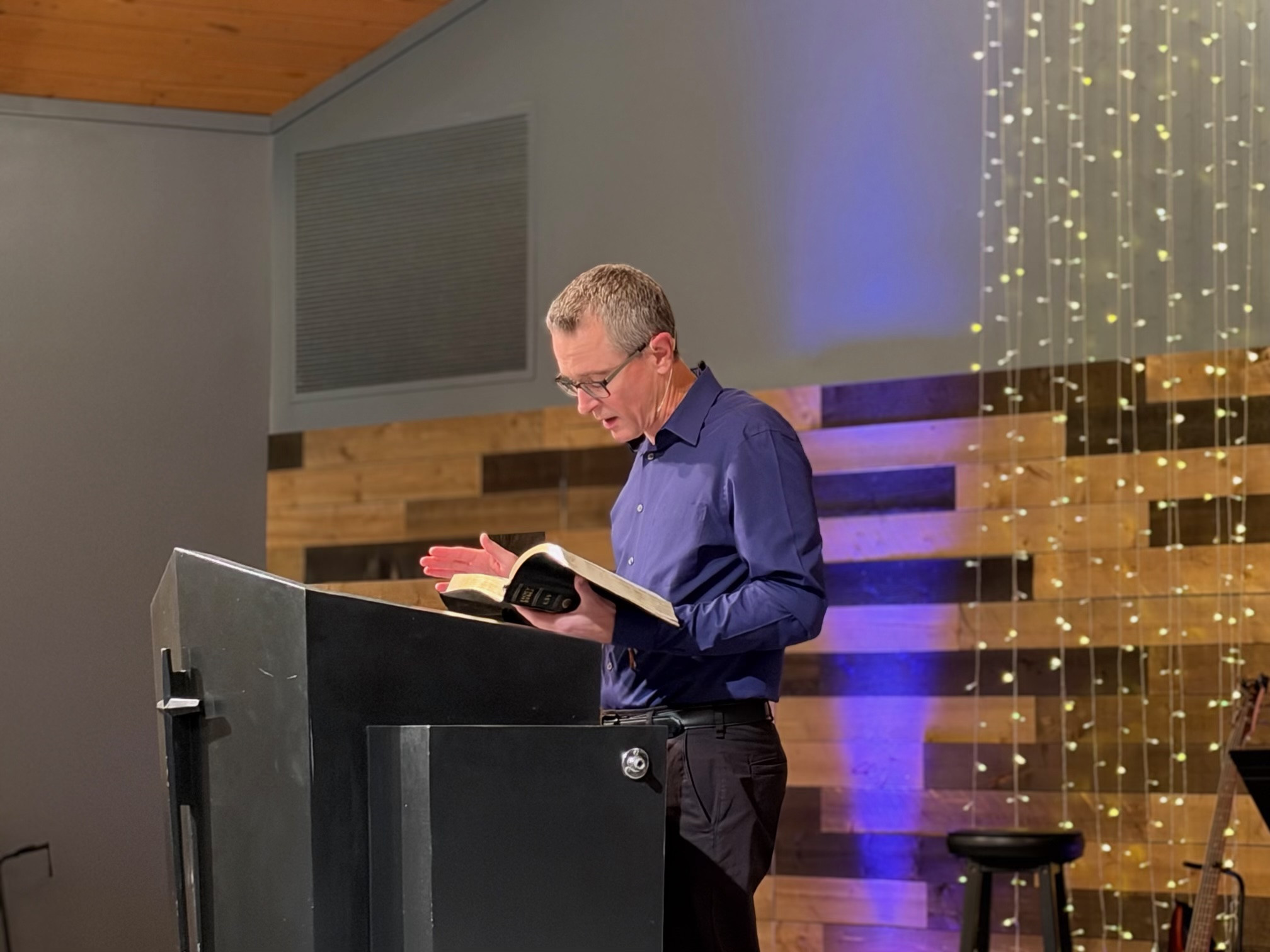
Philippians 3:1-11
The following is a lightly edited transcript generated from the audio; it may contain small errors.
How’s everyone doing? Good. Good to see y’all. We’re in Philippians chapter 3. Starting in verse 1:
Finally, my brothers, rejoice in the Lord. To write the same things to you is no trouble to me and is safe for you. Look out for the dogs, look out for the evildoers, look out for those who mutilate the flesh. For we are the circumcision, who worship by the Spirit of God and glory in Christ Jesus and put no confidence in the flesh—though I myself have reason for confidence in the flesh also. If anyone else thinks he has reason for confidence in the flesh, I have more: circumcised on the eighth day, of the people of Israel, of the tribe of Benjamin, a Hebrew of Hebrews; as to the law, a Pharisee; as to zeal, a persecutor of the church; as to righteousness under the law, blameless. But whatever gain I had, I counted as loss for the sake of Christ. Indeed, I count everything as loss because of the surpassing worth of knowing Christ Jesus my Lord. For his sake I have suffered the loss of all things and count them as rubbish, in order that I may gain Christ and be found in him, not having a righteousness of my own that comes from the law, but that which comes through faith in Christ, the righteousness from God that depends on faith—that I may know him and the power of his resurrection, and may share his sufferings, becoming like him in his death, that by any means possible I may attain the resurrection from the dead.
(Philippians 3:1–11)
Let’s pray. Father, we come before you today and we ask that you would speak to us through your Word. Lord, help us to hear clearly what you have for us today. Open up our hearts, Lord. Give us ears to hear. We thank you for the sacrifice of your Son, Jesus. We thank you for sending him to redeem us, Lord. We thank you for the blood of Jesus that covers our sins, wipes away our transgressions. Lord, help us to be a people who hear your Word and respond to it. God, we pray that you would continue to be in our midst, continue to bless us with your presence. Help us to set our face on you, Lord. Help us to turn towards the things of you, and help us to worship you rightly. We pray this in Jesus’ name. Amen.
Okay, we’re going to recap just briefly. Last week we’re looking at this passage. So last week we talked about the Judaizers, and the title of my message—well, this week is “The Real Deal, Part 2.” Last week it was “The Real Deal, Part 1.” And we’re looking at—a little bit we looked at the Judaizers. Judaizers tried to force believers from non-Jewish backgrounds to adopt the Jewish customs as a condition of salvation. So they basically added faith to the Mosaic law. This was an issue that affected the early church. We see it touched on a couple different times—Galatians, even Romans, here in this passage. It was affecting the early church because the Judaizers were teaching that the entire Mosaic law—listen, the entire Mosaic law—had to be followed in order to be saved. So basically it was Christ plus the law equals salvation.
So we looked at righteousness last week. We looked at justification. We looked at, we don’t have a righteousness of our own. Where does our righteousness come from? It comes from Jesus, right? That’s what we see. We see it right there in the passage. So we looked at that. Next week we actually might look a little bit more into that in some different aspects of it. We’re not going to do that this week. But we saw that salvation is only in Christ, and you don’t add anything to him. What do you have to do to be saved? You have to trust. We’re called to trust. Repent and trust is the call to the people. So salvation is only in Christ.
It’s a serious issue when you start messing, right? We can have different opinions on worship, right? Some churches and some people, I mean, they like it loud and they like it like rock and rolling, right? We can have different disagreements on those things and we can still be brothers and sisters in Christ. If we start to mess up essentials of the faith, that’s an issue. True? Okay, well, salvation is about as essential as it gets. So Paul doesn’t mess around, and he doesn’t really have nice words for these Judaizers. He calls them dogs. He calls them evildoers. He calls them those who mutilate the flesh. Well, when salvation is on the line, like we talked about last week, you have to be pretty blunt and straightforward. It’s not time to be mincing around with your words. So the bottom line was that it is Christ alone for salvation.
And even though it was really part one last week and this week’s part two, we actually will get into much of the three characteristics, which is the real worship, the real glory, and the real confidence. So let’s look at the first thing mentioned that distinguishes believers from so-called believers: worship by the Spirit of God. And I’m going to call it real worship. [audio unclear] What does it mean? It means service rendered to God. Service rendered to God. And a lot of times what you see in the Greek Old Testament is that there are words, again, used to describe the actions of the Israelites. And then in the New Testament, that same word is used and it describes the actions of believers. So that’s what we’re seeing here. Israelites worshiped in the Old Testament; believers worship in the New Testament. So he talks about in Romans 12—you can just listen:
I appeal to you therefore, brothers, by the mercies of God, to present your bodies as a living sacrifice, holy and acceptable to God, which is your spiritual worship.
(Romans 12:1)
There’s an external and an internal aspect to worship. We’re going to get to it a little bit later. But notice it’s a spiritual worship. But don’t make the mistake of thinking it just means it’s internal. It’s also external. We’ll come back to it.
So real worship requires slaying your dragons. What’s our theme for the year? Slay the dragons, right? So that’s my first point. Slay your dragons. Whatever prevents you from worshiping God, you need to take care of it. You need to get rid of it. You know, what do they do with idols in the Old Testament? I mean, sometimes they knock them over, but a couple times they ground them up. They just pulverized them. They got rid of them. So whatever prevents you from worshiping God must be slain. Slay your dragons. Whatever prevents you from making time with God a priority, you’ve got to slay that. Whatever prevents you from coming into his presence must be slain. So for many people, listen to me, for many people, it’s simply deeds of the flesh. And sometimes it’s something as mundane as laziness or selfishness. Those things can easily affect our worship of God.
Think about it for a second. If you had to wake up every Tuesday and be somewhere at 3:30 in the morning to get a shot in order to live for another week, would you hit that appointment each week? Yeah? You probably wouldn’t miss that. Is that an inconvenient time? 3:30 in the morning? For most of you. John’s probably just getting off work then, or he’s probably still working, wrapping up the day. But it’s inconvenient. But you’d make it. If you needed that shot to live another week, you’re going to make time to get to that appointment. And you’re probably going to leave plenty of time for all sorts of things to go wrong. Well, guess what? We all need some spiritual shots. And we get them each week right here. And it’s not really an inconvenient time. What else you got going Sunday mornings at 10? So you need spiritual shots. And listen, God is so amazing, awesome, glorious, wonderful—for us to be flippant about our attitude towards worship. We need to make sure we’re getting our spiritual shots. Some of us were too lazy for church. We’re too tired for church. We’re too worn out for church. I get it. I’m there with you oftentimes. But guess what? I’m still here. All right? Not just because I’m the pastor, but because I want to be here. Priorities matter. All right, you can be on time for work. You can never miss a day. But worship? Optional. But it shouldn’t be. Priorities matter. When we make God a priority in one area, he starts to spill over into other areas.
So sometimes, listen to this, sometimes the solution to slaying your dragon is to actually just get in the Word on a regular basis, fall on your knees on a regular basis, and beseech the Lord. And some of you are probably like, well, I’ve tried that, and it didn’t work. Well, I’m actually convinced a lot of you maybe haven’t tried it. Because you’d be amazed. If you’re in the Word on a regular basis, and you’re praying on a regular basis, you’d be amazed the sanctifying effect that has on your soul. Try it. If you really haven’t tried it, you should try it. It has a sanctifying—I mean, it’s again, one of my favorite verses, John 17:17: “Sanctify them in the truth; your word is truth.” So the Word has a sanctifying effect, and it kind of makes sense. Have you ever gone and eaten a lunch with someone, their words are encouraging to you, and you walk away from that lunch and you’re like, man, I’m so glad I had lunch with that person. Right? Okay, maybe you haven’t. Well, take me out to lunch sometime, pay for it, and I’ll do my best. But seriously, so if we as just human beings, as people, can have that effect on others with our words, how much more so the Word of God? [audio unclear]
Also, if you haven’t noticed, a number of years ago, I stopped making qualifications in most of my sermons. You could almost make an entire sermon of qualifications with every sentence you make. So I don’t usually make too many qualifications anymore. I actually think it can take away from the effect. It just seems like it’s an apology tour. I’ll make one qualification here. Listen, what I’m not saying is that a chapter a day keeps the anger away. Okay, I’m not saying that. What I am saying is get alone with God and let him do some soul work on you. That, if you really want to, if you really want to excel in any area of your life—like if you’re an athlete, going to the gym once a week, I mean, that can help you out, right? Going twice will help you more. Going daily is really going to help. True? And the top athletes, they’re at the gym every day. They’re working on their craft. The same is true for people gifted in other abilities. If you picked up an instrument and just did it once a week, you’re probably never going to become very proficient in it, but if you did it two or three times, you might. Okay? You hear these world-famous pianists—how many hours do they practice every day? Sometimes it’s like three, four, five, six hours. They’re at the pinnacle, man. You can hit cruise control? No, they know what it takes to stay at the top. Well, I mean, it’s kind of the same: you get out of it what you put into it. So yeah, five minutes a day, once a week with the Lord—but maybe 30 minutes, two or three or four times a week. And if you’re really wrestling with something and you really want to have victory in that, then yeah, you get in some serious time set aside for you and the Lord. That’s what it’s going to take.
Now, you know, dads, you need to help out moms with this, especially when they have, you know, when you’ve got younger kids. So sometimes when our kids were younger, we would set it up so that Andrea could just go away. Sometimes, you know, get out of the house. Sometimes it’s just for her to just kind of get a break. But sometimes it was to get into the Word, just uninterrupted—a chance of anyone, you know, crying or waking up or needing to be fed or having this issue. No, so she could have uninterrupted time with the Lord. You know, an hour and a half, two hours, her and Jesus. Dads, you need to make sure your wives are getting that opportunity. Why? Because that’s what they need, and you do too.
So real worship, second: real worship puts God first and everything else a distant second. All right, so put God first. If he’s first, listen, if he’s first, then he gets the first fruits. Right? He doesn’t get the leftovers; he gets the first fruits. He gets the best of what we have. I remember years ago, this dawning on me regarding Sunday morning worship. I used to love staying up late, especially on the weekends, then I got old. No, but what I noticed over and over again, I’d stay up late on Saturday. I’m just chilling out and having a—and everyone’s in bed. I’m just watching a movie or whatever, right? I kind of enjoyed some time to myself. But what I noticed the next day, during the church service, what’s happening? I’m just fighting to stay awake. Well, did that affect what I was giving? Yeah. Did it affect what I was receiving? Yeah. So I was convicted, like, hey, if worship is as important as you think it is and say it is, then make some adjustments so that you can be in the service and be giving and receiving as much as possible. So I started going to bed earlier. It was a sacrifice on my part. Now it’s really not much of a sacrifice, okay? I’m just like, hey, what time is it? Let’s go to bed. But, you know, 10, 15 years ago, it was a sacrifice. But I did that. Why? Because I wanted God to be first, and therefore I wanted worship of him to be a priority.
Think about this: the heart. I want to talk about the heart of affection in the Old Testament for worship. Okay, we need to have a heart of affection for worship. So much so that it’s a priority, listen to me, that it’s a priority in our lives. It’s not a tack-on, it’s not optional—no, it’s key. So we need to stop seeing Sunday worship as a “got to,” but rather as a “get to.” Not “I got to go to worship”—no, I get to, I get to. And sometimes it’s just good to remind yourself of that. Hey, I get to go tomorrow, I get to go. You get to worship the King of kings. Look at Psalm—hold your place in Philippians, but look at Psalm 122. We’re going to look at a few psalms here. Look at this very first verse, Psalm 122, verse 1. Y’all there?
I was glad when they said to me, “Let us go to the house of the Lord!”
(Psalm 122:1)
That needs to be our approach. That needs to be our attitude. If it’s not your attitude, what should we do? What should we do? Yeah, that’s good. We should repent, and we should ask the Lord to change our heart. Change our heart. Give me that desire to want to go, Lord. Give me that desire to make it a priority. So it’s not a drag, it’s not a dirge, it’s not something you have to force yourself to go to. Sometimes, listen to me, it’s just a mindset. Part of it, I should say. Part of it’s just a mindset. It’s Saturday night, you should tell yourself, and repeat to yourself, I get to go to church. I get to go to church. Now it’s true, some of you: I got to go to church. And some of you, you need to go to church. All of that is true, but it’s a mindset. Remember, we talked about it, it’s probably been a couple months now, but we talked about that inner voice. And that inner voice, that’s just our voice. That inner voice can do a lot of good or it can do a lot of damage. But we need to say to ourselves, I’m going to wake up tomorrow, I’m going to church, it’s important, I need it. My brothers and sisters need me there. I want to honor the Lord, it’s important. That’s the path. That’s where I’m going.
[audio unclear] Some people allow a lot of tolerance. I feel like some people have an excuse. [audio unclear] He doesn’t want you here. He’s just like, ugh. You’ve got to power through that, brothers and sisters. Again, if you’re really sick—qualification—but if you’re really sick, like, I don’t want you here, okay? But sometimes you’ve got to power through that. I wake up sometimes I’m like, oh man, I’m not feeling so great. Okay, I’m just going to go. I’m going to go. 99.9% of the time, I’m good to go. And if you’re honest, I think that’s true of you all too. 99.9% of the time, you’re good to go. But the adversary is spiritual. He’s more than happy to make you feel a little unwell on Sunday if it keeps you from here. And he’s also more than happy to remind you of all the things you need to get done before the work week starts. The anxiety starts going up, the stress starts going up, the worry starts going up. You’re like, oh, man, if I could just this one week, I’m going to skip out. I got so much going, I’m going to skip out. You know what Luther said? Luther said, I have so much to do today, I had to spend two hours in prayer before I started. Right? Look, you’ll never go wrong putting the worship of the Lord first in your life.
Look back a few chapters to Psalm 84. Psalm 84, verse 1:
How lovely is your dwelling place, O Lord of hosts! My soul longs, yes, faints for the courts of the Lord; my heart and flesh sing for joy to the living God.
(Psalm 84:1–2)
And then look a few verses later in verse 10:
For a day in your courts is better than a thousand elsewhere. I would rather be a doorkeeper in the house of my God than dwell in the tents of wickedness.
(Psalm 84:10)
You know, doorkeeper, I think, is only mentioned like twice in the Bible. I was like, I wonder what the doorkeeper—like, what’s a doorkeeper? I mean, is that like the dude at the hotel? He’s just like—now they’re automatic a lot of times—but like, what’s the doorkeeper do? They’re only mentioned a couple of times. But David’s like, well, I’d rather be that, or just open the door. Yeah. How much more so for us today, living as a new creation, 2 Corinthians 5, with the Spirit of God dwelling in us, right? So if this was the attitude, think about it, if this was the attitude of worship and the attitude of worshipers under the old covenant, how much more so us in the new covenant. Listen to this, Hebrews 11:21—you don’t have to turn there. By faith Jacob, listen to this: “By faith Jacob, when dying, blessed each of the sons of Joseph, bowing in worship over his staff.” I mean, Jacob is dying, but what’s important to him? Worship. When dying, he bows in worship. But what about us? Oh, we’re too sleepy and we’re too tired and we’re a little sullen and we’re a little bummed out and, well, we don’t feel good and we need a break. Give me a break. The best place for you is in the house of the Lord.
Listen, some of you need to take the attitude of Jesus in this. Here’s what it says. You can just listen again. Luke 9:51, it says, “When the days drew near for him to be taken up, he set his face to go to Jerusalem.” Some versions, I think, say he was resolute. I kind of like that. Right? So the time is drawing near for him. He’s supposed to go to Jerusalem. He’s about to be crucified. What does it say? He set his face to go to Jerusalem. He was resolute about it. This needs to be our attitude towards worship. We set our face to go to church and worship the Lord. We’re not going to let anything get in our way. And certainly 90 minutes on a Sunday, I mean, that can be worked into our schedule every week.
You’re still in the Psalms. Okay, go back a few more chapters, Psalm 63. Psalm 63, verse 1:
O God, you are my God; earnestly I seek you; my soul thirsts for you; my flesh faints for you, as in a dry and weary land where there is no water. So I have looked upon you in the sanctuary, beholding your power and glory. Because your steadfast love is better than life, my lips will praise you. So I will bless you as long as I live; in your name I will lift up my hands.
(Psalm 63:1–4)
So he desires the Lord, and look at the words that he’s using to describe it, right? Thirsts, faints, and what’s his response? I have looked upon you. I’ve looked upon you. Where is it occurring? In the sanctuary, verse 2. I have looked upon you in the sanctuary. What does he see in there? He sees God for who he is, the power and the glory. Some of you have been at that place where you’ve thirsted and even fainted—the flesh faints for the Lord. You’ve been in that dry and weary land where there’s no water, and you see God as the oasis as he is. Don’t forget, don’t forget, remind yourself of those times. Remind yourself of those times and ask the Lord to make that true of your heart today.
Listen, as believers we have no choice. I mean, is worship optional? It’s not. Real worship actually worships. Look at Hebrews chapter 10. Hebrews 10, verse 24:
And let us consider how to stir up one another to love and good works, not neglecting to meet together, as is the habit of some, but encouraging one another, and all the more as you see the Day drawing near.
(Hebrews 10:24–25)
[audio unclear]
Therefore let us be grateful for receiving a kingdom that cannot be shaken, and thus let us offer to God acceptable worship, with reverence and awe, for our God is a consuming fire.
(Hebrews 12:28–29)
So we’re grateful for receiving a kingdom that cannot be shaken, an eternal kingdom set in the heavenlies. And thus, therefore, because we have this, this is the proper action. What do we do? Let us offer to God acceptable worship. How are we supposed to do it? With reverence and awe. Why are we supposed to do it? For our God is a consuming fire. And one more verse, Hebrews 13, verse 15:
Through him then let us continually offer up a sacrifice of praise to God, that is, the fruit of lips that acknowledge his name.
(Hebrews 13:15)
Our worship, it is a form of sacrifice.
So real worship, and listen to me here, real worship is both internal and external. So the false teachers, the Judaizers here, they’re concerned about the external and only the external. And that’s why Paul’s like, oh, you’re concerned about flesh. God’s concerned about [audio unclear] the external in the Old Testament. We can actually go through quite a few [audio unclear] related to this. It wasn’t just ritual and outwardness in the Old Testament. [audio unclear] “that you may live.” Emphasis on the Old Testament as well, right? Is God concerned—does he say—about the sacrifices of bulls, or a contrite spirit? So we are part of this new order, right? 2 Corinthians 5: if anyone is in Christ, he’s a new creation. Are you a new creation? Right? The old has passed; the new has come. So if you are the new creation, you have the new birth. And we have the Spirit in us, and thus we can worship God rightly. It’s not merely an external form of worship. In John 4, Jesus is talking. He says:
The hour is coming, and is now here, when the true worshipers will worship the Father in spirit and truth, for the Father is seeking such people to worship him. God is spirit, and those who worship him must worship in spirit and truth.
(John 4:23–24)
So Christ has ushered in the new age of salvation. The new covenant has arrived. It’s an inner change that leads to outward expression. Do you need the inner? Absolutely. This change occurs inwardly and then what? Leads to the external. It leads to the external. Well, we do need the external though, right? So when he says back in Philippians 3, verse 3, “worship by the Spirit of God,” it might lead us to think it’s internal only—worship by the Spirit. Oh, the Spirit. Well, that’s more internal. No. I mean, even if you just think of the fruit of the Spirit, right? Galatians 5: love, joy, peace, patience, kindness, goodness, faithfulness, gentleness, self-control. I mean, that’s the thing that the Spirit is doing. That’s pretty external work. Those are things he’s producing in us. It’s his fruit, by the way, and he produces it. And that’s external of what the Spirit is doing. So, worship by the Spirit of God. I mean, yes, internal, but yes, external.
I mean, it’s like the little boy who was really upset with his mom, and she’s like, sit down, and he’s like, no, and she’s like, sit down. He was like, no, and she’s like, sit down or you’re going to be in big trouble. So he sits down, and he says to her, I’m still standing in my heart, right? It’s got to be inward and outward, inward and outward. So it’s a worship that is external. Well, some people, I’ve had people tell me, like they’re worshiping—but they’re not even singing the words. They don’t ever lift their hands. They just stand there. But they’re worshiping in their heart. Well, let the rest of you know it, okay? No, if it’s inner, it’s going to be shown outwardly. There will be an externalness to it.
So there’s internal aspects to the new covenant, right? Regeneration, inner justification, the new birth. Those are internal aspects. But there are external aspects to the new covenant: baptism, the Lord’s Supper, good works. So think about this. When you worship, you are proclaiming what you believe about God. Yes, through the words you’re saying, but also in your actions and your demeanor. So yeah, the words that we sing, they are saying something, but also your actions and your demeanor. The words speak loudly, but so do your actions and your demeanor.
Those of you who have young kids, your kids will worship however you worship. You’re teaching them every single week when you’re in here. It’s part of the reason, honestly, actually, truthfully, that we keep them in here for the first part—because we want you teaching them. But you are teaching them. Whether you think you’re teaching them or realize it, you’re teaching them. Every single week, you’re giving them a little lesson on how to worship God. Right? I mean, you’re always teaching them. But this area is very important. So guess what? If you mumble in worship, or you just kind of mouth the words, what do you think they’re going to grow up to do? That. Mom, if you just stand there disengaged, that’s how you’re teaching them to worship God. You’re saying, this is the right way to worship God, son. This is the right way to worship God, daughter. Stand here disinterested and don’t really sing. That’s how great he is, that I don’t even engage. You’re giving a false message, a false gospel, really, through your actions. So it’s very important. You regularly skip out on the service, guess what’s going to happen when they get older? They’re going to regularly skip out on the service. You rejoice, though? They’re going to see what it means to rejoice. You sing heartily, they’re going to see that. And they will grow up and sing heartily. So set a good example. Make it a lesson each week that you’re engaging in and seeing it, and that they see it from you.
So what comes first, the internal or the external? Well, when we’re talking salvation, it’s always the internal. But sometimes, when we talk about the working out of our salvation, Philippians 2, sometimes you have to drag your emotions, kicking and screaming. And you’re like, I don’t want to do this, I don’t want to do this, but you’re like, I know I need to do it. Right, your emotions aren’t there. Maybe even your heart’s not there. You ever been that way with coming to church? Well, many times—that’s not good, I get it. So what do we do? Do we just check out? We’re like, well, my emotions aren’t there, my heart’s not there. I guess I just won’t. No. You’re back to what Jesus did. He was resolute. He set his face toward Jerusalem. Right? You set your face toward church and you get here and you get in here, right? Because oftentimes—and not, oh yeah, oftentimes, but if your heart’s not there but you start doing the action, then the heart follows. Now people are like, well, isn’t that hypocrisy? No, because you’re actually wanting your heart to be there. The hypocrisy is when you just go through the motions and you really just don’t even care and you’re just putting on a show. But you’re like, I really want my heart to be there, my heart’s not there—too bad, heart, we’re going. I don’t feel like raising my hand—it’s too bad, I’m raising my hands. I don’t feel like singing—too bad, I’m singing. But what happens? Many times, the Lord changes our heart. We go through that external action because we know it’s the right thing to do, and the heart follows. The heart follows.
And just to be clear, like every relationship you have on the face of this planet, you handle it this way, by the way. You think about if you’re married, with your spouse. I don’t feel like loving my spouse. Well, what do you do? You stop loving them? No. You’re like, I know I need to do this. This is the proper way for me to love my spouse. I will do the external. And what happens? Oftentimes, the internal follows. Same with anything. You got some boss that’s just dogging on you all the time, and you don’t want to work for them. Still, love might feel empty at times, but you’re going to the external, and what happens? The Lord can give you that love that only he can give for that person. It’s true in many relationships in our life. Well, how much more so with God, the one who redeemed you and saved you? Right? Is it too hard to say amen today? Right? So you’re coming into his presence. You’re not listening to me; you’re listening to his words. That’s the plan. So you’re receiving the heart. Sometimes this is what we’re doing. We’re going there. We’re going to engage. How many times I went to that pastors conference—don’t tell any of my pastor friends this, but I didn’t really want to go to that pastors conference. I was like, I know it’s going to be good for me. I know I need to go. I’m so glad I went. I had a thousand reasons not to go, but I knew I needed to go. That’s what I did. Heart doesn’t matter what you feel. We’re going. Oftentimes what happens, at least for me and others I’ve talked to, I don’t want to go to Reformation Wednesday, but then you go and you’re so blessed. You’re so blessed by going. And you know if you’re honest in your heart—I mean, if I push through, I know it’s going to be good for me. I know it’s going to be good. Whatever that good thing is. So sometimes the external comes before the internal when we’re talking about these things. John 14:15: “If you love me, you will keep my commandments.” I mean, so we have these commandments here, things we’ve been asked to do, things we’ve been told to do. So because I love Jesus, I’m going to do those things.
Let me just close with a couple—I got a little bit more to go, so not quite the conclusion, but we’re circling it slowly. You don’t have to answer this out loud, but have you ever been sorrowful during worship? You know, for your sin, for your shortcomings, maybe for the challenges you’re currently going through. Maybe for the challenges someone else is going through, and there’s an intercession of sorts going on. That’s a good thing. If you haven’t experienced it, you should ask the Lord for you to experience that. What about joyful during worship? Have you ever been joyful during worship? I mean, simply for him saving you. Simply for him loving you. For the awesomeness of who God is, a joy-filled heart. If that hasn’t happened, you should pray. God will answer. And what I’m trying to get here is, do we show God the proper regard? Do we show him the proper regard? Because I would say there’s two aspects of it. When you’re having dinner with your family and your younger kids are there, there’s an attitude and a temperament that you want at the dinner table, right? Yeah, are those amens really that hard today? But there’s an attitude and a temperament you want. But there’s also an attitude and temperament you want about the dinner table. You want them to have a proper approach to actually the meal itself, not just the food, but the dinner table. So you want them sitting there with the proper attitude and temperament, but you also want a proper attitude and temperament as they approach and what they think about that entire thing. Do we think it’s wholesome? Do we think it’s good? Do we think it’s uplifting? That should be our attitude and temperament. And then, once we’re inside, once we’re here, once we’re gathered, we also need the proper attitude and temperament. But having the one actually helps the other. And you need both. But if you’re struggling and you’re struggling and you’re struggling, well, some of you need to start with the attitude and temperament concerning this 90 minutes, 120 minutes, whatever. You need to pray for the Lord to change your attitude on the concept and the idea of what occurs here. And then others need the change—you maybe understand all that stuff and have a good attitude, but then you get here and it’s not so great. You need that attitude and temperament. And some of you need both. You need to show God the proper regard towards the service and during the service.
Finally, real worship is sacrifice. Make the sacrifice. It costs you something. In the Old Testament, you know, the sin offering, you bring it up to the priest, right? Could you just offer like—it would be cruel so I don’t recommend it, but could you just offer a leg? No. You had to offer the whole offering, the whole animal, the whole bull, the whole sheep, right? No half, no part, no leg. Sacrifice the whole animal. Well, when you did that, you didn’t get to hold anything back, right? And most sacrifices, think about it. You really didn’t. [audio unclear] So you sacrifice the whole animal, nothing was held back, and you didn’t get anything back. My encouragement is offer it all. That’s what we’re—if they had to offer the whole thing in the Old Testament, how much more so us in the New Testament? And we’re back to Romans 12, right? We’re not offering the bulls anymore. What are we offering? Ourselves. We are the living sacrifice. Let me see if I can find that page, because I wanted to mention that just briefly. So notice what he says: present your bodies as a living sacrifice. So there’s the internal and the external. Present your bodies—external—as a living sacrifice. And so we’re still living. It’s an ongoing thing. That’s the idea, ongoing sacrifice, holy and acceptable to God, which is your spiritual worship—the internal, the external. We see them both there. All right. You have to first present it. Yes. There has to be a willingness of the believer to participate in the sacrifice. In the Old Testament, I mean, the believer had to participate as well, but the sacrifice, the animal, didn’t really have much say in it. So unlike the Old Testament, the animal didn’t have a choice. The New Testament believer has a choice. He has to present his body as a living sacrifice. And it’s not a willingness to die. It’s a willingness to live. To live for the Lord in all things.
So in conclusion, when we’re talking about real worship, that includes what? Slaying the dragons. When we’re talking about real worship, that includes putting God first. We need to put him first. When we’re talking about real worship, it’s the internal but it’s also the external. And when we’re talking about real worship, we have to make the sacrifice, and it’s the entire sacrifice. We don’t get to hold anything back. We’re going to get an opportunity now to have some extended worship, so I encourage you, let’s practice these things that we’ve seen from the Word of God. Amen. Let’s pray.
Lord, forgive us at times for our hearts not being engaged with you in worship. Forgive us, Lord, at times for those bad attitudes we’ve had coming to church. We repent of that, Lord. You deserve everything and then some from us. Certainly we can give you 90 minutes. Certainly we can sing and engage with you. So we thank you, Father, that you’re here. We thank you that your Spirit is here. Fill us, Lord, to be able to worship, as this verse says, by the Spirit of God, as your Son talked about, in spirit and truth. Let us lift our voices, God. I pray for those that have had trouble engaging, truly worshiping. You’d bless them today. They’d repent of that. You’d bless them.