
October 13, 2024
The Kingdoms of This World: Part 1
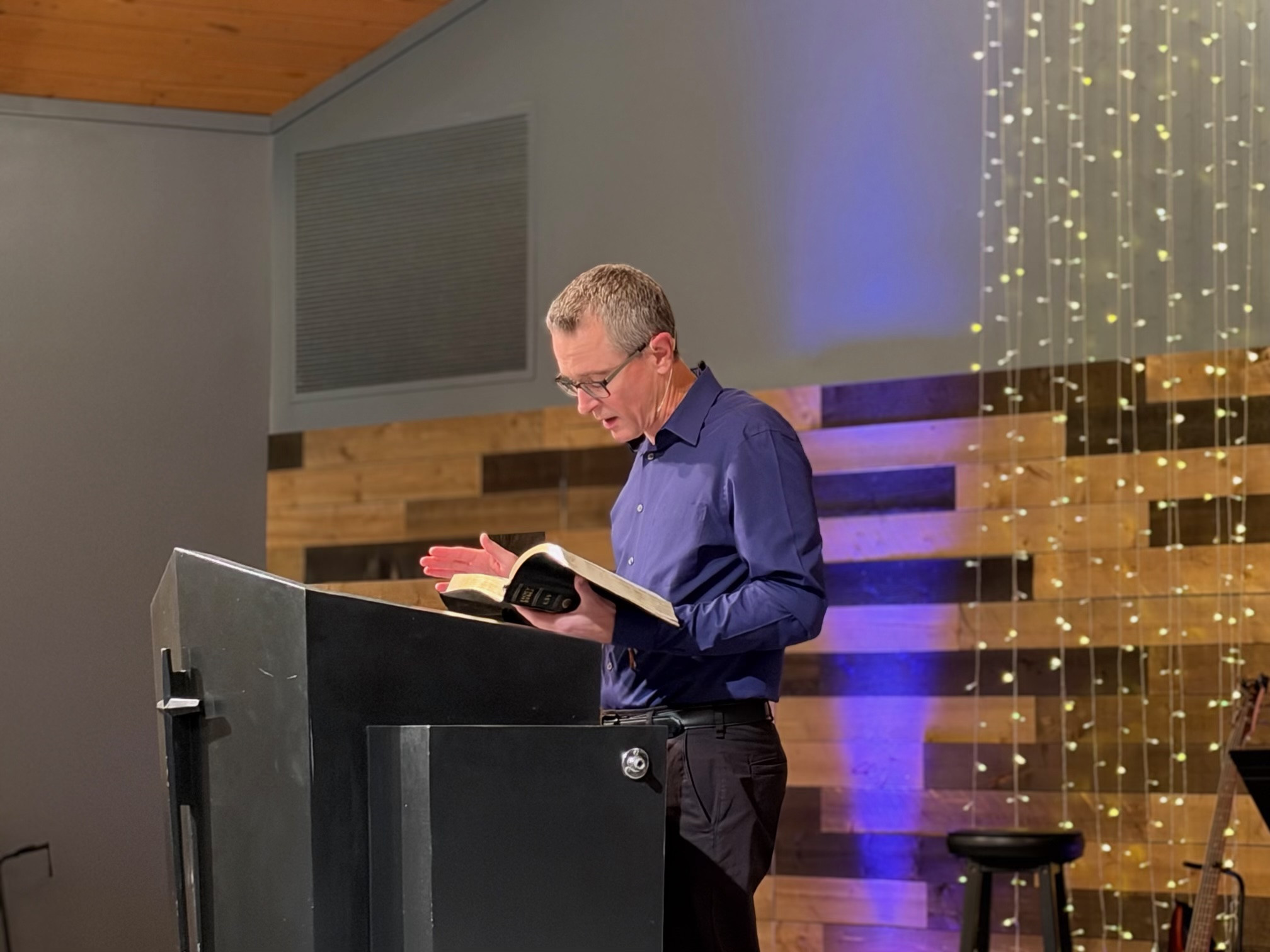
Dr. Michael A. Bond · Revelation
October 13, 2024
Dr. Michael A. Bond · Revelation
The following is a lightly edited transcript generated from the audio; it may contain small errors.
All right, we’re in Revelation chapter 1. Let’s start in verse 1:
The revelation of Jesus Christ, which God gave him to show to his servants the things that must soon take place. He made it known by sending his angel to his servant John, who bore witness to the word of God and to the testimony of Jesus Christ, even to all that he saw. […] Grace to you and peace from him who is and who was and who is to come, and from the seven spirits who are before his throne, and from Jesus Christ the faithful witness, the firstborn of the dead, and the ruler of kings on earth.
(Revelation 1:1–2, 4–5)
Let’s pray. Father, we thank You for the privilege of coming here this morning, for hearing from You, for hearing Your Word, God, for us being able to lift up our voices and praise You. You are an amazing God. We thank You for sending Your Son Jesus for us, for it’s in Him that we have life. And Lord, we beseech You this morning regarding Amendment 3, that You would strike it down. You would have people vote no, that this awful abortion amendment would not pass, God. Please be gracious to the state of Missouri. I know there’s other amendments in other states, eight or nine; please strike each one of those down, and let the church be the church in those states as well. God, we want to be a people that reflects who You are. We want to be a people that reflect Your goodness, Your love, Your kindness, Your mercy, Your grace. So fill us more and more with Your Spirit. Continue to conform us to the image of Your Son. Help us to be humble, Lord, to walk humbly before You, and to seek to do justice, to seek to spread mercy, Lord, and to be men and women who follow after You. Bless our time now as we get into Your Word, Lord. Amen.
All right, so we’re in the midst of political season. We have an election in less than one month. [We’ll take some] weeks to talk about specifically politics, but I want to set the stage right by doing that by looking at Revelation. In this particular verse in Revelation, verse 5. So notice what it says here, because we’re going to camp out here for just a little bit at least, but I want us to notice three things in this passage that it’s talking about.
One, that he says the word “faithful witness.” Notice the description given of Jesus: “Jesus Christ the faithful witness.” Listen, in the context of Revelation, when Jesus is called the faithful witness, it’s referring to His witness of publicly testifying about who God is and what He is doing in this world. Think about Jesus’ life. Yes, He’s doing signs, He’s doing miracles, He’s healing people. But what does He testify about? What’s His main message? “Repent, for the kingdom of God is coming.” The kingdom is coming. About the goodness of His own Father. So when it calls Him a faithful witness here, [it’s] His mission of publicly testifying about who God is and what He’s doing in this world. This mission encompassed His earthly life as well as His death on the cross. And was He faithful? Was He a faithful witness? Like every single step of the way, faithful witness.
The idea of witness in Revelation is linked to the themes of persecution. The word “witness” is just the Greek word, martyr. Later, we just take that word martyr and take it straight across into English. We transliterate the word and we get the word martyr. That word originally meant witness. Guess what happened to all the witnesses? They got murdered. So the word “witness” became synonymous later with martyr. So sometimes you’ll see it translated as martyr, sometimes you’ll see it translated as witness. So here, it’s talking about Jesus being a faithful witness, testifying. You give your testimony about what God’s done for you, testifying to what Jesus has done, what the Father has done for us. And He is the archetype and paradigm for those who must also stand against the evil and the idolatry. That’s what Jesus did. We’ve got to stand against it as well, the evil, the idolatry, even if it may mean one’s own life. [This is] important in the Gospel of John, but it’s also important here. Jesus describes the many witnesses that prove who He is. Over and over again, He appeals to witnesses.
So look at Revelation 3. We’ll see Him described again as a witness. Revelation 3, verse 14: “And to the angel of the church in Laodicea write: ‘The words of the Amen, the faithful and true witness, the beginning of God’s creation.’” So again, here, Jesus is being given that description as being a faithful witness, also a true witness. He testified complete truth entirely of who the Father was. So He was faithful to do it, and what He spoke was truth.
Here’s what we see though in Revelation. Because you see that word “witness” a lot, so it starts by describing and using it to apply to Jesus, and then what happens? Well then it ends up being applied to us. So look at Revelation 6. In verse 9: “When he opened the fifth seal, I saw under the altar the souls of those who had been slain for the word of God and for the witness they had borne.” Your version might say “testimony,” same thing, the witness they had borne. So the idea is this: Jesus is the witness, and what He does, He does for us. And then what happens is the believers see that. They see that He is faithful all the way to the end, even to the point of death. And what did the believers do? Then they are also the witnesses. And what do we see? They’re faithful even to the point of death. So we see this theme throughout Revelation.
Look at [Revelation 12], verse 10: “And I heard a loud voice in heaven, saying, ‘Now the salvation and the power and the kingdom of our God and the authority of his Christ have come, for the accuser of our brothers has been thrown down, who accuses them day and night before our God. And they have conquered him by the blood of the Lamb and by the word of their testimony, for they loved not their lives even unto death.’” So the blood of the Lamb, that’s how they’re conquering. But how did they do it vocally? The word of their testimony. The word—you could translate that; it’s the same Greek word there. A few verses later, we see the same thing: “Then the dragon became furious with the woman and went off to make war on the rest of her offspring, on those who keep the commandments of God and hold to the testimony of Jesus.” The testimony, again, or witness of Jesus. So Jesus is the witness, and what do we see? He makes us to be His witnesses. That’s why some churches, they’ll talk about, hey, we got to be a witness, or we got to testify, or we have to give our testimony. That’s coming straight out of Revelation here. That’s that idea of testifying about who God is. He exemplifies it for us, and then we follow in that pattern. So He is the faithful witness.
But the other thing we see back in Revelation 1 is we see this description of Him being the firstborn from the dead. The firstborn from the dead. Well, a couple things. The idea of firstborn denotes a primacy over whatever thing is stated. So in Colossians 1, verse 15, Jesus is firstborn over all creation. He has the primacy. The word “firstborn” had long since ceased to be used exclusively in its literal sense. So like, for example, the word “prime.” When you think about the word “prime” today, when we say someone, let’s say we say someone’s a prime suspect, they’re not necessarily the first suspect. That might’ve been the third suspect. But they’re the one that they think, hey, he’s the key one that we think probably did the crime. Think about Prime Minister. Well, the Prime Minister, he’s not the first minister that the UK has ever had. No, he’s the most preeminent of the leaders. And even if you think of a man in the prime of his life, well, he’s long since left the first part. So similarly, this word “firstborn” came to denote not priority in time, but preeminence in rank, the firstborn. So He’s over creation. I mean, He’s over it all. What do we get from that? We get this idea that Jesus, He rules life and He rules over death. He rules over us while we’re living and us once we die. It’s appointed for man once to die, and then what? Then the judgment, Hebrews 9. So He’s the firstborn.
Last point we see here in Revelation. He’s the ruler of the kings on earth. As we are heading into this election season, like, Jesus has this. He’s got it all, right? Whatever you’re dealing with, He’s got it. So if He has all those things, if He had the Israelites in the Old Testament, if He has His church taken care of in the New Testament, He has this. So this needs to be the forefront of any discussion. We have a King. He is the ruler of the kings on earth. One day, Philippians, one day, every knee is going to do what? It’s going to bow. In heaven and on earth, every knee will bow. And what’s going to be confessed? Jesus is Lord, one day, right? So the ruler of the kings on earth, that’s who Jesus is. We have a King. We have a president in the United States, right? But we have one who is above him, way above him. It doesn’t really matter what our political beliefs are. We have to get this right. Jesus is the King. One day He’s coming back to claim His church for His own, and guess what He’s going to do when He comes back? Some, He’s going to separate the sheep from the goats. You get the sheep on one side, the goats on the other. He’s going to give out the judgment as it’s due. Punishment will occur for the goats. How do you avoid the punishment? Repent and trust in Christ. But He is coming back. What’s He going to do for His church though? He’s redeeming them. I mean, there’s going to be a wedding feast. So the bride and the groom, the Groom is coming back to grab His bride. The new heavens and the new earth will be ushered in. We’ll be with Him in the new heavens and the new earth. So Jesus has all of this. All of it, all of it.
I could make this longer, but I just want to say a brief word on politics and the pulpit. Here’s the thing: any issue that is mentioned, you could say is a political issue. I mean, abortion, well, it’s been made a political issue. So if we say that pastors can’t speak about political issues, then all the culture has to do is say it’s a political issue, and then pastors can’t address it. Not only that, pastors are exhorted and even commanded to preach the whole counsel of God. The whole counsel of God. So what area is excluded in the whole counsel of God? None, right? So justice issues. Well, I want biblical justice. Sexual immorality. I mean, any discussion about marriage, well, talking about those type of issues, talking about marriage and different things, then you get a discussion about gay marriage. I mean, all those different things, like those are—you can call them political all you want. Whatever God’s Word addresses, then the pastor has authority to address it. All issues it addresses. It even addresses politics. So it’s hard to remove politics from the pulpit. In fact, really shouldn’t remove it from the pulpit. To do so, I believe a pastor would have to forsake his job of what he’s called to do.
Some have kings, some have presidents, some have prime ministers. But there’s only one real King. Look at Colossians, chapter 1. “He is the image of the invisible God, the firstborn of all creation. […] whether thrones or dominions or rulers or authorities, all things were created through him and for him. And he is before all things, and in him all things hold together.” Could God have given us any higher of a view than what’s presented here of His own Son? No. I mean, the image of the invisible God, the firstborn of all creation. Things created through Him and for Him. Okay, so He’s there. Things are being created. He’s part of the creation coming into existence, and guess what? It’s created for Him, through Him and for Him. But to make it clear, it says He is before all things. And in Him, all things hold together. If He were to remove His sovereign power for one split second, it all falls apart. All things hold together. He’s not just talking about spiritual realities there. That is included. But we get the clear picture. I mean, He’s talking physical. “He is the head of the body, the church,” verse 18. “He is the beginning, the firstborn from the dead, that in everything he might be preeminent.”
Well, this became an issue for the early Christians when they started saying that Jesus is Lord. It became an issue. Why? Because back then it was Kaisar kyrios, Caesar is Lord. So they were making a claim that directly contradicted the beliefs of the Romans. They were fine if you had Jesus as just one more god or one more idol, along with all the other idols and gods that the Romans had. They were fine with that. They were okay with that. But when the Christians started saying, which is what the Scriptures say—Romans 10:9 and 10—Jesus is Lord, the Romans didn’t like that. They didn’t like that. Well, this was central to the Roman belief system. We have to decide, just like the believers back then had to decide, who is going to be the Lord? Some people put their trust—they still say, without saying it, they still say it, Kaisar kyrios, Caesar is Lord. They put their hope in the government. They want the government to save them. They want the government to feed them. I mean, they want the government to do it all, to be their big daddy or something. He is the one that is above all, not the state. No, Jesus. So we have a King.
It got the early Christians into [trouble]. That’s why they became the martyrs, because that’s what they were going around saying. They directly contradicted what the Romans believed. They were in the process, if they hadn’t already, of giving God-like status to the emperors. So to say, no, that’s not true, it’s actually Jesus—that was a problem for the Romans, and we see that. That word “witness” ends up becoming synonymous with martyr, with persecution. Brothers and sisters, I mean, we’re not there yet. We’re kind of trending in that direction.
But here’s the thing I want to encourage you with. Look, each one of us will have a day when the Lord calls us to do [something]. Was Jonah ready? Was he ready? No. No. Did God get him ready? Yeah, He got him ready. All right, yeah, but we want to be ready, that when the Lord’s like, hey, I need you to do this, I need you to [do] that, that we’re doing it.
You know, the parenting—one of the life groups is doing the parenting class. Like the ultimate goal with parenting is not for them to obey you; it’s for them to obey the Lord. That’s what we’re training for. So if all they see is, oh, I have to do what mom and dad say, and they don’t see there’s one step above you, and it’s actually a really big step, you’re training for them to obey the Lord. So all the shepherding of the heart is meant what? For them, one day, the Lord—you’re not going to be as much in the picture. Hopefully you’ve shepherded them to Jesus, and then they’re going to have to make a decision. Am I going to repent and follow Christ? Am I going to bend the knee? Am I going to become one of His? And make that decision. But you want to be able to have trained them to the point that when the Lord says, go, that they go. That when they get the command like Jonah, go and preach, that they’re willing to go and preach. They’re willing to go and testify. They’re willing to go and be a witness. I mean, do your own little word study just in Revelation with “witness.” We’re all called to be the witnesses. We’re all called to be the witnesses.
So every one of us [is to speak] about Jesus. But guess what? Faith comes, Romans 10, through hearing. They’ve got to hear it. They can see it lived out. But guess what? The Mormons—I mean the Mormons, they’re pretty nice people. I don’t know if you ever had them into your house or talked to them about Jesus, the real Jesus. I mean they’re nice people. Even Jehovah’s Witnesses, those are nice people. If you just saw them from a distance, you’d be like, oh, I wonder if they’re believers or not. Well, guess what? You’d have to use words to find that out. It’s a cult. Mormons, Jehovah, that’s cult. So, yeah, people might see the example that you’re setting, your neighbor across the street. Like, oh, those are nice people. Well, no, they need to know more than that. Your coworker might think, oh, he’s a good guy. They need to know more than that. Just seeing doesn’t save anybody. So we got to say, we got to be witnesses. We have to give a testimony of sorts. We have to testify.
So part of what we’re talking about here is understanding the biblical spheres as laid out for us. We have the sphere of the state, we have the sphere of the church, and we have the sphere of the family. We could also add a fourth one in there, the individual. So when we talk about different governments, there is state government. Some might call it civil government, something along those lines. But we have the civil government or the state as it’s often referred to. We have the church. So there’s a church government. There’s governing things for the church and we get it straight from the Scriptures. And then there’s also family government. That’s what we saw in Colossians. How the family government is supposed to be set up, how the church government is supposed to be set up, how the state government is supposed to be set up. So much confusion can be cleared up by understanding these spheres. Each area is set up by God, and it has certain things that it is responsible for. So the state is called to do stately things. The church is called to do churchly things. Yes, churchly is a word. The family is called to do family things. And sometimes we want the church to do stately things. Sometimes we want the state to do churchly things. God has defined the spheres in which each is to operate and exert influence.
What does the state bear? What’s the image that it bears? The sword, right? It’s meant to punish the evildoer. The state is not called to be the church. The church is not called to be the state. So then the question is, who has He given it to? Anytime we talk about something, hey, who has the task? Who’s given that task? So if we say something, a real easy one, preach the gospel, who’s that given to? It’s actually given to the church. It’s given to the church, right? Well, I mean, hopefully the family’s doing it. Who’s supposed to restrain evil? The state has the sword. Now, the church should speak to it for sure, but they don’t have the ability to restrain it in a physical sense. So God has given each of those areas, and there is some overlap. Here’s the thing: none of those spheres have ultimate authority. Can a church get out of whack and be out of line? Yeah, you might know some. Can a family get out of whack? Yeah, do ungodly things. Can the state get out of whack? Yeah, might be out of whack right now. Yeah, they can get out of line and they can overstretch. We saw a whole lot of that 2020, 2021. They can overstretch the areas that God has given them. I mean, the state doesn’t have the right to shut down churches. It doesn’t have that right. We saw a whole lot of that going on in 2020, 2021. They don’t have that right. So understanding that helps us understand like, hey, how is God setting up? Some theologians call it, how is He setting up His economy? Meaning, how is He setting up the world in which we live?
So God loves us enough and He’s gracious enough. None of them have complete autonomous control. And there is a set of checks and balances, if you will. Then who’s supposed to step in? Depending on the nature of what’s going on in the home, right, maybe both of them. So if things are out of whack in the home, the wife or the husband, depending on what’s going on. Sometimes the reason we have an issue with this sometimes is what we see is we see the state stepping in whenever it just feels like it wants to step in. So that just gives us a bad taste. We’ve seen the overreach and so then we’re like, no, we don’t want any state involved. Well, no, there’s a place for the state. If a lady is being physically abused by her husband, like we want the state to be involved, we want the evil [restrained]. They can take steps that the church can’t. They can put the guy in jail, right? They can put restraining orders. Can the church get involved? Absolutely, it should be involved. And what power does it have as the ultimate power? Excommunication, right? But it can come alongside and support the woman and children if she has any. So understanding these spheres are important, but none of them have unlimited power. None of them have autonomous control. Over all of them is the Lord. He is there, ruling over it.
Here’s the thing that we see. God has the ultimate authority, and what He does is He delegates authority to us. So whatever authority He delegates, that’s the authority that that particular sphere has. So we’re like, oh, what authority does the church have? Well, we can look and see what God has delegated to the church. What authority does the family have? We can look and see what He’s delegated to the family.
Let’s look at a couple things here. Genesis chapter 1. Let’s start in verse 26. Genesis 1: “Then God said, ‘Let us make man in our image, after our likeness. And let them have dominion over the fish of the sea and over the birds of the heavens and over the livestock and over all the earth and over every creeping thing that creeps on the earth.’ So God created man in his own image, in the image of God he created him; male and female he created them. And God blessed them. And God said to them, ‘Be fruitful and multiply and fill the earth and subdue it, and have dominion over the fish of the sea and over the birds of the heavens and over every living thing that moves on the earth.’” So God has an authority. Who does He give it here to? Adam and Eve, right? This is the authority that’s been given to them. He is delegating them authority. So we wield authority. Why? Because God has given it to us. He makes it real clear here. Where does that, I guess, delegation of authority, how far does it go? Well, we see it right here. What are they supposed to do? Have dominion over the fish of the sea and over every living thing that moves on the earth. Basically, anything on the earth, like it’s under mankind. The animals aren’t there on the level with us. I know you love your cat or your dog. But they’re below us, way below us. Only one created thing was made in the image of God. That’s us. So He gives Adam and Eve, He gives them—God blessed them, said to them—they get this authority, but they’re supposed to rule over the earth.
So in our society we yield to authority as we should. As citizens we yield to authority, but as citizens we also wield authority. We collectively can vote someone in and we collectively can vote someone out. So we have authority of sorts. Think of an alderman. Your vote has a little more authority because it has more influence since lesser voting. I mean, sometimes some of these townships, you can be the sheriff with just a couple hundred votes. But we get to choose our leaders. That’s an authority of sorts. It’s a little slice of authority, but we get a say in who governs us as elected officials. Many nations throughout history have not had that authority given to the citizens. We live in a very blessed nation in regards to many of its founding principles and laws.
Look at Genesis 9. “And God blessed Noah and his sons and said to them, ‘Be fruitful and multiply and fill the earth.’” So notice the creation mandate, it’s being given again. “The fear of you and the dread of you shall be upon every beast of the earth and upon every bird of the heavens, upon everything that creeps on the ground and all the fish of the sea. Into your hand they are delivered. Every moving thing that lives shall be food for you. And as I gave you the green plants, I give you everything. But you shall not eat flesh with its life, that is, its blood. And for your lifeblood I will require a reckoning; from every beast I will require it and from man. From his fellow man I will require a reckoning for the life of man. Whoever sheds the blood of man, by man shall his blood be shed, for God made man in his own image. And you, be fruitful and multiply, increase greatly on the earth and multiply in it.” So this is about a thousand years later after Adam and Eve. God is setting up His sovereign rule again and letting Noah know how it’s going to go. What does He do? Well, He puts mankind in charge again. He delegates authority to them. And so He hits the reset button, so to speak, worldwide flood. After the fall, what does He do? Sets it up the same way. So His original intention, His good, kind intention, He leaves in place. So you have the creation and dominion mandate before the fall, but you also have the creation and dominion mandate after the fall. He also reminds them of the first covenant. It’s still in effect. They’re still to go and multiply. They’re still to rule. So all authority belongs to God and is from God. We should take great hope, great hope in that.
Look at Daniel chapter 2. Verse 20, to Daniel 2, Daniel answered and said: “Blessed be the name of God forever and ever, to whom belong wisdom and might. He changes times and seasons; he removes kings and sets up kings; he gives wisdom to the wise and knowledge to those who have understanding.” And that’s what you see over and over throughout the Scriptures. That’s what He’s doing. Proverbs 21:1: “The king’s heart is a stream of water in the hand of the Lord; he turns it wherever he will.” Brothers and sisters, if we believe this, we should be [assured]: every leader from smallest to greatest is under God’s sovereign reign. Each one of them is called to submit to God and to glorify Him. Someday, all the presidents of the United States will have to stand before God and give an account. If they’re not believers, that’s a scary thought. All the governors, all the mayors, they’re going to have to stand before God and give an account. All the rulers from the different countries, they’re going to have to stand before God and give an account for how they wielded [authority]. For some, there’s no condemnation in Christ. They’re covered by the blood. Those that don’t, it will be a very scary day indeed.
The same is true for us. All right, if you don’t know Christ, you’re going to have to stand before Him on judgment day. And if you don’t have Christ, it’s not going to be a pretty day. The Lord will be a scary day, it will be an awful day. And you will be considered one of the goats, and you’ll be ushered away from the presence of the Lord forever. He does not want any to perish. He wants all to come to repentance. So the gift, it’s freely given, and it’s offered. Repent and trust in Christ for the forgiveness of your sins, and you can receive the gift of eternal life. For those that have Jesus, do you have the blood of Jesus covering you? You don’t have to fear that day. Different descriptions are given of that day. Some call it a great day, some call it a horrible day. Listen, it’ll be the worst of the worst of the worst of the worst of days for unbelievers. And it’s the reverse for believers, all right? Judgment will reign, justice will be given out. And as believers, we have no fear. We will have to give an account too. It says we will all stand before the judgment seat. So we will have to account, and we have one who will step in our place, already has, and take our place: Jesus Christ.
So let’s just talk briefly. Now I’m going to save that for next time. Let’s just end on one more verse, Psalm 62. Psalm 62, sorry, let’s start in verse 5: “For God alone, O my soul, wait in silence, for my hope is from him. He only is my rock and my salvation, my fortress; I shall not be shaken.” Focus on those last couple words there. “I shall not be shaken.” “I shall not be shaken.” Why shall I not be shaken? Because God’s not shaken and we’re part of His kingdom. God’s not shaken. We’re one of His children. He says it four verses earlier in 62, verse 2: “He alone is my rock and my salvation, my fortress; I shall not be greatly shaken.” I mean, even the imagery there, right? And then the imagery of it being shaken. So you have this impenetrable fortress, which is God, and nothing can shake it. So therefore, we shouldn’t be shaken. So whatever your concerns might be with the direction of this nation, like the Lord is not shaken. Kingdoms have come and fallen over the last thousands of years. And if the Lord tarries long enough, this kingdom too, right here, the U.S., it’ll fall. They rise and they fall. We don’t want that to happen in our day. We’d prefer not to happen in our children’s day, even our great-grandchildren. If the Lord is Lord of our life, we have nothing to fear. What can man do to me? What can man do to me?
And I understand, as I talk to people, just being real for a sec, like the older generation, like my mom’s generation right around there, when you talk to them, they have great concern for where our nation’s at and where our nation’s headed. And I think the younger generation, especially the younger generation, maybe the generation or two below me, we haven’t experienced the decline as our parents have. So they’ve seen it when it was maybe doing really good. If you want to call it—I don’t know—much better than today. So they’ve seen that decline over 60 or 70 years. Some of you, if you’ve only been living for 25, realistically, you’ve only probably had your head out of the clouds for the last 5 to 10. My age is maybe the last 20 to 30, but you’ve seen different things. We’ve seen a whole lot just in the last 15 or 20 years, but they’ve seen it for even longer and their heart breaks. But one, just have a little compassion on some of them when they take seriously things like elections, which I think everyone should, but some of them are very passionate about it because they have experienced the decline personally, like the fate of the nation, part of that decline.
It’s kind of like when they return from captivity, right, and they rebuild the temple, it says they were crying. And some of them were crying, it says, because they remembered how great the first temple was. And some of them were crying because they were rejoicing that the temple was rebuilt. Well, the ones that were older were the ones crying, because they were like, man, we remember how great it was, and this is what we got now, right? I mean, it’s a similar thing. The older generation, they’ve seen it, and they’ve been there, and so they say, hey, this is where we’re at, it’s not good. There’s a reason it talks about in the Proverbs, wisdom and gray hair, because with age should come, hopefully, prayerfully, should come wisdom. And so we want to look to our elders and say, hey, what do you see? What wisdom do you have? You should look to your parents. Even if you’re out of the house, [it’s a good] thing to do. You can avoid many, many foolish, stupid, even silly decisions just by bouncing some things off your parents or other people that are more mature than you that are walking with the Lord. So have some grace on that older generation. Some of you also are very passionate, and that’s fine too. But make sure, listen, let’s be—passion is there. We can be passionate about all sorts of things. Some people are passionate about sports, some people are passionate about deer hunting. I know that’s coming up in a couple weeks, I think. I mean, you can be passionate about different things. That’s all right. That’s what, God’s given us different giftings and talents and desires. But bottom line, we want to be passionate about Jesus. And if we’re putting our hope and trust there, then we won’t be shaken. Regardless of who gets elected in any office in a few weeks.
We’ve got brothers and sisters in parts of the world. They are being truly persecuted to the point of death. Nigeria, it doesn’t get much press. They don’t have any resources, and we don’t have any trade agreements or anything like that. I mean, you just don’t hear about it. There’s bad stuff going on with believers in Nigeria. Bad, bad stuff. My mom has a good friend, a really good friend that lives there, northern Nigeria, probably the most dangerous place to be right now. It’s bad. I mean, they’re just going in and wiping out villages. I’m just being honest, it’s the Muslims. It’s not the Hindus, it’s not any other religion. So, even if you lived in northern Nigeria, I’m sure you’d be unsettled as a believer. I would be. But what can man do to me? The worst he can do, yes, it’s horrible, it’s awful. He can take your life. But you have a real life that’s coming. You have a life that you already have if you have Jesus, and that’s eternal life. In this life, it’s just like a little drop of water in an ocean. And there’s an eternity that we will be with Jesus. And if we’re called to the point of laying down our lives, then let’s do so, let’s do so faithfully. We haven’t been called to that point yet. Let’s walk faithfully and not be shaken by anything that occurs, politics or anything else going on in our life. We have a firm rock on which we can stand. It’s not our rock. It’s not some rock we found in the ground. He is the true rock, the capital R Rock. It’s not something that we tried to put together. No, God Himself put it together for us. That’s the rock on which we stand. What’s all other ground? It’s sinking sand. All other ground sinking sand. So we stand on the rock. We stand on the rock. We’re going to be okay. He’s going to see us through. “I’ll never leave you nor [forsake you].” So we can walk with hope and confidence that Jesus has us every single step of the way, regardless of how long our days might be. Our days are all numbered. He knows the exact second that each one of us will breathe our last. He knows it. So we are faithful until whatever point that might be. Let’s walk in confidence of what Christ has done and accomplished for us. Let’s pray.
Father, we thank You that You’ve given us a faith that gives us the righteousness of Christ. A faith that regenerates us from the inside out. A faith that removes our sins. And this is what You’ve accomplished, Father, by Your Son. Lord, I pray for each person here, for any unsettledness, let them look to You, the rock of their salvation. Let them take confidence not in themselves, not in what they’ve done, but in who You are. Our great God and Savior, who can accomplish all things, who has the fate of nations in Your hand, and You know exactly what is best and perfect for each nation, for each state in that nation, for each region, Lord. We pray that Your righteousness would reign throughout the nations. We pray that Your kingdom come and Your will be done. We pray that You would have mercy on the United States. We don’t deserve it. We deserve judgment. We have so much bloodshed on our hands. Forgive this nation, Father. Bring this nation to repentance. Bring it, Lord, to turn, to turn and trust in You. Let revival break out. Let thousands and tens of thousands and hundreds of thousands and millions and tens of millions of people come to know You in this nation. They, just like we, desperately need You. And use Your church to accomplish that purpose, Father. That’s the authority You’ve given us, to take the gospel to the nations, including this nation. So let us go forward with it as Your ambassadors. Let us speak truth to this generation that desperately needs to hear truth. They desperately need to hear the gospel of truth. Touch their hearts, Lord. Soften them that they might receive it, turn from their sins and be saved. Do this for Your glory. Amen.