
October 20, 2024
The Holiness of God Part 1
Guest Speakers · Isaiah 6:1–7
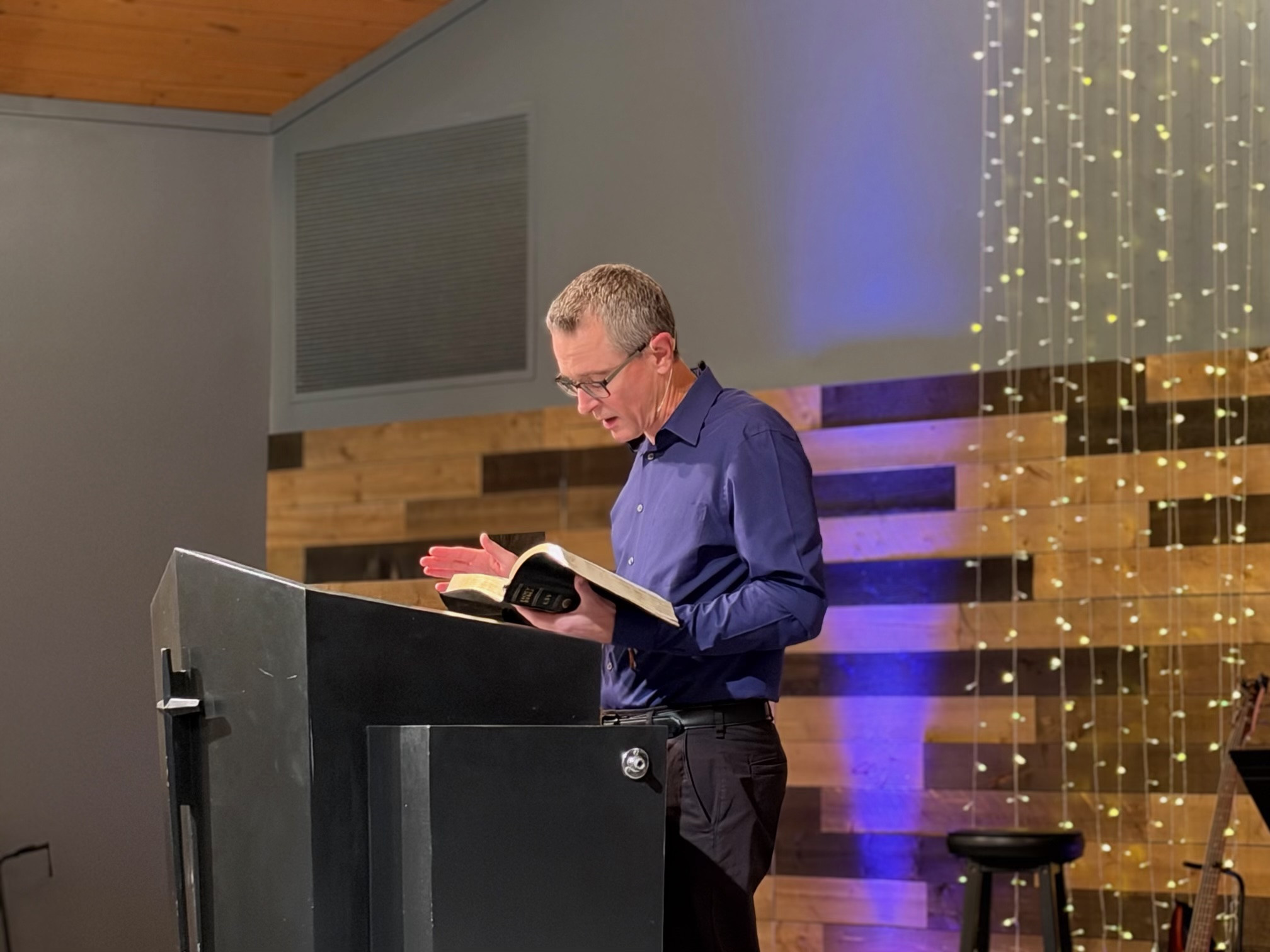
The following is a lightly edited transcript generated from the audio; it may contain small errors.
Okay, good morning church. I’m excited to be here this morning. This sermon has been on my mind for a little bit this morning. I would like to read this Scripture again just for my own benefit as we get into it. So if you have your Bible, turn to Isaiah chapter 6, and, uh, or flip on your phone. You can tell how old I am. Anyway, if you’re able, if you don’t mind, will you stand up and honor God’s Word as we read His Word? So Isaiah chapter 6, verse 1:
In the year that King Uzziah died I saw the Lord sitting upon a throne, high and lifted up; and the train of his robe filled the temple. Above him stood the seraphim. Each had six wings: with two he covered his face, and with two he covered his feet, and with two he flew. And one called to another and said: “Holy, holy, holy is the Lord of hosts; the whole earth is full of his glory!” And the foundations of the thresholds shook at the voice of him who called, and the house was filled with smoke. And I said: “Woe is me! For I am lost; for I am a man of unclean lips, and I dwell in the midst of a people of unclean lips; for my eyes have seen the King, the Lord of hosts!” Then one of the seraphim flew to me, having in his hand a burning coal that he had taken with tongs from the altar. And he touched my mouth and said: “Behold, this has touched your lips; your guilt is taken away, and your sin atoned for.”
(Isaiah 6:1–7)
Let’s pray. Dear Heavenly Father, we come to You this morning. Father, we want to look at the holy Word. Father, we want nothing but the truth in Your Word this morning. Lord, I pray that You would just lead us and guide us, open our minds to the truth that You put in Your Word for us. And God, we just thank You for this, the Scripture You’ve given us, where You unzipped heaven and You allowed man to take a peek inside. These things we just offer up in Your name. Amen.
All right, you may be seated. So the title of today’s sermon is “The Holiness of God.” The holiness of God. You know, this Scripture, I think, contains one of the most profound things, one of the most important attributes about God that’s given to us in the Scripture. And my prayer today is that as we go through this sermon, about some of the things I’m going to talk about, maybe we’ll have a revelation in your spiritual walk like it did in mine. So today we’re going to focus on verses 1 through 3, and next week we’re going to look at verses 4 through 8. I want to read a quote from R. C. Sproul in his book The Holiness of God. Sproul said, “I’m convinced that it”—that is, the concept of the holiness of God—“is one of the most important ideas that a Christian can ever grapple with.” If you know anything about R. C. And today, that’s what we’re going to focus on, the word “holy.” And probably from the songs that we sang this morning, it should be no surprise.
So there are a couple of things that hinder us from really understanding what holiness [is]. First of all, we are finite creatures, right? We use common words and ideas to try to explain something that’s infinite, to try to explain God, to try to explain His attributes, and that’s almost impossible to do, because a lot of times we come to the Bible with preconceived ideas of what we think a word means or what we think a concept is, and when we do that we read something into the Word that’s not there. So today that’s one thing I want to do. I want to challenge what your concept of the word “holy” or “holiness” is. And then the second thing that hinders our understanding of holiness is that we are simple creatures, right? And it’s difficult for us to comprehend what holiness means because we do not see holiness in our common everyday world. And so as we go to the Bible this morning we’re going to see what “holy,” what “holiness” is, and how that applies to God.
You know, I think one of the main problems that people—including many people who call themselves Christians—have today is they don’t understand God. They don’t understand what the Bible says about God because they don’t read their Bible. So today you’re going to hear me hammer over and over again: you need to be in the Word. And when I go home today, [they’re] going to say, yeah, we got it, okay, you don’t need to say it again. But I’m going to say it again. We’re going to talk about we need to be in the Word.
So this morning as we get into the sermon, there are three main things I want to cover. First of all, I want to cover the setting that we talked about here in the Scripture, that we read these Scriptures. It’s important that we set this up and we understand the setting that we’re reading about, because it has an influence on Isaiah, and it’s to have an influence on us. Then the second thing we’re going to do, we’re going to talk about what the word “holy” means. Probably most of our time today we’ll be talking about the word “holy.” And you’re probably wondering, how can you do that? Well, just hang around, you’ll figure it out, okay? And then the third thing we’re going to do, we’re going to look at some examples of how God manifests His holiness in the Bible. And I can only touch on one or two. I had a bunch in here, but when the sermon got in about an hour and 48 minutes long, I figured I better cut it off. So I backed a bunch of those out. Who knows, when we have a life group and they have a Bible study one day on how God manifests His holiness in the Scriptures. But I want to give you a taste, I want to give you a taste, because I want you to go digging in the Bible for yourself, looking for God’s holiness.
Okay, so let’s get into the setting. If we go back to the Scripture, “In the year of King Uzziah’s death”—stop. This was a very traumatic event in the life of Judah, the southern kingdom. By now, Israel has split off to the northern kingdom, Judah’s the southern kingdom. They each had their individual kings. Uzziah was one of the longest-reigning kings. Not the longest, but one of the longest. He reigned for 52 years. I want you to think about that. There were people who were born and died; they didn’t know any other king other than Uzziah. Okay, and when God starts listing the kings and the new kings that come in, He always says, you know, that they followed after God, they were a good king or a bad king. Uzziah was a good king until the very end. He let his pride get a hold of him. But Uzziah did great things for the people. He dug wells for the people in the desert. He built towns, he fortified towns. He had an army, he was well loved. The people loved Uzziah. For 52 years, this man was their king. I want you to think about that. 2024 minus 52 is 1974. Put that in perspective. Most of you weren’t even in the picture, because you weren’t born yet, right? And since 1974, we’ve had 14 presidential elections and 10 different men serve as president. They had one king that they loved.
You see, trauma is significant in our lives, right? And I’m sure there’s no one here. I remember talking to my dad and my grandmother about Pearl Harbor. They were alive and they told me about Pearl Harbor. The Pearl Harbor we have was September 11th. How many of you remember September 11th? Most of us here are old enough we remember those events. They were significant in our country. It was a trauma in our country. It pulled our country together like I had never seen it before, and unfortunately it didn’t last that long. But if you remember, churches were having prayer meetings. We had one here, okay, and the churches, people went back to church for several weeks after that. You see, when trauma occurs we look for comfort. We look for something that’s steady. We look for something that is sure. We turn to God, and that’s what Isaiah did. When King Uzziah died, this is so traumatic that he turned to God, and certainly the sovereignty of God used this to get to Isaiah, to speak to him, okay.
So Isaiah was a prophet. He lived around 700 BC, so you know, back then they counted backwards, so from the upper 700s to lower 700s to the upper 600s BC is whenever he lived. He was a prophet. And what a prophet did, a prophet represented God to the people, and it was very common for a prophet to write down, “Thus saith the Lord.” He had a message from God to the people.
So we go back to the setting. Isaiah says, “I saw the Lord sitting on a throne.” Now, I have come over the years, when I see a name of God—Lord, like this, capital L, small o-r-d, or all capital L-O-R-D, God or whatever—I like to look at what word is really used there, because sometimes that signifies something. And so when I look at the word “Lord” here, “I saw the Lord sitting on the throne,” the term this uses is Adonai, okay? That means the sovereign one. It is a title. It’s not a name, it is a title. Okay, we have Pastor Justus. “Pastor” is his title, Justus is his name. He’s using God’s title. He’s saying the sovereign one is sitting on this throne, and this term Adonai is used about God and only about God in the Scriptures. Okay, and then it goes on and talks about He’s sitting on a throne, lofty and exalted. So this throne is lifted up, is preeminent. It is huge, it’s large, and it’s there to bring a sense of awe, a sense of holy fear upon Isaiah as he goes into the throne room of God. Think about this, the throne room of God. And this throne is a symbol of a kingdom, of authority and of power, and this is where the sovereign one, the King, sits and rules His kingdom. But this throne is not just any throne, like I said, it is the throne of God. There are other thrones mentioned in the Bible, but this is the throne of God. It’s not often in the Bible that God opens up and allows men to come into His throne, and from what I could find, there are only about six times in Scripture. This time in Isaiah, there are a couple of times in Ezekiel, and then there are about three times in Revelation. So in all the Bible, there’s about six times, and if you think about it, there’s three people. There’s Isaiah, Ezekiel, and John who got to see this. No one else has.
So we’re in this throne room, and look what it says, the train of His robe filling the temple. See, it’s not His robe filling the temple. This robe is a symbol of the King’s authority. Okay, it’s hard for us to relate to a king, but if you watch the inauguration of King Charles, he had this stately robe on, right? But what this says, this doesn’t say His robe fills the temple, it says the train of His robe, the hem of His robe, okay? Not the whole thing, but just the hem of His robe. So it got me, starting me thinking, how big is God’s temple? How big is this throne room of God anyway? How big could it be? So I started looking through the Bible for places where it talked about the throne of God. And I ended up in Revelation. Let me tell you what it says, Revelation chapter 4. It says, the throne room of God is surrounded by 24 additional thrones with 24 elders. And then it says, the seven spirits of God are there. In Revelation chapter 7, it talks about a great multitude, which are the martyrs from the great tribulation. And it says, there were so many that no one can count them. They were from every tribe and nation and people and tongues. So it holds an almost uncountable number of people. And then in Revelation chapter 20, the great white throne judgment, verses 11 through 12, it says, all the dead will stand in judgment before that throne, all the dead. So I got to wonder, how many people have ever existed on earth? You ever thought about that? I think a weird thing sometimes. I got thinking, how many people have ever existed, so I went to the source of authority, right? You know, not everybody took a census like Quirinius did, or like the U.S. government does every 10 years. So they’re estimates, and you can only imagine all the perturbations that went into this. But anyway, most of the sites sit anywhere from 108 to 117 billion people. That’s 10 to the 9th. So we’re all going to be around the throne room of God. That tells me the throne room of God is pretty big, right? And people, the hem of His robe filled it. You see the grandeur of God? You see the immenseness of God? How God is different from us?
All right, verse 2. We’re getting there. It says, “The seraphim stood above him,” above God, “each having six wings: with two he covered his face, with two he covered his feet, and with two he flew.” So what is a seraphim? A seraphim is plural for seraph, and it is an order of angel. And what that word actually means is a fiery creature. This is a fiery creature. And look what they’re doing. They’re flying. They have six wings, two wings that cover their face, two wings that cover their feet, and with two wings they flew. And I think this, when they cover their face, this symbolizes their spiritual humility. They are in the throne room of God. It’s right there, okay? They’re created beings like we are; however, they have not sinned, because they are still in heaven. Even though they have not sinned, they do not consider themselves worthy to gaze on God’s glory, okay? They cover their feet. I think this symbolizes their physical position as they worship God. They realize that they are physical. God is something different. And they sing this wonderful, wonderful song that we’ve sung pieces of this morning. We’re going to sing again later.
So they’re flying around and they’re worshiping God, right? They’re singing one of the most famous songs in the Bible, just repeated in Revelation chapter 4, verse 8. And they’re singing back and forth, like a few minutes ago we sang that one song, “You were holy, You were holy,” you know, we sang this back and forth to each other. That’s what these seraphim are doing. One is singing over here, another one over here, another, and it’s just a tympani of these songs coming in. Can you imagine what worship is going to be like in heaven? What those songs are? I don’t know if they’re singing parts—just as I’m imagining, singing all kinds of parts. And they’re probably on key, unlike me.
All right, and what are they singing? First of all, they’re singing, “Holy, holy, holy.” This is the only attribute of God that’s mentioned three times together. You never see “compassion, compassion, compassion.” You never see “mercy, mercy, mercy.” You never see “wrath, wrath, wrath.” You only see one attribute of God that’s repeated three times, and that’s His holiness. This is known as a trisagion, the thrice holy. This only occurs twice, like I said, in the Bible: here and in Revelation chapter 4, verse 8. Both times are in the throne room of God. Now, we all know that whenever the Hebrews, when they wanted to emphasize something, they repeated it, right? So they were mentioning it more than once. We see this in Jesus’s teaching in the Gospels. So when Jesus would sit down, He would say, you know, “Truly, truly, I say this.” The old King James, I like it, said, remember the King James, right? So in English, you know, we can emphasize when we write something, we can make it bold, we can underline it, we can [use] exclamation points, we can use a superlative case. When we’re speaking, we can wave our arms, we can talk quietly, we can get intense, or we can talk really loud. There are many ways, but the Hebrew people, when they emphasize something, they would repeat it. So what he’s saying, what these angels are saying, “Holy, holy, holy is the Lord of hosts”—they’re saying this is the holiest of the holy. It doesn’t get any holier than this. This is the ultimate holy.
And it goes on to say, is who? Now if you look at the word “Lord” here and compare it to the word “Lord” in verse 1, the word “Lord” here, “the Lord of hosts,” is all capital letters. That signifies this is the personal name of God. This is Yahweh. When Moses stood before the burning bush, he said, who am I going to tell the people? And God told him, He said, tell them “I AM WHO I AM” sent you. Yahweh sent you. This is the personal name of God. The Hebrews treated it so holy, when they came across these four [letters], a lot of times they would substitute Adonai or some other name, but they wouldn’t say it.
And it goes on to say, “the whole earth is full of his glory.” We just sang that, thank you, Justus. We just sang that song. What that really means is the fullness of the whole earth is God’s glory. The fullness of the whole earth is God’s glory. The idea is that the completeness or the perfection of the earth displays or testifies to the glory of God. It has its own glory, this comes from God, but it reflects back and it testifies to God. And the glory here is not the Shekinah glory of God. There’s another word used here for glory. It’s the word kabod. You’ve probably heard the word Ichabod, which means the glory has departed. It’s a special kind of glory. It’s a glory that the earth bears, that the creation has, that bears witness of the Creator. It is a special kind of glory, and what it does, it reveals God. I was studying this this week, and a verse came to my mind in Romans, chapter 1, verse 20. This is what I love about Bible study. You understand something, and all of a sudden, a line draws over here to something else, somewhere else. And when it does that, things start coming together. “For since the creation of the world His invisible attributes,” attributes of God, “His eternal power and divine nature, have been clearly seen, being understood through what has been made.” Why? Because the earth gives a testimony as to God’s eternal power and His divine nature. And He says, “so that they are without excuse.” Some way, somehow, God has designed in the creation His glory, and it testifies to His glory. And men everywhere, people all over the world, throughout our creation, all these 108 to 117 billion people, when they stand before God, they’re going to be without excuse, plainly, because whatever God has done has revealed to them enough that they need to know about Him.
Okay, and it goes on to say, “the foundations of the thresholds trembled at the voice of Him who called out, while the temple was filling with smoke.” The temple begins to fill with smoke. Let me ask you a question. Where there’s smoke there is… Thank you. There’s fire. Okay, it is very common in the Bible when God appears, when He makes His appearance, whenever He comes about, there is fire involved. We see it in verse 6 below. Verse 6, then one of the seraphim flew to me with a burning coal in his hand which he had taken from the altar with tongs. That altar had a fire on it. He pulled out a burning coal, right? When Moses was in the desert, when God called Moses, Moses saw a what? A burning bush. It was a bush that was on fire but it wasn’t being consumed, which in that desert is a major miracle, right? And when Israel was wandering through the desert for 40 years, by day they had a cloud. God led them by day, but at night He had a pillar of fire. The tabernacle, the temple, when they built the tabernacle, later when Solomon built the temple, one of the laws they had, one thing God told them to do is there was to be a lamp continually burning, and there was to be incense in the Holy of Holies, as a—that incense was a soothing aroma to God. And then about 22 times in the Old Testament, God refers to Himself or He’s referred to as a consuming fire, okay.
So we have this setting, there’s this trauma, God displays His throne room, there’s these seraphim, they’re singing this song, they’re singing about the holiness of God. So at this point I want to turn our focus from the setting to the significance of the word “holy.” I always wonder why they put water up here. I never needed water sitting out there listening, but it’s different, and it’s about 20 degrees warmer up here too, I can tell you that.
Okay, the word “holy,” this is kind of the crux. And I think if you would go out and do a survey, the general public—and Liberty may not do this—but if I were to say, “God is…” what word do you think most people would fill in? God is love, right? God is love. I hope after today, when you hear that, you would think, God is holy—and quit laughing at me. This is my daughter laughing at me because she knew where I was going, she probably knew where she thought [I was headed].
Okay, so what does “holy” mean? In the Bible, in the Old Testament, there are two words used for holy. The first word is a word here in verse 3. It says “holy, holy, holy.” So I’m going to try to differentiate them. This word “holy” here is qadosh. It’s used exclusively of God, and it is a holiness that comes from that whatever it’s talking about. Okay, so in this case it is a holiness that comes from the pre-existent God because of who He is. It is His holiness, and we’re going to dive deep into that. But first I want to talk about the other word for holy, and I think you’ll see why I want you to understand what the other word for holy is. The other word for holy is qadash, Q-A-D-A-S-H. There’s only one letter difference between those two words. So the second meaning, the second word for holy, qadash, is holy by contact or association with God, or it’s a holiness that God imparts on something else. In other words, it doesn’t of itself have anything holy about it, but for whatever reason God has said, I want to make this holy, therefore it becomes holy. It’s the idea that something common or ordinary to man is selected by God and deemed or set apart as holy or for a special purpose by God.
So let’s look at a couple examples, okay? Genesis chapter 2, verse 3, it says, “Then God blessed the seventh day and sanctified it.” For whatever reason, God said, we’re going to have seven days, one through six are going to be like all the others; however, the seventh day is going to be special, I’m going to sanctify, I’m going to set it apart, I want you to treat it as different. In Exodus chapter 3, we’re going to go back to Moses and the burning bush, okay? Moses is standing before this burning bush. God says, “Do not come near here; remove your sandals from your feet, for the place on which you are standing is holy ground.” Was that piece of dirt holy in and of itself? There was nothing special about that piece of dirt. It was just a piece of dirt on a mountainside. No one had probably ever seen it before and no one has probably ever seen it since that point in time. It’s out there somewhere in the desert, okay? There’s nothing special about it. What made that special? God’s presence. God showed up. He said, I’m here. This is now holy. The holiness comes from God.
Last example, Exodus 19, where Moses got a PhD, I think, in this stuff, okay? So Moses goes up on the mountain to meet with God and get the Ten Commandments. And here’s what God tells Moses in 19, verse 6: “And you shall be to me a kingdom of priests and a holy nation.” Why did God select these Hebrew people? If you read the Scriptures, if you read the Bible, you will see over and over and over, He tells them, there was nothing special about you. You didn’t deserve it. There was nothing that brought you out from Me. I chose you. It was God’s will. Whatever reason, whatever reason, we don’t know. He said, you are a holy nation. You are now set apart from all the other nations. I have a special job for you. That job is to bring Messiah.
You know, this is similar to what we do to our days. We have certain days that we deem as holidays, right? So we’re going to say, hey, this day’s going to be different. Unless you work at a convenience store or a hospital or something like that, you get to stay home. It’s not going to be like the other days, especially the big days, Thanksgiving and Christmas, even Walmart shuts down, right? But these holidays are really holy days. They’re separate, they’re set apart, because we have designated them to be different. They are no longer common. So to summarize, qadash means holy—it’s not holy of itself, but set apart by God.
All right, so now we’re coming to—watching the clock, we want to get out here in time to eat, I know that. So the word “holy,” used here, “Holy, holy, holy is the Lord of hosts,” is the word qadosh, Q-A-D-O-S-H. So when that word is used of God, what does it mean? So I’ve been talking about holy for a while, kind of dancing around, you know, what the word really means. But this is what’s going to be the focus of the rest of the sermon, and I hope going forward in your life. So the word qadosh is the word the Bible used to describe God’s holiness and only God’s holiness. There’s something special there. As I go through this sermon you’re going to say, I’m going to be jumping back and forth between the word “holy” and “holiness.” Okay, these words really describe the same thing. “Holy,” it can be a noun, but most often just uses an adjective. It’s “His holy name,” “the Holy One of Israel,” “a holy God,” right? The word “holiness” is typically the noun form that denotes the state of being holy.
All right, so in my line of work—most of you know here now I’m not a preacher. I have an outside job. In my job, I often have to take difficult technical things and understand them and explain why something went wrong, explain here’s what we’re going to do to fix it and explain why this is going to fix it and the impact or whatever like this. One thing I found in my work that is very important, it is paramount that we all be on the same page as to what a word means or what a word doesn’t mean, because the last thing you want is to be explaining something, somebody over here thinks it means one thing, somebody hears something else, and over here it’s just very confusing, okay? So before we start talking about the word “holy,” qadosh means, I first want to look at what it doesn’t mean, and we need to erase any preconceived ideas so that we can understand from Scripture what this word means.
I’m going to quote from Dr. R. C. Sproul again. Dr. Sproul said, many if not most people associate the word “holy” with the concept or the idea of purity without defilement, especially when it comes to morality and sexual purity. I’m going to admit that’s what I used to think “holy” was. They’re without moral—you know, they’re morally and sexually pure. Now, while “holy” does embody that concept, it has a much broader concept. It does not have really a one simple, a simple one-word meaning for “holy.” I will eventually get around to giving you what I think the best word is, a concept of what the word “holy” means. But at this point I want to start talking about the concept of holiness, and it is not one thing, it is a myriad of things that you’re going to have to listen to, and you’ve got to kind of mesh all these together. You know, you’ve got to kind of integrate under the curve from here to here, and it involves all of these things.
Okay, holy or holiness is, first of all, it’s something apart from the normal or common by its own nature that is not derived from some other source. Only the pre-existent God can do this. And you will hear me use the word “common” several times in here. So let me explain what “common” is. When I say “common,” I mean this is something that is everyday, relatable to us. It’s something that’s ordinary. It’s not different or special from any other thing, like, you know, Monday, Tuesday, Wednesday, Thursday, Friday, those work days, we get up, we have the same old dull routine, right? It’s something normal, it’s something expected, it’s predictable, it’s typical, it’s something that’s familiar to us. And I mean that even when it comes to definitions. We have definitions that come from the culture that we need. I want to challenge this one a little bit later.
Okay, the next thing about holiness is something that’s sacred. It’s above all others in spiritual nature. It’s worthy of respect. It’s worthy of worship, and it’s held in high esteem. Another aspect of holiness is something to which is due reverence. It inspires awe and leaves us speechless. I used to have good conversations with Rob Witty about when it comes to “fear God,” what does that really mean? And so we would talk about this quite a bit. It was very, very interesting talking to Rob Witty sometimes. I miss him being here, okay? Holiness embodies absolute spiritual purity in all attributes, not just morality. And this, and when I say that, I mean all the attributes of God, love, mercy, all these I mentioned before. Spiritual purity in those, and they are untouched by sin. The problem is we start listening to these attributes about God. We start thinking about the way they are implemented in man and how sin has sullied these attributes and they’ve been degraded in man, and we take that to God and we don’t understand God.
Another concept of “holy” is it is transcendentally separate. Now, I’m going to borrow a term from philosophy. I’m not a philosophy major, and I hate it when people use philosophy terms and don’t tell you what they are, because most of the time they know what they are, okay? So something that’s transcendent is something that is in a state of existence outside the normal, outside the physical existence, it’s spiritual. It exists apart from the creation. Something that’s transcendent is another dimension. It’s foreign. It’s unfamiliar to us. It’s difficult for us to relate to. It’s difficult for us to relate to God, to the concept of a spirit. We are so much tied in to the physical. So “transcendentally separate” is something that exists apart from and not subject to human limitations. It is outside the law of physics. I love physics, but something that is transcendent is outside of the law of physics. So what this is saying is something is transcendentally separate from the physical world that we can relate to. That’s why it’s hard for us to understand it.
I have another one of my favorite Bible expositors. He gives four descriptions of “holy.” I want to give those to you. Number one, holiness is an apartness or otherness of God compared to man. The apartness or otherness. Number two, holiness signifies a profound difference between God and man, between the spiritual and the creation, the physical, okay? Number three, he says that it is intentionally and distinctly set apart from the creation, set apart from man. I’m going to give an example, Exodus 15, verse 11. Moses is writing this song, and here’s what it says. He says, “Who is like you among the gods, O Lord? Majestic in holiness, awesome in praises, working wonders.” He’s talking about God’s attributes, and he repeats the question twice. And we know from earlier, when something was [repeated] in Hebrew, it is saying, listen, pay attention to this. And Moses is saying, God, who is like You among the gods? And the expected answer is no one. You are distinct. You are intentionally distinct from Your creation. You created us in Your image, which You made us different enough. He says, who’s like You in Your attributes, Your majestic holiness, Your awesome praises, and working wonders? The answer is, God, no one is like You. Okay? Holiness is God’s ultimate perfection in all His attributes, both those we see as negative and those that we see as positive. So we see that holiness is not a single attribute, but it’s a concept or an abstract idea applied to all the attributes of God. So “holy” when applied to God, His attributes, means something that is unlike any other. Okay, is unlike anything that we are familiar with. Unlike anything that is common to man or creation. So we have to start thinking when we read the Bible, this is different.
So let’s kind of wrap up this deep dive in the word “holy” and “holiness” because we need to move on. So when it comes to the word “holy” and “holiness,” when used about God and His attributes, what one word do I think best takes all these concepts and kind of scrunches them down into one word other than the word “holy”? And that word is “other.” O-T-H-E-R. You see, God is other than man. God is other than His creation. God is other than anything that is common to man that we’re familiar with. His attributes are other than the common meaning that we associate with these words. So I think this is the key concept to today’s sermon. What I’m about to tell you, if you take nothing else from what I’m saying today, my rambling, I want you to take what I’m about to tell you and I want you to think about this. Here’s what I think the key concept of today’s sermon is: the words used in the Bible to describe God’s attributes take on a meaning or dimension other than the common everyday way that we use and understand these words, and you can only know God by studying and digging in the Bible. Let me repeat that. The words used in the Bible to describe God’s attributes take on a meaning or dimension other than the common everyday way that we use and understand these words. And you can only know God by studying and digging in the Bible.
You see, God is other than man. His attributes are other than how we use those words in everyday language. So His love is other than the love that we exhibit to one another. His anger is other than the anger that shows up in man. His jealousy—we see these as negative, okay, because sin has messed them up. His jealousy is other in the world. His justice, He metes out His judgments, are other than the judgments we see in man. You see, you can’t let your background or the culture define God’s attributes. Those belong to God. It is His responsibility to define them and explain them. And where has He done that? In the Bible. Okay? “Holy” calls attention to all that God is and all that God does and how He is different from any other man. He displays His attributes in a different dimension, and we must go to the Bible to understand that dimension.
There’s a second concept that I want you to take. If you’re only capable of one, take that first one. Okay? Here’s a second concept I want you to take away. Because God is holy, He manifests all His attributes all together at the same time, with each attribute being in perfect harmony with each other attribute. Think about this. We tend to be unidimensional. We display anger, we display love, wrath, mercy. It’s difficult for us to bring anger and compassion and wrath and love and justice together in our lives. Okay, we’re not made like that. God can do that. This is something that’s foreign to us. This is something that’s difficult for people to understand. Once again, R. C. Sproul says the holiness of God is an overarching attribute of God that best describes the totality of who He is. So I hope after today, whenever you hear the phrase “God is blank,” you fill in “holy.” God is holy. Okay, so we can only understand this by reading and studying the Bible.
So real quick, I’m going to look at a couple examples of holiness. We looked at the setting, we looked at what the definition is, and now I want to give you an example of how God displays His holiness in the Bible. So if you want to turn to Psalm 41:13, you can go ahead and do that while I’m leading up there. A couple years ago I was reading in the Psalms. I’ve read Psalms, you know, tell me how many. I’ve read the book of Psalms literally dozens of times. Okay, one year I read the book of Psalms, the book of Proverbs, I would take a month, I’d read both books, and I did it for 12 months. I’ve read this book many times, but I came across Psalm 41:13. I had one of those aha moments. You ever have an aha moment? God, Holy Spirit unzips something. You have one of these, oh my goodness, I can’t believe I never saw this before. Psalm 41:13, and people that know me, have talked to me much, or in my life here, you’ve heard me talk about this. “Blessed be the Lord, the God of Israel, from everlasting to everlasting. Amen and Amen.”
Now we all know that God was not created. We all know God is self-existent. He’s the uncreated Creator, right? We know that. I knew that. But when I read this, “from everlasting to everlasting,” something snapped within me. Here’s why. I was looking at this, “from everlasting to everlasting.” I got the two-everlasting part. Okay, my mind can conceive. I have something can come into existence and it can live, and then when they either it dies or Jesus returns, it goes on into eternity and lives into eternity. So eternity for, you know, from here to eternity, got it. I can conceive of that. Okay, I was born 1958. I’m going to live. One day I’m either going to die or Jesus is going to come back, and I will exist in eternity. But not God. God existed from everlasting. He never wasn’t, right? He never wasn’t. How can that… That blows my mind. I don’t understand that, okay? And then it hit me. It hit me. God exists outside of time. You probably already knew. But I want you to think about that. We cannot think of anything that is not a slave to time. If you don’t believe it, go back and look. We have some pictures from June 28th, 1980, when we stood in a hot church sweating, getting married. You may not recognize them. Time always—we try to manage time. We can’t do it. God is outside of time. He is other when it comes to time. It’s like this cup, okay? It’s something He created. It’s something He uses. Everything in creation is subject to time, but not God. It’s just another display of God’s holiness.
Okay, yeah, we’re going to do one more, and we’re going to close. Genesis chapter 1, God did not wait very long to display His otherness. Genesis 1:1, “In the beginning, God…” Okay. How many here have created the heavens and the earth? How other can you get than that? Let me tell you what. There are scientists, there are smart people in this world doing everything they can to create something out of nothing. And every time one of them thinks they do it, they started with something. God is other.
Colossians. I don’t know if you ever heard any sermons on Colossians around here, right? If you’ve been here a member less than a week, you’ve not heard one. Our pastor’s been doing a great series on Colossians, fantastic series. Colossians chapter 1, verse 16, the latter part—verse 17 talks about the incomparable Christ. Incomparable. He’s not common. He’s holy. He’s other, okay? It says, “He,” that is Jesus, “is before all things, and in him all things hold together.” All things hold together. It’s not only did He create what we have, He holds it together. Now I want to ask you a question. Some of you younger folks probably have never had this pleasure. You know what a pocket watch is? Okay, so back in the old days, and your grandfather or great-grandfather may have one, but back in the old days, a lot of the men worked out on farms, because they always get banged around, and they were just big around, and they usually held on a chain or a piece of leather, and when they went to church on Sunday, they had their vest and there was a pocket right here, or you could put it in your pants pocket. They’re really neat things, and some of the more expensive ones have a glass on the back, you can look inside, okay? I was always fascinated with time, you can probably tell. So I saved my allowance, and Mom and Dad—or Dad—took me to a store. And I bought a pocket watch. And so I decided, hmm, how does this thing work? So I pried the back off, and it’s fascinating. It is fascinating. If you’ve never seen one, you need to go buy a cheap pocket watch, and they’re probably electronic now. You get in there, and you’ve got all these little gears. Some are moving fast. They’re going back and forth, or they’re spinning fast. It is fascinating looking at the engineering inside of these, but inside that watch is a coiled spring, coiled up. And when you wind the watch, it coils that spring up. And as that spring slowly unwinds, it drives all of these gears and it keeps time. It’s fascinating to look at, until you start messing with that spring. Let me tell you what, in the blink of an eye that spring and all kind of other parts come flying out, and in the blink of an eye you’re probably thinking this is probably not the best decision I ever made. Ask me how I know. But according to this verse, if God or Jesus were to fall asleep, if they were for one moment to become not God, if they were for one moment to get distracted, the whole creation will come flying apart. It will come unraveled like Isaiah did down in this verse where he says, “Woe is me.” He would come flying to pieces like that watch spring that I—I mean a friend—took apart, right? Jesus is holy. Jesus is other than man.
There are other examples I have, but I won’t get into them today. Maybe we can have another study sometime. I want to—this airplane has been circling, so we need to land it and close so we can move on with our day. So I know you’ve heard about God’s holiness before this morning. It’s not the first time you’ve heard the word in church. What I don’t know is how much have you thought about it? How much have you considered what that word really means? How it relates to God and what it can mean to you? The significance of God’s holiness or His otherness is paramount, I think, to us understanding God. So how does one begin to grasp the holiness of God? As I mentioned before, I’m an engineer, and when something breaks, I figure out why it broke and what can we do to fix it. So I’m kind of pragmatic to some degree. So I’m going to give you four things I want you to think about this week. These are not the only things you could do. There are other things you could do, but I just want to throw these out there that I want you to consider this week to get to know God better.
First of all, number one, paramount, is have you trusted in Jesus Christ as your Lord and Savior. It all starts there. You’re probably thinking, come on, Steve, this is Liberty Church, we don’t need to hear salvation. Let me tell you what, next month I’ll be 66 years old and I’ve been going to church since I was 13 days old. I have seen many, many times where I’ve seen deacons and sons of schoolteachers and even pastors come forward, confess they’ve been trusting in their own self for their salvation and not Jesus Christ. Never take it for granted that whoever’s sitting here, whoever may be watching over the internet or hearing this in the podcast could be years later. You need to know Jesus Christ. So let me tell you, John chapter 17, Jesus Christ rips His heart open in a prayer to God the Father. John 17, verse 3 says—let me ask you a question. How much more clear could it be? And Jesus is standing here saying, this is eternal life. That’s what He’s doing in John 17, verse 3. Here’s what He said: “that they may know you, the only true God, and Jesus Christ whom you have sent.” Do you know God? Have you trusted in Jesus Christ?
See, the Bible says that we’re dead in our trespasses and sins, and because of this we are not capable of reaching out to God. We have no desire to follow God. We have no desire to know God. So I want you to examine yourself. Have you trusted in Jesus Christ? If you’re sitting here and something inside you has stirred and you say, you know, I want to know God better. I want to study God’s holiness. Let me tell you what, God has reached out to you. Don’t ignore that. Follow up on it.
Number two, seek to know, seek to truly know God, not just know about Him. Life group folks, you can go in neutral for a few minutes. We’ve talked about this a couple of times in life group. There’s a difference between knowing someone and knowing about someone. You know, in the one life group we’re studying Knowing God. Other than the Bible, the book Knowing God has influenced me more than any other book I’ve ever read, and I read a lot. It helped me to understand the difference between knowing about God and really knowing God. If you don’t have that book, I encourage you to get it. I don’t know if there are any left here. There were some last time I saw. If you don’t have the book, you really need to get it and read it. But more important than the book is time in the Bible. And that’s what the third thing is. As you pray and as you read the Bible, ask God to reveal Himself to you.
This impacted me more than anything. We did Knowing God here back in 2011 and 2012, Liberty Leadership Institute. A few of you here probably remember that. And when we read Knowing God, I realized I did not know God. And let me tell you what I was doing. I was going through the Bible. I read the Bible a lot. I’ve always been a Bible reader, but I would say, God, show me what You have for me in this passage. I want to know what I’m supposed to be doing. Me, mine, okay? I sound like some of these worship songs that come out today. I was more interested in me than God. And when I did this study, Knowing God, I realized I don’t know God. And so my prayer became, God, reveal Yourself to me as I read this Scripture. Show me Your attributes. Help me understand who You are. Help me understand what You are. You see, it takes going deep in the Bible to understand these things. You just can’t get it by doing five or ten minutes. You have to spend time in the Bible. One big problem today is too many people get their understanding of God from the culture, from their own thoughts and desires. And when a trauma happens in their life, they have built up an idolatrous god that’s a little g. And when that trauma comes along, that idolatrous god collapses. Their foundation collapses. They have nothing to hang on to. That’s why you see people go off the deep end. People think you have maybe been in church and something happens and they can’t handle it because they built their foundation. They built their house on the wrong foundation.
All right. Fourth last thing is you spend time in the Word and prayer this week. Well, that’s kind of what I just said. Ask God to reveal Himself to you. So number three was really the start of the Bible. Number four is ask God to reveal Himself as you read the Bible. Me being the pragmatic person that I am, I want to encourage you, when you get the Bible out, get you a pen and get a piece of paper and take notes. When God reveals stuff, write it down. When God connects something, write it down. When you have a question you don’t understand, a question you want to find out, write it down. Write down what God is telling you. I gave my life group a whole list of questions that as you read the Bible, these kinds of things to start thinking about as you read the Bible, looking for the otherness of God, the holiness of God. If anyone’s interested in that, let me know. Have Justus send it out.
So this kind of summarizes this, is yet what I wanted to say about the holiness of God. I pray that the Holy Spirit has spoken to you about something that you’ve not heard before. Next week we’re going to finish looking at Isaiah chapter 6, verses 5 through 8. We’re going to concentrate on what happens to Isaiah, and the title next week is “Man Before the Holy God.” Hope you come back, because really this is a two-part sermon; they both go with each other. Let’s pray.
Draw us unto You, reveal Yourself to us, Father, and we just want to know You better. Your name we pray. Amen.