
October 16, 2022
Lord Yahweh’s Kingdom
Dr. Michael A. Bond · Obadiah
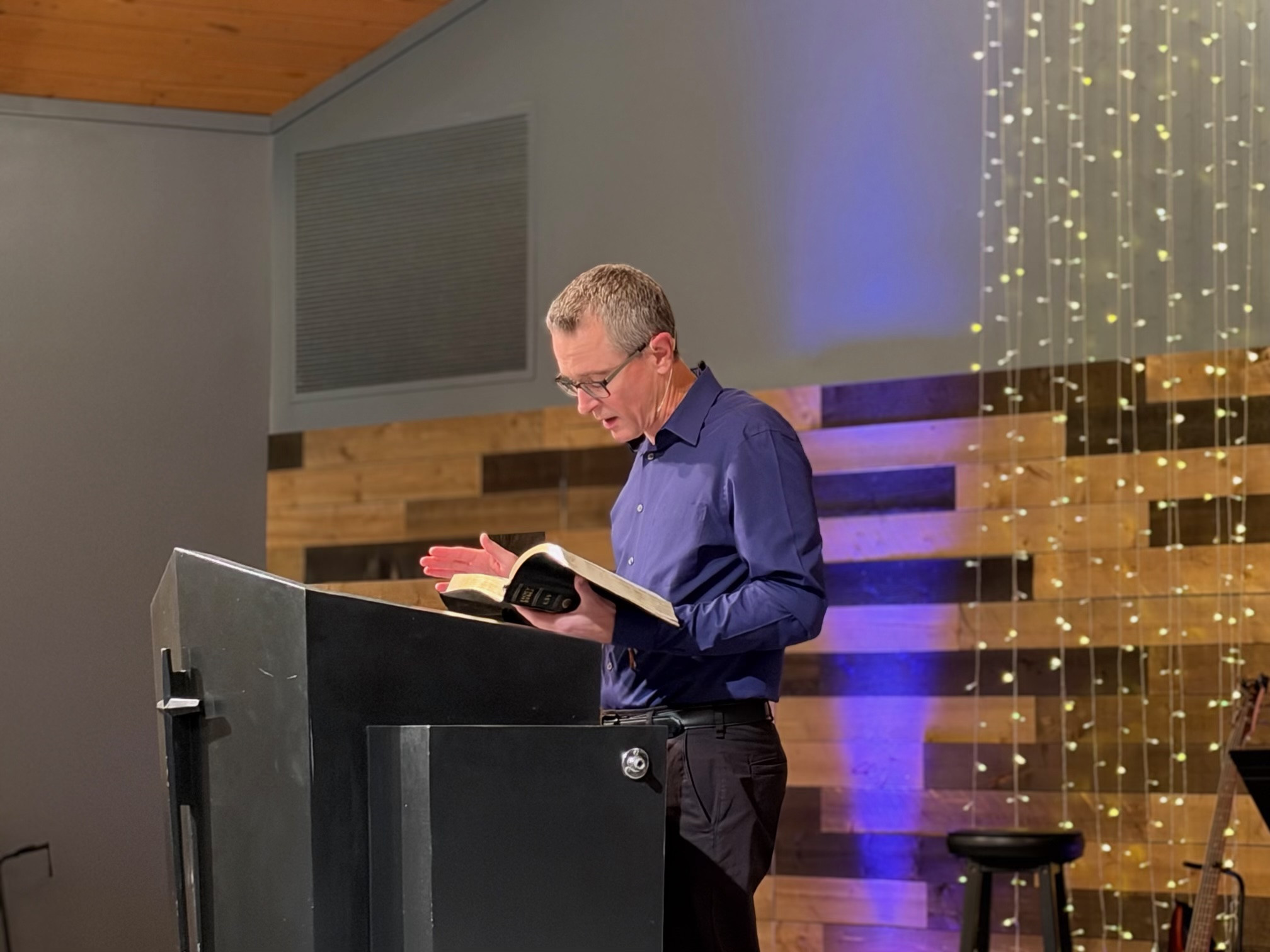
The following is a lightly edited transcript generated from the audio; it may contain small errors.
All right, everyone can be seated. Good morning. How are you all doing? Good. We have a couple announcements before we get into the Word. One, in two Wednesdays we have our semi-annual members’ meeting. So we’ll be going over a few things at that. We also share a meal at that. So mark your calendar for two Wednesdays at 7 p.m. Also, we are having the 19th annual Chocolate Fest for IGY. It’s been going on for a long time, y’all. Back when I was helping out with it, years and years, almost two decades, that’s pretty crazy. Justus was like five at the time. Anyway, that’s coming up on November 9th, which is a Wednesday, so make sure and invite any high school or junior high who are welcome to that. Invite your friends. That is a blast. There is more chocolate than you can feasibly imagine. Also, just a few days after that, our youth are heading out to the Reality Conference, which is an apologetics conference. They’re heading up to Minnesota. We’ve been going for the last few years to it. It is an amazing, amazing conference that hits different topics on apologetics and helps ground our kids in the Word, encourages them in the faith, and we’ve been blessed. So if you are interested in having your kids go, just talk with me afterwards. I can get you the details and all that. With that, we’re going to let our kids head out to class. And we’re going to turn to the book of Obadiah.
We are concluding the book of Obadiah today. Twenty-one verses, the shortest book in the Old Testament, and we’re going to be wrapping things up with it. So let’s look at the last couple verses. Starting in verse 19, it says, “Those of the Negeb shall possess Mount Esau, and those of the Shephelah shall possess the land of the Philistines; they shall possess the land of Ephraim and the land of Samaria, and Benjamin shall possess Gilead. The exiles of this host of the people of Israel shall possess the land of the Canaanites as far as Zarephath, and the exiles of Jerusalem who are in Sepharad shall possess the cities of the Negeb. Saviors shall go up to Mount Zion to rule Mount Esau, and the kingdom shall be the Lord’s.”
Let’s pray. Thank You for taking us through this book. Thank You for blessing us with Your Word. Thank You specifically for blessing us with this prophecy from Obadiah, to know how You’re working, to know who You are, to see how You are working in the lives of Your people throughout history. We pray, God, that You would open up the truths that You have before us today. We want to hear from You, God. Fill us with Your Spirit so that we can do that. Lord, we pray for our brothers and sisters across this nation that today they’d be worshiping You as well in Spirit and truth. Thank You, Lord, for our worship team, for them constantly bringing us before Your throne to worship You rightly, to worship You wholeheartedly, God. We pray for our kids that they would come to know You at an early age. We want to see them grow up to be godly men and women. That being the case, may we be godly men and women ourselves so that they have an example to follow. Lord, we thank You for Your Spirit, for it’s in Him that He lives in us. He gives us His fruit, the fruit of the Spirit, that we can walk in Your ways. You are such a good God. You are so gracious to us. We pray You’d continue to go before us now. Pave the way for us to continue to seek You each and every day for Your glory. Amen.
All right, well, let’s do a quick recap of the book of Obadiah and kind of look at what we’ve observed and learned so far. So it’s broken into four sections. And those first nine verses that we looked at some time ago talk about Edom’s judgment. And what is Edom being judged for? Well, in part for their pride. They think that because of their lofty position, like literally physically, because they lived in a mountainous area, that it’d be very hard to attack them and very hard to take them down, which actually is true, it would be. Then we looked at the specifics of what Edom had done to Israel. And this is what they’re primarily being judged for. So in the time of Israel, basically they had been ransacked by a great nation, very likely the Babylonians. What does Edom end up doing? They kind of end up piling on. And they use that as an opportunity to either join forces with the Babylonians or kind of come in afterwards and kind of finish up. Now, Israel’s in a state of disrepair, and Edom seizes the opportunity to come in and finish him off, so to speak. We also learned in verses 15 through 18 that there is not just a judgment for Edom, but there’s judgment for all. And that one day we will all stand before the Lord to be judged for what we have done, for what we have said, for what we have believed. And then finally, that brings us to the final part of the book, the last few verses here that we just read. We observe that the book is more than just about the Edomites, but contains promises for Israel that we looked at a couple weeks ago, and we’re going to look at today, restoration of Jacob’s land.
So notice in verse 19, it says that those of the Negeb shall possess Mount Esau, which Mount Esau here just stands for Edom. Well, the first part of verse 19, we actually would expect it. We’re getting them back for what they did to us, essentially, is what Israel is being told. The Negeb, part of the land of Israel, is going to end up taking over Edom. So we would expect something like that. Their punishment is losing their land and their punishment is ultimately being wiped off the face of the earth. So they encroached on the land, they did us wrong, and now we’re going to take their land. So we’d kind of expect that as part of the prophecy, but what we would not expect is the next part of verse 19 where it says, the Shephelah, which that’s the plains area, is going to possess the Philistines. Now at this point, we’d be like, well, where did that come from? Like our eyes would start to get kind of wide because it’s not just, now it’s not just about Edom being paid back, but now the Philistines are brought into it. The Philistines haven’t been mentioned to this point, but now the Philistines are having their land overtaken by the Israelites. And then when we keep reading, it continues to get even broader in scope. At the end of verse 19, they shall possess the land of Ephraim and the land of Samaria. Well, what’s going on there? Well, think about the land of Ephraim and Samaria. What is this? Why are these two regions and why is it such a big deal? This is the Israelite land that was taken by the Assyrians back in 746 BC. So you had two deportations, if you will. You had the Northern Kingdom and the Southern Kingdom, and the Northern Kingdom ends up getting attacked by the Assyrians in 746 BC, and they end up getting carried off. Then Judah ends up getting judged. And I believe that this is part of the judgment that is being discussed here in 586, is when the Babylonians come in and exercise their judgment via the hand of God, being used by Him to do to the Southern Kingdom, which would be Judah and the tribe of Benjamin, because of the unfaithfulness of the Israelites. What we see here is they’re going to take back over the land that was taken from them, going back hundreds of years. So imagine being an Israelite in the time of Obadiah and reading this and the Northern Kingdom, I mean, it’s been gone for a couple hundred years. And here God through Obadiah is promising that the land is going to be returned. He’s promising that. So now their eyes are getting really big because it’s not just, oh, we’re going to take some of the Philistine land. No, God is showing that He’s going to restore the land, even the Southern Kingdom, but the Northern Kingdom. And notice this, if you plotted the four areas that are mentioned here, even with the last part, Benjamin shall possess Gilead, what you have is really the four points of a compass. So you have the north, which is Ephraim, you have the south, which is Mount Esau, east is Gilead, and west is the Philistines. So it’s not just a little slice of land that they’re going to get back, but they’re going to get everything back. Well, what’s the application here? It’s this, a big God works in big ways. And a big God delivers in big ways. And brothers and sisters, we serve a big God. Is anything too difficult for Him? I mean, what is it to give the Israelites back whatever land God wants to give them, right? Can He do that? So is anything too difficult for Him? No. Well, then why do we act like it sometimes? Right? Why do we act like it sometimes? God, if you think about it, God often surpasses our low expectations of what He can do. We usually put our expectations here and it seems like God super surpasses it time and time and time and time and time again. And He is a God who always comes through, not just in the general sense, that He is a God who always comes through for you, for each one of us.
So here’s the takeaway from this first part. What God promises, He always brings to pass. What He promises, He always brings to pass. And when you think about it, every prophecy, there’s prophecy in the Old Testament, there’s prophecy in the New Testament, every prophecy is a promise. Because if God is speaking through His prophets, telling what will come to pass, guess what? It comes to pass, right? God says it, He follows it through, it comes to pass. This is what we see even in the New Testament, God talks about promises and about them being completed. Look at, keep your place in Obadiah, but look at Romans 15. In Romans 15 verse 8 it says, “For I tell you that Christ became a servant to the circumcised to show God’s truthfulness, in order to confirm the promises given to the patriarchs.” Well what were the promises given to the patriarchs? I mean, starting all the way with Abraham, right? It’s back to the land, but it’s not just that. And through you, who’s going to be blessed? All the nations, all the nations. And what are we learning here? What is Paul reminding the Romans of, and what is he teaching them? Confirm the promises given to the patriarchs, how? Christ became the servant of the circumcised to show that truthfulness. God sent His Son. That was like the fulfillment of the fulfillment of the fulfillment of the prophecies, right? All those prophecies, ultimately pointing to Jesus to complete the promises that God had given all along. That’s why it says in Corinthians, in Christ, in Christ, this is important, in Christ, all the promises are yes. If you want the promises of God, if you want them to be applied to you, guess what? You have to be found in Jesus. You have to be found in Him. If you want everything that was promised, if you want what God has promised to His people, you’ve got to be one of His people. Right? You’ve got to be part of the covenant with God.
So here, that’s what he’s pointing out. Look at 2 Corinthians. We’re going to see something similar. In 2 Corinthians 7 it says, “Since we have these promises, beloved”—what promises is he talking about? Well, we have to back up a little bit to get the context of what promises he’s referencing here. Go back, we’ll just start in verse 14 of chapter 6. You’re probably familiar with this verse. “Do not be unequally yoked with unbelievers. For what partnership has righteousness with lawlessness? Or what fellowship has light with darkness? What accord has Christ with Belial? Or what portion does a believer share with an unbeliever? What agreement has the temple of God with idols? For we are the temple of the living God.” So he’s making these contrasts, right, and comparisons. And he’s asking these rhetorical questions, and it’s obvious. What partnership has righteousness with lawlessness? None. What fellowship has light with darkness? None. What accord has Christ with Belial? None. What portion does the believer share with an unbeliever? None, right. What agreement has the temple of God with idols? None. For we are the temple of the living God. And then he goes and he’s going to quote the Old Testament: “As God said, ‘I will make My dwelling among them and walk among them, and I will be their God, and they shall be My people.’” Like that’s a promise. I’m going to be your God, okay? Like I’m going to be there every step of the way and I’m not going to let you down. “I will be their God, they shall be My people. Therefore go out from their midst, and be separate from them, says the Lord, and touch no unclean thing; then I will welcome you, and I will be a father to you, and you shall be sons and daughters to Me, says the Lord Almighty.” I mean, that’s really another promise. I’ll be your Father, you’ll be My sons and daughters. Then Paul says in verse 1 of chapter 7, “Since we have these promises, beloved,” I mean, it’s really everything that Paul’s been going through the first six chapters, but specifically he’s talking about these promises just given to them from the Old Testament. He’s linking the Old Testament with the New Testament and he’s applying it to the believers here. God’s talking to the Israelites in the Old Testament. He’s like, guess what? You’re part of that. Why? Because you’re My chosen people. You’re My chosen people. And here it is. I am your Father, you are sons and daughters. I’m your God, and you will be My people. That’s us. We are the people of God. So then we get this command: “Since we have these promises, beloved, let us cleanse ourselves from every defilement of body and spirit, bringing holiness to completion in the fear of God.” His point is specifically here, like since we have promises, we better start acting like we’re part of those promises. Clean up, cleanse ourselves from every defilement of body. Like start living like you are a child of God. Quit living in the dumpster and get out of the dumpster and start living in freedom and start living in holiness. That’s his application there. So what God promises, He always brings to pass. I mean, isn’t that a beautiful thing? You read something in the Scriptures, if God promises it, He’s going to bring it to pass. And those promises were given for God’s children. If you’re a believer here, you’re one of God’s children, those promises are for you.
Look at 2 Peter, we’ll look at one more verse, 2 Peter chapter 1. We’ll just start in chapter 1, verse 1. “Simeon Peter, a servant and apostle of Jesus Christ, to those who have obtained a faith of equal standing with ours by the righteousness of our God and Savior Jesus Christ: May grace and peace be multiplied to you in the knowledge of God and of Jesus our Lord. His divine power has granted to us all things that pertain to life and godliness, through the knowledge of Him who called us to His own glory and excellence, by which He has granted to us His precious and very great promises, so that through them you may become partakers of the divine nature, having escaped from the corruption that is in the world because of sinful desire.” Okay, so notice what he says in verse 4. He has granted to us His precious and very great promises. What kind of promises are they? They’re precious. Why? Because they’re coming from a God who loves us and who cares about us. Who’s going to walk with us every single step of the way. They’re precious promises. And sometimes, depending on where you’re at in your walk with the Lord, like sometimes you read something in Scripture and you’re like, dude, I needed that today. Well, that’s a precious promise that God’s making to you. So it’s a precious promise. Are you all hearing me? Okay. It’s a precious promise, but it’s not just a precious promise, it’s a great promise. And it’s not just a great promise, it’s a very great promise. Well, why can it be a very great promise? Because God is a very great God. Like He can make the best promises and the greatest promises because He is the one that can truly fulfill them. All sorts of people can make promises. You’ve probably had people make promises to you all throughout your life, right? And they get broken, sadly, on a somewhat regular basis. But does God break His promises? No, He’s a promise-maker, not a promise-breaker. So His promises are very great promises and we can cling to them because we know He will bring it to pass. He will bring it to pass every single time. So these Old Testament promises end up becoming New Testament promises.
But here’s the thing. When we’re back in Obadiah, I mean, it gets even better than promising about land. Why? Because it’s not just about the land. It was never just about the land. You know, God’s not just concerned with a few thousand square miles of land in the ancient Near East. He really isn’t. He wants the whole world. And He has all of it. I mean, what does John 3:16 say? For God so loved the Israelites? No. “For God so loved the world.” And what were Adam and Eve commanded to do? Subdue what? Subdue the world or subdue the earth, right? Genesis 1:28, “God blessed them, and God said to them, ‘Be fruitful and multiply and fill the earth and subdue’” that little ancient Near East land? No, subdue it all, right? “Have dominion over the fish of the sea and over the birds of the heavens and over every living thing that moves on the earth.” It wasn’t just subdue the garden. Think about that. It wasn’t just fill the garden. It wasn’t just subdue the area around the garden or fill the area around the garden. Not just multiply and fill those areas. No, the garden was a starting point. But the command was to subdue it all. The command was to multiply and fill it all. Even Jesus tells us in the Sermon on the Mount that the meek will inherit what? The earth, right? That word is the same word that’s linked—and we’re probably not going to look at it—but in Psalm 37, you can just write that down and look at it later. Five different times, there’s the promise of the land being referenced, okay? And it is very likely that when Jesus is giving the Sermon on the Mount and talking about blessed are this and blessed are that, when He talks about “Blessed are the meek, for they shall inherit the earth,” He’s really referencing that Old Testament promise of the promised land. But who’s the meek? Who is Jesus describing in the blessed, in the Beatitudes? Like He’s describing what believers should be in their daily lives as they’re walking before Jesus and they’re walking before the Lord.
But here’s the thing, even if you think about the temptation of Jesus, you know, Matthew 4, what does the devil, one of the things he tries to tempt Jesus with is what? Does he try to tempt Jesus by offering Him the land of Judah or the land of Israel? Okay, I’ll give it, I’ll give back the land, not like it’s his anyway or his to even offer. But what is he offering Him? He’s offering Him the world, Matthew 4:8. “The devil took Him to a very high mountain and showed Him all the kingdoms of the world and their glory.” But the kingdom is already Jesus’s, right? I mean, it’s already His. I mean, the devil, it’s interesting because sometimes the devil tries to offer you something that you already have in Christ. Think about that for a moment. Now, it’s a fake and a false version of it, but the devil tries to offer you something that you already have in Christ, like peace. I’ve talked to people before that have walked away from the faith and they’re like, man, I’m at such peace now. We’ll make things easier for him for a bit. It’s a fake peace. The devil tries to offer you something like wholeness or happiness. You know, if you do this, or you do this. If you do this, I know you want to indulge in this particular thing and it’ll bring you much happiness, much pleasure. He’s offering you something that you already have in Christ. You already have peace, you already have wholeness, you already have holiness, you already have happiness, you already have satisfaction, and you already have pleasure, all those things come if you’re in Christ. You have God and that is the best thing you could possibly have. You have the one and only. And the devil tries to come and give substitutes and gives fakes. Sometimes he offers you fakes and forgeries. I mean even if you just think about like pornography and fornication. That’s a fake and a forgery of what God really has for us, which is biblical marriage, right? The covenant of marriage, but he comes and offers fakes and forgeries. So we’re talking here about God’s faithfulness. Because He’s faithful, we know He will keep His promise. And it’s about His commitment to His children.
Look at Revelation chapter 11. Verse 15, it says, “Then the seventh angel blew his trumpet, and there were loud voices in heaven, saying, ‘The kingdom of the world has become the kingdom of our Lord and of His Christ, and He shall reign forever and ever.’” What’s going on here? Well, we’re going to see this application with verse 21, where it’s talking about the kingdom will be the Lord’s. We have a kingdom on this earth, but we have a kingdom in heaven. And Yahweh here wants to make two things clear to us when He’s talking to His children and when He’s making promises. One, who gets possession? It’s His children. The meek will inherit the land. And who gives the possession? Yahweh Himself. The Lord gives what He promises and whatever He promises, He brings to pass. Think about it for a moment. Did Paul and all the letters of the New Testament make much reference to the land being restored? Does Peter, does James, does John? I mean, it plays no part whatsoever in the new covenant. Why? Because there’s something much greater than land in the ancient Near East. There’s something much greater that God has in store. There’s something much greater that God has in plan. And it ties back, look in Obadiah to the last verse that we see. Verse 21, “Saviors shall go up to Mount Zion to rule Mount Esau, and the kingdom shall be the Lord’s.” See, Paul, Peter, James, John, they realized the eschatological significance of the Old Testament promises. They realized that it wasn’t just for here and now, but it was for the future. They realized it wasn’t just for the Old Testament, but it had implications for the New Testament. It had implications for the new covenant that God had established. And it was more than just land. It was more than just an earthly reign. It was more than an earthly kingdom. It was a heavenly kingdom established on earth that would never end. This is why it says, “the kingdom shall be the Lord’s.” That’s how Obadiah wraps up the prophecy by the biggest commitment and promise that God could possibly make, “the kingdom shall be the Lord’s.” And it is.
So this prophecy, and we mentioned this last time, did this prophecy of Obadiah come true? Well, yes it did actually. We can actually look back in history and we can see that Edom was displaced from its country by foreigners around the sixth or fifth century BC. And even Malachi seems to reference it that by his time, the Edomites had been driven out from their two main capital cities. Further, if you’ve read any or studied any of Judas Maccabeus, I think that’s the proper way of saying it, we find out that the Idumeans, which were basically descendants of the Edomites, they’re defeated in 166 BC. After the second century, we don’t hear anything about the tribe again. God is faithful to His Word. If He says it, it will happen. So the first restoration really ties into the second restoration. It’s the restoration of God’s rule or the restoration of God’s kingdom. It’s not that He stopped ruling. Now here’s the thing. He was ruling. He is ruling. And He will continue to rule, period. But the future rule looks different than the present rule. So really you could say verses 19 through 21 really build up to the fact that God’s kingdom is coming and it is coming through and it is coming here. Think of Israel, they dethroned God as their king and in the judges, they’re given the judges to rule, right? But what happens once you get past the judges, they’re like, oh, give us a king like all the other nations, right? And really, in one sense, maybe they were still a theocracy, but in another sense, they kind of became a monarchy. They put a king in place of God, the King. Their actions showed they wanted self-rule instead of God-rule. So they did their own thing. But even in the Psalms, we have what’s called the enthronement psalms where God reminds His people that, hey, you might have an earthly king, but I am still the King. I’m still the one that’s on the throne. I’m still the one that’s ruling over you. So you have this idea of demonstration of Yahweh’s kingship being seen throughout the Psalms and making it clear, which the Psalms were part of their basically worship. That’s what they’d be singing during worship. So these reminders to Israel of who the true King is.
Look at Psalm, we’ll just look at a couple. Look at Psalm 96. In verse 10, Psalm 96, “Say among the nations, ‘The Lord reigns! Yes, the world is established; it shall never be moved; He will judge the peoples with equity.’” So here, I mean, they’re being even commanded within their worship that they’re supposed to go to the nations and basically be like, hey, Yahweh reigns. And guess what? The world is established, it shall never be moved. Like He’s put this world in place and no one and nothing is going to move it. He will judge the peoples, not just the Israelites, but He will judge the peoples with equity. So this idea that the Lord is reigning, He’s sovereign over all, He’s sitting on His throne, and He cannot be moved. And one day He’s going to judge. That’s what Obadiah gets to in verses 15 through 18. There’s a day of judgment coming. Well here we’re seeing the same thing. He will judge the peoples with equity. So it’s this idea of acknowledging God’s rule, not just over the Israelites, but over mankind. Look at Psalm chapter 9. Verse 7 of Psalm 9: “But the Lord sits enthroned forever; He has established His throne for justice, and He judges the world with righteousness; He judges the peoples with uprightness.” Now think about that. He sits enthroned forever. I mean, so it’s an eternal ruling, an eternal kingship, if you will. And again, who is He judging? The world. The world, why? Because it’s His. It’s His. So He’s going to judge it. One more psalm, Psalm 22. Psalm 22 is considered a messianic psalm, prophesying about in part the coming of the Christ. But we get in verse 27, it says in Psalm 22 verse 27, “All the ends of the earth shall remember and turn to the Lord, and all the families of the nations shall worship before You. For kingship belongs to the Lord, and He rules over the nations.” I mean here in Obadiah, Israel is still in exile, yet her King promises that He is on the throne. The kingdom will be the Lord’s and one day He will establish that throne here on earth. Think about what Jesus taught His disciples to pray. Matthew 6, right? “Our Father who art in heaven, hallowed be Your name.” Then what comes next? “Your kingdom come,” right? Which kingdom is that? It’s His kingdom. Where is it now? “Your kingdom come,” where? “On earth,” where? “As it is in heaven,” right? We want the heavenly rule here on earth. That’s what we’re supposed to be praying for. We’re supposed to be praying something that He’s promised and we’re supposed to be asking for it to come to pass. Think of how it ends: Maranatha, come Lord Jesus. That’s what we’re asking.
I mean, think about this, the scope of God’s reign, when you think about Him being the head of Israel, like their King, so to speak, the Israelites just didn’t have like a view—well, unfortunately at times they did—but they had a true monotheism where there was one God and all the other gods were false, where the surrounding nations had more of a view what you would call henotheism, that there’s one god kind of at the top, but there’s also other gods that are ruling. So the Philistines had their god, and that was their main god, but they recognize the Israelites have their god, and the Canaanites have their god, and the Babylonians have their god, right? That’s henotheism, where they have their one main god, and then an acknowledgement of other gods still ruling. But the Israelites weren’t like that. I mean, time and time again, we could spend all day, all week, looking at all the verses that talk about there is one God, one God. And the rest are false and fake idols. And Isaiah has that passage where he’s like, you know, kind of even mocking the gods of the other nations and the people, because he’s like, you know, they cut down this tree with their own axe and then they fashion it, and then they put some silver on it, and then they end up worshiping the very thing that they created. He’s like, how silly is that? So, here the scope of God’s reign, He’s reigning all because why? He is the one true God. And we are given a hope here for the future.
Back in Obadiah, this word “saviors” in verse 21, it’s really meaning like tribal leaders or military leaders. The judges in the book of Judges a few times are actually referred to with this same Hebrew word as saviors, if you will. But why are they going up to Mount Zion in order to rule Mount Esau? Now this Mount Esau, that’s actually just a phrase that is just peculiar to Obadiah. He uses it a couple of verses earlier as well. It’s just representative of Edom, but he’s making a comparison here. And that’s why he kind of coins this new term, Mount Esau. Why? Because on the one hand, you’ve got Mount Zion, and on the other, you have Mount Esau. He wants you to see that there’s some comparison being made here. Well, what’s the idea? Well, we’re going to see it in just a second, because where do the people that are fleeing earlier escape to? If we look back in verse 17 and we already talked about it, it says, “In Mount Zion there shall be those who escape.” Well, where are they escaping? They’re escaping to Mount Zion. Why is that important? Because this is seen as the place where God resides. It is figurative of heaven. So listen, all reign, authority, and power emanate from heaven itself, where God reigns and rules all. And one day He will establish that kingdom here on earth. “Your kingdom come, on earth as it is in heaven.” So Yahweh will reign supreme. When will He reign supreme? Doesn’t He reign supreme right now? Yes. Didn’t He reign supreme during the exile? Yes. So what is the idea? What’s the idea that’s being shared here? Well, powerfully and eternally. We get a glimpse of it in 1 Corinthians 15. Why don’t you turn there? And we’re going to look at a couple passages there. 1 Corinthians 15.
So when Obadiah mentions Mount Zion, it has centrality in his vision of the future kingdom of Yahweh. So bringing in Mount Zion brings it into the heavenly realm and goes beyond the mere land of the ancient Near East. The rule of God was and is everywhere. And if the Lord is ruling everywhere, then God’s people will be there with Him as His covenant children. It’s heaven on earth. And notice this, we have the comparison. Mount Zion now has authority over Mount Esau. It’s mountain against mountain. It’s true God against false god, and who wins? The Lord wins. He always does. So Zion is seen as the seat of Yahweh’s rule. And here with the word “kingdom,” this word kingdom always designates something having to do with royalty. Most commonly it denotes the office of a king. So when it says the kingdom will be the Lord’s, it is talking about God’s kingdom belonging to Him. He has full reign, full authority, full power, and He’s bringing it here on earth. This is the future fulfillment of Christ’s eschatological reign.
Look at 1 Corinthians 15. It says in verse 24, “Then comes the end, when He”—who’s He? Jesus—“when Jesus delivers the kingdom to God the Father after destroying every rule and every authority and power.” So He’s delivering the kingdom to the Father. The earthly kingdom, if you will. But when is He doing that? After He destroys every rule and every authority and power. Now, those rules and authorities and powers, I mean, you could apply that and say it’s talking about earthly kingdoms, true, it is. But specifically the rule and authority and power is talking about the spiritual realm, demonic forces, okay? So He’s not just taking over and controlling physical things, like He’s taking it over all and He’s taking down the enemy and all his evil minions. All the demons will be put down. He goes on, “For He must reign until He has put all His enemies under His feet. The last enemy to be destroyed is death. For ‘God has put all things in subjection under His feet.’ But when it says, ‘all things are put in subjection,’ it is plain that He is excepted who put all things in subjection under Him. When all things are subjected to Him, then the Son Himself will also be subjected to Him who put all things in subjection under Him, that God may be all in all.” Right, so that’s at the end, right? That’s how it starts. “Then comes the end,” verse 24, what happens at the end? The kingdom is delivered to the Father by Jesus. Jesus Himself comes and gives the kingdom to the Father.
Look at Revelation 22. We’ll see a similar picture given to us. Actually, we’ll start in chapter 21, Revelation 21. “Then I saw a new heaven and a new earth, for the first heaven and the first earth had passed away, and the sea was no more. And I saw the holy city, new Jerusalem, coming down out of heaven from God, prepared as a bride adorned for her husband. And I heard a loud voice from the throne saying, ‘Behold, the dwelling place of God is with man.’” Right? So, I mean, the new Jerusalem coming from heaven down to earth. “Behold, the dwelling place of God is with man.” The kingly rule up in heaven is being set up on earth here. “Behold, the dwelling place of God is with man. He will dwell with them, and they will be His people, and God Himself will be with them as their God.” Amen? So we get the description of the new Jerusalem and then it goes into chapter 22: “Then the angel showed me the river of the water of life, bright as crystal, flowing from the throne of God and of the Lamb through the middle of the street of the city; also, on either side of the river, the tree of life with its twelve kinds of fruit, yielding its fruit each month. The leaves of the tree were for the healing of the nations. No longer will there be anything accursed, but the throne of God and of the Lamb will be in it, and His servants will worship Him. They will see His face, and His name will be on their foreheads. And night will be no more. They will need no light of lamp or sun, for the Lord God will be their light, and they will reign forever and ever.” Which kingdom is being referred to here when the kingdom is being handed over? Well, it’s all kingdoms. Whatever kingdom Satan has, whatever he is controlling, all the earthly kingdoms, every king will bow down to Jesus, and it will be His. And then He will hand it to the Father. And all things will be subjected unto the Father. That includes us. That includes us. Philippians says, one day every knee will bow. Every knee will bow. Every knee will bow. Brothers and sisters, God owns it all. He owns the cattle on a thousand hills, as Psalm 50 tells us, and He owns a thousand cattle on one hill. He owns it all. And what we’re seeing here as we wrap up Obadiah is that Israel will come to a point in their history where they will never again be threatened by oppression. Although Edom dwells seemingly secure in the heights, here’s the thing. Safety and refuge can only be found in Zion. Where did the refugees escape? To Zion. Where is safety and refuge found? Zion. Why? Because Zion is the seat of Yahweh’s rule. Note this end, the last clause, it sounds a note by promising the public and definitive manifestation of the royal power of God. His authority will be displayed for all to see. Lord Yahweh, He exercises authority over all the nations now. Here’s the thing. His purpose, God’s purpose is not simply to defeat His enemies. It’s not simply to restore Israel, but it’s to establish His kingship fully and finally over the whole earth. That’s why we get all those psalms, talking about the whole earth is His. Well it is.
And three words that I would say are key as we wrap up Obadiah are promise, restoration, and fulfillment. First, promise, which we’ve been talking about quite a bit this morning, He keeps His promises from beginning to end. He is an ever-faithful God and if He says it, He will do it. Second, restoration. God is a God that restores and here we’re looking at the restoration of the land, but think about how God restores in other ways. Think about how He restores our relationship, our broken relationship with Him. He is a restorer. You know, the beautiful thing, if you have broken relationships with people here on this earth, they can be restored because God is a restorer. So whatever relationships might be broken, there’s always hope that those can be restored. They can be restored because God’s a restorer. If He’s involved in the picture, then restoration is always possible. But God, in His infinite love and mercy and kindness and grace, He restores us to Him. I mean we have a broken fellowship because of our sin with God. Our sin separates us from Him. And what does He do? He brings us back. It’s like the garden, you know, 2.0. He restores us. He makes it what the garden was supposed to be. He makes the whole earth even better. He restores. So He’s a restorer, that’s the second word, restoration. And then finally the third word, fulfillment. Like He fulfills everything that He says He will do. And someday coming soon we’re warned and commanded to be on watch, to not fall asleep, to be ready, to be prepared, to be sober. Why? Because the fulfillment of all things is at hand. We are just steps away from Christ’s returning. And so then the question is for us, are we ready for His return? Are we ready for Christ to come back? I mean we’re supposed to pray for it. Maranatha, come Lord Jesus. I mean that is a prayer. We’re asking Him to return. He promises that He will return, but are we ready for Him to return?
Look, if you don’t know Christ, then guess what? You’re not prepared and you’re not ready, and you need to trust in Him today for the forgiveness of your sins. You need to repent of your sin. You need to turn to Him. You need to acknowledge your pride and that without Him, you’re completely lost and totally fallen and on your way to hell. But God in His mercy offers forgiveness through His Son Jesus. And the fulfillment of that will be one day seen and it is going to be sooner than many of us expect. We need to be ready, brothers and sisters. The fulfillment of all things is at hand and we are supposed to be the parable where the master says I’m leaving and I’m coming back and what do some of the servants do? They’re out partying, they’re out doing their own thing, they’re out getting drunk, right? They’re like, oh yeah, he’s going to be gone a little bit longer. We got, you know, I know no kids ever do this, you know, when the parents are leaving, right? And they’re like, what time are you going to be back, mom and dad? You know, oh, we’ll be back by two. So at like, you know, 1:55, you know, it’s time to clean up the house real quick. Make sure we were working all that time. No. Like, Christ is coming back and He’s going to catch some people off guard. Don’t let Him catch you off guard. Be ready. Make sure you are walking with Christ, that you are one of His, that you have trusted in Him, that you are His and He is yours. Make sure that you are found in Him. Make sure that you are one of His, that you are part of the kingdom of light and not part of the kingdom of darkness. What does John 1:12 say? “But to all who did receive Him, who believed in His name, He gave the right to become children of God.” If you believe in Jesus, you’re given that same right. Adopted into the kingdom for God’s glory. Here’s how one theologian wrapped things up regarding Obadiah. Obadiah tells all God’s people, “Don’t worry about those who ignore your need, those who rejoice in your problems, those who take advantage of your crises, those who join their hands with others in attacking you. I, the Lord, will take care of them.” And by way of extension, the Lord is saying to us, I, the Lord, will take care of us. God is coming to establish His kingdom. Your kingdom come. Let’s be ready. Let’s be prepared. Let’s trust. Let’s walk in the promises of God. Amen. Let’s pray.
Thank You that You are returning for Your bride, that You are coming soon, that You promise it, and that alone is enough. Your Word is enough for us. You commit to it, You will do it. Thank You that You reign over the heavens, You reign over the earth, that the earth is Yours and You will one day in full fruition come and establish Your kingdom here. Your kingdom come on earth as it is in heaven. We thank You, Lord, that those who trust in You are forgiven, they are made right with You, they are justified by the blood of the Lamb. And I pray today, Lord, anyone here who might not know You, they’d be convicted of their sin, they’d see their need for You, they’d repent and trust in You. If they do that, God, You’re gracious to save, always, every day, all the time. Thank You for being so quick to save. We love You. Amen.