
September 25, 2022
Judgement with Power
Dr. Michael A. Bond · Obadiah
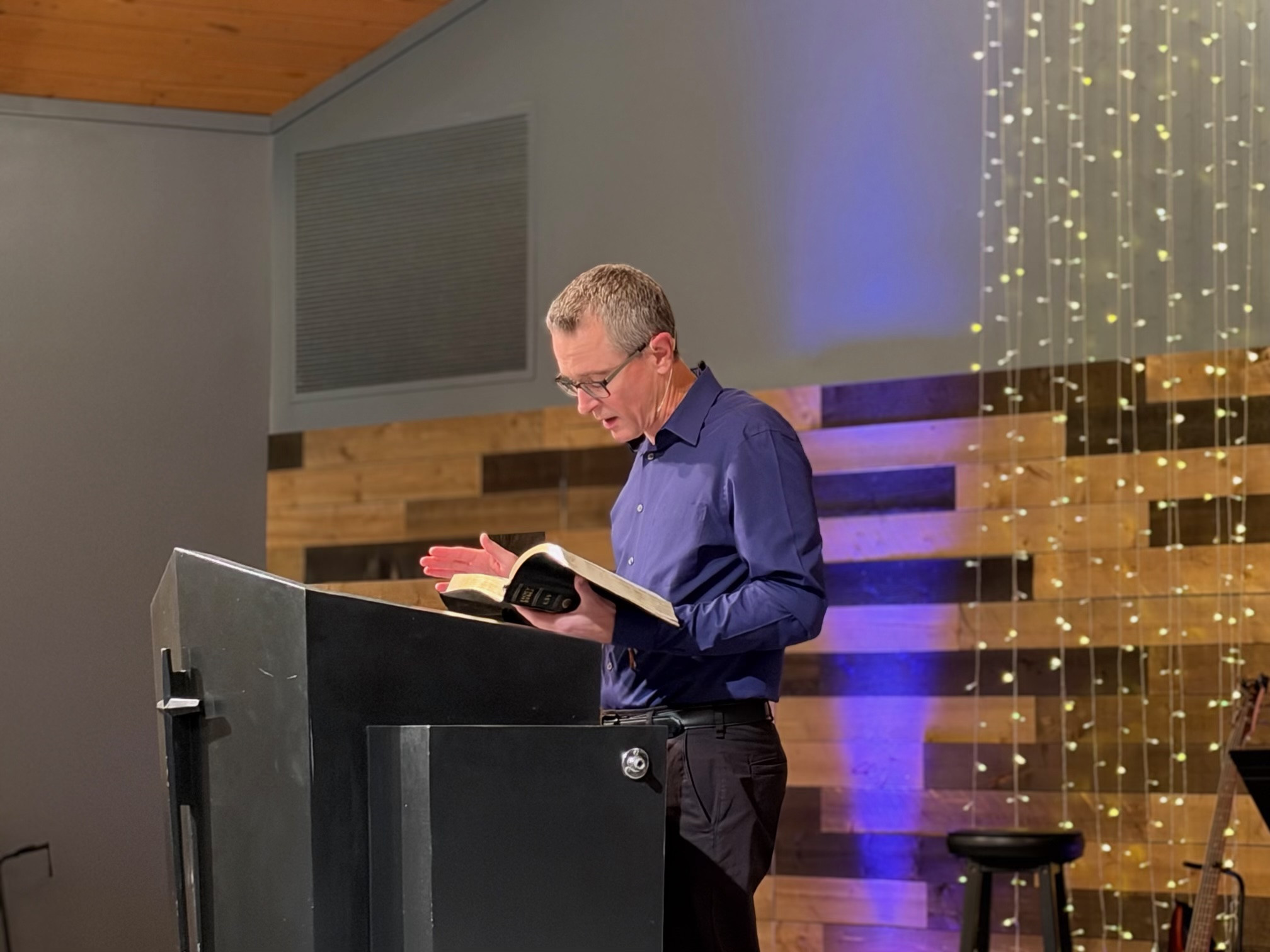
The following is a lightly edited transcript generated from the audio; it may contain small errors.
And we’re going to turn to the book of Obadiah. Obadiah, we’re going to start in verse 15.
“For the day of the Lord is near upon all the nations. As you have done, it shall be done to you; your deeds shall return on your own head. For as you have drunk on My holy mountain, so all the nations shall drink continually; they shall drink and swallow, and shall be as though they had never been. But in Mount Zion there shall be those who escape, and it shall be holy, and the house of Jacob shall possess their own possessions. The house of Jacob shall be a fire, and the house of Joseph a flame, and the house of Esau stubble; they shall burn them and consume them, and there shall be no survivor for the house of Esau, for the Lord has spoken.” Let’s pray.
Lord, we come before You this morning. We come as Your children. We come to hear a word from You. So prepare our hearts for it. Lord, we intercede for our college and career students on their retreat. May they have a blessed time of fellowship and a blessed time of getting into Your Word. Bless their time, Lord. Make it fruitful. God, we want to be a people that’s about doing what You call us to do. We want to be a people that serve You, that minister Your truth to others. Lord, we got an opportunity with the Fall Festival this coming Saturday. We ask You to bless it, give us some amazing weather. Let Your gospel go forth in clarity and truth, and let people respond to it. Let that whole day be a blessing to the community at large. Thank You for the privilege, Lord, of doing an event like that with St. Charles Christian Home Educators. And let all the pieces fall into place, God, as things kind of come to the end here, Lord. God, we want to be a people, Lord, that set our hearts on You. We want to obey the first and greatest commandment, to love the Lord your God with all your heart, soul, mind, and strength. Fill us with Your Spirit to do that, and to do that to Your glory. We ask for Your glory. Amen.
All right. We’re in the book of Obadiah, and we’ve looked at the first two sections of Obadiah, and now we’re going into the third section. So if you remember, the first section is focused on Edom’s judgment for their pride, so we spent a few weeks looking at that. Last week we looked at the second section, which gives us specifics on what Edom did, and the judgment is pronounced on them for their wickedness against Israel. This week we’re looking at a third section which sees that there’s a future judgment for all, and then the fourth section, which we’ll get to in a few weeks, wraps up the book and talks about the future hope for Israel and also for all believers.
When we look at the Old Testament, and one of the reasons I think it’s good for us to study books in the Old Testament is just to be reminded that the best commentary on the New Testament is the Old Testament. All right? And sometimes what happens is, I think that we as believers can just read the New Testament, which is great. Hey, you’re reading the Word. You’re reading the Bible. But the Old Testament is God’s Word as well, right? And it’s not lower or lesser in any form or fashion. It is God’s Word, amen? So we want to make sure to emphasize both the Old Testament and the New Testament. A lot of times, sometimes I think what happens is people think of the Old Testament, they think of it’s like law, law, law, law, and all these rules, and all these regulations. And then they’re like, oh, in the New Testament, it’s grace and grace and grace and grace. Well, I’m going to say that there is more of a continuity and less of a division between the covenants. Now, to be sure, the old is past and the new is come. But here’s the thing. I’ve been working for about five years now on a sermon. It’s actually titled, “The Love of the Father and the Wrath of the Son.” There’s a lot of times people flip that and they think of the Father as bringing wrath and the Son as bringing the love, which is true, but the other is true as well. The Father has much love, and the Son, if you’re familiar with your New Testament, brings wrath. So the Old Testament reveals a God who is very much merciful and gracious.
Look, we’re just going to look at one, one or maybe two verses. Starting, hold your place in Obadiah, but in Psalm 116 verse 5, it says, “Gracious is the Lord, and righteous; our God is merciful.” And if you look at Exodus 34, this is when Moses makes the new tablets. He cuts them. In verse 4 it says, “Moses cut two tablets of stone like the first. And he rose early in the morning and went up on Mount Sinai, as the Lord had commanded him, and took in his hand two tablets of stone. The Lord descended in the cloud and stood with him there, and proclaimed the name of the Lord. The Lord passed before him and proclaimed, ‘The Lord, the Lord, a God merciful and gracious, slow to anger, and abounding in steadfast love and faithfulness.’” Okay, that’s like the refrain throughout the Old Testament. You’ll see this passage, reference, or parts of it quoted throughout the Old Testament. This idea, again, what is it? He’s merciful, He’s gracious, He’s slow to anger, He’s abounding in steadfast love and faithfulness. That’s what reverberates throughout the Old Testament. So yes, is there law? Is there judgment? Is there wrath? Yes, but is that present in the New Testament as well? Absolutely. So don’t create a false division there.
So that was just more of a side note. So moving on with Obadiah, and the reason I think that’s important is I just want us to be people that are filled by the Spirit, walking by the power of the Spirit, knowing the Word and completely knowing it, the Old and New Testament. So in this third section of Obadiah, we see that the reach of the prophecy is now expanded. What do I mean by that? Well, it’s not just Edom that’s facing judgment. It’s all the nations. So I’ll look at verse 15. “For the day of the Lord is near upon” whom? “All the nations.” So think about that. God’s sovereignty extends past the borders of Israel. A lot of times back then they had, you know, different, each nation had their own little god and he reigned in that specific geographic region. So sometimes if they tried to conquer another country and they got smoked, it’s because, well, their god is the god of the valleys and they were trying to go into the clefts and take down the enemy. Okay, well, what do we find here? God’s bringing judgment and He’s gonna bring the judgment not just to the Edomites, but He’s gonna bring it to all. So we see His sovereignty extends past the borders of Israel. Now think about that. The judgment is gonna come even to nations that never bothered Israel. The judgment is going to come to all the nations, even the nations that were friendly to Israel. So the judgment comes to all. And the day of judgment awaits. And here’s the thing, it’s not because of how they treated Israel, though in Edom’s case, I mean, that’s in part true. But the day of judgment comes because every nation has done deeds worthy of being judged. Every nation will have to account for its deeds, and by way of extension, so will the citizens of that nation.
Now, here’s the thing. When we look at verse 15 and it talks about the day of the Lord, we have looked a whole lot at the day of the Lord because we went through 1 Thessalonians and we went through 2 Thessalonians. Here it is again before us in Obadiah. I’m not going to say much of what I’ve said in the past about the day of the Lord. You can go back and listen to those sermons on 1 Thessalonians and 2 Thessalonians. But I’ll make a couple notes here. One, Amos provides one of the oldest witnesses to this phrase, the day of the Lord. So if you look at Amos chapter 5, it’s just a couple, actually it’s just the book right before Obadiah, so just turn a couple pages back. And look what Amos says in Amos 5 verse 18. He says, “Woe to you who desire the day of the Lord! Why would you have the day of the Lord? It is darkness, and not light, as if a man fled from a lion, and a bear met him, or went into the house and leaned his hand against the wall, and a serpent bit him. Is not the day of the Lord darkness, and not light, and gloom with no brightness in it?” So Amos’s use, which is one of the earlier uses of that—he was one of the earlier prophets—it indicates that Israelites knew about this future day. He’s like, hey, be careful wishing for it. Be careful what you wish for. So they knew of this concept. It was prevalent in their culture, and he’s warning them, hey, you’re wanting this day, but you need to be careful. Why? Here he is and he’s speaking to other nations as well, but he’s speaking against the Israelites, warning them of judgment. And they’re like, oh, bring that day, it’s gonna be a great day. And he’s like, not for you. Not for you because you’ve been walking in disobedience, you’ve been walking in darkness. So the contrast we see with the day of the Lord, is it a great day? For some, right? For some, for the believer, for those walking in righteousness, but for those not, for unbelievers, for those that are wicked, it is a day of darkness. It is a day not to be desired at all.
So 16 verses in the Old Testament have this specific phrase in Hebrew, yom Yahweh, the day of the Lord. We have 16 verses and about 12 other verses reference it. But if we look at those 16 verses, we’re not gonna look at them, but a few observations hold true for all 16 verses in the Old Testament. All the texts, all these verses locate the day in the future, but it’s not in the distant future. Okay, so there’s this idea of an imminence to it. There’s an idea of a nearness to it. They all depict, second, they all depict the day as bringing destruction and disaster. God’s wrath is shown on that day. And guess what? People cannot escape it. All the way from Genesis when we see God’s judgment with Sodom and Gomorrah all the way through Revelation. What are people trying to do in Revelation when the wrath is being poured out? They’re trying to flee, they’re trying to hide, they’re trying to do whatever they possibly can. Do they escape it? They don’t. They don’t. Third, the recipients of this judgment are the wicked. All right, so one, it’s in the future, but not the distant future. Two, it’s a day of destruction and disaster that nobody can escape, and the recipients, three, of this judgment are the wicked.
Now, if we looked at other verses that mention the day of the Lord, we’d find some different references to it. Isaiah talks about the Lord of hosts has a day. He goes on to say the Lord of hosts has a day, and he calls it a day of tumult and trampling and confusion. Further, he calls it a day of vengeance. Ezekiel talks about the day of the Lord being near. Zechariah says the day of the Lord is coming. Jeremiah says that there is a day of the Lord, the Lord of hosts. Zephaniah says it is the day of Yahweh’s sacrifice. Ezekiel talks about the day of Yahweh’s anger, and Zephaniah and Lamentations talk about the day of Yahweh’s wrath. Now a lot of times what we’re seeing painted is primarily a picture of gloom and doom. Why? Because it’s the prophets prophesying about the doom that is to come if people don’t repent. And he’s warning them of this day, and it’s not going to be a pleasant day for the people that are hearing the words spoken.
So when it talks about back in verse 15 of Obadiah, and it says that it is near upon all the nations, partly “near” here stresses the urgency of the situation. For the Edomites, it wasn’t too late. They could hear the message and they could repent. And anyone even today hearing the message can repent. But it stresses the urgency of the situation and the need for Edom to change its ways now before it is too late. Friends, that’s the message. Brothers and sisters, that’s the message for us. Change your ways before it’s too late. Now, I don’t know if you’ve ever heard, but I’ve heard different books and people say that the disciples thought that the day of the Lord would happen during their lifetime, that Jesus was gonna return. That’s the truth of the situation. They were prepared for it to happen. They were waiting expectantly for it to happen, and so should we. So they were prepared for it. The Bible, from beginning to end, teaches the imminence of our Lord’s coming. Even if you look all the way back in Genesis, what does God promise to Adam and Eve? A deliverer, right? A deliverer. Well, the deliverer has to come and do what? Deliver, right? And so confident was Eve in this promise that she thinks that her first child is the deliverer. So she was thinking it is near. She’s waiting expectantly for it, and she believes it’s going to happen quite soon, so much that she thinks the first child she has after Cain and Abel is going to be the deliverer. Why is that important? From beginning to end, we see this emphasis on this nearness. Because the judge is standing at the door. James 5:9, he says, “Behold, the Judge is standing at the door.” Guess what? We don’t know when He’s gonna enter that door, but He’s right next to that door, walking right up to it. All right? He’s not a mile away. He’s not half a mile away. He’s not 500 feet away. He’s not 50 feet away. It says the Judge is standing at the door. Okay? And His hand is on the handle and He’s ready to open it. He’s not gonna give us any more warning, and He’s already given us that He’s gonna walk through that door. But He is gonna walk through it. What are we told to do then? Look at Mark 13.
It says, verse 32, Mark 13: “But concerning that day or that hour, no one knows, not even the angels in heaven, nor the Son, but only the Father. Be on guard, keep awake, for you do not know when the time will come. It is like a man going on a journey, when he leaves home and puts his servants in charge, each with his work, and commands the doorkeeper to stay awake. Therefore stay awake—for you do not know when the master of the house will come, in the evening, or at midnight, or when the rooster crows, or in the morning—lest he come suddenly and find you asleep. And what I say to you I say to all: Stay awake.” So what are we told in Scripture about the day of the Lord concerning us? Be on the lookout, right? Stay awake. What else are we told? Be on guard. Be prepared. Be ready. Why? Because the day will catch some people off guard. Don’t let it be you. And Obadiah, as we mentioned, the judgment comes on all the nations, big and small, okay, short, tall, none escape. Does it apply to Edom? Yes. Does it apply to more? Yes.
When we talk about the day of the Lord, there’s basically three categories that the Lord talks about who are going to receive His judgment. The first is Israel. See, Israel doesn’t escape. In fact, you read through the Old Testament, they’re like one of the prime receivers of God’s judgment and wrath, right? And who does He use? He uses the Assyrians with the northern kingdom. He uses the Babylonians with the southern kingdom. And He uses the Philistines at times. But what is He doing? He’s bringing judgment. Why? For their disobedience. His called ones, walking in disobedience, He disciplines them. He brings judgment. So Israel is one of the recipients. At other times, it’s all the nations including Israel. So sometimes the prophets are speaking and they’re speaking about Edom, they’re speaking about the Philistines, they’re speaking about the Babylonians, and Israel is included in it. Because a lot of times what happens is we want other people to get their comeuppance. We want other people to get their due. That’s when you read some of the prophets, it’s like they start talking about judgment against some of the other nations. If you were in Israel, like hearing it or reading it, you’d be like, yeah, yeah, yeah, they’ve got it coming, they’ve got it coming. Then the prophet is like, and you, Israel. Then he talks about their judgment. Yeah, we always want justice to be given to everyone but us. Someone wrongs us and we’re like, we want justice. And then guess what happens when we wrong someone? We’re like, oh, please, please forgive me. Please forgive me. Mercy. So sometimes nations are included with Judah, being one of the recipients as well. Other times, all the nations excluding Judah. But here’s the thing. Obadiah here, he joins kind of this third group of excluding Jerusalem, but why is that? They’ve already drunk the cup of God’s wrath. They’ve already received the judgment. It’s been poured out upon them in the here and now for their disobedience that they’ve already displayed. So they’re left out in this case.
Here’s the idea. When he talks about, “As you have done, it shall be done to you. Your deeds shall return on your own head.” That’s just the idea of what theologians call the lex talionis. It’s the law of retaliation. The idea is eye for eye, right? It’s a formulaic expression that articulates the principle, and here’s the key word, equal retribution. We would say that punishment fits the crime. Okay, so if you steal a loaf of bread, we don’t cut off your hand. That’s not equal retribution. You know, if you end up cutting off everyone’s hand that steals, you just end up with a lot of one-handed thieves, all right? So how is this possible? How can God judge all the nations? Because that’s a huge claim. How can He claim this? Because He is an all-powerful God. We would use the term omnipotent. Omni meaning all, and then potent meaning powerful. Look at Ephesians chapter 1.
Ephesians 1, it says, “and what is the immeasurable greatness of His power toward us who believe, according to the working of His great might that He worked in Christ when He raised Him from the dead and seated Him at His right hand in the heavenly places.” Now verse 19, depending on what version you use, it’s going to have some different words there. The ESV uses the word “immeasurable greatness.” Some others talk about the surpassing greatness, and what you’re seeing is they’re trying to take this Greek word and explain this idea of what does God’s omnipotence look like. So from the ESV, using that word, the idea of immeasurable. I mean, it’s not just power. It’s not just greatness of power, but it’s an immeasurable great power, this surpassing power. What does surpassing power mean? Well, it’s like this idea of unending power. Well, yes, that’s what He has. Because He’s omnipotent. He has all power. He’s all-powerful. Can you measure it? No, it’s immeasurable. What’s it surpassing? Everything that we can compare it to. It’s surpassing power. So because it’s so vast, it’s exhaustive, it’s infinite, it’s without end, who can compare to it? No one. Who can stand against Him? No one.
So we get names in the Old Testament. You know the famous prophecy in Isaiah 9, where it talks about a child will be given to you, and He’ll be called, what is He gonna be called? Mighty God. Mighty God. And at other times in Genesis and Ruth, He’s called God All-Sufficient. He’s got everything that He needs and He can do whatever He pleases. Other names in the New Testament, 2 Corinthians talks about the Lord Almighty. And then in 1 Timothy 6, it talks about God being the only Sovereign. Now sometimes we use the term sovereign to denote like a leader or something, but here the Bible’s pointing out, there’s really only one Sovereign, and it’s God. Okay, He is the Sovereign One. But when we’re talking about His omnipotence, there’s two aspects of His omnipotence, two aspects of His power. First is that He has absolute power, absolute power. He is able to do all things possible, although He might choose to not do them. He’s able to do all things possible, although He might choose not to do them. Look at Matthew chapter 3.
And Matthew 3 verse 8, it says, “Bear fruit in keeping with repentance. And do not presume to say to yourselves, ‘We have Abraham as our father,’ for I tell you, God is able from these stones to raise up children for Abraham.” You see what I mean? God is able. It’s actually the word where we would get the word potent or powerful. God is able from these stones to raise up children for Abraham. Now, did He raise up the stones as children for Abraham? No. But is He able? Yeah, God is able. So there’s this idea of His absolute power, that He can do whatever He pleases, even though He might choose not to do that particular thing—absolute power. Then He has what we would call actual power, or maybe an ordaining power. He not only can do what He wills, but does actually do what He wills. Look at Psalm 115.
Verse 1, Psalm 115: “Not to us, O Lord, not to us, but to Your name give glory, for the sake of Your steadfast love and Your faithfulness! Why should the nations say, ‘Where is their God?’” And here’s the reply, brothers and sisters, verse 3: “Our God is in the heavens; He does all that He pleases.” He does all that He pleases. Every little thing He wants to do, He does it. All that He pleases. Look at Psalm 135. It has a similar idea. Verse 5, Psalm 135: “For I know that the Lord is great”—do you all know that the Lord is great?—“and that our Lord is above all gods. Whatever the Lord pleases, He does, in heaven and on earth, in the seas and all deeps.” So He has this actual power, this ordaining power, that He not only can do what He wills, but does actually do what He wills. If He wills it, it’s gonna happen. He’s powerful, and here’s the beautiful thing. He’s powerful enough that He can set the captives free.
Back in Obadiah, we looked at it last week in verse 14. It says, “Do not stand at the crossroads to cut off his fugitives.” That word “fugitives” there is the Hebrew word for peleṭim, and there’s sort of a play on words going here, because when we get to verse 17 it says, “But in Mount Zion there shall be those who escape,” and that Hebrew word is very similar in spelling. It would have been caught quite easily to any of the readers that the ones who escaped, the fugitives, are now the ones who escape. So yes, did the Edomites take fugitives and hand them over? Yes. But did those righteous ones of Israel, those not considered evil, the true believers, if you will, those true followers of Yahweh, though they might have been fugitives and handed over, ultimately they escape. “But in Mount Zion there shall be those who escape.” Where do they escape? To Mount Zion. And why is that important? Because it is seen as the place where God resides. It’s figurative of heaven. So in this verse the Lord promises that He will protect Israel by giving to the house of Jacob the possessions of the Edomites. We have a strong reference here, and we won’t get into it too much, but that the saints will persevere, the saints will persevere. And here’s the thing, brothers and sisters, who is the one that does the judging? Who is that one that does the repaying? The Lord. As we looked at in 1 Thessalonians, the Lord is the one who avenges. So what are we supposed to do? Leave it to Him. Someday every wrong will be meted out with however God sees fit. And He is the judge, and we might try to do it on our own terms in our own ways, and we’re gonna come and fall way short of true justice if we try to do it in our own strength and our own power as individuals. We’ve got to leave it to God. Okay, personal injury occurs. God will bring the justice, God and God alone. The Lord repays evil to those who have done evil.
Listen, did He abandon His children in Egypt? No. Was it a long time that they were in Egypt? Yeah, some of it, you’ve got to remember, was willingly, like they did willingly go down to Egypt, right? But then they became enslaved unwillingly. But did the Lord forget them? No. And the reminder for us is that we are not forgotten. What’s the reminder that the desolated and desecrated Israelites needed? They needed to be reminded by the Lord that they were not forgotten and that the Redeemer will come. What do we need to hear? That we are not forgotten. Whatever our position, whatever our lot, whatever we’re dealing with, we are not forgotten. And guess what? Our Redeemer will come.
It’s interesting, I mentioned last week, and I was reading part of Alexander Solzhenitsyn’s The Gulag Archipelago. And he’s got this very powerful and profound statement that you kind of have to chew on for a little bit. But here he spends all this time in the worst of the worst of the worst of the worst of prisons. And this is what he says: “Bless you, prison. Bless you for being in my life.” Now why, after writing this huge book, would he say something like that? Well, you go on and you read and you find that it was in this suffering, it was in his suffering that drove him to Christ time and time and time again. And you listen to some of the stories of people that have been under, believers that have been under communist rule and tortured, literally physically tortured, and how in their suffering it drove them back to the cross over and over and over and over and over again. And some of them could well relate to what Colossians 3 talks about, we’re sharing in the afflictions of Christ. So in suffering God is there. In suffering He is your all in all. In suffering God shines bright.
So there’s been two themes that have been resounding in the three books that we’ve been studying for the past three years—that’s how long we’ve been going through them. 1 Thessalonians, it’s this idea that the day of the Lord, that Jesus is coming soon. 2 Thessalonians, it’s the same idea. Obadiah, this day of the Lord, which we find out in the New Testament, that’s Jesus’ return. That’s the first theme, but there’s another theme in these books. Sometimes clearly spoken, more so in 1 and 2 Thessalonians, but also in Obadiah, and that’s repentance. Okay, when judgment comes, being told of a judgment that’s coming—I mean, think about when you tell your children, well, because you did X, Y, and Z, here’s your discipline. They’re like, no, no, no, I’ll go do my homework, or I’ll make my, you know, like they try to do the stuff I didn’t do, right? Like they’re trying to get out of the judgment. It’s like a form of repentance, that’s not true, but they’re trying to do something about it, right? Well, I mean, when judgment is foretold, it’s a call to repent.
So here’s the thing, it’s no coincidence that our church has been going through these three books on these two subjects for the last three years. And so what is He saying to our church? I think one, He’s saying we need to be prepared and we need to make sure we’re ready, like in all forms and fashions. Okay, ready for Jesus to come back first, spiritually where we’re at, but there are, in my opinion, there are dark days that lie ahead, and if the church is not prepared for those dark days that lie ahead, the church isn’t going to make it. The church will fail in its opportunity. And at times in the history of the church, the church has had opportunities to be salt and light and at times shown rather brightly, at other times failed quite miserably. Now, we can’t do anything about the universal church, but what we can do is how our church, the local church, responds. And I wanna make sure that whatever might come, whatever lies ahead, that at the end of the day, we walk through it. Even at the end of the day, some of us don’t make it. Why? Because we’ve been faithful to the end.
And there’s a form of a soft, what some people are calling like a soft totalitarianism. And you talk, what is concerning to me is, and it took a long time for me to learn this, but to trust the words of those years older than you and to realize there’s much wisdom in what they are saying. And when you go to these other countries and talk to believers that have gone through some of the worst of the worst of times, they are warning the Christian church in the US that such a time is coming for us. And not only has the groundwork been laid, but it’s already being rolled out, the seeds have been planted, the fruit is starting to show. And we gotta be prepared for that. Now, are we gonna face it like they did? In some senses, yes. In some senses, no. Our government doesn’t have to do some of the things their government did, because big tech and corporations are taking care of it for them. Our government doesn’t have to censor because big tech’s already doing that. So we have this form of a soft totalitarianism. Guess what? The church, regardless of what comes, has to be prepared to still be the salt and light to shine through. So the word for us for three years has been be prepared. One, you need to make sure that you know Jesus. All right? If you don’t have that, you just ain’t gonna make it, period. Okay, whether you’re living in a million-dollar mansion doing all fine on your earthly days, really you’re not going to make it. So you need to make sure you’re right with Jesus. But two, you need to be prepared so that whatever God allows to come into your life, to your family, to this church, to this nation, you can walk in righteousness. Blessed are those who persevere to the end.
The second word that He’s telling us, and He’s been hammering on some of your hearts—I don’t even know some of you who He’s been hammering on, but He’s been preaching through me to you for three years now—repentance. Repentance. So think about King David’s sin with Bathsheba and against Uriah the Hittite. I mean, it ate him up. It was eating him up. Psalm 32 talks about, like, you know, his bones were wasting away inside. And if you’ve ever walked in some serious sin and you’re a believer, you know how heavy the hand of the Lord can be upon you. It is quite heavy. It does not feel good. And it eats you up inside. And so if you were walking in sin, if you were walking in any type of way in a manner of unrighteousness, God is calling for you to confess that and repent and get rid of it and walk in righteousness. And I don’t believe that would be the message for our church for three years unless there weren’t people that were hearing this word that it applied to. So repent, and guess what? God in His goodness and graciousness, when you repent, guess what, there He is waiting. And “it was for freedom that Christ set us free.” Right, just like last week. You’re not in the bondage, but you’re living in chains. So repent and be free. Repent and truly be free. Was David, when he repented, Psalm 51, when he repented, I mean was it a true repentance? Yeah, right. Yes, horrible sin, awful sin, wickedness, but he repented and there was life for him. Repent and let there be life for you.
Our theme for the past year has been run the race, and that’s what we have to do if we want to continue to walk with Jesus, if we want to continue to push forward, if we want to make it through whatever might come our way. Run the race. Remember, it’s cliché, but we’re running here as a marathon. We know people that treated Christianity like 100- and 200- and 400-meter sprinters, right? And where are they at? Like where are they at? They’re not here. I mean, if you try to run a marathon at a 400-meter sprint pace, you’re toast. You’re toast. So we have to be—we’re in it for the long haul, and we’re running for Jesus. So we’re running the race set before us. What’s the prize? Well, ultimately, it’s Jesus, being in His presence, by His side, right? The crown of life given to each one of us. Eternal life granted to us. But we get the best of all, we get Jesus. That’s what we get. So let’s run. Whatever is hindering us, as Hebrews talks about, let’s just look at it briefly. Hebrews 12.
Hebrews 12 verse 1: “Therefore, since we are surrounded by so great a cloud of witnesses”—who are the cloud of witnesses? Well, specifically in the context here, it’s Hebrews 11, all the people that the writer goes through and mentions, right? It’s everyone who’s gone before us—“Therefore, since we are surrounded by so great a cloud of witnesses, let us also lay aside every weight, and sin which clings so closely.” Let us lay aside—that’s a commandment, by the way, it’s in the third person, but it’s actually a commandment in the Greek. “Let us also lay aside every weight, and sin which clings so closely, and let us run with endurance the race that is set before us.” He’s telling us run, run with endurance, the race that is set before us. And Paul talks earlier in Corinthians, like when we’re running, we’re not just like running haphazardly, right? What are we running to do? We’re running to win. Like we’re running to win. We each have a finish line. And Paul talks, what does he talk at the end of his life? “I have fought the good fight,” right? He’s finished the race. And each day, or someday, there will be a day for each of us that will finish the race. Okay, some sooner than others, but we’re going to finish, right? Brothers and sisters, let’s make sure we truly finish. Let’s do it with endurance. How do we do it? Verse 2, looking to Jesus. Are you looking to Jesus? Because that’s what we’re supposed to do. You want to run this race with endurance? “Looking to Jesus, the founder and perfecter of our faith, who for the joy that was set before Him endured the cross, despising the shame, and is seated at the right hand of the throne of God.” So we’re looking to Jesus. How are we looking to Him? One, He’s the founder of our faith. Two, He’s the perfecter of our faith. Three, we’re looking at how did He approach, what was His attitude towards the cross and what God laid before Him. And we’re looking to Him seated at the right hand of the throne of God. Jesus was victorious on the mission given to Him by the Father. That’s who we’re looking at. This is the Jesus put before us here. That’s who we look at. And if Jesus made it, and He’s filling us, and we have His Spirit, and we are blood-bought children of the High King, then guess what? We can make it too. Yes, there will be much toil, many tears, much suffering.
But brothers and sisters, I mean it’s kind of like, I don’t know, think of whatever your favorite event is, and we don’t really have mass transportation in the St. Charles County area. A handful of times I’ve taken the Metrolink to the ballgame. I mean it’s kind of like when you’re waiting to get on the Metrolink, like I’m really not necessarily looking forward to that ride, but I’m looking forward to what lays at the end of that ride, you know what I’m saying? And so, like, we’re on that ride and different, you know, the company definitely helps out, depending on who it is. But the point is, like, it’s kind of like we’re on the Metrolink, y’all, and we’re headed towards that destination, right? And different good things can happen on the road, too, but the destination is where we’re headed, and that’s really what we’re working towards. And a lot of times what happens if we’re not careful is we treat like the Metrolink is like that’s what the life is. And then we start getting comfortable on the Metrolink and set up a little shop over here and got a little bed over here. No, like we’re aliens and strangers, right? So the Metrolink, I mean that is just a temporary thing to get us to the destination, right? We’ve got to have a destination mindset, not a Metrolink mindset. So focused and looking to Jesus. He is the author and perfecter of our faith. That’s who we look to as we run the race. Let’s pray.
One, Lord, I pray for anyone here who needs to repent. Just like You did with David, lay Your hand heavy upon them and make it a burden that they can’t bear, because You love them and You wanna set them free, and You want them to be healed and walking in wholeness. Two, Lord, I pray for each person here, each family represented, every member of Liberty, that each one of us would persevere to the end. That each one of us would one day be in Your presence, Lord. For anyone who might not know You, Lord, do whatever it takes to bring them to know You. I beseech You, Lord, please do that. I pray, God, that we would look to Jesus. Forgive us for acting like the Metrolink is the permanent residency that we have. Let us set our destination, let us set our sights on You, because You tell us our citizenship is in heaven. Let us live like citizens of the kingdom of heaven. And forgive us, Lord, for falling short. Forgive us for living like our life is on the Metrolink all the time, and that’s all there is. Open up our spiritual eyes. Fill us with Your Spirit. Help us to walk in righteousness, Lord. Cleanse us from all unrighteousness. Do Your sanctifying work in us for Your glory, we pray. Amen.