
March 19, 2023
From Death To Life
Dr. Michael A. Bond · Colossians
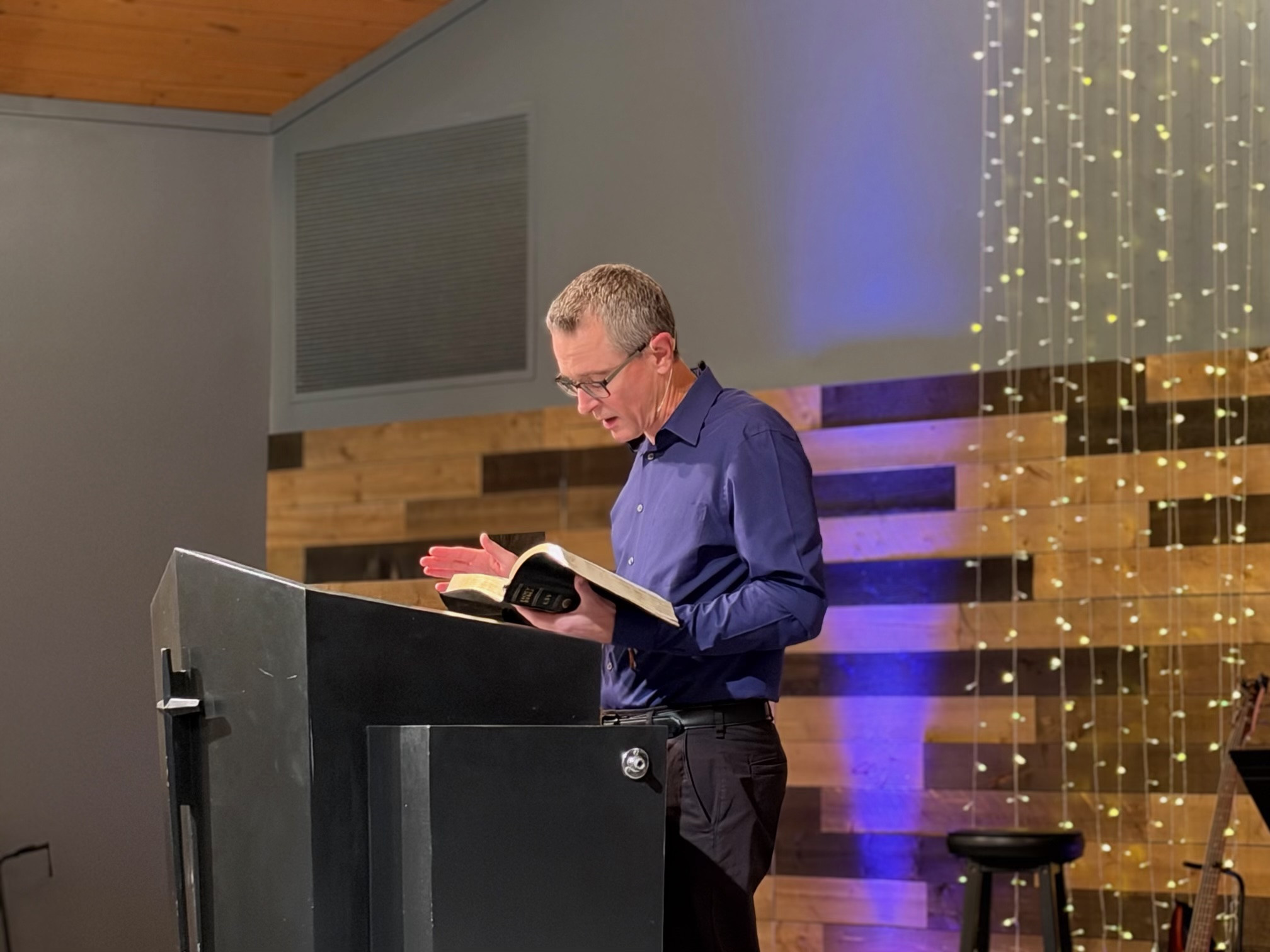
The following is a lightly edited transcript generated from the audio; it may contain small errors.
Good morning. How is everyone? You all ready to get into the Word? All right, we’re going to look at the Word, and then at the end, towards the end of our service, we’re going to install a deacon today. Let’s turn to Colossians chapter 1. We’re going to start in verse 9:
And so, from the day we heard, we have not ceased to pray for you, asking that you may be filled with the knowledge of his will in all spiritual wisdom and understanding, so as to walk in a manner worthy of the Lord, fully pleasing to him: bearing fruit in every good work and increasing in the knowledge of God; being strengthened with all power, according to his glorious might, for all endurance and patience with joy; giving thanks to the Father, who has qualified you to share in the inheritance of the saints in light. He has delivered us from the domain of darkness and transferred us to the kingdom of his beloved Son, in whom we have redemption, the forgiveness of sins.
(Colossians 1:9–14, ESV)
Let’s pray.
Father, we do thank You for the work that You’re doing in us and through us. Lord, we thank You that we get to fellowship afterwards with the meal. We thank You that we get to install David today into the office of deacon. We thank You for the great work You’re doing in this church. We pray, God, that You would continue it on. Lord, fill us with Your Spirit. We daily need You with us every single step, to walk in Your ways, to hear from You, to abide by Your command. So may we continue to be Your children that are faithful, seeking after You, Lord. We thank You, God, that when we stumble You are there for us. You are quick to pick us up, You walk with us every single step of the way, and You are a merciful and gracious God. We thank You and we love You. Amen.
Well, this passage here in Colossians mentions darkness in verse 13. We’re kind of wrapping up this passage that we’ve been looking at for a few weeks, and it says in verse 13, He’s delivered us from the domain of darkness. Let me ask you guys a question. Here’s a question for those of you that have kids, and if you can remember back to when they were young. What do kids request, and they request various things, but what are some of the things that kids request when they go to bed at night? Leave the lights on. Okay, leave the lights on. That’s like one of the top, but what are some of the other things they request? Water. “I need a drink of water,” right? Usually for my kids, it was like, oh, can we read one more book? Like one more book, even though we’ve already read like five books, right? What else? Anything else? Oh yeah, you gotta have the stuffed animals, right? Close that closet door, right? And usually my kids like to keep the door open, right? They like the closet closed and the door open. But kids don’t like darkness, do they? Right? Is anything different though with the lights on or off? I mean, does anything magical happen? No, not unless you’re like watching some fairy-tale movie, okay? And then monsters are coming out of the closet or whatever. But it does feel different to kids, right? And maybe even to some adults.
Well, that’s the imagery that God is using here. He’s saying that when God sees us, He saw us dwelling in darkness. Dwelling in darkness. So He uses this term, the domain of darkness. And what does the darkness signify? Well, it signifies sin, it signifies wicked deeds, it signifies evil. And what is the thing that He tells us in John 3, right after the most famous verse in John 3:16? He continues to go on. And what does He tell us that people love? Anyone know? People love the darkness. Look, keep your place in Colossians, but look at John chapter 3. So verse 16, you’re familiar with:
For God so loved the world, that he gave his only Son, that whoever believes in him should not perish but have eternal life. For God did not send his Son into the world to condemn the world, but in order that the world might be saved through him. Whoever believes in him is not condemned, but whoever does not believe is condemned already, because he has not believed in the name of the only Son of God. And this is the judgment: the light has come into the world, and people loved the darkness rather than the light because their works were evil. For everyone who does wicked things hates the light and does not come to the light, lest his works should be exposed. But whoever does what is true comes to the light, so that it may be clearly seen that his works have been carried out in God.
(John 3:16–21, ESV)
So what do we see here? People love what? They love the darkness. Why do they love the darkness? Their deeds are evil. So evil deeds and darkness, they go together, hand in hand. God, hundreds, maybe even over a couple thousand years now, in Isaiah, gives a promise to His people. And it’s where He’s foretelling the birth of Jesus. One of the famous passages in Isaiah, in Isaiah 9 He says, “The people who walked in darkness”—what have they seen?—“have seen a great light.” It’s that same light that Jesus is talking about here in John 3. They have seen a great light. “Those who dwelt in a land of deep darkness, on them has light shone.” I mean, what a blessing for us to live in the age that we’re in, where we have the light of Christ shining upon us. Amen? We are greatly blessed to have that shining.
And I want to make a couple observations here. One, I want you to notice back in Colossians what God delivers us from. So in verse 13, He has delivered us from the domain of darkness. So He says, you’re free, right? He delivers us. You’re free. But what does He deliver us from? I mean, He delivered us from bondage to sin, right? He delivered us from bondage to the devil. He delivers us from bondage to our own wicked ways. And God comes and sets us free. We, when we are unbelievers, when we’re walking in darkness, when we’re walking in all wickedness and vileness of ways, guess whose power we’re under? The evil one. Look at Ephesians chapter 2: “And you were dead in the trespasses and sins in which you once walked, following the course of this world, following the prince of the power of the air, the spirit that is now at work in the sons of disobedience—among whom we all once lived in the passions of our flesh, carrying out the desires of the body and the mind, and were by nature children of wrath, like the rest of mankind.” So notice a few things here. We’re dead in our trespasses and sins. What can a dead man do? Nothing, right? You’re dead. You can’t do anything. And that’s how we were walking. We were walking dead in our trespasses and sins. And what were we doing? We were just following, verse 2, the course of this world. We’re following the prince of the power of the air. We’re following the example that the world has set. We’re following the example that the devil has set. And what does He say? Verse 3, among whom we all once lived, past tense, right, in the passions of the flesh. That used to be what we are, but it’s not what we are now. Carrying out the desires of the body and the mind, and we were by nature children of what? Wrath. We were by nature, we were by nature, we were by nature children of wrath. That’s what we deserve. Every single person ever born deserves the wrath of God. That’s what it says. We were by nature. That’s our nature. What’s our nature? To be a child of wrath, like the rest of mankind. But then it goes on: “But God, being rich in mercy, because of the great love with which he loved us,
even when we were dead in our trespasses.” Notice it says it again. Verse 1, dead in our trespasses. Verse 5, dead in our trespasses. What can a dead man do? Nothing, right? So what does God do? Verse 5, He made us alive together with Christ. Did you make yourself alive together? No. He made us alive together with Christ—by grace you have been saved—and raised us up with Him. Did you raise yourself up? No. Who did that? Jesus, right? He raised us up with Him and seated us with Him in the heavenly places in Christ Jesus, so that in the coming ages He might show the immeasurable riches of His grace in kindness toward us in Christ Jesus. That means God’s delivering us, right? That’s what He’s delivering us. He’s delivering us from the darkness. So guess what? If you’re living in the darkness and you’re claiming to be a believer, you’re living contrary to the very thing that God has set you free from. Stop living in the darkness. When you willingly sin, I mean, think about what you’re saying: you’re choosing the darkness over the light. And you’re really saying, I’m part of the darkness. I belong to the darkness. But in Ephesians, it just said, we were by nature children of wrath. You’re not a child of wrath anymore. You’re not under condemnation from God. His wrath is not going to be poured out upon you, amen? That’s if you’re a child of God. But you’ve got to play the part, so to speak. If you’re a child of God, you’ve got to act like a child of God. You’ve got to live like a child of God. You’ve got to breathe like a child of God. You’ve got to do things that a child of God does, right?
So God delivers us from the darkness, but what does He deliver us to? He doesn’t just deliver us from something, He delivers us to something. So He comes and God opens the prison doors, He tears down the walls, He breaks the bonds, He takes off the shackles, He leads you out of that damp, dark fortress, but it doesn’t stop there. I mean, we have a prison system in this country, right? It’s broken in many ways. But people serve their time and they get set free. And what happens when they’re freed? I mean, you know, the prison warden’s like, you’re free to go. They open the last of doors out into the world, right? And just kind of pat them on the back and hope it works out. You’re free to go, free to go and do what? Well, sometimes do it again, and then right back there in prison. So they walk out of the prison, but what are they walking out into? A wicked, nasty world that is ready to snatch them up again and let them get entangled in their own sin again. But listen, God does more. Okay, so He delivers us from all the darkness. He delivers from, but then He also delivers to. Where does He deliver us to? Look back in verse 13. Delivered us from the domain of darkness and transferred us to the kingdom of His beloved Son.
Now think about this for a moment. You know, kings would come in the Old Testament—it was going on in the New Testament as well—kings would come and would conquer lands, right? And what would they do sometimes when they conquered the lands and the people? They would actually take some of the people out of the land and do what? Resettle them, right? That’s what happened with the Israelites. We call it the exile. That’s the term for it. But it was always against the wishes of the people. I mean, did the Israelites want to go into exile? Did they want to go to a foreign land? Did they want to go with the Assyrians? Did they want to go to the Babylonians? No. I mean, who wants to leave their homeland and go to the land of the tyrant king that just conquered them? But here, what we’re seeing, we’re seeing a reverse exile. We’re seeing a reverse exile. The punishment in Israel in the Old Testament, God’s like, hey, for everything that you’ve disobeyed, I’m going to exile you. That is your punishment. He exiles them. But this is a reverse exile. He brings us back. He goes out to where we are in exile, in sin, in bondage, and brings us back into His kingdom where we belong because of His Son Jesus. One author said this: God’s domain is filled with light, and its charter is love. Because God loves His Son, all those who belong to Him also are objects of divine love. And so what happens? Well, we share, verse 12, it says He’s qualified us to share in the inheritance of the saints in light. So we share in the inheritance.
Now usually when we think of sharing an inheritance, that’s usually like when someone dies, right? So our mom or our dad passes away, they both pass away, and there’s an inheritance hopefully coming. But that’s not the idea here. Think about it for a moment. What was originally given to the Israelites when they entered the Promised Land? I mean, the inheritance, right? And what was the inheritance? I mean, the land itself, right? The land and everything it was going to produce. That was the inheritance. But Jesus comes along and says the Promised Land on earth, it was a foreshadow of the real Promised Land. So this share of the inheritance, I mean, it was for the Israelites, right? And each tribe got an allotment. I mean, you can go and read it. Was it to be shared? No. I mean, it was really just for the Israelites. I mean, could the strangers come in and dwell in the land? Yes, but could they have any type of ownership? No type of ownership, no type of inheritance. Each tribe got a portion, but it was only for the Israelites. But here, God comes along, and what is He saying? There’s an inheritance that’s greater than the land, and guess what? It’s not just for the Jew, it’s for the Gentile. It’s for us. And it’s not just physical land, which might be nice. It’s way better. It’s the kingdom of His beloved Son. You want physical land? But if you had to choose between physical land or the kingdom of the Son, which one are you choosing? I mean, I’m choosing the kingdom, right? I’m choosing the kingdom. Make sure that sets your perspectives. Some of you that are blessed to have houses and homes and different property, like, man, God’s blessed us, amen. Those are good things. God blessed the Israelites with the land. That was a good thing, right? But it points to a greater reality of what God is going to give us in His Son Jesus. And when we have to choose, the choice should be blatantly clear before us which one to choose. Always choose the better, what God gives us, the kingdom of His beloved Son.
Look at Exodus for a moment, Exodus chapter 6. Notice some of the similar language that we’re going to hear that we just read in Colossians 1, that we’ll see some words here. Exodus 6 verse 6:
Say therefore to the people of Israel, “I am the Lord, and I will bring you out from under the burdens of the Egyptians, and I will deliver you from slavery to them, and I will redeem you with an outstretched arm and with great acts of judgment. I will take you to be my people, and I will be your God, and you shall know that I am the Lord your God, who has brought you out from under the burdens of the Egyptians. I will bring you into the land that I swore to give to Abraham, to Isaac, and to Jacob. I will give it to you for a possession. I am the Lord.”
(Exodus 6:6–8, ESV)
Now time doesn’t fully permit, but there’s parallels between this text and the Colossian text. The Septuagint, which was really just the Greek Old Testament, written as the Jews in later years, really around the time of Jesus and before that, and in part because of the exile, lost some of their ability to read the Hebrew. They wrote it in Greek. And so Paul here was quite familiar with that text as well as the Hebrew, but he is using the same terminology that is used in that Exodus passage. Words like rescue in verse 13, words like redeem in verse 14, words like inheritance in verse 12. So he wants that clear parallel for it to kind of stick out. And here’s something that kind of struck me, because I’m like, well, he’s writing to the Colossians, which is, as best we know, I mean, it’s a Gentile church. Yet he expected them to see these parallels, which meant what? He expected them to know their Old Testament, right? Like he wouldn’t write that unless he’s like, oh, this is really cool, I’m going to sneak all these things in here. No, he wanted them to pick up the same parallels that we’re picking up and seeing, but they had to know their Bible to get that. Listen, the more you know your Bible, the richer it becomes. Okay, it’s not like it becomes richer in and of itself by some magical means—no, it’s just richer to you because you know it better. So then you see things like that and you pick up those things. So there was no excuse for the Colossians not to know their Old Testament. Guess what, there’s no excuse for us not to know our Old Testament, right? We need to know the Word, not just the New Testament, but the Old Testament. So the Old Testament, God rescues His people from Egypt, right? They were slaves, He sets them free. But now, we are entrenched in a tyranny worse than Egypt’s Pharaoh. Worse than slavery, a more vicious power is at work over the entire world. And what does God do? He rescues us. And it is all God’s doing, all of His. Amen.
And here’s the thing, brothers and sisters, God does that, and guess what? It begins with faith, right? That’s repenting of our sins and trusting in Jesus. And we read it in Ephesians: by grace. How are we saved? By grace through what? Through faith, right? By grace, through faith, not by works. It says it right there, Ephesians 2:8 and 9. So it begins with faith. It continues by being obedient to Christ. One of the first steps is baptism. That’s the public declaration of what Christ has already done in you. And what’s our motto for this year? That was last year. All right. All of Christ for all of life, right? That’s why we actually got little banners and different things throughout the church that say that. I mean, just help me make that connection a little bit. But that’s our motto, right? Here’s the thing, there’s this really easy idea that some people overcomplicate. Are you ready for it? Okay, Jesus says it, we believe it. Okay, Jesus says it, we believe it. And there’s another one, and some people overcomplicate it. It’s this: Jesus commands it, and we do it, right? He commands it, we do it. Why? Because we’re part of His kingdom. Are you a part of His kingdom? We’re a part of His kingdom, right? The kingdom of His beloved Son. So that means, guess what? We have a new identity. We’re a new creation. We’ve changed our citizenship. And our King has a task for us to do. It’s kingdom work. Now, it might vary by individual, but it’s kingdom work for each of us.
So when we talk about the role of deacon, like the word literally means, you know, to serve or a servant, in one sense, it’s nothing special. Sorry, David. Sorry, other deacons. I mean, the deacon is only doing what everyone is called to do. Look at 1 Timothy chapter 3. So here we have, and some of your versions might have added to help you out right above verse 8 in 1 Timothy 3, “Qualifications for Deacons.” So here’s where we get the set of qualifications:
Deacons likewise must be dignified, not double-tongued, not addicted to much wine, not greedy for dishonest gain. They must hold the mystery of the faith with a clear conscience. And let them also be tested first; then let them serve as deacons if they prove themselves blameless. Their wives likewise must be dignified, not slanderous, but sober-minded, faithful in all things. Let deacons each be the husband of one wife, managing their children and their own households well. For those who serve well as deacons gain a good standing for themselves and also great confidence in the faith that is in Christ Jesus.
(1 Timothy 3:8–13, ESV)
I mean, that list might be the qualifications for the office of deacon, but that is a list that we all should meet. If we’re walking in the fruit of the Spirit, we will display those things. Yes? Yes. I mean, go back to verse 8. Is it okay for believers to be undignified? Is it okay for believers to be double-tongued? For them to be addicted to much wine? Greedy for dishonest gain? No. Is it okay to have more than one spouse? Is it okay to mismanage your children and your household? Okay? I mean, so those qualifications really, they’re saying, look, that’s really for all of us. But they’re saying, but the office is so important that they need to make sure that if you’re thinking about putting someone into that office, they meet those qualifications. So in one sense, yes, it’s nothing special, but in another sense, it is actually quite special. It’s assigned a task within the church. Deacon, I mean, literally means servant. So the deacon serves—I mean, and we can look at it in Acts 6—but the deacon serves so that the pastors are able to serve in a different way. They serve in a certain way so that the pastors are freed to serve in a different way. So the deacon is doing, really, in one sense, what God calls all people to do, is to serve, right? To be servants. That’s what we’re called over and over, servants. So it’s special because he’s assigned a task within the church. And it’s also special because he’s given an office within the church.
There’s only two church offices. Okay, there’s only two offices. One is pastor, some people call it elder—it’s an interchangeable term—and the other is deacon. Now there’s many jobs and tasks within the church, like nursery worker or treasurer or usher, worship team member, but only two offices. And each office has special qualifications for the office. But it’s also special because he’s given responsibilities for the church. Each deacon, each person installed into that office will give an account for how he did his duties for that office. Look back at the 1 Timothy passage. Verse 10, “Let them also be tested first.” Right. So there’s been a period of testing by the elders and even, in a sense, by the body at large. “Then let them serve as deacons if they prove themselves blameless.” So Paul didn’t just want Timothy putting just anybody in. He wanted there to be a period of testing to make sure they were qualified. I’ve heard of some places where, you know, they just, once a year, they just have a meeting and people can nominate anyone. And then, right then and there, they just vote. I mean, that’s a pretty short testing period, all right? Probably need a little bit longer than that to sit down, ask questions, go through things. Our deacons go through a series of questions and a series of interviews, if you will, with the elders, conversations. Why? Because we want to make sure that the people that God wants serving are serving. We want to make sure that the people that are actually going to be in that office are qualified for it.
But also look at one blessing that is given here specifically in verse 13. “Those who serve well as deacons gain a good standing for themselves and also great confidence in the faith that is in Christ Jesus.” So any deacon, including David who we’re about to install, I mean, that is a verse to hold on to. Those who serve well as deacons gain a good standing for themselves, and also great confidence in the faith that is in Christ Jesus. I mean, what it’s saying is as they serve well, look what it says, confidence in the faith—their confidence in the faith will grow. And what does that do? That empowers them more to serve even better. And they gain a good standing for themselves. I think you could probably take that both ways. Again, a good standing amongst the people as they serve them, there is a mutual love that continues to grow, but even great standing in the sight of God.
Let me conclude with this. Brothers and sisters, we’ve been given an inheritance, rivaled by none other. So, you know, the billionaires of today, whatever they do with their wealth, I’m sure they’ll give some to their children, that pales in comparison to what we have in Jesus. It pales in comparison. All the money in the world pales in comparison. Even the world itself, if it could be given, pales in comparison to the inheritance that God has given us in His Son. And each one of us, if you’re a believer, each one of us has been gifted to serve within the body. So yes, the deacon has a specific office, the elder has a specific office, but everyone has tasks and jobs and roles to play and to do and to serve in within the church. That’s why one of our mottos is every member ministry. We want every member serving in some sort of ministry. Why? Because that’s what you’re designed to do. That’s what Ephesians, if we kept reading—in fact, why don’t we just go back to it? Ephesians chapter 2, when we keep reading here, we’re going to see that.
So verse 8, Ephesians 2: “For by grace you have been saved through faith. And this is not your own doing; it is the gift of God, not a result of works, so that no one may boast. For we are his workmanship, created in Christ Jesus for good works, which God prepared beforehand, that we should walk in them.” What does God want us walking in? He wants us walking in those good works. Service to the body and service to unbelievers. Ministering to both in the ways that He has gifted us. And then He gives offices within the church. Why does He do that? So that it shines as bright as it possibly can. Like we are the salt and light. We’re supposed to be shining bright, right? And so God has set it up in His great wisdom with two offices so that those offices can really empower, strengthen. And what does the deacon do in his role? He serves. He serves. You should be able to look at each one of our deacons and see servants’ hearts. And that they’re serving and they’re serving and they’re serving and serving and serving. And guess what? You need to come alongside, because there’s no title needed or required to serve. Right? We’re all servants of Christ. All servants. God just gives that specific task to some, that particular office, so that they are empowered to do a specific thing. What’s that specific thing? Free the elders. There’s really two things for what? Prayer and the Word. Prayer and the Word. Look at Acts, and then we’ll close with this. Acts 6, it says, now in these days, verse 1, when the disciples were increasing in number, a complaint by the Hellenists arose against the Hebrews because their widows were being neglected in the daily distribution. And the twelve summoned the full number of the disciples and said, “It is not right that we should give up preaching the word of God to serve tables. Therefore, brothers, pick out from among you seven men of good repute, full of the Spirit and of wisdom, whom we will appoint to this duty. But we will devote ourselves to prayer and to the ministry of the word.” So notice, they don’t say, hey, this isn’t important, so we’re just going to get back to our task. No, they say it’s an important task. It’s an important task enough that God has shown us that we need to install a specific office in the church, the office of deacon. Why? Because we’re called to preach the Word. This is still important. We just can’t do it all.
Here the apostles had a specific calling. Pastors have a specific calling, and deacons have a specific calling. When they all are working together, when the pastors and the deacons are working together, it is a beautiful thing. And our church has been blessed to have some of the most amazing deacons. We are blessed to have amazing deacons that truly minister and serve you all. They would do whatever it would take to empower you to also serve well. Same with the elders. They’re here to encourage, to train, to rebuke, to correct, to build up the body of Christ. So He gives those offices within the church so that it shines as bright as it possibly can. Each one of us plays a role in that, plays a role in the church shining as bright as it possibly can. Be faithful, whatever the task is, whatever the job is, whatever the role is. Last time I checked, there’s no small roles in the kingdom of God, all right? No small roles. So whatever role He’s given you, embrace it and do it and be faithful. Amen? Let’s pray.
Lord, we do thank You. We thank You, God, for us being able to celebrate and rejoice in installing a deacon today. We thank You that as David has been tested, that he has met the qualifications. His walk before You is one of righteousness. He is filled with the fruit of the Spirit. Thank You for blessing our church with him and Meg and their children. We pray, God, now that You would continue to go before us, let us have a great rest of our service as we install him, and may Your name be praised.