
March 12, 2023
Four Ways to Please God Part 2
Dr. Michael A. Bond · Colossians
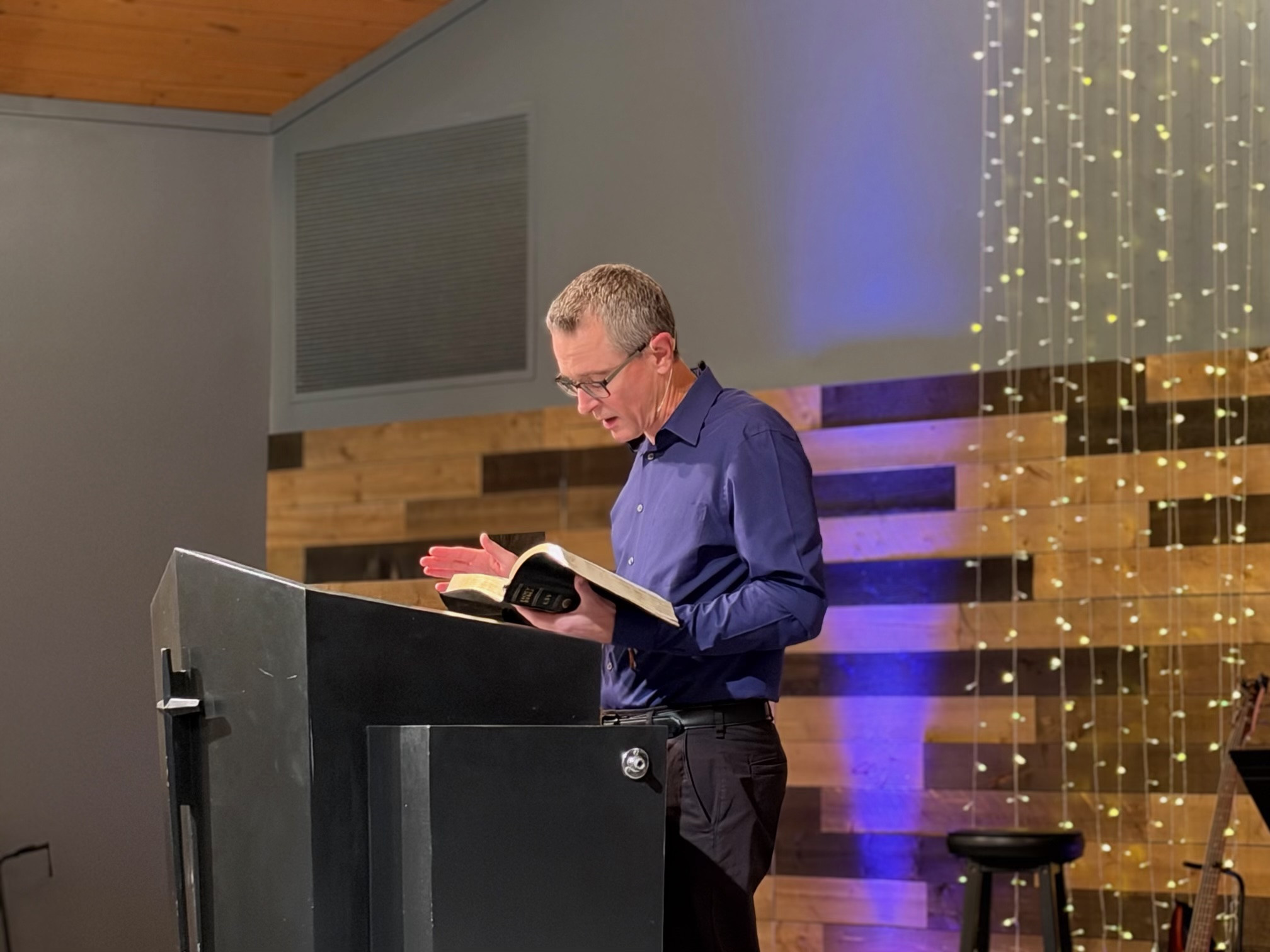
The following is a lightly edited transcript generated from the audio; it may contain small errors.
Starting in verse 9 it says:
And so, from the day we heard, we have not ceased to pray for you, asking that you may be filled with the knowledge of his will in all spiritual wisdom and understanding, so as to walk in a manner worthy of the Lord, fully pleasing to him: bearing fruit in every good work and increasing in the knowledge of God; being strengthened with all power, according to his glorious might, for all endurance and patience with joy; giving thanks to the Father, who has qualified you to share in the inheritance of the saints in light. He has delivered us from the domain of darkness and transferred us to the kingdom of his beloved Son, in whom we have redemption, the forgiveness of sins.
(Colossians 1:9–14, ESV)
Let’s pray.
Lord, You’re doing so much work in our lives and in the lives of the people around us. We pray, God, that You would continue it, continue it for Your glory. Lord, continue to sanctify us and make us more like Your Son. We thank You for sending Your Son for us, for sending Him to be the perfect sacrifice for us, Lord. Father, I pray that people today would hear Your Word, believe it, and respond in faith to it. Let us be not just hearers of Your Word, but also doers. Continue the work, God, that You’ve started in us. You promised to bring it to completion on the day of Your Son, Jesus. We pray that we would continue to walk in Your ways, continue to trust You every step of every day, God, for Your glory. Amen.
Okay, so last week we were looking at ways that we can please God from this passage in Colossians. We looked at two of those ways, which we’ll review briefly. And then today we’re going to look at two more ways that we can be fully pleasing to God. There’s basically four things that are laid out for us here. We can see them as participles beginning in verse 10, towards the end of it. We get a few words that outline for us how we can walk in a manner worthy of the Lord. The first is bearing fruit in every good work. The second is increasing in the knowledge of God. The third is being strengthened with all power according to His glorious might for all endurance and patience with joy. And then the fourth is giving thanks to the Father. So when we are wondering, hey, how can I walk in a manner worthy of the Lord? How can I be pleasing to Jesus? It’s laid out for us right here with these four things. Do you all want to be pleasing to Jesus? All right, I do. You want to walk in a manner worthy of the Lord? Yes, okay. Then that’s what we’re looking at.
So here’s the thing. We as believers, if you’re a believer, if you’ve trusted in Jesus, if you’ve repented of your sins, guess what has been laid upon us? Responsibilities. We have responsibilities as believers. The New Testament, when we get a picture of the believer in the New Testament, the clear picture that we get is that they get saved and then they live for Jesus. They get saved and then they live for Jesus. They don’t just do as they please. They don’t just drift away. They don’t just have it their own way. Now we do get pictures of people who claim to be believers and then they fall away from the faith. I’m thinking of 2 John, 3 John, we get some people mentioned. Paul mentions in one of the Timothys about people that slandered him. Even in Acts we get a couple examples, right? But believers who are believers, who have trusted Jesus, repented of their sins, who are walking with Him—over and over and over we see the picture that what did they do? They do works that are pleasing to God. Here’s what Jesus said, Matthew 7: “Not everyone who says to me, ‘Lord, Lord,’ will enter the kingdom of heaven, but the one who does the will of my Father who is in heaven.” And God has a revealed will. We talked about it a few weeks ago. He has a revealed will, He has a secret will, but He has a revealed will that He wants us to follow. And He has laid it out clearly and perfectly right here in His Scriptures, what He wants us to do. What are our responsibilities?
So when God brings us into His army, so to speak, even at the end of verse 13 here, right? What’s happening? We’re brought out of the domain of darkness into what kingdom? Kingdom of light, right? Yeah, I’ve read it enough times over the past few months. Y’all also have it memorized, right? It’s probably just about due. But we’re transferred from the domain of darkness into the kingdom of light, to the kingdom of His beloved Son, as it says. Here’s the thing. So this overarching idea is walking in a manner worthy of the Lord. And the idea is this: What does the Lord require of me? In fact, that’s a question that one of the prophets asks. Does anyone know which prophet asked that in the Old Testament? Micah. Micah. Good job. Good job. The deacon elect’s wife. Right on. It says in Micah 6:8, “He has told you, O man, what is good; and what does the Lord require of you?” Okay, so, I mean, that’s the question. What does the Lord require? And Micah, being filled by the Spirit, lays it out: do justice, love kindness, and walk humbly with your God. And then after that, he kind of outlines what that looks like. Well, here we’re looking at the same things. What does God require of us?
So when we’re asking like, what can I do for the Lord, or how can I please Him, it’s laid out right here for us. So the first two, just as a review, bearing fruit and increasing in the knowledge of God. Bearing fruit, if you look back in verse 6, has already been discussed in the context of the gospel. At the end of verse 5, it says the gospel, which verse 6 “has come to you, as indeed in the whole world it is bearing fruit and increasing.” So we get this very nice word picture and an analogy that the gospel is bearing fruit and increasing, and then guess what happens? It comes to believers and then we are bearing fruit and increasing. And when you think about it, like, we’re supposed to take the gospel forth, right? We’re supposed to go on to all the nations. We’re supposed to disciple those nations. And what are we supposed to do? Teach them to what? Obey everything Jesus has commanded. Not just teach them everything Jesus commanded, but teach them to obey. So the idea is that as we’re training people, we’re not just giving them intellectual knowledge, right? But we’re showing them how to walk in a manner worthy of the Lord. Disciples are people who are learners of Jesus. They’re hearing and learning from Him, and then they’re seeking to do what He asks. So the increasing here—well, the gospel is increasing, it’s bearing fruit, but in our own lives there should be a bearing of fruit. There should be an increasing in the knowledge of God as it talks here.
So sometimes people have this mistaken notion that you can do your sins and trust in Jesus and then like, oh, you just go off and do your own thing. But that’s not the picture we get in the New Testament. That’s not the picture we get of a believer. No, they’re walking with the Lord. So if you’re a believer here, you will be bearing fruit. You’ll have fruit. We talked about it last week. Like the tree is known by its fruit. So if you are a believer, what kind of fruit are you supposed to have? Galatians 5 talks about it, the fruit of what? The fruit of the Spirit, right? Love, joy, peace, patience, kindness, goodness, faithfulness, gentleness, self-control. We should have those in abundance. So we’re bearing fruit. So there’s an inward fruit, but guess what? That inward fruit shows itself externally. It is seen. So people should be able to look at your life and they should see those different fruits there. They should see acts of mercy. They should see generosity. They should see the very heart of God in you. Bearing fruit, also increasing in the knowledge of God. So we’re learning, we’re reading, we’re studying. And as I said last week, increasing in the knowledge of God will fuel our holiness. The clearer picture we get of God, the clearer picture that we get of Him, spurs us to become more like Him and encourages us on. We’re walking in obedience, and the clearer picture we get, we want to get an even clearer picture. And that, when we see God for who He is, it encourages us to become more like Him. The reverse is also true. Our holiness will fuel our desire to know God more. It’s like you get a taste of it and you want more. In both cases of bearing fruit and increasing, we should expect it and we can expect it.
What are things that help us grow? Things that we’ve probably heard most of our Christian life. But we can hear it all we want, but if we’re not doing it, it’s not going to help. Okay, so back to my prayer. Let’s not just be hearers, but let’s be doers. So, what helps us to be a doer? Well, reading the Word, studying the Word, prayer, being involved with the community of the life of the church, whether that might be life groups, the group Bible studies that we have, serving one another, fellowshipping with one another, looking to participate in the lives of the saints and being with them, that fellowship, that koinonia. We want to be a people who know the Word. We also want to be a people who do the Word, who do what it asks us to do. So that’s the bearing fruit and increasing in the knowledge of God.
Now we come to the next two, which is strengthened with all power. So being strengthened, a lot of times, especially where Paul’s kind of set this up, which this goes back a little bit, but when he starts saying in verse 9, we’ve not ceased to pray for you. So I mean this is a prayer that he’s praying for the Colossians and by extension us, right? When he says being strengthened, that’s in what we would call like the passive voice. And a lot of times when there’s a passive voice in the New Testament, you’re like, well, who does the action? Well, most of the time it’s God who’s doing it. It’s just like assumed. Being strengthened in verse—sorry, I lost my place—in 11, being strengthened, the idea is by God. God is the one who strengthens us, and then we see exactly how does He do that, being strengthened. And so He is the source, right? He’s the source with all power. So how are we strengthened with all power? Well, I mean, so whose power is it? It’s God’s power, right? God’s power. And notice, though, it’s not just some power. It’s all power. Which, I mean, which makes sense because we serve an all-powerful God, right? So the all-powerful God has all power and He strengthens us with all power. One theologian said, we’re strengthened by God with the greatest strength imaginable. Now, if that happens, don’t you think you’re capable of doing whatever God asks you to do? Right? Because you’re strengthened by God Himself. So whatever task He puts before us, we can do it. I mean, think about it. If you’re strengthened by God with the greatest strength imaginable, then we’re in a great position to fully please Him. This really emphasizes God’s omnipotence. God’s omnipotence means that God is able to do all His holy will. He is all-powerful. What does Jesus say in Matthew 19? With God, all things are what? All things are possible. So God’s—and we sing about it, the songs, great choices, Michael, picking out those songs. I mean they just dovetail perfectly with the sermon, thinking about thanksgiving, singing about God’s sovereignty, great exhortation by Emma, because here we are talking about God’s omnipotence, right? And when we talk about God’s exercise of power over His creation, that would be emphasizing God’s sovereignty, right? So His sovereignty is like almost like a subset of His omnipotence. So God’s sovereignty is His exercise of rule over His creation. Now, if He does it and He has all power and He doesn’t hold back, then the result He desires, the result that God desires, is always achieved. If God wants to do something, can He do it? Right? So if He wants a result to be achieved, it will be achieved. Nothing can hold Him back. He is sovereign over His creation. This is the power by which we are strengthened to be fully pleasing to Him. God’s power, His omnipotent power, that means that the very thing that we need to live a life worthy of the Lord comes from the glorious One, God Himself.
And then notice what it goes on to say. So being strengthened with all power according to His glorious might, for all endurance and patience with joy. So for all endurance. So why has He strengthened us? Yes, the overarching thing is to live this manner of life pleasing to the Lord. But then here he’s specifically saying with being strengthened, it’s for all endurance and patience. Now when you think about endurance, the focus really more is on external things that we have to go through, whether it’s trials or tribulations. He’s given us the power, He strengthened us to endure. Whatever might come our way, we have the power so we can endure. Patience is probably more focused on being around people. Okay? That’s all I’m going to say about that, no. Like, patience is needed if we’re going to have real church community, right? We’re going to have to display patience toward one another. It’s also going to be needed if we’re going to thrive in the challenging world we live in. Patience. So patience is more exercised toward people. And Augustine said, here’s what Augustine said, that the one who shows patience prefers to endure evil so as not to commit it, rather than to commit evil so as not to endure it. Both of those things Paul tells us, all endurance and patience with joy. So our attitude, our approach, the manner in which we’re doing it is with joy. What does this mean? It means that whatever God tasks us with, He can accomplish it. Which means we can accomplish it because of His power. That means we need to quit saying, no I can’t. And we need to start saying, yes I can. You know, believers, you have the Spirit of the living God inside of you. That means yes you can. You’ve been strengthened by God Himself. If He calls you to a task, He doesn’t leave you hanging. He gives you exactly what you need to accomplish the task. Sometimes we’re like, it’s too hard, it’s too hard. Well yeah, I mean in one sense that’s true. It’s too hard for you, it’s too hard for me, but too hard for God who’s strengthened us with His all-power? No.
So if you’ve been strengthened by God, what else does this mean? Well one, we’ve really been talking about it, we’re strengthened first for the performance of duties, to carry out what He asks, to walk according to His will. But here’s the second thing, it’s to meet temptations and to walk triumphantly through whatever temptations might come our way. You’ve been strengthened by God to resist. You’re like, oh I can’t resist, I can’t say no. Again, yes you can. By the power of the Spirit, by God’s own strength, by His all power, you can resist. Look at 1 Corinthians 10 verse 13:
No temptation has overtaken you that is not common to man. God is faithful, and he will not let you be tempted beyond your ability, but with the temptation he will also provide the way of escape, that you may be able to endure it.
(1 Corinthians 10:13, ESV)
There’s that word endure, right? That you can endure it. And so what is really the emphasis here is that God is faithful. So whatever’s coming our way, God is faithful. And what does it say? He won’t let you be tempted beyond your ability. He will never put you in a position where the only choice you have is to give in. He won’t do that. He will not let you be tempted beyond your ability. But what does He do? With the temptation, He will also provide the way of escape. You always, always, always, always, always have a way out. Always. You can always say no to the temptation. Why? Because you’ve been strengthened with that all power. Why? Because God’s not going to put you in a position where you will most definitely 100% fail. Now, let’s just be honest. Like, we’ve all failed temptations, right? Right? Many times. But where does the finger point to the guilty party? I mean, we’re like, oh God, You shouldn’t do that. Like, God, You totally let me down. Never. Like God forbid. No. Any temptation that we’ve given into, any sin that we’ve delighted in, any sin that we’ve given into, that is completely and entirely and solely on us. And when that happens, what are we called to do? We’re called to repent, right? To get right before God. But the next time that we are walking along and that temptation comes, let this verse like ring in our ears. Let the verse in Colossians ring in our ears. We have been strengthened with all power. We have all power by God to walk through that temptation, to say no, to resist it. If we have to do like Joseph did, then we flee. And sometimes we do. But we can stand there and we can stand. And like Paul says in Ephesians 6, like stand firm a number of times, what did he say? Stand firm, stand firm, stand firm. We can stand firm. We’re in a position with someone and our blood’s just boiling and we’re about to burst in an outburst of anger—no, we can resist that. We can say no to sin. So whatever might come our way, we can resist. Sometimes that might be an external attack from the enemy. Sometimes by our own foolish stupidity, we put ourselves in very poor places and positions and we’re fighting against our own flesh. You’re like, well, which one is it? It’s probably both at various times, but instead of trying to figure it out, just resist. Okay? Resist and stand firm. So we’re strengthened for that as well. We’re also strengthened to bear up under trials. Now, trials are different than temptations and sometimes they might overlap a little bit. And it’s actually the same word, interestingly enough, in the New Testament. But trials, we more so think of challenging times or struggles or different life events that we have to go through, that we have to walk through that the Lord’s taking us through. It’s an attack from the outside. And even then, I guess you could even put it in the category of a temptation, because if, let’s say we’re just being, we’re going through something, and we’ve all probably been in situations where people have spoken poorly about us, and even though that might be a trial, and we’re going through a situation, there might be a temptation on our part in responding ungraciously, unlovingly. But we’re there with the all power to bear up under trials. We’ve been strengthened by God Himself to walk through that.
Then the fourth way to walk in a manner fully pleasing to the Lord is giving thanks. Look back in Colossians at what he says. Giving thanks, verse 12, to the Father who has qualified you to share in the inheritance of the saints in light. Giving thanks—I have three things here. Giving thanks rightly acknowledges that everything we have is from God. Whether it’s material or immaterial, whether it’s physical or spiritual, what does James talk about? Every good gift is from where? From above, right? The Father of lights, every good gift. So God has blessed us and blessed us and blessed us and blessed us and blessed us. We could set up a little microphone here, and we could talk about all the blessings, material and immaterial. We’d be here all day. If we tried to go through the whole list, we’d be here for a lifetime. Like God has blessed us immensely, amen? So when God is doing a good work in you, here’s the thing, the fleshly tendency is to take the credit. Even when you think about like an organization, you hear people talking sometimes, you know, it’d be like, I’ve been sober for 20 years and everyone’s patting them on the back. And you know what? To some extent, they should be patted on the back. But where, how is that possible? Where does that come from? Like God Himself, right? Like that is a gift. Even I would say for the unbeliever who doesn’t acknowledge it, God has been gracious. We call it like His common grace. Like the sun, it shines on the believing and the unbelieving. God gives rain to the believing farmer and the unbelieving farmer. That’s His common grace, right? He is gracious enough to help people in situations like this. And we need to make sure when we’re talking about whatever accolades we have or whatever accomplishments we’ve done, that we give the glory to the Lord, that we are giving Him thanks. Give credit where credit is due. And guess what, it’s all due to Him. Shine the light on Him. Look at Psalm 100. Here’s what it says, verse 1, a psalm for giving thanks:
Make a joyful noise to the Lord, all the earth! Serve the Lord with gladness! Come into his presence with singing! Know that the Lord, he is God! It is he who made us, and we are his; we are his people, and the sheep of his pasture. Enter his gates with thanksgiving, and his courts with praise! Give thanks to him; bless his name! For the Lord is good; his steadfast love endures forever, and his faithfulness to all generations.
(Psalm 100:1–5, ESV)
So, thanksgiving is at the heart of worship. I mean, you could do a little concordance search with thanksgiving and all these verses you’re going to see popping up in the Psalms: thanksgiving, thanksgiving, thanksgiving. If you want to worship God rightly, thankfulness is required. How we’re supposed to enter every single week. We’re coming through those doors. How are we supposed to enter? Enter His gates with thanksgiving—not just when we’re singing about it, right? This says enter. So when we’re coming in each week, we’re coming in with hearts of thanksgiving. We’re coming in with hearts of thanksgiving. Psalm 69:30 says, “I will praise the name of God with a song; I will magnify him with thanksgiving.” So thanksgiving is at the heart of worship. Second, giving thanks shows that we believe God is who He says He is. It rightly acknowledges His position and place in our lives. When we’re coming in with thanksgiving, we’re proclaiming Him when we’re singing these words, when we’re looking at the Psalms, we’re proclaiming Him as Creator. But we’re also proclaiming Him as Lord, that He is sovereign over all. And we’re proclaiming Him as the King, the King of kings and the Lord of lords, and we’re proclaiming Him also as our heavenly Father.
But here’s the thing, we live in a thankless generation. The current generation is so entitled that to them “thank you” isn’t necessary because they deserve it. And “thank you” are two words never found in the same sentence for them. Which isn’t anything new. Jesus dealt with unthankfulness. Remember when He healed the ten lepers? How many came back? Just one. Jesus Himself heals ten lepers and only one comes back. What about Joseph in the Old Testament in prison? Remember the story with the chief cupbearer, right? He interprets the dream. And what does he tell him in Genesis 40? He’s like, only these three words, it’s just like, wow, he’s like, only remember me. Like he could have said, hey, here’s what I want you to do, here I’ve got this long list, right? Life in prison is pretty tough. Now what does he say? Only remember me. Does the cupbearer remember him? Nope. Out of sight, out of mind, right? It says in Genesis 40, yet the chief cupbearer did not remember Joseph, but forgot him. Brothers and sisters, we need to make sure we’re not like that cupbearer. Like God blesses us and then we just turn around and forget. No, thankfulness is gone. And I know each one of us probably has a hundred things or more we could list of why we have reasons to not be thankful, what seem to be legitimate reasons. But brothers and sisters, the fact that we’re just breathing right now is a testimony to how good God is. That alone is reason for thankfulness. But then you go on and we sing about the mercies of God, and Michael led us off, you know, talking about His steadfast love endures. His steadfast love endures forever and ever, never, never. And it just doesn’t endure forever, which it does, but He pours it out on us. I mean, that’s an amazing thing. The beauty of the gospel. Tasting and receiving forgiveness. Seeing it in the work of Jesus Christ. That makes that list we have for why we shouldn’t be thankful—I mean, we should just be tearing that up. Those are just excuses. We don’t want to be like the cupbearer. Look at 2 Timothy chapter 3. 2 Timothy 3 verse 1:
But understand this, that in the last days there will come times of difficulty. For people will be lovers of self, lovers of money, proud, arrogant, abusive, disobedient to their parents, ungrateful, unholy, heartless, unappeasable, slanderous, without self-control, brutal, not loving good, treacherous, reckless, swollen with conceit, lovers of pleasure rather than lovers of God, having the appearance of godliness, but denying its power. Avoid such people.
(2 Timothy 3:1–5, ESV)
And that’s where we’re at. But I think, I think for a moment of Job. I mean, if anyone had reason to complain, it was Job. What’s his famous response? “Though he slay me, yet will I praise him.” Though He slay me, yet will I praise Him.
So that’s the second thing. Third, giving thanks is the cure for criticizing, condemning, and complaining. When we start to get to that point where we might be criticizing someone, we might be criticizing a friend or one of our brothers or sisters in Christ, where we’re condemning or complaining. Listen, if you’re having a bad attitude and you want a cure for that, it’s giving thanks. Start listing off the things that you are thankful for. We had a church event, it was a while back, and I was driving home after the event. I was kind of going over in my mind just different things. I was like, oh, well, this could have been better. This could have been better. I was kind of like venting to myself, but I caught myself and I was like, no. I’m like, man, I need to thank the Lord for this amazing event. I’m like, it’s like you’re straining the gnat, you know, and swallowing the camel. Like this amazing thing just occurred and then you’re nitpicking at the small stuff. It really doesn’t make sense. And it kind of turns things upside down. So I was like, no, I’m not going to do that. And I just started naming off different things in that event and the different people that helped out and made it successful and the different things that God was doing, and it completely changed my attitude right there. And we can go on and on and have all sorts of different examples. Like, you know, we can do this. I mean, I know y’all never done this with your spouses, right? But we can start criticizing, condemning, complaining, and we start nitpicking at all the negative things, right? And we ignore the plethora of positive things. Well, I mean, we focus on the positive. But we’re supposed to, but oftentimes we don’t. You know, so we’re like, oh, my husband does this and my husband is that, or my wife does this or my wife does that. You all notice you aren’t laughing at any of my comments now, are you? Yeah. Listen, we have a choice to make. We have a choice to make. So we can be thankful. We can give thanks. We can list off the things that we’re thankful for. If we believe in an all-powerful God, then He can do more than we can possibly imagine. And I’m not talking about our spouses, I’m talking about with us and through us. Think about it. God is all-powerful. And so that means that when we pray, He can do something about it, right? I mean, He can do something about it. We can’t, but we can bow down and we can worship and we can seek Him and we can ask and we can seek, we can knock. Listen, brothers and sisters, Christianity is not a do-it-yourself religion. If you rely on yourself, you end up failing. Every single time. If you do it on your own, you end up failing.
God comes along, He sees us in the mud, He sees us in the muck, He sees us stumbled along, He sees us in our gross sin, and what does He do? He works for us, obtaining salvation. Jesus comes along, He obtains the salvation for us. Did y’all do anything to earn it? No, neither did I. Jesus earns the salvation. And then God works in us, right? By giving us grace and mercy. He works in us. And then He’s gracious enough to work through us. And those are like ongoing tasks that will keep on happening. He’s working in us, and it’s not just, oh, back on the 9th of 1996. No, it’s ongoing. Yes, there might be a particular date that you remember that you got saved. But the idea is that it continues on. We want to continue to be fully pleasing to Him. We want to continue to walk in a manner worthy of the Lord. So these are things that are commands that we’re given, bearing fruit, increasing in the knowledge of God, right? We’re walking in this thankfulness. And look back in Colossians, because God wants us to be children who are after His own heart, after His own heart. And He gives us the very strength to do that. So He’s working for us, obtaining salvation, He’s working in us, giving us grace, He’s working through us. I mean, there’s a whole lot of stuff God’s doing, right? And then we receive those things, and then we worship Him and we honor Him and we praise Him and we hear His Word, and then we want to be the doers that walk it out. We want to be fully pleasing to Him, and then we see what that looks like: bearing fruit in every good work, increasing in the knowledge of God. We’re being strengthened with all power. We’re giving thanks to the Father. This is like a little snapshot of how we should walk each day. It’s a snapshot for us. I want to be pleasing to the Lord. You all want to be pleasing to the Lord? Amen. You want to walk in a manner worthy of the Lord? Amen. It is possible, not on your own strength, but by the strength that God gives. We can do this and we can do it for His glory. Let’s pray.
Father, thank You that we are strengthened by Your power, and because of that we can live a life pleasing to You. We can walk in ways that honor and glorify You. That we can be increasing in the knowledge of God. We can be bearing fruit and we can have thankful hearts that shine Your glory. Lord, continue to have those things be true of us. Continue to strengthen us with power so that we can be fruitful, we can have the fruit of the Spirit, then instead of complaining or condemning or criticizing, Lord, we’re heaping encouragement on others, we’re walking in the positive, Lord, glory of the things that You have done. We’re not dwelling on the negative. We’re setting our hearts on things above, not on this earth, and doing it all for You, Lord. In Jesus’ name. Amen.