
February 17, 2023
Foundations Conference 2023: Session 1
Guest Speakers
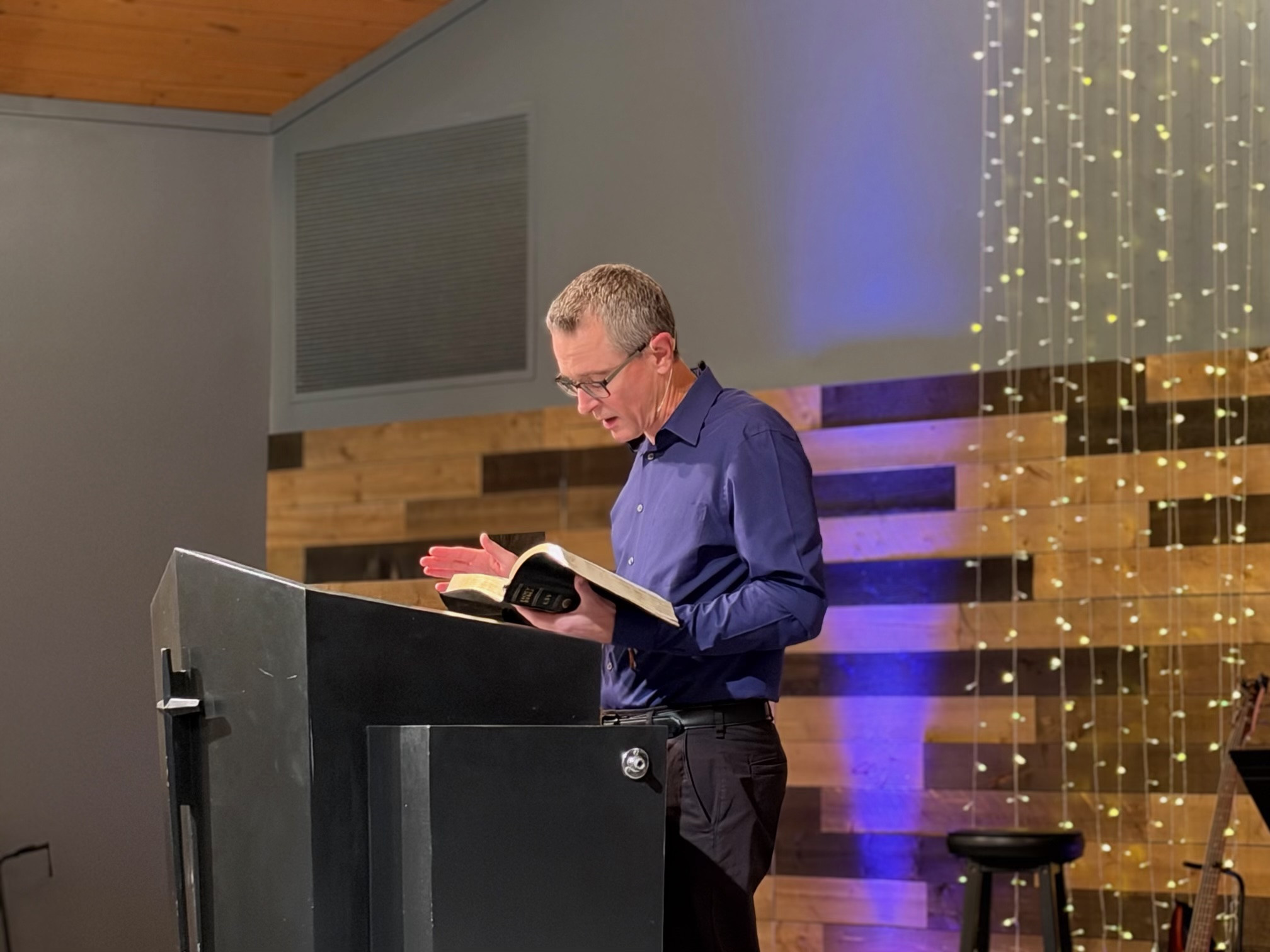
The following is a lightly edited transcript generated from the audio; it may contain small errors.
Good evening. How is everyone doing? Good. Good to see you all. Welcome to our Annual Foundations Conference. Well, each year for our Foundations Conference, we usually pick a subject or a theme to kind of center our conference on. And as Pastor Justus and I were praying and discussing what would be a good theme, what the Lord laid on our hearts was… we’re getting ready to send them out from this church. They have been raising, are still raising support, so it’s still your opportunity to support them, and we want to be a church that sends them out well. And we don’t want to be a church that just sends them on their way, and then either individually or as a church, which we are doing, just send them their check to their organization each month. They need love. They need prayer. They need support. They need shepherding. And that’s not just from like one or two of their good friends that are here, but it’s from the body. It is important for the body to be the body to them.
So Justus and I over the past year have gotten to know the president of Disciples of the Nations, Dustin Meadows, who’s going to be sharing tonight with us. We’ve done some Zoom calls with him and some emails back and forth. And that is the organization that the Cooks are going through. And Justus and I have been blessed not only to get to know Dustin, but also his wife last night, and also just to learn about the organization and their hearts for sending missionaries, for strengthening the church and enabling the church to send missionaries well. So Dustin Meadows was born and raised on a cattle ranch in Oklahoma. He and his lovely wife have been married for eighteen years. That’s pretty good. And they’ve got four kids, fifteen, twelve, eleven, and six. Did I get that right? Yes, all right. And Dustin has been in either local church, serving in the ministry, or overseas serving in the ministry for about 15, 20 years. Yep. And while he was in Costa Rica, he felt the Lord laying on his heart for him to start Disciples of the Nations. It is really multifaceted, even as I was learning some new things last night. And I appreciate the friendship that Dustin and I have been able to develop over the past year and a half and getting to know him. I think we are going to be super blessed this weekend. And so I’ve given him a launch to say whatever he wants. Okay, so he and I were kind of joking that he gets to lob the grenades and then I get to pull out the shrapnel over the next couple of weeks. Anyway, I want to ask all of you to make sure that your hearts are open to whatever the Lord has to say to you this week through Dustin, all right? I think that there are some truths that we need to hear and make sure we’re not just knowing it, but that we are walking it out.
I guess Justus wanted me here. So, is that a…? No, that’s perfect. Allow me a couple of jokes. All right, so, I hope you got your Bible.
I want to be in the Word this weekend with you. And we got a lot of ground to cover. I apologize for the book. Everybody receives that differently. So my wife is a school teacher, and she loves to follow along and take notes. And so for those of you in here that are like that, great; for those of you that panic, I apologize. You can just close it up, it’ll be okay. I’ll say most of the things that’s in there, so no worries. But I do want to cover some ground this weekend. This is our, what we call, sending-church training. Because I’m really creative, and I come up with really cool titles. And so hopefully this will make sense to you as we go.
First I want to introduce you to Disciples of the Nations a little bit, if we could. I did put a page in your booklet that kind of describes who Disciples of the Nations is. But Disciples of the Nations is just a missions agency, right? But we’re not just a missions agency. There’s some things that are a little bit different about us, but we partner with churches and with missionaries to be able to accomplish the Great Commission. Our mission is the Great Commission, it’s in our name, Disciple the Nations, that’s what we’re called to do and that’s what our goal is. And so all the facets that are built in, the things that are required in order for us to accomplish that, that’s the things that we want to try to help to do, but we readily acknowledge that we’re a temporary organization. Okay, we’re temporary. When the Lord comes back, there’s absolutely no reason for us to exist. There’s none, and so we are not built and designed in order to grow our organization. That’s something that is convictional for us. The very first page of our board handbook says that. We are a temporary organization. Our organization is designed to help the church to grow throughout the world, okay? We’re a parachurch organization. We want to come alongside and help churches to accomplish the Great Commission.
So there’s our new logo. We had an old logo that I designed and it was terrible, so I hired somebody that knew what they were doing. And we did this. So to break it down to you really quickly, this threefold cord, if you see that at the bottom of the pillar, threefold cord. So that’s us with an agency, and then the local church and the missionary. The threefold cord, if we work together, we believe that we’ll be able to not easily be broken. Also, the threefold cord works as a rope. If you remember William Carey, the father of modern missions, told his pastor, Andrew Fuller, I will go down into the well. I’m happy to go on the mission field, but you must hold the rope, right? And the idea, so many times, we get this false understanding of what it means to send. We think the missionaries are the ones that are really called to serve. They’re the ones that are really called to suffer. But if you’re holding the rope on both ends, don’t both of you have calluses? Right? And so we want to recognize what it means to send, not just send, but to send well, okay?
So we partnered with churches and missionaries to see the church, which is what the pillar is. Paul says in 1 Timothy chapter 3 that the church is the pillar and buttress of the truth of the living God. Okay, so Timothy’s in Ephesus if you know this, and there was a temple of Diana there, and you can look it up, fantastic, beautiful temple, but giant pillars and buttresses. And Paul writes this to Timothy. Timothy gets this letter, and out Timothy’s window, he can see this great temple. But Paul says that is a temple of a dead god. But the church is the pillar and buttress of the truth, of the living God. And so this is the way that we believe that Christ has ordained to get the gospel to the nations, is through the local church. And so our job is, we partner with churches and missionaries to see the church grown throughout the world, that’s where the circle comes in, for the glory of God, and that’s where the top arrow in the pillar, if that makes sense. So if we overthink our logo that much, what do you think you ought to expect for today, okay? So that’s our heartbeat, all right.
Now we were really designed off of some biblical convictions. I’ve been hanging out with missionaries for about 23 years. They’re my heroes. They were really my heroes until I realized they would let me be a part of them, and I kind of lost some faith in them, right? Wasn’t quite as cool of a club as it used to be. But when I got there, and hanging out with missionaries, there’s just been a few things that we’ve seen over the years that our convictions drove us to do something about, right? And if you don’t have biblical convictions, my encouragement for you today is to get some. Okay, some true convictions, not something that you just say you believe and that you go around unchanged completely by it. The American church, we’re really good at that. The last two and a half years, I pastor a local church in southeastern Oklahoma and I have just been battling this cultural Christianity thing, this ability that we have to say that we believe something but have an impact, absolutely nothing in our life.
And you understand, biblically, so I do something with my church. When I’m talking to them, I say, well, there’s only one problem with that. And my church knows to go, the Bible, right? That’s the problem with it. Because when God creates a new person, right, when He redeems a person, brings them to Himself, He creates a new person by first giving them a new heart. Right? That’s how it is. It’s not, they come up with these new behaviors and then they get… No, no, no. When God creates a new person, when He redeems them, He gives them a new heart. That new heart comes with new affections. And the new affections lead to new behaviors. And it’s a chain of events. It has to happen. If you claim that you have a new heart, but you don’t have new affections or new behaviors, I don’t believe you, right? Why do I not believe? Because convictionally, I believe that’s what happens. I believe that’s what the Bible teaches. And so if I believe that, I can’t continue down the path. And so I pray that you guys will grab those convictions so deeply that you have to do something, okay? And that’s where we were.
So there’s a few things that drove us to start Disciples of the Nations. So first of all was the lack of biblically faithful missions. And all right, let’s kind of walk through it. Okay, what you’re going to get through today and tomorrow, I’ll give you kind of in a snapshot, all right? So my encouragement to you is to let theology drive. Okay, what happens so many times is methodologies drive. Okay, but theology has got to drive. So theology should drive you to mission, but theology should also direct your methods. What happens so many times is people get a methodology and they forget about theology and they let methodology drive them to do certain things. And then ultimately they’re not actually accomplishing the mission that God has given us. So if we understand biblically at our core level what the mission is that God has given us, then that should drive us to action, but then also direct our actions. Make sense? You got to give me some feedback here.
So with these things, these convictions, it started with this poor methodologies that we see in missions. I told the guys last night, I said, to be honest, if about 90% of the world-missionaries would come home, they would do the world a favor. That’s how much bad stuff is going on over there. We are exporting so rapidly bad theology. Bad theology leads to really bad missions. And bad missions leads to really bad theology over there. And we’re going to have to hurry up our export of good stuff. Same thing Paul does in Titus chapter 1, right? Paul leaves Titus in Crete, Titus wasn’t from Crete. That was kind of a problem, right, if you’re Titus. I’m leaving you there, okay? You sure? Okay. He says so appoint elders in every city, set all these things in order, right? And then he walks through, here’s the qualifications of an elder. Why is that important? Because there are tons of false teachers that are upsetting whole families. This is like verse 10 or 11 of chapter 1, upsetting whole families by teaching what they ought not to teach. And so Paul’s answer to loads of false teaching is to do what? Multiply good teachers, right? That’s why he says you raise up these elders. They can do what verse 9 says, hold firm to the trustworthy word as taught. You got to have elders that do that. If Justus shows up and teaches that Jesus is a reincarnation of a hippo, you need to not let him be your elder anymore. Right? These are things we’ve got to do convictionally that causes us to action, right? So poor methodologies, that’s something that we wanted to fix. Another thing that we wanted to fix was the lack of church centrality. So the vast majority of missionaries that are sent out and are overseas don’t even attend local churches. Did you know that? And okay, so churchless ministries, churchless Christians, what’s the problem with that? The Bible. The Bible is the problem with it. The fact that that never happens ever in Scripture, that’s the problem. And the fact that lots of mission methodologies are set up totally separate from the church.
Okay, so another thing was we aim for mature disciples, not just converts. This is one of those core things. There are mission methodologies and mission agencies completely set up that do not care about discipling, that don’t aim for maturity at all. They only aim for converts. And that’s wrong. Paul says in Colossians chapter 1 verse 28, “Him we proclaim, warning everyone and teaching everyone… that we may present every man mature in Christ.” Paul’s ultimate aim was not converts. Your methods cannot just be for converts. This is why a guy named Charles Finney, don’t know if you know Charles Finney, but Charles Finney showed up in the U.S. and started doing this totally different thing that was totally against the way biblical methods have always been. And he changed the way he did missions and ministry, changed the way he preached. And so he only worked for converts. And he changed the definition of convert. You didn’t have to actually be converted. You just had to pray a prayer. And so you start this thing where people will show up and say, does anybody want to go to heaven? Great, pray after me. That’s not actually converting a person. No. If you do that to my six-year-old, I won’t hit you but I will shake the mess out of you. You’re not going to do that. You can’t do that, why? Conviction. Conviction. I don’t want the thousands or millions of people that are convinced they’re okay with God because we’ve sold them this bill of goods. Guys, you don’t get to come to God on your terms. Try that with your wife. Offend your wife and go to her and say, hey, we’re going to be okay again, you’re going to do the dishes and you’re going to love me. Just try that. It doesn’t work. This is the God of the universe who has revealed Himself to us and what it takes for somebody to be saved. And it is not, does anyone want to go to heaven? Right? We deal with this a ton. We have what I call good-old-boy theology in southeastern Oklahoma. And I’ve been trying to kill it. I want to murder it very publicly. And we have to be a little bit aggressive to this type of stuff because it’s so pervasive. That’s all that, where we’re at, that’s all the churches around us have preached for over 100 years. That’s all they’ve taught. And somebody’s got to go after it. Because people are not being saved. And they come, when they come, they come and they feel very comfortable in our churches because we’re not declaring the truth of the Scriptures. And so my encouragement, I hope you’re getting that. My encouragement to you is to read the Bible, believe the Bible with such conviction that you will change, you will allow it to be your authority. You will place yourself under the Scriptures. Is that okay? If we’re not on the same page, we’ll go do something else, okay? I just want to be honest up front.
All right, another thing that we saw that greatly concerned us is in 23 years of hanging out with missionaries, I’ve never met a missionary that suffered from being overly encouraged. It has been brutal. We have on multiple occasions had missionaries come over to our house and sit on our couch and cry. And talk about being forsaken, abandoned, forgotten. The number of missionaries that go and serve overseas and then come home and never even attend church again is way too high, because they’re so broken and hurt, because what happens is they’re amputated. The church goes, best of luck. Pats them on the rear end, says go get them tiger, and that’s it. And biblically, that’s not the way we should send.
The last thing is we want to steward gospel resources well. The average mission agency costs about 12.5 to 15% for administration fees. Every dollar that a missionary raises, they end up turning around and giving about that percentage. The highest I know of is 21%, but they range in through there. Some are as low as 10. And we work on just a 5% administration fee, so that more of those resources can stay with the missionary and with the work. We also try to do language training in a way that serves them. We can get our people to intermediate, mid, advanced levels, for a couple, because we did that in-house and we make no money on it. We just give missionaries special pricing that just covers costs, so they can actually start ministry without being crushed by fees.
And so this afternoon, what evening, when are we, what day is it? At this session tonight, Lord willing, what I’ve got to do, convictionally, we’ve got three sections here. Tonight is going to be what I’m going to call Start Well. For you guys to be able to build a missions program at your church, you’ve got to start on the right foundation. You’ve got to start on that right theology. And so we’re going to talk about some theologies, and some of it I want to try to help you see some of the really poor methodologies that you can get to if you don’t have the right theology. Because if you have the right theology, there will be guardrails that will prevent you from getting into some of these things that are not what God has called us to do. And then tomorrow is going to get very practical. I want to help you, tomorrow the first session is going to be called Serve Well. And so it’s how do you build in this biblical strategy for missions and then implement this in your churches so that you can actually go start to accomplish what God has called us to do. And then the third section, which will be tomorrow afternoon, will be what I call Send Well. And that’s how do you actually develop missionaries, make sure they’re assessed and ready to go, prepared, fully equipped, launch them, serve with them, shepherd them, and make sure they can go and achieve their goal. They’ve got a beautiful goal. The task is a beautiful task. We want to help them to accomplish their task for the glory of the Lord. You want to invest, it takes a lot of money. You want to invest hundreds of thousands of dollars in the missionaries for 20 years so they can accomplish nothing? No. This is a serious call that we have. And so hopefully, Lord willing, this will be very… it’s not going to be super practical tonight, but hopefully it will be that foundation that will help, okay? Questions, comments, fears or frustrations before we get jumping in?
2 Corinthians chapter 4, starting verse 3:
And even if our gospel is veiled, it is veiled to those who are perishing. In their case the god of this world has blinded the minds of the unbelievers, to keep them from seeing the light of the gospel of the glory of Christ, who is the image of God. For what we proclaim is not ourselves, but Jesus Christ as Lord, with ourselves as your servants for Jesus’ sake. For God, who said, “Let light shine out of darkness,” has shone in our hearts to give the light of the knowledge of the glory of God in the face of Jesus Christ.
(2 Corinthians 4:3–6, ESV)
So, in talking with my people, I have this saying I say a bunch, which is there’s this understanding we have to grasp. And what I mean by that is we have to grasp truth by first rejecting error. Right? And this grasping of truth is really an embracing of reality. What happens is unbelievers in the world, they walk around as if there is no God. Our cultural Christianity that is so pervasive in our area of the United States, I hope it’s not as bad here, but in our area, they show up for a couple of hours on Sunday and then they function as atheists the rest of their time. Now, is there a God? Yes. Yes, there is. As they walk as if He does not exist, they are rejecting reality. Right? So we have to embrace reality by first rejecting this other idea. So my point in that is this. The world is going to give you loads of different viewpoints on the world. Talk about biblical worldview, right? The Bible has been given to us that God has revealed Himself to us so that we can see the world through the lens of the truth. We can embrace the reality of what is actually going on in the world, what is actually going on in people’s hearts, and then adjust accordingly. And so one of the things we have to recognize is that the gospel is veiled. They don’t understand, they don’t see it. Our mission will not make sense to the world. This is why Paul says this is foolishness. Preaching is foolishness. The world, if you’re on mission with the Lord, they will surely hate you. American church is very strange because we’re a church that’s not hated very much. It’s changing, the days are changing. A lot of times we’re not hated because we’re not actually doing what we’re called to do. We’re not standing out against the culture that has embraced what they say is reality, but it’s not.
So first thing is God’s ultimate purpose is for His glory. That is the reality of all things. The world will not say that God’s ultimate purpose is for His glory. They will reject that idea. There’s a great John Piper book, Let the Nations Be Glad. Missions exist because worship doesn’t. Missions agencies exist because worship doesn’t. That’s why we’re temporary. The Lord comes back, He’ll be done with us. Missions will be done. Missions is a temporary task. So it’s not the ultimate task. Our ultimate task is to worship the Lord. Everything that we do is to worship the Lord. Why do we evangelize? Because it’s through evangelism that the Lord might create a brand-new worshiper. Because He’s worthy of more worshipers. He’s worthy of that. Why do we disciple? So that that new worshiper might worship more purely and more faithfully, more fervently. Why am I being discipled? Because I don’t worship Him as He deserves. I want to be discipled so that I will worship more fervently and passionately as well. Does that make sense? We fellowship, why? So that we can spur one another on to worship more. Why do we join together as a church? So that we can do that. We can join together, corporately, and worship our great God. This is what we do. This is the ultimate motivation in missions, is the glory of God. There are lots of motivations to missions. Lostness, sure. Lack of access to the gospel, obviously. But those motivations won’t keep you on the field. Over 3 billion people have never heard the name of Jesus Christ. But guess what? Not one of them deserves heaven. And so if you make your passion for missions their lostness, it will not keep you on the field. You will get over there and you will realize very quickly that these people don’t deserve grace. What keeps you over there though? That I didn’t deserve grace. That God in His sovereign grace and mercy towards me gave it to me and He is worthy of all of my worship. He’s worthy of my life. I lay myself down as a living sacrifice. Why? Because He’s worthy. It’s that that keeps us on the field. It’s that that keeps us proclaiming to a lost and dying world. Okay? So that has got to be… the glory of God is our number one ultimate motivation to missions. Your success in missions, your perseverance in missions, even your hope of finding the right biblically faithful path in missions, all depends on whether or not you recognize that the goal of your life is to glorify God and enjoy Him forever.
Another thing would be that God is a missionary God. The fact that God’s nature and character drives this mission also is very foundational to us. I love the early parts of Genesis. They teach so many important things about our faith. Genesis chapter 3 is when we’re introduced to, well, we kind of get talked about a little bit in earlier chapters, but for the most part, following the creation story in chapters 1 and 2, chapter 3, they really focus down on mankind, Adam and Eve, in the Garden of Eden. It takes 14 verses to describe how we get from being made in perfect relationships, how we fall, do miserable stuff, and it actually doesn’t take that much, but then it describes what that fall caused. And it’s 14 verses. The first place that the gospel could ever be presented is in Genesis chapter 3:15. The very first place that the gospel is presented is Genesis chapter 3 verse 15. The first one, the protoevangelium. God, as soon as there was a lost and dying world, He came into the lost and dying world with the announcement, the pronouncement of the gospel. God is a missionary God. He was the first missionary. And this is His heartbeat. This is who He is all the way back. We also know that because God is a missionary God, we see this in God’s mission, the mission of the Son, and we see it in the mission of the Holy Spirit. Jesus says He will build His church. Revelation 7 is the glorious thing. This is that reality of what will happen.
After this I looked, and behold, a great multitude that no one could number, from every nation, from all tribes and peoples and languages, standing before the throne and before the Lamb, clothed in white robes, with palm branches in their hands, and crying out with a loud voice, “Salvation belongs to our God who sits on the throne, and to the Lamb!”
(Revelation 7:9–10, ESV)
That will happen, right? That’s the reality of missions, is there will be a people from every tribe, tongue, and nation. Why? Because God is a missionary God. And as what Job says, He’s sovereign, and no purpose of His can be thwarted. Nobody’s going to be able to stop Him. Habakkuk 2:14 is true. The glory of the Lord shall cover the earth as the waters cover the seas. That’s true. We operate in that reality. It’s not reality yet, but it is coming and promised and it is as sure as the dawn. And so that is that foundational thing that causes us to serve with hope. Why do we even have an opportunity to succeed? Because God won’t fail. So you’re not called to go be on a losing team. You’re called to go be a part of God’s greatest purpose of redeeming a people for Himself for His great glory from every tribe, tongue, and nation.
Third little thing that I’m kind of hoping you get is the gospel of Jesus Christ is the exclusive remedy to man’s greatest need. Now I really have to stress this whole thing, this good-old-boy theology. Good-old-boy stuff doesn’t work. Last year a statistic came out that said that 63% of all evangelicals do not believe that lost people will go to hell. And if you don’t believe, I don’t know how to help you. The only problem with that is the Bible. Thank you. So this is the thing we’ve got to have at our core. We believe the Bible. For God so loved the world, He gave His Son, and now in sending His servants to the nations. John chapter 20 verse 21, great missions verse, Jesus says, “As the Father has sent me, even so I am sending you.” This is how it works.
So a couple of theologies that will continue to impact what it is that we’re trying to do. Hey, here’s my other notes I was looking for. Just found them. Okay, so what theologies, serious theologies that will drive us. One, how about soteriology? This is the doctrine of salvation, what we believe about this. So has anybody ever had evangelism classes? Yeah, so anybody ever taken something called EE, Evangelism Explosion. Yeah? So not an attack on Evangelism Explosion. It’s written by a guy named D. James Kennedy, great brother, a Presbyterian guy out of Florida. But it starts with two diagnostic questions. It starts by saying this, the way you start your evangelism is you say, if you were to die tonight and you were to stand before God, and if He were to ask you, why should I let you into My heaven? What would you say? Well, at that point, by whatever somebody responds, you think, well, okay, I’ll figure out where to start. One of the things I want us to recognize is the conviction that we have, especially as you have to know your own culture. But especially in realizing we’re going to do ministry outside of our culture, there’s some things that we’ve got to grasp, they’re just different. D. James Kennedy wrote this many, many years ago when we were way more of a Christian nation than we are now. So people had an understanding of who God was. That question assumes a lot. If you were to stand before God, which God? Right? What is God? It just assumes a lot of those things. Why should I let you into My heaven? It assumes a lot. My encouragement for you on some of these things is to just recognize you can’t take these things for granted anymore. When you start in your teaching and your evangelism, in your ministry, these things ought to change because of the gospel, because of what we know.
So, you understand, if you’re in India, and you’re talking to a Hindu, and you say, I want to tell you how to get eternal life. Do you know a Hindu would say, I’ve already got it. I’m trying to get rid of it, right? And in our culture I want to encourage you, it’s getting worse and worse. You can’t assume. So what you start with is God. We start with who God is.
I’ll show you this example. Psalm 2. Not really a chapter, it’s Psalm 2, sorry. My Bible professor in college would be so mad at me if he heard me say that.
The kings of the earth set themselves, and the rulers take counsel together, against the Lord and against his Anointed, saying, “Let us burst their bonds apart and cast away their cords from us.” … As for me, I have set my King on Zion, my holy hill. … Ask of me, and I will make the nations your heritage. … You shall break them with a rod of iron and dash them in pieces like a potter’s vessel. Now therefore, O kings, be wise; be warned, O rulers of the earth.
(Psalm 2:2–3, 6, 8–10, ESV)
This is the difference in a lost person and a Christian. When somebody gets saved, it’s the repentance, the turn. The first aspect of the turn is turning away from, we want to be our own God, and now You have to be my God. You are my God. That’s the beginning aspect of conversion. I no longer want to break the bonds apart. I’m willingly and joyfully submitting myself to Your rule. That has to be what it is, right? So recognizing these things, this is not let’s get them to pray a prayer. Praying a prayer does not change, right? There’s no repentance that’s happening. You realize I’m attacking a certain methodology of evangelism. I’m not really. I don’t apologize.
So the point that we have to start with when we recognize that this is the natural state of man is we start with who is God. Well, God is your Creator of all things. And this is what, so I have an 11-year-old. She looks 16, and she’s gorgeous. Ugh. But if a 16-year-old boy walked into my house and said, I’m here to take your daughter on a date, I would laugh like that. I would laugh the way God laughs. I would hold them in derision. That means mockery. No, you’re not. I would laugh. You really don’t. And God says, here’s why. I have already set My Anointed on Zion, He’s on My holy hill. God says, there’s things that are in order before the foundations of the world, and you, you little fleabag, you’re not going to change anything. Right? This is, the lost people can war all they want, try to break those chains. They’re not changing His sovereign rule. And so we teach them, our proclamation of the gospel starts with who is God, not, if you were to stand before God. I really encourage you to go back deeper because which God do they believe? They probably don’t have a biblical understanding of who God is. And they certainly don’t understand what it means that He is Creator and their Owner, which means He has full right and authority to do whatever He wants with them. They can reject that. I don’t like that. You need to reject that idea and embrace reality, because the reality is God owns all things, including you. And so because He’s the owner, we have to honor Him as owner. That’s what He requires.
The next thing that we teach about who God is, is He is holy. He is holy. Most of the time evangelism starts with, do you know that Jesus loves you? And to most people we’re like, don’t know who He is, but obviously. Why would they not? Right? That is not the best place to start. Do we get there? Sure, but there’s a lot of other things that have to be covered first. We can’t take all those things for granted. Okay, so God’s your Creator, the Owner, and He’s holy. Now this is where it gets to be a problem for us. Not only do we hate this and want to reject His sovereign rule, now we realize that we have broken His laws and we are due His just punishment. He’s holy. Holy God. So in this understanding we grasp law, we grasp who His nature and character is, and it’s only then can we see who we are. You don’t start with who man is, well you’re lost but Jesus loves you. Lost of what? Right? What’s the big deal? The old saying the preachers used to say is, before you get them saved you got to get them lost. And this is that understanding. Help them grasp the problem. If I go to the doctor and the doctor says, listen I’ve got to cut that arm off. No, right? But if he spends 15 minutes with me going, man that’s got gangrene in it and the infection is going to take over your body and it’s going to kill you. You don’t need me to hold the saw? What do you need me to do? Right? Now I’m more interested in the cure because I know the problem. We got to help the lost world to understand the problem. Make sense? So it’s then that we now get to who we are. We grasp our sinfulness, our rebellion against Him. And now we’re interested in what the cure is. So it’s God first, man, now Christ. For God so loved, yes, God loves you. This is the greatest news on the planet. This is why grace is amazing. If John Newton was taught the gospel the way we teach the gospel now, he’d never have written “Amazing Grace.” But we get things in the right order and it makes so much more sense.
So last few months I’ve been going to a man named Doyle. I’ve been going to his house. He had stage four cancer and teaching this stuff over and over to this old man who was convinced that when he was 13 and he prayed this prayer, this guy led him to pray this prayer, and he was convinced he was fine with the Lord. I had to see the truth for weeks. These things are what give us our methodology. Or else you’re going to be wasting money and wasting time and having lots of fun getting cool pictures. I wish I could believe it for you.
I’ve got something I get stuff from mission agencies all the time. I got something a couple of months back that said… which means that every missionary planted 12 churches, six churches. I assume they weren’t couples, I think that’s what I did and that’s why I got to the number 12. So each couple planted 12 churches. One minute? One minute, all right. This will be the longest minute of your life.
So disciple-making movements, if you’re not, you’re not supposed to know this, okay? I’ve never heard of it. It’s okay. That sounds, disciple-make, yeah that’s what I want to do. Let’s see this movement of disciple-make and go, I’m going to caricature this, okay? Don’t, please don’t be offended if you know it, somebody that’s in it. But this is true. A disciple-making movement, one of the things it does is it makes, where the missionary is not to proclaim, they’re just a facilitator. So that’s the first difference. I’m not allowed to teach. Y’all’s job is to teach. Equip the saints for the work of the ministry, right? To teach pastors and teachers, right? Their missionaries are just facilitators. They try to get together what’s called a discovery Bible study. That also sounds good. I want to do that. Have unbelievers show up to discover what the Bible says? Sounds great. They give them a portion of Scriptures and without teaching anything, just facilitate. Please read this, what do you think it means? I’m not allowed to correct. So they do that and then they come up with, well, what do you think to do… and somebody will say, oh, you think we should do this? And the facilitator goes… You think I’m joking, that’s not the joke. That organization raises $160 million a year to do that. I personally think that it would be better for the church to be educated and equipped on proper biblical methods so that we can say no. It’s non-existent. They don’t understand these things. These mission methodologies are happening out there. And I want you to have at least some basic understanding of them so that you can say, no, we reject that because we want to embrace the reality of, this is the way the gospel is to be proclaimed. This is the way churches are to be planted. Right? Makes sense. Questions, comments, fears or frustrations? We’ve done one thing so far. We’ve made it to one step.