
August 23, 2026
Wage the War for Life
Dr. Michael A. Bond · Isaiah
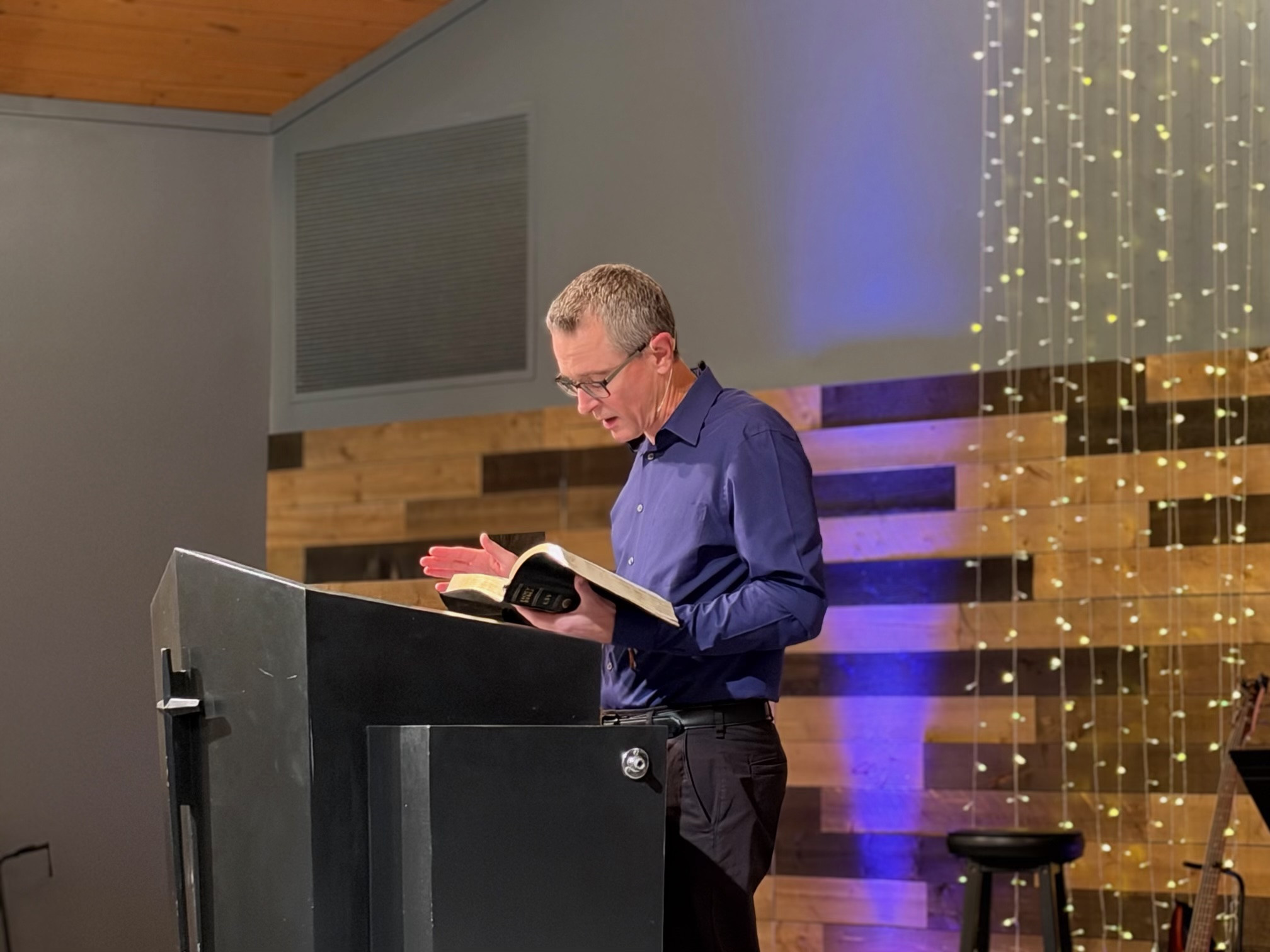
Isaiah 49
The following is a lightly edited transcript generated from the audio; it may contain small errors.
Let’s pray. Father, thank you so much for the privilege of us gathering together. We thank you that you are a gracious God, that your mercy and your steadfast love extends to thousands upon thousands of generations. And we thank you, Lord, that you’ve blessed us to bring us in and be part of one of those generations. Lord, let us continue to pass this on to others, to our children, to our progeny. God, that we’d see a godly heritage and a godly lineage passed on and built up to make a difference for you. We thank you for [audio unclear] in your Son, Jesus. We thank you for the Spirit that you give us, who fills us, who renews us, who gives us the new birth, who speaks your word. And Lord, help us to see today these things in your word. Give us ears to hear.
We want to be people of your word, that stand on your word, that aren’t afraid to proclaim it to a dying world that desperately needs you, Lord. So may you be here in our midst. We know you are. We thank you. Amen.
All right, Isaiah 49. We’re just going to look at one verse here to start off. The title of my sermon is “Wage the War for Life.” Wage the war for life. And in verse 15 of Isaiah 49, it says,
Can a woman forget her nursing child, that she should have no compassion on the son of her womb? Even these may forget, yet I will not forget you.
(Isaiah 49:15)
And this is sadly where we’re at in our culture, where a woman can have no regard for her nursing child and no compassion on her children. If you haven’t looked at the news lately, you’re blessed. But in the news is the trial of a lady named Lindsey Clancy, who sent her husband to the store and then proceeded to murder her three children by strangling them—five years old, three years old, and eight months old. She admitted it. Then she tried to kill herself, didn’t succeed in that, and is paralyzed from the waist down. The 911 call that the husband placed when he got home was so horrific and traumatizing that the police have tried not to let it be released. It’s so disturbing to hear his voice as he realizes his kids have been slaughtered by their own mom.
What’s odd about the situation, among many things, is she has fans. Now you would ask yourself, how can a mom who has murdered her own three children have fans? And by and large, most of them are ladies. In fact, they have lined the steps of the courthouse and cheered her as her vehicle has arrived every day during her trial. And online, they’ve raised a million dollars in donations for her—not for her defense, but for her. And there is a movement online, again, primarily women, who believe that her husband did it. There is not a shred of evidence whatsoever. She admitted to it. She has not denied it. And we have women lining up and cheering her on.
Well, in a culture which normalizes abortion and treats human lives as disposable under the banner of women’s autonomy or choice, you can end up with a seared conscience. In fact, you will end up with a seared conscience. The Bible talks about it. And it creates an ideological continuity with viewing Lindsey’s actions through that lens. It’s a choice. If you can kill the child in the womb, well, why can’t you kill the child outside of the womb? And you’re like, “Oh, pastor, come on.” Well, listen, if the last six years haven’t taught you that ideas have consequences, and bad ideas are like a contagion that spreads and mutates—I mean, I’m not sure what will.
Because you know what a slippery slope argument is? You guys know what that is? So you make an argument basically, and you’re like, well, here’s this thing over here. If this thing happens, then we’re going to end up here. And they’re like, no, that’s a slippery slope, because you slide too quickly to that point, and you’re just getting to that point too quickly. You don’t really get from point A to—that’s not point B, that’s like point Z, and we don’t even think point Z exists. Well, again, if anything has taught you the last six years, there’s not too many slippery slopes left. Like, we get there pretty quickly. All the things they said about gay marriage and all these different things—and now it’s all in our face. So the slippery slope argument, whenever you hear someone kind of claim that, you should put a lot of doubt on that these days, because most of those slippery slopes have come true, sadly.
So when you devalue unborn children, I mean, you put yourself on a path to minimize or contextualize the killing of three small children. I’m going to guess—I could be wrong—but I’m going to guess that most of these women that are fans of hers are pro-choice. I’m going to guess many of them have had an abortion. It either lessens the guilt and impact of what they’ve done—right, I’m not as bad as that person—or goes in line with the logic that led them to their own abortion. We have a culture of death that has been going on for over 50 years. And brothers and sisters, we’re in a culture war.
And now this isn’t some modern idea. It didn’t start in the 21st century or the 20th century or the 19th century. You know, the apostles started the first culture war. And they started it with just three words. Three words started a culture war. What were those three words? Jesus is Lord. Jesus is Lord. That started—listen—that started a political fight with the Roman Empire. It wasn’t so much a religious fight. They didn’t care if Jesus was another of the many gods of the Roman pantheon or the Greek pantheon. They didn’t really care. One more god—what’s one god among many? What they cared about was when you started to proclaim Jesus as Lord. Why? Because back then it was Kaiser kyrios, Caesar is Lord. So now you’re attacking not some religious institution, you’re attacking a political institution that strikes at the very top. And yet they did that. Why? Jesus is Lord. Amen.
So they weren’t afraid to say it. They weren’t afraid to proclaim it. And then they let that truth infiltrate their hearts and their lives, but then spill out and affect other hearts and lives—and not only that, societies, and not only that, institutions, and not only that, entire nations. Kevin DeYoung said, I’d rather not be in a culture war. But sometimes the opposite of war is not peace and quiet. It is surrender and loss. And sometimes you’ll hear people say this—I’m going to talk about it a little bit later, because it’s kind of a pietistic view—but you’ll hear people say, “Oh, we need to transcend the culture war. We need to transcend the culture war.” What do you think the culture war is? I mean, seriously, it already is transcendent. It is the war for ideas, for ideologies, for truth, for goodness, for beauty. That’s transcendent. That’s a spiritual battle with both temporal and eternal results.
[audio unclear] For many people, if you’re late to the party, that’s okay. But what you do next is key: you need to take some action. So what do you do? Well, one, you gird up your loins. That’s a little King James-ish. What does that even mean?
You know, people back then—we get that phrase, we’re going to look at a couple of verses—but people wore these long tunics. We don’t wear tunics these days, praise the Lord. But these long, loose tunics, they could trip you up if you started trying to do anything, whether you’re working in the field or trying to run or trying to do something, or maybe trying to defend yourself. So they’d tuck the hem into their belts, right, to free up their legs for running. So this literal act became a metaphor for mental and spiritual readiness. Look at Luke chapter 12.
Stay dressed for action and keep your lamps burning.
(Luke 12:35)
Well, here’s how the King James says it: “Let your loins be girded about and your lamps burning.” Right. So most versions today say some type of, “Hey, be prepared for action. Be ready to take action.” Gird up your loins. Look at Ephesians chapter 6. Ephesians 6, verse 14:
Stand therefore, having fastened on the belt of truth, and having put on the breastplate of righteousness.
(Ephesians 6:14)
Well, how does the King James put it? “Stand therefore, having your loins girt about with truth, and having on the breastplate of righteousness.” I know you King James people are real proud right now, okay, that I’m using your version today. Mark the day. One more verse, 1 Peter 1. 1 Peter 1, verse 13:
Therefore, preparing your minds for action, and being sober-minded, set your hope fully on the grace that will be brought to you at the revelation of Jesus Christ.
(1 Peter 1:13)
Again, the King James: “Wherefore gird up the loins of your mind, and be sober.” Well, again, what’s the idea? Prepare for action and be ready.
Now, back in the day when Apple was coming out with new inventions and new technology, it felt like every few weeks. It was kind of exciting at the time to watch their annual presentation, the WWDC, Worldwide Developers Conference. And they’d spill out the new features. I mean, they’ve kind of gone as many features as you possibly can, just about. But in those early years, it was very exciting to watch parts of it. Well, Steve—and the whole thing, if you ever watched it, it just was so smooth. It was so smooth. You know, Steve Jobs is out there, he’s got like this black turtleneck on, right, looking all suave. But the whole thing was just smooth. You’re like, man, how’d they pull that off? Well, you know how they pulled that off? Steve would start practicing and rehearsing daily three weeks beforehand. Three weeks beforehand. Practice, practice. And right before the event, they’d have two dress rehearsals, back-to-back days, dress rehearsals. I mean, it was like a production of sorts, because it was. The world was watching. Listen, that’s just for a presentation about some new hardware and software. How much more so for us to prepare for action and be ready for life, and what God wants us to do, and what he calls us to do, and how he wants us to be salt and light.
Think about the Great Commission. What’s the Great Commission? I mean, it’s basically disciple the nations. Well, what’s included in that? Evangelize the nations, train the nations, teach the nations. But what are we teaching them? Well, Jesus tells us, teaching them, verse 20, Matthew 28—28, sorry:
Teaching them to observe all that I have commanded you. And behold, I am with you always, to the end of the age.
(Matthew 28:20)
People always miss two words. All right, I’ll read it one more time. “Teaching them to observe all that I’ve commanded you, and behold, I’m with you always, to the end of the age.” Those two words that they always miss is “to observe.” Teaching them—they just hear “teaching them all that I’ve commanded.” No, there’s much more if we’re to disciple the nations. It’s much more than just teaching them the things that Jesus said. He said, “Teaching them to observe all that I have commanded you.” So we’re talking about thinking biblically on all things, but then acting biblically. Teaching, yes—information, knowledge, get that, yes—but also act biblically. Teaching them to observe all that I have commanded. The gospel is much bigger than individuals. It is for individuals, and that’s where it starts, but that’s where a lot of people end. The gospel is much bigger than individuals. It’s for individuals, but it’s also for families. The gospel transforms families. Have you ever seen the gospel transform a family? Yeah, it’s pretty cool to see.
The gospel is for a society. Listen, the gospel transforms society. You look at the missionaries who go into Africa back in the 1800s, early 1900s—they were bringing the gospel, but that gospel was transforming society. I’ve told this story before, but I think it was William Carey goes into India, right? And they have a practice. When the husband dies, what do they do to the wife? They burn her. They burn her. So William Carey is in there and he’s preaching the gospel. What does the gospel do? It transforms. Did they say, “Well, you have your culture over here, we’d hate [audio unclear]”? He says, well, we have a culture too, that when you do that, we put you to death. Cultures, right? So the gospel is bigger than the individual. It’s actually bigger than the family. It’s bigger than society. It’s for the society. It transforms society. It’s for government. The gospel transforms government.
Think about the early Roman Empire. I mean, you had some emperors, they got saved. Some of them might have been just Christians in name only, but some of them were very legit and advanced the cause of Christ, because of the position that was given them, they were able to do that. Now, do you want to live in a society that’s been saturated in the gospel, or do you want to live in a society that is void of the gospel? It’s sad and ironic to me that I’ve read people that say, well, it’s better that it’s void of the gospel so the gospel can go forth and speak to those people. No. I don’t know about you, but I’d like to be in a society saturated by the gospel.
Did you know, Papua New Guinea, it’s a country right above Australia, but last year in March they amended the constitution of their country. Did you hear about this? Listen to what they said: “We the people of Papua New Guinea, united in one nation, acknowledge and declare God the Father, Jesus Christ the Son, and the Holy Spirit as our Creator and the sustainer of the entire universe and the source of our powers and authorities delegated to the people and all persons within the geographical jurisdiction of Papua New Guinea.” I mean, they declared themselves a Christian nation. That’s the preamble. You know, we have a preamble to our Constitution. That’s the preamble to their constitution. And there’s a couple other places where they brought it out even more forcefully later in the constitution. Is that a good thing or a bad thing? It’s a good thing. Would it be good if other nations did this? Would it be good if our nation did this? Amen.
So how do you disciple the culture? Well, you don’t disciple the culture by ignoring it. You don’t disciple the culture by acting like it’s not there. We are salt. So what does salt do? Well, one of the things that it does is it preserves. We’re preservers. We’re trying to preserve. What does our culture, left to its own devices, want to do? Well, just look at any culture that’s never had the influence of Christianity to it, and you can get a real picture of it. But the salt preserves. We’re preserving. But we’re also light.
Well, what does light do? Well, it does a couple of things. One, it illuminates. Psalm 119: “Your word is a lamp unto my feet,” right? It illuminates. It shows the way, right? So we’re like a beacon. We can be like a lighthouse in the distance. There’s still light shining. People are drawn to that. But it can also expose. The light exposes. John talks about that. The light exposes what? The darkness. Light exposes the darkness so we can expose the wicked and evil deeds that men do. For what purpose? For change to occur.
Even if you think of what early Christians did—abortion has been pretty much happening since the history of the world—but the Romans would abandon their children. If they didn’t want them, they would abandon their children at the city gates, the city wall. Well, what would the Christians do? They’d come and rescue them. All right, right outside the wall, they’d put them on the other side where there’s no protection, right? Sadly, wolves and other animals would come and devour these small children. But what would the Christians do? They’d rescue them, adopt them into their family. The early Christians spoke against the blood sport of the gladiatorial games. Did it take a while for them to end? Yes, but it was because of their influence.
But the issue that we have sometimes is this word, pietism. And I’ll say this, pietism rightly practiced and defined is actually a good thing, but the problem is it’s usually not rightly practiced and defined. Pietism emphasizes—and it’s a movement that came about in the German Lutheran church where they saw the dry ritual, the headiness. And so they’re like, dude, like, it’s just dry and it’s like a dead faith. So it came about with, hey, we need to emphasize the heart. We need to emphasize experiential faith. Hey, that’s great. We should do that, not dry ritual. But the problem became with an overemphasis on this piety where you end up emphasizing personal holiness to really the exclusion of anything else. So it’s just like you and Jesus, and everyone else—who cares, as long as you and Jesus are doing good, who cares what else is going on in the rest of the world. Well, that clearly doesn’t jive with Scripture.
Now you’re to obey the commands of Scripture and to follow them and to carry them out, but it’s incumbent upon you also to encourage others in society to do so. Encourage the government to walk in righteousness. So there’s a false view that God’s not concerned with the affairs of the world, and the idea of you being involved in the affairs of the world is a distraction from what you’re really called to, pursuing a life of holiness. Well, listen, it’s not an either-or, it’s a both-and. Yes, you should pursue the Lord and have a relationship with him, but yes, you need to be salt and light as we’re commanded, and shine the light brightly.
So sometimes what happens is we try to put Christ’s teaching in a vacuum. It’s just spiritual truths with no real application outside of yourself. Be a better person, be moral, be virtuous. Well, the idea is focused on you. Well, that’s pretty selfish. No, we should be outward focused.
When the Israelites were sent into captivity as punishment for their disobedience, they were given a command. Guess what it was? Jeremiah records it. Just listen, chapter 29, verse 7. Right, they’ve disobeyed. God’s given them chance after chance after chance, prophet after prophet after prophet. Now he’s sending them into captivity. They’re being carried away to Babylon. What does it say, Jeremiah?
But seek the welfare of the city where I have sent you into exile, and pray to the Lord on its behalf, for in its welfare you will find your welfare.
(Jeremiah 29:7)
You see it? The two are linked. The two are linked. Your welfare and the city’s welfare. This is not even their nation. It’s not even their land. And what are they commanded? Seek the welfare of the city. How much more so us, citizens of the U.S.? Should we try to put this into practice? Seek the welfare of the city, by extension the nation. That’s just loving your neighbor at a higher level, at a different level.
So seek the welfare. I mean, have you taken a look at the United Kingdom lately? I mean, the United Kingdom has been undergoing a whole lot of discipleship lately. It’s not the right kind. But discipleship happens whether it’s good or bad. Nations are nurtured in certain directions. They can be nurtured in directions that lead to righteousness. They can be nurtured in directions that lead to wickedness and evil. If you are a conservative Christian, if you have Facebook, a 2023 law that was passed in the United Kingdom, likely about 10 to 15% of your feed as you’re doom scrolling—10% to 15% of your feed—would be illegal in the United Kingdom. No kidding. And you can look at story after story. It’s actually not hard to find, of people literally being arrested for making social media posts, posts that probably most of you have made in some form or fashion. You want to know what the number one name is in England right now for boys being born? Mohammed. 2023, 2024, 2025, and so far 2026. Those are facts. The Christian culture of England is being replaced with the Islamic culture. That’s not a good thing. Not a good thing.
A new law just went into effect in New Jersey literally just days ago that will likely be interpreted to getting rid of anyone that is protesting outside of an abortion clinic, even if they’re doing it silently and just praying, because part of the law talks about if the person feels intimidated trying to get into the clinic, then those people can be liable. So our nation, we’re in a culture war. Just a couple years ago at the Democrat National Convention—this is hard to believe, it’s true, I mean I remembered it at the time—they had a mobile abortion truck outside the Democrat National Convention as you’re walking in. You could have an abortion. And there was at least 25 abortions. 25 abortions, mobile abortion truck. Brothers and sisters, we’re in a culture war.
So what do we do? We gird up our loins, we get ready for action. And next, what do we do? Well, one, I’m going to say this, we trust. We trust that we have a sovereign Lord and he is in control. John 14:1: “Let not your hearts be”—what?—“troubled.” Let not your hearts be troubled. We have a sovereign Lord. He is in control. “Let not your hearts be troubled. Believe in God; believe also in me.”
Let not your hearts be troubled. Believe in God; believe also in me.
(John 14:1)
I was reading this article, I think it was yesterday. I know we got some hikers in this room. You guys are crazy like Justus and go on these long, crazy hikes, all right? Come on a run with me sometime, all right? We’ll see what you’re made of. I’m totally kidding. But this father and his two boys were hiking up Mount Fuji. And they get to—and the one boy is seven years old and he’s like, I’m tired and I can’t keep going. So what did the father do? He left his son and kept climbing up the mountain. Mount Fuji. Abandoned his kid. Aren’t you thankful we don’t have a heavenly Father that abandons us? He’s there with us, right? Never leaves us, never forsakes us. We have a Father that walks with us every single step of the way. Whatever we’re going through, he’s there with us.
At times, looking around, it can become disheartening if you’re not careful. That’s why I want to encourage us to trust. We need to trust in the Lord, which really goes back to kind of one of the key verses in Philippians, chapter 1, verse 6:
And I am sure of this, that he who began a good work in you will bring it to completion at the day of Jesus Christ.
(Philippians 1:6)
I mean, so God’s working. He’s working it in each one of you. I mean, if you’re a believer, he’s working. If you’re a believer, you’re one of his. If you’ve trusted in Christ, if you’ve repented of your sins and trusted in Christ, what does he give you? He gives you eternal life. Your sins wiped away, just like that. And he tells us later in John chapter 16:
I have said these things to you, that in me you may have peace. In the world you will have tribulation. But take heart; I have overcome the world.
(John 16:33)
We know the end of the story, brothers and sisters. Jesus wins. And therefore, we win. So yeah, is there going to be tribulation? You see the contrast? In me, you have peace. In the world, there’s tribulation. Guess what? We’re living in the world. There’s going to be tribulation. There’s going to be affliction. There’s going to be suffering. There’s going to be temptations. There’s going to be trials. But we have Jesus. So we can have peace. We can have a true peace. Not a faux peace, but a true peace. And we can take heart. Why? Because Jesus says, “I have overcome the world.”
1 Corinthians has a similar idea. It says, you are not lacking in any gift as you wait for the revealing of our Lord Jesus Christ, who will sustain you to the end, guiltless in the day of our Lord Jesus Christ.
You are not lacking in any gift, as you wait for the revealing of our Lord Jesus Christ, who will sustain you to the end, guiltless in the day of our Lord Jesus Christ.
(1 Corinthians 1:7–8)
One day every single one of us is going to have to stand before the Lord. But if you’ve repented of your sins, if you trust in Christ, what does Paul say? Guiltless. Why does he say that? Because that’s what the Father says. That’s justification. There’s a declaration of innocence. He declares us to be innocent, and he declares us to be righteous in his sight. Why? Because of something we’ve done? Absolutely not. Because of everything that Christ did for us. Everything that he did for us that we couldn’t even do if we wanted to do. He earned salvation for us. Yes, that’s a proper word. It was merited, if you’d like, but he earned salvation for us. He did what we couldn’t do.
And think about it. I mean, the Bible, it’s a rescue story from beginning to end, but it’s also one cohesive unit. I think we miss that sometimes. But it’s a cohesive unit. I just want to show you one thing in Leviticus. Turn to Leviticus. How many times do you hear someone say, “Turn to Leviticus,” right? Turn to Leviticus chapter 1. Y’all there? All right, verse 1. It says, “The Lord called Moses and spoke to him from the tent of meeting.” Does yours roughly say something like that? Okay. Look at verse 1 again. That’s probably the second word for you, that word “Lord”—it’s not there in the Hebrew. It just says, “And he called Moses.” Now, it’s very odd to start a book with just a pronoun like that. So the translators are trying to help us out. Because clearly it’s talking about the Lord, because that’s what it goes on to indicate in the context. But why is the word “Lord” missing? Different question why our translators put it in there, but why is it missing? Because the Bible’s a cohesive unit. Go back one chapter, you end up in Exodus 40. Look at verse 34:
Then the cloud covered the tent of meeting, and the glory of the Lord filled the tabernacle. And Moses was not able to enter the tent of meeting because the cloud settled on it, and the glory of the Lord filled the tabernacle.
(Exodus 40:34–35)
Now, if you just go on and keep reading and you just go right into Leviticus, you don’t need that proper name, “the Lord,” there, because you know who calls to Moses. Why? Because you’ve been reading your Bible and it just tells you. It’s a continuation. Exodus right into Leviticus. The tent of meeting, right? The Lord called Moses and spoke to him from where? Oh, the tent of meeting. Well, what’s the cloud doing in Exodus 40? The cloud covers the tent of meeting and the glory of the Lord filled the tabernacle. I mean, it’s just a continuation. There’s no problem not having that word there. Why? Because it’s just a continuation. The Bible is this cohesive unit. It fits together perfectly from beginning to end. Over and over and over, we see this.
Now, we have our quiet times, we’re like, oh, this month I’m reading through, you know, Leviticus, and I’m in the book of John or something. So we can get a little disjointed at times and we miss some of that. But I’m saying it’s there for you to see when you sometimes step back and get a little bit bigger picture. So it’s cohesive, and the cohesive message over and over again is God is looking to redeem a people for his own pleasure. Starts with Adam and Eve, a people for his own pleasure. What happens? They mess it up. But even there, even there in the early chapters of Genesis, God’s like, I’ll take care of this. And what do we see? He takes care of his children over and over again. Does he discipline them at times? Yes. Is it painful at times? Absolutely. Does he still do that today? Actually, yes he does, because he loves us. Just like any mom or dad disciplines their kid because they love them. So we see this thread going all throughout of God wanting to redeem a people for his own pleasure. And here we are today. A people for his own pleasure. If you’ve trusted in Christ, you’re one of those.
Well, what do we do after trusting, and we’re walking in that trust? Well, then we actually do something. We’ve girded up the loins and we’re trusting, and now we act. 1 Corinthians 16 says in verse 13:
Be watchful, stand firm in the faith, act like men, be strong.
(1 Corinthians 16:13)
So you prepare, you prepare, you prepare, right? You prepare for the race so that you’re ready to race. You prepare for the test so that you’re ready to take the test. Preparations lead you somewhere. You hear about the guy that went through all his scuba certifications and passed them all, and every night would put on his scuba gear and sit in his bathtub in six inches of water. He’s prepared, but he’s underachieving for sure. You prepare so that you’re ready to act and truly act, not just a little act, but you act, and the time’s now. So you do something with all the preparation you’ve taken.
Listen, you have to reject this kind of sacred-secular divide. Émile Durkheim kind of brought it up back in the early 1900s. Another gentleman came along and tried to develop it. But we think that there’s a sacred-secular divide. It’s just not true. Remember what one of our mottos was a few years ago: all of Christ for all of life—not for part of life, for church life, for family—all of life. For work life, for civil life, all of life. So you’ve got to reject this false sacred-secular divide. Well, what does that mean? It means a few things. Allie Beth Stuckey, a podcaster doing great work out there, she says it like this: “Politics matters because policy matters because people matter.” It goes backwards, right? Because people matter, the policy matters. The policy affects the people. Well, how do we get the policy? From politics. The politics set the policy which affect the people. So she says again, politics matter because policy matters because people matter.
And if you’re reading your Bibles—I’m sure you are, I hope you are—but the Bible is full of God-fearing leaders challenging the highest political power of their day. Not just like one or two of them, but have you considered Moses? He took on Pharaoh, the highest power at the time. Joseph, he took on Pharaoh, the highest power at the time. Jonah, who did he take on? Took on God in one sense, right? That didn’t go so well. But he took on the king of Assyria, the highest power at the time. I mean, seriously, I mean, you go up to some godless wicked leader. Well, he did. He didn’t have any qualms. I guess he had a couple of qualms, but his qualms wasn’t really—it wasn’t a spirit of fear. He’s just like, they’re going to get the message and I don’t want them to repent. I mean, that was his fear, and it’s right. But I mean, you have to understand the history of the Assyrians with the Israelites. It might make [audio unclear]. Daniel, he took on the highest power at the time. Esther, she took on Ahasuerus, the highest power at the time. John the Baptist—now he didn’t take on the highest power at the time, but he took on the highest power that he could reach in his sphere at the time. Not to mention prophet after prophet after prophet to the Israelite kings, and call them out. I mean, you read these stories, brothers and sisters, you can’t walk away thinking Christians should have nothing to do with the politics.
We have before us in a couple of months Amendment 3. Our current constitution, because it was amended two years ago, sadly, but our current Constitution allows, before fetal viability, abortion for any reason; after fetal viability, as long as you get a doctor to sign off for the mental health or physical health of the woman. Well, we know how that goes. You say you’ve got a mental health issue, abort the baby. Pretty much all nine months. What we’re voting on in a couple of months is to ban abortion at all weeks except for cases of rape and incest. Now don’t get me wrong, it is unfortunate and tragic in my opinion that there’s an exception clause there, because it doesn’t matter how you’re conceived, your life is valuable. But when you walk into the ballot booth in November, it’s to ban abortion at all weeks, except for cases of rape and incest. Rape and incest, you can abort that baby up to 12 weeks. Now, my limited understanding is that they’ve tried to phrase that language so that potentially someone could come in and challenge the exception clause on like an equal personhood ground. Like, well, if you’re protecting this class over here, why isn’t this class? But as it is, nonetheless, that’s what we’re voting for. So we’re voting for, do you want to keep the current Missouri constitution, or do you want to change the Missouri constitution? That’s what we’re voting for. The Missouri constitution: abortion anytime. This puts a limit on all abortion, except in the cases of rape or incest up to 12 weeks. That’s what we’re voting on. I would encourage you to vote yes. Let’s turn back things to where Missouri was a few years ago. And then if it passes, we’re coming back the next day and we’re trying to get rid of that exception clause. Because those little babies matter too. So I would encourage a yes vote.
I know there’s been a lot of talk the last six years about systemic injustice, usually defined when a system of power—it can be a government, it can be a business, a major or key part of the system—acts in a corrupt way. That’s kind of the general idea of systemic injustice. Well, abortion is truly a systemic injustice. A system of power, the government, has used its power to promote and try and accomplish that which is morally evil, wicked, and unjust. That’s what states are doing. We have a chance for Missouri to say no. But it’s government supported, government backed, government defended, sadly government funded, and it’s all perfectly legal.
So how do we act? Salt must come into contact with the thing it wishes to preserve. Salt must come into contact with the thing it wishes to preserve. Light must shine in order to expose the darkness. Yes, obviously the basic thing we can do is vote. Like, that’s like so basic.
Part of it is training the next generation to think righteously about things. That’s why we love having SCCHE here. We’re helping train the next generation to think biblically about things. We’re coming alongside the parents, however we can support. This church, even apart from SCCHE, how can we support, help, encourage? Many things, right? But don’t spend 18 years of sacrifice, whether you’re sending your kids to private school, whether you’re homeschooling them—don’t spend 18 years of sacrifice and all sorts of things and don’t prepare them for the wolves outside. Because there’s wolves outside. So you have to take intentional, specific time at the appropriate time to train them about the wolves. You have to sadly have conversations with your kids, sadly, younger than you probably would like to, about the wolves, because they’re out there and they will devour. But don’t spend 18 years sacrificing and not spend the time to prepare them for what lies outside once they walk out that door.
In one sense, yeah, it’s a scary world out there. So how do you do that? Like, how do you expose at the proper time? It takes much wisdom, but my point is you have to think about, what are the things that my kids need to know? If you’re just focused on math and science and science, that’s good. But they need to know how to walk out Christianity in the world. They need to know what are biblical views and why. They’re going to encounter them in the world. You can do everything you want—they’re going to encounter it. But you should prepare them so that when it finally comes, they are ready to walk in it.
[audio unclear] I mean, why do you care so much about the opinions of people who hate you and hate your Jesus? Think about that. Why do you care so much about the opinions of people who hate you and hate your Jesus? That’s fear of man. Gird your loins. Prepare for action. We’re not spectators in the culture of death. We’re soldiers. We’re not physically fighting in the sense of a soldier, but with a spiritual battle going on. We’re soldiers in a war of ideas, truth, and souls. And remember, the King has already declared victory. So what do we do? Well, we gird up the loins of our minds. We prepare for action. We refuse any type of false piety that says, just Jesus and me. That’s not biblical Christianity. That’s surrender dressed up as spirituality. Now we’re supposed to love our neighbor. And that means more than just giving them a cup of sugar when they come over because they’re short on their cake recipe. No, we want to love them with gentle truths and at times hard truths. We also trust. We have a Father who does not abandon his children. He began a good work, he’s going to complete it. The same God, the tabernacle filled with glory, [audio unclear] to try to make a difference.
Some people the Lord in his sovereignty gives really big spheres. Some people he gives smaller spheres. That’s okay. Don’t be concerned about the size of the sphere. Be concerned about what you do in your sphere. How can you be an agent for good and for righteousness? How can you use the sphere that God’s given you to influence people for holiness and goodness? We act. The Bible’s full of God’s people standing before the highest powers of the day and speaking the truth without apology. Certainly, wherever God gives us, he’s giving you your sphere because he knows you’re the best for your sphere. If someone else was the best, the Lord would have them there. No, he has you in your sphere for a reason. What does he want you to do there? Be light, speak truth, be bold, gird up those loins, prepare for action, and then as opportunities arise, take the action. Walk in confidence because you have a God who goes before you and paves the way every single step of the way. Amen? Let’s pray.
Lord, we pray we would be people of your word who do gird up our loins. We prepare for action, that we would trust in you, and then we would take it. We pray that whatever it takes, Father, that you’d be gracious to the citizens of Missouri, to the unborn in Missouri, both now and in the future, and have this amendment passed. Have people fill in that yes circle. Touch people’s hearts, Lord. Forgive us for the bloodshed of tens of millions for decades and decades. Help us be a part that turns the tide. We thank you, Lord, for your goodness in overturning Roe v. Wade, and now may it start state by state. Let the people fear you more than they love themselves and their selfishness. Let them fear you, Lord. Touch people’s hearts. We pray you’d reveal yourself to them. Be gracious to save many, many, many people in this state. And Lord, use us as the salt and light to do that, to be a beacon of hope in this dying world, and to do it for your glory. Amen.