
August 8, 2021
W.O.W.: Warning on Wolves – Part 2
Dr. David J. Vaughan · Matthew
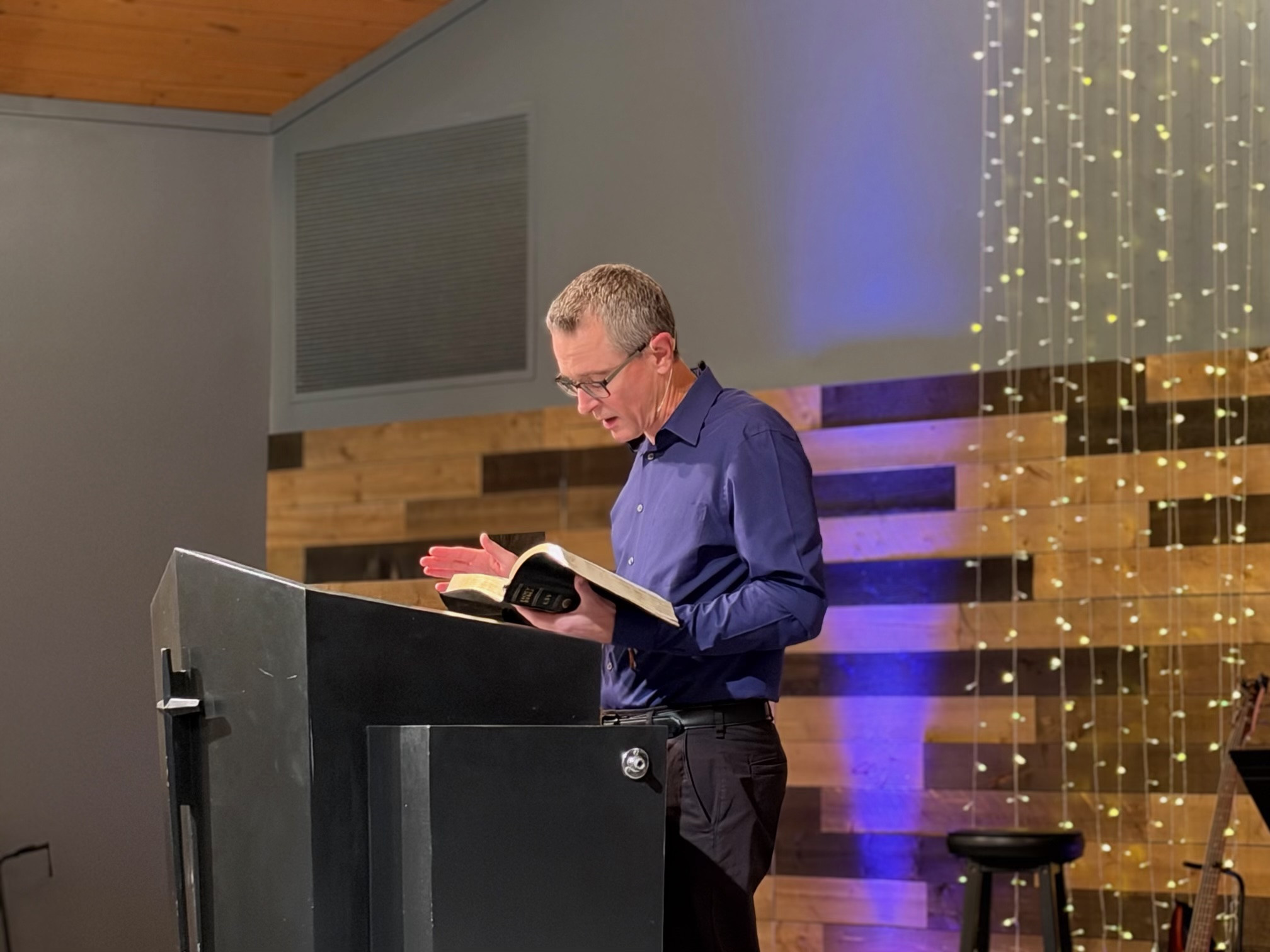
Part 2: Critical Theory
The following is a lightly edited transcript generated from the audio; it may contain small errors.
I want to pray together. Would you mind standing with me praying? I would I want to thank. name, the name which is above every name. Lord we do bow before that name we do confess that name the name of Jesus. We ask that today Lord that you for your Holy Spirit would illuminate your word to us, grant us discernment that we may be mature in the faith and grow up in all things unto you. We ask it in Jesus name. All God’s people said, amen. Now today I’m gonna be talking about if you’re here last week you know that we I opened with the text in Matthew 7 where Jesus said in Matthew 7 15 he said beware of false prophets who come to you in sheep’s clothing but inwardly they’re ravenous wolves. He says, you will know them by their fruits. Do men gather grapes from thorn bushes or figs from thistles? Even so every good tree bears good fruit but a bad tree bears bad fruit. A good tree cannot bear bad fruit nor can a bad tree bear good fruit. Every tree that does not bear good fruit is cut down and thrown to the fire.
Therefore by their fruits you will know them. As I pointed out Last week in the New Testament alone, there’s at least 20, maybe more, because I didn’t count them, and at least 20 admonitions or warnings regarding false teachers or false prophets. It was a problem in the early church, and it’s been a problem all through the history of the church, and it’s the problem now. So we looked at a few false teachings last week, and today I wanted to continue. Now, I didn’t give you a complete catalog last week. If you wanted a complete catalog, you’d have to buy a big volume with all the heresies in the church, okay? So I highlighted a few of them. The one I wanna highlight today is a new kid on the block, and it’s called by different names. Some people refer to it as critical theory, some people refer to it as critical legal theory, some people call it critical social justice, Some people call it critical race theory, some people call it social justice, and some people call it wokeism. If you heard any of those terms, some of you, I need to know, raise your hand if you have.
All right, so like 90% of you, okay. Now, if this, this is a group of concepts I’m gonna try to unpack. Now, I need to say upfront that there’s so much here that it literally would take hours and hours and hours in many, many, many sermons to unpack it all. So what you’re getting today is a very brief overview introduction. It’s the best I can do in one sermon. Okay? So understand that in case you’re well read in this area, you’re going to say, well, you know, you’re kind of skating on the top, and you of people of God be discerning about teachings, not only in the world, but teachings that
are coming into the church via the world. Now I believe that critical theory is dangerous to certain aspects of culture, of our word coming in the church. It still ought to be talked about because we need to understand the culture while we engage the culture. some aspects, some not all, some aspects of this teaching are being proposed now by teachers in the evangelical church. And I stress the word evangelical. So, what are these, let me try to unpack for you a little bit what I call critical theory, and then we’re going to talk about some areas where I think it’s unbiblical. Now I neglected to say one more thing by way of introduction, and that is this, that to critique a doctrine or to critique a view or a worldview doesn’t mean everything about it is wrong. You understand what I’m saying? So what I’m doing today is I’m being critical of critical theory. Shouldn’t that be? They’re critical. That’s the whole point, right? So I’m being critical. I’m evaluating and there’s areas where I think it is unbiblical. But that doesn’t mean everything they say is bad and everything’s wrong. That’s simply not true. It doesn’t work that way. As a matter of fact, that’s why some teachings which lead to false conclusions, if you will, or dangerous applications are so appealing to even those in the church because much of what is said is true. And that’s the bait, if you will. That’s how you get hooked, not realizing that while you’re accepting certain truths you’re also accepting certain errors.
And that’s why we need discernment. Discernment means the ability to prove the true from the false, the good from the bad, right? Discern is related to a word which means divide. And we’re told to rightly divide the Word of God. So we need to be discerning people. So So some of the key concepts in critical theory, one is called class conflict. Now we will get into the word a little bit later so you get in a brief lecture. Sorry, got to do it. Class conflict was developed by Karl Marx. Anybody heard the name Marx? Okay, right. And originally it was class conflict between the R. and the proletariat. the bourgeoisie were the property classes, today we’d call it the middle class or middle or upper class and the proletariat being the working class. So Marx R. S. All of society through this lens of class conflict rooted in economic realities. Now Marx had some insight, so like I said not everything was wrong. However the concept of class conflict has now been transformed through critical theory into, it’s been expanded, shall we say, to include conflict between various groups, groups like male versus female, white versus people of color, straight versus queer, cisgender versus transgender, able-bodied versus disabled, et cetera, et cetera, et cetera. And this expansion of Marx’s idea of class conflict leads to the second word you will often hear, and that is the word intersectionality. Has anybody heard that word? Fewer of you. OK. This is important because it’s foundational to the cultural application of critical theory.
This is a notion that all people can be arranged into a hierarchy, into a hierarchical grid, if you will. And those at the top, which means white, straight Christian men, they are the oppressors and those on the bottom, and it’s hard to say exactly where the bottom is because the way the re-intersectional diagram works is the less white, the less straight, the less able-bodied you are, the further down you go on the intersectional pyramid. You understand? So it would be somewhere like a black lesbian disabled trans woman. Now it sounds funny but it’s true. I mean, it’s a real thing. Okay, this is a real thing. And so all people are put in one of these slots based upon race, gender, et cetera, and the ranked. Now, I’ll get into my criticism later, but I just want to say up front that the ranking is purely arbitrary. There’s really no rationale for why it’s, why do you put white people on top? White people aren’t better than black people. You know what I’m saying? I mean, it’s just, it’s arbitrary. So, the, the important point about the intersectionality thing, well several things, but one is this. is that we probably hear today, at least in the medium, more about CRT, critical race critical race theory than anything else, but when you look at the intersectional theory than anything else. But when you look at the intersectional pyramid, it’s not just about race. Race is only one category. Grace is only one category. There are many categories here, and so critical theory is probably…
Critical theory is probably a better comprehensive term for this ideology. And critical style involves things like post-colonial feminist theory, gender studies, disability and fat studies, social justice scholarship, and things along those lines. So critical theory encompasses all of that, and scholars, thinkers from various disciplines, all kind of converge around this idea of critical theory. Now if you’re asking yourself is because the goal, the goal is to critique what we would call classical liberalism. The goal is to critique American society, to critique capitalism, to critique our institutions. In other words, the starting point, the basic assumption is that America is problematic And that’s a word that’s used a lot. America is problematic. Well, that notion, I think it’s problematic, but I think it’s problematic for different reasons than they think it’s problematic. Why did the critical theorists think America’s problematic? Well, it just so happens that all the original critical theorists and many today are Marxists. And so capitalism is problematic, right? Private property is problematic. Wealth is problematic. And so they had operating assumptions based on their Marxist view, and they said, okay, based upon our Marxist presuppositions, let’s critique and develop a theory, began as a theory, it’s now evolving into a worldview. worldview, in which we can critique classical liberalism or capitalism because we think it’s problematic according to our Marxist presuppositions. And so what originally began as kind of an economic theory has now morphed into a broad a worldview involving race, gender, and all sorts of things. Anything related to identity.
Now another concept you may hear or read about is called hegemony. This has to do with power. Those at the top of the intersection of the period have power or privilege. So you’ve undoubtedly heard the phrase white privilege, white supremacy, white nationalism as applied to certain people in America, mainly conservatives and often Christians are usually white. You’ve heard phrases like fat-sh you heard that phrase? Slut shaming. You hear about marginalized groups. You hear the phrase the other. Meaning somebody that’s not you, somebody that’s not in your square in the grid, the pyramid. And according to Marxist theory, power is bad. That’s an operating assumption. Power is bad. You have to remember that Marx’s vision, by the way, I Do you understand that? When you read about the Russian Revolution, when you read about the Chinese Revolution, not just a few, I mean hundreds of millions of people killed by their government in the name of communism, in the name of the worker, in the name of the people, in the name of humanity. Okay? It is a profoundly destructive ideology. And not only that, but these countries suffered, not only all of the bloodshed, they suffered cultural decline, they suffered economic decline. Now you might be thinking, They’re not declining. The picture we have of China is not the picture of reality, number one. And number two, China is smart. Because you can have kind of a functional capitalism going on as long as the ruling elite is communist. And you still have communism. Because you don’t have freedom.
That’s the one thing you don’t have. You don’t have true freedom. So the operating assumption in Marxism is that when the Marxist paradise occurs, when the revolution is complete, we will live in a classless, hear this, a class, a classless society. Paradise means there will be the abolition of government. Now, this is one of the reasons Marxism is so appealing, because what it does is it casts a religious vision. Do you understand? It is a vision of the millennium. And many Christian writers have commented over the years that Marxism really is a Christian heresy, because it takes the biblical vision of the millennium and secularizes it, and says it will be brought about by revolution, of course, without God. So it’s a man-made millennium, a man-made utopia. And so this is the vision which makes it attractive. But it involves the abolition of power. However, when you look at the historical record of communism, not only does it not eliminate state power, it always increases it. It has always increased it. Now the argument is, well, true, but that’s because we’re not we’re not fully done with the revolution. It’s in process. And then, you know, as they say, to make an element, you got to break a few eggs, right? Stalin said that. And he killed at least 20 million people. That’s the low number. Some people say as many as a hundred million. You got to break a few eggs. OK. So remember, power is bad. Another phrase you may hear is what’s called standpoint epistemology.
You’ve undoubtedly heard phrases like lived experience, or you’ve heard people say, well, my truth is, you ever hear anybody say that, my truth? Yeah, my truth. They don’t say my opinion, but my truth. Okay, standpoint epistemology means that there’s no universal or absolute truth. It also means that reason, logic, evidence is a construct developed by white males, westerners, Christians, people that are bad in the intersectional pyramid. Those who are lower in the intersectional pyramid, they have a special access to knowledge. And that is called Standpoint Epistemology. Based upon where they’re standing in the pyramid, this gives them special knowledge. Voddie Baucham I think refers to it as ethnic Gn nosticism, okay? So the powerful or the privileged are blinded by their position while the marginalized possess a unique and true knowledge. Now, this is one of the inner contradictions of this whole view, is that they say that, depending on where you’re standing, you can actually gain access to truth, but in fact, they don’t believe in absolute truth. So really, it is a lived experience. Now, I actually think that there’s an element of truth in this whole concept. If you’re born with a silver spoon in your mouth, you’ve always lived wealthy, you don’t understand what it’s like to be poor. You just don’t. And so, there’s an element, and this is where in many of these things that I’m talking about, there are elements of truth, and that’s why it’s appealing. The problem isn’t that someone says you can gain insight based upon your lived experience.
You can. The problem is that the whole system actually denies and relativizes truth. And in the process, it is now at the point where it denies reason and denies logic. So now you’ll hear people say like mathematics is racist. Why? Because reason is racist and logic is racist. because these things were developed by white men. And white men The next concept obviously, which is a major concept, is… A major concept is justice. Now, is anybody here against justice? Justice. I don’t mean Justus Witty, I know a lot of you are going to say that. here against justice. Okay, of course not. Of course not. So you know, and someone says, do you support social justice? I’m like, define your terms. And that should be the truth about anything. Paul even said in 2 Corinthians 11, if someone comes to you preaching another Jesus, you might well tolerate it. I believe in Jesus too. But is your Jesus my Jesus? Very often, you find out it’s not the same Jesus. You have to define your terms. So as the term is used in critical theory, What you find out is that justice actually means the rejection of or the liberation from all traditional Western norms. Remember, this is about an oppressor, oppressed worldview.. And so while we consider traditional norms, many Western, I don’t personally, I don’t care about Western norms. I care about biblical norms. Amen. It just so happens that for 1500 years, the Bible was in the West affected the culture in such a way that many Western.
Norms actually are rooted in biblical norms. But this is you know, the church isn’t fighting to save the West. We’re not even even fighting to save America per se. We’re fighting to enunciate and declare the gospel which is rooted in the Word of God. Amen. So, it just so happens that because we’re in the West, many Western norms are also biblical norms. But these norms are considered oppressive, and these norms need to be rejected in the name of liberation. Remember, liberation is the opposite of hegemony or power, which is always bad. So this means rejection not only of classical liberal structures, things There’s things like the rule of law, private property, due process, and many other things which our whole society is based on. But it also means the rejection of all norms to morality, sexuality, science, education, family, etc. If you’re thinking that sounds revolutionary, then you’re finally getting it. It is revolutionary. It is designed to be revolutionary. The point from the beginning, the assumption from the beginning is Western culture, Christianity, infused culture is problematic, and we need to not reform it, we need to tear it all down and start over. That’s always been the Marxist vision. Okay? It is a radical vision of, I would say, transformation, but that’s not the right word. Because transformation means you take something and you improve it. This is not transformation. This is cultural revolution. So what it is. So logic, reason, mathematics, marriage, evidence, due process. Go down the list. All of these things are considered racist or sexist or culturally conditioned by the hegemonic oppressor powers So justice means that but justice can also mean what Is called equity you hear that word a lot now equity Some of you that work may have gone through diversity and equity training That’s becoming a popular thing in corporate America Well, how do we define equity right?
Ultimately, equity means, in critical theory, equity means a equality of outcome. Now, equity is not the same as equality, but when you read the literature, that’s really what they’re saying, equality of outcome. Re- equity actually means the particular application of justice to an individual case. In other words, laws are generally broad, right? For example, when you leave, you’ll see a speed limit, right, 35 on the road. If you go over, break them low. General low. Now, let’s say you’re washing the car and the baby’s coming out. Are you really going to be going 35? No. You’re probably doing 95. I remember one time my daughter Hannah was having an attack. I threw in the car, probably doing 95 on the highway. With my emergency lights on. at. Right? Well, if a policeman sees that, they might. Pull you over and say what what’s going. And- and he see the baby pop out and he says, says, gotcha and it’ll lead you to the hospital. That’s equity, okay. Justice means the application of law. as a law universally. Without any discrimination, that’s just. But there are cases that come up that the general rule doesn’t cover. And so there’s an adjustment to the rule in the name of equity. But equity the does not mean equal outcome. It simply doesn’t mean that although it’s either stated or implied in a lot a lot of critical theory. Now as a result of of these elements I’ve talked about. What’s developed as a meta-narrative or a story, and in this story, at least in our country, America is and always in a racist, bigoted country dominated by white supremacist males.
Now, in fact America is so corrupt, is, not just was, is so corrupt that it cannot be be reformed, but must, be torn down and a new liberated society and society must be built on the principles of. This is where the critical race part comes in. When you look at America’s past, there’s undoubtedly no question racism, terrible racism. I remember one night looking at things were blowing, and I grew up over, so it was kind of personal I mean, some of the stories that were being burned down were the 7-Eleven. These are places I hung out as a kid. Okay. And I remember looking up pictures of lynchings, and I saw pictures of black people hanging from Eads Bridge. Eads Bridge is a downtown St. Louis. And the 1900s, it wasn’t 1810. This is like 1910. To say America was not racist is, and chattel slavery is a grave sin, there’s no excuse for it. So I don’t want anybody to think that anything I’m saying that’s critical of critical race or implies an endorsement of any kind of white supremacy or racial inferiority on those who are people of color. It’s just not true where I’m at. So when you look at the history, you’re like, oh my gosh, it’s terrible, terrible, terrible, terrible. And it is terrible. If critical race theory was being enunciated in 1930, 40, maybe even 1950, it would make total sense to say that the country is systematically racist because at the time, I don’t know about the whole country, but a lot of the country was.
Certainly parts of the south we know about Jim Crow laws right we know about redlining so There’s a real historical reality there, and that’s the the impetus for many people to swallow the whole critical theory Ideology because there’s a huge truth that is there and needs to be acknowledged And I think many people have acknowledged it, but be that as it may it’s true It’s true, okay, but then again a truth is taken and then there’s false applications or false deductions But then again, a truth is taken, and then there’s false applications or false deductions from that truth. But, so, don’t think anything I’m saying is somehow justifying the evil… the evils of racism or slavery because that’s simply not true. So in order to buttress much of what much of what critical theory says History is highlighted, if you will, literature is written in such a way as to display the horrors of how white people treated people of color. And those horrors are real, but they weren’t universal. So much ink is being spilt describing the horrors of colonization and especially of slavery. Those evil things are true. Okay? They are, they need to be acknowledged as true. But the point I’m making here is that we’re not living in 1860 anymore. We’re not even living in 1930 anymore. The Civil Rights Movement of the 1960s formed our country. Now, are there other sure? Of course there are. There probably always will be until glory, amen? But this is a different country than it used to be.
And it’s indisputable. And so in one sense, the critical racist part of the theory, it’s late, it’s a little late. To say now, to imply, look at the past and look at all this evil racism. K. Yes, yes, yes, yes. True, true, true. So we are now that. But we’re not that. I’m not that. I mean, when I grew up, listen. Just a couple personal notes on this thing. I was born in 1955. In 1955, there was white lines and colored lines in the South. You You get what I’m saying? Anybody hear of me me? Now, I never saw it, but it’s a real thing. Saw pictures of it. And when I was born, I grew up in a neighborhood that when I was young was totally white. And when I moved out, it was thoroughly integrated. I mean, thoroughly. I mean, I was the minority. OK? So my experience growing up was completely interracial, at least between white and black. My, my, some of my best friends in high school were black. And then when I moved out of that neighborhood and got a house with my wife, we moved into a community where we were the minority. I rubbed shoulders with black people every day, restaurants, gas stations, um, grocery store. It to me, that was normal. That was just normal. I remember growing up, my favorite athletes were black, some of my favorite rock stars, Jimi Hendrix, black. Go down the list. It never occurred to me that they were in any way different or inferior to me.
It wasn’t part of my vocabulary. It wasn’t part of my worldview. And the amazing thing, when I look back, I grew up, my parents were Democrats. I remember my dad saying that FDR was the savior. That’s a Democrat. And I remember as black people moved into our white neighborhood, the only thing my parents ever said about race, that’s the only thing. My dad said there’s two kinds of people. There’s good people and there’s bad people. Good black people, bad black people. Good white people, bad white people. That’s it. Well, didn’t MLK something like, say something like judge people based upon their character and not the color of their skin? Same message. This is amazing. I never heard one racist comment in my family. I never heard one racist joke in all my schooling. I never heard… I mean, it’s just really astounding to me. I mean, I never thought about it. It was just normal. Looking back now in light of all of this, when we’re being told that every white person is a racist, it’s astounding to me. But that wasn’t just my experience. It was the experience of many people. Okay? So, America has a sordid history regarding racism. It’s true. And it’s also true that most countries too. And it’s no justification of slavery to say, by the way, everybody did it. Everybody did it. And I will say one more thing. And this is not in any way. Again, I’m not trying to sugarcoat evil. The whole intersectional thing about white male Christian men being at the pinnacle of evil.
Do you know who was most responsible for abolishing slavery in the entire Western Hemisphere? higher western hemisphere. Think, come on. It happened to be a man… It happened to be a man named William Wilberforce, who was a white Christian, straight, rich male. to be a man named William Wilberforce who was a white Christian straight rich male, and he is And he and all of his white, rich friends, Christians by the way, were called the saints. They sacrificed their reputations, their wealth, their position in order to see the slavery was abolished not only in England, but in the Western Hemisphere. That simple fact, now that doesn’t justify anything white people did against black people. The point is, is that it is a very simple refutation of the intersectional ideology. To say that someone is bad because they have wealth, they’re bad because they’re white, they’re bad because they’re Christian, I mean, that is a new form of racism. That’s a new form of bigoted worldview. To just assume someone is evil because of something which technically is accidental to their nature. It’s not essential to who they are. Wilberforce was wealthy by birth, and he ended up giving giving some years, he was so generous, 40% over his income to various causes, the main one being abolition. But if you just follow the grid, he would be the epitome of evil. It doesn’t fit. It doesn’t fit the historical facts. And so we have to acknowledge the horrors of racism in America and in the West.
We have to acknowledge the horrors of slavery, which was a universal practice. But we can’t cherry pick things. If we’re going to do that, we have to tell the whole picture. And when you tell the whole picture, I believe you see that some of these constructs developed by critical theory, critical theory are actually quite inaccurate. Now, so, let me say a few things in terms of critique.
I’ve kind of criticized a little, but let me just say this. On the issue of knowledge, the big word is epistemology. Okay? Critical theory is rooted in intellectual and moral relativism. There are no universal or absolute truths. Now, this obviously flies in the face of the biblical claim that God is a God of truth. Amen? It flies in the face of the claim of Jesus who said, I am the-the way, the truth, and the life. It flies in the face of the biblical claims that God’s said to the father in one of his last prayers, thy word is truth. Truth is revealed to all, according to Romans 1, and thus it is accessible to all. Biblical truth is. Yes, our experiences can shape how we see things. Our experience can give us insight to certain things. But, and this is a R- is not relative. It is not a social construct, but it’s actually universal and it is absolute. Secondly, the issue of identity. According to the Bible there is only one race. You know what it’s called? The Who-Man Race. The human race, okay, no race is superior, no race is inferior. That’s really the biblical view. Each person is created in the image of God with intellect, volition, -emotion, and agency. Each person is created either male or female, which means they’re cisgender. Cisgender means you identify I identify with your biologicals biological sex. Now some people don’t identify that way but they were created that way. And go to Genesis 1 because I want toI hesitated which I think I did last time but it’s important.
In Genesis 1 in the creation account The Lord, the word says this in verse 26, then God said… The Lord the word says this Then God said, let us make man singular in our image according to our likeness. And then it says, let them, plural, a dominion of the fish, the sea, and the sea. the sea, over the birds of the air, over the cattle, over all the earth, and over every creeping thing that creeps on the earth. So God God created man singular in his own image In the image of God, He You know, these are the two genders of God created, they both each they both reflect the divine image okay There are not 51 genders, which is what which we’ll learn on Google. Fourthly, male and female were created to unite in heterosexual marriage. This is called hetero-normativity and heteronormativity and he Genesis 2 we read where. God created Eve and then God brings the man and the woman together in marriage. Male and female, the biblical teaching, so marriage is heterosexual lifelong union. Hetero normativity is not a western value, it is a biblical teaching. Also regarding Also regarding identity, in marriage, the husband is the head of the wife, which means Now how you flush that out and how you define that and issues of abuse and all of that, I get there’s a whole big package there, I get it. But the point is, in critical theory, you often hear the word patriarchy, right? The patriarchy is bad. Then you hear words like, phrase like toxic masculinity, right?
Because men are bad, patriarch is bad. This is an attack on the biblical structure of marriage. So, in that regard, critical theory again on all these scores is incompatible with biblical Christianity. Now let me say a word about hegemony. true hegemony or power resides in God who sovereign overall. Amen. God delegates his authority or his power to three governments. Those governments are family, church and state. Now we think of schools having authority or businesses having authority. Those are out workings usually of the family sometimes the church. basically God designed these three governments and when you look at Scripture there are many texts which support this these what I call this the fears of sovereignty okay these authorities are are legitimate provided that they govern according to God’s word very important. Nonetheless, they are created by God. Their authority is ministerial, which means that they don’t create their authority, they receive it and administer it because it comes from God. They are not social constructs. Now, let let me clarify this. You will see different kinds of government in different countries. You’ll see even various cultural differences in the constitution of the family and that sort of thing. That’s true. But the fundamental institution is created by God. and it can have differences in different cultures and that’s not necessarily bad. As long as those differences don’t violate. So but But they’re not social constructs. And this gets to the whole, Marxist vision of the classless, governmentless utopia. Okay. And where they do not believe that government is ordained by God for sure, and they don’t believe it should exist.
They believe that someday there’ll be no need for government. Holy cow. These are not cultural artifacts, they are God’s ordinances or spheres of authority, designed to govern in the present fallen age. They will not be abolished, and should not be abolished, until the the future eternal age appears. These three authorities are to check and balance one another since all authority except for God is tainted by sin. The the goal of critical theory is not reform these institutions but to destroy or the word they use to dismantle them because they are oppressive structures. So again incompatible with the biblical view. Lastly, what’s called moral asymmetry and I didn’t refer to this earlier, but it’s worth mentioning. Moral asymmetry means that according to critical theory, oppressed people may engage in behaviors, speech, attitudes which would be condemned if they were engaged in by oppressors. This is the classic double standard. So, according to this ideology or paradigm, if a white person were to criticize a person of color because of their behavior, not because of their color, they would say, you can’t do that because they’re a person of of color, they are free to engage in various behaviors
which you can engage in. Well, this is the classic double standard. We don’t see that in scripture. What we see in scripture is we see there’s only one truth. , we don’t see that in scripture scripture, truth, there’s only one law. That is, there’s only one moral standard, and that standard is the will. of God that’s revealed in His Word and through conscience, Romans 1 and 2. told in Scripture not to be partial, not to show preference. And this is a classic example of classic example of doing that. The standards that God applies are applied to all people universally, regardless of what we call all people universally. personally, regardless of what we call race, but I would call ethnicity, or color, or what color or wealth or told in the Old Testament repeatedly, the judges are told to judge. not to favor the poor or to favor the rich. So, let me conclude with this. Now, again, I didn’t point out good insights from critical theory because time doesn’t permit. And I didn’t even go into a deep critique. There’s a lot here. This is, we’ll call this Introduction 101. And I’ll let Mike and Justus take it from here, okay, to do the deep dive. Because there is good stuff, no doubt, and there’s also… Because there is good stuff, no doubt. And there’s also more bad stuff. But the thing I wanted to accomplish today is I wanted you to see that… wanted you to see that on some fundamental questions, the critical theory is just incompatible with Scripture.
It just is. It just is. So, the question is, one of the questions is like, okay, if that’s true, and I hope you can see that, how is it that we are seeing evangelical pastors imbibing it, preaching it? How is that happening? Or why is it’s happening? Well, I think there’s a couple One is ignorance. Now, I don’t use the word ignorance. I don’t, when I, if I said to you, so-and-so is ignorant, you might think I’m insulting them. But I’m not. Ignorant means you don’t have knowledge. I’m ignorant of so many things. I’m ignorant of, oh, let’s go to the list. Manics, physics, art, all kinds, I go long list things, I’m ignorant enough. Does that mean I’m stupid? No. If you say somebody’s stupid, that, that’s an insult. If you say they’re ignorant, it just means that they’re not informed, that’s all. And there’s many, many, many things that we all are not informed about. And we don’t even want to be informed. We don’t need it or we don’t care, right? So the weird thing I’ve noticed, and I mentioned this last week, is that not always, but in In the vast majority of cases, pastors who are good Bible teachers, they know the Bible. At least they know the New Testament part. When they start getting involved in politics, they almost always start veering left. It’s really astounding to me. Not often, certainly in this case. And I think a big part of it is through to ignorance, and that’s not an insult.
It takes a long time to learn about this kind of stuff. There’s a lot to read. There’s books. There’s articles. There’s a whole bunch here. My red pill regarding Christ and culture was the issue of abortion. I was very troubled when I saw a video of a teenager getting an abortion. very so trouble, I just. Well, when I saw it and I began to think about the fundamental question and that is the distinction between sin and crime. Not every sin is a crime, right? And not even every crime is a sin because maybe the law is actually unjust. But it started me thinking about how do I apply the word beyond just what we call, you. called, you know, church life. How does the Word of God intersect with culture? you know, church a life, how does the word of God intersect with the culture? I’m And that sent me on a journey of education. journey of education, where I got a master’s degree in political philosophy, then I got So I wanted to understand, by the way, I’m not bragging. even experts. As we learn with Fauci, we don’t have experts. Did you get the joke? So I’m not an expert. I’m not claiming to be an expert on anything. I’m just saying it takes a long time to learn about certain things. The church has a very rich history of that most evangelical pastors are just not aware of. They weren’t trained in it at some point. They’re busy pastoring. They don’t have time to really study this stuff.
And so they say things out of ignorance. Again, that’s not an insult. It’s not an insult. That’s part of the problem. But here’s another problem. As I said earlier, who isn’t for justice? Who isn’t for racial reconciliation? these slogans come out and it’s like, yeah, I want that. I mean, you can’t read the Bible seeing that our God is the God of justice, amen? And so it’s like, yes. . And so they embraced that without realizing that, the camel has now got his nose in the tent. And there’s a lot more to it than just the word. How is the word defined? What is that word connected to in the broader ideology? Okay, that’s part of the problem. And it’s well-intentioned. Because yes, we all want justice, but like I said earlier, you have to define it. And it has to be defined according to Scripture, not according to contemporary critical theory. Another problem is what I call a confusion of categories. And you see this a lot, and I don’t know about anywhere beyond that. anywhere beyond that. As I said earlier, God created the family, the church, and the state. And when you look at the word, there are various commands and exhortations given to these three These three groups, if you will, these three institutions are ordinances. groups. And so what many Christians have done is they have taken… scriptures and exhortations which are applied the individual Christian and then they’ve applied them to the government. You know what I’m saying? And we see this, we see this a lot.
So because the Bible tells me to be merciful, therefore the government ought to pass the R-law blah blah blah blah blah. Well maybe not. Because that wasn’t given to the government. So there’s a lot of confusion about that. And I’m not saying it’s easy to always figure out what. What goes where but that’s another area so Now, I’m not saying The Church is the institution of welfare, in my opinion. Not the state. It, it doesn’t mean I don’t believe in welfare. It just means I don’t believe in government welfare. I’ve never met welfare. I believe in church welfare. And I think I can, you know… Thank you. show that from scripture, of course, but they have time today. But the point is, it’s that kind of confusion of categories which trips us up and causes many well-intentioned people to support government policies that the government really shouldn’t be involved in at all. So let me conclude with a couple verses. I’m sorry we didn’t have time to look at really digging into the word, but I just want to, I want to conclude with a couple verses. We’re going to look at Ephesians 4. I just want to read them to you and then we’ll close. As I said today, you’ve got a little mini introduction to a broad category. Hundreds and hundreds and hundreds of books, maybe thousands by now, thousands of articles. A lot to learn. We’re told in Ephesians that God, verse 11, that Jesus, He Himself gave some to apostles, to be apostles, prophets, evangelists, pastors, and teachers, for the equipping of the saints, for the work of ministry, for the edifying, or building up of the body of Christ, till We all come to the unity of the faith and of the knowledge of the Son of God to a mature or my version says perfect, could be rendered complete, man to the measure and the center of the fullness of Christ.
That we should no longer be children tossed to and fro and carried about with every wind of doctrine. Can I read that again? that we should no longer be children, tossed to and fro, and carried about with every wind of doctrine by the trickery of men in the cunning craftiness of deceitful plotting. The being blown about by a doctorate. Notorious. You just see these fads. I’m out on an autopsy. now old enough for I’ve seen the fads over the years, you know, and for five or five years or so, everybody’s. Everybody’s writing books about cell groups and then temperament That gets And that I guess boring Then we get a new blown about Well, it applies to ideologies like this, which are coming into the? The church. Do not be blown around by the wind of doctrine verse 15, But speaking the truth in love may grow up in all things into him who is the head. Christ, grow up into Jesus. That’s how we’re going to be able to get through the storms of life, all the blowing of the very structure. We have to grow up and mature in Jesus. Colossians 2. Paul says this. Colossians chapter 2 verse 1, for I want you to know what a great conflict I have for you and those in Laodicea and for as many as have not seen my face in the flesh that their hearts may be encouraged being knit together in love and attaining to all the riches of the full assurance of understanding to the knowledge of the mystery of God, of Christ, Who are hidden all the treasures of the wisdom and knowledge?
Jesus has all the rism and knowledge. And now this I say, Let anyone deceive you with persuasive words. That’s why I’m telling you. That’s why I’m pointing you to Jesus as the as the reservoir of all wisdom and knowledge, because people are trying to deceive you. For though I’m absent in the flesh and I am with you in spirit rejoicing to see your good order and the steadfastness of your faith in Christ. As you therefore have received Christ Jesus the Lord, so walk in Him, rooted and built up in Him and established in the faith as you have been taught, abounding with thanksgiving. Beware lest anyone cheat you or deceive you through philosophy and empty deceit, according to the tradition of men according to the basic principles of the world and not according to Christ. For in him who was all the fullness of the Godhead bodily and you are complete in him who is the head of all principality and all power. We live in a day, the biblical day for the need of the Sermon. We need to be rooted in Jesus, deeply fixed and attached to Jesus. I need an Amen. Jesus is the source of all wisdom. It is in Jesus that we come to maturity. We are complete, we are fulfilled, and I’ll just mean, feel like emotionally satisfied I mean grown up spiritually, grown up intellectually, grown up emotionally. We are mature. We reflect the image upheavals by growing up into him. But we rooted in him. Rooted in him.
And that’s why I said last week that the beginning of the sermon is surrender. The beginning of discernment is hereafter or consecration, Romans 12.1. And when we surrender, then we can go to Romans 12.2 and renew our minds. Then we can discern what is the good and perfect and acceptable will of God. So today, like last week, is just a warning. A warning of falling into air and an exhortation to discernment. As I said, there’s much I could have said about this. It would take hours and hours and hours to talk and unpack all of this. My concluding exhortation to you is simply be discerning, be knowledgeable. You’re going to have to read. Sorry. You’re going to have to read some stuff. You’re going to have to learn. You can’t run and hide from this stuff and stay in the Word of God. Really wash your mind with the Word of God. All of it. Genesis through Revelation. And stay close to Jesus. Amen.
Let’s stand and pray. And I ask that, I know today was a different kind of sermon and I know there’s a lot to process. I pray Lord for myself and everyone here that you would help us root ourselves in you, root ourselves in your word and to renew our minds according to your revealed truth and that Lord that we would be surrendered so that we will not be deceived. I pray this for all of us regardless of our race, our gender, our financial status, all the things which which are talked about now in our culture. All of us stand before you on the same footing. We are sinners saved by grace and we thank you for our salvation. We glorify you for our salvation. But Lord, help us grow up. Help us be mature and complete in you. And I ask it in your name, and I ask it for your glory. Amen.