
March 26, 2006
The Wide and the Narrow: What did He mean?
Dr. David J. Vaughan · Matthew 7:13–14
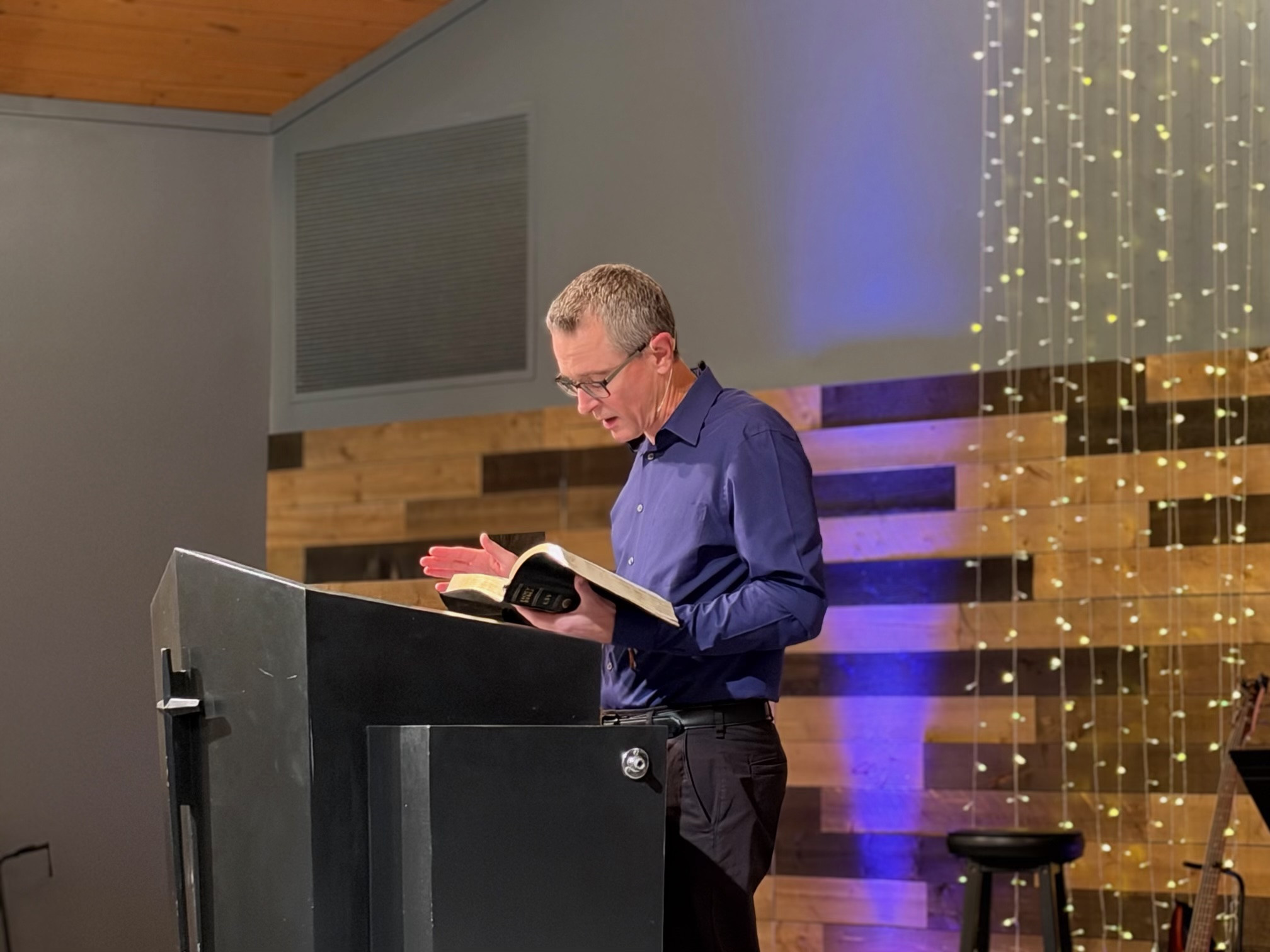
March 26, 2006
Dr. David J. Vaughan · Matthew 7:13–14
The following is a lightly edited transcript generated from the audio; it may contain small errors.
We appreciate the work that Cynthia is doing in Jeff City. Amen. We know there’s different people here. Tom McKnight is leading our pro-life ministry, and we appreciate the work Tom’s doing and other people do for the cause of the unborn. [audio unclear] Why don’t you open your Bibles, if you would, to Matthew chapter 7. Let’s read Matthew chapter 7 starting in verse 13. Jesus says, I’m reading the New King James:
“Enter by the narrow gate; for wide is the gate and broad is the way that leads to destruction, and there are many who go in by it. Because narrow is the gate and difficult is the way which leads to life, and there are few who find it.”
(Matthew 7:13–14)
Let’s pray together. Father, we thank You for Your holy word, and we ask that as we read it, study it, and meditate upon it, Lord, we invite Your Holy Spirit to come and to speak to us. We ask that You give us ears to hear what the Spirit is saying to each one of us. I pray that our hearts will be open before You and that You would search and try our hearts, Lord, see if there’s any wicked way in us. We ask that through the ministry of Your word we would be changed, transformed. We will leave here loving You more and desiring to serve You more. We ask it in Christ’s name, amen.
Commenting on this passage, the great expositor Alexander Maclaren notes, “A frank statement of the hardships and difficulties involved in a course of conduct does not seem a very likely way to induce men to adopt it.” But then he goes on to say, “But it often proves so.” Why is that? Because the call to hardship is in fact a call to nobility. It is a call to a life worth living, a life above the boredom of mediocrity and ease. It’s a call to be different and therefore to be special. It’s a call to be a martyr, really, and therefore to be a hero. The Lord will have no soldiers in His army on false pretenses. Although Jesus loved the multitudes, He loved the truth more. Or maybe it’s better to put it this way: because Jesus loved the multitudes, He was willing to tell them the truth even if the truth was unpleasant—even the truth that His way is the narrow way, that His way is the difficult way, and that His way is the hard way. That’s because to be a disciple we must take up our cross. Amen. Tonight I want to look at two things. One, the wide or broad way and what that means. Secondly, the narrow way. And then thirdly, I want to conclude with a couple applications to ourselves.
First, the Lord says, “Enter by the narrow gate, for wide is the gate, and broad is the way that leads to destruction, and there are many who go in by it.” The Lord says there is a wide or a broad way, and this is the way where there are no snags, there are no impediments. In other words, it is the easy way. It’s the way which is congenial to human nature. It does not offend our pride, it does not mortify our flesh. It requires no sacrifice, exacts no price, and causes no pain. That’s why it’s broad and that’s why it’s easy. The Lord says that many find this way. They enter by the wide gate and many walk in the broad way. Why? Because it is as simple as floating downstream. That is to say that the broad way is the way of human nature. The broad way is the way we go by nature or by habit. You get in a raft on a river, which way do you go, upstream or downstream? You go down. If you exert no force, you go down. In other words, to be in the broad way, to walk in the wide gate, you have to actually do nothing, because that is the way of humanity. He says many are in that way. They walk in that way. This way is attractive, if you will, to the majority who prefer something for nothing and delude themselves into believing that God is like themselves. Paul said of the Cretans that they profess to know God, but in works they deny Him. They had an outward form of godliness, but they denied the power of it. The easy way, or the broad way, is always the popular way. And it’s popular because it’s easy. It appeals to our nature to get something for nothing and to not have to exert any effort or sacrifice. That is the easy way, that is the popular way. But the Lord says that this is the fatal way. He says verse 13, enter by the narrow gate, why? For wide is the gate and broad is the way that leads to destruction. The wide gate and the broad way is the way of destruction. Whereas it says in Proverbs, “There is a way that seems right unto a man, but the end thereof is the way of death.”
You know, all the religion in the world will not save the person who does not do the will of God in heaven. Jesus says here, in the same chapter, He says verse 21:
“Not everyone who says to Me, ’Lord, Lord,’ shall enter the kingdom of heaven, but he who does the will of My Father in heaven. Many will say to Me in that day, ’Lord, Lord, have we not prophesied in Your name, cast out demons in Your name, and done many wonders in Your name?’ And then I will declare to them, ’I never knew you; depart from Me, you who practice lawlessness!’”
(Matthew 7:21–23)
We’ll speak more on this text later, but it’s interesting that the people speaking here were religious people. They were people that were acting in His name. They were people that were doing deeds in His name. These were people who were professing the name which is above every name. And yet Jesus says, depart, because I never knew you. This is what the Lord is telling us here in verse 24, where He says:
“Therefore whoever hears these sayings of Mine, and does them, I will liken him to a wise man who built his house on the rock: and the rain descended, the floods came, and the winds blew and beat on that house; and it did not fall, for it was founded on the rock. But everyone who hears these sayings of Mine, and does not do them, will be like a foolish man who built his house on the sand: and the rain descended, the floods came, and the winds blew and beat on that house; and it fell. And great was its fall.”
(Matthew 7:24–27)
So the broad way is the easy way, it’s the popular way, but Jesus says it is the fatal way. And He contrasts the broad way to the narrow or the difficult way. So let’s look at that.
He says in verse 13 again, “Enter by the narrow gate.” Then in verse 14 He says, “Because narrow is the gate and difficult is the way which leads to life, and there are few who find it.” So the narrow gate is essentially just the opposite of the broad gate: the hard or the difficult way. Why? Well, because to enter the narrow gate one must humble himself. To enter the narrow gate means we must acknowledge our sin, we must confess our inability, we must confess our lack of righteousness. To enter the narrow gate ultimately means to acknowledge that we cannot save ourselves, that we can only be saved by Jesus Christ. In one sense, and this is the irony of this passage, in one sense, the hard way is easy. I want you to think about this. Think about trying to save yourself. Think about trying to get to heaven by your good works. Think about how hard that would be. Do you know what I’m saying? It would be extremely difficult. Extremely difficult, because really what would be required would be meticulous obedience to God’s law. It would be very difficult to do that. The invitation to come to Christ in saving faith, to come to Jesus to receive His righteousness, and not your own, not a righteousness of the law—in one sense, it’s very easy. What do you have to do? You have to believe, right? You with me? Faith. “For by grace you have been saved through faith, and that not of yourselves; it is the gift of God, not of works, lest anyone should boast.” In one sense, entering in the narrow gate is very simple and it seems very easy. So why is it that when you talk to someone, even a religious person, and you present to them the simple gospel of Christ, that Jesus Christ died on the cross for their sins, that He was buried, that He rose from the dead, and that He will grant eternal life to those who embrace Him as Savior by faith, not by works—when you present that simple message, why is it that some people say, no, I don’t want that message, I want to do it myself? Doing it yourself is a lot harder than letting Christ do it for you, isn’t it? So why would somebody choose to do it the hard way? Because at the root of their rejection of Christ is really ultimately the hardest thing for man to do. See, the reason the easy way, meaning the reason that coming to faith in Christ, which means not working for your salvation, which is easy in that sense—the reason the easy way is really the hard way is because ultimately what it means is that we surrender our pride.
When you share the gospel with people, and I’ve shared it with hundreds, if not thousands, over the years, people will tolerate you telling them that they’ve sinned. Now they might not like it, but if you talk to them, say, well, have you ever told a lie? Well, okay. Have you ever gotten angry? Well, okay. They’ll admit that they’ve sinned. Telling someone that they’ve sinned, that’s not the ultimate offense of the gospel, because that’s not the gospel. The gospel isn’t “you’ve sinned.” The gospel is God has provided a payment for your sin because you can’t pay for it. That’s the offensive part. If you tell someone you’ve sinned, but be good, go to church, take the sacraments, read your Bible and pray, and God will let you into heaven, they’ll say, okay, I can do that. I’ll do that, I’ll turn over a new leaf, I’ll start going to church, I’ll start praying, I’ll even put some money in the offering plate every now and then, and by golly, I’m going to get myself right with God. But if you say to them, no, no, listen. When I say that you’ve sinned, what I’m really saying is that your condition is utterly hopeless, you are utterly helpless, and that if God does not reach down by His grace and save you, you will never be saved. You cannot pay for your sins, you cannot earn your way into heaven. The only way you can be saved is by the grace manifested in the death, burial, and resurrection of Jesus Christ. You think, well that’s so easy, but it’s hard to pride. Because pride says, hmm, okay, but I’m going to add a little bit of my works to it. I’m going to add a little bit of my righteousness to the righteousness of Christ. I’m going to take my little robe of righteousness and drape it over the cross so that when I get into heaven I have something to boast about. “Jesus, yeah, but I helped Him.” But what does the Scripture say? “Not of works, lest any man should boast.” [audio unclear] that is so contrary to human pride, that part of us which insists on ourselves.
Think about the original fall of man. Think about in the garden. God said not to eat a particular fruit. They ate. Their eyes were opened. They realized that they had sinned and violated God’s command. And what did they do? They immediately hid, and it said that they covered themselves. The very first work of works—this is the very first work. Man in a fallen condition innately attempts to save himself, innately. It is his nature to think that by some work, by some covering, by some human atonement, somehow he can make himself right with God. But the Word of God says that we are so deplorably fallen and sinful that we cannot save ourselves, but we are saved by the mercy and the grace of God alone. So the hard way is easy in one sense. Coming to Christ is easy in one sense because you don’t work for your salvation, but it’s hard in another sense and it’s narrow because it means as we enter into the kingdom we strip off everything that we have. And Jesus is undoubtedly using a picture of a very narrow gate, and there are often these very narrow chasms between mountains where a camel could just barely get through. And if the camel had a bunch of bags on the side, they’d try to get through and they couldn’t get through. They’d have to throw the bags off the camel and squeeze through the chasm between the mountains. And so when we enter into God’s kingdom, we take off the bags of self and self-righteousness. We take off the bags of our works. We take off the bags of our supposed righteousness and our obedience. And we take that off because the way is narrow, and we enter in with “nothing in my hands I bring, simply to Thy cross I cling.” And so the way is narrow. And in that sense, it’s hard. It’s hard to truly admit I can’t save myself.
For those of us who have entered in the narrow gate, we do understand that the way can be hard or difficult. The way of Christ is the way of the cross. Hold your place here and look at just one of many passages in the Gospel of Luke. And we could look at many, but we’ll just look at one. Gospel of Luke, starting in Luke 9:21. It says:
And He strictly warned and commanded them to tell this to no one, saying, “The Son of Man must suffer many things, and be rejected by the elders and chief priests and scribes, and be killed, and be raised the third day.”
(Luke 9:21–22)
And in the account in Mark, where Jesus shares this with the disciples for the first time, what does Peter do? It says that Peter took Jesus and Peter began to rebuke Jesus. Think about this. I mean, it’s not just that he rebuked Jesus, but this is after recognizing that Jesus was the Christ. After saying, “You are the Messiah,” and then Jesus says, yes I am the Messiah, but I must first suffer and I must first die, be buried and resurrected. And then Peter turns to the Messiah and begins to rebuke Him. He says, Lord, this will never be. No, You’re not going to suffer. You’re not going to go to the cross. You’re not going to die. Well, this seemed like a hard way for Peter, and he wanted the easy way. You see, that’s the same thing that the devil offered Jesus in the wilderness, remember? When he took Him up, he said, look at the kingdoms of the world. I’ll give these kingdoms to You. Bow down and worship me. In other words, I will offer You the fruit of the atonement without the suffering of the atonement. I will give You authority over all things, but You do not have to die and suffer to gain that authority. I’ll give it to You the easy way. Now Jesus said, “Get thee behind Me, Satan.” And when Peter essentially gave Him the same offer, what did He say to Peter? “Get thee behind Me, Satan,” because the easy way is not God’s way. The easy way is Satan’s way. And the hard way was Jesus’ way, because Jesus’ way is the way of the cross. Verse 23:
Then He said to them, “If anyone desires to come after Me, let him deny himself, and take up his cross daily, and follow Me. For whoever desires to save his life will lose it, but whoever loses his life for My sake will save it. For what profit is it to a man if he gains the whole world, and is himself destroyed or lost? For whoever is ashamed of Me and My words, of him the Son of Man will be ashamed when He comes in His own glory, and in His Father’s, and of the holy angels.”
(Luke 9:23–26)
So the way of Jesus is the hard way in this sense: that it’s the way of the cross. It’s the way of self-denial. It’s the way of service. It’s the way of sacrifice. The commentator John Brown said, “A religion which requires no self-denial is not the religion of Christ. If the gate be not strait, if the road be not narrow, it is not the gate of life and it is not the road to heaven. In all ages of the world, the way that leads to life is narrow. It is not and it cannot be easy or agreeable to our corrupted nature. It requires attention to find it, self-denial to enter upon it, and labor and resolution to persevere in it.” Amen. So the way of Jesus Christ requires humility as the root and holiness as the fruit. Lifelong discipleship is what we were called to. And I stress lifelong, and I stress discipleship. Jesus said take up the cross daily, which means take it up every day while it is called today. If you carry the cross today, I’m sure that you’re thinking, boy, I’d love to get up tomorrow and not have to carry it. But Jesus says we have to get up tomorrow and pick it up again. And then we pick it up Monday morning and Tuesday morning and Wednesday morning. We take up the cross daily, every day. It is lifelong discipleship. And lifelong discipleship is no easy matter. And if anybody tells you otherwise, then he or she is one of the false prophets that Jesus warns us about here in Matthew 7. Notice this in Matthew 7: after He exhorts us to enter in at the narrow gate and the difficult way, He immediately says in verse 15, “Beware of false prophets.” When you read the Old Testament, and I hope you’re reading through your Old Testament, one thing you find is that one of the contrasts between a true prophet of God and a false prophet of God is that a true prophet of God would speak people’s sin. As a matter of fact, one of the marks of a true prophet was that they would blow the trumpet in Israel and declare to the people their sin. That was part of their calling. But what did the false prophet say? “Peace, peace,” when there is no peace. The mark of the false prophet was that he always was offering the easy way. You can have peace with God and you don’t have to obey. You can have all the blessings of God. God wants you to be healthy, wealthy, and wise, and you don’t have to do anything but name it and claim it. It’s the easy way. It’s the rich way. It’s the wealthy way. Have you heard this message before? It’s on TV, it’s on the radio, it’s in print, it’s everywhere. It’s the American gospel. But it’s not the biblical gospel. Because the biblical gospel is you take up the cross, and the emblem of our discipleship is not a crown, it’s a cross. The crown is later, the cross is now. “The sufferings of this present time are not worthy to be compared with the glory which shall be revealed in us” later. For now, we labor, amen.
The last thing I want to say about the narrow way, or the hard way, is that there’s a reward. The end of the narrow way is life, Jesus says. Life, both here and hereafter. Let’s read it again in Matthew chapter 7. He says in verse 13, “Enter by the narrow gate. For wide is the gate and broad is the way that leads to destruction, and there are many who go in by it. Because narrow is the gate and difficult is the way”—but what does it lead to? It leads to zoe. It leads to life. And there are few who find it. The pains of piety are more than compensated for by the joys of justification. And the reality is, for many of you, many of you that have come to Jesus Christ as adults, let me ask you, would you prefer the old life over the new life? Yes or no? Of course not, because the broad way which the world says is so easy and so pleasurable and so wonderful—in reality the broad way isn’t easy, it’s hard, because it’s the way of darkness. It’s the way of sin, it’s the way of futility, it’s the way of frustration, it’s the way of broken relationships, it’s the way of broken hearts, it’s the way of broken homes, it’s the way of broken marriages. That’s the broad way. The difficult way of Jesus, the hard way, is actually the way of life. Zoe, the word that’s used for eternal life or everlasting life, or as Jesus put it in John, the abundant life. The thing we have to understand about the life that God gives to the believers is that eternal life is not just a life of a certain duration, that is to say that eternal life is not just long, but it’s a life of a certain quality, which means that eternal life is deep. When God gives us eternal life, it’s not like He writes us a receipt and says here, put this in your back pocket, and when you see St. Peter at the gates, hand it in. You have eternal life. No, that’s not what eternal life is. Eternal life is a quality of life that abides in the soul of the believer. To have eternal life, yes, it means that we have the hope of eternal life in the sense of we anticipate and look forward to the joys and the blessings of heaven, that’s true. Amen. But it means that here and now we have a quality of life that the world does not have. Because what we have abiding in us is the Spirit of God, and He gives to us the very life of Jesus Christ. Better yet than that—what’s better than that, you’re thinking? Better yet than that, what He gives to us is the resurrection life of Jesus. The same life and power that brought Jesus alive from the dead is the power and the life that dwells in the heart of the Christian. Well, what could be better than that? So when Scripture says we have eternal life, it’s not just speaking of our future, it’s speaking also of the present, that we have an abundant life here and now. Jesus said, “I have come that they may have life, and that they may have it more abundantly.” And that is meant for us. So even though He says the gate is narrow, it’s hard to get in there, the way is difficult, there’s sacrifice involved, there’s a cross involved, yet He says in spite of that, or really not in spite of that, but I would say as the result of that, this narrow gate and this hard way is really the way of true life, of true abundance, of true peace, of true joy, of true happiness—all the things that the world is looking for in the broad way, all the things the world is looking for in the easy way, all the things that the world is looking for in pleasures. All of these things, the essence of these things, the happiness, the joy, the contentment, the peace, the security, all of these things are given to us because we have eternal life. Amen? So when we speak of the narrow gate and the hard way, it is more than compensated for by the result of walking in that way. So the Word of God says that we have a peace that surpasses understanding, and a joy which is unspeakable and full of glory, and a hope which will not be ashamed. And so the believer gets everything the unbeliever really is seeking and really wants in the broad way—we get it in the narrow and the difficult way, because we receive the life of God in Christ Jesus. As Christians, we may mourn, but we’re comforted. Amen. We may be accounted as sheep for the slaughter, but we are more than conquerors through Him that has loved us. And the Word of God says that in spite of whatever we go through, whatever our suffering, whatever our trial, whatever difficulty we may be encountering as Christians, the Word of God says that there is nothing that will separate us from the love of God in Christ Jesus our Lord. And to know the love of God, I mean know it, and to experience the reality of the love of God, you can endure anything. So let me conclude with a few observations.
I’d like to quote John Brown again, the Scottish commentator. He says, “These awfully solemn words of our Lord are as applicable to us as they were to” [audio unclear] the one leading to destruction, the other to life. The broad road [audio unclear] there are only two paths and one of them we must choose. You know, perhaps one of the most striking things about this passage is really one of the most obvious things, and it’s this: Jesus says here that there are only two ways, and that’s all. There’s a narrow way, and there’s a broad way, but there’s no third way. There’s an easy way and a hard way, but no third way. There’s a way which leads to destruction and a way which leads to life, but there’s no third way. There’s a way of obedience and a way of sin, but there’s no third way. There’s a way of submission or a way of rebellion, but there is no third way. There’s a way of sacrifice or the way of indulgence, but there is no third way. There’s the way of morality and the way of iniquity, but there’s no third way. The way of righteousness or the way of lawlessness. But Jesus never offers a third way. Only two. Does this sound narrow-minded to you? It does, doesn’t it? And the reason it sounds narrow-minded is because it is. In fact, one of the reasons the narrow way is so hard to enter is that its very narrowness offends those who believe themselves to be open-minded, free-thinking, accepting, and tolerant. It is offensive to say there’s only two ways. Aren’t there many religions? Aren’t there many philosophies? Aren’t there many denominations? Aren’t there many ways to God? Well, Jesus said there’s a narrow way, a narrow gate and a hard way, and there’s a big wide gate and there’s an easy way, but He offers no other way. I think that in our day and age, especially, this message is offensive. It is offensive to assert only really one way, because when Jesus says there’s two ways, He’s really saying there’s only one way. A true Christian is only reiterating the teaching of his Master Jesus, who said, “I am the way, the truth, and the life. No man comes to the Father but by Me.” We may not like to share that message. We may understand that the message is offensive. We may even wish we didn’t have to put it that way, but we have no authority to change the message of Jesus. It’s nice to preach a gospel of many ways. [audio unclear] “You’re so tolerant, so understanding of viewpoints. You are so appreciative of diversity and pluralism. We embrace you as a brother.” You’re laughing because you hear that all the time, don’t you? That’s what you’re hearing. That’s the American gospel. All the way up there, there’s an East, there’s a religion, West, there’s a religion, no religion, we’re all going to get there in the end, just be sincere, God loves you, your sins are not an issue, there is no hell, it’s like the story has a happy ending, no matter what chapter, and it’s all going to end up good. That’s the American gospel. But it’s not the gospel of Jesus.
The thing I think that we’re confused about, when I say we, I say we Americans, is that we really don’t understand love. I think that’s the problem. I mean, we talk about tolerance and diversity as an expression of love, but I don’t think we really understand love. I mean, imagine your child is five years old or six years old and he has a penchant for playing with razor blades. “Ah, my son. Have fun today with those razor blades. I wouldn’t want to stifle your creativity as you slit your wrists today.” Well, of course not, it’s folly. It’s folly when applied to a very simple practical case. Okay? Of course we don’t want people to do things that are destructive to themselves, right? Of course you don’t let children play with razor blades or loaded guns or go play on the freeway. Of course we don’t do these things. Of course we stifle creativity when it causes harm. Why? Because we love. Because we love, we often have to speak a hard word. As a matter of fact, the Bible says, “Open rebuke is better than secret love.” True love is displayed not in tolerating, but in caring enough to confront. Sadly, I think that much of what passes for love and tolerance in our culture is simply selfish indifference. You live your life, I’ll live mine, you can do whatever you want. I just won’t look over there across the street, but you can’t look over across the street at me. I’ll leave you alone, you’ll leave me alone. We’re going to tolerate each other, we’re going to be diverse. And essentially, even though what you’re doing may be destroying your life, destroying your family, destroying your children, and even destroying the culture, I won’t say a word to you because I love you. Go thou in peace and destroy thyself. But that’s not God’s way, is it?
I mean, when you read the Old Testament, and people think the Old Testament’s really kind of hard and harsh, and the prophets come along and they start rebuking people, you can just see them, I mean you can just see the prophets doing this, you know what I mean? Just pointing at people, pointing out their sin and calling them to repent. You can just sense the fury, the fury of the Lord, God’s indignation towards sin. Can’t you just see it when you read the prophets? And then Jesus comes, the Prophet that was told. And He comes and He starts doing the same thing. Starts wagging His finger in people’s faces. And He starts preaching to the Pharisees. And what does He say? He says, “Woe to you.” And He confronts them with their sin. He rebukes them even in public, the audacity to do this. And then He goes and He weeps over Jerusalem. It was His great love that compelled Him to confront sin. His great love that compelled Him to literally put His life on the line. Because the reality was that the leading men of His day sent Him to the cross because He rebuked them. He spoke a hard word, but He wept for them in private because He loved them. He said, “How often I wanted to gather your children together, as a hen gathers her chicks under her wings, but you were not willing!” And He wept over Jerusalem, His beloved city, and Israel His beloved people, and yet when He confronted their sin, He had to speak a hard word. The gospel of Jesus Christ is the gospel of Jesus Christ. It’s not the gospel of the evangelical church. It’s not the gospel of any denomination. It’s the gospel of Jesus. And He said that He came to give His life a ransom for many. He said that He was the way, the truth, and the life, and that no one would come to the Father but by Him. That’s the gospel of Jesus Christ. The gospel of Jesus Christ is that God so loved the world that He gave His only Son—He’s the only Son, He’s talking about Himself—that whoever believes in Him would not perish, but have everlasting life. That’s the gospel of Jesus Christ. But those who love darkness, Jesus said, they’re condemned already, and the wrath of God abides on them. That’s the gospel of Jesus Christ. And that’s the gospel that the apostles preached, when Peter said, “Neither is there salvation in any other, for there is no other name under heaven given among men by which we must be saved.” And the Apostle Paul said that there is one Mediator, one Mediator between God and man, the Man Christ Jesus. Not many mediators, not many gurus, not many spiritual leaders, but one Mediator between God and man, and that is the Lord Christ Jesus, and no other. So when Jesus tells us there are two ways, He’s saying if you want life, there’s only one way. There are not many ways. There’s one way. And that’s His way.
Finally, let me say this to those of you who are truly Christian. In other words, those of you that have entered the narrow gate, do not be discouraged by the hard way. Do not be cast down by the difficult way. Remember the words of the Apostle Paul, when he said, we are hard pressed on every side, yet not crushed. We are perplexed, but not in despair. We are persecuted, but not forsaken, struck down, but not destroyed, always carrying about in the body the dying of the Lord Jesus, so that the life of Jesus also may be manifested in our body. Because we have this treasure in earthen vessels, that the excellency of the power may be of God and not of us. And so the hard way, the narrow gate, is the way of the cross, and yet it’s the way of God’s power and it’s the way of Jesus’ life. And again Paul says, most gladly will I boast in my infirmities, that the power of Christ may rest on me. For when I am weak, then am I strong. When I am afflicted, then I am strong. When I am persecuted, then I am strong. When I’m taking up the cross, then I am strong. When I’m sacrificing, then I am strong. When I’m serving, then I am strong. Even if I feel weak, then I am strong. Because then the power of Jesus rests on me. Amen? Amen. When you walk in the hard way, God’s grace is always sufficient for you. Because the hard way is the way of grace. It’s the way of God’s blessing. It’s the way where God will meet you in that way. And God will give you strength and grace and give you wisdom and give you everything that you need to walk on His way. Do not be discouraged, but persevere in the way. God is calling you and me as Christians to lifelong discipleship. We have many days, many months, and many years ahead of us. And for some of us, we’ve only just begun. For some of us, the best years are ahead of us. For some of us, the most fruit we will see is ahead of us. But we have to persevere in the way. And we have to walk God’s way, not our own way. I know it can be discouraging. Sometimes you want to give up. This Christian thing is just too hard. I’ve tried, I’ve prayed, it doesn’t work right. Things aren’t happening the way I think they need to happen. It’s just too difficult. Friend, let me tell you, [audio unclear] for a purpose. And the purpose is that as you walk in the difficult way, you must cry out to Him for strength and power and wisdom to persevere in the way. And so as you walk in the way and you cry out to Him, you certainly are in the way of life because you are met by the living God. The living Christ meets you in the way and He walks with you in the way. He empowers you for the way. Listen, if everything were easy, we would all be fat and lazy, and you know that’s the truth. Isn’t it the truth. [audio unclear] in the presence of God by day, in a cloud, in the presence of God by night, in a flame. They had God. And the same is true of us. Whether God lead you through a wilderness, [audio unclear] do not do what the Israelites did in the hard way. They looked back to Egypt. They wanted to go back. They wanted an easier way. But you know what’s striking about that. [audio unclear] “Today, if you will hear His voice, do not harden your hearts as in the rebellion, in the day of trial in the wilderness, where your fathers tested Me, tried Me, and saw My works.” They lusted for Egypt. “They have not known My ways.” They didn’t understand the hard way. [audio unclear] the Red Sea. How could they want to go back to garlic and leeks when they saw God pour manna from heaven? How could they do this? Because their hearts became hardened through sin. And they wanted to go back and serve Pharaoh. [audio unclear] And then he says this. He says, listen. He says these things became our examples, to the intent, for this reason, that we should not lust after evil things as they also lusted, and do not become idolaters as were some of them, as it is written, “The people sat down to eat and drink, and rose up to play.” [audio unclear] “Therefore let him who thinks he stands take heed lest he fall.” And here is the promise: “No temptation has overtaken you except such as is common to man; but God is faithful, who will not allow you to be tempted beyond what you are able, but with the temptation will also make the way of escape, that you may be able to bear it”—a way to endure whatever He lays in your path. God is faithful to His people, amen? And God will be faithful to you, no matter what He calls you to, no matter how difficult your path may be, God will be faithful to you. [audio unclear] I’d like to quote a well-known commentator. He said, we may well be afraid if our religion is that of the multitude, or the many, [audio unclear]
Especially some people that have grown up in a professing home, you’ve heard the gospel many times. You may have walked the aisle, you may have raised [audio unclear] Some of you know this. You know this is true. Because if I were to sit down with you and say, tell me about your relationship with Jesus Christ, [audio unclear] is still in the broad way. There are some others who think because they’ve done these things, they prayed the prayer, they’ve been baptized, they’ve raised their hand, they’ve memorized their Bible, they think they’re in the way. But they’re not in the way. How do we know? Well, the Lord gives us the one perfect test. You know them by their fruits. Those that are in the way are those that have the fruit of being born again in their lives. They love God’s word. They love God’s people. They pray. They serve. They have the fruit of the Spirit in their lives. And they don’t just think they know Jesus, they know they know Jesus.
You know what’s ironic, and I’m going to close with this, is that sometimes the hardest people to reach are people raised in a Christian home. There’s a lot of reasons for that. But one of the reasons is they think they got it, but they never got it. You understand what I’m saying. They think they embraced Jesus. “Well yeah, I did that when I was seven. Yeah, uh-huh, I remember that.” But there’s no fruit. “I was baptized by Pastor Vaughan. Of course I’m a Christian,” but there’s no fruit. There are people that can give the gospel better than me who don’t know Jesus. Because knowing the gospel, speaking the gospel, isn’t the same as knowing Christ in your heart. And then this problem gets compounded like this. Listen, it gets compounded this way. Listen to me, everyone, this way. It’s because when you grow up in a Christian home, you say the prayer, you walk the aisle, you get baptized, whatever, and then you realize, oh my gosh, I’m probably not really saved. If what pastor’s saying, I’m probably not really a Christian, because I don’t see the fruit in my life, I don’t really love the Bible, I don’t have a real prayer life, and I know this deep down, I know this is really true of me, but all these years my parents thought I was saved. All these years my friends thought I was saved, so now you’re too ashamed to admit you’re not saved. And so because there’s a sense of shame, you’re even more reluctant to embrace Christ. How can I admit it now? How can I admit that all these years when I thought I was a Christian, I really wasn’t? How can I admit this? I’ll tell you how you can admit it. Stand up and admit it. Just say it. You think anybody here will condemn you? You think anybody here will condemn you because you come to Christ tonight? It doesn’t matter if you were wrong for five years or 10 years or 20 years or 30 years, no one will condemn you for being wrong. No one will condemn you for coming to Jesus. We want you to come to Jesus, amen? I would completely understand if some of you have made professions of faith many years ago. I would completely understand if you received Christ tonight, after all these years. I would completely understand. You know why I would understand that? Because I understand from the Word of God and my own experience the profound deceptiveness of the human heart. There are so many warnings in the Bible, and in Matthew 7 is one of them, so many who think we’re on the way, but we’re really on the broad way to destruction. Why? Because we are hardened through the deceitfulness of sin, and we get deceived. I understand that. I’ve preached in different churches. I’ve had people respond to the gospel that had been baptized [audio unclear] with Jesus Christ. And I’m imploring you, and I’m especially imploring you young people, because some of you are just church kids. You’re just church kids. You’re great kids. I love every one of you. As far as I’m concerned, this is the best group of kids in the world. And I mean that. I was out with a bunch of them a few months ago, having pizza after church, I just kind of sat there looking at all the kids hanging out and having fun. I thought, this is the greatest group of kids in the world. I mean that. But it doesn’t mean they’re all saved. And my fear is that because you’ve heard it your whole life, you’ve never come to Jesus. Do not be ashamed to come to Christ just because you thought maybe you had before but were wrong. No one will condemn you. Amen? No one.
So let’s stand and pray. Lord, we thank You for Your word. I thank You that You loved us enough to speak even unpleasant truth to us. Lord, I pray that anything I spoke tonight was not offensive on my account. But Lord, if it was offensive on Your account, then we accept that. And I pray, Lord, for those who have entered the narrow gate, [audio unclear] that Your grace is sufficient for them. O Lord, make it a living reality in their hearts through the power of Your Holy Spirit. Not just words, but a reality. And help us, Lord, to strengthen one another, to walk hand in hand with each other, just to cheer each other on, not to give up. Not to give up, but to run the race with perseverance. And Lord, I pray for those tonight who need to accept You. Lord, open their hearts even now as I speak. And I invite you tonight to enter into the narrow gate by truly accepting Christ. You’ve heard the words, but listen this time with your heart. You have sinned. And that sin is leading you to destruction. But God’s great mercy and love has intervened on your behalf. Jesus Christ died on the cross for your sin, yours. But you must embrace Him. You must bow the knee to Him. It’s got to be real. You must enter in the narrow gate, not look in, not peek in, not stick one foot in. You must enter in. The Word of God says that whoever will call upon the name of the Lord will be saved. To call upon His name, to confide and rest in Him, to call upon Him where you are. I invite you to come to Him tonight. Even now, today, do not harden your hearts. God is calling you. You are here tonight for this message, for this invitation. Today is the day of salvation. There’s no magic formula. There’s no magic prayer. Your heart must turn to the Lord. Whatever words are in your heart—“Father, I know I’m a sinner, Jesus, save me. Jesus, I call upon Your name to be my Savior and Lord.” Whatever words are, if your heart turns to the Lord, you will be saved, the Word of God says. And so now, call upon the Lord in truth and in sincerity. For you to be raised in a Christian home or to hear the gospel repeatedly and not to come to Christ, I am literally trembling for you, because God has given you so much light. But come to the light, come to Jesus. Don’t be ashamed. I’m going to ask you to raise your hand, because I want you to understand, raising your hand does not save you. You’re just telling me something. Yes, I’ve called upon the Lord tonight. Would you tell me that so I can see your hand? I pray for you. God bless you, sir. Thank you, Lord. Lord, someone else. So I can see it, someone else. There’s more tonight. You’re here for a reason. There are more here tonight. Saying yes in truth, in sincerity. I’m calling upon the Lord. Will you tell me, raise your hand? I pray for you. Yes, God bless you. I see, I see your hand. [audio unclear] You don’t have to raise your hand, but it would encourage me to know. It’s not going to bring you into the kingdom. That’s what God is doing in your heart at this moment. Settle your account with God. Today is the day of salvation. Dear Lord, we thank You for those that have indicated a decision. I pray for each, I pray, God, that You would fill them with Your Spirit even now and bear witness to their spirit that they are Your child. We thank You for the gift of eternal life that You give when we accept Christ by faith. May that life be full in them. May that life be full in them. In Jesus’ name. Amen.
Tune my heart to sing Thy grace, streams of mercy never ceasing. [audio unclear]