
June 2, 2013
The Wheel: Prayer Part I
Dr. David J. Vaughan · Matthew 6:1–18
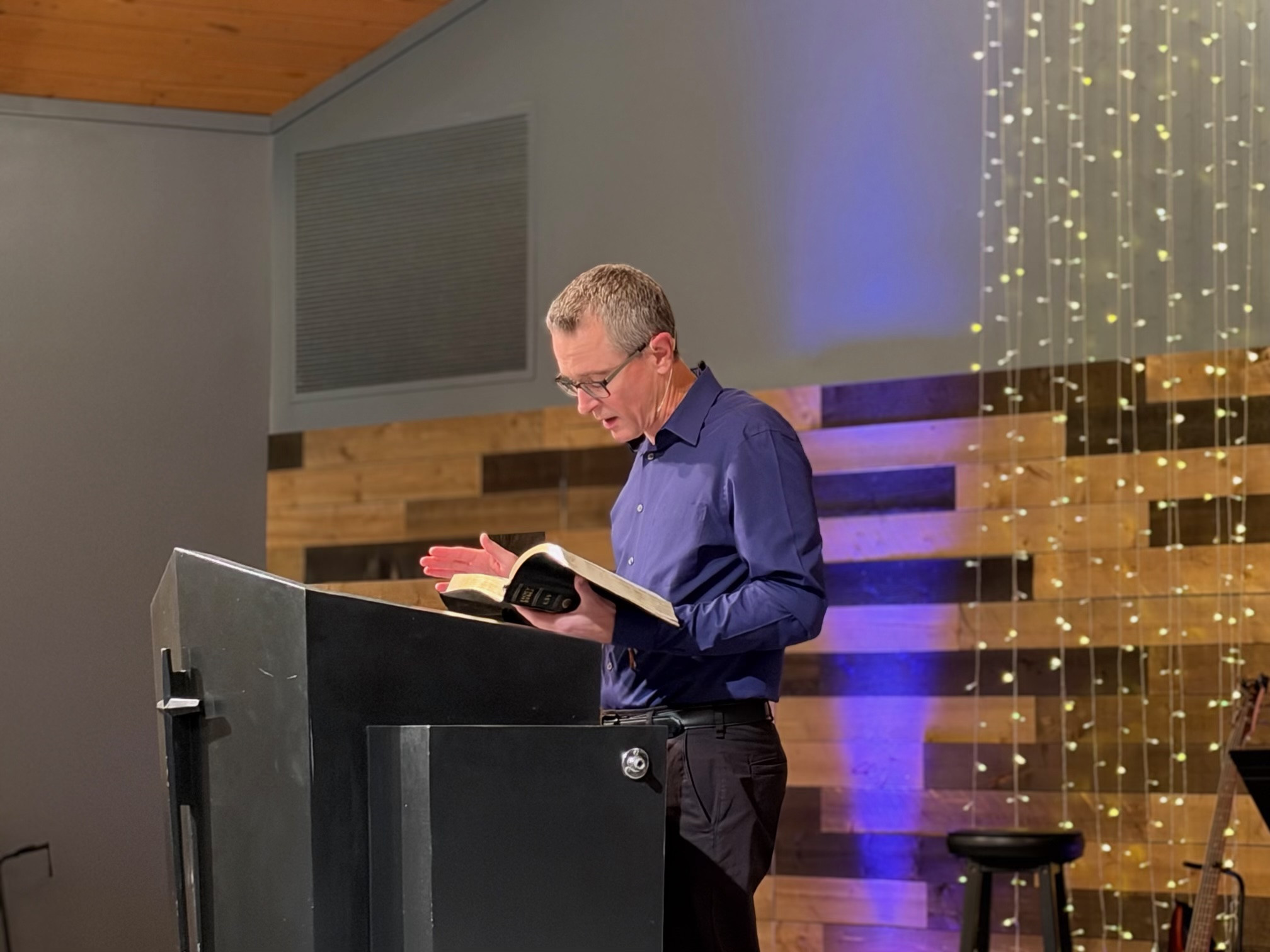
The following is a lightly edited transcript generated from the audio; it may contain small errors.
If you would, to Matthew, the Gospel of Matthew, chapter 6. We’ve been talking about some of the basic Christian disciplines called the wheel. And if you remember, the four spokes of the wheel, they’re the Word, worship, prayer, and witness. And we’ve talked about the Word for several weeks, and today we’re going to begin to speak about worship. Under the rubric of worship, I of course include prayer. So today I want to talk to you about the practice of prayer. Here in Matthew 6, Jesus says in verse 1:
Take heed that you do not do your charitable deeds before men, to be seen by them. Otherwise you have no reward from your Father in heaven. Therefore, when you do a charitable deed, do not sound a trumpet before you as the hypocrites do in the synagogues and in the streets, that they may have glory from men. Assuredly, I say to you, they have their reward. But when you do a charitable deed, do not let your left hand know what your right hand is doing, that your charitable deed may be in secret; and your Father who sees in secret will Himself reward you openly. And when you pray, you shall not be like the hypocrites. For they love to pray standing in the synagogues and on the corners of the streets, that they may be seen by men. Assuredly, I say to you, they have their reward. But you, when you pray, go into your room, and when you have shut your door, pray to your Father who is in the secret place; and your Father who sees in secret will reward you openly. And when you pray, do not use vain repetitions as the heathen do. For they think that they will be heard for their many words. Therefore do not be like them. For your Father knows the things you have need of before you ask Him. In this manner, therefore, pray: Our Father in heaven, hallowed be Your name. Your kingdom come. Your will be done on earth as it is in heaven. Give us this day our daily bread. And forgive us our debts, as we forgive our debtors. And do not lead us into temptation, but deliver us from the evil one. For Yours is the kingdom and the power and the glory forever. Amen. For if you forgive men their trespasses, your heavenly Father will also forgive you. But if you do not forgive men their trespasses, neither will your Father forgive your trespasses. Moreover, when you fast, do not be like the hypocrites, with a sad countenance. For they disfigure their faces that they may appear to men to be fasting. Assuredly, I say to you, they have their reward. But you, when you fast, anoint your head and wash your face, so that you do not appear to men to be fasting, but to your Father who is in the secret place; and your Father who sees in secret will reward you openly.
(Matthew 6:1–18)
I want to make a few comments about this passage. We’re not going to dig in and look at all that’s there, but I want to make a few observations about this text before we go on. One is that Jesus assumes that His followers will pray. He assumes they will pray. In other words, Jesus is not so much commanding us to pray as teaching us how to pray. And when you look at the teaching, and there’s quite a bit, actually, it’s an operating assumption that if you’re a follower of Jesus, that you will pray. Of course, He’s operating on the assumption that these were devout Jews who believed in Jehovah and so that they prayed. Prayer was something that they did. Prayer, giving, and fasting were assumed disciplines, we call them today, of their life. So Jesus is teaching us how to pray.
Another observation in this passage is the importance of sincerity. Now I had someone quote to me this passage and say, Christians should not pray in public. This person was adamant that Christians should not pray in public. And they’ve cited this passage. Well, Jesus is not saying to us, don’t pray in public. What He’s saying is, when you pray in public, or if you pray in public, make sure your motive is right, your heart is right. And the test of our motive is not what we do in public, the test of our motive is what we do in private. When no one else sees, do we pray? That’s the question. So, He says, do it in secret, because your Father is in secret, He’ll reward you openly. So, what Jesus is getting at here, of course, He’s reproving the Pharisaical problem of hypocrisy and receiving glory and praise from men for being religious. And He’s encouraging His followers to be sincere in their prayer life. And the test of that sincerity is not their prayer in public, but rather their prayer in private.
Also, Jesus in this passage assumes a relationship. You notice the beginning of the Lord’s Prayer is “Our Father in heaven.” He assumes a relationship. So this prayer and all that Jesus really teaches on prayer is really addressed to those that are in the relationship of a father-child. That is, those who are born into God’s family and know God as their Father. Our relationship with God is the foundation of our prayer life. Amen. As a matter of fact, one of the main purposes of prayer is to cultivate that very father-child relationship. Secondly, notice that our prayer is bound up with our relationship with other people. In the Lord’s Prayer, He says, “Our Father,” not “My Father.” He goes on and He says that we are to pray in verse 12, “and forgive us our debts, as we forgive others,” that is to say that my prayer life is affected by my relationship or lack of relationship with other people, and this is something borne out all throughout Scripture. And so, in our prayers, not only are we to remember other people, but we are to make sure that we are right with other people, because a broken relationship with others ends up impinging on our ability to have intimacy with God. John put it this way in his epistle, how can a man say that he loves God while he hates his brother? And the obvious answer is he can’t. If we say we love God whom we have not seen, but hate our brother whom we have seen, John says that we’re lying. We’re lying to ourselves anyway. So our relationship with others is foundational to a successful prayer life, if you will. Also, Jesus makes a point that not only can our relationships hinder our prayer life, but clearly unconfessed sin can do the same. So we are taught to pray in verse 12 to forgive us our debts or sins or trespasses as we forgive others. It’s striking here that after the Lord’s Prayer, there are actually six petitions here, and we’re not going to go into those today. But the one petition Jesus pulls out of that prayer and comments on is this petition on forgiveness. Because after He gives what’s called the Lord’s Prayer, it’s really the disciples’ prayer, right? In verse 14 He says, if you forgive men their trespasses, your heavenly Father will also forgive you, but if you do not forgive men their trespasses, neither will your Father forgive yours. This is the one petition that He pulls out of the Lord’s Prayer to comment on. Because unforgiveness, that is broken relationship with other people, is a barrier to intimacy with God. We must be right with others to be right with God. So we must confess any bitterness, anger, unforgiveness, etc. toward other people, or that will break our relationship and fellowship with the Father. Another observation, that in our prayer, we are to pray for both material and spiritual needs. We are to pray for daily bread, that’s material, right? To pray for forgiveness, those are spiritual needs. Some people, prayer is always, I would say, a hyperspiritual thing where you don’t ask God for basic things, but the Lord gives us warrant here to pray for physical needs.
I’ve been using the word prayer, I probably said prayer about 25 times already, right? And so we’re assuming well we all know what we mean by prayer, but I think that is one of the fundamental errors we make in talking about prayer and even developing our prayer life is that we think we know what it means when in fact we don’t have a, I would say, a fully developed concept of what prayer is. So my goal today is to kind of unwrap the meaning of prayer, the meaning of prayer. Now prayer has been defined in many ways. Some people say prayer is simply talking to God. And that’s true, although you can actually pray without saying any words. So in one sense, it’s not true, right? One definition is prayer is uttered desire. I love that definition, but the problem is sometimes you don’t have to utter it, and God still knows your desire. So the other thing is all talking is not the same, right? Imagine you and your wife in the bedroom having a conversation, arguing, and the voices are loud and you walk out and your child says, what was going on in there? You say, we were talking. [audio unclear] talking to our Father in heaven. And so today I want to unpack a little bit the meaning of prayer because I think that we, as I’ve said many times in this series already, we fall into habits and assumptions that are not biblical. And so, you know, I think in our prayer life especially—many books on prayer, and there’s kind of a common joke in prayer books and it goes like this. If you want to humble a Christian, ask him about his prayer life. Well, I think part of the reason we struggle in prayer, there are other reasons, is that we have narrowed the meaning of it to one thing. If you were to give me one word that meant prayer, what would you say? Now, I know what many people would say. Asking. If I said, give me one word for worship, what would you say? Singing, praise, Thanksgiving, right? And what do we do at a prayer meeting? Okay, we’re taking requests. We’re thinking of asking. Asking, asking, asking. So in other words, we think of prayer only as petition, as we’re going to see this morning. It’s much broader than that. And I have a visual aid here somewhere in the heavens. I don’t know if you can read that. The print’s not real big. This shows four areas of prayer or worship. The first is what I’ve—now, some of these labels are just labels. Don’t get hung up on the labels. It’s not the words we’re concerned about. It’s the thing, right? It’s not the label. It’s the thing. What we’re concerned about is the practice of prayer, not how you describe it per se. So there’s four categories here. The first one I’ve labeled adoration. The second, supplication. The third, contrition. And the fourth, reception. Now generally when you hear teaching on prayer and read books you’ll say there’s five kinds of prayer and I think there are five but there’s actually more. And so I’m trying to simplify this thing and kind of reduce it down to some basic concepts we can understand. The first one is adoration. Do we have another overhead? Yeah, good. And adoration includes two aspects, praise and thanksgiving. The best way to think of this, I think, is to think of—some people would substitute the word worship for praise. But there’s two aspects: praise for who God is and for what God has done that is glorious and majestic, and so you acknowledge that.
I was thinking, you know, when we come together to worship and pray we say things like, God I love You. God I adore You. We say phrases like that all the time. Am I right? Say yes. Okay, thank you. Are you guys awake today? Thank you. All right. So we say, Lord, we love You. Lord, we praise You. Lord, we think You’re cool or whatever. But how many of us in our private prayer time say those things to God? I mean, when’s the last time you took 30 minutes in your prayer time, and for 30 minutes you said, God, I love You. Jesus, I love You. And you just adored Him. And I would venture to say, it’s probably been a while. It’s because we have separated worship and prayer in such a way in our minds, and this is where we need to correct our thinking, that we think, well, that’s something we do when there’s music, but we don’t do it when there’s no music. Now, one of the things we have to understand about worship and prayer is when you are worshiping God, when we publicly worship, and I’m using worship in the broadest sense of the word, not just adore Him, which is the narrower definition of worship. When we are corporately worshiping God together, you know what you’re doing? You’re praying, but you’re praying with the aid of music. But you’re praying. And that’s why it’s disturbing to see Christians who are, quote, worshiping and who are apathetic, looking at their watch, watching people walk in this sanctuary, because their mouths are moving, but their heart is not there, right? And it reminds us of what Jesus said, quoting Isaiah: with their lips they honor Me, but their heart is far from Me. Now I believe when we worship God corporately, I believe that God looks at us and listens. I believe when we call on His name, especially when we call on His name in the name of Jesus. If you want to get God’s attention, use Jesus’ name. And when we call on Him in the name of Jesus, He looks at us and He listens to what we’re saying. This is important. Sometimes I think we get this idea of doing this for us. You know what I’m saying? We’re getting together and we’re worshiping for us. It’s like this is the weekly pep rally. Yay Jesus. Yay Jesus. Let’s go out this week for Jesus. Rah, rah, you know that kind of thing? This isn’t for us primarily. This is for God. When we address God, He is listening to what we are saying, and He’s listening to the manner in which we are saying it. And when we sing to Him, when we praise Him, when we adore Him, we are praying to Him with the aid of music, and that is all we are doing. So we need to be sober about what we’re doing when we worship Him, are we not? Because He’s listening. And I think one of the things that accounts for lackadaisical corporate worship is because we have lackadaisical private worship. That is to say we have separated the two and we don’t understand that part of our private prayer is to be praising and thanking God in our private prayer. The distinction, as I said, is that praise focuses on His person and His mighty deeds. Thanksgiving focuses on His provision and what He has done for us. It’s much more personal.
Now, I’ve shared this story many times, but I want to share it again. Years ago, when I was in a depression, it felt like everything in my life was going wrong. Ever feel that way? You might feel that way right now. Everything was going wrong. And I was very unhappy. I was very depressed, very critical, very negative, just not in a good place. And this wasn’t something that lasted for a week. This was something that lasted for a long time. I was not in a good place. And God one day spoke to me, and it’s because I was reading Philippians where it talks about these things. Hold your place in Matthew, Philippians 4. After he talks about prayer in verses 4 through 7, about rejoicing, he says, “meditate on these things.” And I remember reading that, and God really convicting me, because I was looking at all the negative things in my life. You know the old saying, is the cup half full? Well, that’s not half full. Half full? Mmm. Ah, water. Or half empty. I like what Adam said. Well, to me everything was half-empty. I didn’t see the silver lining, I just saw the cloud. And it was a frame of mind. It was a condition of the heart, of the spirit, if you will. And the Lord very clearly spoke to me, and He said, I want you to write down everything you’re unhappy about. And it was my job, it was my financial situation, it was a lot of things. He said, I want you to write those things down on a card, and then I want you to every day look at that list and find something good. So I had to think about my boss that I couldn’t stand. Every day during quiet time I had to think about my boss. How would you like to do that? Think about your boss every day in quiet time. Well, something revolutionary happened. Because as I began to ponder this list of negative things, I began to see positive things in them. I began to see ways that God would and was using these negative things in my life for good. So it’s not that you thank God for evil, but you thank Him for using evil for good. And I began to do this every day, and I didn’t necessarily feel thankful. You have to understand this, because this is where a lot of Christians get hung up. They think, if I don’t feel it, it’s insincere to do it. It’s hypocritical. I’m not going to thank God for that, because I don’t really feel thankful. That is wrong thinking. We are commanded to give thanks. It is a command. God says to do it. Here in this text in Philippians, He says, rejoice in the Lord. Again, I say rejoice. That means to proclaim your thanksgiving to Him. Now, it doesn’t say feel thankful. It says give it. That’s why it’s often called a sacrifice of praise. It’s a sacrifice to give it, because you might not feel it at the moment. That is not hypocritical if it is done in a spirit of obedience. Now it is hypocritical if you do it just to show off for other people in the assembly, but if you’re doing it as obedience to God, it is not hypocritical. As I began to ponder these things in my life that were, from one perspective, negative, I began to see the positive, and this is not a Norman Vincent Peale positive thinking. That’s not what’s going on here. This is learning to see your life through the perspective of God’s Word. This is what it is. It is seeing things the way God sees them. It is valuing things with the value that God places on them rather than the value you place on them. In Romans 12 it’s called renewing your mind. So I did this daily. I did it as an act of obedience. I did it when I didn’t feel thankful because God told me to do it. And I gave Him the sacrifice of praise, and over time my depression lifted because my mind was being renewed. I was being changed on the inside because I was obeying God’s Word. I was obeying His Word. I would verbally thank God, verbally thank Him for my boss who I didn’t like. I would verbally thank Him that my car was broken down. I would verbally thank Him that I had to ride the bus again. I would verbally thank Him for the things that I didn’t like, et cetera, et cetera, et cetera. And I would give Him the sacrifice of praise. He’s focusing on God and His will. Go back to Matthew 6. [audio unclear] The first thing in prayer is God Himself. I have been in a prayer meeting where people ask and ask and never thank God. That is prayer that is out of order. Now if I wrote the Lord, I didn’t. But if I did, I would have put confession first. But Jesus doesn’t even put confession first. He puts God first. When we come to God we have to remember who we are talking to. And I have to bring a little word of reproof to this church. Some of you are irreverent in your worship. You are dishonoring God, by your inattention and your apathy. Now, you might not like some of the songs, and that’s okay. You don’t have to sing them, but you have to be reverent in God’s presence. You need to pay attention to what we’re doing here. Not because I care, not because I’m watching, but because God is watching what we’re doing. And we need to restore reverence in the house of God. Because this is first and foremost about Him. He is first, His name is first, His kingdom is first, His will is first. So, in our prayer, whether it’s public or private, and I really want you guys to get these things in your private prayer life. We must put God first, so when you pray in private, you must. This isn’t difficult, but we have to train ourselves to pray in a biblical pattern. God first in our prayer, God first in our worship. Amen.
Secondly, supplication. This is a big word for intercession, which simply means asking for things for others, and petition, which is asking things for ourselves. Okay, this is an important area, but this is how many people think of prayer. Prayer is ask. Now, there’s biblical warrant for that. Jesus says ask, seek, knock, right? He tells the parable of the persistent widow. He gives us many teachings on to persevere in prayer, meaning persevere in petition, in asking for things. And so this is important. But this isn’t all of prayer, and I don’t think this is even the heart of prayer. Now, Jesus gives us a warrant here in the Lord’s Prayer for petition because He says we can ask in verse 11, give us this day our daily bread, and forgive us our sins. We’ll talk about that in a moment. We can ask for things from God. This is legitimate. We can ask for things for other people. We can intercede for them. Whether it’s their spiritual condition or their physical condition, we can pray for others and therefore we can supplicate God. We’ll have more about this later.
The third area, contrition. This I believe is another neglected area. I’ve used that word to cover two things. One, confession. And the second, you’ve probably not thought of much, and that is lamentation. What do I mean? First, confession. This is obvious. Confession is acknowledging to God your sins. It’s really that simple. So in our prayer time there’s always a place to acknowledge to God the many ways in which we have sinned and failed against Him. And let me stress the word many. For years I prayed with a group of pastors and the thing that shocked me is after praying with them weekly for years, I never heard them ever confess a sin. It was shocking to me. When we come into God’s presence, we often feel—I say often, not always maybe, but usually. And for many people, that’s an obstacle. That feeling is what keeps them from proceeding in their prayer and in their worship. That feeling of unworthiness is going to happen. It should happen, actually. But you see, we come to God based on the finished work of Jesus. So what that means is that we can confess our sins and we can be assured of forgiveness so that therefore, because of the work of Jesus, there is no barrier between God and I. Once I acknowledge that sin and remove it, if you will, I have access to the Father. So in 1 John, there’s a verse many of you already know. It says, if we confess our sins, He is faithful and just to forgive us our sins and to cleanse us from all unrighteousness. Now, that verse is right after he said, if we say that we have no sin, we deceive ourselves. He’s acknowledging we sin, but he’s saying that we have a remedy for our sin in the work of Jesus, that He’s our advocate with the Father, he says. So because of the work of Jesus, even though I might feel unworthy, I confess any sins that are brought to mind, and then therefore I have access to the Father regardless of how I feel. Regardless of how I feel. I always tell people when they say I feel unworthy, I always say you are. So get over it. You are. In yourself you are. In the flesh you are. But based upon the work of Jesus, you’re covered with His righteousness and you have access to the Father. It doesn’t mean you’ll never feel unworthy. Excuse me. But what it means is, in spite of the feelings of unworthiness, you stand before God on the finished work of Jesus. And let me tell you, there’s nothing like private prayer to test your belief in grace. Do you really believe in the finished work of Jesus? Do you really believe that He paid for all of your sins? Do you really believe that when He died and it says that the veil was torn in two, do you really believe you have a way in? [audio unclear] through the Spirit because of the work of Jesus Christ. We must confess our sins because they are barriers to our fellowship with God.
The second aspect of this contrition is what is often called lament or lamentation. Michael Card wrote a wonderful book on this called A Sacred Sorrow. When you read the Psalms, what you see is many of the Psalms are saying, they got bummed out, right? Many of them. The psalmist is troubled. He may be troubled over his own sin, he may be troubled over persecution, he may be troubled over why he’s troubled. I mean that’s what Psalm 42 and 43 are really about. He’s troubled and he’s troubled and he’s troubled. Why are you disquieted within me, O my soul? He’s talking to himself in God’s presence. Why do I feel this way? Why am I troubled? And he’s trying to get his soul in the right frame of mind. This is an area I think we do not do well in. Matter of fact, I think many Christians totally neglect this area. This area of what is called sacred sorrow or lamentation. When you read the Psalms, and I encourage you to get into Psalms for the next month and read them a lot, you will see often this theme of sorrow and lamenting sadness. And the reality is we live in a broken world. Amen. Everything is broken. Everything and everybody. And when you actually look at it, it’s a pretty sad place. Okay? And so, with the sadness. What do you do when you’re disappointed? What do you do when you’re hurt by others? What do you do when you’re bummed out about your own spiritual condition? What do you do when you’re sad that you can go through the list? What do you do with that? Well, the Scripture tells us to give it to God. In 1 Peter 5 it says, Cast your care upon the Lord because He cares for you. Very simple to say. But what that means is when you are in God’s presence, you’re honest about how you really feel. Now it doesn’t mean your feelings govern, but it means your feelings are true. Are you hearing me? You hear me? And so, this means communicating with God about the things that are troubling you, whatever their nature is. Now it’s not necessarily complaining, although often the Psalms sound that way. But it is lamenting. And we don’t do this well privately or corporately, because generally in the church today, if I said the word worship, you would think praise. Maybe you would think adoration. You would not think sorrow. But the Psalms, you remember, were a corporate prayer book. And so there were times where the Hebrews assembled and they would spend time in worship and they would spend time being sad together. Crazy idea, huh? Anything in your life that makes you sad? Be honest. Anything at all. Nobody in this room has anything? No, be honest. Raise your hand, I want to see. Yeah. Yeah. Yeah, we have a lot to be sad about. So what do you do with all that? You just stuff it? That’s what most Christians do. Because the Christian thing is to be happy. You see? And so, which is really unfortunate because all that stuffed garbage that you’re not talking to God about, you’re carrying. The imagery in 1 Peter 5, when it says, cast your care upon the Lord because He cares for you. The imagery is the image of someone carrying a load. So what do you do with your load? Well, Scripture says give it to the Lord. Tell the Lord your sorrow. Share with Him your grief. Talk to Him about these things. But we need to learn. If we’re going to have a true biblical prayer life, we need to learn to be honest with God about these things.
Lastly, I just call this reception for lack of a better term. You’ll hear people say, prayer is a dialogue, not a monologue, right? Ever hear that? I probably said it. Well, what that means is a dialogue is two people are talking. So, you know, Scripture many times in Psalms and other places tells us to wait upon the Lord. Right? You know what wait means? Wait. And as I pointed out earlier in this series, we often have our quiet time and we just do it real fast and real quick and we say, God, this is what I’m going to do and You better show up. And I don’t think He appreciates that. Come to Him and have time and open our Bibles and meditate and pray and wait. Wait for Him to come to you. Wait for Him to minister to you. Wait in His presence. This is a discipline. This is a discipline. Because some of you guys can’t sit still for five minutes. You are wired for action. And the idea of sitting there for 15 minutes and not doing anything and not saying anything drives you crazy. The other thing we don’t do well with is silence. So you go to a prayer meeting and if there’s any silence, somebody just starts praying because they don’t like silence. Noise means better than silence. So we’re told in Scripture to wait upon the Lord, and it means literally wait. So if you’re going to do this, guess what? You can’t just have your quiet time in this little 30-minute slot. You’re going to have to have times in your life that are much more open-ended, if you will, where you can go to God in prayer and meditation, and you can wait. Now, you know what happens when you wait? Then you begin to hear. Because we say prayer is a dialogue, but the fact of the matter is, most of us do all the talking. And we’re not good at listening. We’re not good at the silence. There’s noise around us all the time. I just heard the cars go by. I mean, radio, TV, whatever. I mean, there’s constant noise around us, and that’s considered normal, and some of us are afraid of the silence. We need to be quiet at times in God’s presence, because He has things to tell us. He has things to show us. You know, here in the Lord’s Prayer, we pray, “do not lead us into temptation, but deliver us from the evil one.” And I was thinking about that petition. It’s a petition for guidance. It’s a petition that God would not let us fall into these various things. But you know, imagine pulling up at a gas station, you’re lost. And of course, most guys don’t want to ask, but hey, you say to the attendant, hey, how do I get to this street? And before he can answer, you drive off. But that’s often what we do with God. We ask Him things and we don’t wait for the answer. Well, if you just be quiet a minute, He’ll tell you. And so we have to learn to wait on God and we need to learn to listen to God.
Now, here’s my exhortation. I would encourage you to take one of these areas and, in particular application, preferably adoration or reception, to take one of these areas and begin to practice it daily. Now, I have an hourglass in my office. Really? It’s a half an hour. Really, it’s a half-hour glass. I want to get an hourglass, but I haven’t been able to find one. It’s a half-hour glass. The sand will run for 30 minutes, and I’ve actually timed it. Pretty accurate. So sometimes when I pray, I’ll take the hourglass and I’ll put it on my desk, and I’ll turn it over, and I’ll begin to pray. And I’ll use that as just an aid to make sure I stay where I need to be. So maybe you can’t do 30, maybe you can do 15. I don’t know what you can do. Maybe you can do an hour, maybe you can do four hours. I don’t know. I want to encourage you to take adoration, for example, just an example. And for 15 minutes, for 30 minutes, don’t ask God for anything. Don’t ask Him for anything. Just praise Him and thank Him. You will find something interesting if you do this. Many of you will find out how uncomfortable you are doing it. Because the only time you’ve told God you love Him is when there’s music going on. Okay? It seems odd to you. And the biblical answer for oddness is simple. Get over it. Get over it. Father, I love You. Jesus, I love You. Holy Spirit, I love You. Lord, I adore You because You are faithful. I adore You because You honor Your Word. Your Word is forever settled in heaven. [audio unclear] Practice that for a week. Two, three, four, or whatever. [audio unclear] Only for the brave. Let me tell you, friends, if you learn to pray the way the Bible tells us to pray, not just meaning pray, ask God for things. That’s legitimate, but as we see, it’s only part of it, and it’s not the main part of it. [audio unclear] until you begin to feel comfortable doing it. Then take the other one and focus on this aspect. You have to learn how to pray. Let me tell you something, I got saved and no one taught me how to pray. No one. Why do you pray the way you pray? Well, I just kind of, I heard the people around me praying so I just kind of prayed like they did. No one taught me to pray. And I suspect no one probably taught you to pray. And so the way you pray is you just kind of fall into whatever habit you have, and that’s how you pray. But this is a well-balanced prayer life, and it will revolutionize your life, I’m telling you. You must apply these areas of prayer in your life.
Lord, we thank You. Because of the work of Jesus, we can come into Your presence. I pray, Lord, for myself, my family, and for the church at large, that we would really take to heart what Your Word has to say about prayer. I ask, Lord, that we would be a people of prayer. Jesus, I’m reminded of when You came into the temple and You cast out the money changers. And You said that Your house was a house of prayer. Lord, You desire us to be a people of prayer. And I ask, Lord, that You would help us to learn to pray in private as well as in public, and that our prayers would be pleasing to You and would be used by You to accomplish Your will and to bring Your kingdom, that Your name would be hallowed. And we pray in that precious name. Amen.