
April 8, 2006
The last in a series: Sermon on the Mount
Dr. David J. Vaughan
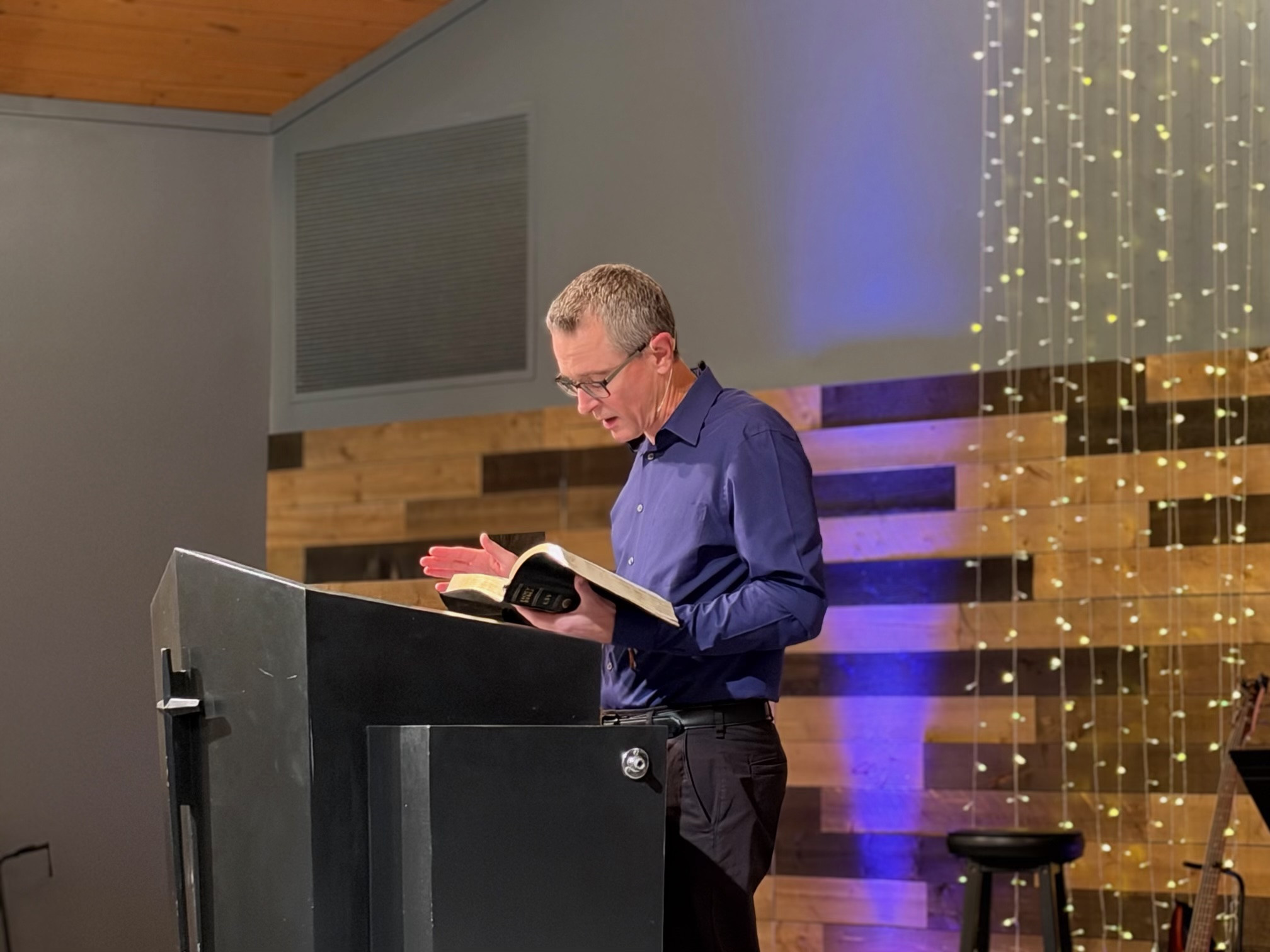
The following is a lightly edited transcript generated from the audio; it may contain small errors.
There’s a booby trap up here. Before we actually get into the Word tonight, we’re going to have a ministry report. We’ve been at least once a month having a ministry leader come up and share about the different things going on in their ministry, what they’re doing, the work they’re doing, as well as if they want to ask for people to help in the ministry. And tonight we’re going to have Tom McKnight come up and share about Liberty for Life. Would you welcome Tom?
How is everybody? Good. Well, I am glad to be a part of a church that sees its mission as changing lives through the gospel, growing believers through worship and edification, but also sees its mandate is to change culture. Amen? And the church really has that threefold mission: to share the gospel, to change lives, to build up believers, but then to shape culture. And our culture is in need of shaping. Unfortunately, there are some really dark things going on in our culture right now, specifically as it relates to abortion and life issues. When you look at over 3,500 abortions a day in America, legislators considering the destruction of human life at its most basic form, basically to harvest body parts. We saw last year one of the weakest members of the human community, Terri Schiavo. I mean, our government, American government, basically mandated that she be starved to death and dehydrated. The task almost seems daunting for the church. Like the Staples commercial, we just want to say, you know, I wish there was an easy button. Right? Yeah? Did you like that bell? That was easy. We had that at Bible quizzing today because I said if you get stuck and you don’t know the answer, just come on up to my table. No. But I say that to say our task is daunting as a church, you know, in general, but as a church local here too. But there is great news when it comes to pro-life issues. There’s been tremendous legislative victories here in Missouri and around the country, limiting abortions and even outlawing abortions. Now they’re being challenged in the courts, and I think they’re trying to push it to the Supreme Court. But there’s tremendous good news on the horizon right now. Planned Parenthood is on the defensive as states are moving to really defund their educational programs. And that is the lifeblood of their abortion industry, getting funds for educational programs. Last month, our church was a part of a petition drive nationally that sent over 175,000 signatures to Bill Frist’s desk to say, you need to defund this abortion provider on a national level. We’ve already seen it through leaders like Cynthia Davis and others on a local level, legislation being pushed through. Interestingly enough, with regard to Planned Parenthood, in 1993 they had a national campaign and their goal was 2,000 clinics by the year 2000. If you recall in 1993 what was going on in our culture, they had probably the most pro-abortion supportive president in the history of America in Bill Clinton at that time, and they were going to ride that wave. At that point they had a little less than 900 clinics around the country. I’m glad to say that in 1995 they only had 938 clinics, and in the year 2006 right now they have 824 clinics. Planned Parenthood has closed one clinic a month on average in the last decade. Let me tell you, the church is having an impact, it is. And it is primarily the church of Jesus Christ.
So the question is, how do we get involved in what God is doing, right? Well, we have a ministry here called Liberty for Life. And let me challenge you to think about ways to get involved. So if you have a pencil, we’ll be having flyers in this, but I want you to go home tonight or tomorrow and put these on your calendar if you will. How can you get involved? May 13th, we support every year the Walk for Life, the pregnancy resource centers, and there’s six facilities around the city here. We help them fund what they do. They are taking business away from Planned Parenthood. They’re having a Walk for Life. Many of you have been a part of it. It is such an easy way for your family to get involved in standing up for life. We’re going to have signups for you to sign up. You get friends and family, that you’re supportive of the Pregnancy Resource Center providing resources to young women and middle-aged women in crisis pregnancy. And take your family out and you walk through Creve Coeur Park. It’s a wonderful time, May 13th. We hope that you’ll consider joining us as we prayerfully and peacefully protest at abortion clinics. We primarily do it over at Hope Clinic and then downtown at the Planned Parenthood clinic. We’ll be having dates for those specifically, but you can get on there any Saturday morning and just pray against this insidious evil in our land. Someone spoke to me just recently about a vision he has for raising money for ultrasound machines in crisis pregnancy centers. This is the holy grail of influence. It really is. Ninety percent success rate when a young woman in a crisis pregnancy sees this. I was just at a fundraising banquet for a pregnancy resource center, not in this area, this week. And they had a gentleman there with an ultrasound machine. He had a woman, literally, they had a big screen at the banquet. In the back room, they had two women, one who was 10 weeks pregnant and one who was 8 weeks and 12 weeks. They showed what these women see. It is powerful. Because God’s reality comes crashing into people’s lives when they see their baby and they see the heartbeat. These ultrasound machines, they can show a heartbeat at 5 weeks, 2 days. Unbelievable. So I’ve got a gentleman, he’s in this church, and we’re going to be talking about how we can raise money because there are small pregnancy resource centers that on their own can never have the money. These machines are like $40,000. They can be made available for about $20,000 to $24,000. And this man’s got a heart for it. And if you’re interested in helping us think of ways to do that, please see me.
I’ll tell you something else that’s on my heart too. We’ve got a Planned Parenthood clinic over here in St. Peters. And I want to shut that place down. That place is passing out RU-486, which is over-the-counter abortion, basically drive-through abortion. By the way, if you want to go to the Planned Parenthood site in St. Louis and follow the links to what it takes if you’re a woman and you want to get that pill, it is unbelievable. It’s drive-through abortion. You can just say, I don’t want to have a doctor’s consent, I don’t want anything, here’s my name, here’s my credit card number, and they’ll say, where do you want to pick up the pill. And men, businessmen in the community, we need to think about the owners of that strip mall over there. And I know there’s a Christian bookstore there, but we’ve got to put pressure on that strip mall owner. They just put a Barnes and Noble over there. It is unacceptable to have that place in that mall. And while they’re not doing, quote, unquote, physical abortions in that place, they are passing out the RU-486 and having the girls go down to the main clinic for follow-up. So that’s kind of on my heart. We don’t have any plans what we’re going to do, but I think this is something as a church we need to think about, okay? And then lastly, not only getting involved, but educate yourself. You’ve got to educate yourself on this. And we try and keep things out at that table. And in fact, I’ve just put some new information out there tonight. There are some free tapes. There’s tapes out there. All those tapes are free. Gentlemen in the car going to work, you need to be listening to tapes that can educate yourself on everything, but this is an important issue. All right? And so I encourage you to stop by there at least monthly. And then if you’ve not been to our Making Abortion Unthinkable seminar, how many of you have been to Making Abortion Unthinkable? Okay? Now, how many of you think that everybody in the church ought to go through that seminar? Do you? I tell you, we got ahold of this seminar about three years ago and our goal was to run 70% of the church through it. We about hit it three years ago, now we’ve got a lot of new people. Let me tell you, it is a phenomenal seminar. We’re going to run it on June 6th and 13th. It’s the first two Tuesday nights in June, okay? We’re going to run it down here at the other end of the building. And it will equip—every high school student should not leave home without having gone through this seminar. There’s no way. I think every Christian needs to go through it, but every high school student needs to, every college student, young adult. We equip people to more clearly articulate their pro-life beliefs. We simplify the abortion debate to one simple question. We teach people how to articulate their views and how to really chop down and poke holes in the pro-abortion arguments, okay? And we think it’s an important part of our ministry here. So I appreciate the church’s support. God is using this church in a great way for life around this community in a number of ways, not just me and this ministry. It’s sent many other people who are involved in pro-life work, and we’re just happy to be kind of a facilitator for it. So God bless you.
If it’s a little too complicated—yeah, I’m going to use this. Go ahead. Thank you. We’re being genuine here tonight. I have this mechanical about this. If you’re new to Liberty, you get to see warts and all tonight. So this is who we are. Not distracting. No, not distracting at all. This is better than me tripping in the middle of a sermon and falling over. You’re thinking I’m getting slain in the Spirit when I’m just really being clumsy. Right? I didn’t say I wouldn’t get slain in the Spirit. We just don’t want to confuse that with being clumsy. That’s all. Appreciate that, Rob, very much. Thank you, let’s give Rob a hand. You need something done, you can call Rob Witty. He’ll take care of it for you. Okay, it’s been a full evening already, but that’s okay.
Why don’t we open God’s Word, if you would? Matthew chapter 7. We’re going to finish our study on the Sermon on the Mount tonight. Matthew chapter 7, we’re going to start reading in verse 21 to the end. It says, and of course this is Jesus speaking:
“Not everyone who says to Me, ’Lord, Lord,’ shall enter the kingdom of heaven, but he who does the will of My Father in heaven. Many will say to Me in that day, ’Lord, Lord, have we not prophesied in Your name, cast out demons in Your name, and done many wonders in Your name?’ And then I will declare to them, ’I never knew you; depart from Me, you who practice lawlessness!’ Therefore whoever hears these sayings of Mine, and does them, I will liken him to a wise man who built his house on the rock: and the rain descended, the floods came, and the winds blew and beat on that house; and it did not fall, for it was founded on the rock. But everyone who hears these sayings of Mine, and does not do them, will be like a foolish man who built his house on the sand: and the rain descended, the floods came, and the winds blew and beat on that house; and it fell. And great was its fall.”
(Matthew 7:21–27)
In the conclusion of this most famous sermon of Jesus, He reminds us that He’s not merely offering us good advice, which may be accepted or rejected as we please. He’s delivered unto us a revelation of the will of God, a revelation of His Father’s will, His Father who is in heaven. And this revelation from God demands not only a hearing, but it demands a response. And what He’s teaching us here is that our response to His teaching will determine ultimately our eternal destiny. And He says those who build on His teaching are building on the rock. And those who do not build on His teaching are building on sand. Those who build on the rock, He says, are wise, and those who build on the sand, He says, are foolish. So I want to look at two things tonight. First, what we have here is two different contrasts. The first contrast is between those who profess and those who do—professors, meaning a profession of faith—and then the second contrast is between those who hear and those who do, the foolish builders. And the foolish builders really are the picture of the false professors. So let’s look at these two contrasts together.
The first contrast is between those who profess and those who do, or this is a warning on false profession. What the Lord is contrasting here is between those who profess to be His, that is to say those who say “Lord, Lord,” but do not do His will, and those who in fact do obey His will. Notice this in the passage in verse 21. Let’s read it again. I want you to notice something here. He says, “Not everyone who says to Me, ’Lord, Lord,’ shall enter the kingdom of heaven, but he who does the will of My Father.” Notice the contrast between what one says and what one does. Then in verse 22 He says, “Many will say to Me”—notice, say, again, a verbal profession. They will say to Me, “Lord, Lord,” again, this repetition, “Lord, Lord, have we not prophesied in Your name, cast out demons in Your name and done many wonders in Your name?” So Jesus, by repeating this phrase, they will say, they will say, and then notice that the works or the wonders that they did, at least two of them are mentioned, one is prophecy and the other is exorcism or casting out demons, and both of these are, if you will, verbal in nature. So they say, “Lord, Lord,” they speak the name of Jesus, they will prophesy in the name of Jesus, teach in the name of Jesus, preach in the name of Jesus, attempt to cast out demons, perhaps even do it in the name of Jesus, all of this being of a verbal type of religion. So what we have here is a picture of a religion of the lips. They profess Jesus as Lord, but they do not obey Him, or they do not do the will of the Father. They profess His name in prophecy, and they profess His name against demons, but they do not do the will of His Father in heaven. So the contrast is between speaking and doing. And it reminds us of the passage in Titus, where Paul is speaking of the Cretans, and he says that they profess to know God—same word, they profess to know God, but in works they deny Him. So they speak the right thing, they say the right thing, and they’ll even speak the name of Jesus, but in their works they’re not living in a way consistent with that profession. That’s the contrast, speaking versus doing.
So let me point out a few things about this contrast. One is this, that it’s clear from this passage as well as others, is that salvation is not by a mere verbal profession. Let me say it again. Salvation is not by a mere verbal profession. Now you may be thinking, well wait a minute, doesn’t it say somewhere in Romans about calling on His name and you’ll be saved, or with the heart you believe and then with the mouth confession or profession is made unto salvation? But what we have to understand is that the name of Jesus, that name, the name which the Bible says is above every name in heaven and earth, amen—the sweet name of Jesus, it is not a magical incantation. It is not a mantra. We don’t say the name and something miraculous happens unless there is true faith that accompanies it. Someone can say to you, I believe in Jesus. Someone can say to you, I believe Jesus is Lord, and yet not be a Christian, because that saying of theirs is not accompanied by true faith. “For by grace you have been saved through faith, and that not of works.” Let me paraphrase it: by faith you are saved through faith and not by words. So when Scripture says we must call upon the name of the Lord, or the confession or profession is made unto salvation, it’s assuming that the profession is a genuine profession, right? That it’s a profession which is evidence of a true, genuine, saving faith. The word “Jesus,” not spoken in faith, is not going to save anyone. And unfortunately, and I’ve done this myself, when I’ve witnessed to people before, I want to get them to say the one, two, threes of the gospel message, and just pray the sinner’s prayer the right way, and then I can check them off and say, well they got saved. Yes they did. They read the Romans Road, or they did the Four Spiritual Laws, or the six steps, and at the end, we went through the prayer together, and they said the words, they said, “Jesus, I’ve… Jesus, save me, Jesus, save me,” they’re saved. Cha-ching. That was easy. It’s easy, right? Just say the name, just say the words, you’re in. Just say the words, you’re saved. But the words don’t save you, Jesus saves you. The word, small w, “Jesus,” doesn’t save, but the Word, capital W, Jesus, saves you. So what Jesus is telling us here is He’s telling us that this religion of the lips isn’t sufficient. To say all the right things, profess all the right things, isn’t enough. We’re not saved by words, we’re saved by the living Word, Jesus Christ Himself. We’re not saved by creeds, we’re saved by Christ, amen.
So some people read this text that we’re looking at and they say, well gee, this sounds like we’re saved by works then, we’re saved by our obedience. But the contrast that Jesus is pointing out is not between faith and works, it’s a contrast between faith and words. That’s the contrast. Anyone can say Jesus is Lord, but only those who truly believe that Jesus is Lord will obey Him as Lord. And it’s those who are truly saved because they have genuine saving faith. Look at James chapter 2. There is a supposed contradiction in Scripture between the teaching of Paul and the teaching of James. And the argument goes like this. Paul says you are saved by faith alone, but James says you’re saved by faith and works. Paul says you’re justified by faith, James says you’re justified by works. And so some people say, well, there’s a clear contradiction in the Bible, therefore they adopt a low view of Scripture, because if it was truly God’s Word, it wouldn’t contradict itself. Or they’ll pick one of the two and say, well, one of them, you know, I guess James was off. Did you know Martin Luther questioned whether or not James was an inspired epistle because he couldn’t quite fit James into his theology of justification by faith? Let’s read a little bit of James 2, and then I’ll share with you my thoughts on this apparent contradiction. James 2 verse 14: “What does it profit, my brethren, if someone says he has faith but does not have works? Can faith save him? If a brother or sister is naked and destitute of daily food, and one of you says to them, ’Depart in peace, be warmed and filled’”—notice, notice the lip religion, right? Notice, if someone of you says, be warmed and filled, “but you do not give them the things which are needed for the body, what does it profit?” So here someone says, love your brother, praise him, I’ll pray for your brother, but then you do nothing to alleviate their need, you do nothing to help, it’s lip religion. Verse 17: “Thus also faith by itself, if it does not have works, is dead. But someone will say, ’You have faith, and I have works.’ Show me your faith without your works, and I will show you my faith by my works.” Now if I walked up to you and I said, are you a Christian, you say yes I am. I say, do you believe Jesus is Lord? Yes I do. Do you believe Jesus died on the cross for your sins? Yes I do. Do you believe that three days later Jesus rose from the dead? Yes I do. And they say, show me your faith. And you’d say, I just showed you my faith. I said I believe. Did you see their faith? No. James says that’s not a sufficient sign of faith. Amen. Saying it, you may have faith, it may be real, but it may not. But James says I can show you my faith. I can show you by my works. The evidence of my faith isn’t what I say, the evidence of my faith is what I do. Verse 19: “You believe that there is one God. You do well.” That’s a good thing to believe, he’s saying. “Even the demons believe—and tremble! But do you want to know, O foolish man, that faith without works is dead?” And then he goes on and he talks about Abraham.
What is James saying, and how do we reconcile this with Paul? The difference between James and Paul is this. Paul is trying to teach us that salvation or justification, that is, being right with God, is based upon faith without the works of the law. Let us say we’re saved by grace through faith. Faith is the vehicle, grace saves us. But James is talking about how do we know if that faith is genuine or not? How do we know if it’s real? He’s not saying you’re not saved by faith. He’s saying, okay, you believe? Show me. The devils believe, but they’re not saved. Show me your faith. If you’re going to claim to be a Christian, if you’re going to claim to be saved, if you call Jesus “Lord, Lord,” then show me your faith by your works, because otherwise I can’t see your faith. I don’t know if it’s real or not. Now if someone comes to a church meeting and there’s an invitation to receive Christ and they raise their hand or they walk the aisle or they have an experience and then nothing changes in their life. Should you presume that they truly became a Christian? Yes or no? Why? They said Jesus, they called upon Him as Lord. Then why should you be so cruel as to not accept their profession? Well, because there’s no fruit. Remember when Jesus talked about the good tree and the good fruit, the bad tree and the bad fruit? You’ll know them by their fruits. The only way anybody can tell if there’s been a genuine conversion, or to put it this way, is if that profession of faith produces fruit. There’s no other test that we have. Now having said that, I want you to understand something. I’m not asking you to evaluate the fruit in other people’s lives. Sean’s very smart. He understands what I’m saying. Because this isn’t about evaluating others, this is about evaluating ourselves.
I’ve shared this story before, but when I used to work in a Christian bookstore years ago, I had every kind of Christian conceivable come in that store, from, you know, the uptight lemon-suckers, you know, never smiled, you know, the more you frown, the more you had the Holy Ghost. And then I had, you know, the chandelier swingers. I mean, you had every conceivable type of experience. And I remember this guy, he actually came to the youth meeting that I was running at the time, he visited a few times, and I met him, I think he may have come to the meeting a few times, and I didn’t see him for months and months and months, and then he just showed up in the store I was working, and he said, “Brother,” oh, gee, he was just all pumped. “Just got to tell you, brother, you know, months ago I got saved, but then I backslid, I just got saved again.” I said, how in the world, you got saved again? “Oh, because I came up to the altar and I was crying. I got saved again.” He was convinced that he was saved because he had an emotional experience at the altar. Probably as he had had an emotional experience three months before that at the altar. And as the story goes, I think he had another emotional experience about six months later. Whether you come forward in an invitation, whether you’re reading your Bible at home, whether you’re watching a Billy Graham crusade on television, or whether you’re listening to Christian radio, the test of whether or not your decision for Christ is genuine is not by what you say, it’s by the fruit in your life. So when Scripture challenges us, which it does, to make our calling and election sure, or to examine ourselves, it’s not asking us to go back to some remote time in the past. It’s not saying, okay, go get your journal out and look up, 10 years ago, on July 2nd at 8:52, at a revival meeting, you walked the aisle. Oh yeah, I’ll go look it up, yup, I’m saved, close the book, I’m fine. That’s not what it’s saying. When it says to make your calling and election sure, it’s saying, look at your life right now, and based upon what you see right now, do you have the fruit of a Christian? That’s what it’s saying. Not what was your experience in the past, what is your experience now? That’s what we’re being asked to do. So Jesus is teaching us here that a mere verbal profession, simply calling Him Lord, by itself is not a mark of genuine faith.
One thing we learn from this contrast between the professor and the doer is that salvation is not a result of religious observances or religious acts. When these professors came to the Lord, they said in verse 22 of Matthew 7, “Lord, Lord,” notice what they say, “Lord, Lord, have we not prophesied in Your name, cast out demons in Your name and done wonderful works in Your name?” Notice the kind of evidence they produce. It would fall in the category of religious works. They didn’t say, look Lord, I fed the hungry. Look Lord, I clothed the poor. They didn’t say that. They said, look Lord, we had an awesome revival meeting. Look Lord, we were swinging from the chandeliers. Look, Lord, we were having a blast in Your name. The Spirit was moving and grooving in our services. We had prophecy. We had exorcism. We had signs and wonders, Lord, and we were doing it all in Your name. Jesus wasn’t impressed, was He? And we can fall into the error just as they did, that a religious or spiritual act, what we would call a spiritual act, is a sign of saving faith. Whether it’s baptism or communion or Mass or lifting hands or whatever the activity might be, whatever the church activity might be, Jesus is saying, well no, that’s not the ultimate test. We’re not saved by any type of religious ritual. We are saved by a genuine relationship with Jesus Christ. Notice the Lord says here in verse 23, after they give their list of religious works, He says in verse 23, “And then I will declare to them, ’I never knew you.’” There was no relationship between us. So first, this passage says, we’re not saved by a mere profession, verbal profession. Secondly, we’re not saved by religious activity. And thirdly, this being so, we’re not saved by partial or selective obedience of any kind. What do I mean? You know, we don’t know if these prophecies or exorcisms were true or false. We don’t know. We don’t know if these people were simply deceived or if these people were deceivers attempting to deceive others. We don’t know. But we do know this: that their religious activity in one area was not a sufficient compensation for the lack of obedience in another area. And we can all fall into this. All of us. We can fall into believing that a prophecy or a spiritual act or exuberant worship or some such thing is somehow a substitute for doing God’s will. But these things are not; they ought to be aids to fulfill God’s will, and to worship and to sing and to study God’s Word and to [audio unclear] A personal relationship with Jesus Christ is not unto salvation, it is salvation. Jesus Christ, when praying to His Father in John 17, He’s talking to God and He says to God, “This is eternal life, that they may know You,” and Your Son. God through Christ, knowing Him in relationship, that is salvation. And although we do any kind of profession, works, study, prayer, worship, ritual, all of it should be to further that relationship, because that relationship is what transforms us. The relationship with Christ is the ground not only of our salvation, that’s the ground of real fruit. If you say a professing Christian is not bearing fruit, there’s one of two things happening. One is either the profession is false and they’re not a real Christian, or they are a Christian but they’re not in vital relationship with Christ. In some way, they’re backslidden. And because they’re backslidden, they’re not producing fruit. Jesus said that He was the vine, we are the branches. The sap, the power, the juice comes from Jesus into the branches, amen? And then the branches bear the fruit. But if we are not in fellowship with Jesus Christ, if we are not walking in fellowship with Him, we will not bear fruit. And we can do religious activities, but we won’t bear real fruit.
Now let’s look secondly at the foolish builders, the foolish builders in Matthew 7 starting in verse 24. The Lord says, “Therefore whoever hears these sayings of Mine, and does them, I will liken him to a wise man who built his house on the rock: and the rain descended, the floods came, and the winds blew and beat on that house; and it did not fall, for it was founded on the rock. But everyone who hears these sayings of Mine, and does not do them, will be like a foolish man who built his house on the sand: and the rain descended, the floods came, and the winds blew and beat on that house; and it fell. And great was its fall.” The foolish builders: what the Lord is teaching us here is He’s teaching us about the destiny of the false professors. Those who only profess will not enter the kingdom of God. Jesus says that He will say to them, “Depart from Me,” because “I never knew you.” And the imagery here of the storm coming is undoubtedly an imagery of our standing before the Lord on the day of judgment. It’s this coming judgment that Jesus illustrates with the parable of the two builders here.
And I want you to notice a few things about this. First is that Jesus assigns everyone to one of the two categories, either wise or foolish. Either they’re building on the rock or they’re building on the sand. The fundamental distinction between all men and women is not one of race or class or political party. It’s not denominational affiliation. It matters not if you are rich or poor, white or black, or a Republican or Democrat. Those are not the basic divides according to Jesus. The basic issue to Jesus is this. He says, do we do what Christ taught us to do? If so, He says, we are wise. But if not, He says, we are foolish. And all the other distinctions between men pale in comparison to this basic all-important divide. Are we building our lives on the rock of Christ and His teaching, or are we building our lives on the sand of human philosophy?
Secondly, Jesus is telling us that all men, all men—and I stress the word all—all men are builders. He compares everyone’s life to a building. And it’s constructed upon some foundation. You’ve probably heard the expression, every man’s a philosopher, every man has a worldview, and that’s true. But Jesus is telling us every man is an architect, every man is a home builder. Because our life is what we’re building. Our life He compares to a building. But the thing that’s important, I want you to see, in this passage, is the important thing about the building, Jesus says, is the foundation. Now I’m not a home builder, I don’t know much about it. But I suspect that if you have a foundation that’s cracked, a foundation that leaks, a foundation that isn’t stable, if you put a superstructure on top of that, that you’re going to have problems eventually with the superstructure. Is that correct? We have some home builders here. So the foundation’s all important. The foundation has to be laid correctly, because if you build on that weak foundation, you’re going to have problems. You’re probably going to have the ground move, and you have cracks in your wall, and you have all sorts of other problems. So the important thing about the life that is being built is not the superstructure. It’s not the facade. It’s not the nice Sunday-morning brick, right? It’s not the paint, it’s not the furniture, it’s the foundation. And the funny thing about the foundation is the foundation is the thing that people don’t see. So we can put on a good superstructure, right? We can put on a good facade. We can put on our church face. How you doing? Fine. How are you, Lord? Fine. Fine. Everything’s fine. Fine, fine, fine, fine, fine. And one of those big cracks in the foundation. So Jesus is saying, you know, the strength of the building or the superstructure is all based on what’s underneath. It’s all based on the foundation. That’s the important thing. Are we building our lives on Jesus Christ and His teaching, or are we building our lives on some other foundation? Are we building it on His will truly? Are we building it on our will? Are we building it on divine revelation? Or are we building it on human speculation? It’s the foundation of our life.
The third thing I want you to note about this picture here of the builders is that both the builders experience the same storm. The builder that’s on the rock and the builder that is on the sand both experience the storm. Some people read this text in a this-worldly fashion, meaning that they’re saying, you know, if you build your life on Jesus, storms and stress will come in your life, but your life will stay intact, things will go well. And I think there is validity to that. I think you can make an application to this life. You build your life on the Lord, you build your life on His teaching, when things happen in your life, and bad things will happen, even to a Christian, storms will come, the rain will come in your life, yet you will weather the storm because you’re built on the rock. Amen? And that’s true. That is true. But I don’t think that’s the primary point that Jesus is teaching us, because in the context He just said in verse 23, He’s talking about men standing before Him, and clearly this is the judgment day, when He tells some to depart from Him. And that’s the context. I think in context, the storm here is not the storm and stress of life. It’s rather a picture of what will happen to all of us as we stand before the Lord to give an account of our lives. In other words, whether someone is building on the rock or whether someone is building on the sand, both builders will experience the storm of God’s judgment.
I have talked to some Christians and they say, you know, I’ve trusted in Jesus and that’s all that matters. I’m saved and that’s all that matters. I don’t care if I just barely get into heaven, just so I’m in, nothing else matters. I’m going to heaven, nothing else matters. It doesn’t matter if I have a big mansion. I don’t care if I’m in the ghetto in heaven. I just want to get into heaven. You know what I mean? But I don’t think that’s a good attitude. Do you? It’s kind of a laissez-faire attitude which almost suggests, well, you know, it doesn’t really matter how I live. I’m saved. I’m going to get there. So, you know, I’m not going to worry about rewards in heaven or any of that kind of thing. Hey man, I’m in. I’m in, I’m going to make it. I got the fire insurance. That’s all that matters. But I don’t think this is the kind of attitude God wants us to have. When we think about the Lord’s return, when we think about standing before the Lord, I believe that the Scripture gives us a picture of two different but harmonious responses. You know what they are? One is joyful anticipation. Don’t you want Jesus to come back? I mean, don’t you want to meet the Lord? I mean, you want to meet Him, embrace Him, just fall on your knees and cling around His legs as you worship Him. I mean, don’t you want to meet Jesus? I do. I want to meet Him. I want to see Him. I want to see His face. I want to touch His hands. I want to feel Him embrace me. And I look forward to that. I have joy and excitement when I think about seeing the Lord face to face. It’s going to be a glorious day. Amen? That’s one emotion. And it’s a biblical emotion. Let’s look at 1 Peter chapter 1. We’ll get a couple more Scriptures before we close. 1 Peter chapter 1, we’ll start at verse 3. Peter says:
Blessed be the God and Father of our Lord Jesus Christ, who according to His abundant mercy has begotten us again to a living hope through the resurrection of Jesus Christ from the dead, to an inheritance incorruptible and undefiled and that does not fade away, reserved in heaven for you, who are kept by the power of God through faith for salvation ready to be revealed in the last time. In this you greatly rejoice, though now for a little while, if need be, you have been grieved by various trials, that the genuineness of your faith, being much more precious than gold that perishes, though it is tested by fire, may be found to praise, honor, and glory at the revelation of Jesus Christ, whom having not seen you love. Though now you do not see Him, yet believing, you rejoice with joy inexpressible and full of glory, receiving the end of your faith—the salvation of your souls.
(1 Peter 1:3–9)
This is clearly a picture of not only a joy-filled Christian life, but a joyful anticipation of the ultimate revelation of Jesus Christ, our salvation. Amen? We look forward to the Lord Jesus Christ returning. We look forward to meeting Him, and if the Lord tarries and delays, we look forward to when we will leave this mortal body behind and that we will enter into the presence of the Lord—“absent from the body,” “present with the Lord,” Paul says. And so we look forward to the day of meeting the Lord. That’s one emotion we have. But then there’s another one. And the other one is what could be called sober recognition. That is to say we have a sober understanding that when we meet the Lord, even though it will be a joyful reunion on the one hand, on the other hand, the Scripture also tells us that we will give an account to Him. We will give an account. And that is very sobering. I think the perfect balance of these two emotions of joy and sobriety are brought together in 2 Corinthians chapter 5, if you’d like to turn there. Starting in verse 6, it says:
So we are always confident, knowing that while we are at home in the body we are absent from the Lord. For we walk by faith, not by sight. We are confident, yes, well pleased rather to be absent from the body and to be present with the Lord. Therefore we make it our aim, whether present or absent, to be well pleasing to Him. For we must all appear before the judgment seat of Christ, that each one may receive the things done in the body, according to what he has done, whether good or bad.
(2 Corinthians 5:6–10)
Now of course if you’re at home in the body you can have fellowship with the Lord, even though you’re absent from the Lord physically, right? While we’re at home in the body here, we’re absent from the Lord, for we walk by faith and not by sight. We would rather be with the Lord than to be here. There’s that joyful desiring, that anticipation of being with Christ. But then he says, note this in verse 9, therefore we make it our aim, whether present or absent, to be well pleasing to Him. Why? Verse 10, because we must all appear before the judgment seat of Christ. So there we see the balance. On the one hand we think of the Lord’s return and we are excited and we’re joyful and we anticipate it and we want to meet Christ, whether He returns first or whether we go to be with Him. Yet at the same time, even though it’s a joyful thing, we also look forward to it with sobriety. It is a very sobering thought to realize that when we meet the Lord, we must give an account of our lives, amen? It’s very sobering. And so Jesus, back in the Sermon on the Mount, is talking about when we stand before Him He will ask us to give an account of our life. And if we’ve built our lives on Him and His teaching, then we’ll pass through the judgment with flying colors. If we don’t build on Him and His teaching, we’ll be like a fool that’s built on sand. It’s all going to collapse. It’s all going to collapse.
So I think the application of the sermon is clear, is it not? Not just this sermon tonight, the application of the Sermon on the Mount. The conclusion of the matter, Jesus says, is this: everything I’ve taught you, everything I’ve spoken of in this sermon. When He talks about it being blessed to be humble, blessed to mourn, blessed to be meek, blessed to hunger and thirst after righteousness, it’s blessed to be merciful, to be pure in heart, to be peacemakers, to be persecuted, that we’re called to be salt and light. When He says that we should not be angry with our brother, that we should seek reconciliation. When He says that if we lust in our heart, it’s like committing adultery. When He says that when we pursue divorce without biblical grounds, when He talks about perjury, when He talks about retaliation, about turning the other cheek, when He talks about loving our enemies, when He talks about praying for those that mistreat us, when He talks about not doing our religious deeds for the praise of men, but doing them in secret before our Father. When He talks about laying up treasures in heaven and not on earth, when He talks about not being anxious but trusting God’s providential care, when He tells us not to judge one another, when He encourages us to pray, when He says to do unto others as we would have them do unto us, all of the teaching, this is what we are to build our life on. What Jesus teaches us to do. You know, discipleship in one sense is very simple. I’m not saying it’s easy. It’s not easy, but it’s simple. Meaning, to be a disciple of Jesus means you follow Him and His Word. If Jesus Christ has taught us in this sermon to be of a certain temper, to be humble and meek and forgiving, if He’s taught us to be pure in heart, if He’s taught us to forgive, if He’s taught us to pray, then guess what? That’s how we should be. You know, I think some people think that I’m teaching this because I have nothing better to do. And I just kind of like this passage, so I’m just going to talk on this because I kind of think it’s neat. Well, that’s not why I’m teaching this. I’m teaching this because I believe God expects us to live this way. I believe that. I believe that when Jesus taught this sermon, He expected people to receive His teaching and to shape their lives according to what He taught them. If someone says, what’s a Christian like, you ought to be able to say a Christian is like this. Read through that, that’s what a Christian is like. Because a Christian is a disciple of Jesus. We follow the teaching of Jesus, right? You’re thinking, but you’ve raised the bar so high. No, I haven’t raised anything. I have communicated to you what Jesus, I believe, attempted to communicate to you faithfully what Jesus is teaching His disciples. It’s His bar, it’s His standard, it’s His word, it’s not mine, right? I’m just a very poor messenger of what He is teaching.
Now I don’t mean to be idealistic, because I want you to understand I don’t believe that any of us can live this way in our own power. We can’t do this. I can’t even do hardly any of this one day, you know, much less a week or a month or years. I mean, a whole life. As a matter of fact, some people, even some Christian theologians, have criticized the sermon of Jesus. Just kind of funny, isn’t it, criticizing Jesus? Oh, I know more than Jesus, because I got my D.D. degree. They criticize the sermon and say, well, you know, it doesn’t talk about the Holy Spirit. It doesn’t talk about the atonement. It doesn’t talk about these other things. And so, this is not for us. This isn’t for Christians. This is a spiritualized form of Judaism, or this is, maybe it’s for the kingdom later, but then there’s all kinds of ways it’s explained away, but it’s not for us. It’s not for the church today. I believe this is what we are to be. But we cannot live this way apart from the Rock Himself. When Jesus came preaching, it says that He came preaching the kingdom of God and preaching repentance. If you understand this sermon, it’s only three chapters in a very large book called the Bible, but if you just understand these three chapters, it will lead you to repentance, because you will understand that you are not what God expects. We are not pure in heart. We are not humble. We are not meek. We are not forgiving. We are not many of the things that the Word of God says we ought to be. Well, what do you do when you realize you are not living up to God’s Word? You repent. And that’s what Jesus wanted us to do. Why? Because when we truly repent, when we truly acknowledge that we’re building on the wrong foundation, when we truly say to the Lord, I’m not what I ought to be, then we go to Him and He makes us what we ought to be. Jesus makes us true Christians. I believe that another way of studying this sermon is to study it as a spiritual biography, if you will, of Jesus Christ Himself. That the way to read this sermon is to see that this is a description of the very character of Jesus Christ. Because when you study His life, what you see is He lived these things out. He was humble, He did mourn, He sought after righteousness, He had a pure heart, He forgave His enemies. He was on the cross, and He said, “Father, forgive them,” He’s forgiving the people that are crucifying Him. He turned the other cheek. He did, He lived this sermon. And the only way you and I can live this sermon is that we go to Jesus and say, Lord Jesus, empower me. I know that I am not living this. I’m not living the supernatural life. I know I cannot do this. Lord, empower me to obey You. And if you truly want to obey, He will give you the power. Paul says in Galatians that the law was to lead us unto Christ. The high standard of the sermon, what some people call the legal tenor of the sermon, is not bad. That’s good. Because it makes us go to Jesus. It makes us realize that we’re not what we ought to be. And so we go to the One who can transform us into what we ought to be. As I’ve said several times as I preach you this series, don’t settle for a sub-Christian standard. Don’t settle for a sub-Christian life. Don’t say, well, it’s okay, well, you know, Jesus, He was just idealistic and He didn’t really expect us to live this way, you know? He just wanted to make us feel bad for a while. No, not at all. When He spoke it, He spoke it with authority and He meant us to live what He taught us. And yet we all know, if you’ve been a Christian for any length of time, you know that you are powerless to live as He taught us. So you go to the source of the power. You go to Christ. The very One that commands you to obey is the very One that can enable you to obey.
But to come to Jesus—I’m talking to Christians coming to Jesus, I’m not inviting the unsaved to come to Jesus—Christians, for Christians to come to Jesus in repentance means acknowledging that you’re not what you ought to be, and that requires the very first Beatitude, humility. Because that is the root of it all. That is the root of everything in our Christian life. Because as long as we think we can do it on our own, we’ll try to do it on our own. But when we understand we are powerless apart from Christ working in us and through us, then we in humility come to Him and say, Lord, today, empower me to forgive this person that’s wounded me. Lord, today, as I go to work, empower me to not lust at that woman who’s dressed so provocatively in my office. Lord, today empower me to walk in a righteous way with my spouse. Lord, today empower me to love those that are making fun of me because I’m a Christian. Lord, today empower me—and you can fill in the blank—and as you seek Christ to empower you, guess what, He empowers you. That’s why the Christian life is a supernatural life, because the Savior lives in us, amen? He lives in us. That’s why we can live on a supernatural plane, not because of our own discipline or effort, but because we come to Him in humble repentance and He gives grace to the humble. That’s the key. So we read and study this passage as well as others and we hold up the mirror of God’s Word, and as we look in the mirror of God’s Word we see what we are called to be. Not just what we are called to do, but what we are called to be. And we see it. And then if we are honest, as we look in the mirror, we see those areas where we are failing to be what we’re called to be. And then we go to Christ and we say, Christ, You are the living Word. Empower me to be conformed to Your written Word. And He can give you that power. If He cannot give you that power, if this power is not available to us, then it is time to close the doors because we have nothing different than any other religion. Do you understand? We might as well be Stoics or Epicureans or Buddhists or Muslims, it doesn’t matter, your pick, because all religions have a moral code and moral standard, but Christianity has the power to obey in Jesus Christ, and that is what makes us different—not our code, not our creed even primarily, but that we have the power, and it’s in the relationship we have with Jesus Christ. And so the Sermon on the Mount should call all of us back to Jesus, back to Jesus. And I believe if you come to Jesus humbly, He will give you the power to be like Him. And I believe He wants nothing less from us. Let’s pray.
I’d like to just give everybody a moment of silence, so that you can talk to the Lord. I believe the Holy Spirit has been searching your heart. I believe the Lord has been dealing with many, many hearts here over the past many months as we’ve studied His Word. And I believe that we have seen many times as we looked at His Word, we have seen areas where we have failed Him, areas where we’re not living up to what He’s calling us to be. This is good. It is good that we see it. But it’s better that we acknowledge it to Him. The point of the sermon is not to make you feel guilty. The point of the sermon is that if you do feel guilty, you go to Christ and He will forgive you and He will empower you if you ask for His power. Let’s all stand together.
Dear Lord, I want to thank You for Your word. We are so grateful that we have Your word. And Lord, I know that as we’ve studied Your Sermon on the Mount, I know that many times, many of us, myself included, we have been convicted by Your Spirit. We’ve been convicted by Your word. We know that we’ve fallen short. We continue to fall short. We know this, Lord. But we’re not content falling short. We don’t want to continue to fall short. We want to be different. Lord, we need You to change us. Lord, we need You to transform us. Lord, we want to be the real thing. We don’t want to play church. We want to be real Christians. And we know that that is not possible unless You are living in a powerful way in our hearts. So Lord, we need You to change us. We’re not going to lower Your standard. We’re not going to tamper with Your word. We’re not going to make it easy. But Lord, You can make it easy by empowering us. Because You say that Your burden is light. So there are so many here tonight that are standing before You with different needs and different struggles and different areas where this sermon has spoken to them. Or some are dealing with pride and they need humility, or angry and they need to walk in forgiveness. Lord, some are struggling with greed or fear and they need to learn to give You their treasure. Lord, there are others that need to learn to pray in private. They don’t pray as they should. Lord, there are so many different needs. I can’t speak of all of them. I can’t present them all to You now, Lord, but You see every heart, You see every need. And we thank You that You do. And as we lift these to You, we thank You that if we ask You in sincerity and truth, that You will hear our prayers. Because we know that You want to make us like Yourself. That You are working through Your Spirit to conform us to Your image. So Lord, once again we stand before You and want to yield ourselves to You. [audio unclear] I know that You will answer us. So Lord, have Your way in us. Do Your work in us, we pray. We pray for Your glory. Amen.
Okay, we’re not going to be mechanical this time. I’m going to ask you, we’re going to intercede for each other for just a second. I’m going to ask you to pray for the person on your right. And then we’re going to pray for the person on your left. And some of you are thinking, oh, my brother’s standing to my right.