
July 7, 2013
The Lamb
Dr. David J. Vaughan
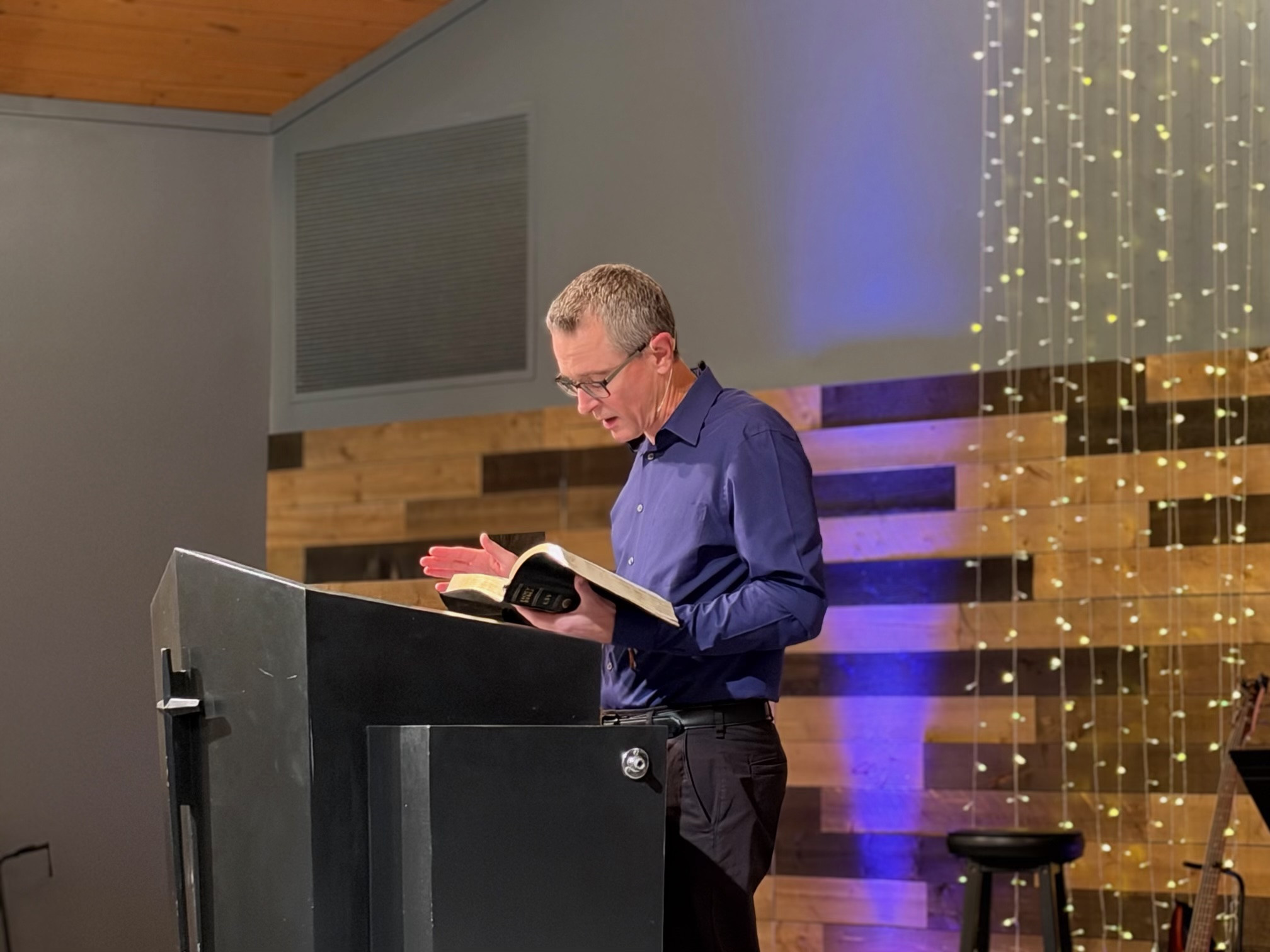
The following is a lightly edited transcript generated from the audio; it may contain small errors.
Open your Bibles to 1 Peter and look at the Word. In light of the fact that we’re taking the Lord’s Supper today, I wanted to speak about the Lamb of God. So we’re not on our series about the Christian disciplines or what we’ve called the wheel, other than the fact that the hub of the wheel is Jesus, amen.
He is the focus of all that we do. Peter chapter one says in verse 13. Therefore, gird up the loins of your mind, be sober and rest your hope fully upon the grace that is to be brought to you at the revelation of Jesus Christ as obedient children, not conforming yourselves to the former lust in your ignorance. But as he who has called you as holy, you also be holy in all your conduct because it is written, Be holy for I am holy. And if you call on the Father, who without partiality judges according to each man’s work, conduct yourselves throughout the time of your stay here in fear or reverence, knowing that you were not redeemed with corruptible things, like silver or gold, from yourlandish conduct received by tradition from your fathers, but with the precious blood of Christ, as of a lamb, without blemish and without spot. He indeed was foreordained or foreknown before the foundation of the world, but was manifest in these last times for you, who through him believe in God, who raised him from the dead and gave him glory, so that your faith and hope are in God.“
[audio unclear]
We want to talk about the Lamb who was, that is the Lamb that was foreknown or foreordained. Secondly, we want to talk about the Lamb who is, that is the Lamb manifested in time. Peter uses the word, he’s manifested. And then thirdly, the Lamb who is to come, which is the Lamb in glory. Who was, who is and is to come. First of all, the Lamb who was. Peter says here that the lamb was foreordained or foreknown. It could be translated either way. What we learned in Revelation 13.8, Revelation 13.8 John refers to the lamb and he says that the lamb was slain before the foundation of the world. This is what Peter is undoubtedly alluding to when he refers to the Lamb foreordained.
In Titus 1.3, I want you to look at something. This is intriguing. You’ve probably read the verse many times. In Titus 1, we’re coming back to Peter, by the way. In Titus 1.1, Paul says, Paul, a bondservant of God and an apostle of Jesus Christ, according into the faith of God’s elect and the acknowledgement of the truth which accords with Godliness in hope of eternal life which God who cannot lie promised before time began or literally promised before the eternal ages as we would say in our lingo he promised an eternity Now think about this. Why would God be making a promise before time? I got you. Didn’t I? He made the promise before time began. Well, who do you make the promise to? We were there. God made a promise of eternal life before time began. Because God made a promise to the Son. And this is the answer to the perennial dilemma of what’s called the theodicy or justification of God, is how can a good God permit evil? And the answer is this, is that when God decided to create, God decided to die.
When the Father determined to create, the Son volunteered to die.
And in the eternal conscience of God, and we only get a small glimpse in Scripture, what we learn is that before time began, before God brought all things into being, before He created the stars, before He created the multitude of galaxies that we now see, before this time the Father and the Son and the Spirit had a consul, if you will, and they they determined to create all things, but in order to do that, foreseeing sin, one of them must die.
So the second person of the Trinity volunteered to become the Lamb of God. So even in eternity past, within the Godhead, there was a mark, if you will, in God’s heart.
His beloved son, his servant, his elect one, the scripture says, was to come and to die for sin. In Psalm 40 it says, David says, but it’s really Jesus, the spirit of prophecy. He says, lo, I come in the volume of the book it is written of me. I delight to do thy will, O God. This has to do with the fact that the father and the son had agreed that the son would come and he would die and he would be a ransom for many. And in reward for that, the father would give the Son an exaltation and a glory, if you will, and that He would give Him an inheritance among the nations. Read Psalm 2, where God sets His King on His holy hill and He prays, He asks for His inheritance.
And you must understand this as you read many Psalms and many Scriptures, where we see The hints of this agreement, if you will, between the Father and the Son. So before time even began, there was a Lamb that was slain, but He was not yet revealed or manifested. So Peter says back in our text that he says that we were dealing with the precious blood of Christ as a Lamb without blemish and spot. He was foreordained before the foundation of the world, but was manifest in these last times for you. So let’s speak about the manifestation of the Lamb. Peter clearly had in mind what we call the incarnation of Jesus, that the second person of the Trinity took upon himself
[audio unclear]
All the way back in Genesis when Cain and Abel come before God and, and they offer their sacrifices. And it saysys that Cain brought a sacrifice of vegetables, right?
Abel brought a blood sacrifice, a lamb, and the one was rejected but the other was accepted. And what we learnrn from this is the necessity of a lamb in order to worship.
That in order for our worship and offering to be acceptable to God, there must be a shedding of blood. There must be a lamb. Then we think of the account of Abraham and Isaac in Genesis 22. You know the story, right? Abraham takes Isaac up to the Mount and Isaac’s going to be the lamb, right? He’s going to kill his own son in obedience to God. What devotion? You might think, what insanity? But he knew, God’s voice. So he’s on the mountain and he’s ready to slay his own son in obedience to God. And God’s the angel stops his hand and then what does God do? God provides a lamb in place of Isaac. And so therefore Abraham named the place Mount Moriah, because this is a place of provision. He referred to Jehovah as Jehovah-Jireh, the God who provides, Jehovah who provides. He provides the Lamb. And the idea here is of provision and substitution. Isaac was to die. God provides a substitute for Isaac. We think about the Lamb in Exodus 12 where God establishes the Passover. This is called the Paschal Lamb, whose blood had to be applied to the doorpost when the angel of Hetai came over Egypt. And when the angel saw the blood, he passed over that house. And where there was no blood applied, then he came and there was death in that house. And so this speaks of the fact that the lamb had to be sacrificed, but that the lamb provided protection. we think of the lamb in Leviticus, and really throughout the law, but mainly Leviticus 16, all these regulations about the lamb, and they all emphasize one thing, the idea that the lamb had to be a lamb without spot. And it highlights the character of the lamb, that the lamb had to be perfect, without blemish, in order to be offered to God. And this lamb provided absolution from the guilt of sin. Then we think of the lamb
[audio unclear]
a person. It’s a human being. Before it was just the Lamb. But as revelation progressed, as the Lamb was manifested more and more and more in Scripture, we see that now this Lamb had to be a person, a person that God provided, a person that was a substitute, and thus His suffering and His death were vicarious. Vicar means it is representative that this Lamb was to die for His people in their place. Then of course we come to the New Testament and we think of the incarnation, which is in some ways is most amazing revelation of the lamb. And in John 1, John says, in the beginning was the Word and the Word was with God and the Word was God. Then he says, this Word became flesh and he walked among us. Then a few verses later, John talks about the ministry of the Methodist. And when Jesus appeared, if you will, in his public ministry, John, having many disciples, saw Jesus, he pointed at Jesus, and he said, “’Behold, or look, look, look at him. ”’He is the Lamb of God, “’who takes away the sins of the world.’” So now we see not only is the Lamb a person, but the lamb is a specific person. And as we learned from John 1, the lamb was a divine and human person. The eternal word who existed from the beginning, that is before time, but who became incarnate. So the lamb is not an animal. The lamb is not merely a man. The lamb is the God-man Jesus. And it was as the God-man that he took away or bore away, the the emphasis is in the original, the sins of the world, he says. In the Old Testament, there were many rituals, as you know. And one of them was called the zezal, or the scapegoat.
And they would take two animals. One, they would kill, the other, the priest would lay his hands on the animal in prayer with the animal, and then they would send the animal off into the desert of the wilderness. That speaks of a couple things. One, it speaks of the removal of our sins. That was part of the imagery was that our sins were separated from us. Our sins were sent outside the camp, if you will, because of the slaying of the other lamb or the other goat. But it also speaks of something else, and it speaks of death and life. It speaks of resurrection, because there was a death for sin, but there was an ongoing life also. We see it also in the offering of the two birds. For those who were poor and couldn’t afford a lamb, they would allow the poor to offer two doves, and they would break the neck of one, but the other they would let go free, death and life. So in this progressive revelation of the Lamb, we see that the Lamb comes as a man, but that this Lamb is a divine man, and that He comes to remove or bear away the sins of the world.
[audio unclear]
was resurrected from the dead. In 1 Peter 1, verse 21, he says, who through him, meaning the Lamb, we believe in God who raised him from the dead and gave him glory. The resurrection of Jesus was the evidence of his power, I need you to listen to this, his power over sin. When Jesus defeated the grave, what he was really defeating was sin because is the power of the grave is sin. We die because of sin. We end up in the grave because of sin, and sin keeps us in the grave. But when sin is defeated, the grave is defeated. So when Jesus came back from the grave, this was the evidence that he had defeated not just death, but the cause of death. He had defeated sin. And as the lamb, he truly had borne it away. He had removed it so that he had conquered sin, and therefore he conquered death. This is at the heart of redemption. Verse 18 of 1 Peter 1, knowing that you were not redeemed with corruptible things like silver or gold from your aimless or vain conduct, received by tradition from your fathers, but with the precious blood of Christ as of a lamb without blemish and without spot. The resurrection of Jesus is the proof of the redemption of his people.
To be redeemed means to be bought out of bondage and bought out of slavery. That’s what it means. This means redemption means you are no longer under the power of your former owner.
No longer under the power, because the power of your former master has been broken. Thank You, Jesus. So the Lamb comes and he is slain and through his blood he takes away sin he bears it away he destroys the power of sin and the power of death and so the believer you can walk in victory and power over sin because you’re not under the old slave master. You’ve been redeemed. So when we think of the manifestation of the Lamb, in history, we see that He is a necessary propitiation. We are not acceptable to God apart from the Lamb. We have to bring the blood of the Lamb to God. And it is through the blood that our sin is removed, and hence God’s wrath is removed from us. We learned that the Lamb is a substitute for us, but the substitute is provided by God. We don’t bring our own Lamb. That is grace, amen.
God gives the very sacrifice that He requires He gives it to us. And then we think of the Lamb as bringing absolution in Leviticus, the removal of guilt and sin. In Isaiah 53, we’re reminded that through the Lamb we have a vicar, a representative. When Jesus died on the cross, he was dying for you as your representative.
Your sins were laid upon him and he was punished in your stead as your representative. It is as if you were on the cross. And God was punishing you on that cross. And that’s why you can be forgiven today. your sins were laid upon Him in your place. The incarnate Lamb bore away our sins, completely removed them from us. Hence He is a resurrected Redeemer.
[audio unclear]
That’s the manifestation of the Lamb in time, but there’s also the manifestation of the Lamb.
The Lamb who was the foreknown Lamb, the Lamb who is the Lamb in time, and then there’s the Lamb to come. And the key word there is glory. The Lamb and glory. What we learn of the Lamb to come is simply this, that He is enthroned. Look at Revelation chapter 5. In Revelation 4 there’s a worship scene where God, it just says God is being worshiped.
And in chapter 4 verse 8 it says, the four living creatures each having six wings were full of eyes, around and within. They did not rest their nights saying, hagios, hagios, hagios. Holy holy holy. Some ancient versions have it not three times, but nine times. Holy holy holy holy holy holy holy holy holy. They can’t stop saying it. They can’t stop saying it. They can’t help saying it. When they look at him, it just comes out. Hagios, hagios, hagios. Holy holy holy. Pure, pure, pure. It just comes out. It has to come out because that’s what they’re looking at. Ineffable beauty and holiness. And so they’re worshiping this God. And then in chapter 5, we have this beautiful scene where there’s a book.
And everybody wants to know what’s in the book, but no one can open the book. No one’s worthy to open the book. And so the verse 5, but one of the elders said to me, do not weep. not weep.“ Just John saying, I want to know what’s in the book, what’s in the book. He sounds like me, I want to read the book. What’s in the book, what’s in the book? No one can open the book, no one has authority. I want to know what’s in the book. And he weeps because he wants to know what’s in the book. One of the elders said to me in verse 5, Do not weep, behold, the line of the tribe of Judah, the root of David, has prevailed to open the scroll of the book and to loose its seven seals. And I looked and behold, in the midst of the throne and of the four living creatures, and in the midst of the The other stood a lamb as though it had been slain. This lamb still bears the mark of his sacrifice. Something about what John saw, and it’s not clear. Maybe there’s a blood stain on the lamb. Maybe there’s a scar on the lamb. We don’t know. But it’s not just the lamb. When he sees the lamb, he sees the sacrifice. He’s the Lamb that was slain. Seven horns, full authority, seven eyes, perfect knowledge, which are the seven spirits of God sent out into all the earth. This is the complete and perfect work of the Holy Spirit in His ministry of knowing and revealing all things. Then He came and He took the scroll out of the right hand of Him who sat on the throne. Nobody had taken the scroll of the four living creatures, and the twenty-four elders fell down, each having a harp, and golden bowls of incense, which are the prayers of the saints.” We sang the song about our prayers arising as incense, right? And I was meditating, I was praying, and I thought, this is really cool, because I’m in a prayer right now, it’s going to go into a bowl. You laugh. You laugh. But it’s true. And I prayed and I read and my prayers are being offered before the throne of God right now. Open the eyes of our heart, God. Open our eyes. It’s true. You can join this right now for your prayers. Your prayers can be in one of these bowls. It’s glorious. And they sang a new song. You are worthy to take the scroll and open its seals. Why? For you were slain. This is the lamb slain from the foundation of the world. For you redeemed us to God by your blood, out of every tribe and tongue and people and nation, and made us kings, or a kingdom and priests to our God. And we shall reign on the earth.“ So then I looked and I heard the voice of many angels around the throne, and living creatures and elders, and the number of them was ten thousand times ten thousand and thousands of thousands. John is saying, I’m not really good at math. I don’t know the number. It was a lot. In numerable. So many it cannot be numbered. They’re all saying with a loud voice, Worthy is the Lamb who was slain to receive power and riches and wisdom and strength and honor and glory and blessing. And every creature which is in heaven… Now you’ve got to notice what’s happening. The elders sing, the living creatures sing, When the angels sing, and now everybody is going to sing, every creature which is in heaven and on the earth and under the earth and such as are in the sea, that is to say all those living and all those who have died, whether they were buried in the earth or buried in the sea, all men, women, children, all will come and they will say this to the lamb, blessing and honor and glory and power be to him who sits on the throne and to the lamb forever and ever. Amen. And the four living creatures said, Amen. And the 24 elders fell down and worshiped him who lives forever. The lamb is on his throne. The lamb that was slain is now reigning, and to him is committed all judgment.” That’s what it means, that he could open the scroll, because as you read Revelation, when he opened the scroll, when he opened that book, all that happens in Revelation comes out of the book. It is the book of universal history. It is the book of all things that shall come to pass quickly. It is the book which shows us what is to be and who is in authority. The Lamb is governing the course of history. The Lamb is reigning on His throne with God. It’s glorious. This Lamb is enthroned. And this Lamb is not only a Lamb, this Lamb is a Shepherd. Now that’s a weird paradox. Think, well, these guys had mixed metaphors, you know? But that’s, God is ineffable. How do you describe the Father, the Son, the Spirit? But the Lamb, not only is a lamb, the Lamb then becomes a shepherd. He’s first a governor. He rules and reigns. But He’s a shepherd to His people. Look what it. worship scene. It says, after these things, verse 9, I looked and beheld a great multitude which no one could number. See, not good at numbers. Of all the nation’s tribes, peoples, and tongues standing before the throne and before the lamb, clothed with white robes with palm branches in their hands and crying out with a loud voice saying, salvation belongs to our God who sits on the throne and to the lamb. Salvation belongs to the lamb because salvation was purchased through the blood of the lamb. And salvation belongs to God because God is the one who provided the Lamb, just like with Abraham. And crying out, not that they need salvation, they provide salvation. They are the source of our salvation. And all the angels stood around the throne, and the elders and the four living creatures fell on their faces before the throne and worshiped God, saying, Amen, blessing and glory and wisdom, thanksgiving and honor and power and might beat you, our God, forever and ever. Amen. Then one of the elders answered and said to me, I mean this guy, I don’t know who this elder is, you know, it’s probably Peter. He’s always talking at a wrong time. I mean, can you imagine piping up right now, it’s like during this worship scene. It was Peter. Who are these arrayed in white robes and where did they come from? And I said to him, sir, you know. So he said to me, these are the ones who came out of the great tribulation to wash the robes and made them white in the blood of the Lamb. Now there’s a mixed metaphor. You pour the blood of the Lamb on your robe and instead of turning red it turns white. Praise God, Amen. Because it washes us from our sins. Therefore, there before the throne a God and they serve Him day and night in His temple and He who sits on the throne will dwell among them. They shall neither hunger anymore nor thirst anymore. The sun shall not strike them nor any heat, for the Lamb who is in the midst of the throne will shepherd them and lead them to living fountains of water. And God will wipe away every tear from their eye.“ Glory, glory, glory. And so the Lamb becomes the shepherd. One more passage. We’re going to go to Revelation chapter 20. It says, 21-1, I saw a new heaven and a new earth for the first heaven and the first earth that passed away. Also, there was no more seed than I, John, saw the holy city, New Jerusalem, coming down out of heaven from God, prepared as a bride adorned for her husband. And I heard a loud voice from heaven, saying, Behold, the tabernacle of God is with men, and He will dwell with them, and they will be His people. God Himself will be their God. And God will wipe away every tear from their eyes. There will be no more death, nor sorrow, nor crying. There will be no more pain, for the former things have passed away. So the time is coming because of the Lamb that there will be no more suffering, no more physical pain, no more broken bones, no more diseased body. There will be no more emotional scars, no more broken hearts, no more tears, no more mental suffering, no more anguish, no more anxiety. Every aspect of pain and suffering will be completely born away because of the work of the Lamb.
[audio unclear]
He will wipe every tear from your eye. It’s a glorious God and a glorious Lamb. Verse 22, Behold, I saw the temple. This is the great, the great city that came down. So remember in chapter 6, He said that the Shepherd, Shepherded them in the temple, but now we have further revelation. 21, 22, but I saw no temple in it, the holy city. Why? For the Lord God Almighty are its temple. The city had no need of sun or the moon is shining in it, for the glory of God illuminated it. The Lamb is its light. The nations of those who are saved shall walk in its light, and the kings of the earth bring their glory and honor into it. Its gates shall not be shut at all by day, there shall be no night there. They shall bring the glory and the honor of the nations into it, but there shall by no means enter it anything that defiles or causes an abomination or a lie, but only those who are written in the Lamb’s book of life.” I’m sure hereafter the Lamb is the one who determines the eternal destiny of all.
So as we close, as we take this supper which represents this broken Lamb, as we break the bread. We remember that the lamb was slain. As we take the wine, we remember that the blood was shed. We have to ask ourselves this, do, let me ask you this, do you have a lamb when you come to God? Do you have a lamb? Have you applied the blood of the lamb to the door post of your heart? Has your guilt been removed? Has your soul been redeemed by the precious blood of the Lamb? Have you washed your robes white in the blood of the Lamb? If so, then you may come. And I love the Lord’s Supper because it’s a beautiful picture of the Supper we’re going to have, the the marriage feast of the Lamb. But we have to come with the Lamb. The Lamb must be ours. His blood must be applied to our lives. which means that we must have faith. We must have faith. We must believe. And if we believe, we can come. And we can just as some day we’re going to enter this glorious city where the lamb is the temple, even now we can enter into God’s presence. Amen.
Because of the blood of the lamb, we can partake of this meal, which is symbolic of His death, symbolic of the future meal we’re going to have with him. And if you believe, you may come. And then if you believe, you must worship. If you believe in the lamb, remember this morning that whatever is going on in, your life, Jesus has the book. And whatever is written therein, he will do for the good of his people and his own glory. He is the ruler, the governor, and the shepherd of your life.
Worship Him. Amen.
Let’s stand. Worthy is the Lamb that was slain. To receive blessing and honor and glory and power, to receive riches and wisdom and strength and honor and blessing. For Jesus we acknowledge that you are the Lamb of God, that you are the Lamb that was slain, that you are the Lamb that was foreordained, that you are the Lamb that was revealed, that you are the Lamb that is enthroned. And we worship you, Jesus, the Lamb of God slain from the foundation of the world. And we thank you that you became our Lamb. And I ask God that if anyone is here doesn’t know you, that by the work of your spirit they might apply the blood of the Lamb to their hearts by faith, by faith, receive the Lamb by faith.
And then I pray Lord that they would come and worship. That through the eye of that same faith that receives the Lamb, through the eye of that same faith we would see the Lamb enthroned as He truly is. And I ask that our worship and our prayers are in our prayers, Lord, but go before you.