
January 8, 2023
The Knowledge of Knowledge Part- 1
Dr. Michael A. Bond · Colossians 1:9–14
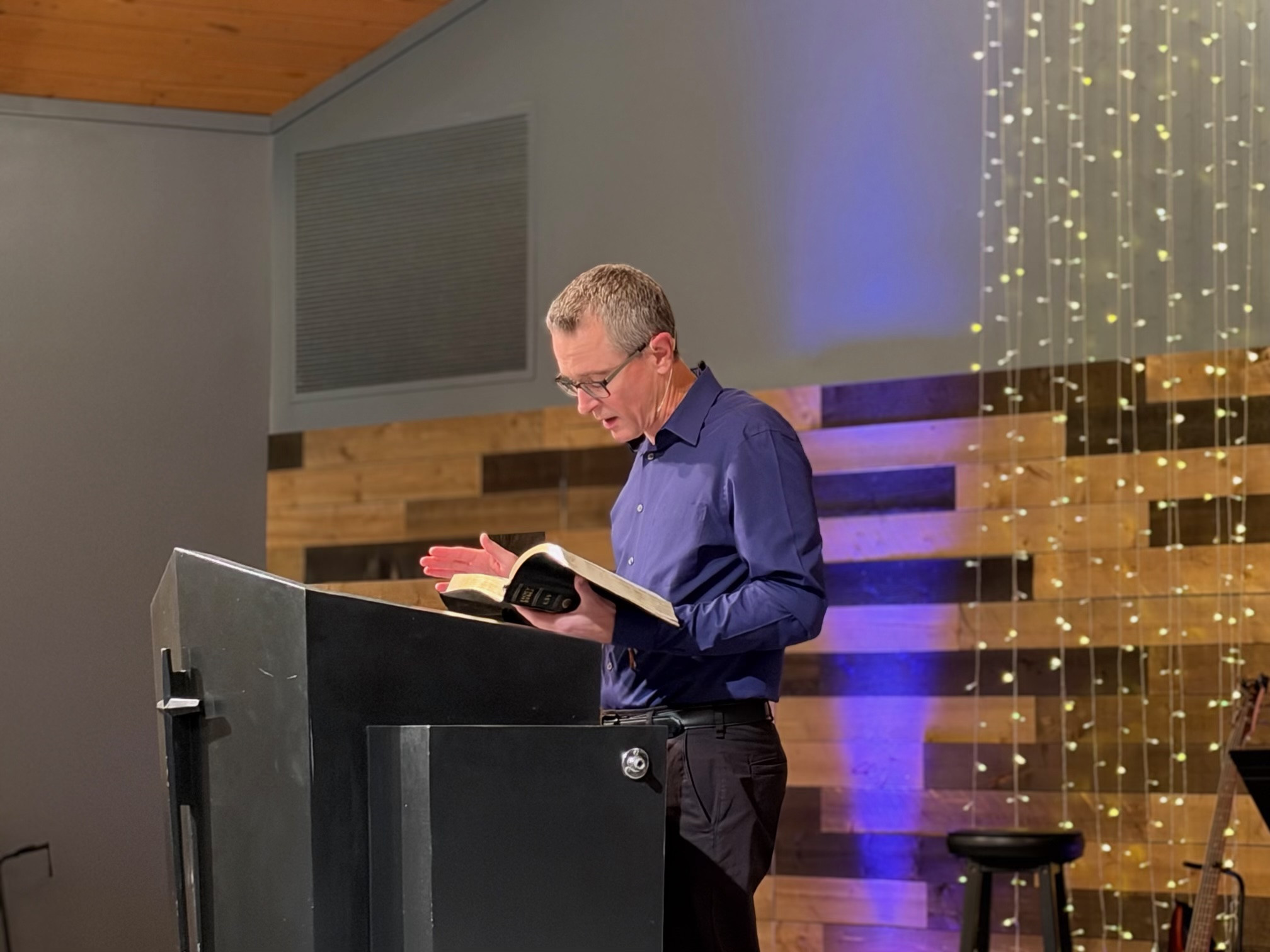
January 8, 2023
Dr. Michael A. Bond · Colossians 1:9–14
The following is a lightly edited transcript generated from the audio; it may contain small errors.
Starting in verse 9 of Colossians 1, it says:
And so, from the day we heard, we have not ceased to pray for you, asking that you may be filled with the knowledge of his will in all spiritual wisdom and understanding, so as to walk in a manner worthy of the Lord, fully pleasing to him: bearing fruit in every good work and increasing in the knowledge of God; being strengthened with all power, according to his glorious might, for all endurance and patience with joy; giving thanks to the Father, who has qualified you to share in the inheritance of the saints in light. He has delivered us from the domain of darkness and transferred us to the kingdom of his beloved Son, in whom we have redemption, the forgiveness of sins.
(Colossians 1:9–14)
Let’s pray.
Father, we thank You that You are such a good God, that You do amazing works like reuniting father and daughter. We thank You that You are a God who restores, who reconciles, Lord. And we thank You that through Your Son Jesus we can be reconciled to You. We thank You, Lord, for blessing us with another year of life. May we use it to Your glory. We thank You for the privilege of even having a basement, and a dry one at that, that we can meet in. We thank You, God, that You provided the resources and the finances, through the generosity of the people here, to be able to get a new floor that we are in much need of. And we thank You that the church just has so much going on, that the floor is not just to be used on Sundays, but it’s going to be used almost every single day of the week. So we thank You for the ministry going on here. We pray, God, that whatever comes our way in 2023, that we would stay faithful to You, that we would walk with You every single step of the way, that we would lean on You, Lord, and continue to put our hand to the plow and not look back. We do all these things for Your glory.
I was actually thinking about it when we were singing here. I probably preached more down here in this basement than I actually have upstairs, because I led the junior high ministry for many, many, many years, and we met here, so I’m quite familiar with this setting. Maybe some of you aren’t as familiar with it. Anyway, one of the good things about us having church down here this week is that regardless of what the acoustics are, once we get back upstairs, it’s probably not going to be worse than this. So we’ve prepped you all pretty good for the new floor. Anyway, we are excited. We would ask you to pray that that goes well this week, because we’ve pretty much shut down most of SCCHE. They were gracious to kind of help with that and rearrange some schedules. Just that everything would go smoothly, and whatever kind of color test they have to do, that just the right color would get chosen, and all that stuff, and the grinding and all that, and it just would be a witness to the company. They’re going to have multiple workers up here working. So anyway, pray that it really is smooth and it goes well.
All right, so we’re in Colossians chapter 1, continuing on. Now the first verses, 3 through 8, were really an example of a thanksgiving prayer. And a lot of times when we’re looking for ways to pray, one of the go-to’s is the Lord’s Prayer, which is definitely good, and you can even break that down phrase by phrase. But there are many examples we have, including two here in the first chapter of Colossians, where Paul is praying for a different church, in this case, the Colossian church. Verses 3 through 8 is really an example of a thanksgiving prayer. So if you’re looking for ways to pray, what better than to just simply pray the prayers of Scripture, right? So that’s verses 3 through 8. Now we get to verses 9 through 14, and that’s more of an example of what we’ll call intercessory prayer, where now he’s not just giving thanks for the Colossian church, but he’s actually interceding and asking things for the Colossian church.
One of the key things that we’re going to see through Colossians chapter 1 and 2, probably really through the whole book, is this key word: knowledge. I’m talking about like I normally do, but if you can’t hear me in the back, just like put your thumb up and I’ll speak louder, because I want to make sure you all can hear me. But this key word knowledge—most of the time when you see that word knowledge in the New Testament, it’s the Greek word gnosis. And the thing is, when you talk about knowledge, there’s a real fancy word called epistemology. And it seems like it’s probably been around for a long time, but it seems like it came on the scene more and more in the last 15 to 20 years. And it really is just the theory of knowledge. The theory of knowledge. Like, what does that mean? It’s basically, how do we know what we know? How do we know what we know? Most people put it under the category of philosophy. If you try to read some of it, it’s pretty complex and crazy. But if you just wanted to boil it down to one little handy sentence: how do we know what we know?
René Descartes, he has the famous cogito ergo sum. Anybody know what that means? “I think, therefore I am,” yes. Just knowing that does not lead to Latin scholar, by the way. You need to know much more than just that little phrase. But his whole point was he was thinking about existence. How can I prove that I exist? And if you read through his first principles, where he lays it out, it really boils down to that’s where he got it, to the point of, well, the fact that I’m thinking means that I’m existing. And he takes it a little bit further and even adds a little Latin word before it: dubito, ergo cogito, ergo sum—like, I doubt, therefore I think, therefore I am. The fact that I can—my existence means I exist. I mean, I’m a thinking being, which gets into the whole idea of how do we know what we know. So there’s different ways we can gain knowledge. There’s reason. There’s experience. There’s the senses. There’s revelation. But when we get to the Scriptures, what Paul’s going to be attacking and looking at is this idea of a true knowledge versus a false knowledge.
So if you look in Colossians chapter 1 and verse 9, he says, “And so, from the day we heard, we have not ceased to pray for you, asking.” So this is his intercessory prayer. This is what he’s interceding before God for the Colossians. This is what he’s asking: “that you may be filled with the knowledge of his will in all spiritual wisdom and understanding.” Now there, that word knowledge is actually a different Greek word. Still gnosis, but he puts on a little prefix, if you will, epignosis. Now, usually when Paul uses this word, epignosis, as opposed to the normal gnosis, it has the idea of knowledge regarding God the Father, Jesus, and salvation in general. So in other words, it’s a knowledge that leads to life. Well, why is this important? Why is he essentially going to spend chapters 1 and 2 dealing with who Jesus is and this concept of a false knowledge versus a true knowledge? It’s because what is called Gnosticism was creeping into the Colossian church. It was creeping into the Colossian church. And we can see an aspect of it in chapter 2. If you look at verse 8, look what he says:
See to it that no one takes you captive by philosophy and empty deceit, according to human tradition, according to the elemental spirits of the world, and not according to Christ.
(Colossians 2:8)
So there is this false knowledge, or this Gnosticism, that was creeping into the Colossian church that Paul gets word of, and now he’s writing to combat it and set the record straight.
What is Gnosticism? We’re going to look at it a little bit, because the Gnostics, they come along, and they say, in order to really have knowledge, you have to have this special knowledge, or this hidden knowledge. And then you’re like, well, how do I get it? And they’re like, well, you get this special knowledge through us. Well, that’s convenient, right? So to understand Colossians in the backdrop of what’s going on, we kind of need a little primer on Gnosticism, like Gnosticism 101. And you’ll see it plagued the early church with the Colossians. 1 John deals with it as well.
So what do the Gnostics believe? Here’s what they believe about creation. The universe is not good. Why is the universe not good? Because it was not created by an all-good God. It was actually created by a lesser god, what they would call a demiurge, that fashioned the world in ignorance. One of the Gnostic texts says that the world came about through a mistake, for he who created it wanted to create it imperishable and immortal. He fell short of attaining his aim. So in this scenario with the Gnostics, the God of the New Testament and the Old Testament is not like the highest being. He’s almost like a demigod, if you wanted, a lesser god that kind of messed things up. The result is this material cosmos plagued with ignorance, pain, decay, death. Like everyone, here’s the thing, everyone always tries and has to deal with, why is there suffering in this world? Why is there pain? Why is there death, right? Every worldview has to have, or should have, an answer for that. Now I’d submit to you that the Christian worldview has the best answer. Amen. I mean, it has the best reason for why we’re in the mess that we’re in.
But the Gnostics believe that this demigod—that there was some pre-cosmic disruption in the chain of beings, you know, there’s this chain of beings, and this disruption occurs, emanating from this unknowable high supreme being, which results in this substandard deity, which is what they would say is the God of the New Testament. And this creator god, he’s not the ultimate reality, but he’s just the degeneration of the unknown and unknowable fullness of being. And then so what happens with human beings? Human beings, at least some of them, are in the position potentially to transcend their imposed limitations, even if the deck is stacked against them. So locked within the material shell, because the material, the universe isn’t good, the physical isn’t good, the material isn’t good. So locked within our physical bodies, we have this, what they refer to over and over again, as a spark. This spark of the highest spiritual reality that the creator god accidentally infused into humanity. But because we just have that tiny little spark, with the right knowledge, we can move past our ignorance and come to the true knowledge.
Now how do they view Jesus? They don’t see Him as a Redeemer. They don’t really have any aspect of the resurrection, no idea or concept of Him dying on the cross for our sins. He is really one who comes with a spiritual message of self-redemption. So he comes, and in this view, Jesus is like a higher level of intermediary beings. And He’s not as a sacrifice for sin, but as a revealer. Well, what’s He revealing? Well, He’s revealing to us this knowledge. So the big sin, if you’re a Gnostic, the big sin is the fact that we have ignorance. We need to be rid of our ignorance. What about salvation? Well, Jesus dispenses this knowledge to us to awaken us from the ignorance that we’re trapped in. So the body is a prison, the spirit alone is good, and salvation comes by discovering the kingdom of God within us.
In this view of Gnosticism, Jesus is really more like a wise person. He is not our crucified Lord and Savior. He didn’t die on the cross for our sins. He wasn’t resurrected three days later. Salvation comes again from the kingdom of God being discovered within us—figuring out what this hidden knowledge is and coming out of ignorance. He’s more akin to the Gnostics. He’s more akin to Buddha or Confucius or Lao-tzu. The Jesus actions in life aren’t anywhere near as important as His sayings. Who cares what the Buddha did, if you talk to a Buddhist, really? We want to know what the Buddha said.
Interestingly enough, in Gnosticism there’s actually two branches when it comes to the view of sin. The first is hedonism, which means do whatever makes you feel best, whatever brings you the most pleasure. Why would they have that view? Because they would say that since the material flesh is fallen and evil, it can’t be stained any worse than it already is. So why not go delight in the pleasures of the world, however you might want. But there’s also another view, and it’s really the exact opposite. It’s the one that Paul is combating in Colossians, and it’s more of an ascetic view. That would be abstain from every form of pleasure. Deny yourself, deny yourself, essentially. Deny yourself, with the idea being, because the flesh is so evil, we don’t want in any way to give in to its sinful pleasures, or even some basic pleasures. So that’s what Paul is combating back in Colossians 2 again, where he says, “See to it that no one takes you captive by philosophy and empty deceit.” We get to it a little bit further in verse 20 of chapter 2:
If with Christ you died to the elemental spirits of the world, why, as if you were still alive in the world, do you submit to regulations—“Do not handle, Do not taste, Do not touch” (referring to things that all perish as they are used)—according to human precepts and teachings?
(Colossians 2:20–22)
He’s really quoting the view that they were falling into: you can’t do all these different things. And Paul is saying, hey, you’re falling into this, the asceticism of Gnosticism.
The Gospel of Thomas, which is not in your Bible—hopefully you know that—is 114 sayings of Jesus. I forget when it was discovered. It was probably within the past, not too long ago, past couple hundred years. There’s no storyline. It’s almost like the proverbs of Jesus, if you will, 114 sayings of Jesus. Now, when I was doing my undergrad at the University of Missouri-Columbia, and I was a religious studies major, it was like all the rage, like the Gospel of Thomas. It was like on the scene, and we didn’t have to read any book of the New Testament, even though I was a religious studies major. I was never required to read a single book of the New Testament or a single book of the Old Testament, but we were required to read the Gospel of Thomas, all right, and write papers on it. And at the time, people were claiming this is the earliest writings about Jesus, right? This is the exact record of what He said. Now people were pushing back at the time, but since then that theory has pretty much been completely debunked. Most scholars don’t give it much credence, because they kind of picked and chose from the gospel. If you read the Gospel of Thomas, you’d scratch your head on it, but you’d also see it. They kind of copy and pasted from the four biblical Gospels. But here’s how the Gospel of Thomas begins: “These are the secret sayings which the living Jesus spoke and which Didymus Judas Thomas wrote down.” And he said, “Whoever finds the interpretation of these sayings will not experience death.” So I noticed the emphasis on the secret sayings, right? And then whoever finds the interpretation, whoever has the knowledge, whoever has the understanding, will not experience death. So already we see this emphasis on the secret knowledge.
Valentinus, he was a Gnostic teacher in the early second century. He said that Christ is the Paraclete, or the helper, or the comforter—is the Paraclete from the unknown who reveals the discovery of the self, the divine spark within you. So there’s that spark word that you’ll see a lot of if you get into study of Gnosticism. So the heart of the human problem for the Gnostics, it’s not sin, it’s ignorance. Ignorance. So what is needed is knowledge, right? If you’re ignorant, what’s the remedy for ignorance? It’s knowledge, right? But it’s not just any knowledge, it’s a special knowledge that you need to be free from your ignorance. With Gnosticism, there’s no redemption, there’s no repentance, there’s no salvation, there’s no reconciliation with the Father. It’s you personally gaining this knowledge to be free.
Now, how could something like this happen so quickly in early Christianity? Well, Gnosticism really was around in various forms before Christianity. There’s actually a form of Jewish Gnosticism, actually a form of Buddhist Gnosticism. There’s actually a form of Hindu Gnosticism. So really, Gnosticism and Christianity kind of just mixed together. The Gnostics came along and saw an opportunity to get mixed with Christianity, and it kind of mixed and blended together, kind of like a syncretism. But here’s the other thing: the devil loves to mix in error with the authentic. And the devil doesn’t mind mixing with Christianity if at the end of the day it’s no longer Christianity. So yes, you can read the Gospel of Thomas and you can see elements of truth. Even some of those verses, like I said, are just copy-paste, straight from the Gospels. But it’s not Christianity, it’s not the truth. So the devil, listen, he’s fine with you believing in many gods. He’s fine with you believing in no God. He’s fine with you believing in a false god. If you can have misperceptions and misconceptions about Jesus, since so many of them—because you’ll be worshiping, and in all those scenarios, you’re not worshiping the one true God, and you’re on a path to hell. Satan’s okay with that. The devil loves to mix truth and error so as to come up with a concoction full of lies and falsehoods.
And to be truthful, we’re having to help him out sometimes, right? Like sometimes the devil can just take a backseat to the way our flesh likes to act. We can latch on to whatever idea or concept that we want to. I had a friend when I first got saved. He always wanted a corner on the market of truth. I didn’t see this for many years until I looked back on it, but he always wanted a corner on the market of truth. And he was always looking for that hidden kernel of knowledge that he could have, and then he wanted to be able to share with others, and then people would think he was like super spiritual and on this level of other people because he had this little kernel of knowledge of truth. It took me a while to realize that, but it was like whenever there was a new edge, he was right there, riding right into it. But looking back, I realized it was really like a form of Gnosticism, like this knowledge that would free you from your ignorance. Even when the Bible Code—some of you all remember that came along? And it was like all the rage in some circles. It was a bunch of hooey. But he was right there, eating it hook, line, and sinker. And I was just like, I’m shaking my head, like the Bible Code was a form of Gnosticism. This hidden knowledge—again, they try to use the Scriptures—this hidden knowledge, finding in the Old Testament that will reveal what God was going to do, right? And it was all these mathematical equations and all these different things. And it was all a bunch of falseness. So things quickly creep in if we’re not on guard for the truth, if we’re not on guard for falsehood, and making sure it doesn’t creep in.
It gives me a little bit of hope, the fact that it actually started to creep into the early churches. Guess what? What does that mean for us? If they had the apostle Paul there, if they had a great man of God like Epaphras, we can be susceptible as well. Yeah, right? So that should be a little bit of a wake-up call for us, that any church anywhere can be susceptible to falsehood, heresy, untruths coming in its midst.
I know a church. This goes back probably 10–15 years, and they let, probably initially unbeknownst to them, they let a false teacher into their midst. You know, in churches generally it can be hard getting people to serve in different positions, and this person came in and was willing to teach their Sunday school. He was a gifted teacher, but he was a gifted false teacher. And so he came in teaching false things about the Godhead and about all sorts of different things. And guess what it ended up doing? Because they did not confront it, because they didn’t deal with it, that church ended up dissolving, and it no longer exists. And I would comment, it was that one person, because he came in and created a rift and created division. Now what should the elders of the church have done? What should they have done? They should have guarded. And they should have confronted, they should have guarded, they should have dealt with that situation, dealt with that individual. A little leaven does what? A little leaven leavens the whole lump, right? So all it takes is a little bit of falsehood, it takes root, and then it just spreads out, right? You ever put like, you know, like a little drop of food coloring in water? I mean, it’s kind of cool to watch, right? Little drop, and just one little drop, and then it kind of splashes down, but then you can just see the effect of it move throughout and color the entire water, right? Doesn’t take even much to stir it, and it’s instantly mixed in, right? Red dye with the pure water, and then it’s mixed. So don’t underestimate the danger of false teaching.
I was coaching Trinity’s 14U basketball team yesterday. The head coach had to be somewhere else. I was coaching the team. Now how many players do you need to play a basketball game? Five. Guess how many we had? Five. Not ideal. So we’re there with our five, and I’m talking with the head coach of the other team before the game. And I’m like, yeah, we have three other girls that can’t make it today, and one of our girls is injured, so we’re down to five. And I can see that he liked that. I like it too if I was him. And so he’s like, you know what we’re going to do? We’ll take—you know, he didn’t really say it like this, but what he did say is kind of saying, we’ll take it easy on you. He’s like, I’ll use some of my timeouts to give you all a rest. And I’m like, you know what? You don’t need to do that, because I’m thinking to myself, he thinks he’s going to like walk all over us. We ended up beating them. He took a timeout for us in the first quarter, but he didn’t take one in the second. And I don’t blame him, and I told him he didn’t have to, but everything changes once you lose the game, right?
Here’s the thing, sometimes—because I was texting the head coach, Coach Matt, I was texting him—sometimes we underestimate our opponent, right? Like he underestimated us. And he had, I think he had like 10, but he probably had eight that he was normally playing. And he thought, oh, five, I can take five, no, really good. Underestimated the opponent. And sometimes we underestimate our opponent. Listen, don’t underestimate the danger that false teaching can have. Because sometimes people are like, what’s the big deal? What’s the big deal? Well, distorting the Christian faith is a pretty big deal, right? We’re talking about people’s eternal souls on the line, people being damned to hell for believing falsehood and error and heresy. It’s a very big deal, so don’t underestimate our opponent. Our opponent, one, our flesh, is more than willing to deceive us. We are willing to deceive ourselves and believe a whole host of things if we’re not walking right with the Lord. But then two, the devil is crafty. He’s very crafty, so we need to be on guard.
All that is good, here’s the thing. Knowledge is good. Knowledge is good. So Christians aren’t opposed to knowledge. I mean, in fact, we’re very much supportive, okay? I’ve got enough degrees behind my name. I am very much a fan of learning and education. I taught Latin for 20 years in different school settings, so I’m very much a fan of learning and knowledge. If you look at the different thinkers for the last few thousand years of Christianity, the scientists, the engineers, the philosophers, the theologians, the vast majority were believers. And they weren’t just believers in name only. They were legit, solid, strong believers. And a lot of times their pursuit of knowledge in a particular field, they strove for it because they knew that there was a God who had set up an order to His universe, and that if you scratched long enough and dug far enough, the answers were there. So they scratched and they dug, and they’ve given us amazing technology and advancement that we have today, but they were basing it on the fact that there is a God that controls the universe, that rules the world, that He set up an order to the universe, and that He has a divine revelation, but there’s also a natural revelation. So knowledge is good. Look at Hosea chapter 4 for a moment.
Hear the word of the LORD, O children of Israel, for the LORD has a controversy with the inhabitants of the land. There is no faithfulness or steadfast love, and no knowledge of God in the land; there is swearing, lying, murder, stealing, and committing adultery; they break all bounds, and bloodshed follows bloodshed. Therefore the land mourns, and all who dwell in it languish, and also the beasts of the field and the birds of the heavens, and even the fish of the sea are taken away.
Yet let no one contend, and let none accuse, for with you is my contention, O priest. You shall stumble by day; the prophet also shall stumble with you by night; and I will destroy your mother. My people are destroyed for lack of knowledge; because you have rejected knowledge, I reject you from being a priest to me. And since you have forgotten the law of your God, I also will forget your children.
(Hosea 4:1–6)
So notice what he says: there’s no faithfulness, steadfast love, knowledge of God. And what’s the result? Verse 2: swearing, lying, murder, stealing, committing adultery. Right? Then it goes on, verse 4. “My people are destroyed for lack of knowledge.” What’s the knowledge? Hosea here, by inspiration of the Holy Spirit, he’s not talking about math and science, reading and arithmetic. He’s not talking about those things. What is he talking about? The knowledge of God. The knowledge of the Holy. And what happens when we don’t have that knowledge? Well, we get what we just read in verse 2, the swearing, the lying, the murdering, the stealing. So we have to have—yes, knowledge is good, but guess what? It has to begin with God Himself. We have to have the right knowledge of who God is. If we don’t have a knowledge of the Holy, then everything else will get off the rails, right from the get-go. So we have to know God. We have to know God. Like, not just know Him intellectually, but know Him, like truly know Him. Not just be able to—and this is what we did with my undergrad, hundreds of times in the classroom—it’s like you put God on the examination table, right? And you kind of slice Him and dice Him however you want, right? It’s like we put ourselves above God. And we try to figure out and say what He is and who He is. No, He is the Revealer. He is the One who reveals Himself to us. And then we receive that knowledge and accept it. And not only do we accept it, but we grab ahold of it. For in Him is life. In Him is life. So we have all of our knowledge at the root, at the foundation, starts with God Himself. And God in His grace and mercy and love reveals Himself to us. He is a good God who reveals.
So Proverbs 1:7: “The fear of the LORD is the beginning of knowledge.” It’s the beginning of knowledge. So yeah, you want to walk in a right way before God, you have to know Him. You want to walk in knowledge, in true knowledge, guess what, you have to submit yourselves unto God. How does that occur? By trusting in the work that His Son did for you on earth. Jesus Himself laid down His life so that you could have life. Yes, we do have a problem. It’s not ignorance. It’s sin. We have a sin problem. But we have a God who solved the sin problem. He solved it through His Son Jesus. So because that problem has been solved, well, guess what? Eternal life is offered to each one. The gift of God is offered freely to all who would come in repentance.
There’s a place for knowledge. I went to one of the early churches I went to when I first got saved. It’s a great church. It’s still rocking and rolling. And they’re doing great things. But one of the things that the pastor would regularly say is, look what an uneducated man like me can become. It was almost like a pride in the fact that he wasn’t educated. Now, there’s probably one or two things. But the message that at least was communicated to me was, education was not important. And it was almost like there’s a spiritual side of things, and then there’s a knowledge side of things. And as long as you’ve got the spiritual, the knowledge isn’t that important. It’s almost like it was a false dichotomy, if you will. That’s not good. Now, God can do many, many great things. There are many people that don’t have credentials behind their name or have degrees. Absolutely 100% total truth. But having said that, education and us gaining knowledge is really important. When it’s time to build a bridge across a mile-wide river, I mean, I want the engineer who has the degrees behind his name and who has the experience, has worked on a couple of group projects, right? I don’t want the guy that stands up and is like, well, I’m not a very educated engineer, but I got a pretty good plan for the group, right? And when it’s time for me to climb onto the operating table, I don’t want the person who’s like, I’ve watched a few videos on YouTube, and I feel like I think I got the hang of this. No, I want the surgeon who went to medical school, who’s done his residency somewhere, you’ve seen that surgery done, you know, hundreds of times, right? Yeah.
The idea with the liberal arts education—like that’s what most people when they go to school, they’re going for a liberal arts, it’s a bachelor of arts, right? Even though you don’t even have to take an art class, how does that work? Bachelor of arts, though. But what’s the idea behind that? The idea behind a liberal arts education was that word there, liberal, which now means a different thing to us today, right? A little conservative, but originally that word comes from the Latin word for “free.” And what the idea with the Roman word was, they wanted an education for every free citizen. They wanted them to be a citizenry that was well educated. Why? So that they could be a part of the public discourse and make decisions accordingly, make wise decisions to the best of their ability. They felt that an educated citizenry was the best way to set up a government and to run a society and to rule a country, right? So the Bible affirms knowledge is good, but it has to be a knowledge that is true, righteous, and pure.
So God bless many of us to get a bachelor’s degree or an associate’s degree. Many of the classes I took, they weren’t true, righteous, and pure. I mean, I remember taking a social inequality—this was back in the late ’90s—taking a social inequality class. And all it did was bash me as a white man, right? And all sorts of falsehoods being put out there. And class after class, even my literature class that I took, reading all sorts of junk and nonsense and trash. It was not true, righteous, and pure.
And here’s the thing, sometimes we eat from the tree of the knowledge of good and evil, and it’s like we pat ourselves on the back for all the knowledge we’ve just gained, when it’s rubbish that we’ve gained. Like you can gain knowledge, but some knowledge just isn’t helpful. Like sometimes I see a term or run across a term and I can tell that it’s probably like some type of sexual innuendo. I’m like, there’s going to be no benefit to me Googling that weird term. I’m going to gain knowledge. But it is not going to benefit me or anybody else. So we’ve got to be careful what kind of knowledge we’re eating. And a lot of times what we’re doing is we’re chewing on the fruit of that nasty knowledge. We’re chewing on the fruit, it is false and baseless and has no benefit whatsoever to us. What the Bible doesn’t affirm, what it doesn’t affirm, is this hidden knowledge or special knowledge. We’re going to look a little bit more into it next week. Paul even uses a couple of terms that will be very beneficial to us understanding. But here’s the thing. When we’re talking about eating fruit, let’s eat fruit from the tree of life. Two trees in the garden. More knowledge doesn’t equal more spirituality. Let me say that. More knowledge doesn’t equal more spirituality. But here’s the thing: less knowledge doesn’t equal more spirituality either. That happens. Right? We don’t just want knowledge for knowledge.
Now, when I first got saved, I just felt like, it was kind of like the Wizard of Oz, the other scene, it goes from the black and white to the color, you know? She opens the door and everything. I mean, that’s what I felt like when I got saved. It was like looking at the world in a completely different way, and it was like beautiful and amazing. Well, guess what? Knowledge for knowledge’s sake, that is not beneficial. That’s not beneficial. When we are pursuing knowledge, what we’re really doing is we are pursuing to know God more. Even learning about His creation. Like I was astounded all of a sudden now, even in my least favorite classes, like I was like, okay, but geology, and learning about a God who created this world and how He created it and how He formed it, right? And all those different layers of rock I’m thankful I don’t have to know about anymore. I mean, He put them there though, right? He formed them, He put them there, and we came up with different fancy names for them that I had to be tested over. But we want to talk about knowledge, because not knowledge for knowledge’s sake. We’re aiming for a knowledge of the Holy. And if we want to grow spiritually, more knowledge does not equal growing spiritually. But guess what? God uses the knowledge to help us grow. And so then it becomes a question of what’s the knowledge that we’re going to pursue, and what knowledge are we going to ingest to help us grow in our relationship with the Lord. And so it’s kind of like the two trees, like which one are we going to eat from, right? Tree of life, tree of the knowledge of good and evil. Or even from that bad tree, I mean, we’re gaining knowledge. There’s all sorts of junky knowledge out there. All sorts of crazy different terms people are willing to use when that doesn’t help us grow in our relationship with the Lord. But we have the tree of life on the other side. And eating from that tree is going to help us grow in our relationship with the Lord. We’re gaining knowledge that aids that.
So some of these things, I mean, it’s things that you’ve heard before, but we need to be reminded of. It’s like regular intake of the Word. I was talking with a brother at lunch a while back. And one of the things that we had to do at seminary is we had to take this class. And you read through the Bible in a semester, so like 16 weeks, you had to read through the entire Bible. That’s a pretty good pace. But then at the end, you had to take this test over the entire Bible, and I’ve mentioned this before, but you had to take this test over the entire Bible. You had to pass the test, and I’m not just talking like, you know, 70%, like you had to kind of pass it with flying colors, and all it was was based on the Bible, boom, right here. Like if you read this and you knew it, you could pass the test. But there’s a lot of info here, right? I mean, if you could come up with 100 questions, it would be hard to answer. Oh yeah. Yeah, right? Okay, well, my seminary did that. I mean, some of them were sort of easy, but some of them covering all sorts of topics, all sorts of categories. But again, if you knew the Word, you could pass the test. Why? It kind of makes sense, right? Because it’s wise to make sure that the future pastors of America know the Word of God, right? So you don’t want to be rolling out guys that don’t know it.
Regular intake of the Word. Yes, just because you know certain facts about the Word, that doesn’t make you more spiritual, like brothers and sisters. “Sanctify them in the truth,” Jesus tells us in John 17. “Sanctify them in the truth.” And then He says this: “Your word is truth.” And many believers, many believers, many believers, myself included, when we’re in this Word and we’re ingesting it and we’re eating from the tree of life, it has a sanctifying effect. Amen. Go a time without staying in the Word, what happens? Exactly. We start going downhill. Why? Because we’ve got to feast. We’ve got to have the true feast right there. So regular intake of the Word, that includes reading the Word. But there’s also other things like regular prayer with the Father. I mean, it’s two-way. You’re talking to Him. He’s talking to you. Regular intake. Reading the Word. Praying. Being in community when you’re with your brothers and sisters in Christ. That’s why we have the life groups. Being in community where you’re studying the Word. That’s why we have the Bible studies. Even just getting involved. Plugging in and serving somewhere. That helps you grow. That helps you grow.
I mentioned that I started down here many years ago. When I first came back from college and was looking for an avenue maybe to serve, Tim Morgan at the time, who was running the St. Louis Teen for Christ, he’s like, hey, we have a need for the junior high ministry. I was like, the junior high ministry? Like, who do you think I am? Well, he knew exactly who I was. I’ll take a look at that. But it taught me, and it stretched me, and it caused me to grow. Why? Because I really had to be in the place where I was seeking the Lord and knowing Him, and I was ministering to other people. It is hard to minister to other people if you’re an empty vessel, right? So serving, even personal study, personal reading. I saw some people talking about, you know, the New Year’s resolutions. Those are all good stuff, and people talking about I want to read 12 books this year, or 20 books this year, or 50 books this year. Like that’s good. You’re putting yourself, if you’re choosing from the tree-of-life books, right, you’re putting yourself in a position to grow spiritually.
Here’s the thing, in conclusion: all knowledge has to be submitted to the God of the Word. Amen. All knowledge. So, all knowledge, it bows before the supremacy of Christ, and it points to Him as the Savior. God determines what is true and accurate. He has been gracious to give it to us right here. He has been gracious to give us some of the greatest minds. And it just blows me away. Even some of the greatest minds now that are either atheist, downright hate God—like that’s His common grace that He gives, to come up with some of the most amazing things. They’re, in a sense, glorifying the Lord through their works, through their knowledge. Like they’re using the ingenuity that comes from God Himself to come up with some amazing technologies, some amazing surgeries, and all sorts of different things. But God determines what is true, accurate, and right. Anything that doesn’t line up with the Word, we reject it. We don’t give it a second thought, we reject it. We are fed a constant barrage of lies about the world, and the moment you walk out of that door, the barrage comes. Maybe even right now, the barrage comes. You’re fighting a fight, a spiritual fight. You have a spiritual enemy. So we hold everything up to the light of Scripture, because then it’s exposed for what it truly is. We hold it up to the light of Scripture, see if it passes the test of Scripture. When we start to believe certain things, we hold it up to the Scripture. If we’re tempted to believe certain things, we hold it up to the Scriptures. That’s the standard. Why? It’s God’s Word. He said it. It’s true. And so there’s a lot of false knowledge out there. There’s a lot around under various names dispensing their false knowledge. We have to reject it.
And so let me end with this. God in His mercy and grace sent His Son Jesus. “For God so loved the world, that he gave his only Son, that whoever believes in him should not perish.” God wants all to come to a saving faith in Him. He wants all to repent and believe in Him. So if you’re hearing my words today, the offer is to you to turn away from your sins—the fancy word, repent—to turn away from your sins and turn towards the Father. Trust in Christ for what He did. He was on the cross. He was dying for your sins. He was dying for your sins so that you could be forgiven. Your sins placed on Jesus. Guess what? Today is the day of salvation. Trust in Christ today. Receive the gift of faith by the Holy Spirit. Let God’s grace be poured out upon you. The fact that you’re even hearing these words, brothers and sisters. The fact that you’re even hearing these words, but you’re not saved—there’s a testimony to God’s grace in your life. Amen. That He is letting you have one more opportunity to hear the gospel, maybe the first time, I don’t know, but you’re hearing the gospel, you’re hearing the good news that Jesus came to save a people for His own. And today, be one of His people, by trusting in Him. By seeking Him, by turning away from your sin, by coming and bowing the knee before Him. That’s available to everyone here. Let’s pray.
Father, I do pray for anyone here who might not know You, that right now, Lord, they would trust in You for the forgiveness of sins, they would know that what You did through Your Son Jesus was done for them. And they would trust in You. Turn away from whatever else they have in their life to believe in You and what You want them to know: the true knowledge of salvation through Jesus Christ. Give the gift of faith to people today. Let them trust in You. Let them know You, rejoicing in heaven over people repenting. And help us as believers, whatever is false and untrue in our lives, to reject it. Yes, Sir. Help us to see it pointed out to us. Remove the blinders. Take down the deception so that we can see it, we can reject it, and we can eat from the right tree, the tree of life. Help us to spit out, from the tree of the knowledge of good and evil, the falsehoods we’ve been chewing on, God. Do this all for Your glory, we ask, O God. In Jesus’ name.