
November 6, 2022
The Flourishing Church Part 3 – Colossians
Dr. Michael A. Bond · Colossians
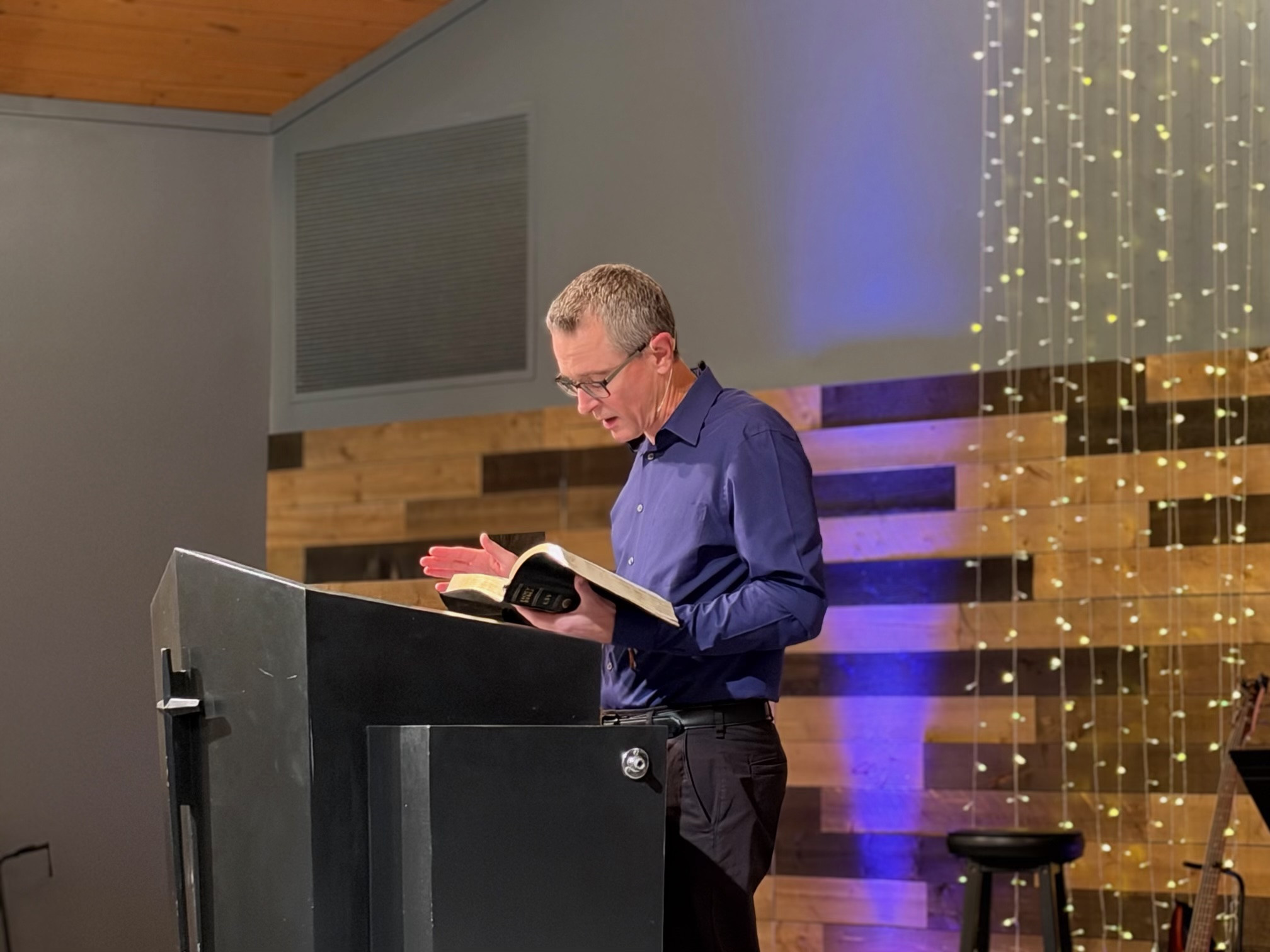
November 6, 2022
Dr. Michael A. Bond · Colossians
The following is a lightly edited transcript generated from the audio; it may contain small errors.
All right, we are in the book of Colossians, so you can go ahead and turn there. Starting in verse 3: “We always thank God, the Father of our Lord Jesus Christ, when we pray for you, since we heard of your faith in Christ Jesus and of the love that you have for all the saints, because of the hope laid up for you in heaven. Of this you have heard before in the word of the truth, the gospel, which has come to you, as indeed in the whole world it is bearing fruit and increasing, as it also does among you, since the day you heard it and understood the grace of God in truth, just as you learned it from Epaphras our beloved fellow servant. He is a faithful minister of Christ on your behalf and has made known to us your love in the Spirit.”
Let’s pray. Lord, what an amazing day for us to gather together as Your children and sing Your praises, to be with one another, Lord, to have fellowship, to rejoice in what You have done for us, what You are doing for us, and what You will do for us. You truly are good. We pray, God, that You would walk with us every step of the way. We pray You would continue to shine Your mercy and grace upon us. Lord, help us to hear from You today, Your truths that You have for us. And may it be done for Your glory. Amen.
Well, there’s a book I read not too long ago called The Church of Facebook. And the subtitle was “How the Hyperconnected Are Redefining Community.” Yes, when it was written, 2009, 13 years ago, recognizing, think of how far social media has come in the last 13 years, right? Facebook was more so in its infancy. And how much more is social media overtaking our lives in the last 13 years? Now, if you can get community elsewhere, I mean, that was really the, maybe the thesis of the book was people are getting their community wherever they want it. And if they can get it elsewhere, why get it from church? There’s less hassle, and community is messy, and relationships are messy. Any time you have more than one person, there’s going to be problems. Right? If you’re involved. So, and with social media, if you think about it, like you can shut it off. You can turn it off. You can even remove friends from your friend list. Right. And they don’t even know about it until they actually stumble across your page and they’re like, hey, I thought we were friends. And you can even ignore friends and turn that off so you don’t have to see them in your feed, right? What are friends for?
But if you think about it, like when we’re talking about continuing on with kind of my series of the flourishing church, when we talk about like what it takes to have a flourishing church, it takes a body of believers coming together, not just individuals. I mean yes individuals, but people coming together to do life together. They have relationships together. And think about it even like the twelve disciples—like they weren’t the sharpest and the brightest by any stretch, but for three years and longer, but for three years when Jesus was on the earth, they did life together. Did they have issues? Yeah, right. You ever read the Gospels? They had issues. Selfishness, pride, unrighteous anger. I mean the list goes on and on and on—that’s just talking about Peter. So I mean, reading the Gospels, like they had issues, but guess what? Jesus in their midst, they still had issues, right? Well guess what? Jesus in our midst, we still have issues. But did they just give up and walk away? No. No. No. They struggled through it by God’s grace. Even if you think about Paul himself, like when he went on a mission trip, did he go solo? No, he always took, it looks like he always took at least one, but usually it looks like he took multiple traveling companions with him. What’s part of the idea behind that? I mean, fellowship, right? Fellowship, accountability. When he went to a church, and we have the letters from some of those churches. When he went to a church, what did he do? Like, did he just like hide out in the next city? No, like he really got involved in the life of that church that he was ministering to. And especially you see it, maybe one of the letters you see it most clearly is in 1 and 2 Corinthians. You know, he’s talking about like our heart was your heart and your heart was our heart. Even here, if you look just quickly, Colossians chapter 2. Here he’s talking about, “I want you to know how great a struggle I have for you and for those at Laodicea and for all who have not seen me face to face, that their hearts may be encouraged, being knit together in love.” I just love that, that little phrase there of being knit together in love, right? Because I always think of like, you know, a little old lady, like doing her knitting, you know, putting things together. Looks real nice when it’s done. But being knit together in love to reach all—and here’s what Paul’s wanting them to do—“to reach all the riches of full assurance of understanding and the knowledge of God’s mystery, which is Christ.” Knitted together, ultimate goal being Christ. So Paul didn’t go solo, he wasn’t at arm’s length from the people he was ministering to. He’s very much involved in the life of the church.
And when we’re talking about the flourishing church, you know, that’s one of our key words is flourish. Belong, flourish, and what’s the last one? Go. And the Colossian church, even if you just had these few verses that we just read, I think it was six of them, like you can tell it was a flourishing church. But here’s the thing, the flourishing church faces challenges. Internal challenges, external challenges. The flourishing church faces dangers, internal dangers, external dangers, the world, the flesh, the devil. How the church reacts to the challenges and dangers it faces is vital. So every church, every church will face its own challenges and dangers. I mean, don’t be fooled. If you’re in a church, it will go through challenges and face dangers at some point, or I should probably say some points, multiple points. I mean, think about, well, we’ll get to that in a second. There’s going to be rough times, there’s going to be challenging times, and I think sometimes people are like, honey, let’s just go to another church. Well, guess what? You might find another church that’s in the midst of their good season. But what’s going to happen? They’re going to have their challenging season, right? And then what are you going to do? You going to leave that church? And you just go to the next church, and then the next church, and the next church, and the next church. That’s kind of like being a leech, honestly. Because you’re just taking the good, you know what I’m saying? Just taking the good. But every church is going to face its own challenges. And think about the Colossians, when Paul’s writing a letter, he’s dealing with issues in the church, right? Do you think the believers, the Colossians were like, there’s challenges here, so we’re going to go to the church down the street? Now they didn’t really have that option, did they? Right? They were the church down the street. They were the only church in that city. There’s probably something to that. But here, here’s the thing, like they stuck it out, right? They stuck it out. They stayed together. They stuck it out. I remember years ago, a family started coming here and they plugged right in and they left their church over rough situations and the dad said I’m going to go back and make it right and try to work things out because he knew he was part of the bad season so to speak, he was part of the problem, and guess what, like he did, and praise God, like they plugged back in and made things right. So when we’re talking about the flourishing church, I mean, listen, part of it is incumbent upon us to help the church flourish. It’s incumbent upon us.
And we see here what I call the trio of virtue that Paul talks about. If you start in verse 4, we see three characteristics named. Verse 4, “since we heard of your faith in Christ Jesus and of the love”—so that’s the first virtue—“and of the love that you have for all the saints because of the hope”—that’s the second virtue—“laid up for you in heaven.” Of this you have heard before in the word of the truth, the gospel, which has come to you as indeed in the whole world, it is bearing fruit and increasing, right? And I missed, I missed actually the second one, love, sorry, in verse 4, I went right by it. Faith, hope, and love. Here’s the thing. 1 Corinthians talks about it. 1 Thessalonians, we spent a bit of time on it. But faith, hope, and love, faith is always mentioned first. Every time that trio of virtue is mentioned, it’s always faith. It’s always faith. Why is faith mentioned first? Because if you don’t have the faith, the other two really don’t matter. You’ve got to have the faith as the foundation, because if you don’t have the faith, there’s not going to be any hope, and there’s not going to be a real biblical love. Faith must be there as the bedrock. We have to have that. Where is our hope grounded? Well, it’s grounded in the hope laid up for you in heaven. When we talk about hope, it’s really, and we’ve talked about this before, it’s an assured confidence. That’s how I like to say it. So usually when the New Testament is talking about hope, especially in matters regarding who God is or what He will do, when you see that word hope, it’s assured confidence. You could also say it as if it’s a confident expectation or a sure certainty that what God has promised will come to pass.
Look at Romans chapter 15. Romans 15 verse 13, it says, “May the God of hope”—look at that, what kind of a God is He? A God of hope, right? Not just a hope it might happen, I hope I get a pony for Christmas, not that type of hope. No, there’s a confident expectation, an assured confidence, as I would say. “May the God of hope fill you with all joy and peace in believing, so that by the power of the Holy Spirit you may abound in hope.” So the God of hope is the one who gives us hope. Look at 2 Corinthians chapter 3, we’ll see something similar. In 2 Corinthians 3 Paul’s writing about the new covenant compared to the old. So he says in verse 5, “Not that we are sufficient in ourselves to claim anything as coming from us, but our sufficiency is from God, who has made us sufficient to be ministers of a new covenant, not of the letter but of the Spirit. For the letter kills, but the Spirit gives life. Now if the ministry of death, carved in letters on stone, came with such glory that the Israelites could not gaze at Moses’ face because of its glory, which was being brought to an end, will not the ministry of the Spirit have even more glory? For if there was glory in the ministry of condemnation, the ministry of righteousness must far exceed it in glory. Indeed, in this case, what once had glory has come to have no glory at all, because of the glory that surpasses it. For if what was being brought to an end came with glory, much more will what is permanent have glory.” So he’s comparing the two covenants, the old covenant, the Sinaitic covenant, and the new covenant, the covenant with Jesus. But look what he says, “Since we have such a hope,” right? Why do we have the hope? Well, because of everything he just explained. Like we have the new covenant. And compared to the old, I mean, it’s amazing. The old covenant, I mean, some of these words, I mean, some people, especially if they really like the Old Testament, I mean, they might even blush a little bit. “The ministry of condemnation,” he says in verse 9. Verse 10, “it has come to have no glory at all.” And he says, in comparison to the new, it far outshines that of the old. In fact, it’s really pointing to the new. So he says in verse 12, “Since we have such a hope,” and then notice what he says. And what’s, well, first, what’s the hope? It’s what God’s going to do in us and through us. It’s what God has already done for us. And it’s what God will one day do as He has promised. So since we have the hope, the hope of what? Of this new covenant that is available to every single person by the blood of Christ through faith in Him. “Since we have such a hope,” and then look what it says, “we are very bold.” We are very bold. And then he goes on, “not like Moses, who would put a veil over his face so that the Israelites might not gaze at the outcome of what was being brought to an end.” We are bold. Think about that. Like we are the ministers, we have the hope, we can be bold, all right? So we’re like, oh Lord, like I’m scared to share the gospel, I’m scared to share my faith—well, that might be true, but here we have a reason, and we are reminded why we are bold and why we can be bold, because of what is laid up for us in Christ. We have the hope. So this trio of virtue, faith, hope, love, these characterize the true believer. Over and over again, Paul talks about it. Faith, hope, and love. And here’s my question, because we’re going to be talking about the flourishing church and different characteristics of it. But do you even have, and do you even display these three in your life? Faith, hope, and love? Because here’s the thing, the internal will always work out to the external, right? I mean, so if we have that faith, right? That’s like the foundation, that’s the grounding. We have to have the faith, but from that, God has done a work and He keeps doing a work and guess what ends up flowing out? Hope and love. So, I mean, at a bare, bare minimum, we should have these three characteristics. Because what you have on the inside will come out. And if we’re honest, sometimes what’s on the inside when it comes out, it’s not too pretty. And it’s not faith, hope, and love. Right? God forgive us. But by His grace and by His mercy and by His Spirit, we can display faith, hope, and love.
So what is the flourishing church? What does the flourishing church have? Well, historically, when you talk about the marks of the church, like if you’re like, what would define, what would be a good definition or what would be good characteristics of a church? Historically, and I’m not just talking like the last 50 or 100 years, I’m talking like hundreds and hundreds of years. There’s been three marks that theologians have used in talking about what defines a true church. Three marks. First is right preaching of the Word. So you’ve got to have the Word rightly preached. Second is the sacraments rightly administered. So baptism, communion, right? We had it today. And then third, exercise of church discipline. Now sometimes you’ll see the exercise of church discipline almost like as the subcategory of either the sacraments or the right preaching of the Word. Now just, we can’t just say we have these three all we want, but we actually have to practice them, right? You can say you have the Word, but it needs to be rightly preached. There are churches out there right now, as I’m preaching, there’s pastors out there and they’ve read something from this book. But are they really practicing it and preaching it and believing it? Are they preaching the hard parts? Are they preaching about the things that the society is saying this is right but the Bible is saying it’s wrong? Are they just giving a rose-colored little happy message? There’s a lot of rose-colored sugar-water messages going on. So rightly preaching the Word, the sacraments rightly administered. That means we have to understand what the sacraments are and what they do. Right, some people, some denominations, some churches believe that baptism saves. That’s not the sacraments rightly administered. Not. Some people, there’s the baptism formula. You all know what the baptism formula is for hundreds of years in the Protestant church. When you take someone under, how are you baptizing them? Right? Father, Son, Holy Spirit. I mean, Jesus lays it out pretty clearly. Baptizing them what? In the name of the Father—I mean, you literally couldn’t get any clearer—the Son, and the Holy Spirit. But there’s denominations out there that don’t baptize in the name of the Father, Son, and Holy Spirit. True. What are they baptizing in? So you need the sacraments rightly administered, and then you need the exercise of church discipline.
Now in focusing on the marks of the church, when you go back to like the Protestant Reformation, you know, some would say, you know, with Luther, but probably argue even earlier with Huss and Wycliffe and those men. But the Reformers were not saying that all a good church needs to have are these three marks. It’s that the marks make the true church recognizable. So, the Church of Christ has many more characteristics than the three marks, right? 9Marks, right? I mean, they name their organization after what they thought were the marks of a healthy church, nine marks.
But here’s the thing. Why was there a need for such marks to be delineated? Because little was needed as long as the church was clearly one, but what happens even in Colossians, even in Corinthians, even in pretty much every book of the New Testament, every letter, heresy arises and it’s necessary to distinguish true from false every single time. Further, once you have the Protestant Reformation, you have the splitting from Rome, and one theologian said in response the Reformers did not reject the Nicene attributes of the church; what they did reject was the way the Roman Catholics tied them all to the institutional papacy. God’s grace is not a commodity to be dispensed. Finding the true church is not a matter of locating the pope, although even that could be complicated by rival popes. There is a question of time as well as space. The Roman church might claim to be spread throughout the whole world, but it had ruptured its link with the early church by corrupting Christian doctrine. So what was being answered was, how will we know a true church when we see one? So those three marks, the rightly preaching of the Word of God, the sacraments rightly administered, the practice of church discipline. The early Reformers, they saw a need to clearly define what the church was as they began to realize and believe that what they were seeing around them was troubling in that not all churches were true churches. John in the book of Revelation has a name for false churches. What does he call them? Synagogues of Satan, right? Synagogues of Satan. B. B. Warfield, theologian, said, the Protestant Reformation was a revolt against seeing grace channeled through the sacraments. Back to the rightly administration of the sacraments. Grace channeled through the sacraments, a revolt in all Reformation expressions against the notion that predestination trickled only through the narrow crevices of church ordinances. It was by contrast an affirmation of Augustine’s grasp upon human lostness, bondage to what is dark and wrong, the indispensability of grace, the glory of the gospel because of Him in whom the good news took and takes form. And on and on we could look at different, earlier even theologians. John Calvin in his Institutes says, wherever we see the Word of God purely preached and heard, and the sacraments administered according to Christ’s institution, there it is not to be doubted a church of God exists. The infallible mark of the church has always been the Word. The true church is marked by submission to the Scriptures. That’s just a couple early theologians and what they were seeing and starting to figure out as what defines what a true church is.
And confession after confession, the Augsburg Confession written about 1530, here’s what it said: “the congregation of saints in which the gospel is rightly taught and the sacraments rightly administered.” The Geneva Confession just about six years later, the proper mark—and these are like confessions that either denominations or churches, different churches have ascribed to—the Geneva Confession: “the proper mark by which rightly to discern the Church of Jesus Christ is that the holy gospel be purely and faithfully preached, proclaimed, heard, and kept, that His sacraments be properly administered,” and even if there be some imperfections and faults, as there always will be among men, they are faithful to God’s Word. And then the Belgic Confession, about 25 years after that, said—we’re here in the 1500s, right?—“If the pure doctrine of the gospel is preached therein, if it maintains the pure administration of the sacraments as instituted by Christ, if church discipline is exercised in punishing sin, in short, if all things are managed according to the pure Word of God, all things contrary thereto rejected, and Jesus Christ acknowledged as the only head of the church. Hereby the true church may certainly be known, from which no man has a right to separate himself.” On and on and on the different confessions give similar definitions, if you will, similar attributes regarding the church. So for hundreds of years this has really been what has been seen as the marks of the church. Again that third one, the exercise of church discipline, Calvin I believe put it under the rightly administering the sacraments. He considered that as where it properly belonged. But it’s really those three that we see time and time again.
Here’s the thing. Let’s talk about the true preaching of the Word of God. That’s the first mark. That’s the foundational mark. It’s kind of like going back to the faith. You have to have the faith. Imagine a church for a moment that didn’t have the Word of God. Like really? I was thinking about it when we were singing. Like what would we be singing about? Right? What would I be preaching about? I mean there’s churches out there, I mean they’re probably synagogues of Satan, truth be told, but they sing songs but they’re not worshiping God, they’re not extolling Jesus. There’s churches out there that someone will get up calling himself a pastor and give some nice, you know, I’ll be nice to each other this week, never once even reading the Scriptures. So we’re talking about the true preaching of the Word of God. Look at 1 Timothy 3 for a moment. 1 Timothy 3 verse 14: “I hope to come to you soon, but I am writing these things to you so that, if I delay”—now, if you ever want to know what 1 Timothy is about, it’s actually right here, okay—“if I delay, you may know how one ought to behave in the household of God.” All right, so everything that he’s laying out is like here’s how you behave in the household of God. 1 Timothy 1, 1 Timothy 2, 1 Timothy 3, bringing it up to this and then he keeps going on with it. Okay, how you ought to behave in the household of God, “which is the church of the living God, a pillar and buttress of the truth,” or some versions might say a pillar and foundation of the truth, or pillar and support of the truth. The pillar, like the idea is, well, what’s the truth here? I mean, it’s the Word of God, right? But what’s the pillar? Like it’s being, you’re holding it up. Not that we have to support the Word, but we’re like putting it on a pillar for people to see. A pillar. The Word of God is a support in and of itself, right? If anything, it’s kind of holding up the church, if you think about it, right? So it’s a pillar. The church is a pillar, and it’s the support or the foundation of the truth, right? I mean, Paul, it’s interesting because he almost like coins a new word here, because he’s trying to find something that is unique using some architectural terms, but something unique to describe what God’s Word does and what the church does for God’s Word. If we want to be a flourishing church, we’ve got to be this church right here, the church of the living God. And what are we doing? A pillar and support of the truth. The idea of firmness and steadfastness. What is Paul combating in part? Well, Ephesian error trying to creep in. So what is he saying? Well, the church is there to support God’s Word. It’s to stand against all the falseness that’s going on out there. All the heresy that’s occurring. All the errors that are trying to creep in. It stands there and says no. It holds up God’s Word as the standard. On and on and on, we see in the Scriptures the importance of God’s Word being foundational to who we are and to who the church is.
Look, just turn one chapter over in 1 Timothy 4. Look what he says in verse 13, “Until I come, devote yourself to the public reading of Scripture, to exhortation, to teaching.” So what is he wanting Timothy to do? Take the Word, right? Read it, teach it, exhort it, expound it. Many other things he could have told him to do, and he does. But what he said, until I come, like I’m setting up how the church is supposed to run, Timothy, here’s what God’s revealed to me, and I’m laying it out for you, right? You need elders, and you need deacons. Chapter 3. I want people praying, I want the men praying, right? I want the women dressing accordingly. I want men being the teachers, instructing the congregation. 1 Timothy 2. And on and on and on. And what does he want here? Until I come, devote yourself to the public reading of Scripture. That’s why I like for us to turn together in our Bibles. I don’t care if it’s on your app, that’s fine. But to turn, so you’re seeing it yourself. And sometimes we’ll read a little bit more, and you’re like, man, he’s reading a lot of verses here. It’s a good thing to read God’s Word. Amen? So if we go a little bit long on some of those verses, like let’s ingest it a little bit more. So yeah, we might be going through Colossians, but we need some of 1 Timothy and we need some of Romans, right? And we need a little bit of Galatians. We need that stuff. We need to be ingesting it because it is truth for our soul.
So “until I come, devote yourself to the public reading of Scripture, to exhortation, to teaching.” Look in 2 Timothy. He starts 2 Timothy 3 verse 14: “But as for you, continue in what you have learned and have firmly believed, knowing from whom you learned it and how from childhood you have been acquainted with the sacred writings, which are able to make you wise for salvation through faith in Christ Jesus.” Amen? May that be true, brothers and sisters, of our children, as we’re raising them up. May they be able to say how from childhood they’ve been acquainted with the sacred writings. We’re here to help you, but parents, that’s primarily your role, right? Right? Right? Okay, and so take that role. We’ll complement it, we’ll support it. We’ll be the buttress, so to speak. But that’s your job. Okay. Verse 16: “All Scripture is breathed out by God and profitable for teaching, for reproof, for correction, and for training in righteousness, that the man of God may be complete, equipped for every good work.” Right, over and over we see this, the foundation of who we are and what we are. It’s not just man’s word. The Scripture is literally breathed out by God. I mean, what they call the pastoral epistles, 1 Timothy, 2 Timothy, Titus, they give you a kind of a different glimpse of Paul because he’s not writing to a church of however many people, but he is writing to his disciple. He’s writing to his disciple, right? And so you see some intimacy there that you don’t see in the same way in some of the letters to the Galatians, Ephesians, or whatever, right? I mean he’s writing a personal letter to a dear friend, if you will. But look what he says. I mean because he’s given him instruction and he’s been pouring into him, right? And so he says here in 2 Timothy 4, “I charge you in the presence of God and of Christ Jesus”—like, hey, that’s a pretty serious thing, right? You start using a word like “I charge you,” like he’s kind of laying it down, right? He’s kind of calling them out like this is what you need to do. I’m calling God and Jesus to witness the word I’m about to give you. “So I charge you in the presence of God and of Christ Jesus, who is to judge the living and the dead, and by His appearing and His kingdom.” Man, that’s a whole lot there, right? But look what he says: “Preach the Word.” So over and over, 1 Timothy, 2 Timothy, what’s the emphasis that we can see? Does Timothy get a whole lot of instruction? Absolutely. But different verses here are bringing it back over and over and over and over again. The Word, preach the Word. “Be ready in season and out of season; reprove, rebuke, and exhort, with complete patience and teaching.” And part of the reason we find out why. “For the time is coming,” verse 3, “when people will not endure sound teaching.” That’s back to the marks of the church. It needs to be the Word of God rightly preached. “For the time is coming when people will not endure sound teaching, but having itching ears they will accumulate for themselves teachers to suit their own passions.” Listen, if you want to do something, if you want to act a certain way, you can find someone out there that will bless what you want to do. It’s just the truth. But it doesn’t matter who’s blessing what if God’s Word ain’t blessing it. All right? This is, it’s not just the final authority, it’s the only authority. All right? Everyone else is just parroting in different ways what God’s Word says. All right? I’m not saying, hopefully, I’m not inventing anything new. I’m just saying it and parroting what God’s Word says here. So you want your own little sermon? Just have a quiet time this week, all right? Right? So, I charge you in the presence of God. So he has this charge to preach the Word. Now he could have charged him with many other things, and in a sense he does, but the one that he really makes note of, and he’s like in the presence of God and of Jesus Christ, and he keeps going on, who is the judge of the living and the dead, and by His appearing and His kingdom, like, I mean, he kind of like stacks up the whole deck there. And here’s what he says. Just three words in English: preach the Word.
Look at 2 John chapter 9, verse 9, excuse me. 2 John doesn’t have chapters—that would be inventing new stuff. 2 John 9: “Everyone who goes on ahead and does not abide in the teaching of Christ does not have God. Whoever abides in the teaching has both the Father and the Son. If anyone comes to you and does not bring this teaching, do not receive him into your house or give him any greeting, for whoever greets him takes part in his wicked works.” So notice back in verse 9, you have to abide in the teaching of Christ. Whoever abides in the teaching, right? You’ve got to abide in the teaching. It’s back to the Word, rightly taught, rightly preached, rightly exhorted. Whoever abides in the teaching has both the Father and the Son. And we could look through 1 John talking about the antichrist and who’s the antichrist and what is of him and what is not of him. Over and over we could look at verse after verse after verse, John, it spells it out a number of times where Jesus is like, if you love Me, like you’ll abide in My Word, right? So the point here in making this a mark or an attribute, if you will, is to show that there are fundamental articles of faith that must be adhered to and not denied. The Word rightly preached. When certain fundamental truths are denied, it ceases to be a true church.
Here’s the thing, the Word is foundational. We must treat it like it is. It can’t be a side dish instead of the main course. All right, if we had a Reformation Wednesday and we just served salad. Well, some of you would be happy. But most of us wouldn’t. We want a main dish. We want a main dish. And sometimes we treat the Word of God like it’s a side dish. No, it has to be the main dish. Everything centered on the Word. It’s the main dish. And you can’t just, you know, I like books, right? I like books. But it can’t just be one of many books on your bookshelf. Right, oh, yeah, that book, yeah, I read that about four years ago. No, I read that a couple months ago. No, it needs to be a book that regularly comes off the bookshelf. Probably shouldn’t even be on the bookshelf because you’re using it so much. But here’s the thing. Why do we treat it as optional and not required for our daily living? I mean, we treat it as optional if we’re truthful. Like I might have a quiet time. I might get into the Word. I might read a Bible verse. Listen, some of you, especially as you get older, you know, I’m there with you. Not all the way with some of you, but I’m there. But like you’ll take medicine every single day for your physical well-being. You know, you go to, especially if you’re like, if you’re younger and you get sick the doctor puts you on something, you know, you’re like, man, this thing, this stinks. Like, I want to get over this thing. So he gives you whatever, a Z-Pak or something, and you’re like taking that every, you don’t forget, because you want to get over that sickness. But then we’ll leave the medicine of God on the shelf, even though our soul desperately needs its daily dose. We can’t do that. All right, we need the medicine of God right here. It nourishes the soul. It does protect us from the viruses of false teaching. It protects us from the enemy wanting to try to get in, right? What is the Word of God? You start reading in Ephesians 6, the sword of the Spirit, but everything as you go through the armor there, right, it’s some truth found in the Scriptures that God has revealed—the breastplate of righteousness, the helmet of salvation, right? I mean those different things that God has shown us that are required for us, but we kind of just flounder about as if we’re dressed right now. I mean that’s not wise at all. So we got to equip ourselves and our battle sword is the Word of God. It is the Word of God. So it is not optional. We have to have this. We have to have it in some form or some shape every single day. Whether you’re getting a little bit of Word on the way to work, whether you’re a mom at home and you’re listening to the Scriptures being read, whether you just get five verses wherever it might be, you need to be in this thing as God, to be ingesting your soul. Listen, if we want to be more like Christ, I mean, here’s the answer. Here is the answer. Once a week will not cut it. You’ll be cut down if it’s once a week. You will not be prepared to fully stand. You’ll stand, but it won’t be standing firm as Ephesians 6 talks about. You have to be able to stand firm. That comes by the Word of God being in you and knowing it.
All right, we could have, however many people are here, let’s just say 90, we could have 90 swords of the best, I don’t even know anything about swords, all right, but whatever the best sword is, it’s probably super expensive and crazy and there’s someone out there that is all into that stuff. We could get 90 of the best swords that money can buy, but most of us don’t know how to use a physical sword, not in the slightest. You ever see the fencing people? I’m like, that’s so cool. They make it look so easy. But there’s more of an art to that, right? That’s cool. But even we watch some of these different battle scenes and everything and they have these swords. Like you think they just picked that up one day and were like, it’s time to go to battle? No. They were trained well with the sword. Well, are you trained well? Are you trained well with the sword? Because there are men and women of God out there who can wield this thing for God’s glory and do great damage to the kingdom of hell. All right. They know it, but they don’t just know it. They know it. They know it, they don’t just know it, they live it. So if we’re going to be gospel believers, we have to be gospel speakers. We’re speaking the truth. And we don’t want to just be gospel speakers, we want to be gospel doers. There’s many people that speak about the gospel and speak about Jesus, but it’s like, man, you’re kind of, you know, you’re not living for Jesus. We want right thinking to lead to right action. Orthodoxy leads to the orthopraxy is how you could say it. Right teaching leads to right acting. But it starts right here. Right here. So we have to be men and women of the Word, grounded in the Word. I want to be the swordsman that knows how to handle this thing well. All right? And some of you, if you’re truthful with yourself, you look like a floundering fool trying to handle this thing. Why? Because you just don’t know it. You just don’t know it. It’s like you’re picking it up for the first time. Well quit and really get into this thing and really know it. Because you love Jesus. All right? Not because you want to destroy the enemy. We want to do that. Not because you want to build up the church. We want to do that, but because you love Jesus. That’s the primary motivation. And He’s written to you. Boom. Right here. You’re like, I wish Jesus would speak to me. Well, I’m starting in Genesis and let me know when you get done with Revelation. And He’ll have spoken to you a whole lot. You want Jesus to speak? Well He did. 66 books. All right. So start with one. Anyone. Choose a book. Choose one and then keep going. But really get into it and come to know your heavenly Father and come to know your great Savior in deeper and more intimate ways. You start doing that as you grow closer to the Lord, guess what? I mean, it’s kind of like Moses, but it happens on the inside. You know, Moses is in the presence of God, right? What’s the result? Like he walks out and the people are like, what happened to you? Right, his face is glowing. It’s like, you’re in the presence of God, it can only but change you. You’re in this thing, you’re ingesting God’s Word, you’re reading it, it can only but change you. Even better than Moses, honestly, right? He had an external change. Now he probably had an internal one too, but we get an internal change. And we got the Spirit of God living in us so that we can display the fruit of the Spirit. Love, joy, peace, patience, kindness, faithfulness, goodness, gentleness, self-control, like boom, that’s ours by God’s strength, by His Spirit. And it comes through this. So let’s be brothers and sisters that are living in the Word, that are breathing the Word, that know this thing inside and out.
You know, at seminary, they make you take this class, and you have to read through the Bible in like a whole semester. So 16 weeks, you’re reading 66 books. And then at the end of that class, you have to take a test over the whole Bible. All right? Guess what happens if you don’t pass it? You’re taking the class again. All right, a little motivation. But no, no kidding. Thankfully it’s multiple choice. Every possible question you can imagine, they put in that test, all right? All sorts of stuff. Geography, where’s this verse found? Disciple stuff, Old Testament stuff, and why? Well, it kinda makes sense. I would prefer if the church that I’m going to, my pastor knows his Bible, right? Right? So if you can’t pass the test, that’s a problem. But really, there were some men, they would let you take the test without ever taking the class. And if you pass the test, you didn’t have to take the class. And there were some men that came in and knew the Word of God before they even started seminary. They never had to take the class. And that should be true, I would say, for most of us. Maybe all of us, but definitely most of us, we should be able to take a test like that, that we know the Word of God so well, we could pass it, we wouldn’t have to take that class. Why? You’re just being quizzed over—granted, that’s a lot. But 66 books, but because you’ve read it, some of you have read it five times, some of you have read it 10 times, some of you have read it 20 times, but some of you have never read it all the way through once. So that should be your goal. Bite-sized chunks, it can be done. There’s a gentleman who wrote one of the most used, it’s like a giant dictionary basically on Greek words. I mean it’s like 10 volumes and it’s like tiny print. And he translated it from German into English. And they were asking him, like how did you accomplish such a feat? Literally thousands and thousands of pages that he translated from German into English. And his response was, it’s amazing what you can accomplish if you just do two pages a day. And that’s what he did for like 20 years, two pages a day. And now there’s a great resource for pastors and theologians who would never have been available had he not done it. Just bite-sized chunks is the idea. Reading, you need to read through this thing for the first time. There’s so many great reading plans out there, I can help you find one if you need, but bite-sized chunks is the idea. Don’t go for quantity, go for quality. The idea is to be in it and let it feed your soul. So that’s my challenge. Let’s pray.
Lord, we do thank You for Your Word. I pray for everyone here, every family represented, I pray for the entire church, that we would be men and women of Your Word, that we would know Your Word backwards and forwards, that we would feast on Your Word. That we would be people busy about Your Word and doing what it says. That we would be able to pick up the sword and wield it properly and rightly. Lord, for those that know they can’t really pick it up, then let them get in the Word and learn to use it well. Bless them, God, as they’re spending time in Your Word. Show them things. Reveal things to them about You. Reveal things to them about themselves. Grow them closer to You and be glorified. Thank You for how good You are to us. We love You. Amen.