
June 27, 2021
The Beginning and Completion of a Journey
Dr. Michael A. Bond
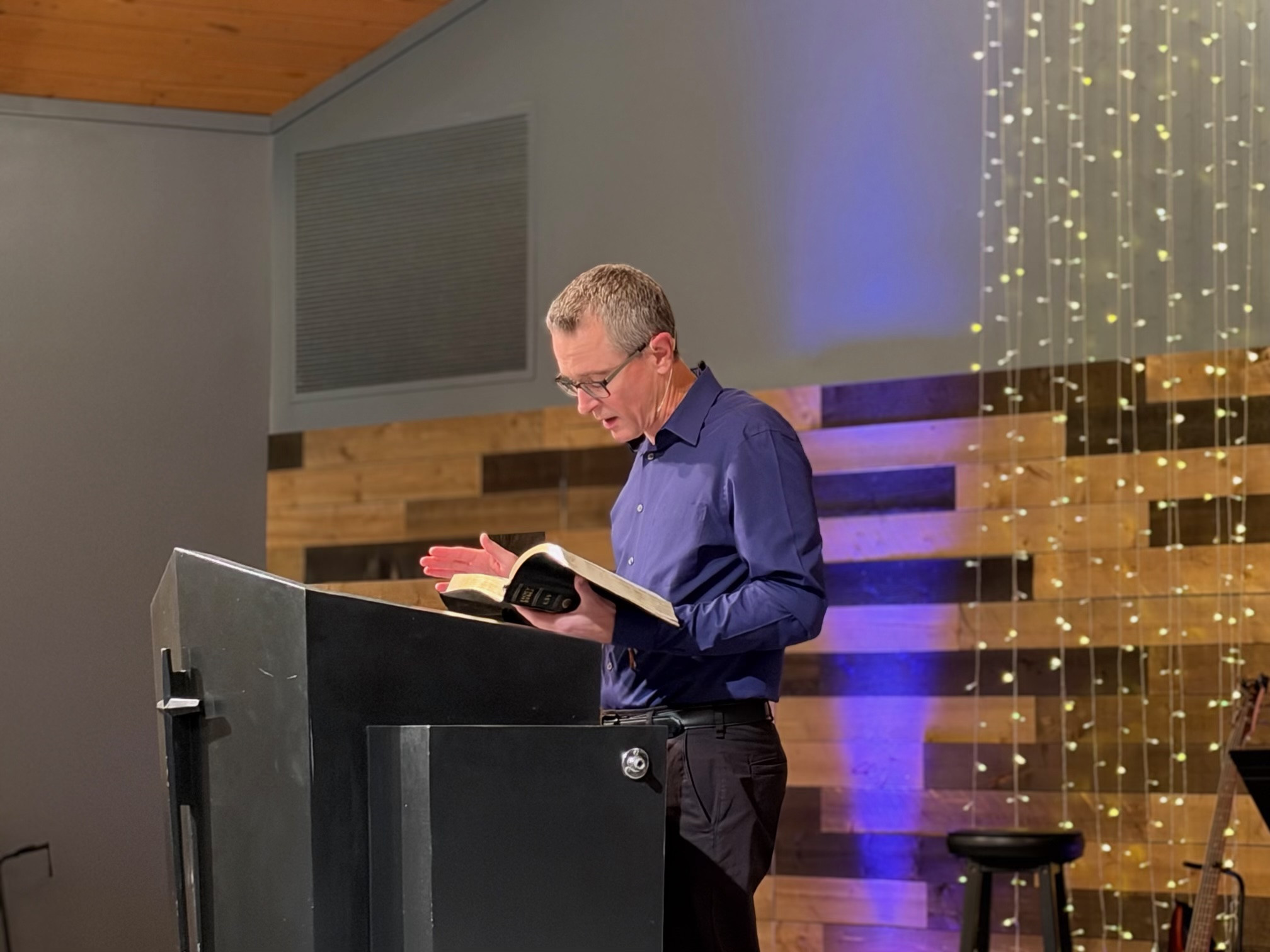
The following is a lightly edited transcript generated from the audio; it may contain small errors.
Good morning, everyone. How’s everyone doing? Good to see you all. It’s an exciting day when we get to have some baptisms. Amen. Before we have the baptisms, we get to actually hear from one of our very own missionaries today. Homegrown right here in Liberty. True. Which is one One of the goals of the church is to send those out. So Sarah Benson, daughter of Dan and Lynette, grew up in Liberty. She left for college, got her master’s degree, and has literally been on the mission field ever since then, which has been like probably over 20 years if you do the math. And she’s been on the mission field because Sarah is truly a foreign missionary. And she’ll occasionally come back here for a few weeks, kind of get refreshed, get rejuvenated a little bit, and then head right back out. In the way of financial support, we supported Sarah in her early years. There’s not been as much to do recently because God has gifted Sarah as a physician assistant, so that most of the organizations that she’s worked with over the years have paid her because she has such a unique skill set and has been blessed with that that they’ve been able to pay her as a mission organization to do that.
All of that to say she’s going to come up and give us a little bit of history of what she’s done. But in a few days, she’s actually getting ready to go off into like the next phase of her missionary life. I’ll let her tell you the country, but it’s a new country. So I’m excited for Sarah to share and for you all to hear about it. Please give it up for Sarah Benson. I think I stole your mic.
Thanks. The little earpiece thing was a little weird for me. Yeah, so like Mike said, I actually started before Liberty. I was a Teens for Christ member back when I was like 15. I think I was in youth group with Mike and Jen who’s here back in the day. And we were led by a man named Tim Ward. And yeah, he instilled in us at a very young age to put the gospel first and everything that we did. And I am forever grateful for this church and how it really affected my life and the way that it set me on a different path. When I left for the Mission Field in 2008, I was a, what I would call quintessential missionary. I went with an organization called SIM. I lived in a hut in the middle of Sudan, which was what is actually South Sudan now, but was a big country then. So, and I treated patients, and lived pretty basically. And I thought that’s what I was gonna do for the rest of my life. I thought I was gonna be the quintessential missionary, and live in a hut, and that sort of thing. And after about a year into it, the Lord started talking to me about how missions aren’t necessarily one way. And after a year being there, God actually called me to leave the quintessential missionary life and to do something different. And so I actually moved to Scotland and worked in Glasgow, as a physician assistant. I felt like I needed to pay off my debt from school and not have to worry about that kind of attachment.
I had an organization that was paying my debt for me while I was a missionary, but I really felt God was saying, you know, you can pay off your debt and serve me at the same time. So he led me to Scotland and I was able to be a physician assistant in the NHS, but I also worked with the navigators and was able to work with several mission organizations in in downtown Glasgow and actually saw several people come to the Lord in my ministry in Scotland, even more people than I did when I was in Sudan. And so it was interesting to see and that’s where God really opened up my eyes to like missions in a different way and after that God called me to work with the military actually. I still hadn’t paid off all my debt from school sadly the NHS doesn’t pay that much. I didn’t realize how much taxes the UK took out. And so God led me to working with the military as a contractor, as a physician assistant, and I worked in Afghanistan in Kandahar for nine months, experienced life there in a very dark place, something that I had never anticipated, a place that I didn’t even think God would ever lead me to go. And I was able to minister to several people because you live like a fishbowl. I don’t know if any of you have been in the military, but when you’re deployed, everybody knows who you are. You live with like 19 other women in one tent, so your life is pretty much open to everyone.
And it actually really provides a great opportunity to be a witness and a light in a dark place. And I was able to really minister to several people there and be able to share with them my life’s gospel and who Jesus is. It was difficult, it was hard, we got rocketed a lot. And then after that, God opened up the door for me to do a very similar job in Iraq and I got based in Baghdad. And through all of that, I was able to pay off all of. My debt. Thank you, American government. but also being able to really see another aspect of how to be a missionary in a different setting. And so God led me, I did that for four years in Afghanistan and Iraq, so yeah, God was able to help me pay off all my debt as well as be able to support myself. So I saved a bunch of money and then wanted to be able to do missions and be able to support myself through my mission work. And so that’s when the Lord led me to work with an organization called Med Air, which is a Christian-based NGO out of Switzerland. And they have missions all over the world. But they’re not necessarily gospel-based. And so it was interesting. And I was actually with a group of people when I went to northern Iraq in a place called Kurdistan in a city called DeHuk. And we were working in areas that, So this was now 2017. No, 16.
So this was right after ISIS was being pushed out of northern Iraq. So we would go into areas where ISIS had been cleared, and then we would go and support the clinics and be able to help revamp and rejuvenate the health systems in northern Iraq. But my team that I was with, I was really lucky that they were very gospel-filled. And we were able to have secret Bible studies with our local staff. And we actually saw several of our Lord in working with Med-Air, which is, we’re not supposed to be sharing the gospel, but we can in our private time. Working with Med-Air, I really enjoyed it, but I missed being able to do practical clinical work. It’s my love. I love being able to treat people. As a physician assistant, I am generally educated so I can do everything from psych to delivering babies and I really, I’m so thankful for that background. And so through that, I tried to work with MSF, didn’t work, MSF is a very secular organization and God kind of closed the door and I’m thankful for that. And then God opened up the door for me to work upheavals with an organization called Samaritan’s Purse. And with Samaritan’s Purse, I’ve been able to do both my clinical practical work as well as my like medical coordination work, which is kind of what I did with Med-Air. And I’ve been really thankful to work with them. So with Samaritan’s Purse, I started working with them in Bangladesh. We did dip theory.
I don’t know if you know what that disease is, but thankfully, according to, because of vaccines, we don’t deal with it anymore. Yeah. So we got to, we saved quite a few kids. Dip theory is a disease that you get. It’s like an upper respiratory infection that will kill you because it, your windpipe. So I started with them doing that and then was able to go to DRC. We treated Ebola. We also have done the, we went to Mozambique and did hurricane response. We were in the Bahamas, did the hurricane response there. And you’re out of other things, I actually was working with them in Iraq as well. During the ISIS, we had a hospital right outside of Mosul and was treating ISIS as well as the Iraqi soldiers. So, and I love SP because I’ve also worked here in the States, so we worked in New York, worked in the hospital for COVID, as well as the other hurricane responses here in the States. So that’s pretty much where I’m at today. So you can go ahead and put the slide up there and try and keep into the 20 minutes. So my next assignment with Samaritan’s Purse is gonna be in Tigray, Ethiopia. So you can go to the next slide too, I think. Yeah, so I’ve got a map up there. Maybe it’d be easier if I can see. So Ethiopia is in the Western Horn of the African continent. So Sudan, Eritrea, Djibouti, Somalia, Kenya, and then like right above Eritrea and Sudan is Egypt.
So if you guys can kind of figure out where that is in Africa. So Ethiopia has probably, I think it’s the third largest country, third largest populated country in Africa, and it has been probably one of the most stable countries in the northern parts of Africa. So the reason that I’m going to be there, I’m going to be working in this Tigray region, which is up in the north. In November 2020, the prime minister, and I’m going to mispronounce his name, Avyeh Ahmed, he basically started a civil war within his own country. So ever since November, since this war started, quote unquote, there’s been thousands of people who have died. Again, it’s very difficult to count because at the R beginning particularly, there weren’t being allowed anyone to come in to help. And we’ve had over 2 million people by now that have been displaced. There’s been a lot of issues with ethnic cleansing. So the Tigrayans are certain people group that the Ethiopians do not, or the Ethiopians as a whole at the moment, um, are looking to possibly eradicate. Um, and so the UN has declared parts of Tigray, um, in, um, a famine that is probably going to be worse than we saw in 2011 when we had a quarter of a million people die in Somalia. Um, so go ahead and flip the, um, so just wanted to give you a quick history so that you kind of understand some of the issues that I might be dealing with and some of the problems that I might come into, come face to face with.
So the Tigrayans were the ruling party in Ethiopia since about the 1970s. They basically had the strongest arm and controlled most of the military. And they also were, like, a cazere were on the border with Eritrea. And they’ve constantly had a battle between Eritrea and Ethiopia. Erita used to be part of Ethiopia. And so the Tigrayans were always the people that protected the rest of Ethiopia from the Eritreans. But the Tigrayans But the Tigrayans only make up about 6 to 7 percent of the population. There’s two bigger, like the ethnic groups within Ethiopia. And so this, you know, this small population were ruling Ethiopia for a long period of time. And the, in 1991, the Tigrayans took over the government because there was a lot of unrest and there was a lot of issues with the government, a lot of corruption, and so the Tigrayans were coming in to bring peace, and they were the ones that were protecting everyone from Eritrea. And so in 1991, Ethiopia was being led by the Tigrayans, and they saw quite a bit of peace during this period of time. Go ahead and switch the slide. So we saw them, they had quite a bit of economic growth and there was quite a bit of stability within the country. However, again, we saw huge amounts of corruption. They didn’t have as much freedom of speech as they should. We also saw quite a bit of torture and things like that that were commonplace as a ruling party. So again in 2016, they had another eruption of discontent within the country.
And a man, the prime minister, Mr. Abiy, who is part of one of the larger groups, the Oromo people, he basically, he actually was a Tigrayan foreign minister and worked in their secret a secret service. They pushed him forward to be the Prime Minister, but he’s not Tigrayan, he is Oromo. When he took the position of Prime Minister in 2018, he basically started purging the government of all the Tigrayans. This is what started to cause a lot of the unrest in that area. Um, so yeah, so the Tigrayans basically saw the new prime minister as their enemy and they started to kind of build forces up in Tigray. I’m going to change the slide. And so there was a lot of back and forth and then, in early November, the Tigrayans basically started the fight. But they basically say it was preemptive because the government was going to come in. was going to fight, who was actually going to throw the first punch, we’re not sure. The Tigrayans technically did early on November 3rd to the 4th. And then once they started, then this is the prime minister, the current prime minister of Ethiopia. He then launched an offense against the Tigrayans. And he also brought in the Eritreans. Eritreans in the Eritreans, Eritreans came in to fight against the Tigrayans. So these were, they were longstanding enemies, particularly during the wars of 1998 to 2000. Tens of thousand people were killed on that border. So there’s a lot of bad blood between the Tigrayans and the Eritreans.
So Mr. Abieh, you can go ahead and change the slide, made a pact basically with the Eritreans and made a peace agreement. He actually won a Nobel Peace Prize in 2019 for the peace treaty that he was able to get with the Eritreans. But there’s many people who are now saying that this was at the expense of the Tigrayans. So now at this moment, there are Eritreans who are, they’re not supposed to be in Ethiopia fighting against the Ethiopians. So they’re actually wearing Ethiopian uniforms and pretending to be Ethiopian when they’re actually Eritrean. So yeah, so you’ve got your own people. So there’s a civil war as well as a war coming across. And you can go ahead and change the slide there. So what’s happened as an effect of this wonderful conflict in northern Ethiopia? So thousands of people, hundreds of thousands of people, millions of people have been displaced, leaving the areas that are being fought. They’ve lost their homes, they’ve lost all of their farming. Most of these people are substance living. And yeah, the other issue is, is there’s been a huge famine. They had locusts that killed hundreds of thousands of acres and they’re also having an extreme drought. So we’re really dealing with severe amounts of malnutrition and people dying of, yeah, starvation. And all of the, I think we’ve also seen 80% of the health clinics and hospitals have been destroyed or not working in this area. So the humanitarians have all come into this area to try and meet the needs of the people.
Go ahead and switch the slide. This is again just some of the stuff that I talked about and you can see some more of the actual, sorry that’s pretty small, numbers of what we’re looking at. So, and it’s really interesting too. So when Tolkien wrote the Lord of the Rings, he actually used some of the cities in this area. So one of the areas that I’m going to is called Shirei, but it’s, you guys know it as the Shire. There are several other storytelling so it’s like when So when you saw it, I was like, oh, is that actually the Shire? And it actually is. Anyway, so I’m actually going to put it on the screen. So, I’m actually going to be based in Shirei, and in this area now we’ve got over half a million people who are… people who are IDPs. And so these are people who have come from more of the eastern part of Tigray and have moved west. towards Sudan and this area only had about a hundred thousand people in it and now they’ve gone up to five times the population so you can imagine what that does to food scarcity health care and all of the all of the above water is also a big issue so go ahead and switch the slide. So what we’re gonna be doing in with Samaritan’s Purse we always go in with like a full response. So we do shelter, we do food, we do wash, and then I’ll be working with the health program.
So we’re working a lot with nutrition, but also with basic primary healthcare. We’re gonna be doing mobile medical units. There’s several IDP camps, which have hundreds of thousands of people in them. And so we’ll be doing medical mobile teams in those areas working on reproductive healthcare as well. and like diabetes, high blood pressure, these are all things that people have- like they’ve run out of their meds, they’re not being treated because they just don’t have access. So my role actually, we’ve hired, we’ve been trying to make sure that we’re having the Ethiopians run the majority of what we’re doing. So our goal will be when I leave either in July or August, it’ll be fully run by Ethiopians. And the Ethiopians are very well and highly trained. So we’ll be handing over the two MMUs to our SP hired Ethiopians who will then be able to continue the program until at least December. So go ahead. Go ahead and switch the slide. So I just, this is another map here. So you can see Gondor in the south there too. So I’m going to be working up in Shirei there, and then our areas were up in Shiaro. I didn’t bring the little thing, but there’s like two dots that are up far north. We’re in the second dot there. And then just south of Shirei, there’s camps down in the south of there, and that’s the other two sites that we’ll be working in. One of the big things to pray for, on Thursday, we learned that MSF, so you guys know Doctors Without Borders, you’ve heard of that, MSF is, what is it, Medicines Sans Frontiers, I don’t speak French, but it means Doctors Without Borders in French.
They have huge amounts of response in this area and lots of NGOs, local and international. One of their teams was driving up from Addis, which is down south, up into Tigray. I don’t know exactly where, but on Thursday they lost contact with them. On Friday they found them and the three of them had been killed and were left outside of their vehicle. This has been a bit of an issue in the past, but generally, as long as we put one international white person in the car, they remained safe and didn’t have any issues. This is the first time they’ve attacked an international. Things are changing. Again, this is in the middle of a war. I’m actually really surprised that the Ethiopians are allowing us to go in. I’ve got a visa. They know that I’m coming to help. they have deemed as a terrorist organization, which is the Tigrayans. The Tigrayans, they basically want to eliminate. They are taking away their cards with their national identity as Tigrayans. They want to eliminate this people group. We are actually going to help these people groups. We definitely are going to have to look at our security and then also see kind of how we want to go about being able to help these people. I’m going to go ahead and change the slide. So what I need prayer for. Wisdom with the program, making sure that my local staff understand the program and that they’re able to continue to work once we leave and that they are given the tools that they need in order to do the job well.
And also just praying for the local staff, praying for their safety, praying for their salvation. The Ethiopians have a longstanding history of the faith. You’ve heard about the Ethiopian eunuch who heard the gospel and brought the gospel into Ethiopia a long time ago. It has since, as normal humans, we often take things and don’t necessarily stick with it. There’s the Ethiopian Coptic Church is there, but again, they’ve often lost the gospel. But there are several missionaries who are born again. And Samaritan’s Purse really tries to hire believers so that they can be lights in these places. So pray for my staff and particularly that we do devotions every morning with all of our staff. So pray that we’re really able to impart the gospel and that they can make that part of their work. It’s also one of the beauties of working with Samaritan’s Purse that we’re able to integrate the gospel and what we’re doing. And then supply needs, this has been a big issue, getting meds in food, water, and those types of things. So just please be praying about wisdom and moving those things in. And yeah, just opportunities to be able to share the gospel with our patients and with our staff in particular. And yeah, safely, safety and travel between, back and forth. So I’ll go in and fly to Addis on Tuesday, And then we’ll be evaluating the security situation as to whether or not I can be moving in and out of Shirei into the Tigrayan region. So lot of my friends, it’s actually brought up a lot of ability to talk with people about eternity since these three NGOs died.
And a lot of my friends in the NGO world are not believers. And so this has really hit them a lot, hit them quite hard. So just be praying for opportunities with that as well. I think that’s it. I’m going to pray for you, Sarah. Oh, OK. Are you going to have a translator while you’re there, or how does that work with communicating with the patients? So most of the… I’ll let you have that. Oh, sorry. Most of the, all of the staff will speak English, a lot of Ethiopians speak English, but up in this area they’ll have a dialect. Amharic is the main language of the country, but yeah I have translators when I’m working directly with patients, but most of my work will be with the staff and I won’t necessarily be treating in this role that I’m doing. And then so you said there’s a Coptic element of Christianity, is there a Muslim Oh yeah, yeah, yeah, especially up north so Eritrea I had put some information about Eritrea. If you look in Eritrea is a very closed country. You can’t get there as a missionary and Yeah, very Muslim backgrounds. There’s a There’s a large large contingency of Muslims in this area All right. Thank you for sharing.
We want to pray for you Lord, thanks for Sarah for her heart for you. I think that she’s been obedient to the call to go. And Lord, here she is going again. We pray, God, that she would find favor in your sight. As she heads into Ethiopia, we pray you’d find favor in the sight of men to get into places that only you can get into God. We do pray for safe travels as she is traveling around. I pray you’d make her bold and courageous in her faith to share God that she is going into a dark, dark situation, Lord. Let her be shining your light brightly to the other workers, to the people she comes into contact with, to the Ethiopians, God. We do pray that you’d fill her with your spirit. God, give her wisdom beyond her years to make medical decisions, to make all sorts of spiritual decisions, decisions in ministering to people, God, decisions, Lord, that will glorify you. We pray, God, that you would use her, let her be an instrument and a vessel for your purposes, Lord. We’re all jars of clay, God. So we pray you’d use this jar of clay, God, for your purposes to carry the water of the gospel to people that badly need it.
Listen God, we also pray for Sarah’s friends, the people she knows that are not believers through NGOs and we ask that you would continue to open doors for her to have conversations that they would put their trust in you. We pray that you would open doors when she speaks to Ethiopians and these different people groups, God that you would make them hungry and open to the gospel. That you would give her opportunities to share the gospel, God, and that you would have her see people come to know you and put their trust in you while she is there. Connect her with other believers, maybe even secret believers in that country, God, so that your church can grow. We ask this in your name. Amen.
So what you just heard from Sarah, which by the way, Sarah’s not one to laud her accomplishments, but when everything was crazy last year in New York City, like when it was super, super bad. Guess who was in New York City doing the work of the Lord ministering to people with COVID? Sarah Benson. So anyway, she kind of mentioned that almost like as a footnote, but many, many things that God has used her for and blessed her to be able to minister to people that are in really tough situations, Ethiopia being one more example. So thank you, Sarah, for your faithful ministry. What you just heard from Sarah, it actually leads to what we’re about to do with the baptisms. Sarah’s ministry, spreading the gospel, ministering to people’s physical needs, but also ministering to people’s spiritual needs, that leads to baptisms, right? People get saved, and then what do they do out of the obedience to their salvation? They are baptized. So, let me put it a little bit different way. What’s the three key words for our vision? Belong, flourish, go. And Sarah is doing the go, right? And Jesus said what? I mean, he kind of, the Great Commission can really be summed up in one word, right? Go, right? Now he gives us like, what does the go look like and what does it look like? Making disciples. But part of that making disciples is what? Baptizing them in the name of the Father and the Son and the Holy Spirit. So what Sarah is sharing goes well because the go part leads to the baptism part.
And what does the baptism part show? It shows belonging. So if you think about it, you belong and then you’re flourishing and then you’re going, but then the going actually leads back to the belonging. So it’s almost like a circle when you start to think about it. When you go, it’s not just randomly skipping about aimlessly. There’s purpose when you go. There’s intentionality when you go. There’s a gospel focus when you go, will Sarah be attending to people’s physical needs? Yes, that’s very much needed. The illustration I heard years ago was about water. So you’re bringing bread to people. That’s like meeting their physical needs, but guess what? If they don’t have the water, the water of the gospel, that bread ain’t going to do them much good for very long. So when you’re going, yes, at times you’re bringing the bread, but you’re bringing the very, very, very vital thing of the water. And that’s what Sarah has been faithful to do and will continue to be faithful to do. So just like Sarah’s going, when we’re going, it needs to have a purpose to it. It needs to have an intentionality to it. It needs to have a gospel focus to it. There’s many organ… She mentioned a few organizations that are going into the same region she’s going in, and those people aren’t believers. And their aim is maybe more singular focus. frame really is different than what Sarah and Samaritan’s Purse is attempting to accomplish. So we want to have, when we go, a gospel focus in our going.
And yet, and yet, baptisms lead to going. Baptisms lead to going because baptism is part of the belonging. If you’re belonging to the body of Christ, one way that you express that belonging is by being obedient to Christ and being baptized in the name of the Father and the Son and the Holy Spirit. Peter said it well, repent, get right with the Lord, and then as part of that obedience and repenting and turning to Him, you show it publicly by being baptized. We’re going to have a couple people today who want to declare to their family, to their friends, to this church that. They’ve decided to follow Jesus and they want everyone to know it. That’s a great day to rejoice friends. So we’re blessed to be a part of that today. Think about it though as people get saved and baptized. They’re planted in the church. Right. They’re planted. So they belong and as they belong what’s supposed to be happening flourish and the two that are being baptized. They’ve got some amazing parents that it’s Primarily there’s responsibility to help them flourish, but guess what? It’s the church’s job to help them flourish and You’re the church You’re the church so flourishing isn’t just oh, well, you know, I don’t have kids in the house anymore and i’m not responsible No, if you’re part of a church Then you’re responsible and helping other people flourish. That’s the iron sharpening iron It doesn’t matter if they got 20 years on you or you got 20 years on them or you got 40 years on them Or they got 40 years on you you are called to help others first That’s why God in part has gifted you with spiritual gifts for the edification of The body edification that’s flourishing So they flourish and then what happens as they’re flourishing They’re going They go so they belong they grow and then they go If you think about it, it’s the beginning of a journey but it’s Completion because they’re getting baptized Because someone else was faithful to go If someone hadn’t gone They wouldn’t be here getting baptized now.
Maybe that’s their parents. Maybe that’s a pastor Maybe that’s their youth pastor. Maybe that’s a friend. All different types and sorts of people the Lord uses to get the gospel message. Maybe you weren’t the one that sat down and talked with them and when they prayed a prayer of sorts. That’s okay because there’s so many messages of the gospel that go forth before a person finally gets saved. I don’t know how many times you You all had to hear the message, but it’s almost like countless in my situation. We have to hear it and we hear it. If we’re blessed to grow up in a family with believing parents, we hear that message, really from infancy, over and over again, in small ways and big ways. But it, and then at some point, but we’ve heard that message many, many, many times before, Even one of the people today, Caleb, being baptized, I mean, he’s heard the gospel message many, many, many times before. Yet just a few weeks ago at camp, God was gracious to save him. God was gracious to work in Caleb’s life all these years. And a couple weeks ago at camp was the night that the Lord had set really before the foundation of the world for Caleb to trust in Jesus. So, we have a completion of sorts and a beginning of journeys of sorts. They’re beginning a journey in one sense by publicly saying that they’ve made a decision to follow Jesus. And we want to see them belong to the Body of Christ.
We want to see them flourish as disciples, and we want to see them go in service and mission. Who knows? Who knows what the Lord has planned for each of these two being baptized today? They will be missionaries. The question is, will they be foreign or domestic? So we’re all missionaries in the broader, larger sense of the definition. God’s called Sarah to be a foreign missionary. I believe he’s called other people in our midst to be foreign missionaries as well. So we go, so others, think about this. We go so others can belong. We go to spread the message of hope so that others can belong to Jesus. I mean, what does this look like? This is us spreading the message of hope to people that are in their sins and have not received the forgiveness of Christ yet. This is us telling people that in the worst of the worst of the worst circumstances, Christ is there ready to shine brightly in their lives. In fact, he’s already shining brightly. It’s like trying to put a giant cover over the sun, S-U-N. Could it be done? No. Can you turn your back on the sun? Is it still shining? Yeah. Absolutely. Does it sometimes seem like the clouds are covering it? It might, but the sun still shines. Well, guess what? The S-O-N still shines as well. The sun is always shining. We might not think it. We might not feel it. It might not always seem that way, But the sun shines brightly.
And he is shining his love and his hope onto you right now. And his message is one of mercy and grace. It’s one of hope. It’s one of peace. He wants you, the Son, Jesus Christ, wants you to be reconciled to the very one who could God himself. And the scripture talks in Romans 5 that you can have peace with God. not like this sentimental feeling, but a peace as in that you are at war, if you don’t know the Lord, the Bible says you’re an enemy of God. I mean, that’s kind of weird. You don’t normally hear talk like that, but it’s true. That’s just what the Bible says. So if you’re an enemy of God, what does that mean? Well, you’re at war with him. But Jesus came so that you could have peace, not the sentimental feeling, but a true peace, just like two nations at war, declare peace. The war is over. You can have the war with God over in your life. You can have forgiveness of sins that only comes through Jesus Christ. That’s what the Scriptures say. God demonstrates his own love for us in this that while we were still sinners, while we were still enemies of God, while we still wanted to have nothing to do with him, while we were still enemies, while we still sinners, Christ died for us. That’s how he demonstrated his love. What greater love? How greater of a love could he have demonstrated in sending his own son to do for you what you couldn’t do for yourself.
Friends, the gift of eternal life is offered to every single person here. It is offered to every single person. It says in Romans, the wages of sin is death. That’s our payment for our sin, which that makes sense. We’ve sinned against the holy God. What do we deserve? A death, a physical death, a spiritual death. But the gift of God, the verse goes on is eternal life. In Christ Jesus our Lord. The key part you got to remember is that last part. In Christ Jesus our Lord. That’s where the gift of life comes from. That’s why it’s possible. That is the only way it’s possible because Christ, Christ did, we couldn’t do. He made the perfect sacrifice. And He took your sins, every single person sins in here, my sins as well, He took them on the cross and received the punishment that each one of us deserved. And He paid the price. And He offers you that payment for your life, if you but trust in Christ today. It’s a beautiful thing when you think about how God created this world. A perfect world. We sometimes wonder, why does God let this happen? Why does God let that happen? That was not the original design. It wasn’t the original design. So when someone designs something and it gets all haywire and messed up, we got to remember what was the original design of the Creator. And it got off and it got messed up. Why? Because his creation, his two creations, they messed it up.
But God had a plan. Even back then God had a plan. We get glimpses of it, even in the first couple chapters of Genesis. We get glimpses of God having a plan to redeem man. Eve believed it very strongly. Read Genesis 4. She knew the promise was coming. She actually thought it was happening with her first child that she had after Cain killed Abel. But she believed. Friends, Abraham, it says, looked forward in faith and believed. Where are we at now after Moses and Abraham and all the prophets? Now we look back to what Christ already did. We should have much greater vision and clarity because we get the entire picture of the gospel. They looked forward at it and caught glimpses, you know, and Peter talks about it, right? Things that angels long to look into. You know, even the angels are like, what’s the Lord, how is He working this out? We get to see exactly how He worked it out. It’s right here. He has worked it out. Even the song we were singing earlier about the Lord coming back, right? Then sings my soul and the Lord descends. He will come back for his church. He will come back to redeem those that are his own. It’s gonna be an amazing day. It’ll be a glorious day if you have truly trusted in Christ. Friends, one of the things that keeps most people back, I’m just gonna be honest with you, is pride. And I would encourage you if that’s holding you back, like stop resisting.
Stop resisting. Scripture is very clear when it comes to pride. God opposes the proud. He actually says it a few times. God opposes the proud but gives grace to the humble. I would actually submit to you if you really want to trust in Christ you have to be humble. If he opposes the proud, can you be opposed by God and trust in him? That seems… no. Who does he give the grace to? The humble. Why? You have to come before the Lord and be like, I can’t do it. There is nothing I can do whatsoever to save myself. I need you to do it all, not just some of it, not just part of it, not just I’ll do this part and you do that part, Lord. He’s got to do it all. And the beautiful thing is, and we sing the song, Jesus paid it all. He did it all and he paid it all. Because of what he did, therefore, we can have a right relationship with the Father. So I encourage you today, man, throw off the pride. Stop resisting. Trust in Christ for the salvation of your soul.
Let’s pray. Lord, we thank you that we get opportunities at times to see and have our eyes as believers open to the work that you’re doing around the world. We get a snapshot of what’s going on in Ethiopia, things that many of us didn’t even know before we walked in the room today. We do pray, God, for the Ethiopians, Lord, let your gospel break forth in that country. Mightily let revival sweep through, Lord. If you can save someone as horrible and wretched and awful as the Apostle Paul, you can save anyone. If you can save someone like Moses, who was a murderer, then you can save anyone. You can save the leaders of those different tribes, the leader of that nation. You can do it, God. We ask in Jesus’ name that you would do so. Let your spirit go forth now. Be working in the hearts of those people that Sarah is going to come across and the other believers that are there. They are a light in a dying world. So bless their ministry. Let it multiply 30-Fold, 60-Fold, 100-Fold, way more than they could ever accomplish in their own flesh. Multiply it greatly.
Lord, thanks for us being privileged today to witness the baptism of two young people. They’ve trusted in you, they’re seeking after you, and they want to let the world know that they love you and that you are theirs. You are a good and gracious God. We thank you, Father, that you are so gracious. And I pray now, God, that you would give the gift of faith to people here that haven’t yet trusted in you. Let them truly believe for the first time. Let them throw off the pride and humble themselves in your presence and trust in you and in the work that your son did. Let them repent. Let them turn away from their sins and turn to you. Do this Lord for your glory. We ask in Jesus name, Amen.