
March 8, 2015
The Baptism of Jesus
Dr. David J. Vaughan
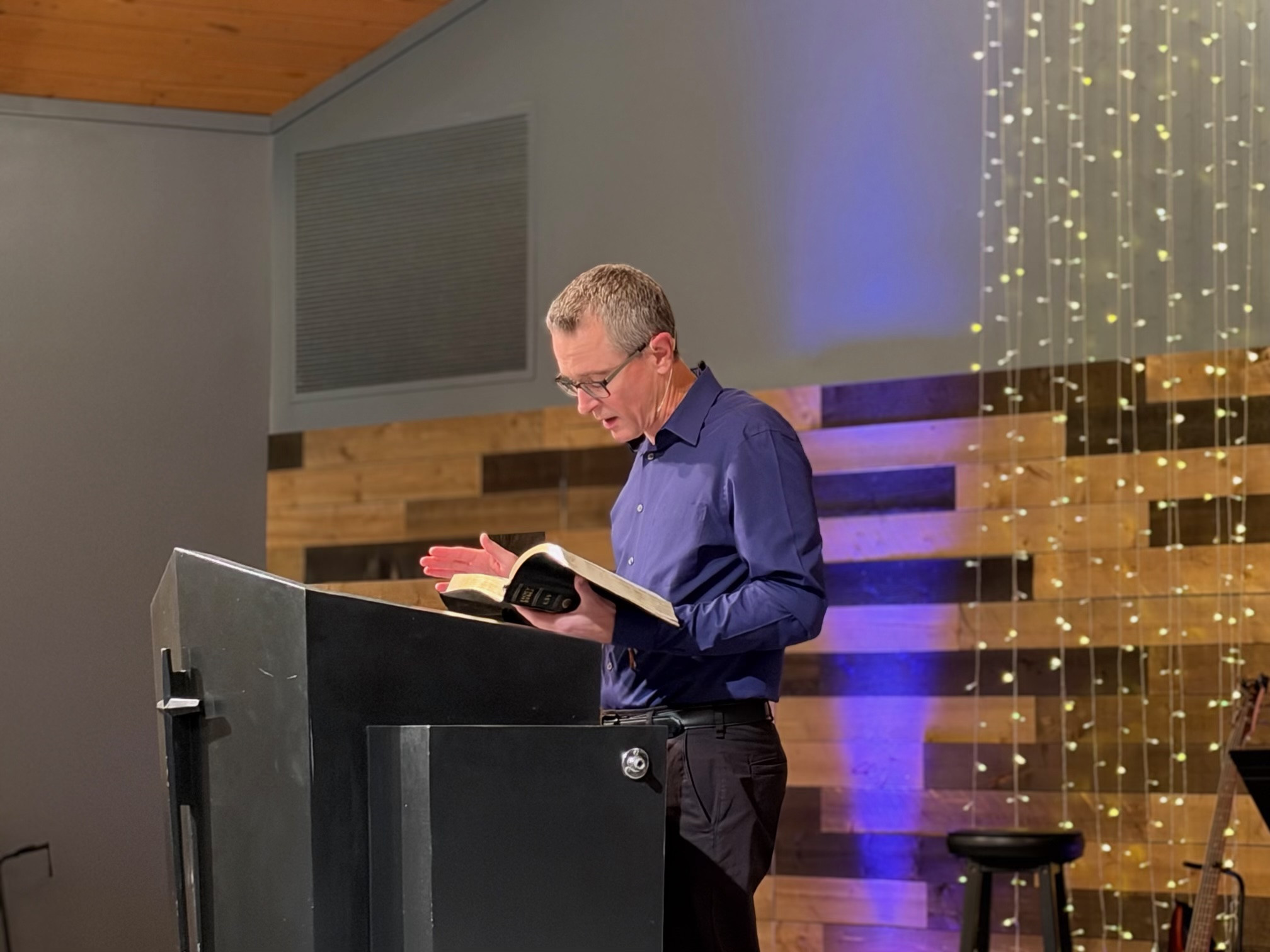
The following is a lightly edited transcript generated from the audio; it may contain small errors.
[audio unclear] him like a dove. Then a voice came from heaven. [audio unclear] tempted by Satan, and was with the wild beasts, and the angels ministered to him. After John was put in prison, Jesus came to Galilee preaching the gospel of the kingdom of God and saying, the time is fulfilled, the kingdom of God is at hand, repent and believe in the gospel. Now I think I pointed out earlier that when you look at Mark, well, we have four gospels, right? Three of them are called synoptic gospels. Those are Matthew, Mark, and Luke because they all cover generally the same material. But if you read the gospels closely, what you find, you find many similarities and you also find differences. And one of the differences is the order in which the various evangelists will talk about various events in Jesus’ life. Excuse me. And if you try to do a harmony of the gospels, you can do a pretty good harmony, but you can’t do an exact harmony. And that frustrates some people, and some people even use that as an argument against the reliability of the Gospel record. But in fact, each writer has certain purposes in mind in how they arrange the material.
And the way they arrange the material, it’s like a shining light on a particular event [audio unclear] and the temptation of Jesus and his entrance into ministry are all one thing. That his baptism and his temptation were essentially preparation, necessary preparation for his public ministry. They can’t be separated. They have to be thought of together. And so by bringing them together, he forces us to think about them together. Another thing you’ll notice about Mark as we look at Mark more is Mark will, although he leaves out a lot of things, he adds things. There’s little things in Mark that are nowhere else in the Gospels. An example, and we’re going to talk about this a little bit more later today, an example is when Jesus is tempted in verse 13, and it says, he was tempted by Satan and he was with the wild beasts. He just throws that in there. So he gives us So he gives us something, even though in one sense he’s giving us less, and in another sense he’s giving us more, because he adds things that we do not see in the other Gospels. And why he mentions that we’ll talk about a little bit later. It’s actually a very fascinating fact to me that he mentions that.
So let’s look briefly at the baptism of Jesus.
Again in verses 9 through 11, it says, And it came to pass in those days that Jesus came from Nazareth of Galilee and was baptized by John in the Jordan. And he immediately coming up from the water, or some manuscripts out of the water, he saw the heavens parting and the Spirit descending upon him like a dove. That a voice came from heaven, you are my beloved Son, in whom I am well pleased. Of course, many lessons could be drawn from the baptism of Jesus, but I just want to mention a few. And the first is this, or let me first ask a question. Has it ever crossed your mind why Jesus was baptized?
Why did he get baptized? Because if you notice, when John’s talking about baptism earlier in this passage, in verse 4 it’s referred to, a baptism of repentance for the remission of sins. And then in verse five, it says that those from Judea and Jerusalem came to John, and when they were being baptized, what were they doing? It says in verse five, they’re confessing their sins. So there’s a sin thing going on with baptism. There’s a relationship between baptism and sin. So here comes Jesus to be baptized. But Jesus didn’t sin. So what’s going on here? He’s not being baptized unto or for or because of the remission of sins because he wasn’t a sinner. So we know from the other Gospels, John objected to Jesus being baptized And Jesus said, it’s necessary for us to do this to fulfill all righteousness.
So this is the right thing to do, he says, for him to be baptized even though he wasn’t himself a sinner. Why was this the right thing to do? Because this goes to the heart of Jesus’ mission. Jesus’ mission. When Jesus came, Mark tells us that this is the gospel of Jesus the Christ, the Son of God, Jesus the anointed one. The term anointed or Messiah was really a general term for things, many of the terms we use for Jesus, but one of them being Savior. When Jesus came, He came to save good people. Is that true [audio unclear] Jesus came to save sinners. So here all these people from Judea, Jerusalem coming out to John’s baptism. They’re being baptized unto the remission of sins. They are confessing their sins. They’re saying we are sinners, some of them sincerely others not, as we learn from the other gospels. And here comes Jesus, the sinless one, the one who is without spot or blemish, This Jesus comes in the midst of all the sinners, and just like the sinners Jesus gets baptized. What is he doing?
Jesus is identifying Himself with the sinner. The baptism of Jesus in a way is a public symbol of what the incarnation was all about that the Holy One, the Holy God, the Holy Son of God, Jesus, would become a man.
Even though he himself was sinless, he identified himself with humanity, not just in a figurative sense, but in a literal sense by taking on human nature. Jesus took our nature upon him, except for sin, but identified himself with a sinful human race. And this was necessary for Jesus to do in order to be the Savior of sinners.
He had to be like them. He had to identify, if you will, with them. When you read the Gospels, you know the Pharisees didn’t like Jesus, right? Some of them did, but a lot of them didn’t. And one of the common criticisms of Jesus in his life is that he was hanging around sinners. He wasn’t hanging around the holy people, he was hanging around the unholy people. And Jesus said several times when he was criticized for that, I came to call sinners to repentance, not the righteous. Those who are well do not need a doctor, those who are sick. In other words, these are the very people I came for. These are the ones that I am here for. I am here for the sinners. So Jesus in his baptism made a public identification really with all of humanity, but essentially with fallen humanity because this right or symbol of baptism was linked to the idea He was not confessing that he was a sinner, but he was confessing that he was one with the sinners. Amen.
Grace upon grace, amen.
Amen.
That’s why John says, Grace upon grace when Jesus came. The Holy One would dwell with sinners. Would identify himself with sinners. Grace upon grace. So Jesus is identifying himself with sinners, himself with sinners. But what’s striking about this is that while he’s doing this profound act of humility, the Father then speaks from heaven. Notice here it says in verse 10, “…and immediately coming up from the water, he saw the heavens parting and the Spirit descending upon him like a dove.” By the way, the word here, parting is the word being rent open. And this is one of the other things Mark does, he’ll use words different from the other gospels and we get a little insight because this word is used where? You know, the word rent. When the veil in the temple was rent. Exactly.
So the heavens are rent open and there’s a voice and the voice says to Jesus, you are my beloved son in whom I am well pleased or in other the other gospels one of the other gospels you are my beloved son in you I am well pleased of course the same thing so we see here something really striking is that while Jesus is identifying himself with sinners God is identifying Jesus as a son is that cool As Jesus submits, and remember, this was an act of humiliation for Jesus to do this.
As Jesus was humbling himself to the Father’s will, to the Father’s call as Messiah and Savior. As he was identifying himself with the sinner, the Father then speaks and says, this is my beloved son. By the way, [audio unclear] Neither does Psalm 2 apply to the baptism of Jesus. You know what Psalm 2 is? You got it memorized? You should. This is where God speaks to his son in the Old Testament. He says, you are my son, this day I have begotten you. like, well, what day is that? Well, some apply it to the baptism of Jesus and say this was the day when God declared begotten not literally born, but declared and acknowledged the sonship of Jesus. But when we read the book of Acts, that text in Psalm 2 is not applied to the baptism of Jesus. What is it applied to? You don’t know? Okay, you’re an assignment this week. So read the book of Acts. Memorize Psalm 2 and read the the book of Acts. All right, got it? You’re like, sure. In the Bible, the text in Psalm 2 where God says, “You are my son. This day I have begotten you,” is applied to the resurrection of Jesus. The resurrection of Jesus. Here God, at the baptism God speaks and says, you are my beloved son. Where else does he say that in the Gospels? Do you remember? Oh, you guys need to start reading your Bibles. How about that? Why don’t you try that, okay? At the transfiguration, again the voice comes from heaven. He says, this is my beloved son. He’s talking to Peter and James and John. They wanted to build three tents for, you know, Jesus and Moses and Elijah and God speaks and says, Moses and Elijah are really cool, but they’re not the point. Okay, the law and the prophets, which they represented, speak and point to my son. Hear him. Hear him. It’s about him. So God speaks again at the transfiguration, says, this is my beloved son. And then in Acts 2 we’re told that when Jesus was taken out of the ground literally, resurrected, that God was declaring declaring publicly, this is my son that I have begotten. Now it’s an interesting question whether Jesus already knew he was God’s son. And theologians write a lot about this kind of stuff. They gotta do something, right? Those long office hours. But I will say this. When we read the Gospels, we moderns, if we’re evangelicals, we do have a tendency to downplay the humanity of Christ. Amen? And so and so what happens is we I think we miss a lot of why different things happen and the way they happen and so Jesus, you, you remember when Jesus was remember that they went to Jerusalem his family takes off and leaves him there which I think is just hilarious my brother got, one time when we were young And we went out to a family picnic thing. We got home and then we realized we left my brother at the park. Now if you have six kids or more, you probably understand how that can happen. So he gets left. All of a sudden we get a call from the police saying, we have this little boy here. He says that he’s your son. Fair enough, went down there and he’s sitting there eating ice cream cone at the police station. He thought it was cool. But he does talk about that story a lot. It was a defining moment. It was definitely a defining moment. Just as this event in the life of Jesus was a defining moment. Because in his humanity, I mean think about this. Think about the realization that you are the Son of God.
The realization that you are the Messiah. The realization that you are the Savior of the world. The realization that at some point in your life you will bear the sins of the world upon your back. Do you know what I mean? And Jesus didn’t like, you know, just come out of the womb like, and he just knew all his humanity developed and in his humanity his human consciousness developed and he grew it even says in Luke that he grew in wisdom and stature he grew in his understanding of his calling are you hearing me okay so this was an important defining event in the life of Jesus because this was a confirmation of what he had come to believe about his call because remember back in Jerusalem when he was 12 his parents say, hey, what are you doing? You know, you’re supposed to be in the caravan, not the van, the caravan. And he says, don’t you know, I mean, Jesus is like so like, you know what I mean sometimes? It’s not like, mom, I understand, but boom. Don’t you know I’m supposed to be about my father’s business? In other words, don’t you understand that I’m called to be doing what I’m doing right now? And one of the most beautiful lines in all of scripture to me is when it says that He He went with them and was subject to them. Now think about this. Jesus at 12 at least knew that he had some type of messianic calling. How much he fully understood we don’t know. But he knew enough that he was supposed to be in the temple teaching, asking questions and listening. So from that time until this day that we’re looking at here in Mark was 18 years.
Some of us can’t wait 18 minutes for God to answer a prayer. 18 days? 18 months? 18 years? those years I believe were necessary in the preparation of Jesus for his mission.
He had to grow in wisdom and stature and knowledge. He had to learn the discipline of submission. How do I know this?
Go to the book of Hebrews. Put a ribbon in Mark and if you’re on your computer do an electronic bookmark. Go to the book of Hebrews. It says in Hebrews 1, it says, well I’m going to read 1 through [audio unclear] 3. God who at various times, and I’m reading the New King James, at various times and in various ways spoke in time past to the fathers by the prophets, has in these last days spoken to us by his Son, whom he’s appointed heir of all things, through whom also he made the world, who being the brightness of his glory, and the express image of his person, and upholding all things by the word of his power, when he had by himself purged our sins, sat down at the right hand of majesty on high. This is an exalted, glorious person. Amen.
But notice Chapter 2. verse 5, for He has not put the world to come, of which we speak, in subjection to angels, but one testified in a certain place, saying, what is the man that you are mindful of him, or the son of man that you take care of him? He’s quoting Psalm 8, you have made him a little lower than the angels, you have crowned him with glory and honor, and set him over the works of your hands, you have put all things in subjection under his feet. Now But the writer of Hebrews is quoting Psalm 2 and applying it messianically to Jesus.
Go on to verse 8, For in that he put all in subjection under him, he left nothing that is not put under him. But now, but now, we do not see, we do not yet see, all things put under him.
Everybody’s saying that God has placed all things under the rulership and authority of His Son. All things were to be subject to the Son. But we don’t see that yet. It’s being unfolded in history. Verse 9, But we see He who is made a little lower than the angels for the suffering of death, crowned with glory and honor, that He by the grace of God might taste death for everyone. [audio unclear] Amen? Notice verse 10, for it was fitting for Him, for whom all things, for whom are all things, and by whom all things are made, in bringing many sons to glory, to make the captain of their salvation, that’s Jesus, perfect through sufferings. For ye who both sanctify and those who are being sanctified are all of one, for which reason He is not ashamed to call them brother, and saying, I would declare your name to my brethren in the midst of the assembly I will sing praise to you. When Jesus was baptized he was in the midst of the assembly, he was in the midst of the brethren, the people of God, and he was praying. Says in Luke, this was being fulfilled even that day. Not to mention that it’s fulfilled even this day. And again I will put my trust in him. And again, here am I in the children whom God has given me. Inasmuch that as the children have partaken of flesh and blood, he himself likewise shared in the same, that through death he might destroy him who had the power of death, that is, the devil, and release those who through fear of death were all their lifetime subject to bondage. For indeed he does not give aid to the angels, but he does give aid to the seed of Abraham. For in all things he had to be made like his brethren. See this? In all things he had to be made like his brethren. That he might be a merciful and faithful high priest and things pertaining to God to make propitiation for the sins of the people. For that he himself has suffered being tempted, which we’ll talk about in a moment, he is able also to aid those who are tempted. But he was made like his brethren in all things. This was part of what Jesus was doing in his baptism. He was subjecting himself to the requirements that others were subjected to. When Jesus Christ saves us, are you listening? When Jesus Christ saves us, He not only gives us what is called His passive obedience, meaning the merit of His suffering on the cross, He gives us His active obedience. The reason I am righteous in God’s eyes is because the righteousness of the Son has been imputed to me and that righteousness was a life of obedience for 30 years before this day in Mark.
Where he was subject to the Father and all the requirements of the law. So Jesus fulfills the law. He was subject to the law. He was subject to the will of the father, he was obedient to his parents. God in the flesh. So what’s your excuse? Well, if you knew my parents, they’re jerks. Let me say this. When you’re perfect like Jesus, you realize a lot of people are jerks. And because you’re perfect, you can really see other people’s faults. You know what I’m saying? Yeah. I’m sure that Joseph and Mary had their moments. They were sinners like you and I, right? But Jesus was subject to them. And this was part of his discipline and part of his training and even part of his suffering for us. It was preparation for his messiahship, if you will, that he could complete the work that he came to do in saving sinners. That’s you and I. So God honors the obedience and humility of Jesus.
And when he’s baptized, he says from heaven, you are my beloved son in whom I am well pleased. So there’s nothing in Jesus to displease God because as we know, he was perfect, he was spotless, he was sinless. Now, it’s really an interesting question if other people heard the voice. Because none of the passages, none of the gospel doesn’t it say they heard the voice. Now it says in John, John says he saw the dove. So I think other people saw the dove. But did they hear the voice? It’s interesting isn’t it? I think heard the voice. But it doesn’t say they heard the voice. But I think that because I think God was testifying and confirming who Jesus was before the people to kind of inaugurate his ministry, if you will. You hear what I’m saying? Maybe, maybe not. But certainly Jesus Jesus heard it. He heard the voice and the dove came upon him, which of course was the Holy Spirit. Now I don’t think Jesus got the Holy Spirit that day. I think Jesus had the Holy Spirit. I think Jesus was set apart by the Holy Spirit in his mother’s womb. Matter of fact, the Bible tells us Jesus was really conceived by the Holy Spirit. Right? So the Jesus had the spirit, but he received this day an anointing of the spirit. And if we look in the Old Testament, when we see the anointings in the Old Testament, usually with wine, excuse me, with oil, these anointings were on prophets and priests and kings. And so when this anointing came on Jesus, when he was anointed as the Messiah, and Messiah, what does it mean? It means anointed one. Christos anointed one. When he was anointed, it was God’s public affirmation that Jesus was indeed the Savior, the prophet, the priest, and the king of God. And this anointing was the endowment from God which gave Jesus the power to fulfill his calling. Is anybody listening? the power to fulfill his calling. And when you read John, which you should read, you should read all the gospels this week. Can you do that? And act. Before it done today, you’ll have to read the whole New Testament. John tells us that the spirit was given without measure to Jesus. Without measure. That’s why John would talk about we receive grace upon grace. We receive the spirit from Jesus. Jesus, man, I should have, I should have, I should have, no I won’t, I’ll make a mess, okay. But the idea is this, the idea is you take a glass of water and you take a picture and you pour it, not until it’s full, you pour it until it’s overflowing. It’s overflowing. In Psalms it talks about how good it is for brethren to dwell in unity, right? And it uses a couple of analogies of how great it is. It talks about the dew on the mountains. Now if you live, you’re like, I don’t like dew, personally. R [audio unclear] The grass likes the dew, right?
Because it causes it to grow, nurtures it, refreshes it. It’s a good thing. Dew is a good thing. But not dew. No, dew is a good thing. And then the psalmist says also, this place of blessing and fellowship, it’s like the oil, he says, that ran down Aaron’s beard. Now, Aaron was the priest, right? And he was anointed with oil for his office.
I want you to think about this. He doesn’t say it’s like the oil on Aaron’s head. It’s like the oil that is on his beard. And then he says, that ran down his skirt. The oil was poured on him when he was anointed for office in such a way that it covered his body. It wasn’t a little drop. No, this is important. When Jesus was baptized and the Spirit was, the dove came. This was an anointing on Jesus where the Spirit filled him without measure.
It is the spirit, it is the oil that was on his head and on his beard and it covered his entire body. And you are members of his body. We are anointed if we are part of Jesus’ body. If we are in him, we are anointed with the same Holy Spirit that came on Jesus.
It’s just true. Read 1 John. There you go. Before we’re done, you’ll read the whole New Testament this week. He says, we have an anointing from the Holy One. The Spirit anointed Jesus, filled him without measure. God identified Jesus as his beloved Son, his unique and only begotten son, but because we are in him, we have that anointing. And because we are in him, listen, listen now, we have his sonship too. We can be called the children of God. As a matter of fact, in the Gospel of John, even before the baptisms talked about, John says Because he came to his own, but his own did not receive him. Clearly his own there being the Jewish nation as a whole. But to as many as did receive him, to them he gave the power or the authority to what? To become the children of God. And when we put our faith in Jesus Christ and we become members of his body, we then become a son or a daughter. We become a child of God. Now I’m going a say something that’s going to blow your mind. You ready? Bring it. When Jesus looks at his church, he says, you are my beloved.
In you I am well pleased. Now I know what you’re thinking. He can’t be pleased with the church because it’s a mess. He can’t be pleased with me because I’m a mess. Well we’ll all agree you’re a mess. But you see, God doesn’t look at His church apart from Jesus Christ.
There isn’t Jesus over here and the church over here. I mean the real church. I don’t mean the visible church. The visible church is really a mess. I mean the church, the invisible church, the church that is united to Jesus Christ through the baptism of the Holy Spirit. When we are born of God’s Spirit, we enter into the body of Christ and we enter into Christ and there is now a union between me and us and Him. We are the members, He is the head. It’s real. I mean, this is not just a figure of speech to teach us something. It’s real.
There’s a real union between the believer, or should I say between the church and Christ. And it is a spiritual union created by the the work of the Holy Spirit. is identified here as the Messiah, the Savior. He’s pointed out, he’s marked, if you will.
He’s anointed. God speaks, God declares, God affirms that this is true of Him. Right? But God has declared that we are His children too. And God has confirmed that by giving us His Holy Spirit. Look at Romans 8 for a moment. You might as well read the book of Romans and speak too. Romans 8 verse 9, but you, meaning the true believer, you are not in the flesh, you’re in the spirit, and if indeed the Spirit of God dwells in you. Now if anyone does not have the Spirit of Christ, he is not his, he’s not Christ. But if you do have the Spirit, you are Christ, because you’re now joined to Christ. Right? And if Christ is in you, the body is dead because of sin, but the Spirit is life because of righteousness. Now go on and look at verse 14. For as many as are led by the Spirit of God, these are sons of God. Sons of God. What was Jesus called? The Son of God. For you did not receive the spirit of bondage again to fear, but you have received the spirit of adoption by whom we cry, Abba, Father. And the Spirit Himself bears witness with our spirit that we are the children of God.
When Jesus was baptized and the Spirit came down, the Spirit bore witness, This is my Son. He bore witness to Jesus. You are my Son in whom I am well pleased. When we receive the Spirit of God, we are identified with the Son of God and we become a Son of God and the Spirit confirms that reality to our Spirit and He says to you, you are my beloved child. And if you’ve never heard God speak that to your soul, I wonder if you have the Spirit.
Because that’s what the Spirit does. Verse 17, and if children, then heirs. Heirs of God and notice this, joint heirs with Christ. When we are baptized, and we’re talking about the baptism of Jesus, but remember Jesus through his baptism identified with us, right? He identified with the sinner. He became like them except for sin. But when we are baptized, we are identifying with Jesus, right? We identify with Him, because He has many members, called the Church, we identify with the Church.
So baptism is about identification. So when we are baptized, we are no longer identifying ourselves with the world, the thoughts of the world, the ways of the world, the philosophy and customs of the world. We are now identifying ourselves with Christ just as He was willing to identify Himself with us. And so when we receive His Spirit, we become one with Him and we become one with His people.
We are branded. We’re branded.
Well, I had a lot more to say, but I guess I’ll have to wait till next week. Maybe I should talk a couple more minutes. You know that doesn’t mean a couple, that’s the problem, right? Well I’ll just say a few more things. I wanted to talk about the temptation, but the only thing I’ll say about it now is, we know from the other accounts that when the devil attacked Jesus, what did he attack? Say it. His Sonship. He didn’t say, if you’re a good person, do this. Or if you’re religious, do this. Or if you’re holy, do this. If you’re a good Jew, do this. No. He said, if you’re the Son of God, well gee, why do you think you attack that? It is the foundation of the entire life and work and message of Jesus. Jesus didn’t come to make us better people. Jesus didn’t come to make us religious. Jesus didn’t come to just build a church so we could all have social time on Sunday morning. Jesus came that the one Son would make many sons.
And you’ve probably heard a million times, those of you that have been raised in Christian homes, and I, you know, it’s a great blessing sometimes, and our times it’s not a blessing. Because you can get, you get inoculated, you hear things, you just hear them, you’re like, okay, then it’s all just jumbled around in your head, but it doesn’t mean anything. But how many times have you heard, you know, you can have a relationship with God? But I don’t know how many of us really understand that. that really means? I mean a relationship. Now here’s the problem. Here’s one of the problems. When Jesus, excuse me, when God said to Jesus, you are my son, he’s also saying I am your father. Right? Now, if you grew up in a home without your father, you can be dysfunctional. That word father carries a lot of positive connotations for you. Right? It means security, it means protection, it means provision, it means warmth, it means counsel, it means a lot of good, it’s a good thing. Have a father is a good thing. But we live in a culture now where the family is this being decimated, right? I mean, I don’t know what the percentages are, but I mean, it’s bad. And not only do we have many children growing up without fathers, we have children growing up with bad fathers. Now, my father was bad. He was an alcoholic. He was bad. And that shaped my perspective on God. In fact, I believe that was one of the reasons that I didn’t come to Christ sooner in my life, because I had a distorted image of God based upon the fact that I had an abusive father. But even after I came to Christ, I realized, as I grew in grace and understanding, that I had to work through my father issues because they were impeding my intimacy with God my Father. And although I called God my Father, I don’t know how many times I said, Oh Father God, you know, we like that one don’t we? Father God. Well we do it all the time don’t we? Father God. We don’t even think about what we’re saying. I mean think about what you’re saying when you call God your Father. I mean that’s why, you know, Paul, he says Abba Father, he’s trying to get a point across. It’s not the remote father, it’s the intimate father. It’s not the abusive father, it’s the loving and caring father. It’s the father that, not the father you know about, but the father that you know. You have a relationship with this person called father. And it’s a good thing. But when you grow up in an abusive environment, you hear the word father, it doesn’t mean anything. It might even mean something bad. It might even make you uncomfortable, I don’t know. But by saying that you are a child of God, that you’re faith in Christ, you’re saying that God is your Father. And one of the things that you will need to do as you grow in grace is you will need to come to terms with the Fatherhood of God. In light of your background with your Father, whatever that may be. And God is so good because He will shepherd you through that. And if you allow Him, He will teach you who He is. He will show you what a good Father He is. What a kind, loving, compassionate, nurturing Father He really is. But it’s something you will have to press into. It’s something you will have to pray. And at times you may even need to strive and struggle with God to come to a place where where you can truly embrace what it means to have God as your father. Jesus, the Son, did not save you from God the Father. He saved you unto God the Father. He saved you for God the Father. So when Jesus went into the wilderness, that sonship was attacked because that’s the foundation of our identity of who we are. I am a child of God. And everything that I have is because I am God’s child. Everything I have is because being united to the unique Son, I am now a son and I am a joint heir with him. And the devil wants to attack who you are in Jesus. And let me just say this, this is so important because if you don’t understand and walk in the reality of your sonship, your Christianity becomes legalistic. Any amens? It’s the fruit and the overflow of a relationship.
That’s what real Christianity is. It’s the reality of my relationship with God overflowing and touching others. That’s really, I mean, it’s that simple.
Let’s stand and pray. Lord, we thank you so much that You condescended to become one with us. It truly is incomprehensible to me how You, the Holy One, would identify with sinners, but you did. And we thank you for it. I pray, Lord, that the depth of that identification of You with us and us with You would be unveiled for us. I pray for those here today, Lord, who really don’t understand your father. They don’t understand true fatherhood. I pray, Lord, that through your ministry and the ministry of your spirit, you would reveal the father to them. Lord, you even say that that no one knows the Son but the Father, and no one knows the Father but the Son, but that the Son reveals the Father. And so Jesus, I pray that you would reveal the Father to us, so that we might fulfill the calling and the mission you have for us as children of God. Lord, I’m just reminded as I contemplate this text of Your abundant grace that our sonship, our possession of Your spirit, our identity, it’s all a gift because You are obedient to Your Father. We thank You, Jesus. You are so good. Amen.