
October 22, 2023
Seeking the Above Things – Colossians 3 : 1-4
Dr. Michael A. Bond · Colossians
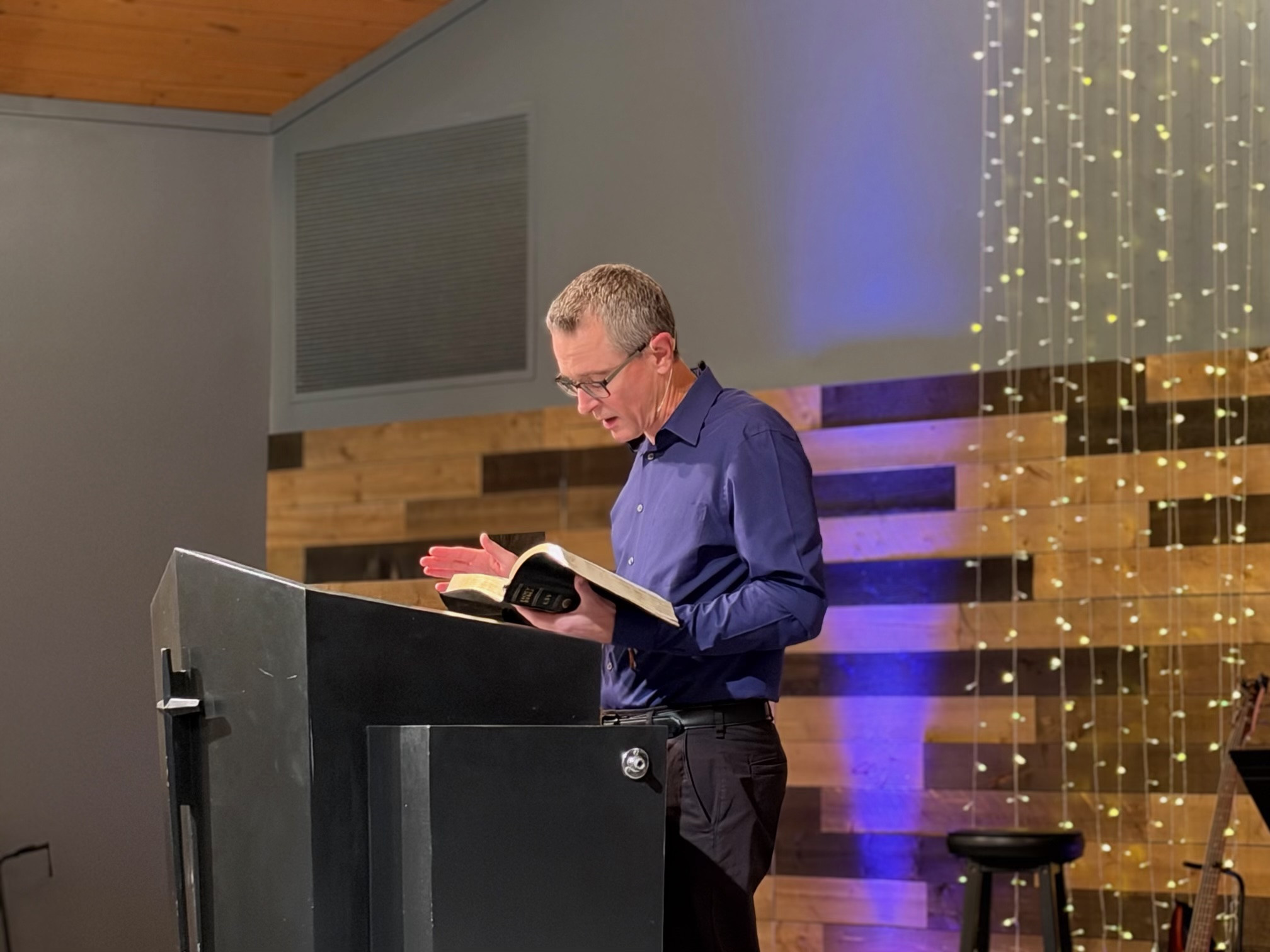
October 22, 2023
Dr. Michael A. Bond · Colossians
The following is a lightly edited transcript generated from the audio; it may contain small errors.
Good to see you all. Let’s turn to the book of Colossians chapter 3. And before we read the Word, let’s go ahead and pray. Father, we come before You with grateful hearts. We’re thankful for the salvation that we have in Jesus. We thank You that we’re privileged to come together and worship You as brothers and sisters in Christ, that we are Your children and we can worship You unashamedly. We can offer You our requests, and that You hear us, our great heavenly Father. Lord, we ask that You would continue Your work in us and through us. We pray that You would continue doing Your work through this church. Lord, bless the children that are getting ready for the Christmas program, and bring many of their friends and family to see that and also hear the gospel. We continue to pray for the gospel that went forth at the fall party, that those seeds would grow, You would cause them to grow and give them the growth, Lord, and bear much fruit, Lord. You say the harvest is plentiful. And so, Lord, we pray You’d give us the harvest. Thank You that You are the Lord of the harvest and that You are gracious to bring many, many, many people to know You. Bless our time now, Lord, as we look into Your Word, in Jesus’ name, amen.
Colossians 3 verse 1, it says,
If then you have been raised with Christ, seek the things that are above, where Christ is, seated at the right hand of God. Set your minds on things that are above, not on things that are on earth. For you have died, and your life is hidden with Christ in God. When Christ who is your life appears, then you also will appear with Him in glory.
(Colossians 3:1–4, ESV)
Here’s my question for us. Do we believe this? Like, do we believe it? And if we believe it, does it make a difference in our lives? It’s really not a rhetorical question. I mean, does it make a difference? Yes, right? So the Scriptures matter, truth matters, and that means doctrine matters. And what we’re reading here is a hundred percent truth. A hundred percent. It’s without error.
And when we talk about inerrancy, there’s different terms that are used to describe what the Bible is. And when we talk about, oh, you know, you might talk to someone and they’re like, I believe the Bible. Well, what do they believe about the Bible? I mean, that statement, I believe the Bible, generally understood given the context of the people that we’re talking to, it probably entails certain things, and maybe those things are given, but we shouldn’t always assume that. So when we talk about believing the Bible, one of the words we might use is inerrancy, and it just kind of means what it sort of sounds like: the Bible’s without error. So it does not affirm anything that is contrary to fact. Big or small, there’s no errors whatsoever. Not just on theological matters, but on all matters. If the Bible speaks to it, doesn’t matter if it’s about agriculture, animals, whatever it might be, it’s without error. That’s the idea of inerrancy.
Infallibility is another term that you’ll see used sometimes, and that’s the idea that the Scripture does not lead us astray. It does not, will not, and is not able to lead us astray. It will not fail. So when someone talks about, I believe, the infallibility of Scriptures, that means like the Bible will never lead us in the wrong direction. It won’t say, oh, this is the way to get saved, but oh, actually there’s another way. No, it’s infallible.
And then when we talk about inspiration, a lot of people might use the term God-breathed, coming from 2 Timothy chapter 3 verse 16 and 17. You could literally translate that section there, God-breathed. But inspiration refers to the words of Scripture being spoken by God. Literally, God-breathed. Now when you get into inspiration, you know, God supernaturally guided the authors of the Bible to write exactly what He wanted them to write. Sometimes when you look at inspiration and you start reading some of the books, it’ll talk about different aspects of inspiration. So you’ll talk about the verbal inspiration or the plenary inspiration. When we talk about verbal inspiration, it just means that every single word of Scripture is the word that God wanted to be there. He inspired the words, not just like the thoughts or the ideas, but the words. And the beauty of that is that’s one of the reasons like when a particular word is there, it’s not just like, oh well, God inspired that author to kind of write however he thought, and that’s just the word he chose. No. Like God wanted that particular word there, which means it’s important for us. I mean, Jesus kind of talks about like every jot and tittle, right? Those aren’t… when He talks about jot and tittle in the Hebrew, those aren’t even letters. Those are like little marks that aren’t even really the letters. So He’s like, even all the way down to the grammar, their pronunciation, like all of it. So it’s the same thing here when we’re talking about the verbal, it means every word of Scripture is God-breathed, every single word, every single word.
That also means when we talk about the verbal plenary, that word just means complete or full. So the idea is that when we talk about God’s Word and we use that word plenary, it means all parts of the Bible are equally of divine origin and equally authoritative. It’s full, it’s complete, all of it from Genesis all the way through the Revelation. That includes the Colossians passage here, right? Verbal, plenary, inspiration, infallible, inerrant. That means we can take great hope when we come to this Word. We can have confidence. God says what He says. Is He a liar? No. His Word is true. We can take confidence in that.
So this is the teaching that we have before us today. You could use the term doctrine. Doctrine just, I mean, it’s just from, well, it’s actually probably from the Greek and the Latin, but it just means teaching. And here’s something interesting. This is a quote from Alister McGrath. He says this. It’s a little bit heady and wordy, so listen to it, and then I’ll dig into it a little bit. He says, “Christian doctrine offers us a subject we’re studying in its own right. Yet its supreme importance lies in its capacity to allow us to pass through its prism and behold our world in a new way. Theology is not the agent of this transformation. It is, however, the agent of its disclosure.” In other words, theology discloses to us biblical truth. But the question is, what or who changes us? Right? God, right? I mean, He’s the one that is doing the work. So the agent that changes us is God. He’s the agent of transformation, but how is it disclosed to us? How is that information disclosed to us? It’s through theology. It’s the agent that gives us the information. So it’s the agent of disclosure.
What happens sometimes is people get so focused on their theology, they miss the person behind the theology, God Himself. So you get people who get so intellectualized and so focused on the academic side that the theology becomes the primary thing for them instead of God Himself being the focus. So all sorts of, and the pursuit of knowledge and biblical knowledge and intellectual pursuit of what God, those are good things. But when wrongly placed, then can become an idol in your life and can get you off track. Even something like theology, you can get so focused on the theology, you forget about the relationship with Christ that you have. Now the flip side is also true. And all of us probably lean one way or the other. We get really focused on the intellectual and then we actually forget about the relationship and just enjoying our relationship with Christ and pursuing Him. Other people are so focused on that pursuit that like that academic stuff and what the Word says in doctrine, they’re just like, oh, you know, doctrine, that’s like boring stuff. Well, doctrine is hopefully what you’re hearing every week from the sermon. Like it’s the teaching, but it’s the teaching of none other than what we’re studying is God Himself and what He says about us and what He says about His world, and what He says, most importantly, about Himself. So, I mean, we’re learning about God, and hopefully that helps nurture your relationship with Him. And as you see who He really is, and as you come to see that more clearly, we’re seeing through the glass dimly, right? But we can clean that glass a little bit and see through it a little bit better. Well, that’s what doctrine, that’s what theology allows us to do. And as we see God more and more for who He is, guess what happens? Our minds are blown. We’re in awe. And what is the result? We’re bowed down, and we’re worshiping Him. We’re glorifying His name. Amen? So this is why we dig into the Scriptures. Each word is put there by God. His Word does not lead us astray.
So when we come to chapter 3, if you’re there with me, and we read this passage, “If then you have been raised with Christ,” we know that the Lord is making true statements to us, and He wants to teach us something about Himself and about us. “If then you’ve been raised with Christ, seek the things that are above where Christ is seated at the right hand of God.” Now this conditional clause, the word if there in verse 1, it’s very similar to what we saw in chapter 2, verse 20. “If with Christ you died to the elemental spirits of the world.” There’s different types of conditional clauses in the Greek, it’s kind of neat because depending on the construction, it leads us in a direction of understanding the passage more accurately. In this case, we would just consider it a first-class condition where the first clause, the if clause, is assumed to be true for the sake of argument. So he’s saying, if you have been raised with Christ, and I know you have, then seek the things that are above, where Christ is seated at the right hand of God. Same thing with chapter 2, verse 20. If with Christ you died to the elemental spirits of the world, he’s saying, and I know you have, then therefore do these things.
Listen, I want to make sure that we realize and understand how intricately linked with Christ we are as believers. Listen, look back in verse 3. “For you have died.” Well, what’s the result? “And your life is hidden with Christ in God.” So Christ died. And because you’re in Christ, guess what? You died. It’s the whole Galatians 2:20. “I have been crucified with Christ.” And so the life we live is what? It’s now in faith. It’s now found in Christ. But look back at verse 1. So Christ died and we died. Christ is raised. And then it says, if then you have been raised with Christ, and the idea is, yes, you have been. So Christ is raised and we’re raised. So it’s like what is happening to Christ, we get — why? Not because we’ve done anything, not because we’re divine. No, because we’re found. We’re found in Christ. We’re united with Him. Then notice what it says. “When Christ, verse 4, who is your life appears, then you also will appear with Him in glory.” So Christ appears. And guess what? We appear. He’s glorified. Guess what happens? We’re glorified with our glorified bodies. So our identification with Christ’s death leads to our identification with Christ’s resurrection. Why? Because Christ’s death leads to His resurrection. And each one of us here, hopefully, we want to be a part of the resurrection with Christ. Well, guess what? We have to be part of the death of Christ, right? We are going to be able to identify not just with His resurrection, but with His death. In real identification with Christ’s death, it necessarily ends up leading us to His resurrection. Okay, Christ died. What happens? He’s buried. He’s raised. This is why we want to make sure we find our identification in Christ. Listen, He is the one who defines who we are. He defines who we are. And so the world is going to say all sorts of things. The devil is going to say all sorts of things. Our flesh is going to say all sorts of things. No, your identity is who you are in Christ. And that’s where you find your identity. He defines who you are. And so you are a blood-bought child of God. You’re covered in the Lamb’s blood. Therefore, Romans 3 says that we’re justified by His grace as a gift. He gives you identity. He’s the one who bought you. And guess what? He owns you. He’s the one who gives you the identity. And you’ve got a passport. The Bible says in Philippians, your citizenship is in heaven. Okay, you’ve got a passport, that’s where you’re going. Your identity, child of God. You should not find it in your intelligence. That’s not where your identity comes from. Not in your education, not in your skin color. None of those things. Your identity, primarily child of God. God is the one who identifies and defines and tells us who we are. And so we do an injustice to God when we let the world define us and give us our identity, or when we define ourselves and give ourselves the identity that we want. We’re skirting what God has said about us and we’re just making up our own truths. Back to this, if it’s true, then this is where we turn for the truth.
So because of those things, of what we have in Christ, because we’re united with Him, and because of who we are in Christ, therefore it says, seek the things above and set your mind on things above. So there’s two commands we’re given here. First one is in verse 1, seek the things that are above. Second one is in verse 2, set your mind on things that are above. Listen, a few important things here. In Christ, you can actually seek the things above. Think about that for a moment. In Christ, you can actually seek the things that are above. If you’re not in Christ, you can’t seek those things. You really can’t. In Christ, you can actually set your mind on things above. Unregenerate man cannot set his mind on things above. It’s not possible. But you can. And in Christ, you can actually keep your mind off of earthly things, earthly distractions. The unregenerate man cannot do that.
So seek the things above. This is in the present tense. It’s an imperative. We’re being commanded to do this, but being in the present tense, it means continuous ongoing action. It’s not just something you did once. And so too many people treat their salvation as if it was done a long time ago in a galaxy far, far away. I was like, oh, 20 years ago, I got saved, and that was good, and I’m done. No, you’re just beginning. That’s just the beginning. And it’s like there’s nothing for them to do. Salvation is complete. Like, check the box. It’s like part of a bucket list. You go to Mount Rushmore, and go see Niagara Falls, and get saved. No, like your salvation, yes. There’s an initial point at which you’re saved. But guess what happens after that? Then you’re living for Jesus, right? You’re walking in faith. And one of the things that we’re told here, what do believers do? They seek the things above. This is gospel-centered living. The kingdom comes first. Christ comes first. He Himself tells us in Matthew 6 verse 33, seek first what? The kingdom of God and His righteousness. And in Matthew 7 He says, ask and it will be given to you. Seek and you will find. Knock and it will be opened to you. And again the grammar there, the idea is you are asking and you keep asking. You seek and you keep seeking. You knock and you keep knocking. What are we asking and seeking and knocking about? Like what we want? No, no, what He wants. And what suits our whims? No, no, it’s about the kingdom. It is about the kingdom. So the seeking is the desire to have one’s thinking and lifestyle continually oriented around Christ’s kingship over all things.
Then we’re setting our minds on things above, very similar to seeking the things that are above. We must remember that our mindset is a deliberate act of the will. We set our minds, think about it for a moment, one author said, we set our minds on taking a vacation, we set our minds on buying an object, we set our minds on finishing a project, we can set our minds on things above. Again, it’s in the present tense. What does it mean? It means present, ongoing action. We’re setting our mind on it, and we’re continually striving to set our mind on it. It’s not, I got saved, and I’m good to do my own thing. Even if you take someone like Albert Einstein, he was dismissed from his school in Munich because they thought he lacked interest in his studies. And then he failed to pass an examination to enter a polytechnic school in Zurich. And then he became a tutor for boys in a Zurich boarding house, but he was soon fired. But he had a continuous ongoing effort. Continuous ongoing efforts. As a side note, don’t sell yourself short, okay? You can appear, what, a failure after failure after failure, right? Continuous ongoing effort.
Here’s what the Word is not saying, though, when it talks about setting our mind on things above and seeking things above. It’s not talking about a withdrawal from the world. This is not the focus. The focus is not just only on the spiritual. It’s not the physical is bad. Remember, Paul just criticized the asceticism that was going on with the Gnostics. And it would play into the Gnostics’ argument to say the physical was bad. So that’s not what he’s saying. You’ve heard, you know, some people are, you’ve heard probably the cliché saying, you know, some people are so heavenly minded they’re no earthly good. Okay, that’s not what he’s saying. What he’s saying is to make sure that our focus and how it shapes how we live and walk out our Christian life is centered on none other than God Himself.
Here’s what Bonhoeffer said, Dietrich Bonhoeffer. He had a disdain for a worldliness. He said, “Whenever life begins to become oppressive and troublesome, a person just leaps into the air with a bold kick and soars relieved and unencumbered into so-called eternal fields. He leaps over the present. He disdains the earth. He is better than it. After all, besides the temporal defeats, he still has these eternal victories, and they are so easily achieved. Otherworldliness also makes it easy to preach and to speak words of comfort. However, Christ does not will or intend this weakness. Instead, He makes man strong. He does not lead man in a religious flight from this world to other worlds beyond. Rather, He gives him back to the earth as its loyal son.” The point being this, we’re not fleeing this world. This is not a call to flee, this is a call to transform. But it’s hard to transform if you’re still living the old lifestyle. If you haven’t been transformed, it’s hard to be an agent of transformation. So the call is to be an agent of the transformation. Like our hearts are set on things above, we’re not focused on earthly things. Why? Because we want to make sure we’re at a place where God can completely use us. We’re totally sold out for Him. It’s the kingdom-first living mentality, gospel-centered living. So it means that the practical living we do is done out of that focus on heavenly things.
Listen, Colossians and many of the New Testament literature sit this way, but Colossians, we’re about to get into it. We’re given the theology, oftentimes, maybe the dogmatic theology, you might call it, and then we get to the practical theology towards the end of the letter. So it’s not going to be too long before we get to chapter 3, verse 18, and he starts to lay out rules for Christian households. Wives submit to your husbands. Husbands love your wives. Children obey your parents. Fathers don’t provoke your children. That’s pretty practical. But what is he doing? He’s grounding that practical theology in the theology of the Scripture, that dogmatic theology, the teaching first, and then the application of the teaching. So as we’re doing His work, the idea is where is our focus? Where is our attention? It’s on Him. It’s on Him, that’s where we’re focused. So our hope, yes, it is on the next life, but listen, brothers and sisters, God has us here right now. He has us here right now for such a time as this. If He wanted you born 100 years ago, you would have been born 100 years ago. If He wanted you born 100 years from now, you’d be born 100 years from now. You’ve been born right now for such a time as this. He has you exactly where He wants. If He wanted you born in a different country or a different state, He would have done that. Okay? But He didn’t. He has you here. So Acts 17, He appoints times and places for people. You’ve been appointed for this time. So then the question becomes, okay, what does God want me doing right here, right now? This is where He has me. How am I supposed to make a difference where I’m at? If you’re focused on the earthly stuff, it’s going to be really hard. If you’re seeking first the kingdom, and you’re setting your mind on things above and seeking the Lord first and foremost, then He can speak to you and make it pretty clear and obvious, why? Because you’re going to be all over this Word, knowing what it’s telling you to do, knowing it’s telling you how to live, knowing it’s telling you where to go. So our heart is fixed on God. And part of the reason we’re doing that is so that we don’t give into the temptations that the world and the devil and our own flesh wave in front of us. We have a heart fixed on God. Again, that doesn’t mean we’re free from practical living. If anything, it aids the practical living that we’re supposed to do. So it means practical living we do is done out of love for Christ and obedience to God.
Setting our minds on things above, it really refers to our focus in life, our direction, and where we’re headed and what we’re moving towards. Notice what he says, “not on things that are on earth,” at the end of verse 2. So we view earthly things differently. And Paul’s point is you have the old ways and you’ve got the new ways. What are the old ways? It’s that temple worship we talked about last week. It’s the do not taste, do not touch, do not handle. It’s the asceticism. We view earthly things differently. Everything is seen through the lens of what God has done for us and what we possess in Christ. I remember my good friend Brian Niebaum earned his master’s degree in his late 40s. That’s a big accomplishment for anyone. And I’m paraphrasing, but he said something along the lines of, because I was like, man, that’s awesome, congratulations, like that’s impressive. He’s like, it’s a worldly honor. What I have with King Jesus is far better. I mean, so like, yeah, recognize the achievement, right? But then put it in its proper place. And that’s what he did. So we put it in the proper context. Nothing wrong with furthering your education. View it in the proper context. Nothing wrong with awards and accolades. Put them in the proper context.
So what will turn out to be our highest priority? Like each one of us has to answer that question. Someday we’re going to die. And imagine for a moment if we get to heaven and there’s a screen showing a list of what our highest priorities were. What would be on that screen? Someone said food. What will be on the screen? Well, look at Matthew 19 for a moment. In verse 16, this is the rich young man, verse 16, Matthew 19:
And behold, a man came up to Him, saying, “Teacher, what good deed must I do to have eternal life?” And He said to him, “Why do you ask Me about what is good? There is only one who is good. If you would enter life, keep the commandments.” He said to Him, “Which ones?” And Jesus said, “You shall not murder, You shall not commit adultery, You shall not steal, You shall not bear false witness, Honor your father and mother, and, You shall love your neighbor as yourself.” The young man said to Him, “All these I have kept. What do I still lack?” Jesus said to him, “If you would be perfect, go, sell what you possess and give to the poor, and you will have treasure in heaven; and come, follow Me.” When the young man heard this, he went away sorrowful, for he had great possessions.
(Matthew 19:16–22, ESV)
The truth is, we’re the rich young ruler. Now, maybe ours isn’t riches. Maybe it’s one of those other things, but we’re just like the rich young ruler. And honestly, we have riches. We have riches like God has blessed us, physically with material possessions. America abounds in wealth. When we can send billions of dollars to other countries, I mean, it’s just an unfathomable amount that we just hear it so often. It sounds like we understand how much money that is. We just have untold wealth that God has blessed us with. We have these riches. And guess what? Some people are like, I can’t stop holding onto my riches. The antidote to selfishness and greed is generosity. And people are like, I want to be generous. I want to be generous. I mean, that’s great. And start being generous, right? Start giving. If you have an issue with your heart, then deal with the issue. You know, deal with the issue. And if you don’t want it to reside there, then do something about it.
I always think of Moses and the Israelites, and you know, they have gone out of Egypt, and then they get trapped by the Red Sea. They’re hemmed in there and Pharaoh’s army has come in, and it’s one of my favorite verses. Let’s just look at it all together in Exodus chapter 14. 14 verse 10: “When Pharaoh drew near, the people of Israel lifted up their eyes, and behold, the Egyptians were marching after them, and they feared greatly. And the people of Israel cried out to the Lord. They said to Moses, ‘Is it because there are no graves in Egypt that you have taken us away to die in the wilderness? What have you done to us in bringing us out of Egypt? Is not this what we said to you in Egypt: Leave us alone that we may serve the Egyptians? For it would have been better for us to serve the Egyptians than to die in the wilderness.’” Sometimes if we’re honest this is our attitude. We’re like, Lord, why’d You bring, why’d You do all this stuff in my life, like why, it would have been better if I just had what I used to have, and we complain and we moan, and God’s doing this amazing thing and we have a bitter negative attitude. “Moses said to the people, ‘Fear not, stand firm, and see the salvation of the Lord, which He will work for you today. For the Egyptians whom you see today, you shall never see again. The Lord will fight for you, and you have only to be silent.’ The Lord said to Moses, ‘Why do you cry to Me? Tell the people of Israel to go forward. Lift up your staff, and stretch out your hand over the sea and divide it, that the people of Israel may go through the sea on dry ground.’” And you know the rest of the story, right? The part I love is verse 15, where He’s like, why do you cry to Me? I mean, they’re like talking to the Lord, crying out to the Lord. It says, the people cry out to the Lord, supposedly. Verse 10, the people of Israel cried out to the Lord. He’s like, stop praying and start doing. …the miraculous powers over and over again. So obey the command, put the staff down, go through the sea. And a lot of times we’re like, oh, I gotta pray about it, I gotta pray about it. Well, that’s good, like the Lord wants us to pray. But we just get stuck in that place. I’m praying and I’m praying and I’m praying and I’m praying and I’m praying, you’re still praying. Five years later, you’re still praying. Ten years later, you’re still praying. No, go and do something about it. Do something about it. Don’t just pray, but go.
So, I mean, you have an issue with selfishness and greed. I mean, yes, pray, but do something about it. The antidote to selfishness and greed, it’s generosity. And you’re like, well, I can’t do that. I mean, you can’t log online and fill out the information and make a gift or something. No, sure you can. I mean, I was, you know, it was about a year ago, I was concerned for my own heart because I was like looking at my bank account and I’m like, wow, that’s a pretty good size. It hasn’t got that big. And so there’s some pride there. So guess what I did? I gave a good amount away. It’s hard to be selfish and greedy when you’re intentionally giving it away. And you’re like, well, I need that money. Guess what? I agree. I needed it too. Okay? But what did Jesus say? Hey, you also need both your hands. And Jesus says better to enter heaven with one hand than to enter hell with both hands. And so I’ll say it’s better to enter heaven with a small bank account left behind than to go to hell with a large bank account left behind. All right, so whatever is tripping you up, deal with that sin. He wants you conformed to the image of His Son. He wants you conformed to the image of His Son. And so if we want to talk about walking in the fruit of the Spirit, love, joy, peace, patience, kindness, goodness, gentleness, faithfulness, self-control, like then that’s what we need to do. And we have to display it in all areas, not on some like spiritual plane, but it has to be seen out there in the real world as we’re walking it out on this earth.
Listen, this passage here, go back to the Colossians. How are we even able to do these things? Seek the things above, set our minds on things that are above. It is the resurrection power. It’s resurrection power, not I but Christ. If you are in union with Christ — and you are — that means you’re in union with His death, but it also means you’re in union with His resurrection. Let’s look at what it says again. If you have been raised with Christ, seek the things that are above. And you have been raised with Christ. “For you have died,” verse 3, “and your life is hidden with Christ in God.” So you have this life and it’s hidden with Christ. And you’re in union with Him. It also means you have union with His death, union with His resurrection, and thus you have power from God Himself. You have the resurrection power. It’s not your own power, but you have a resurrection power. You might call it an ability. That’s fine. But you have resurrection power to say no to sin, to say no to the flesh, and to say yes to the godly things, to the things above. You can say yes to those things. Unregenerate, fallen man can’t do that, can try and try and try and try, but he, as everyone, is called to glorify and honor God, and every act of his will denies who God is. Hopefully, by God’s power, every act of your will honors and glorifies the Lord. Amen.
Let me tell you something. You probably already know this. But our Jesus is victorious. Amen. So I want us to make sure we see the glorious picture presented before us, and we can miss it if we’re not careful. Notice what it says in verse 1, He’s seated at the right hand of God. This is a reference to Psalm 110. Look at Psalm 110. Thank you. Y’all there?
Psalm 110, who wrote it? How do we know? It says it. That’s actually the first verse in the Hebrew, by the way, it’s actually part of the inspired Scriptures. It’s kind of unfortunate our English versions make it a title. So this is from David. This is what the Lord has shown us. This is what he actually wrote. Verse 1: “The Lord says to my Lord: ‘Sit at My right hand, until I make Your enemies Your footstool.’” Now, in the time of King David, what man would have been greater than King David? No one, right? Right? But look what he’s saying. And we’re going to use some of the Hebrew words here to help us understand it because most versions probably all doing all caps on that first word Lord, right? Is yours all capped? Okay, so that means that when you see that word, that’s the Hebrew word Yahweh. Then you go to the next Lord when he says, the Lord says to my Lord, that’s not all caps, right? First is capital L, but then the rest is lowercase, correct? That’s the Hebrew word Adonai, commonly translated Lord. So it’s saying Yahweh, so God says to my Lord. So this is David writing it. God says to David’s Lord. Well, again, who was greater than King David at the time that he was the king? No one, but he is here acknowledging that there’s someone greater. And it’s at least one of the members of the Trinity. Yahweh says to my Adonai. Well, this is a messianic reference to Jesus. Who’s the Lord? We find out it’s the second person of the Trinity. You could easily argue it’s a divine reference, David saying there’s someone greater than me, and it’s not just some earthly king that’s going to come along. Someone greater, well who we find out is Jesus. So when Colossians talks about He’s seated at the right hand of God, I mean it is a fulfillment of the prophecy from Psalm 110, sit at My right hand, guess what? That’s where we see Jesus.
And this idea, this picture occurs elsewhere in the New Testament quite a bit. In fact Psalm 110 is the most quoted passage in the New Testament. This one right here, over and over. The Lord — why? I mean that in itself, I’d say is a pretty strong argument for the deity of Christ, like this passage in the Old Testament applied to Jesus. It was talking about Him. And the Scriptures in the New Testament want to make that crystal clear to us. I think it’s over like 20 times, this passage in the New Testament, referenced and referenced and referenced and referenced. Why? Because the Scriptures want to make it absolutely crystal clear without a doubt, over and over again, Jesus is high and exalted. He is the risen King. So it underscores Christ’s exalted position. He’s seated at the right hand of God. Our Jesus is high and exalted. That’s the one that you’ve died with, the high and exalted Christ. That’s the one you’ve been raised with, and He is the conquering King who rescued you from the dungeon of darkness. That’s our Jesus. So our Deliverer has come, and our salvation is secure, and our resurrection is guaranteed. Why? Because Jesus was resurrected. He has power, victory, power over the grave. He has a resurrection power that He gives to us so that we can be free from sin, so that we can live for Him. You try to live for Jesus on your own, it’s a fail. You try to do it in the flesh, it doesn’t work. But you got the resurrection power, and you can actually do it. You can actually please and honor the Lord. You have the ability to walk with God. You have the ability to please Him. You have the ability to bring Him glory and honor. And that’s what we’re being called to do here. The main point in this passage is we seek heavenly things and not the old earthly things because we have died to the old world, and we’ve been raised with Christ as a new creation in the new heavenly world. Our Deliverer has come and our salvation is secure. Therefore, we seek the things above and we set our minds on things that are above, not on this earth. Let’s pray.
Jesus, we do thank You that You’re seated even now at the right hand of the throne of God. You sit victoriously, You reign as the conquering King. You promised to redeem a people for Your own, and You were faithful to that promise. We pray, God, as we continue on, that we would continue to be faithful, and we would set our minds and hearts above. We would seek those things, and that’s possible because we are united with Jesus Christ. Thank You for the union that we have, Father, with Your Son. Father, we ask You to continue Your work in us and through us. Continue Your work in our church, and let us, God, be focused above. Let us be gospel-centered in our living and do it all for Your glory. Amen.