
August 7, 2022
Psalm 51 – A Psalm for Sinners
David Snider · Psalms
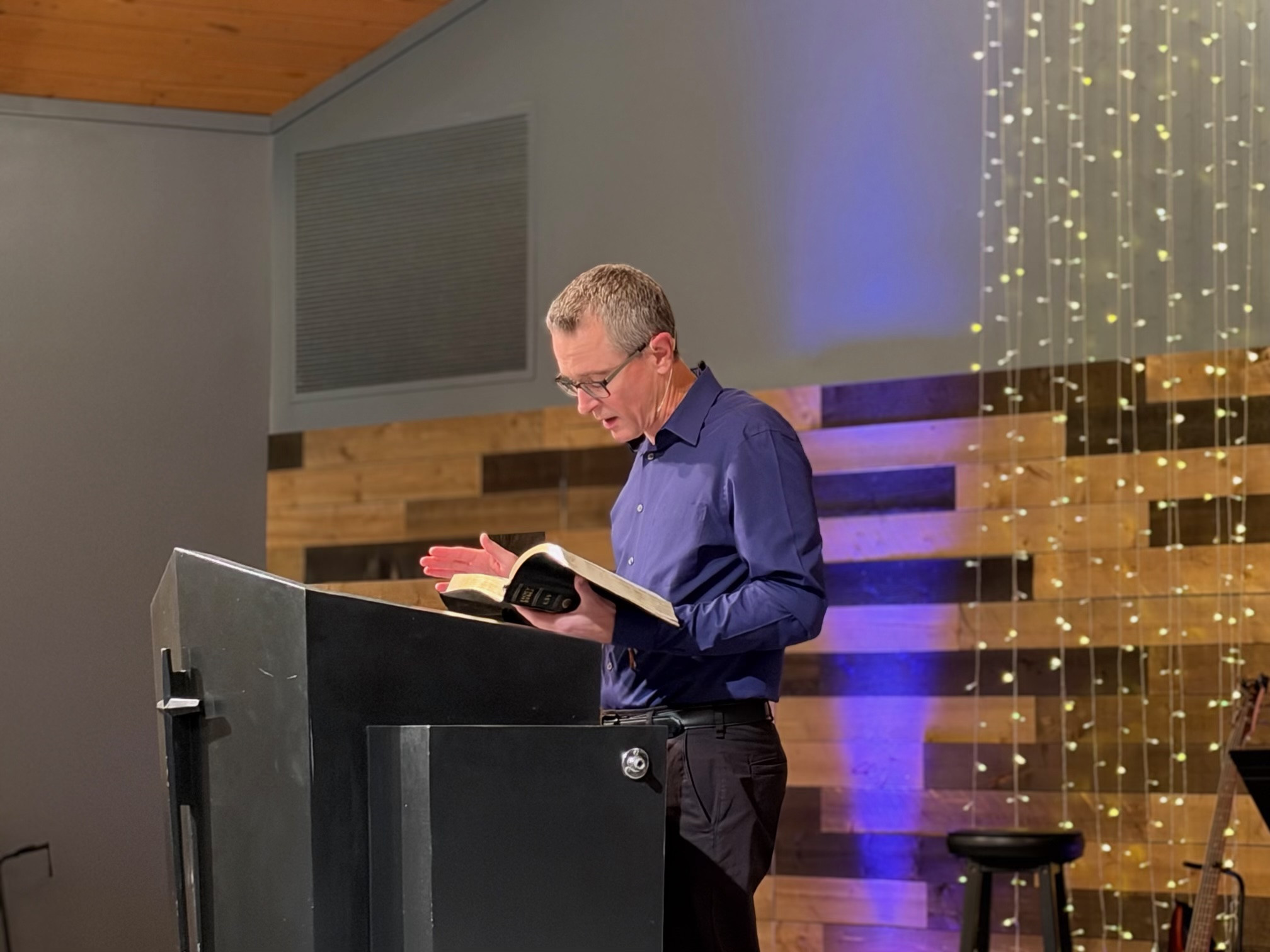
The following is a lightly edited transcript generated from the audio; it may contain small errors.
Lord, we pray that You would help us this morning. I pray that we would hear the Word of God this morning. Please strengthen us, and make Your Word clear to us this morning. We pray, O Lord, that You would come near to us now. In Jesus’ name we pray, amen.
We’re gonna be camping out this morning in Psalm 51, so if you wanna turn there you can. But by way of introduction, I’ll be reading something else to introduce us. So Psalm 51, you can turn there. 1 John 1:5–10 says this. “This is the message…” […]
…failings and scandalous sins. The Bible’s stories, in all their open ugliness, tell my own story. Isn’t that true of you? This is why I love Psalm 51. It’s a psalm for sinners. It’s a psalm for those of us who have failed. So this morning, if you are here in self-righteous smugness and absolutely convinced that this has no bearing to you, it would be best for you to excuse yourself. Because everything that I’m about ready to say will fall on deaf ears. This is a psalm for people who have failed. This is a psalm for people who have sinned. It is a psalm of confession.
Who is the author of this confession? On the one hand, he’s a man greatly loved by God. You’d be hard pressed to name a person about whom God is more openly affectionate towards than this man. On the other hand, he’s a man whose sins are more scandalous than just about anyone else’s. His name is David, Israel’s greatest king, the man after God’s own heart. This was his fall as recorded in 2 Samuel 11. One afternoon, while walking on the palace roof, positioned so that he could see the courtyard and the nearby houses, David sees a woman bathing, and the text itself tells us that she was extraordinarily beautiful. The temptation is there. David the king sees the opportunity. He says yes to sin and no to God. He sends for her, he takes her to his bed, and then when finished, he sends her home. Her name is Bathsheba. Her husband, Uriah, ironically, is out fighting for David. A month or so later, Bathsheba discovers that she’s pregnant and sends word to David. David is good with dealing with problems. After all, he’s been king now for 20 years. David handles this situation by sending for Uriah and giving him a furlough. He expects him to go immediately to his wife and to their marital bed so that Uriah will think that he is responsible for the pregnancy. But Uriah, who is one of David’s prominent mighty men, is a loyal soldier who doesn’t feel good about enjoying his wife while his fellow soldiers are out roughing it out on the battlefield. So he sleeps on the porch of David’s palace. Frustrated, David turns the scheme up a notch. The next night, David gets Uriah drunk and sends him home. But Uriah proves to be a better man drunk than David is sober. David finally solves this complication, sending Uriah back to the army camp with a letter to Joab. Joab was the general, instructing Joab to place Uriah in the thick of the fighting. There he will almost certainly be killed. Joab himself, he relishes the intrigue, he carries out the instructions from David, and sure enough the next day, Uriah is killed in the fighting. Word comes back to David reporting the death. After a proper time of mourning is complete, David sends for Bathsheba and marries her. As soon as the preacher says, I now pronounce you man and wife, David smiles inside and says it’s done. It’s finished, free and clear, dodged that bullet. All wrapped up nicely and neatly. And so the story ends, right? No, not really.
Both Old Testament and New Testament say this, Proverbs and Hebrews: the Lord disciplines those He loves. In fact, not to be disciplined is to prove that you are an illegitimate child. And so the great unseen Observer to all we ever say or ever do, God, God decides to get involved. 2 Samuel 12 says it like this: Then the Lord sent Nathan to David. Nathan carefully, carefully stalks his prey, and when David is finally trapped beyond all possibility of escape, Nathan… and David discovered becomes David devastated. The man after God’s own heart, so profoundly loved by God, is humiliated. Have you ever been in that position? Where you have felt a sick sense of shame of being found out, of being exposed, of being uncovered, of being revealed, of being unveiled. A position where God Himself sticks His finger in your chest and says, you are the man. You are the woman. Let me tell you something this morning: that is the beginning of God’s grace to you. We’ve been singing this song, many of us, for a long time. We sang it here this morning. I’m not sure we did this verse, but, “’Twas grace that taught my heart to fear,” because no one comes to Jesus until they fear sin and its reality. You do not come to Jesus Christ savingly for life enhancement. You do not come to Jesus Christ savingly to save your marriage or to help you raise your kids. No, you come to Jesus to flee from the wrath to come. Any other Jesus you pursue is nothing but a utilitarian genie. “’Twas grace that taught my heart to fear, and grace my fears relieved.” And so it was with David, and in turn you see this painful expression of grace is what drives David to this confession. Here we have this confession, Psalm 51. It’s a model confession. If you haven’t turned there, please do. I can summarize this psalm in three basic requests.
The first reflects the substance of verses 1 through 9. Here it is: Remove my guilt. Remove my guilt. If you have said yes to sin and no to God, then this is where it all begins, the turnaround. Remove my guilt. Verse 1: “Have mercy upon me, O God.” Maybe your translation says, “Be gracious to me.” Be gracious. Now David is not asking for God to be nice. He’s not asking for Him to be polite or kind. He’s saying, treat me in a manner that is the very opposite of what I deserve. That’s what grace means. Treat me in a manner that is the very opposite of what I’ve earned or what I’ve merited and deserved. Throughout the years you might have heard grace defined like this: it is God’s favor to undeserving people. Maybe you’ve heard it that way, maybe you’ve heard it in Sunday school or vacation Bible school or Christian school. Here is what grace is. It’s God’s favor to undeserving people. What that definition does, however, is it cuts the guts out of what grace really is. Grace is much more aggressive than that. Grace is not God’s favor to undeserving people. To be undeserving means you deserve nothing. Friends, we deserve something, right? It is not God’s favor to undeserving sinners; it is God’s favor to ill-deserving sinners. You deserve something, I deserve something, we deserve judgment. And David understands this well when he says, “Be gracious to me.” Because at this point, Old Testament law was crystal clear. The penalties for adultery and murder were death. “Be gracious to me.” Treat me, Lord, in a manner that is the very opposite of what I deserve, which tells you that this confession from David is not his attempt at negotiation with God. There is no attempt of give and take here. There is no attempt at offer and compromise. “Now look, Lord, we both know that I’ve not made very wise choices here. I mean, I’ve made my mistakes, but don’t forget all I’ve done for You. I mean, for Your glory, I took out Goliath when no one would get near him. And for years, I respected Saul and his position and refrained from retaliation when countless opportunities presented themselves. And Lord, what about all that worship music I’ve composed for You? I’ve ruled Your people for 20 years, and most recently I wanted to build a house of worship for You, remember?” Is he attempting to put God in his debt? No, he’s doing the only thing you can do as a sinner. You appeal to God’s character of graciousness. You appeal to His character. And that’s why theology is so important. At the end of the day, it’s theology that will save your tail every time. He appeals to God’s character of grace and character of graciousness. “Have mercy on me, O God, according to Your steadfast love; according to Your abundant mercy blot out my transgressions.” If you heard Pastor Vaughn, he talked about that a while back. He preached on the hesed, the steadfast love. David casts himself right into the arms of God’s character. God, to be sure, is a most gracious God, a most merciful and loving God, rich in love and eager to forgive, the Old Testament tells us. May I tell you something on a practical level? You will never, ever experience joy and forgiveness until your understanding of its reality is grounded in the gracious character of God over and against your own effort to compensate for wrongdoing. Did you get that? You will never, ever experience joy and forgiveness until your understanding of its reality is grounded exclusively in the gracious character of God over and against your own effort to compensate for your own wrongdoing. Forgiveness is found in God’s character for the simple reason you can’t compensate enough for your sin. Verse 2: “Wash me thoroughly from my iniquity, and cleanse me from my sin, for I know my transgressions, and my sin is ever before me.”
Do you notice that David takes ownership here? He takes ownership of his sin. “Blot out my transgressions. Wash me from my iniquity. Cleanse me from my sin. For I know my transgressions, and my sin is ever before me.” Is there the slightest bit of excuse-making here? Any attempt at rationalization for his sins? Shifting the responsibility? How different is this from our intuitive responses, intuitive responses that became intuitive at the fall? Remember Adam and Eve? They sin. God comes to them. What’s going on, Adam? How does Adam respond? “The woman You gave me.” I know, you know why this is so huge, friends? It’s funny a bit, a little bit. But you know why it’s so huge? And why we need to pay attention to that? Do you realize those are the first, very first words out of the mouth of a sinful person? What comes out of the person’s mouth is indicative of what’s in their heart. It’s what sinful people do. “The woman You gave me.” Eve does the same thing. The serpent. Oh, there was a serpent there, and she did give Adam the fruit, but at the end of the day, Adam, it’s you. “Oh, I was raised in a dysfunctional family. My spouse is a real loser. My kids are giving me fits. The pressures at work, they’re enormous. I’ve been so depressed. Everybody’s doing it.” I’m not saying that none of those things aren’t true, but what I am saying, friends, is that one of the characteristics of authentic, God-granted confession is the courage to deal with yourself impartially. The courage to deal with yourself objectively, truthfully, and may I say ruthlessly. This sin is mine, and I will not undermine the extent of its offense against God by looking for a way to share the blame. David owns his sin.
He also recognizes the treasonous nature of his sin. Look at the various words he uses here. “Blot out my transgressions, wash me thoroughly from my iniquity, cleanse me from my sin,” and some of your translations might have words like guilt, wickedness, evil. These words collectively are words that refer to deliberate acts of rebellion. Deliberate acts of rebellion. You see, the real sin that David has, the real sin in his life was not adultery or murder. The real sin in David’s life was treason. The sin underneath the sin. Notice verse 4: “Against You, You only, have I sinned and done what is evil in Your sight.” What makes sin so exceedingly sinful is that. This is what makes sin to be sin. Now to be sure, Bathsheba, she had been greatly wronged, right? Exploited and demeaned; one might even suggest that she was abused by power. And Uriah, he had been killed. But before these two wrongs there came sin: David setting himself and his desires in the most important place, thus displacing God. This is treason. It’s idolatry. It’s to say that I want what I want more than I want what You want. This is what we’re saying every time we willfully choose sin. And that’s idolatry. That is treason. You guys remember the story of Joseph, right? Genesis 39. You remember the situation with Potiphar’s wife? Day after day she was making her moves on him. Joseph says to her, “How then can I do this great wickedness and sin against God?” The heinousness of sin, the severity of sin, the sinfulness of sin is not so much in the nature of the sin committed as it is in the greatness of the person sinned against. Until you see this, friends, until you feel this way that David does about his sin, you won’t get it. You won’t feel this way. You’ll never feel this way. You’ll always wonder, what’s the big deal? I mean, come on, it won’t hurt anyone. No one else will ever know. Isn’t it all relative anyway? It’s the existence of God that makes sin sin. If there’s no God, friends, then there is no sin. And you want to know why this is huge today? You want to know? Because most churches today don’t even mention the word sin. And if you happen to come across a church that occasionally mentions sin, it’s spoken about almost exclusively horizontally. If you sin, things won’t go well for you. So don’t do it because it will be bad for you. What makes sin sin is God. If there’s no God, then there is no sin. Go and do as you please. But if God does exist—and make no mistake, He does exist, and you know it—to sin knowingly, intentionally is to despise Him. Again, it is guilty of nothing less than treason. This is why David says in verse 4, “Against You, You only, have I sinned and done what is evil in Your sight, so that You may be justified in Your words and blameless in Your judgment.” My friends, this is amazing. Do you realize what David’s doing here? He’s praising God for the rightness of His punishment. It’s how we know that a confession is heartfelt and real. There’s no resentment, there’s no bitterness, there’s no frustration towards any expression of God’s chastisement. To the contrary, condemnation is declared just, it’s good, God’s acts of judgment are exalted as righteous, and in fact David says, let me illustrate how righteous they really are. You see, these sins of murder and adultery in my life are not an expression of something that’s completely new. They’re not freak events, they’re not uncommon, they’re not out of the ordinary. They’re in keeping with the character, the warped person I have always been. Verse 5: “Behold, I was brought forth in iniquity, and in sin did my mother conceive me.”
At the moment of conception, sin was there. I believe this to be a theological truth. But let me ask you more from an experiential perspective. Can you honestly remember a time in your life before which a dark change came over you? A time when your motives were and always were in every way pure and unselfish, undistorted? All you ever thought about, all you ever talked about, all you ever did was driven by the glory and honor of God? No. If you’re any way like me, you can look back as far as you want to and you will not remember that, because you would see that you’ve been essentially self-absorbed, self-consumed, self-centered. You are at the center of your universe, and everybody else around you is evaluated in terms of how they intersect with you—your hopes, your dreams, your desires, your purposes, your sense of well-being. What are you gonna do for me? Sure. You’re sitting there probably saying to yourself, how do you know this about me? Because it takes one to know one. I was born with the very same sin propensity. All my treasonous actions are because of a treasonous nature. I am not a sinner because I sin. I sin because I’m a sinner. Sin in my life is not a glitch or a malfunction. You might be surprised by that. But it’s the element in which I live. The enemy that I have is within the citadel. It’s here in me. Some folks, they try to combat this sin. They try to do this, they try to combat it with legalism. I think we probably know people that do this. Parents maybe that have been somewhat legalistic with their kids, bringing them up. They just want what’s best for their kids, so I get it. So they try to protect their kids from the world and sin. But you see here, our kids already have the problem flowing through their veins. It’s inside them. You cannot protect them enough. If you attempt to protect them too much, you’ll kill them. You’ll squeeze the life right out of them. It’s like shaking up a bottle of Coke and taking the top off. It will spew out all over. That’s what legalism does when raising kids. What David is saying here is that he owns his sin. He recognizes that it’s nothing short of treason.
Notice now that he casts all of his dependence on God. We already went over verse 1. He appeals to God’s character. He asks God to do what only God can do, given the fact that sin is ultimately against God. Notice: “Blot out my transgressions, wash me thoroughly from my iniquity, and cleanse me from my sin.” Now look at verse 6. Keep in mind that all of this comes right after verse 5, and I’ll try to read it in a way that’s a little bit more faithful to the original text. Starting in verse 5: “Behold, I was brought forth in iniquity, and in sin did my mother conceive me. Behold, You delight in truth in the inward being.” In other words, I am what I am, and what You desire from me are two totally different things. Sin defines my very being, and yet it’s fidelity that You want from me. Not just external fidelity, not just what people can see on the outside; it’s fidelity that extends all the way down to the very core of my being. But how can such a thing happen given what I am? I’m totally dependent on You. So verse 6 says, in an imperative sense, “Behold, You desire truth in the inward parts, and in the hidden part You will make me to know wisdom.” What David’s saying here is, teach me wisdom. Grant me the discernment that will make a new and responsible life possible. Otherwise, my inclination towards sin will always have its way with me. David acknowledges his dependence on God.
Now, verse 7: “Purge me with hyssop, and I shall be clean; wash me, and I shall be whiter than snow.” This is how it reads in Hebrew: De-sin me with hyssop. De-sin me. Look at it again, and verse 9, and verse 1—it’s really important. I’m sorry to repeat it, but look at it again. Blot, wash, cleanse—all second person singular: You do this. You blot out my transgressions. You wash me. You cleanse me. Now here in verse 7, You purge me. You do this. You do this. Why do I draw your attention to this? Despite what you hear from Oprah or Dr. Phil or any other television psychologist, there is no such thing as self-forgiveness. I’m sorry, but psychological theory is wrong. There is no such thing as self-redemption. There is no such thing as self-restoration. You cannot blot out your own sin. You cannot forgive yourself. You can’t wash your guilt. Why? Because God is the offended party. Only He can forgive. And David knows this. He’s at God’s mercy. He’s totally dependent upon God. De-sin me. With hyssop? What in the world is this? Hyssop was a plant. Because of its shape and structure, its texture, it was used as a small brush. The first time we ever come across this strange plant is at the Passover. When God delivers His people out of Egyptian bondage, the greatest act of redemption in the Old Testament, He told His people, I want you to slaughter a lamb. I want you to pour its blood into a basin and take a bunch of hyssop, dip it into that blood, and then paint it on the doorframe of your house. Why? So that the angel of death sees that blood of the lamb, a sacrificial substitute killed for the people inside that house, and he will pass over that house, and the firstborn male inside would be saved. A sinner is de-sinned by the application of blood from a substitutionary sacrifice, an innocent life dying in place of the guilty life. And this is exactly what David’s getting at here. That’s what he’s saying. David knows this. My sin merits death. Your law is clear. My sin merits condemnation. Would You in Your grace de-sin me by allowing another to die in my place? It’s the only way for you to be de-sinned. No detergent can cleanse you, no morality can purify you, no religion can clean you up. There is nothing you can do by way of self-redemption or self-reformation. Sin has marred you and you are guilty before God. But it is God Himself who provided a means of forgiveness for you. He has appointed the death of a sacrificial substitute, a lamb to die in your place. That lamb is His own Son, Jesus Christ. And when His blood is applied to your life, you are made clean, whiter than snow.
You know, I love old hymns. I love old hymns because of the theology that’s in them. There’s an old hymn called “Rock of Ages.” You guys familiar? One of the verses says, “Nothing in my hand I bring, simply to the cross I cling; naked, come to Thee for dress; helpless, look to Thee for grace; foul, I to the fountain fly; wash me, Savior, or I die.” David is in every way depending on God, which is why he now prays in verse 8. He says, “Let me hear joy and gladness; let the bones that You have broken rejoice.” Literally in the Hebrew, it’s “let the bones dance that You have broken.” Two things are implied here. Number one, God was the source of his misery. God making him miserable. The bones that You have broken making him miserable. Why? To drive him to confession. Second point, only God could give him joy again. Only God could give him joy again. How? Verse 9: “Hide Your face from my sins, and blot out all my iniquities.” Have you said yes to sin and no to God? You have only one recourse and one recourse only: confession. “Blot out all my iniquities.” Remove my guilt. This is the request that David makes in these first nine verses. He owns up to his sin. He takes ownership, and he recognizes its treasonous nature, and he casts himself entirely upon God. And that’s what we need to do. Right, friends? If you have said yes to sin and no to God, as we all have: remove my guilt.
Now, in verses 10 to 17, we hear his second request. This request can be summarized like this: renew my heart, renew my heart. So we just heard “remove my guilt,” now “renew my heart.” Notice verse 10: “Create in me a clean heart, O God, and renew a right spirit within me.” Notice here how David asks God to change him specifically. “Create in me a clean heart, renew a pure or steadfast spirit. Give me a willing spirit,” is what he’s saying. Now what does this all mean? When he says “create a clean heart within me,” David is asking for internal purity. When he says “renew a steadfast spirit within me,” David is asking for the disposition of loyalty. When David is saying “give me a willing spirit,” David is asking for the eagerness to obey, a renewed eagerness to be obedient. He’s saying quite simply, make me new on the inside. Transform my internal control center from which all desires come. Very simply, change or renew my heart. He’s asking God to do something that only God can do. I can’t recreate my heart. I can’t transform the control center of my life. If it’s ever going to happen, God Himself must do it. This is why David is pleading with God in verse 11: “Cast me not away from Your presence, and take not Your Holy Spirit from me.” And what does he mean by that? “Take not Your Holy Spirit from me.” What did David witness? He had watched God withdraw His Holy Spirit from his predecessor Saul, and consequently he watched Saul progressively degenerate spiritually and emotionally until the day that he died. So David begs God that He would not do the same to him, because if the Holy Spirit is taken away, the hope for ongoing recreation would be lost. This internal transformation, friends, is the work that only God Himself can do.
And notice now that it’s a work that results in joy. Verse 12: “Restore to me the joy of Your salvation, and uphold me with a willing spirit.” In the Hebrew poetry here, the eagerness to obey is synonymous with the restoration of joy. These two things always go together, they always do. Joy is the first thing that’s taken from us when sin interrupts our relationship with God. Joy goes. Joy becomes a stranger. And what follows over time, obedience becomes progressively burdensome. God seems like a nag. Fellowship with His people becomes more and more like a nuisance. Do we really have to go to church Sunday? We can just watch it at home. Why is the service so long? Besides, David’s preaching. Worship becomes repetitious or just going through the motions. Why do we sing those same songs all the time? Those hymns, they’re just old. I don’t like them. I don’t like the guitar in the worship band, and I’m really not a big fan of the drums either. Church life becomes an interruption to the things you really want to do. My friends, joy is a barometer. It’s a barometer indicating the eagerness of your heart to obey. These things always go together, and whenever you meet a person who claims to be a Christian and there is no joy, they don’t even have to say a word, do they? About 99% of the time you’re going to be right. If you’re talking to that type of person, it’s probably going to be a very inconsistent way in which they have commitment to obedience.
A recreated heart is beautiful. A renewed heart evidences itself. No one has to scratch their head and say, I wonder if that person has a changed heart and has been saved. Notice the evidences here of a recreated or renewed heart. There’s two things we find here: witness and worship. Witness and worship. Notice the consequence of this regenerated heart. Verse 12: “Restore to me the joy of Your salvation, and uphold me with a willing spirit. Then I will teach transgressors Your ways, and sinners will return to You.” I want to tell other sinners what You’ve done for this sinner. It’s how you know that the heart’s been changed. The forgiven sinner wants to talk about it. Not just to air their dirty laundry for everyone to see, but such a person wants to tell other sinners what it means to be forgiven. They want other sinners to experience the benefit of having release from sin and guilt removed. A recreated heart evidences itself in witness. Freedom from guilt also evidences itself in worship. Verse 14: “Deliver me from bloodguiltiness, O God, O God of my salvation, and my tongue will sing aloud of Your righteousness. O Lord, open my lips, and my mouth will declare Your praise.” There is nothing more exuberant this side of heaven than a sinner who knows that their sins have been forgiven. There’s nothing more exhilarating, no one more exuberant. Such a person lives for the opportunity to praise God for it. Have you met such people? Those people, they look around at other people that are indifferent and they wonder what’s wrong with them. Has God forgiven your sin today? Don’t you want to just stand up and say it? God has forgiven my sin. God has forgiven my sin. God has forgiven my sin! As a Christian, that should mean everything to us. I’ll tell you something, if a Sunday comes around and you go and sit through a service where from the beginning to the end you don’t hear anything about the death, burial, and resurrection of Christ, you don’t hear anything about what the gospel has accomplished in both the singing and the preaching, my friends, you’ve been ripped off. This message sets our hearts soaring that because of Jesus Christ, God has forgiven my sins and is renewing my heart. I don’t know why you would come here for any other reason than that. This is why we show up.
You might be saying, how can I know that God will do this for me? Can I be certain that He would do this for me? Verse 16: “For You will not delight in sacrifice, or I would give it; You will not be pleased with a burnt offering.” So it’s very interesting here that David would say this, given that he’s living right in the middle of the Old Testament epoch of God-ordained sacrifices, the sacrificial system. What does he mean that God does not desire such things? He does not take delight or pleasure in such things. God ordained these things. If we go all the way down now, if we skip down to verse 19, he gives us a bit of a hint. “Then You will delight in right sacrifices, in burnt offerings and whole burnt offerings; then bulls will be offered on Your altar.” Now all of a sudden, here in verse 19, God is pleased with such sacrifices. So what’s going on in verse 16? When David says in verse 16 that God is not pleased with sacrifices, he’s obviously not saying this in an absolute sense. David is saying it in a relative sense. Relative to what? Relative to the heart of the person offering the sacrifice. Verse 17: “The sacrifices of God are a broken spirit; a broken and contrite heart, O God, You will not despise.” See how this works? What is prohibited in verse 16 becomes acceptable to God in verse 19 because of what is in verse 17. This shows us that the physical act of sacrifice is subordinate in importance to the heart attitude of the one offering sacrifice. This, my friends, helps us to understand. It shatters the notion that forgiveness from God is automatic if we just go through the right religious procedures. There’s some people that think that forgiveness is God’s job. He’s like a slot machine. You just put the quarter in, pull the lever down, and boom, you’ve got forgiveness. No. What matters to God is a broken spirit, a broken and contrite heart. God will receive that.
So let’s step back into the story for illustration. When Nathan concludes his confrontation with David, how does David respond? He’s broken. He’s contrite. He’s devastated. “I have sinned against the Lord.” And what then are the very next words out of Nathan’s mouth? “The Lord has taken away your sin.” Do you believe in the instantaneous forgiveness of sins? Or do you feel like, You’ve got to show me a little bit of something first? There’s a lot of Christian people that act like that, which proves they really don’t understand the gospel. Do you believe in the instantaneous forgiveness of sin? Please don’t hear me saying something that I’m not. The consequences for David’s sin, he lives with for the rest of his life. That’s another story for another day. But the point here is that David’s sin, enormous as it was, is wildly outdone by God’s grace, a grace that’s greater than all our sins.
Remove my guilt, renew my heart, and finally, briefly, restore our prosperity. Verse 18: “Do good to Zion in Your good pleasure; build up the walls of Jerusalem.” You say, what in the Sam Hill is this? Many people that preach this, by the way, they just preach and stop at verse 17. They kind of stop like somebody had taped these last two verses to the end. They don’t make a lot of sense to us, but that’s because of an American thing. They make huge sense if you get your mind out of this American mindset. The American approach to Christian life, it distorts our ability to understand this. You say, what are you talking about? Sin is not an individualistic thing. Sin is never an individualistic thing. It’s always a community thing. So men, you drive your car home, you discover that no one else is home. You go into your bedroom. You get on a device and you do what you do. No one’s going to know. It won’t hurt anybody. Sin is never an individualistic thing. The king’s sins, and the entire nation suffers for the consequences. You think that internet pornography only hurts you? No. It grieves the Spirit of God and compromises His blessing upon this whole body. Because you are one with the rest of us. You gossip about someone in this congregation. That sin affects the rest of us. You hold back what is rightly God’s in your giving? That sin affects the rest of us. You speak disrespectfully of church leaders? That sin affects the rest of us, the well-being of this entire congregation. It’s a staggering thought that our sins affect each other. This individualistic kind of “me and Jesus” Christianity will be the end of us if we don’t put it to death. A little leaven leavens the whole lump. There is no such thing as an individualistic and autonomous Christianity. You are placed into the body of Christ, and by that definition we belong to each other in Christ. And what we do has profound implications on each other. David knows this. You see, his sins have compromised the well-being, the blessing of God on the nation. It caused the withdrawal of God’s blessing on Israel. That’s why he prays here as he does: in Your good pleasure, given the fact that You are pleased with my broken and contrite heart, cause us to prosper again, build up the walls of Jerusalem, strengthen us again. To what end? That our worship in response to Your forgiveness will be pleasing to You. “Then You will delight in right sacrifices, in burnt offerings; then bulls will be offered on Your altar.” Oh my dear friends, maybe what you need to pray this morning is, restore the blessing that my sin has compromised on my wife. Restore the blessing that my sin has compromised on my children. Restore the blessing that my sin has compromised on my church. Because I don’t sin by myself. Did God forgive David and Bathsheba? Yes. Bathsheba became pregnant again, and their son, David and Bathsheba’s, became Israel’s next king, Solomon. And through their line came the King of kings, the Lamb of God, who on a cross would die for their sins and our sins. It’s not that God turned a blind eye and a deaf ear to their sins. It’s not that He swept it underneath the carpet. It’s that He sent His Son to endure the punishment for their sins.
I’d like to close with a story. A few years back in Decision magazine, if you guys know that magazine, it’s a magazine published by the Billy Graham organization. It was a number of years back. They published a true story about a Mexican man and his son Paco. It seems that this man’s son Paco grew into his late teenage years. His relationship with his father became increasingly strained. Finally, one day Paco left home, promising never ever to return again. He had said things to his father that he knew his father could never forgive, and it would break his father’s heart. He would never be welcomed home again, and so he left. His father was distraught. His father was devastated. He searched the streets of that Mexican city for Paco, all to no avail. Finally, he was struck with an idea. He would put an ad in the newspaper. This is how it read: “Dear Paco, you are my son and I love you. Meet me in the city square next Saturday morning. All is forgiven.” And this article goes on to say, the following Saturday morning, 400 Pacos showed up in the city square. It’s a universal need. It’s your need this morning. I don’t know the particulars of the sin that needs forgiving, but I do know that you need forgiveness. Why? Because I do. There’s not a person in this room without the need for forgiveness. Is it the forgiveness from a filthy mouth? Is it forgiveness from arrogance and pride? Is it forgiveness for lying to your employer or cheating the government? Or verbally abusing your spouse? Maybe it’s not even verbally. Is it the expression of greed, of covetousness, of lust? Single people, is it purity? Is it pornography? And I’m not just jumping on the men here who see it on a computer or something. Lust also affects women, maybe a little bit differently, but it’s still lust. Is it homosexuality? Is that your secret? Friends, the good news is this: You are the man. I am the man. You are the woman. Have you said yes to sin and no to God? What do you do? You have one recourse and one recourse only. Confess. Confess. Remove my guilt, renew my heart, restore our prosperity. This, with a broken heart, the Lord will not despise. “’Twas grace that taught my heart to fear, and grace my fears relieved.” Don’t you love the gospel? Let’s pray.
Dear Lord, we love Your gospel. Heavenly Father, You know us intimately in all of our sins. That fact should terrify us, and it does terrify me. But if we confess our sins, Lord, You are faithful and just to forgive us our sins and to cleanse us from all unrighteousness. Lord, we have an advocate with You, the Father, through Your Son Jesus Christ the righteous. I pray now for those who do not have the Advocate because they’ve never come to You with a contrite heart. I pray that Your Holy Spirit would quicken their dead heart and the Lord would give them life. And Lord, for the rest of us, I pray that we would continue in obedience, that we would come to You with contrite hearts. Lord, we don’t sin only as individuals, and our sin is against You. Lord, we pray that You would forgive us. Lord, we love You. In Jesus’ name we pray. Amen.