
January 22, 2023
Pro Life Sermon
Dr. Michael A. Bond
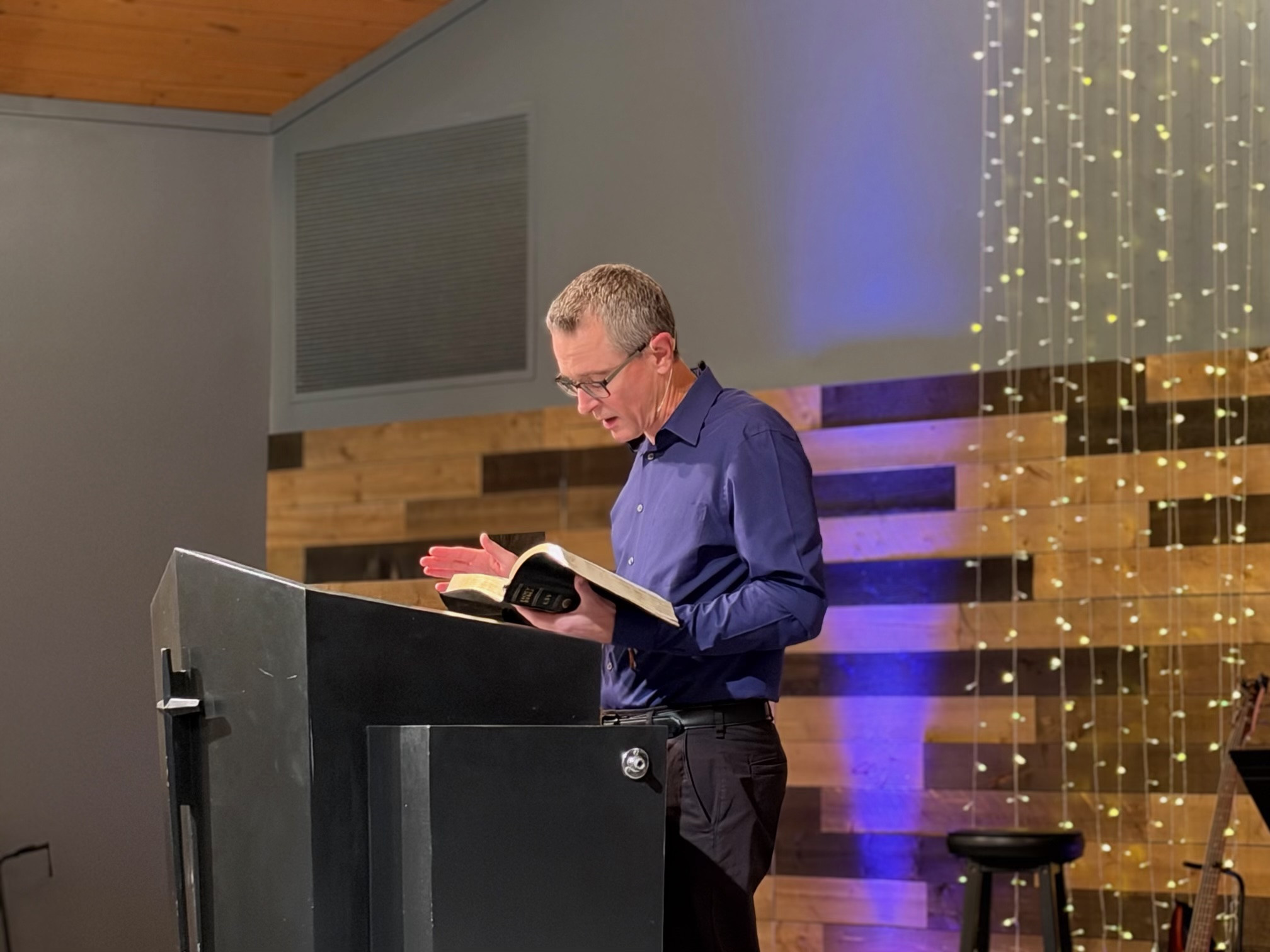
The following is a lightly edited transcript generated from the audio; it may contain small errors.
All right, before we get into the Word, we have two announcements. The first is that we are starting back up for January Reformation Wednesday. So that is this Wednesday. Make sure you sign up in the app for that. We’ll be having a meal. We’ll be hearing from the Word. And then we’ll be spending some time in prayer. And then second, we have a new members class coming up. So if you’re interested in that, learning more about Liberty and what membership entails, speak to me afterwards or shoot me an email or text and we can get you the details on that.
And then finally, you guys see our new floor, right? Looks pretty good. It turned out amazing. We are super blessed by the company that did that, and it took them longer than they anticipated. And so SCCHE was gracious to kind of work around that. But I almost felt like bringing in a super large soda this morning and just spilling it, you know? But I’m sure one of you will take care of that for me. All right? But it’s been a long time coming, and we are super blessed. You guys were very generous to help make it possible. And we are very excited. I think that the color turned out well, and everything is good so far. We’ll be tweaking the music and my voice over the next few weeks to try to figure out what’s the best for everything. So just be a little patient with that. Obviously we still have some trim and different things to put up, but I’m super excited, and it’s been a long time coming.
I mean, if you go back four years ago and you compare how much the sanctuary gets used today, it’s seen a 700% increase in its use. So the sanctuary gets used. It’s not just for an hour and a half on Sundays. It sees—I think Justus was telling me when he was crunching the numbers a couple weeks ago—it sees about 30 hours each week. So really, when we were kind of looking at the different flooring options, like the carpet we had, which probably should have been replaced like 10 years ago, you can imagine how short the life of that carpet would be at 30 hours a week, right? With a lot of foot traffic. So anyway, we are very hopeful and believing that this is going to be a really good fix and combination for all the use that it sees. We want our building to be able to glorify God and be used. And really, it’s a blessing for this building to be used. It almost feels like 24/7, but seven days a week—I mean, there’s people in this building doing things to the glory of God. So part of that comes about by you guys being generous with your tithes and offerings. I mean, it costs extra money to heat it to have this sanctuary used 30 hours a week as opposed to a few hours, right? So you guys, when you’re giving, you’re contributing to help make that happen, to minister to students that are coming here to learn and have a biblical worldview on different subjects throughout their curriculum.
And so anyway, just again, a big thanks from the pastors and from the deacons. Y’all are amazing and awesome. It’s a privilege. And I mean, totally thanks to the Lord for this floor that He’s blessed us with. In one sense, it’s not a new floor. It’s been there all along, right? We just ripped it out, put a little stain on it, and shined it up. So it’s very cool for us to have that. And there really was only one crack that they had to kind of mess with and figure out what to do. Otherwise, the floor, for the most part, is in really good shape. So again, we weren’t sure what we were going to see once they tore out the carpet and came and got all the glue off, but it was in really great shape and allowed them to do the job that we were hoping they were able to do. So with that, we’re going to get into the Word. Let’s turn to Proverbs 31.
January is pro-life month, and this is actually pro-life Sunday. So our church is unashamedly pro-life, and historically we will spend a Sunday or two in the month of January—sometimes February, March, just depending on the preaching schedule—to have us look at what the Word says regarding life. Kids can head out, as I see they already are, to their classes. All right, Proverbs 31.
Actually, we’re going to start by doing this. Keep your place in Proverbs 31. Stand up if you are under the age of 50. Under the age of 50. I know I’m calling some of you out—sorry about that, if you’re still sitting. But if you’re standing, until seven months ago, you didn’t know a world without Roe v. Wade. And until seven months ago, that was your world. And it was January 22nd—today’s January 22nd—it was January 22nd, 1973, so to the day, 50 years ago, that the Supreme Court handed down the decision of Roe v. Wade. Fifty years later, we have our first January in a world without Roe v. Wade. Amen? And our first pro-life month where Roe v. Wade is no longer the law of the land. You can go ahead and be seated. So we’ve come a long ways. We’ve come a long ways, and it’s a glorious January and a glorious day to be able to celebrate. Look at Proverbs 31. Here’s what it says.
The words of King Lemuel. An oracle that his mother taught him:
What are you doing, my son?
What are you doing, son of my womb?
What are you doing, son of my vows?
Do not give your strength to women,
your ways to those who destroy kings.
It is not for kings, O Lemuel,
it is not for kings to drink wine,
or for rulers to take strong drink,
lest they drink and forget what has been decreed
and pervert the rights of all the afflicted.
Give strong drink to the one who is perishing,
and wine to those in bitter distress;
let them drink and forget their poverty
and remember their misery no more.
Open your mouth for the mute,
for the rights of all who are destitute.
Open your mouth, judge righteously,
defend the rights of the poor and needy.(Proverbs 31:1–9)
So, a comment here. Commentators think that this is Solomon’s mom. Who’s Solomon’s mom? Yeah. Told you that test was coming up, right? We’re not doing it today, but it is coming up. Some commentators say this is Bathsheba, but I’m speaking to Solomon. I’m apparently—with a cute little nickname—King Lemuel. “What are you doing, my son? What are you doing, son of my womb? What are you doing, son of my vows?” Let’s pray.
Lord, let us be a church that is about Your Word and is about Your business. Let us be a church that seeks to honor You and follow You wherever You call us to go. You show us Your ways, Lord; let us be on that path. You say it is a narrow path, so let us stick to the narrow path. God, I pray for strength for pastors across this nation who are speaking truth in their pulpits today. Some may be, for the first time, preaching a pro-life sermon. Strengthen them, be with them, God. Let them stand firm. Lord, let the truth about life ring out across the nation this morning from the pulpits. God, we thank You for Your Word, that it is truth, that in Your Word is life, and You have the words of eternal life. Thank You for sending Your Son Jesus, for it is in Him that we have life, in Him and no other, and thank You for being our gracious God. Amen.
All right. I want to give an update today on really the pro-life movement. I want to give a little review, a biblical history lesson, and then a challenge. Now, when you look at Christians throughout the last 2,000 years—even if you go back to Judaism, so Old Testament—there has always been a pro-life ethic. Always. Unashamedly, undoubtedly. Even if you think of child sacrifice in the ancient world, going back to the Jews in the Old Testament, they stood strongly against it, and it was abhorred. Now, is there, apart from abortion, which we would classify as child sacrifice, but is there child sacrifice going on in first-world countries today? By and far, not really. Apart from abortion—I understand, I agree with you very much so, that is still child sacrifice—but are people burning children alive and offering them to whatever they want to offer it to? No. How did that come about? In part because we have a God who tells us what to believe about life. Not just in the New Testament. A lot of times when people start with a pro-life ethic, they start in the New Testament. It’s also in the Old Testament. We can look at verse after verse after verse after verse of God protecting life, innocent life. Even that there was a presumption of innocence—like our court today really gets its ethics from the Bible, a presumption of innocence. So you can read different passages in Deuteronomy and Exodus, and it talks about, if this person is killed, there is a presumption of innocence for the one who is being accused. There is a presumption, right? Protect life, protect life.
When you get to the New Testament, what do you see? Well, you see that in New Testament times, the Romans had a practice. And what was that practice? Of abandoning children. And they had a kid, usually a little girl, but it could be either. What would they do? They would abandon the child. There would be like a wall around the city, and they would just abandon the child right outside the city walls. What would happen usually? Wild animals would come and tear apart that little baby. What did the Christians end up doing? Rescuing those kids, right? Like literally adopting them into their family and rescuing those kids. Does that happen by and large today in first-world countries? Are kids by and large just abandoned randomly outside? Now I understand it does happen rarely, but does it happen by and large? No. A common practice 2,000 years ago has pretty much been snuffed out today. Why? Because believers took a stand and were willing to get in and do tough things. I mean, imagine today if that was a common practice, would we be willing as believers, as a church, to do something about that? To bring those kids into our families, to adopt them as our own. We can say many things that we want about a pro-life ethic. We have to be willing to walk it out.
By the way, things like that will echo a little bit more with our new floor. And that’s okay. It was nice to hear people’s voices kind of re-verbing and sounding out this morning. The point is this: Christians have taken a stand and been willing to do whatever it takes to have a truly pro-life ethic and live it out. Christians took action.
Even if you take someone like William Carey, kind of like the father of modern missions. Okay, so you should read his works. He’s written some good things, lived quite a while ago. Missionary to India in the late 1700s, early 1800s. And he really was the first man. Now he’s there, and his heart is to preach the gospel, right? But he goes into India. And guess what? There’s exploitation of women, left and right. Prostitution, sexual abuse, even burning. There was the practice of widow burning. So the husband dies, and then it was common practice to burn the wife. What did he do? Well, initially the British government accepted these evils. It’s kind of like, well, that’s their culture. But Carey began just scriptural research and preaching how this was a travesty against God, that it was wrong. So his persistent battle against this widow burning and other things against women came to change the tide. In 1829, the famous edict of 1829 banned one of the most abominable religious practices in the world, widow burning. Now, the people of India said to the British, “Sir, this is our culture. This is our tradition.” The British responded, “Well, we have a culture and tradition too. We kill people who do that.” Okay? So stop. So Christians have always been known—even someone like William Carey, the father of modern missions, his primary task is to go there and preach the gospel. What is he doing while he’s there? He’s being salt and light, right? In the culture, still speaking for truth. Did that mean he stopped preaching the gospel? No, many converts, many, many converts from William Carey, but he also wanted to be the salt and light in the place that God had placed him.
Since the U.S. Supreme Court’s 1973 decision, there’s been over a thousand abortion-related laws. Now, they might be pro-choice, they might be pro-life, but a thousand-even laws passed across the 50 states. Almost half of those have been passed just since 2010. A lot of laws. When Roe v. Wade was overturned, it did not outlaw abortion. What did it do? It returned it to the states to regulate it, right? Now Missouri, praise God, led the charge. We literally were the first state to outlaw abortion out of any of the 50 states. Yes. So they had what were called trigger bans, laws that were on the books that when and if Roe v. Wade was overturned, these laws would go into effect. And Missouri had carefully crafted it, and it went into effect. It was either a couple days or a couple weeks, but very soon after, the law was set and it went into effect. And we have followed the trajectory of abortion, especially in Missouri, for many, many years now, thanks in large part to Thrive and other pro-life ministries and people who have served there. You who have given your time and your resources have helped make abortion less of a reality in Missouri now than it ever has been. Okay, you guys did that, all right? Obviously God did it, absolutely, but you did it, all right? God used you to accomplish that. So it didn’t outlaw abortion. It just returned it to the states and allowed them.
So what’s happening is we’re seeing a couple things. This past November, there was a number of ballot initiatives in various, in a handful of states. So you get to the ballot and you get to vote, you know, a pro-life or a pro-choice vote. So every person that is registered to vote in that particular state—they had different wording and different ballot initiatives, but they were regarding pro-choice / pro-life issues, right? Most of those did not go in the pro-life way. Kind of sad, very sad, okay? So we’re seeing that, that still at the state level, there is a lot of work to do, a lot of work to do. But what are we seeing at the same time? We’re seeing the courts actually uphold a number of these bans. Now some of them are still being adjudicated, but just two weeks ago, the Idaho Supreme Court issued a decision upholding Idaho’s near-total abortion ban. Just two weeks ago, that came out. And we hope and we pray and we work towards seeing continued decisions towards that end.
The Republicans increased their numbers during these last midterms at the local levels, the state levels, and some of them, they literally were given by their states—people were voting for them, they were running on, “Hey, we will put these bans in place if you elect us.” And so some of those states have what’s called a supermajority, it’s like a veto-proof majority, where even if there is a Democrat governor, they can override his veto. So at the state level, even though you heard about the red wave or the lack or whatever, many pro-life legislatures won offices at the state level across the nation and are holding to their commitment and are introducing bills to that end of outlawing abortion. They’re sticking to their word. So we can pray for them as well. Missouri, I don’t know much information, but one state representative is introducing a personhood bill. So even though we’ve pretty much outlawed it except for medical emergencies, they’re putting in and hoping to pass into law a personhood bill that would protect children from conception.
Here’s the thing. Sometimes I think people are like, “Well, we’ve been beating this drum for a long time.” Well, yes, and look what the results have been so far, right? Even before the overturning of Roe v. Wade, God was doing a good work in saving many babies’ lives through the works and faithfulness and prayers of many of you. So when we talk about beating the drum, we keep beating the drum because we don’t stop now. We don’t stop. There is much work to do for the pro-life cause. God has been gracious to this country. He’s given us a reprieve of sorts with the overturning of this law at the Supreme Court level, and we need to continue to ask Him to do more and more. Ultimately, it is God’s work. A nation stands or falls because God decides it stands or falls. If He wants America to end tomorrow, it will. If He wants it to continue on, it will. So we continue to beat that drum. Look at Galatians chapter 6.
And let us not grow weary of doing good, for in due season we will reap, if we do not give up.
(Galatians 6:9)
So that’s the word: don’t grow weary. Don’t grow weary of doing good. God calls us to be faithful in all walks of life. So whatever He shows us, whatever He reveals to us, whatever He lays plain to us, we want to walk that out faithfully. Don’t grow weary.
As a pastor, it can seem at times as if my life is like one unpleasant conversation after another. In my family, I call them unfun conversations. I have to have an unfun conversation. And sometimes I am talking to people and ministering to people, and I’m encouraging them because they have to deal with the situation. “That’s not going to be a fun conversation for you to have, but you have to have it. It’s not going to be fun, right?” Sometimes it feels like I’m having one unfun conversation after another, but why am I having those conversations? And I don’t know of too many people that like having those unfun conversations. All right? Do you all like having those conversations? Okay, two of you don’t, okay. Apparently that’s why I’m having so many, because the rest of you like having them. Thanks for inviting me to the party. But we don’t like having them because why? Because they require us to humble ourselves. They require us to get into the weeds of things and minister to people as they’re hurting and as they’re dealing with different issues. And sometimes it’s sinful issues, right? We’re calling people to account, or we’re realizing that we need to be held to account and we need to make amends and bring about a reconciliation, right? But here’s the thing: we’re going to encounter situations that might not be pleasant, but we can’t flee in those moments. Listen, anyone who’s got any type of age in this room knows what happens when we ignore situations that really we know we have to deal with. Did they get better? No. Always get worse, right?
So sometimes, probably half the people in this room have a tendency—I’m just going by numbers—have a tendency, like when an issue comes up, some people are kind of bent towards, “Oh, let’s just sweep it under the rug, so to speak. Let’s just ignore it. Let’s not deal with it. Hopefully it’ll go away.” But we know from experience, it doesn’t go away, right? What happens? That little pile under the rug keeps getting bigger and bigger and bigger and bigger, and then you or someone else trips over it, and then it’s like a big old mess. That’s usually when you get tripped up. We have to deal with things. We have to address those things and deal with them as they come about. The book that we’re going through in our Bible studies—I mean, the term he uses is keeping short accounts, right? We want to keep short accounts with one another. So we don’t want to grow weary in doing good, but then as we’re doing the good and those situations occur, we have to be willing to address those. We’re going to encounter situations that might not be pleasant. We can’t flee in those moments; we have to stand tall. Look at 1 Corinthians 13.
If I speak in the tongues of men and of angels, but have not love, I am a noisy gong or a clanging cymbal. And if I have prophetic powers, and understand all mysteries and all knowledge, and if I have all faith, so as to remove mountains, but have not love, I gain nothing.
(1 Corinthians 13:1–3)
And then it goes on to talk about love, right? That we have to have love. So speaking of beating a drum, right, in music? It has to be done in love. It has to be done in love. Whatever we do, it has to be done in love. And sometimes I cringe at the comments that I see from people on social media, because it’s clear that it’s not done in love. It’s not done in love. So you can win the argument, but really, you lose the argument by winning the argument. You can know so much about a particular subject, and you can totally destroy that person, but guess what? Have you changed their mind? Have you impacted them? Not in a positive way. So it has to be done in love.
Now, I made a simple comment the day after Roe v. Wade was overturned on my Facebook—and I’m not on Facebook much, but I was like, if there’s ever a time for me to comment on Facebook, I’m commenting on Facebook. And I said, “Roe v. Wade overturned. Thank You, Jesus.” And phew, right? Comments blew up. People very unhappy and making all sorts of claims, right? Some of you chimed in. I appreciated that, actually. But here’s the thing: there is a way to respond to people that is right, and there’s a way to respond to people that is wrong. So if you just want a little notch in your belt that you just took someone down for the thousandth time, you can take that approach, but it’s really not the Jesus approach. It’s not the loving approach. You’re just banging on your gong a little bit louder for people to see how much you know. But people need to see that you care and you love. So I don’t remember exactly what I said in response to some of those, and then it turned into an attack on this church. I’m just like, what in the world, right? Things go crazy real quick. But a couple of people outside of this church texted me—people I hadn’t heard from in a long time—and are like, “I appreciate how graciously you interacted with those people that weren’t happy with you.”
People see your interaction. They might not ever comment, but people see that. I mean, they see it on social media, but they see it in real life, too. People are known for how they interact with one another. Are you a gracious person? Are you not very gracious? Are you easy to work with? Are you not easy to work with? That is part of your testimony to this dying world: how we interact with others. And so people have a concept of you. That’s just natural. We’ve come to know you in different ways and in different situations, but people have a concept of you. And my question for you: Do you have a short temper? Do you have a short fuse? Are you long-suffering? Are you patient? That speaks to your testimony. Now, us in here, I mean, hopefully we’re walking in unity and love and grace, and we know our own shortcomings, and so we’ll forgive and love and correct and exhort, right? But not so much sometimes with unbelievers, true. And you only get so many chances at times with your neighbors, especially, it seems, like the way that things go today. Because we’re so busy, we have, it seems, lesser interactions with our neighbors. And we have to let them know, and see our testimony walking it out. We have to use words, for sure. Sure, they need to hear the gospel, but they also need to see us live out the truth of the gospel that we believe. So back to my question: What is that perception that people have of you? Now it could potentially be a wrong perception. That’s why it’s called perception. But you can walk out the truths of the gospel in a very loving and gracious way. You do not have to be abrasive. You do not have to be abusive. You can be a godly man, a godly woman. You can stand for truth, you can stand for your convictions, you can speak truth, you can speak it boldly, and all that can be done in love. The Scriptures talk about speaking the truth in love. That’s what we need to do. That’s what we need to make sure we do as we deal with any issues, including this issue.
So, you know, as a pastor, I’m going to preach about controversial issues that might not sit well with you. If they don’t, ask yourself why. Either I’m off, or—right? Why are they controversial? I mean, listen, some of them weren’t controversial back 15 years, like transgender. I mean, that wasn’t even on the scene really, not in any type of major way. Fifteen years ago President Obama was in favor of biblical marriage. Truth. Some of these weren’t controversial 50 years ago, some of them weren’t controversial 100 years ago, some of them have always been controversial. But if a pastor is going to be faithful, he has to speak on the issues of the day. He has to take the Scriptures and then clearly show you how they apply to today. And he needs to speak to the issues of today. Now, I understand if this is your first time at Liberty, make sure you listen to the last few weeks for more of a flavor of a normal sermon. It’s good to hit pause and really focus on a couple particular issues, especially something as important as life. Amen.
So some of these haven’t been controversial, but listen, let’s go back 200 years in our church’s history. You want to talk about the speaking of controversial issues. Slavery was a controversial issue. Guess what? I’d like my pastor, if I was living 200 years ago, to be speaking the truth of what the Scripture said and speaking out against it. Probably wasn’t very popular, but it was the right thing to do. So it might not be very popular, but it’s the right thing to do. Listen, here’s the other thing: name one topic. One topic has, at some point, been controversial. Like the Word of God. The Bible being the Word of God—I mean, really? That’s been and still is quite controversial. Justification by faith alone. Controversial. Jesus is God. Controversial. There’s a real hell. Controversial, right? Right? Just about every issue has at one point or another been controversial. So if that’s the standard, I mean, in truth, the pastor really can’t even speak. All right, right? I mean, he can read a psalm or something like that. So yes, yes, there are controversial issues. Some are more controversial than others: abortion, sexual immorality, speaking on race. I preached a sermon a number of years ago in this church, and it’s really sad: someone sat in the church and scoffed while I preached that sermon against racism. That is sad. But guess what? I’m still going to preach it. I’m still going to preach it. Gender issues, husband and wife relationships, male headship. I have to teach. I’m called to teach the whole counsel of God. That’s what I’m called to, Acts chapter 20. That’s what I’m called to. Look at Acts chapter 20.
So Paul, speaking in Acts 20 to the Ephesian elders—it’s really his farewell address—and he says, in verse 25:
And now, behold, I know that none of you among whom I have gone about proclaiming the kingdom will see my face again. Therefore I testify to you this day that I am innocent of the blood of all, for I did not shrink from declaring to you the whole counsel of God.
(Acts 20:25–27)
That’s what he did for the time that he was with them. That is what my plan is for the time that I’m with you, however long that might be. Listen, you should want a pastor that does that. And the thing is, it’s not a question of if the sermon is political, but really it’s how political is it? Because every sermon touches on some aspect of culture, of living, of life in the world. It can’t but be political, dealing with the issues of politics, right? Politics: the activities associated with the governance of a country. You can never speak about any type of law or how the system is set up—if you take that view.
Now, our culture would have you to believe, if you flip on the news, which you probably shouldn’t, but if you happen to do that, listen: if you hold to a biblical worldview—they might call it traditional—you are considered and being painted as extreme. Seriously, you’re being painted as extreme. If you hold an unpopular opinion in today’s world, they try to paint you as extreme. We have unpopular positions we hold. The Bible today has unpopular positions. If you’re going to stay with Jesus, you’re going to have to stick with the truth and be considered extreme. Biblical marriage. That’s now considered extreme. If you advocate biblical marriage, you’re a hater. The pro-life march was yesterday, and there was a famous football coach who spoke at the march, and just for him speaking at it, he was labeled extreme. Just for speaking at it. Gender given at birth, not by choice. Two genders. You’re extreme, and you’re a hater. The label doesn’t fit, but that’s what they’re going to say, okay. So you’re going to have to get some thicker skin, so to speak, if you’re going to keep walking with Jesus, because the arrows are pointed at us. If you believe something extreme, you believe something off the wall, I get that. That’s not the case anymore. Things that were considered acceptable 10, 15, 20 years ago are now extreme. What’s the definition of an extreme position? It’s just believing something that the liberals don’t agree with. So we’re extreme. Thankfully, Jesus was extreme.
…And who gets to define what’s political or a hot button? And if you don’t get to define it, then you’re letting someone else define what gets broken out of your pulpit, and that’s really sad. So you’re putting a muzzle on the preacher if you take that position, and then how does he make applications to the congregation? It’s just moral platitudes.
Jesus wasn’t just extreme. He was political. He spoke on marriage. Right? Right? Okay. He spoke on the value of children. He spoke on racial issues. Imagine if He didn’t. So what did He come on the scene doing? Mark chapter 1.
The beginning of the gospel of Jesus Christ, the Son of God.
(Mark 1:1)
So Mark tells us from the very beginning, “Hey, here’s what my book’s going to be about.” Then he goes and talks about John the Baptist preparing the way in the first 10 or so verses. Then it goes to, in verse 12, the temptation of Jesus in the wilderness. Then it says in verse 14:
Now after John was arrested, Jesus came into Galilee, proclaiming the gospel of God, and saying, “The time is fulfilled, and the kingdom of God is at hand; repent and believe in the gospel.”
(Mark 1:14–15)
Now notice something, if you’ve read the Bible: this theme of the kingdom of God—or, in Matthew, the kingdom of heaven—is a recurring theme. It’s a recurring statement that Jesus uses over and over again, right? The kingdom of God, not the kingdom of Rome. And guess what, if a new kingdom is coming? Guess what it says about the one currently in place. Do you not think that this was as much a religious statement as it was political, in the context of the day? The kingdom of God. Do you not understand how clearly the Romans could feel threatened by Jesus making such a statement? The kingdom of God is coming. The kingdom of God. And here’s the thing: this was not like, “Oh, a side note,” and He said it in one verse, way in the back of the book, towards the end. It’s the main message: the kingdom of God is coming. Repent and believe the gospel.
Now, if you were an outreach pastor of some church, you might take Jesus aside after preaching that, after mentioning that over and over, you know, and you’d be like, “You know, we’ve done some nationwide polling on that term. It’s actually gaining a lot of traction with the Jews. People are feeling empowered. There’s hope. There’s hope for change. But some of the religious leaders, they’re a little bit uneasy with that term. So they’re not very happy, and we don’t want to lose influence with the religious leaders. We’ve also done some polling with the Romans, and it’s quite concerning. Ten out of ten Romans feel the term is incendiary and potentially inciting a rebellion. So we’ve been testing a phrase that we think might work better with both groups. What about, instead of the kingdom of God, the family of God? Much more family friendly. And we are sure that the Romans would be accepting; even they have a good concept of the family. And maybe we want to be a little seeker friendly, so instead of just always saying the family of God, we can throw a little s on the end and sometimes say the family of gods, right? Because we want to be inclusive and make sure those Romans know that they’re included in that.” No. Jesus was going to say what He wanted to say, and He didn’t care what people thought. Amen that He did. Right? He took sides. And as one person said, when politics become about moral issues, Christians must take sides just like their Lord did. Jesus took sides on political issues. So we have to take a stand when it’s not popular. Look at Matthew chapter 10. Here’s what it says, Matthew 10, verse 34:
Do not think that I have come to bring peace to the earth. I have not come to bring peace, but a sword. For I have come to set a man against his father, and a daughter against her mother, and a daughter-in-law against her mother-in-law. And a person’s enemies will be those of his own household. Whoever loves father or mother more than me is not worthy of me, and whoever loves son or daughter more than me is not worthy of me.
(Matthew 10:34–37)
That is definitely not the Jesus that gets painted sometimes in churches today. Jesus is taking the most intimate relationship—mother, son, daughter, like this intimate relationship. And what is He saying? Of your relationships, a father or mother would do anything for their kids. Literally lay down their life, right? They would do that. But what is Jesus saying? If you love them more than Me, what does He say? You’re not worthy of Me. And that’s some strong words. So what is He saying? Even the most intimate relationship we can have, like a son or a daughter, a mom or a dad, that relationship—guess what? Jesus far out-trumps that. When it comes to if we had to choose, if we had to choose, we’d have to choose Jesus. Guess what? The same is true then, I mean, the argument from the major to the minor, how much more so with any other relationship that we have with our friends, with our neighbors, with our coworkers, with our bosses. We choose Jesus, right? But what does that mean? We’re like, “Well, of course I chose Jesus. I believe in Him. I read my Bible.” No, it means taking a stand for Jesus. We’re willing to walk the path of righteousness, that if we lose those relationships because of it, then we will consider it worthy for the gospel’s sake. And we are willing to speak hard truths to those people because we love them. Not the noisy gong, but speaking the truth in love. Because we care about them, because we love them, we will preach the gospel to them. Why? Because Jesus is way above them. Because Jesus is our number one. So He says it, and then we do it. We don’t love man more than God. And we’re going to have to get used to that if you want to continue to be a believer in 21st-century America. Twenty-first-century America, guess what? There’s no option to run and hide in a hole. There really isn’t. And you could probably blend in back in the ’20s, ’30s, ’40s, ’50s. It’s not the case now. It’s not the case. You’re going to be called on the carpet for what you believe. And you can either hide or stand. We’ve got to stand. Consider Jesus worthy. Consider Jesus more worthy than anything. And one of my prayers—Paul talks about it in Galatians—like, don’t fear man. Don’t fear man. What does that mean? Don’t fear man’s opinion. Yes, you want to be well thought of. Yes, you want to have a good testimony, but don’t fear and act in a way that will go against the very thing that God has done in your heart and done in your life. Live a testimony consistent with what you say you believe. Don’t fear man more than God.
So Tony Dungy, coach of the Colts, won a Super Bowl with them. He is a strong believer. And if you’ve ever seen his interviews, he showed the sports world, when he won the Super Bowl with the Colts, he showed the sports world that you can be a coach at the highest level, and you don’t have to scream, yell, use curse words, or talk dirty, to get a bunch of grown men to come together with a common cause and achieve something of greatness. Highly, highly respected. One of the nicest guys you’ll ever hear, but he stands, he stands for the truth. So it comes out that he’s speaking at the March for Life, and he’s just been, his character has been maligned. How can you malign the character of this godly man who has nothing to lay at his feet of ill will? Well, they’ve found a way. And spoken ill of him, called him a hater, right? So a lot of hit pieces. One sports journalist though, who’s a believer—there’s a lot of hit pieces on Tony Dungy—this is what he said, coming out in the last 24 hours: “All I can say is Coach Dungy is one of the most genuine, humble, and morally upright people I’ve ever met. There is not an ounce of hate in him. The only hate in these articles is the hatred of Christianity.” And he goes on and says, “The backlash against Tony Dungy is well orchestrated and not remotely organic. The motive is to outlaw a biblical worldview. The anti-God agenda is so strong and obvious. I’m so sick of alleged Christians sitting silent while someone like Tony has his character assassinated.” Got to stick up. This guy is sticking up for Tony. Standing for him, using his platform to speak truth. Don’t fear man. Don’t fear man.
That said, we have a long way to go. We fought for 50 years. We might have to fight for another 50 or even more, but we will stand and fight for another 50 if that’s what the Lord calls us to do. I hope and pray that someday Americans look back and say, “How did we ever let a barbaric practice of murdering children occur in this land?” I hope and pray that. And I hope and pray that women continue to see the wrong in what they’ve committed, and for the church to be there to offer grace and love and nurture and provision to help her walk through that repentance and that ministry that’s needed. We have a long way to go, but we’re making a difference. In June of 2022, just in the state of Texas, there were 2,596 abortions in June alone. In July, there were 68 abortions. In August, there were three abortions, and those were medically necessary. And so depending on your definition, you might not really truly consider that abortion, but there were only three in August, a 99% decrease through the steps that Texas had taken through their law and then by the overturning of Roe v. Wade. So the battle still lies ahead, and there’s much ground for the Lord to cover and to take. But God has been doing a work through us, through this church. He’s been using us to bless organizations like Thrive, and we want to continue to stand with them. We want to continue to serve there. We want to continue to give our gifts. We want to continue to pray. We want to continue to elect godly men to leadership in this country, in this state, that can have an influence for Jesus, that will stand for the truth. And guess what? They need to know that we have their backs. They need to know that we stand with them. Okay, they’re going to take heat. We stand with them. We support them. We pray for them. So we have a long way to go, but God has taken us a long way. Let’s continue to be faithful in the fight. Let’s continue to set a testimony before others, believers and unbelievers, that speaks strongly to what we believe, that speaks truth to how we comport ourselves and our composure towards them. And let’s continue to make sure that we use words, speaking the truth in love, grace and compassion, compassion and truth. The gospel has to go forth, it has to go forth, it has to go forth, and God wants to use us to do that. So we’re living a gospel-oriented life, but we’re also speaking the gospel. People get saved from hearing the gospel. Romans 10, they have to hear it. So let’s be the ones that walk in the path of righteousness for His glory. Amen. Let’s pray.
Lord, we thank You for how You’ve done a great work in this nation, how You are continuing, God, You are letting the gospel go forth and people can hear it. We can walk up to any person we want today that we see and share the gospel, and we won’t go to jail, we won’t go to prison. Continue to give composure to do that, Lord. Continue to give us freedom to stand for our truths. Lord, bring this nation back to You. Bring it to its knees in repentance. We have much, much, much to repent for. Forgive this nation, Lord. Cleanse it of wickedness, and start with Your church, Lord. Start with Your church. You say judgment begins with the household of God. Start with Your church. Cleanse Your church. Bring truth into Your church. Bring repentance into Your church. Let it start with Your church and flow from there, God, for Your glory. Amen.