
December 29, 2024
Personal Evangelism – Acts 8:26-40
David Snider · Acts 8:26–40
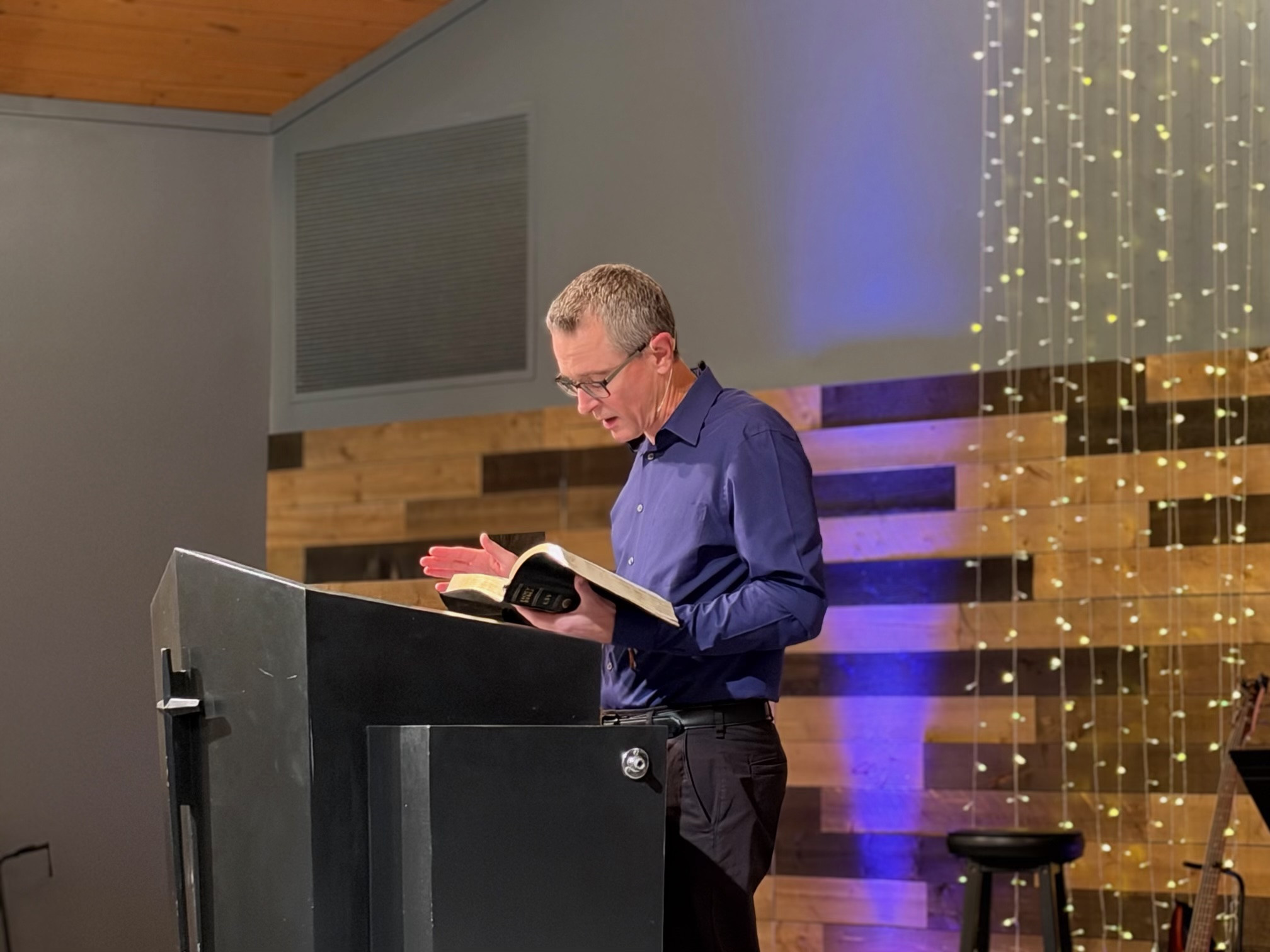
The following is a lightly edited transcript generated from the audio; it may contain small errors.
Good morning. I hope you had a joyous Christmas. Yeah, good. All right, I’m going to be in Acts chapter 8, and I’m going to start reading in verse 26. Acts 8, verse 26.
Now an angel of the Lord spoke to Philip, saying, “Arise and go toward the south along the road which goes down from Jerusalem to Gaza.” This is desert. So he arose and went. And behold, a man of Ethiopia, a eunuch of great authority under Candace the queen of the Ethiopians, who had charge of all her treasury, and had come to Jerusalem to worship, was returning. And sitting in his chariot, he was reading Isaiah the prophet. Then the Spirit said to Philip, “Go near and overtake this chariot.” So Philip ran to him, and heard him reading the prophet Isaiah, and said, “Do you understand what you are reading?” And he said, “How can I, unless someone guides me?” And he asked Philip to come up and sit with him. The place in the Scripture which he read was this:
“He was led as a sheep to the slaughter;
And as a lamb before its shearer is silent,
So He opened not His mouth.
In His humiliation His justice was taken away,
And who will declare His generation?
For His life is taken from the earth.”So the eunuch answered Philip and said, “I ask you, of whom does the prophet say this, of himself or of some other man?” Then Philip opened his mouth, and beginning at this Scripture, preached Jesus to him. Now as they went down the road, they came to some water. And the eunuch said, “See, here is water. What hinders me from being baptized?” Then Philip said, “If you believe with all your heart, you may.” And he answered and said, “I believe that Jesus Christ is the Son of God.” So he commanded the chariot to stand still. And both Philip and the eunuch went down into the water, and he baptized him. Now when they came up out of the water, the Spirit of the Lord caught Philip away, so that the eunuch saw him no more; and he went on his way rejoicing. But Philip was found at Azotus. And passing through, he preached in all the cities till he came to Caesarea.
(Acts 8:26–40)
Let’s pray. Dear Heavenly Father, Lord, a monumental task to have Your Word here before us this morning as we try to discern what You want us to hear. Lord, I pray that You would get me out of the way, that people would hear You and only You. I pray that there be ears to hear this morning. We thank You that Your Spirit helps us. In Jesus’ name I pray. Amen.
So Liberty, what was our assignment this year? What was the motto? Let’s start there. Ambassadors for Christ, right? And what were we supposed to do? We were supposed to invite five people, right? And share the gospel with at least three people. How did we do? We got two more days. Two more days till 2025. And what’s our motto for 2025? Make truth your home. Pastor Mike has given us that a little bit early. It’s almost like an early Christmas present. Make truth your home.
And as I was going through this passage, I was remembering things. Things that I probably, in the hectic life, set aside in nooks and crannies. And that’s what happens with truth. You know, sometimes we set that truth aside and go on. The Bible says in Romans that we suppress the truth in our sin and in our unrighteousness, we suppress it. And so we need a reminder, and this passage this morning as I was going through to prepare the sermon was a reminder to me. So I want to share that reminder that was to me, to all of you today.
Church, it’s my guess this morning that most of you don’t consider yourself to be experts in evangelism. Right? That most of you don’t regard yourselves as experts in evangelism. And yet, as the history of Christianity makes clear, it is by the means of people exactly like you that God has moved His kingdom forward most significantly and most consistently. Christians, one-on-one, making known the victory of Jesus Christ and its saving implications for people who are desperate and in need, whose real problem frankly is that they’re clueless until somebody exposes their need and its glorious gospel cure. It’s why I love this story of Philip and the Ethiopian. As I was reading it, it impressed upon me this idea of personal evangelism. I pray today for its motivating influence upon us as a congregation here at Liberty.
This story of Philip and the Ethiopian is a change in emphasis as you read it, as Luke records the progress of the gospel here in Acts. The change here, it’s dramatic. Up until this point in Acts, church, you may have not realized it, but the advancement of the gospel has taken place in the context of large groups, what we might term mass evangelism. Beginning with Pentecost itself in chapter 2 of Acts, and extending right up to the conversion of an entire city of Samaritans, beginning in the beginning of our chapter this morning, chapter 8. But as amazing as it is, and as exciting as it is, it really doesn’t resonate with our experience, does it? I mean, have you ever seen 3,000 people brought to faith in Jesus Christ on a single occasion? Maybe you have, if your name’s Billy Graham. How about an entire community powerfully won to the gospel? Perhaps, if your name is George Whitefield. Now, I love to read about these guys. I love these conversions, I certainly do. But frankly, I can’t in any way relate to them. What I can relate to is the one-by-one conversion of solitary individuals, like an African from Ethiopia in our passage today, or a single Jewish Pharisee in chapter 9 of Acts, or a single Gentile soldier in chapter 10.
Luke, you see, now makes a shift in emphasis, and nowhere is it seen to be more dramatic than right here in chapter 8. Philip leads an entire city to Jesus Christ. In the second half of the chapter, Philip leads one man to Jesus Christ. And interestingly enough, the equal amount of space or text is devoted to both. The same message is proclaimed, the good news of Jesus Christ. The same response is displayed, saving faith. And in both cases, the same result is recorded: joy. But common sense tells you, friends, that you don’t talk to one person in the same way you speak to a group of a hundred people. And maybe you will find yourself relating much more naturally not to the Philip whose preaching commands the attention of thousands, but to the Philip whose personal conversation results in the very first African being converted to faith in Jesus Christ. He, Philip, he is unusually gifted of the Spirit of God. He’s adept in both contexts, large crowds and one-on-one. It may be the reason that he’s the only person in the entire New Testament given the title “the evangelist.” And it stands to reason then that we can be tutored by his example, right?
Let’s look at the narrative. But as we do, I want to draw your attention to three distinguishing characteristics that make Philip such an effective personal evangelist. You’ll be amazed, quite frankly, at how basic and elementary they are, but how, in fact, they can contribute significantly to your effectiveness as a gospel witness to individual people. See if you can pick them out as we go along. We pick up the story in verse 26.
Now an angel of the Lord spoke to Philip saying, “Arise and go toward the south along the road which goes down from Jerusalem to Gaza.” This is desert. Philip, I would remind you, is presently in Samaria, where an entire city has been converted. Sometime after the fact, Peter and John, apostles from Jerusalem, join him for a time in this Samaritan city. But then, sensing the need to return home, we’re told in verse 25, Peter and John return to Jerusalem, and while they return, they’re preaching the gospel in many Samaritan cities. But what about Philip, huh? It all started with him, right? There’s a different agenda for Philip, here made plain by the message that comes to him from an angel of the Lord. In fact, look at it. It’s very similar in verse 29: “Then the Spirit said to Philip, ‘Go near and overtake,’” or stay with or join this chariot. So the Spirit tells Philip, go to that chariot and stay near it. Then in verse 39, if you go down: “Now when they came up out of the water, the Spirit of the Lord caught Philip away.” The Lord suddenly took Philip away. It’s impossible to miss, I think, that God’s hands are all over directing the entire thing. And it does raise the question, who is the real seeker in evangelism? Here, everything is set in motion by divine command. And God’s word is clear to Philip. Philip, from where you are in Samaria, go due south to that 60-mile road that runs from Jerusalem to Gaza. It’s a road that eventually extends from Gaza into Egypt and thus to the African continent.
Does this by chance seem a bit strange to you? It does to me. It would have sounded strange to Philip, I would guess. I mean, Samaria has just experienced the unique and inordinate blessing of a major evangelistic success. So much so that Philip can’t keep people away from the gospel. It’s even attracting people who want Jesus for all the wrong reasons. Philip had to deal with that too, didn’t he? Verse 9 of this chapter, we have Simon the magician, who wanted Jesus for power. Could you imagine being Philip? I know that I would be thinking, you want me to leave this place? To walk away from all these new converts? And yet no sooner had Philip heard this word than we read in verse 27, “So he arose and went.” It’s interesting that this is the very opposite of what we see with Jonah, isn’t it? When the word of the Lord came to him, he defiantly refused. However, Philip obediently and immediately responds. So he arose and went. And on his way, he met an Ethiopian.
Church, Luke here, the writer of Acts, is playing with us a bit. He’s teasing us a bit, because the way the original reads is, “So he arose and went, and behold, a man of Ethiopia.” Now we no longer use the exclamation “behold.” That would be kind of weird, wouldn’t it? So it’s not in our modern translations, but if you have a King James or the New King James version of the Bible, it’s exactly how it reads. It’s a kind of literary wink and a smile. It’s as if to say facetiously, surprise, surprise. Because there are never surprises with God, only fresh revelations of His long-standing predetermination. It is most startling, however, to Philip, not because he comes upon a man—it’s not a road infrequently traveled—but because of who this man is that he comes upon. A man exotic, powerful, and pious.
You say, exotic, in what sense? Well, he’s an Ethiopian. It’s not a reference to Ethiopia as we presently know it. It’s a reference to what is present-day Sudan, referenced in the Old Testament as the land of Cush. But the point is, to people of the ancient world, it was regarded as the furthermost edge of the earth. It would be like me saying, he’s from Timbuktu or Boingo Boingo. But even more captivating and more mysterious, the fact that he is dark-skinned. Don’t forget, my friends, this is not New York in the 21st century, where on every couple of blocks, every race of human being that exists on the planet—black Africans were not only unusual in the Middle East, they were regarded with great fascination, particularly among the Romans and the Jews. So that all at once, this man is strange and striking and alluring.
But not only is he exotic, he’s a man of great power. As verse 27 continues, “a eunuch of great authority under Candace, the queen of the Ethiopians.” Now, the word Candace—or some of your versions, it kind of looks like Candace or something like that—that is not the queen’s name. It’s an official title, which means Queen Mother of the Ethiopians. A kind of royal designation, much like we would refer to the Egyptian pharaoh. “Who had charge of all her treasury, and had come to Jerusalem to worship, was returning.” This Ethiopian is an important official in charge of all the treasury of the Candace, the queen of the Ethiopians. And this guy here, you’ll notice, he’s not merely the one who makes sure her bank statement is reconciled at the end of the month. He’s the CFO for the entire nation, which means he’s probably very intelligent, very trustworthy, very strong, and very highly regarded.
You say, well, how do you know that? Well, it’s a bit of a guess, I do admit, but it’s an educated guess. To travel from where he lives in that land of Cush to Jerusalem would take five months, to travel back from Jerusalem five months, to spend a little time once he gets to Jerusalem—for all intents and purposes, he’s gone for a year. How many bosses are going to give a year off to an employee, let alone the CFO for the entire operation? You think President Trump, once he gets in office, is going to allow the [treasury secretary] to take a year off? Probably not. This man must be highly regarded.
You say, David, why does he want a year off? Well, because this exotic and powerful man is also very pious or devoutly religious. Look at it, the last part of verse 27, this man had gone to Jerusalem to worship. He is most likely a Gentile who has become Jewish by way of conversion. And as a convert to Judaism, he has in all likelihood traveled to Jerusalem to worship God at one of the principal Jewish feasts. A thousand miles away, a trip that would take a year of his life. I’d say he’s a pretty committed fellow. Verse 28: “was returning,” or on his way home, “and sitting in his chariot, he was reading Isaiah the prophet.” So most likely he has the entire scroll of Isaiah, which would be well over 100 feet long. I mean, it was rare in those days to have a personal copy of the Scriptures, even just one Old Testament book, and it was very, very expensive. It says something to you about his piety, doesn’t it? And not only that he owns it, but that he’s reading it. But why in particular is he reading Isaiah? Well, providentially speaking, God does have His reasons. We’ll see that in a moment. But so also does this guy. And my guess, it’s owing to the fact that Isaiah, on more than one occasion, speaks about the last days, the days inaugurated by the Messiah, when the people of Cush, his own people, will be welcomed into the kingdom of God.
So this exotic, powerful, pious man, I envision him as being striking, well-dressed. If you have a problem with that, imagine me and then just envision the opposite. But he’s in charge of Ethiopia’s national treasury. And his co-star in this whole story, verse 29: “Then the Spirit said to Philip, ‘Go near and overtake this chariot.’” So the Spirit told Philip, go to that chariot and stay near it. To whom does the Spirit say that? Philip. Right? He’s an innocuous little Jew whose only significant position is that he and seven other guys once ran the widow’s fund for the impoverished Hebrew church. He was one of the first assigned to the office of deacon. Now you can see why this is near and dear to me. Acts chapter 6. I mean, it’s amazing. This whole scene is amazing. This church deacon and a powerful foreign dignitary. I mean, can you imagine a scene of greater disparity? I know I can’t.
When I was a kid, before I could drive, I would hop on my 10-speed and go to the mall to hang with friends. Yes, I lived in a day when there were only 10 speeds on a bicycle. But that 10-speed and the freedom that came with it gave me just a tad bit of credibility with my peers, being able to ride to the mall by myself. My peers being pre-16-year-olds. 16- or 17-year-olds would just laugh as they passed me by in their cars. All of this to say, by cultural standards, I hadn’t made it quite yet. What if the Spirit of God said this to you today: ride your 10-speed up to the side of this limo. You know, the big black one with flags on the side, going to the embassy. If he rolls down his window, say something to him. How would you respond? Him? Not a chance. We’re from two entirely different worlds, socially, ethnically, economically, culturally. I’m not even sure he would listen to me. And frankly, given the opportunity, I’m not sure I would know what to even say to him. We would have a million different rationalizations, wouldn’t we? But Philip, he does it. Verse 30: “So Philip ran to him.”
You see, church, it’s a distinguishing character that makes Philip such an effective personal evangelist. He is responsive. He is responsive. Responsive—it’s a word, a notion of quality that you need to keep in mind. He’s responsive, Philip is, to the command of God. Notice verse 26. Does God tell Philip what he will encounter there? No, it appears not. Nevertheless, verse 27, “So he arose and went.” Same thing in verse 29. Then the Spirit said to Philip, “Go near and overtake the chariot.” Go to that chariot and stay near it. Why? The Lord doesn’t say. Even so, we’re told in verse 30, “So Philip ran to him.” I mean, friends, it’s so obvious here that it would be very easy for us to miss this. And yet, ironically, it is at this very point that so many of us go wrong in the business of personal evangelism.
I mean, if I were to take a poll this morning, if I would have started the whole morning out with a poll and asked you what is the most significant distinguishing characteristic of a successful personal evangelist—my guess is, very near the top, probably at the top, would be something like Spirit-led boldness. Spirit-given boldness. I bet that’s what we’d find. We think of people like Ray Comfort, right? We think of him. And therefore, all together now, of course, this is the very reason I don’t share the gospel: it’s because I don’t have the boldness. I’m so meek. I’m an introvert. I’m so shy. May I tell you something? You can say yes or no. In all my years as a Christian, including those occasions when I’ve shared the gospel in situations where I was entirely outmatched—happens often—I have never found boldness to be the cause of my obedience. I would suspect that I’m just like you. My stomach gets tied in knots. My heart begins to race. My palms sweat. I have never, ever found boldness to be the cause of my obedience. I have always found boldness to be the consequence of my obedience. That the Spirit of God supplies boldness when, in responsiveness to the gospel mandate, I begin to speak about Jesus Christ. Then I find the courage comes. Then I feel the boldness. At times, it’s almost as if I’ve become an entirely different person. You say, well, Lord, I mean, if the [audio unclear] the gospel, because friends, the Holy Spirit has spoken. And He does speak to you. You have a direct word from God Himself: “Go and make disciples of all nations.” How many direct words do we need? “Go into all the world and preach the gospel to all creation.” “You will be My witnesses in Jerusalem and in Judea and Samaria and to the ends of the earth.” Do I need to continue? The key issue that has immediate bearing on your being effective at personal evangelism is not the need for a direct word from God. It’s your responsiveness to the crystal-clear word He has already spoken to you, repeatedly and unambiguously. What makes Philip such an effective personal evangelist? He is responsive to the word of God. But that’s not all he is, this Philip.
Notice, secondly, he is redemptive. Watch this now, watch this, verse 30: “So Philip ran to him, and heard him reading the prophet Isaiah.” Hmm, that’s interesting. Philip just happens to come across this man out in the desert who just happens to be reading the book of Isaiah. Hmm, feels like something more than mere coincidence, doesn’t it? “Do you understand what you’re reading?” Philip is not questioning the man’s capacity to read. He’s inquiring about his ability to comprehend the implications of what he’s reading. And I love the response, verse 31: “And he said, ‘How can I, unless’”—notice the necessary precondition—“‘unless someone guides me.’” He needs someone to explain it to him. How often, friends, do you come across a top-level government official who displays this kind of humility?
And the fact of the matter is, no one can appreciate the implications of the Old Testament until they possess the interpretive key. Oh, they can define the terms, right? And we’ve been learning some terms. Pastor Mike has been teaching us what hesed means, right? And we can look it up in a dictionary and we can define it in a little dictionary what it means. And any Joe can observe the moralities that are in the Bible. David did something bad here, so don’t be like David. David did something good here, so go be like David. But the ultimate aim to which all of it points, that, my friends, requires an interpretation external to a person, which the Ethiopian readily acknowledges here. How can I understand it, since I do not possess the interpretive key? So the end of verse 31, he invites Philip to come up and sit with him. That’s an amazing thing, this scene. This little white Jewish deacon sitting next to a powerful, exotic foreign dignitary, with a giant scroll of parchment in their laps.
This is the passage of Scripture the Ethiopian was reading. Now keep in mind, friends, it’s a long drive home. So this Ethiopian probably started what we would refer to as Isaiah chapter 1, verse 1. By the time Philip shows up on the scene, this is where he’s at now:
He was led as a sheep to the slaughter;
And as a lamb before its shearer is silent,
So He opened not His mouth.
In His humiliation His justice was taken away,
And who will declare His generation?
For His life is taken from the earth.(Acts 8:32–33; cf. Isaiah 53:7–8)
I know you recognize it, right? Just as a result of hearing that you recognize it, and Philip did. It’s the passage that the inspired writers of the New Testament quote 85 times. Now of course, this Ethiopian didn’t know this. Why? Well, the New Testament hadn’t been written yet. Verse 34: “So the eunuch answered Philip and said, ‘I ask you, of whom does the prophet say this, of himself or of some other man?’” Then Philip opened his mouth, and beginning at this Scripture, preached Jesus to him. He told him the good news about Jesus.
You see, my friends, the whole Old Testament must be read, that all of revelation must be interpreted, from revelation’s highest point: the person and work of Jesus Christ. And in the case of Isaiah 53, that God’s servant must be rejected by His people, unjustly judged, silently led to slaughter without a single descendant to speak of, was violently snatched away. But as Isaiah goes on to say in chapter 53, this was no tragedy. It was the purpose and will of God that God was pleased to crush Him. Not only that, that His suffering and His death was not a result of His own sin, but a result of our sin. God vindicated Him then by raising Him from the dead, and has been established and exalted as the King of kings and Messiah over all. And the reason He did all of it? Verse 6 of Isaiah 53: “All we like sheep have gone astray; we have turned, every one, to his own way; and the Lord has laid on Him the iniquity of us all.” He suffered and died for the sins of all who would become His people. God would justify the followers of the Messiah, and with Him they too would be resurrected to reign with Him eternally. But let me remind you, this is only where Philip began. I assume that since he had the whole scroll of Isaiah in his lap, that he moved through it backwards and forwards, showing the implications of this good news, that this crucified and resurrected Messiah would inaugurate a new kingdom for His people, which no doubt made this Ethiopian’s heart race. Why? What has Luke told us about this Ethiopian that I have conspicuously overlooked?
You probably think I left it out for modesty’s sake. That my manners are good enough not to mention it. But when we read this text it should be a blinking yellow check-engine light right about now in your mind, because it’s been stated by Luke no less than six times in this text. This Ethiopian, exotic, powerful, pious, is a eunuch. He’s been castrated. When? How? Why? We’re not told. Though it was a frequent occurrence among royal officials, particularly those who work closely with women, especially royal women. So why does Luke repeatedly call your attention to this? He was a eunuch, the Ethiopian eunuch, the eunuch. Why does he keep bringing this to our minds? Because if you are indeed a reader of the Old Testament, you would know that Jewish men who are castrated are not allowed to enter into the temple to worship. Forbidden to enter into the assembly for worship. And if you think that is stringent, the defects prohibiting a man from priesthood were even more severe. It was one of the tangible ways, you see, that the law of God illustrated that a person’s level of access to God was determined by the degree to which he was perfect. And this Ethiopian conspicuously wasn’t, and he was reminded of it every single day. He bore in his body a glaring defect, an imperfection, and for that reason, it excluded him from mere access to God in the temple.
Can you imagine what that would have felt like? Have you ever felt like an unloved stepchild, restricted from a place on the inside, kept from something that you desperately want, confined to the margins of the mainstream, relegated, downturned, frozen out, not smart enough, not fast enough, not pretty enough, not tall enough, and in this case not good enough, not pure enough? And yet he’s come a thousand miles and over five months, all the while he can’t get close to the God he longs to worship. But they have the scroll of Isaiah. It’s in their hands. And after chapter 53 comes chapter 54, introducing a new day for the people of God and a new kingdom. And after chapter 54 comes chapter 55, an invitation from God Himself extended to all people everywhere to be part of this new kingdom. Which then brings us to chapter 56, where we read in verse 3:
Let not the foreigner who has joined himself to the Lord say, “The Lord will surely separate me from his people”; and let not the eunuch say, “Behold, I am a dry tree.” For thus says the Lord: “To the eunuchs who keep my Sabbaths, who choose the things that please me and hold fast my covenant, I will give in my house and within my walls a monument and a name better than sons and daughters; I will give them an everlasting name that shall not be cut off.”
(Isaiah 56:3–5)
Oh, my friends, there’s something broken about this Ethiopian, physically broken, that was symbolic of our spiritual condition. He was unfit for the presence of God, less than perfect, just like you, just like me. Flawed, damaged, and because of this, he was an outcast. But by using the Old Testament Scriptures, read through the wide-angle lens of the gospel, God’s redemptive purpose becomes clear. By virtue of the death [and] resurrection of Jesus Christ, God has not only purged all of our imperfections, He has raised up a new temple in which people like this Ethiopian eunuch could find full membership. Now free to draw near to God in the most intimate way possible. There is now a place for those who were once outcast, kept on the periphery, and this Ethiopian has now come to know it. It’s why in verse 36 he says, “Now as they went down the road, they came to some water. And the eunuch said, ‘What hinders me from being baptized?’” How profoundly different is this from the person who says, “Do I have to get baptized?” “Do I get to get baptized?” But how does he even know about baptism? Well, obviously he knows because Philip told him. We see it many times prior to this: baptism is always connected to a person repenting and receiving Christ as a result of the proclamation of the gospel in the book of Acts. And since this Ethiopian eunuch now believes in the Messiah Jesus as set forth in the Old Testament, the Savior who has dealt with all his flaws and all his imperfections and sins, he wants to identify with Jesus fully and immediately. Verse 38: “So he commanded the chariot to stand still.” It’s how we know he’s not traveling alone. You see, there’s a limo driver. “And both Philip and the eunuch went down into the water, and he, Philip, baptized him.”
It’s so much more than just a good story. This is a tutorial on personal evangelism. And here, it reveals what makes Philip such an effective personal evangelist. It’s not his powerful apologetics. It’s not his salesman-like ability to be slick or smooth. It’s not his willingness to engage in religious dialogue so that he might appear wonderfully [open]. He is redemptive. He uses the Bible to talk about Jesus. It’s a distinguishing characteristic that can make you an effective personal evangelist. And I might add, a very rare one. What a novel idea, huh? Using the Bible to talk about Jesus with an unbeliever. Finally, verse 39: “Now when they came up out of the water, the Spirit of the Lord caught Philip away, so that the eunuch saw him no more; and he went on his way rejoicing.” He no longer has the evangelist, but he does have the evangel, the gospel, the good news, and everything that comes with it. And church, he now carries that good news, that gospel, with him a thousand miles south, a powerful man in a public position, joyfully testifying of a Savior who loves marred, distorted, disfigured, flawed, marginalized people.
Are you divorced? Are you gay? Have you been abused? Are you a convict? Are you an alcoholic? Are you addicted to porn? Hear this. There is no obstacle of any kind that can place you beyond the saving power of the good news of Jesus Christ. None.
What are the distinguishing characteristics that make Philip such an effective personal evangelist? He is responsive to God’s command. He is redemptive in his conversation. Finally, he is relentless. That is, relentless at his calling. Let me show you something. Look back at verse 5: “Then Philip went down to the city of Samaria and preached Christ to them.” He proclaimed Christ there. Now verse 12: “But when they believed Philip as he preached the things concerning the kingdom of God and the name of Jesus Christ, both men and women were baptized.” Verse 35: “Then Philip opened his mouth, and beginning at this Scripture, preached Jesus to him.” Verse 40: “But Philip was found at Azotus; and passing through, he preached in all the cities till he came to Caesarea.” I wonder, church, if he would have been as successful if, like some in our day, he said, “I’ll just let my life be a witness.” I mean, deeds are more powerful than creeds, right? Evangelism is about words. Enhanced by deeds, perhaps, but without specific content, no one ever, ever gets saved. We have to use words. So God drops off Philip about 20 miles up the road until he finally arrives at Caesarea, about 60 miles north, where he eventually makes his home. He travels from place to place doing what? What all of us are supposed to do. He preaches the gospel. He is relentless. Are you? Am I?
Over my years, I figured something out. This is the truth that I kind of set aside, and I needed to remember. It’s something that sometimes I forget and I needed to be reminded of. It’s a practical thing. And I wish that I’d learned it a long time ago, and I don’t forget it. It’s not easy to talk to unbelievers about Jesus and find myself talking about Jesus all the time. If you were to say to me this morning, “I don’t ever talk to unbelievers about Jesus,” I would have to ask you, is it because you never talk about Jesus with your husband? Do you talk about Jesus with your children, with your friends at different events? We need to make talking about Jesus the most natural thing in our lives. To talk about the gospel so much that it becomes a regular part of who we are. It’s instinctive. We will find it much easier to speak about Jesus to people who don’t know.
Let me give you just a bit of a silly illustration. I know it’s silly. How many of you have seen and maybe applauded the pronounced faith of like a Hollywood star getting their award? Or maybe the faith of an athlete, right? Particularly after they win. I mean, we really don’t see the opposite when they lose. They don’t go to an after-game interview and say, “I would like to give God all the glory,” do they? It’s in the moment, which makes me wonder, is this authentic or is it emotional, the pronouncement of faith on live TV? It’s not always sure at what God they’re giving glory to. Remember Evander Holyfield? You guys remember him at all? Old enough to remember, he was the heavyweight boxing champ and had the top of his ear bitten off by Mike Tyson in a fight. Mike Tyson’s been in the news recently. This Evander Holyfield, he was very outspoken about his faith. Every fight he would come out in boxing trunks, shorts that had embroidered right on them Philippians 4:13: “I can do all things through Christ who strengthens me.” He was an excellent boxer. But his life was full of chaos. He fathered 11 children with six different women.
On the other hand, there’s a guy, he was an outfielder, I think he’s retired now, for the San Francisco Giants. His name was Hunter Pence. In a post-game interview after the Giants had won the first game of the World Series in 2014 against the Kansas City Royals, there was a female interviewer, her name was Erin Andrews. She asked Hunter, who by the way had hit a home run earlier in that game, “You told us today, Hunter, that the theme in the clubhouse would be, ‘There’s nothing to fear.’” “No,” said Pence. “That wasn’t the message.” So she kept pressing him and pressing him: in that clubhouse before the game, well, what did you say to your teammates then? What did you say? Finally, Pence said, “I said, make your peace with the King of Kings.” In a baseball clubhouse, during the World Series, it was so matter of fact. It was unrehearsed. No evangelistic formula to memorize. You just talk about Jesus all the time.
Are you responsive to God’s command? Are you redemptive in your conversations? Are you relentless at this calling? All around you, church, are people just like this Ethiopian eunuch. People who know they are outsiders, convinced for whatever reason that they can’t ever get near to God. “If the Holy Spirit spoke to me and said, go talk to that person, then I will do it.” He has. So by the grace of God, let us begin like never before. This is 2025, make it your resolution: to be responsive to His calling, to be redemptive in our conversations, and to be relentless at this business of personal evangelism. Let’s pray. Would you bow your heads, please?
Our Father and our God, I am certain there wasn’t anything significant that I said this morning, anything that was unknowable or in any way too sophisticated. Nothing revolutionary. It’s also simple this morning. And yet, Father, it seems to be the simple things that really do win the day in the end. We are thankful, God, to know that the advancement of the kingdom of God does not turn on large stadiums filled with people in crusades. History bears out the fact that the kingdom of God advances ultimately, most consistently, and significantly by the individual one-on-one conversations with unbelievers that take part with individual, ordinary, garden-variety Christians just like us. Not experts, but people who simply love Your Son, Jesus Christ, so much so that they find themselves talking about Him all the time. Lord, that’s what we want to do here at Liberty. We want to talk about Your Son all the time and what He’s done for us. It should be the most natural thing in the world, Lord. Please help us. O Lord and God, I pray that that would be true of us here at Liberty Church. And that as a result, Lord, one by one we would see men and women and boys and girls brought into the Christian family, transformed, God, not because they were at a mass crusade or heard some powerful preacher, but because a faithful Christian minister like Philip sat down alongside them, opened the Bible and explained Jesus to them. May that be so of all of us. And Father, I pray for those here, like the Ethiopian eunuch, that even if they are kept from You by the impediment of sin, may they know today that You have made a provision for the outcasts. I am an example of that, Lord, and I thank You for it. That they would come in and have a name greater than sons and daughters. O Lord, we praise You and thank You for all, in Your Son’s matchless name, Jesus. Amen.