
May 20, 2012
OMG: God’s Faithfulness
Dr. David J. Vaughan · Psalm 89:1–11
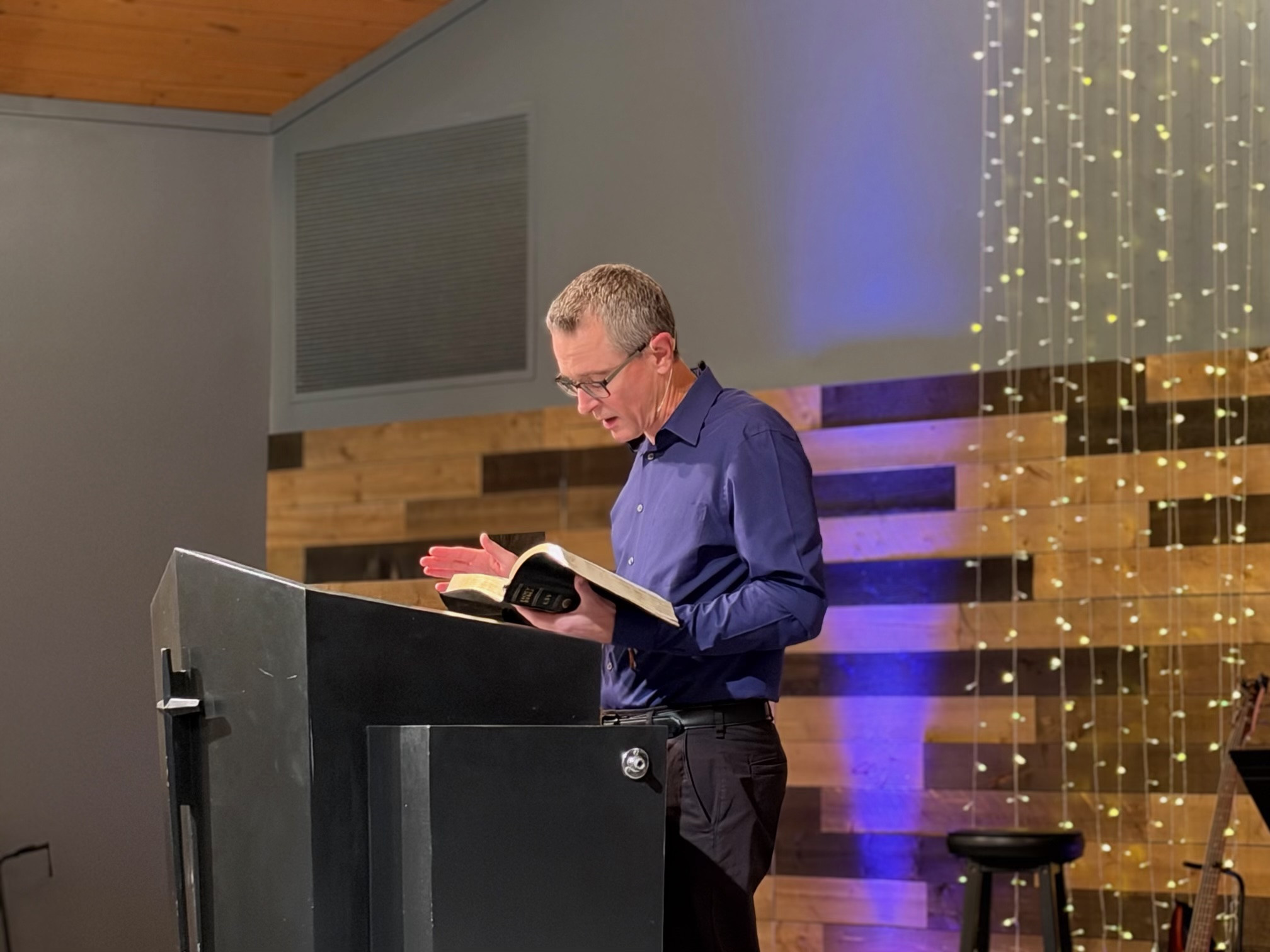
The following is a lightly edited transcript generated from the audio; it may contain small errors.
Open your Bibles if you would to Psalm 89. I’m going to talk to you today about God’s faithfulness, and I’ve talked about the Lord’s faithfulness for a couple weeks now. And I can’t seem to get away from it, even though I want to. What that means is, it keeps on impressing upon me to continue to talk about this. If you’ve been paying attention in this series of God’s attributes, on most of His attributes, I’ve given one sermon, and occasionally I’ve given two on one. And today, actually, believe it or not, is the third sermon on God’s faithfulness. So for some reason, God wants us to hear this message. I’m firmly convinced of that. In Psalm 89, the psalmist says in verse 1:
I will sing of the mercies of the Lord forever; with my mouth will I make known Your faithfulness to all generations. For I have said, “Mercy shall be built up forever; Your faithfulness You shall establish in the very heavens.” “I have made a covenant with My chosen, I have sworn to My servant David: ’Your seed I will establish forever, and build up Your throne to all generations.’” And the heavens will praise Your wonders, O Lord; Your faithfulness also in the assembly of the saints. For who in the heavens can be compared to Jehovah? Who among the sons of the mighty can be likened to Jehovah? God is greatly to be feared in the assembly of the saints, and to be held in reverence by all those around Him. O Lord, Your faithfulness also surrounds You. You rule the raging sea; when its waves rise, You still them. You have broken Rahab in pieces, as one who is slain; You have scattered Your enemies with Your mighty arm. The heavens are Yours, the earth also is Yours; the world and all its fullness, You have founded them.
(Psalm 89:1–11)
This is a great psalm, isn’t it? I like to read the whole thing, but it’s really long, so we’re not. But this psalm is a tribute to God’s covenant fidelity, His faithfulness to His people. And this is a psalm about God’s covenant with David. And David’s throne was to be established. And if you read the book of Acts in chapter 2, when Peter gets up and preaches the first sermon, he refers to the covenant made with David. So the Davidic covenant was fulfilled when Jesus Christ was risen from the dead and then ascended, and He sat on His throne, and now He was on the throne of David, which is established forever. So this psalm is really about not just David, it’s about His seed, Messiah, and the seed of the Messiah, which is you and I. And it talks about how God’s fidelity, His covenant faithfulness, will never be removed. Hear me? Never be removed. He will keep covenant. He will be faithful forever. He says in verse 28, he says, well, let’s go back a little bit, 24:
But My faithfulness and My mercy shall be with him, and in My name his horn shall be exalted. Also I will set his hand over the sea, and his right hand over the rivers. He shall cry to Me, “You are my Father, my God, and the rock of my salvation.” Also I will make him My firstborn, the highest of the kings of the earth. My mercy I will keep for him forever, and My covenant shall stand firm with him. His seed also I will make to endure forever, and his throne as the days of heaven. If his sons forsake My law and do not walk in My judgments, if they break My statutes and do not keep My commandments, then I will punish their transgression with the rod, and their iniquity with stripes. Nevertheless My lovingkindness I will not utterly take from him, nor allow My faithfulness to fail. My covenant I will not break, nor alter the word that has gone out of My lips. Once I have sworn by My holiness; I will not lie to David: his seed shall endure forever, and his throne as the days of heaven.
(Psalm 89:24–36)
[audio unclear] fidelity and his faithfulness to his people. [audio unclear]
But also God is omniscient, because He knows all things, He can’t make a mistake. So if God makes a prediction or if God makes a promise, something can happen where He says, oh shoot, I didn’t know that was going to happen. I didn’t know Fred was going to lose his job. I didn’t know the stock market was going to crash in 2009. I didn’t know this. Well, of course He knows this. He knows all things. So because He’s true, He’s truth itself, because He’s omniscient, He knows all things, so when He speaks a word, all of these factors are taken into account. But also, God is immutable. That means He doesn’t change. He cannot change. Therefore, the point I wanted you to see a couple weeks ago when we talked about this is this. This is what we have to get a hold of by faith, is that when a being, when a person who is true, when a person who is immutable, when that person speaks, the only result can be truth. That’s the only result. That’s the only possible logical result. If He knows all things, if He cannot err, if He will not lie, if He does not change, when He speaks, that word must be true. You hear me? It has to be true. It must be truth. It cannot be false. Therefore God’s Word is faithful because He is faithful. Also, one being who is true and immutable acts—when He moves, His ways are true. That is, He acts in faithfulness to what He has said.
So when we read the Bible, we read, you know, like if you just read Acts 2 and you’re not really paying attention, you think, oh, Jesus rose from the dead, that’s awesome. Peter gets up and preaches about it. That’s awesome, people could say, that’s cool. But what you need to see is that event was a fulfillment of a word that God had given hundreds and hundreds and hundreds of years before. It was God fulfilling His promise. So when we read the life of Jesus, we see all of the—oh, Jesus doing all of these things. And if you’re paying attention, you’ll see how often the Old Testament is referred to. Why? Because everything that was happening was in fulfillment of promise. Jesus is the fulfillment of the promise. So God was acting, but He wasn’t acting randomly. He was acting in accordance with what He had already said He was going to do. Why? Because He is a faithful God. He keeps His covenant. So when God speaks and when God acts, it is always in faithfulness.
This morning, briefly, I want to talk about some evidences of His faithfulness, and then I want to talk about what’s the right response. If God’s really faithful, then what does that mean? How do we respond to that? First of all, most importantly, God is faithful to His Word. He’s faithful to fulfill His Word. Since we’re in Psalms, look at Psalm 119. One of my favorite, favorite verses. Psalm 119 verse 89. You all there? It says:
Forever, O Lord, Your word is settled in heaven. Your faithfulness endures to all generations; You established the earth, and it abides. They continue this day according to Your ordinances, for all are Your servants.
(Psalm 119:89–91)
Forever, O Lord, Your word is settled in heaven. Not “Your word is settled in heaven until circumstances change,” or “Your word is in heaven until people decide they don’t believe in You anymore.” No, it’s “Your word is settled in heaven”—how long? How long? Say it one more time. [audio unclear] warnings. [audio unclear] to Israel because God made a covenant with them. And it says here in verse 19:
God is not a man, that He should lie, nor a son of man, that He should repent. Has He said, and will He not do? Or has He spoken, and will He not make it good? Behold, I have received a command to bless; He has blessed, and I cannot reverse it.
(Numbers 23:19–20)
Hallelujah, amen. God has commanded to bless, and this prophet was hired to curse, and he went to curse him, and God turned the curse and made it a blessing. Why? Because God made a covenant with Israel, He was faithful to Israel, and He cannot lie. So when He makes a promise He will fulfill that promise. Notice what I said. I did not say He might fulfill the promise. I said He will fulfill the promise. He must do so because He is true and He cannot lie. Are you hearing me? Not He might do it, He will do it, He must do it.
Now when we look at Scripture, there’s two kinds of promises, as you probably know. There’s the conditional kind, this is the “if” promise. In other words, God says if you do this or if you believe this, then you will get the result. These are conditional. And then we have unconditional promises. I call these the “I will” promises. God just says, I will do it. Whether you like it or not. I’m going to do it. I’m going to fulfill it. Boom. Which was the fulfillment of many covenant promises in the Old Testament. He wasn’t waiting. Okay, let me see, is there enough faith on the earth? Now I’ll send the Messiah. He wasn’t responding. He was fulfilling, fulfilling a promise because He made a promise. That’s what He did. When we see in Scripture is whenever God makes a promise, sure enough, He fulfills it. He always does, and He always will.
I mean, think about this. Just think. Our first parents eat the fruit, they die, and God immediately makes a promise to them. He makes a promise to the woman. And He says that her seed will bruise the head of the serpent. Well, that was a promise about the Messiah. So when Jesus Christ was born, when Jesus Christ died on the cross and rose from the dead, God was fulfilling the promise He made to Eve. Thousands and thousands of years later, but He fulfilled His promise.
Think about the promises to Abraham in Genesis 15 onward, where He promises Abraham that he’d be a father of many nations. Remember Abraham is old. He’s actually, he was older than me. That’s old. His wife was old. And when you read about Abraham in Romans it says that when he was given the promises, it said he didn’t consider the fact that he was a hundred years old. He didn’t consider the fact his wife’s womb was dead. He didn’t consider those things. He didn’t stagger at the promise of God through unbelief, but he was strong in faith. When that word came to Abraham, I mean, can you imagine? I mean, think. Can you imagine? The promise wasn’t, Abraham, okay, you’ve been praying for years, I’ll give you one son. Well, he could believe that, like, hey, maybe he could believe it. Well, okay, somehow You’re going to do this. My wife’s really barren, but okay. No, no, no, no. That wasn’t the promise. The promise is, I will make you the father of nations. I will give you thousands and millions of descendants. That’s the promise. And that’s why in Romans, it says he didn’t stagger at the promise of God. In other words, the promise of God was so great that the very promise could have inspired unbelief. Are you hearing me? Are you hearing me? He could have believed maybe for a child, but that’s not what the promise was. The promise was that he was to be a father of many nations and that through his seed, the entire world would be blessed. Now that’s a promise. And the Word of God says, Abraham believed God, and it was imputed to him for righteousness. And we have seen that promise fulfilled in our Lord Jesus Christ, amen.
Think about the story of Joseph. You all read the story of Joseph lately? Go to Genesis 37. We’re not going to read the whole thing because it’s chapters and chapters. Just want to look at a couple verses. Genesis 37. It says in verse 2:
This is the history of Jacob. Joseph, being seventeen years old, was feeding the flock with his brothers. And the lad was with the sons of Bilhah and the sons of Zilpah, his father’s wives; and Joseph brought a bad report of them to his father. Now Israel loved Joseph more than all his children, because he was the son of his old age. Also he made him a tunic of many colors. But when his brothers saw that their father loved him more than all his brothers, they hated him and could not speak peaceably to him. Now Joseph had a dream, and he told it to his brothers; and they hated him even more. So he said to them, “Please hear this dream which I have dreamed: There we were, binding sheaves in the field. Then behold, my sheaf arose and also stood upright; and indeed your sheaves stood all around and bowed down to my sheaf.”
(Genesis 37:2–7)
And they said, “Shall you indeed reign over us?” You’re the runt. You’re the youngest. That’s not how it works. It’s the oldest son. I think it’s the honor. “Or shall you indeed have dominion over us?” And they hated him even more. Verse 9, then he dreamed still another dream and told it to his brothers. Now you think Joseph would have learned his lesson? But no. [audio unclear] If you asked Joseph, “Do you want the dream?” he would have said yes, but if you asked him, “Do you want it to come true by being a slave and being in prison?” he would have said no. The very means—now hear me now, some of you aren’t listening—the very means that God was using to fulfill His promise were means that were contrary to what Joseph wanted. Are you hearing me? This is important because God still works this way. He still works this way. And sometimes we’re wrestling with God and we’re resisting God when He’s actually trying to fulfill His promise to us. But God always works by contrary means. He always has and He always will. Why? Because in that situation, which seems so contrary to the promise, what do you have to do? You have to believe. You have to have faith. Because it doesn’t appear like God’s fulfilling His Word, but He is.
We already alluded to the promise to David. We won’t take the time to read it. But God gives a promise to David as an old man that of his seed, there will be the Messiah, there will be a throne, it will be established forever. And we know from Psalm 89, Acts 2, the fulfillment of that promise is in our Lord Jesus Christ, that His throne is established forever. Jesus Christ is now on a throne. He is the King of kings and the Lord of lords. And that was in fulfillment of a promise that God had made hundreds of years before to King David.
Think of the promise that God made in the book of Joel. Go to the book of Joel chapter 2, if you can find the book of Joel. Joel 2:28:
And it shall come to pass afterward that I will pour out My Spirit on all flesh; your sons and your daughters shall prophesy, your old men shall dream dreams, your young men shall see visions. And also on My menservants and on My maidservants I will pour out My Spirit in those days.
(Joel 2:28–29)
This is a promise that God made. In the book of Acts again, chapter 2, that on the day of Pentecost when the Holy Spirit came down and the church as we know it today was born, that that was a fulfillment of this promise, that God kept His Word, that He would now pour His Spirit on all. Now that’s a promise for us. This is a promise about the birth of the church. And if you’re part of the church, this is a promise for you. So we can look at literally, and I’m not exaggerating, literally hundreds of promises, hundreds of promises made in Scripture that we see fulfilled in the Scripture, hundreds of them. Wherever God makes a promise, He always fulfills it, and the reason is His very character. He is just, and He must keep His Word. He must.
But He also keeps His warnings. Look at Deuteronomy chapter 7. And Deuteronomy 7 starting in verse 6, it says:
For you are a holy people to the Lord your God; the Lord your God has chosen you to be a people for Himself, a special treasure above all the peoples on the face of the earth. The Lord did not set His love on you nor choose you because you were more in number than any other people, for you were the least of all peoples; but because the Lord loves you, and because He would keep the oath which He swore to your fathers, the Lord has brought you out with a mighty hand, and redeemed you from the house of bondage, from the hand of Pharaoh king of Egypt. Therefore know that the Lord your God, He is God, the faithful God.
(Deuteronomy 7:6–9)
Let’s read that again. Therefore, know that the Lord your God, He is God, the faithful God, who keeps covenant and mercy for a thousand generations with those who love Him and keep His commandments. Now I believe that things happen in our life, for some of us anyway, maybe many of us, because of things that our ancestors did hundreds and maybe even thousands of years ago, because that’s what this Bible says. Some of you may have great-great-great-great-great-great-grandparents that prayed down through the generations, and God decided to honor their faith and save you. And we’ll never know until we get to heaven. But I know this, that when a [audio unclear] We have the short view, God has the long view. So God is doing things in our day because of what people prayed and did in their day. And you know what that means? You and I can shape the future. You and I can shape what happens a hundred or two hundred or three hundred years from now by our faithfulness and faith today. Do you believe that? I hope so, because that’s what the Word is telling us. He keeps His covenant to a thousand generations. Now if a generation is forty years, that’s a long time. Right? With those who love Him and keep His commandments. And notice verse 10: and He repays those who hate Him to their face, to destroy them. He will not be slack with him who hates Him. He will repay him to his face. So in other words, the faithfulness of God to fulfill His Word is a two-edged sword, right? So when He makes a promise, He’ll fulfill His promise. But when He makes a warning, He’s going to fulfill His warning. We can’t have one without the other. They go together. Because they’re both rooted in the same thing. They’re rooted in God’s faithful character, that when He speaks, He will bring it to pass.
There are many examples in the Bible that we don’t have time to look at. But we think of our first parents when they sinned. God warned them and He said, “In the day that you eat the fruit thereof you shall die.” And they ate, and guess what happened? They died. He warned them, He warned them, and they ate, and they died because He said it would happen. God didn’t say, oh man, I’ll give you another try. Once He spoke it, once He spoke the warning, if the conditions were violated, the results must come to pass. On the day you eat, you’ll die. They ate, they died. That’s because God is faithful to His Word.
You think about the example of Eli, one of the saddest things in the Bible. We won’t look at the text because we don’t have time, but Eli’s sons were profane. They were priests, and they were committing adultery and fornication and profaning God’s sacrifices. And Eli didn’t stop them. And as a result of that God raised up Samuel, and when Samuel was a child in the temple, God came to him and spoke to him. It’s amazing when you read Samuel. Samuel is a child and Hannah, his mother, devoted him to the Lord, right? He’s being raised in the temple to be a prophet. This is like the school of prophets. The first prophecy he got was a word that the high priest’s sons were going to die. Now that’s a job I wouldn’t want. You know what I’m saying? So God comes to Samuel and he hears a voice and he thinks it’s Eli. So he runs to Eli. “Yes, my master,” and Eli says, I didn’t call you. So he goes back and he goes back to bed. The Lord comes and speaks to him again. He runs to Eli and says, “Yes, Eli.” Eli says, I didn’t call you. It happens again. So Eli, I know what’s going on. And Eli says, it’s the Lord. So the next time you hear that voice again, say, “Speak, Lord, for Your servant is listening.” And then listen. So he goes back to bed, the Lord speaks, and the Lord says to Samuel, I’ve raised up the house of Eli to stand before Me in the priesthood. But because Eli would not discipline his sons, because he would not stop them profaning My sacrifices, therefore I will kill his sons and I will stop his seed. And as you read the story, the Philistines end up attacking Israel, and in the battle, his two sons died. And Eli receives the news and he falls over, an old man, breaks his neck and he dies. And his seed is cut off because God said it would be so. Numerous examples are given in the Bible, both of the fulfillment of the promises and the warnings.
The lesson to learn is this. There’s a fundamental principle in the universe. And it’s this, are you listening? Whatever God speaks is true and will come to pass. His Word cannot be broken. So when God says in His Word, whatever a man sows, that shall he reap, then we can be certain it will come to pass. When He says whoever sows to the flesh will reap corruption, we can be certain it will come to pass. When He says, whoever sows to the Spirit will reap life everlasting, then we can be certain it will come to pass. When He says whoever sows sparingly will reap sparingly, we can be certain it’s going to come to pass. When He says whoever sows bountifully is going to reap bountifully, then we can be certain it will come to pass. When He says evil company corrupts good habits, we can be certain it will come to pass. When He says turn at My rebuke and I will pour My Spirit on you, we can be certain it will come to pass. Whoever listens to Me will dwell safely, we can be certain it will come to pass. He gives grace to the humble, we can be certain it will come to pass. The Lord will not allow the righteous to famish, we can be certain it will come to pass. The generous soul will be made rich, we can be certain it will come to pass. He who speaks lies will not escape, we can be certain it will come to pass. Whoever shall call upon the name of the Lord shall be saved. We can be certain it will come to pass. Amen? We can be certain because God is faithful and true. Every word He speaks shall come to pass. Jesus said not one jot, not one tittle, meaning not one stroke, not one comma, not one dot of the law will pass away, but all will be fulfilled. And as we read earlier, David said, “Forever, O Lord, Your word is settled in heaven.” Forever it is settled, because Your faithfulness endures to all generations.
This being true then, and it is true, what’s the appropriate response? If God is true, if God is faithful, if God’s Word is true, if His promises are true, if His warnings are true, then there’s only one rational response. There’s only one rational response. There’s only one rational response, and that is faith that leads to obedience. It’s the only logical [audio unclear] confused. Faith involves more than the intellect. I’ve been preaching for weeks, months on God’s attributes, and it is possible to hear a full exposition of every one of God’s attributes and still have no more faith in Him than you did before. That is possible. Because faith is more than intellectual assent. Now that’s part of it. You can’t believe a promise you don’t know, right? You’ve got to know the Word. You’ve got to know the promise. You’ve got to know the warnings. You have to know that this behavior brings God’s chastening or God’s displeasure, so you can avoid that. You have to know—intellectual content is part of faith. But it’s not all of faith. And the problem is many of us have substituted intellectual assent for a full-orbed faith. That is to say, we know more than we believe. You hear me? We know more than we truly believe, and we know more than we truly experience, and so what happens is we substitute what we know for what we live. True faith involves not only the intellect, it involves the will. And it’s the will—by an act of the will—that you receive the promises and you rely on the Word of God. I want to say it again because some of you are still not listening. True faith is more than intellectual assent. It involves the will which receives the promises and it relies on the Word.
Now let me give you an example. Let’s say I’m thirsty. Let’s say I’m really thirsty. Some of you are really thirsty, but not for water. You’re thirsty for God. But let’s say we’ll just use this as an example. So I know, I know, I know that there’s water in here. I know that there’s water in this cup. I know that if I drink this water, it’s going to take care of my thirst. I know it’s going to taste good. I know this. I can know everything there is to know about thirst, and everything there is to know about water, but until I take the cup of water and drink the water, I’m not exercising faith. It’s not faith to know all that we can know. That is not faith. You can know all about Jesus and all about God and every one of His attributes and write a book on each one. You can do this, but that is not faith until you take the cup of salvation. Drink it. That’s faith. But you see, that was an act of the will. Knowing all that I know is intellect. That’s part of it. There was a cup full of gravel. That would be good for my thirst? Nope, wrong. But until you take it, until you take the promise of God and drink it, you take the Word of God and eat it, until you take Jesus and embrace Him, all of it’s intellectual. So it’s not about knowing the benefits of the promise. Everything that I can know about water, everything I can know about plastic, everything I can know about the dynamic structure of a cup—all of this is of no avail for my thirst until I take it by an act of my will, and I embrace the promise with my will. You see, it’s not enough to say that we know that God is good. I have to embrace God. I have to taste and see that the Lord is good. That’s what the Word of God says. Let’s say, think about God being good. Talk about God being good. Taste Him. See Him. Feel Him. Know Him. Embrace Him by faith. Because then, you won’t be thirsty. Some of you are dying in the desert, I’m telling you. You’re in a freaking desert, and you’re drinking gravel, and you’re writing books about God’s attributes, and you’re saying all the right things, but it’s all in your head. Your soul is famished, man, because you’re not embracing by faith the Word of God. You’ve got to take what you know, and you have to embrace it by an act of your will. And when the Word of God says something is true, it is true. That means you stake everything on it. You stake your entire life on it.
Here’s what I don’t understand about unbelief in the Christian life, and I do it too. We say we’re believing God for our eternal salvation. You’re saying that you have taken your soul, which is your most precious possession, and you’ve put it in the hands of Jesus for safekeeping—you really believe that? And then you can’t trust Him to fix a problem in your life. As an old pastor friend used to say, we trust Jesus for eternal life and we can’t trust Him for a hamburger. Something’s wrong with that. Something’s fundamentally wrong with that. Faith isn’t just knowing intellectually. Faith is embracing by an act of your will. I will believe. I will believe the Word of God. I will believe that God is faithful. I will believe that He is true. I will believe that He is good. I will not believe the lies of the devil. I will not believe the lies of the world. I will not believe the lies of my flesh. I will believe. [audio unclear] You know, Israel went into the wilderness by God’s will, but they died in the wilderness by their will. It was part of their training. They needed it. They needed the trial. They needed the testing. But it was never His real will that they died there. He wanted to bless them. He wanted them to have the Promised Land. He wanted them to have milk and honey. And instead they had gravel and manna. Why? You read the story over and over and over. It’s the same thing. Their unbelief. Every time they’re confronted with the difficulty, God blesses the water and they can drink it. A couple days later, the same situation. I mean God didn’t even like make this hard. He gives them the same trial, not a different one. Same one. A couple days later. A couple days later. Oh, the water’s bitter. Same thing, unbelief, unbelief, unbelief. I’m like, God’s just fine. You’re going to die. I’ll raise up a new generation. In other words, I’m still going to fulfill My promise to somebody. Somebody, because I’m going to accomplish My will, I’m going to fulfill My purpose, I’m going to do it with you or without you.
So when we believe in God, we are receiving His Word. We’re receiving it like we receive this water. But I want to give you another illustration of what faith is, but I need a prop. [audio unclear] I referred to faith, I referred to faith as receiving, right? You receive the promises. You receive the Word, you receive the warnings. I mean you take heed to them, you listen. You change the way you’re living because you believe it’s true. If it says you sow to the flesh, you reap corruption, you keep on sowing to the flesh, say what you will—you don’t believe that word. You don’t believe it. You’ve not received it. So receiving is one example of faith, but another example of faith is relying. I’ve used this illustration hundreds of times when I’ve given the gospel to people, and for some reason it seems to work and many people have been saved. But the Bible tells us in order to be saved we have to trust in the Lord Jesus Christ alone. He died on the cross to pay for your sins. He was buried. He rose from the dead, proving He defeated sin, proving He conquered the grave, and ascended and is seated at the right hand of glory. He is going to come back to judge the world. And if you cry out to Jesus Christ to save you, He will save you. But you can’t be leaning on anything else. It’s not Jesus plus your church, Jesus plus your good works, Jesus plus the sacraments. It’s Jesus alone. Jesus Christ alone is the Savior. So you have to trust Him alone.
Now I remember when I trusted Him as my Savior. It was a daring thing. I knew I was stepping into the invisible. I was crossing the line of no return. And when you trust Jesus, it’s not like this. That’s not trusting Jesus. We’ve got half your weight on your leg and maybe a little bit of weight on the chair. That’s not trusting Jesus. This isn’t trusting Jesus. Because if the chair moves, you’re still okay. You’re being propped up by something else. See what I’m saying? The Bible says, not by works of righteousness which we have done, but according to His mercy He saved us. Notice it doesn’t say not by works of unrighteousness which we have done, but even our righteousness. So that’s why Isaiah says that all of our righteousness is like filthy rags. Not our unrighteousness. Our righteousness is completely unacceptable. You don’t give your righteousness to God and say, I believe in Jesus, but, hey, backup plan. Got some good works. Got a few sacraments. Hey. Just in case Jesus didn’t pay for all my sins, just in case there’s a few I’ve got to cover myself, I’ve got all the bases covered. That’s not trust. That’s not faith. Because it’s not total reliance on the person of Jesus Christ and His work. It’s partial reliance. Partial reliance doesn’t give you partial salvation, it gives you no salvation. So trusting Jesus isn’t just leaning like this, it isn’t sitting a little bit with, you know, some of your weight on the chair and some of your weight on your leg. Trusting Jesus is leaning back and putting your feet up and saying, hallelujah, I’m saved by the blood of the Lamb. I’m saved by the blood of the Lamb. That’s faith. No props. No props. Now some of you are saved, some of you aren’t. Because some of you will not fully lean on the chair. And there’s nothing I can do about that, except tell you that you need to lean on the chair. Jesus will save you, but you’ve got to put all your weight on Him.
But some of us Christians, now, we give Jesus our soul, and by His grace and mercy, He saves us, but we’re living our Christian life like this. You hear me? We’re not really relying on Him. Maybe a little bit. But here’s what we do. Listen, I know I’m going long, I’m sorry, but it’s God. God’s speaking to us. Do you hear Him? What’s happening. We construct our lives in such a way that we build all these little props. We prop up our lives with things, with money, with our home, with our job, with our identity, with our friends. We’re propped up all kinds of places and we say we’re walking by faith. But let me tell you, until those props are gone you don’t know if you’re walking by faith. You think you are. But okay, what are you going to do when God decides, in what is called His severe mercy? In His severe mercy, what is God going to do? He’s going to, because of His great love for you, God decides in His severe mercy, He’s going to take your job away. Then in His severe mercy, He decides He’s going to take your health away. And then God decides in His severe mercy that He’s going to take your friends away. God’s going to take everything away. And all of a sudden you have no props to lean on. You have nothing to lean on other than God. You have nowhere to go. And let me tell you something, friends. That’s the truth about all of us whether we know it or not. We have nowhere to go. We think we do because we’re leaning on all these props. But I’m telling you the Lord God is holding up all of these things in your life. And when He chooses to, if He chooses to, He does what He does in your life the way He wants to do it. He can remove those props like that, and the irony is that so many of those things are blessings from God. He blesses us with all of these things and then we take the blessing and we misuse it. This is what God said to Israel when they went into the Promised Land, right before they go in. What does God say? In Deuteronomy 8 He says you’re going into the land, it’s flowing with milk and honey. Now we’re like, yeah, yeah, money, man, cable TV, computers, a nice car, a big house. I’m going to bless you, I’m going to bless you, I’m going to bless you. This is what God is saying, I’m going to bless you. But then He says, beware. Lest you forget, it is the Lord your God who gives you the power to get wealth. The very blessings of God are a two-edged sword. And if you’re not careful, you receive the blessing and you forget God. The very thing He gives you ends up being the [audio unclear] and snares you. And then you wake up one [audio unclear] I’ll come in spite of all the stuff. If I’m really honest, I would admit it to people.
And so we in our folly take the blessings of God and turn them into idols, meaning substitutes for the true God. True faith means putting yourself in [audio unclear] You don’t know what real faith is. I mean utter dependence on God. I mean you don’t know where the next meal is coming from. I mean you don’t know where the next tank of gas is coming from. You don’t know. You get through the day, you really don’t know. I was listening to a Christian radio program the other day, I wanted to vomit, I’m sorry. It’s a good show. [audio unclear] trust [audio unclear] on all these props, but our brothers and sisters, they’re trusting God because they have to pray to get a cup of water. It’s really pathetic. Now, I know you probably think I’m mad. I’m not mad. And I don’t want anybody to think that I’m not sympathetic to your trials, whether it’s a physical trial or a financial trial, but listen, dudes, we’ve got to get our perspective fixed, because when Christians say I can’t give and they’re buying new TVs and they’re going on vacations, they’re going to movies and they’re going out to eat, something is wrong. Amen. It’s fundamentally wrong with that. It’s unbelief. Call it what you will, it’s the sin of unbelief.
I think that we play at religion too much. I think some of us are flirting with God. I think a lot of us sing the songs about surrender and it just isn’t there. And you can get mad at me for saying it, but I’m just saying it the way it is. I’m sorry if it offends you. But if your faith is not costly to you, then it’s not real faith. It’s cheap faith and cheap grace. The gravity of unbelief is that it’s not only a sin. It’s the great sin. It’s the fatal sin. It’s the damning sin. Men are condemned because of unbelief. Why? Because unbelief calls God a liar. So when God’s Word promises you something and you don’t believe it, you’re saying God is a liar. Is that true or not? It is what it is. And do you expect God’s blessing to be on your life when you call Him a liar? Let me tell you something. I think God’s heart is so big. I think His will to bless us is so big that if we actually got a real picture of it, it would be worse than Abraham when he got his promise. It is so staggering. It is so huge. God says in His Word in Malachi, just one example, that if you’ll just be faithful in giving, if you just do this, which really isn’t a big deal, if you just do this, I’m going to open the windows of heaven for you. In other words, My heart for you is to bless you. My heart for you is to rain down blessings on you. My heart is to make you prosper. My heart is that you succeed. My heart is that you be full. My heart is that you have the abundant life. That is God’s heart for you. Do you believe that? Or do you think God is stingy? That’s His heart toward us. Then why don’t we see more of His blessing? Well, that text tells us, as do hundreds of texts, and it’s very simple, that it is our unbelief or disobedience that stays the hand of God.
Jesus Christ, God incarnate, the Almighty, enfleshed, the One who created the universe. He’s standing in front of people in His hometown. They were sick, they were demon-possessed, and the Word of God says that Jesus could do no mighty work among them because of their unbelief. There is nothing God cannot do for you. There is no problem too big, there’s no obstacle too great, there is nothing that He cannot overcome in your life. And His heart is to bless us. That’s what He wants to do. But He does it in His way. He does it in His way. I don’t look at the giving records of the church on purpose. You know why? Because I’m called to serve whether the people appreciate it, recognize it, honor it with their giving or not. I’m called to serve and so I’m going to serve. You may never give a penny to this church, I’ll serve you. And I don’t want to know because I don’t want my attitude to be affected, because that’s what a hireling does. A hireling serves for money, but a shepherd serves because he loves the sheep. And I’m telling you, when I bring a hard word, it’s because I love you. And I’m telling you, God loves you more than you can imagine, and you’re substituting props for His love. He wants to bless you more than you think, but He’s only going to do it in response to faith. Faith. Faith doesn’t mean, well, I’ll give when I can afford it. That’s not faith. That’s unbelief. It’s unbelief. The reality is you can. You can’t afford not to give.
I could spend another hour and tell you story after story of miracles I have seen in my life. You know something the Lord taught me a long time ago, when I was living on—after paying my rent and utilities I had eleven dollars a week to live on. He says, He told me there’s two ways you can get things in life. You can grab them or you can receive them. And He said when you grab them, yeah, you got them, but what you didn’t get is the assurance of My love. But when you receive them you get both. You get the blessing and you get more than the blessing, you get to see Me work in your life, you get to know that I am your God and I’m alive. And that taught me a lot. It taught me not to strive. Taught me not to be ambitious in a wrong way. It taught me not to worry about things that were beyond my control.
Let me tell you something. I know I’m going long. Is it okay? Just a couple of minutes. I got your permission. You’re good. All right, all right. A long time ago, many, many years ago when I was working with young people, we saw many, many people come to Christ. There was this season of revival and many people coming to Christ. And God gave me a vision, you know, I really wanted to reach a lot of people. I mean not just 10 or 20, I mean not just 10 or 20, I mean not just 10 or 20. I wanted thousands of people to hear the Word. So we talked to our staff about maybe things we could do, and this and that. And we were having concerts and having hundreds of kids show up. And I wanted a big event. I wanted to fill Busch Stadium with the gospel and preach the gospel to them. I wanted to preach to 50,000 people. Well, through a series of events, it was clear that that wasn’t the Lord’s will to do that. Fine. I didn’t complain about it. Quite frankly, I forgot about it. Do you know that every Sunday morning at 10:30, my voice is on the radio? And do you know that based upon the media studies which are done, 110,000 people listen to that voice every week. [audio unclear] Not only did God fulfill the vision, He doubled it! He doubled it! And He didn’t do a one-time event. He did it every week. I mean, dudes, open your eyes. What God can do. He takes the weak and the foolish. I’m not talking about—this isn’t about me. This is about God fulfilling a promise. Not just in here, now, in our lives, in our church, in our homes. This is now stuff. God spoke to my wife over 20 years ago that He wanted her to be in the pro-life movement. And eventually He brought it to pass in a way we would have never dreamed. Beyond what we could think or ask. Ephesians 3, beyond. Beyond. God wants to bless us. God wants to bless you. God wants to bless our church. But He’s not going to bless disobedience. It don’t work that way. He’s not going to bless unbelief. It don’t work that way. So, what do you want? It’s what it gets down to. Do you want God’s blessing on your life or not? I heard like two amens. Say it like you mean it. If you want God’s blessing on your life, then you do it His way. You do it by faith, you do it by faithful obedience. That’s how we do it.
You know, these charts by Jake, God bless Jake, I’m telling you. God bless him for all of his work. But I believe, I believe, we shouldn’t have to come to you, say, you know, we’re not meeting budget again. I don’t think God’s called this church to live that way. I do not believe that. I believe God wants to bless our church. I believe God wants the gospel to go out from the church to every household in O’Fallon, and we’re working on that as we speak. And that’s going to cost money. And I believe God wants us to fund that. That’s what I believe. Now is our time, friends. I mean, we’re on the stage of history now. Do you get what I’m saying? Abraham had his day. David had his day. Joseph had his day. The apostles had their day. Everybody had their day. It’s our day. This is our day. This is when we exercise our faith and our obedience. Now, not in heaven, now. Now is the time. We’ve got to start believing the Word of God at the core of our being. God is calling us to the things we can’t imagine. God is calling some of you to do things that are great, that when you think about it, you stagger at it. I was praying one day, I was really bummed out. You want to hear the story. I’m thinking, maybe I’m done doing this pastoring thing. I was bummed out. So maybe I had to do something else. And the Lord spoke to me, and He said—and this isn’t about me, it’s about any Christian—He said, by praying to Me you can rule the world. I might have fallen over. The Person we are talking to rules the world. Are you hearing me? He [audio unclear] can stop the waves, He can bring the flood, He can stop the storm, He can bring the tornado. He can do whatever He so wills, and we have His ear. And the church has to wonder if we can pay for an electric bill. Oh my gosh. Where is our faith? Where is our faith? You need not fear. You need not fear. If you’re faithful to give to God, you need not fear God providing for you. You need not fear. I’m saying it again. I’ve had days I didn’t really know how I was going to eat that day, and every day God fed me. Story after story of His wonderful provision. I just, it was amazing. The life of faith is an adventure. And you need to step out in that place where it’s scary. You hear me? Don’t say God can’t use me. Don’t say I can’t do that. Don’t say that. Because the Word of God—He takes the weak things and confounds the strong. He takes the things that are not, they don’t even exist yet, and He confounds the things that do exist. In other words, in order to confound that thing, the thing that wasn’t there, He brings it into being to do His work. Hallelujah.
Father, we thank You for who You are. Even apart from all the things You give us, for who You are. Lord, open our eyes. Open the eyes of Your people, God, through Your Word, to give us the spirit of wisdom and revelation to see who You are. The great and awesome God, the King of the universe, the Lord of lords, who created the earth, who created the heavens, owns the world and everything in it. O God, forgive us our unbelief. Forgive our unbelief. Forgive us for our lack of faithfulness to You. Change us, God. Now, make us a faithful people, because we have a faithful God. And do it, Lord, for Your glory, not for us, not because we want things, but because we want to be found faithful in that day. When we see You, You say, “Well done, thou good and faithful servant.” Do it for Jesus’ glory, we pray.