
March 9, 2018
LFC2018: The Priority of Hospitality
Dr. David J. Vaughan
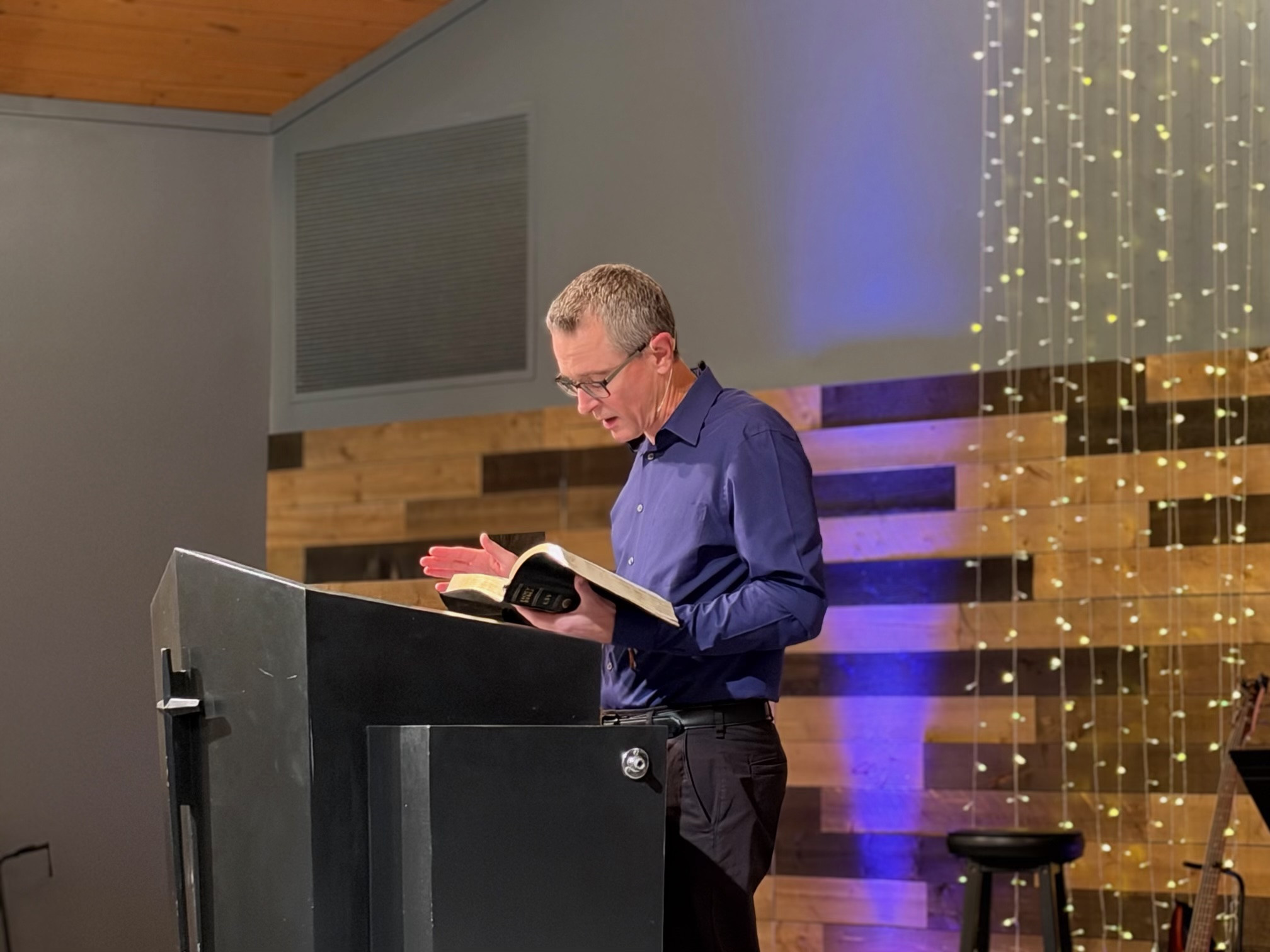
The following is a lightly edited transcript generated from the audio; it may contain small errors.
Good evening, how are you? Great. Great. Awesome. Lindsey’s doing great. I’m glad to hear. Give it up for Lindsey. Amen. I’m going to pray as we open this evening. Why don’t y’all pray with me. Father, we thank You for this opportunity to gather together. We do thank You for the communion of the saints. Lord, we thank You for the promise that where two or three are gathered, You are here. And Lord, ultimately we’re here not just to learn but we’re here for You.
We’re here to be ministered to by You and get to know You, fellowship with You as well as with the saints. We ask, Lord, that You would speak through me tonight and Pastor Joe, that we would hear the voice of Jesus. We give Him all the glory. And God’s people said amen. All right, we want to thank you for coming tonight to our annual Foundations Conference, and our theme this year is the known or is it the unknown?
Is it the known stranger or the unknown stranger? Guess what? They’re the same thing. Because if they’re not known, if they, they’re known, but a stranger, they’re not really known, are they? So our theme is hospitality, as we call it, and I want to talk to each other about the priority of hospitality. Looks like people are taking a break tonight and getting refreshments. We will have a break after my talk. It will be brief. I’m excited to be here because Pastor Joe is here. Amen.
and he’s my favorite. He is my favorite. It’s going to be good.
So what I’m going to do tonight is basically give an introduction to the topic we’re discussing, and that is hospitality tonight. My talk is called the priority of hospitality. First of all, what do we mean? Well, let’s open the scripture. We’re looking at a number of texts. The text I want to open with tonight is Romans 12. In verse 13, if you have your Bible, you can open there, Romans chapter 12. And we’ll start in verse nine.
It says, let love be, I’m reading the New King James, the one Paul used. Let love be without hypocrisy. Abhor what is evil and cling to what is good. The word abhor there means to hate or to loathe. It’s a word which means, I really don’t like this a whole lot. Hate, hate evil, cling to what is good, It literally means be glued to what is good.
Be kindly affectionate to one another with brotherly love, in honor giving preference to one another, not lagging in diligence, fervent in spirit, serving the Lord, rejoicing in hope, patient in tribulation, continuing steadfastly in prayer, distributing to the needs of the saints are taking part in the needs of the saints and being given to hospitality. Given to hospitality. So what do we mean by hospitality? This word, hospitality in the Greek, the primary word is two Greek words, if you will.
And it means to love the other or to love the stranger. Love the other or the stranger. There’s my outline. It’s coming up. It’s philoxenia. Philos means love. Xenos means the stranger or the other. To be hospitable then simply means not to be kind to the people you know. That is to be kind to your family or to be kind to your friends or to be kind to to simply your fellow church members that you’re acquainted with.
It means to be kind and open and warm and inviting to those that you do not know. Now, one of the reasons we chose this title, The Known Strangers, because the reality is everybody in this room doesn’t know somebody in this room. Every Sunday morning, our churches gather all around the country and sit in sanctuaries with strangers.
And what happens is people go to church, they have one or two friends, or a couple has one other couple or two other couples, they talk to those couples every week and then they leave. Next week they come back, talk to those couples, and they leave and they come back and that’s what they do. And so they worship in an environment where they’re surrounded by known strangers, really unknown because they’re strangers. Well how do we fix this problem?
And it is a problem and it’s by hospitality, right? means that we care about people that are outside our circle of concern. And there are three circles of concern, the self, the clique, and the family. We’ll talk about those at a later date, but not tonight. So this is an attitude of affection for the stranger or the other. It means being friendly to those that we don’t know. And if we are friendly, greet them, right? We’ll express an interest in them.
As Philippians 2 states, we will not look at our own things, we will look at the things of others, the things of others. So this attitude of hospitality should be apparent whenever the saints gather. If there’s anybody in this room you do not know tonight, you should talk with them tonight. Greet them, say hello, how are you, who are you? That’s the beginning of hospitality.
So in one sense, it’s a very simple thing, but we need to understand in my goal, in my brief talk tonight before the awesome preacher Joe comes up, is to help us appreciate the importance of this simple virtue of hospitality.
Why is it important? First of all, it’s important because it is commanded by God. It is a command of God. Now I know that the word command is not very popular today, like the word sin or judgment, or things of that nature. We don’t like the word duty and things like that. We want to talk about opportunities, growth, excitement. Every Christian book this day has the word radical in it. You can’t just have hospitality. Radical hospitality. Radical evangelism. I mean, just doing it isn’t enough.
The fact that God commands it isn’t enough. We got to spice it up. We got to make it radical. We do what we do because we’re told to do it by God. It’s really that simple. The Christian life is that simple. I understand that when you hear the word command, you think, oh, legalism. That’s not legalistic. God tells us what to do because it’s the best thing for us. Right?
When God says do this and don’t do this, it’s because that is the best thing for us. I came to Jesus after many, many years of hard living, much, much drinking, drugs, parties, and bad living. A lot of sin. And as the scripture says, the way of sinners is hard. It’s true, the way of sinners is hard. But it is joy to the just to do justice. The path of the righteous is like the light of dawn, it gets brighter and brighter and brighter.
So when God says do something, it’s not because God’s a killjoy, it’s because God’s saying This way of living is the way to peace and love and joy and fulfillment and prosperity. My way is the way of blessing. Amen? So God gave us the 10 commandments, not the 10 suggestions. Right? So God tells us in his word that we are to be hospitable to one another. The Bible is full of exhortations, commands, and injunctions that are morally binding on the believer.
It’s our duty to obey them. In one sense, there’s no trivial command, because as Wesley said, there’s no trivial sin. Jesus said that if we give a cup of cold water to someone, in the name of a disciple, we’ll receive a reward. And that’s a proverbial saying for the smallest act of kindness. If we’ll do the smallest act of kindness, God will reward us. So God, first of all, commands us to be hospitable,
but as part of our calling, that’s my second point, part of our calling as Christians. So not only does God tell us to be hospitable, It’s important because we the church, we God’s people, are people that should be eager for good works and the people that are known for our good works. Let’s look at a couple of scriptures here. Well, we’ll stay here. Here in Romans first, let me point out this in Romans 12.
When it says here, distributing to the needs of the saints and given to hospitality. This word given is a very interesting word in the original because it can mean strive for, pursue, or even eagerly hunt. And some classical authors use this term of a horse that was in full stride, straining as it was running. So not a passive virtue, you get it? Some virtues are passive. you do, and not only do you do it, you do it aggressively and actively and you strain to do it.
Let’s turn to Titus 2, and we’ll come back in a moment to Romans. Go to Titus 2. Paul says in 2.11, for the grace of God that brings salvation has appeared to all, or to all men, teaching us that denying ungodliness and worldly lusts, we should live soberly and righteously and godly in this present age.
for the blessed hope and glorious appearing of our great God and Savior, Jesus Christ, amen, who gave himself for us that we might, he might redeem us from every lawless deed and purify for himself his own special people, or the King James says, a peculiar people, I love that. A unique people. Zealous for good works. Zealous for good works.
And as he goes on in Titus, Paul tells them here in Titus 3:8, this is a faithful saying, and these things I want you to affirm constantly that those who have believed in God should be careful to maintain good works. These things are good and profitable to men. One of the divine goals in our salvation is that God would have a unique people. Unique means different from the world. Set apart. Special. A unique people, a chosen people created in Christ Jesus for good works.
Therefore, Jesus said to the church, you, meaning you in this room, you are the light of the world, you are the salt of the earth. Let your light so shine, how do you let your light shine before men? That they may see your good works and glorify your Father who is in heaven. As we learned recently when we were talking about faith and the relationship between works and faith, no one can see your faith apart from your works.
Now, you can say you believe in Jesus, but how would anybody know if your faith is real? They don’t know by what you say. They know by how you live. Right? That’s why Paul says to Titus, these things are good for men. Not only does it benefit men, it witnesses to men. So as we do good to others, as we are hospitable to others, it is an evidence of our faith.
Yes, it ministers to others, which is important, but it’s a testimony that we are a different people. love for one another. He says, by this will men know, John 13, by this will men know that you are My disciples, by your love for one another, not by anything else. He didn’t say by your church building, by your pews, by your music, by your love for one another. That would be the mark of the church. So God’s calling on His people is to be a special unique.
There are also unique people who are eager for good works.
Thirdly, the message of God. Hospitality is a means of evangelism, or proclamation. What is it that we preach by our good works and by our hospitality? What is the message of hospitality? There are at least two things. The first thing is this. It is the priority of the human person. In other words, we proclaim people matter. People matter. You know, a lot of people I know who work in the corporate world complain that the corporation doesn’t care about them.
The corporation’s about the machine, you know what I mean? It’s about the corporation. And you’re just a cog in the machine. Do a good job, great, if you don’t, maybe you’ll get fired. Maybe you’ll get your retirement, and you’re just a number on a page. You know, in churches people can feel that way too, because the issue becomes the machine, the institution. But true hospitality says what’s important is the person, the individual.
So when we are hospitable, when we greet people or embrace people, we are saying, you matter. When we share our resources with others, we are saying, you matter. When we open our homes to others, we’re saying you matter. So hospitality preaches. It incarnates a message that men and women are valuable because they’re made in the image of God. Amen.
Hospitality preaches that men and women are of more value than all the world, more value than the resources we spend on them, more valuable than the time and energy we spend on them. So when we’re hospitable, we preach the value of the person. But secondly, we preach the love of God, the priority of divine love. By doing good to others, we show not only that we love them, but more importantly, that God loves them. To put it more accurately, we love them because God loves them.
By showing people the love of God, we are proclaiming the gospel. We’re preaching not only with our lips, we’re preaching with our lives. And we have to understand this. As the people of God, we cannot separate the church’s testimony from the Savior’s message. Let me say it again. We cannot separate the church’s testimony from the Savior’s message.
I can’t tell you how many times I’ve talked to people about Christ and they always bring up issues of, well what about the Inquisition and what about when the church did this and what about the church did that. So the church becomes a stumbling block to the gospel. That’s exactly what Paul accused the Jews of. He says that to the Jews, you have caused the Gentiles to blaspheme God by how you lived. So our hospitality incarnates the message of God’s love for the person.
Words and deeds are inseparable. To say to someone God loves you and not to care for them in a practical way, not to greet them, to embrace them, to love them, to show an interest in them, is to contradict the gospel by one’s actions. Love for God leads to love for man. That’s really the point of James 2. The credibility of the gospel hinges on whether the church will incarnate the gospel by deeds of love.
Deeds of love mean practical expressions of compassion, kindness, and hospitality, because love is the mark of discipleship.
My last point, hospitality is important because it was modeled by God Himself. Ephesians chapter 5, if you want to turn there, Paul says in verse 1, therefore, Or be imitators of God. Be imitators of God. Do what God did as dear children. And walk in love as Christ, also loved us, and has given himself, given himself for us and offering a sacrifice to God for a sweet smelling aroma. The gospel message is a story of divine love reaching out to the outcast and the stranger.
Once Adam sinned, he was alienated from God and he hid. Yet God sought him out. Indeed, the history of the world is a record of God seeking out those who are aliens, seeking out those who are his enemies, inviting them to a supper, and then receiving them into his family. Look at Luke 14, if you will, and we’re going to come back to Ephesians in a moment, but Luke 14, Jesus tells really two parables here about hospitality and they’re really about the gospel.
In verse seven, so he told a parable to those who were invited, notice that word invited, when he noted how they chose the best seats. Now this is taking place in the context of Jesus was invited to someone’s house. It says in 14 1 now it happened as he went into the house of one of the rulers. So he’s in a home of someone who invited people over.
And here’s what he says in verse 8, when you are invited by anyone to a wedding feast do not sit down in the best place, lest a more honorable than you be invited by him, and he who invited you and him, come and say to you, give place to this man, that you and you begin with shame to take the lowest place.
But when you’re invited, go and sit down to the lowest place so that when he who invited you comes, he may say to you, friend, go up higher. Then you will have glory in the presence of those who sit at the table with you. In other words, the problem here is that people wanted the best seats and they wanted the recognition, right? They wanted to be at the special table. For whoever exalts himself will be humbled, but he who humbles himself will be exalted.
But this is the kicker right here. Then he said to him who invited him, when you give a dinner or supper, do not ask your friends, your brothers, your relatives, nor rich neighbors, lest they also invite you back and you be repaid. But when you give a feast, invite the poor, the maimed, the lame, the blind, and you will be blessed because they cannot repay you. For you shall be repaid in the resurrection of the just.
In other words, invite the outcast, invite the stranger, invite the other. Then he tells another parable. Now, when one of those who sat at the table with him heard these things, he said to him, blessed is he who shall eat bread in the kingdom of God.
Then he said to him, a certain man, when he gave a great supper and invited many, here’s another story about a guy, you know, food and meal and inviting people, and sent his servant at supper time to say to those who were invited, come for all things are now ready. They all with one accord began to make excuse. The first said to him, I bought a piece of ground and I must go and see it. I ask you to have me excused.
Another said, I’ve bought five yoke of oxen, I’m going to test them. I asked to have me excused. Still another said, I’ve married a wife and therefore I cannot come. So that servant came and reported these things to his master, then his master, being angry, said to the servants, go out quickly into the streets and the lanes of the city and bring in the poor, the maimed, the lame, the blind. And the servant said, master, it is done as you commanded, still there’s room.
Then the master said to the servant, go out into the highways and the hedges and compel them to come in that my house may be filled. For I say to you that none of those men who are invited shall taste of my supper. We see here at the heart of God, so wide, amen. So wide, he wanted his feast filled. He invites the Jews, they reject him, they made excuses.
So then he begins to invite the Gentiles and Jesus said go to Jerusalem, then Judea, then Samaria, then the uttermost parts of the world. And this is what this parable is about, is going out. Invite, invite, invite to God’s supper. Amen. One more text and then I’ll close. In Ephesians 2, this is a text about those of us that know the Lord, those of us who are saved, those of us who are in God’s family.
In Ephesians chapter 2, in verses 1 through 10, we’re told about, Paul talks about our salvation that we’re saved by grace through faith not of works. Amen. It’s all of grace.
But then he addresses the issue of God’s family and he says in verse 11, therefore remember that you once Gentiles in the flesh who were called uncircumcision by those called the circumcision, meaning Jew in the flesh by hands, that at that time you were without Christ being aliens from the Commonwealth of Israel and strangers from the covenants for the promise having no hope without God in the world. This is written to us, the Gentiles. We were aliens. We were strangers. We were foreigners to God’s covenant.
Amen. But now verse 13, in Christ Jesus those who were far away that was us have been brought near by the blood of Jesus. For he himself was our peace, who’s made both, meaning Jew and Gentile, one is broken down the middle wall of separation, having abolished in his flesh the enmity that is the law of commandments contained in ordinances.
so as to create in Himself one new man, that’s the church from the two, Jew and Gentile in one new man, thus making peace and that he might reconcile them both to God in one body through the cross thereby putting to death the enmity and he came and he preached peace to you who were afar off and to those who were near and through Him we both, Jew and Gentile, have access by one spirit to the Father.
Now therefore you are no longer strangers and foreigners but fellow citizens with the saints and members of the household of God.” Amen. The gospel message is a message of God taking aliens and foreigners who were far away and through the work of Christ they went from being dead to being alive and then they went from being far to being near and then they went from being strangers to being family. That’s the gospel message. That’s the message that we incarnate with hospitality.
We take the stranger and the other and we say come into the family of God amen
let’s stand together and pray Lord we thank you that we are saved by your hospitality and we thank You that we are saved by Your love for the stranger, and we thank You that You’ve called us to be imitators of you to do as you did and I I pray, Lord, that as a result of this weekend, we, your people, would truly be imitators of God.
That we would be a unique people because our lives are marked by grace and warmth and hospitality and love for the stranger. We thank You, Lord, that you’ve given us your church, not only your word to guide us, but your spirit to empower us. And anything you call us to be, you have empowered us to be. And we thank you God for the high calling that we have in Christ Jesus.
And we pray Lord that as a result of all that we learned this weekend and all that we live out in our lives, ultimately that Jesus would be glorified. I pray in His name. Amen.