
May 17, 2015
Jesus: Physician and Bridegroom
Dr. David J. Vaughan
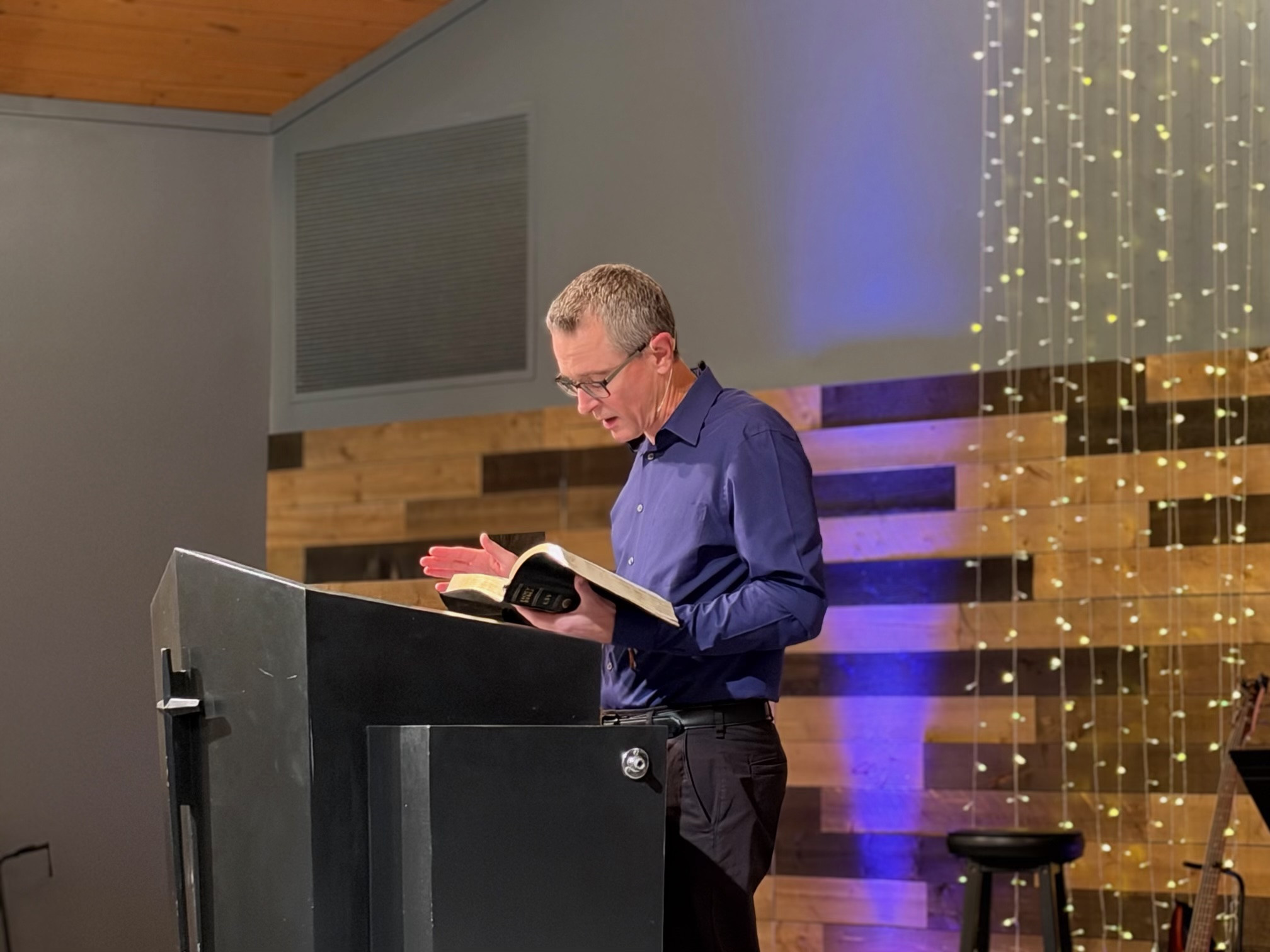
The following is a lightly edited transcript generated from the audio; it may contain small errors.
We’re going to continue our study in Mark, but let’s not start in Mark. Let’s start in Matthew because I want to look at some parallel passages to the text in Mark we’re going to read today. So why don’t you look at Matthew 9 first. In Matthew chapter 9 starting in verse 9. Tell me when you’re there. You there? It says, as Jesus passed on from there, he saw a man named Matthew sitting at the tax office. And he said to him, follow me. And he arose and followed him. Now what happened is Jesus sat at the table in the house that behold many tax collectors and sinners came and sat with him and his disciples. When the Pharisees saw it, they said to his disciples, why did your teacher eat with tax collectors and sinners? When Jesus heard that, he said to them, those who are well have no need of a physician, but those who are sick. But go and learn what this means. I desire mercy and not sacrifice. For I did not come to call the righteous, but sinners to repentance. Then the disciples of John came to him saying, why do we and the Pharisees fast often, but your disciples do not fast? And Jesus said to them, can the friends of the bridegroom mourn as long as the bridegroom is with them, but the days will come when the bridegroom will be taken away from them and then they will fast. No one puts a piece of unshrunk cloth on an old garment, but the patch pulls away from the garment and the tear is made worse. Or they put new wine into old wineskins or else the wineskins break, the wine is spilled, and the wineskins are ruined. But they put new wine into new wineskins and both are preserved. Now let’s look at the same text in Luke chapter five. And then we’ll get to Mark. Luke five starting in verse 27. It says, after these things, he went out and saw a tax collector named Levi sitting at the tax office. And he said to him, follow me. So he left all, rose up and followed him. Then Levi gave him a great feast in his own house. There were a great number of tax collectors and others who sat down with them. And their scribes and Pharisees complained against his disciples saying, why do you eat and drink with tax collectors and sinners? And Jesus answered and said to them, those who are well have no need of a physician, but those who are sick. I have not come to call the righteous, but sinners to repentance. Then they said to him, why do the disciples of John fast often and make prayers? And likewise, those of the Pharisees, but yours, meaning your disciples eat and drink. And he said, can you make the friends of the bridegroom fast while the bridegroom is with them? But the days will come when the bridegroom is taken from them, then they will fast in those days.
Now go to Mark, back to Mark chapter 2.
So in Mark 2, in verses 13 through 22, we have the calling of Matthew or Levi. And this account is recorded in what’s called the synoptic Gospels, Matthew, Mark, and Luke, where they here is Jesus upsetting social conventions. Do you know what I mean by that? In the account, it’s very clear that the Pharisees were disturbed at Jesus’ behavior. Why? What was Jesus doing wrong? Jesus was spending time with tax collectors and sinners. So according to the Pharisees, this was a bad thing. According to Jesus, he says that’s why he came. So very different view of not only who Jesus was and what his calling was, but a very different view of religion, if you will. And we’re going to unfold more of that later. But the two things I want to focus on this morning is the two words or titles that Jesus uses regarding himself. And the first is that he says he is a physician. And then secondly, he says he is a bridegroom.
First Jesus is the physician. Notice here that Jesus says that he came not for those who were well but for those who were sick. And then he says the well are the righteous, the sick are the sinners. In other words the reason I’m hanging out with sinners is because sinners are the ones who need me. Right? Now when you go to a hospital, The only people there that are well are the staff, the doctors, the nurses. The other people are sick. That’s why they’re there. But the reason the doctors are with all the sick people is because the doctors have the cure. So Jesus is saying, I’m hanging out with sinners, tax collectors, because I am the one who can and will heal them. Now, it’s hard for us, from our vantage point, just how much the Jews despised the Romans.
And of course it was mutual. There was racial hatred between the Romans and the Jews. But there’s even something more here, because the Jews were being oppressed by the Romans. were being burdened by their taxes. And of course, they kind of felt about the tax collectors, the way some of us feel about the IRS. But even worse. And what makes this text even more striking is that the tax collector here wasn’t a Gentile. He was a Jew. In other In other words, one of their own sided with the enemy. You know what I’m saying? so Matthew or Levi would have been highly despised by the Pharisees and by many other Jewish people because he was a traitor to his own people. Now these are the kind of people that Jesus was hanging out with. People that were hated by others in their culture. So he says that I come to call those who are sinful, or the sinners, but not the righteous.
I come for the sick because I’m a physician. What’s striking to me about this text is that ordinarily the sick call the doctor, but here the doctors call him the sick. In fact, it has to be this way, because only those who Christ calls and draws to Himself actually end up coming to him and none otherwise. Look at John 6, we’re going to come back to Mark. Look at John 6 for a moment. You all know the context of John where Jesus talks about being the bread of life, right? And a bunch of his disciples have a problem with that.
Let’s see, where does Jesus say he’s the bread of life. The Jews demand a sign. And Jesus says, verse 32, Most assuredly I say, Moses did not give you the bread from heaven, but my Father gives you the true bread from heaven. For the bread of God is he who comes down from heaven and gives life to the world. Then they said to him, Lord, give us this bread always. And Jesus said, I am the bread of life. He who comes to me shall never hunger and he who believes in me will never thirst. But I said to you that you have seen me and yet you do not believe. Notice this, all that the Father gives me will come to me and the ones who come to me I will know why it’s cast out. For I have come down from heaven not to do my own will, but the will of him who sent me. And this is the will of the Father who sent me that of all he has given me, I shall lose nothing, but should raise it up. And this is the will of Him who sent me, that everyone who sees the Son and believes in Him may have everlasting life. And I will raise Him up on the last day. And then the Jews complained about Him because He said, I am the bread, which comes down from heaven. Verse 43, Jesus says, don’t murmur. No one can come to me unless the Father who sent me draws Him. And I will raise Him up the last day. And as it is written in the prophets, They shall all be taught of God, that for everyone who has heard [audio unclear] The doctor must make the call because our very sickness causes us not to come to Christ.
Our very sickness is our spiritual blindness, our inability to perceive the things of the kingdom of God, our lack of attraction to God and the things of God. And so God must work in us to draw us to Himself because we are in spiritual darkness and we are in death. Ephesians chapter 2, quickly. Paul describes it here in Ephesians and he says, 2 verse 1, And you, he made alive who were dead in trespasses and sins, in which you once walked according to the course of this world, according to the prince of the power of the air, the spirit who now works in the sons of disobedience, among whom also we all once conducted ourselves in the lust of the flesh, fulfilling the desires of the flesh and of the mind, and were by nature children of wrath just as the others. Notice verse, go to chapter 4, verse 17, …this I say therefore and testify in the Lord that you should no longer walk as the rest of the Gentiles walk. Well, how did the Gentiles walk, meaning how do we walk? How did we walk before knowing Christ? In the futility of their mind, having their understanding darkened, being alienated from the life of God, because of the ignorance that is in them, because of the blindness of their heart, who being past feeling have given themselves over to lewdness, to work all in cleanness with greediness. It’s a very dismal picture. And we can read text after text which describes fallen human nature. It’s not a pretty picture. And so we are sick, meaning our human nature is sick. And because of our sickness, we ironically don’t seek a remedy. This morbid condition makes us unwilling to come to the physician unless God first draws us to Himself. But God in his grace does draw us to himself. Amen.
He calls. Jesus said, I came to call sinners, not the righteous. I came to heal the sick, not the well. So the initiative for salvation is always with God. He is the one who initiates. He is the one who draws. He is the one who, if you will, lures us in to the kingdom. But let me point out that he calls, as I’ve already said, not the righteous, but he calls the sinners. And this is one of the main points of our text in Mark. The Pharisees were offended at Jesus for a number of things. And as we read the Gospel accounts, we see that this was one of the major offenses that he spent time with sinners. But who needs a doctor more than a sick person? Amen.
And who needs a Savior more than a sinner? Jesus came for people that men don’t like. He came for people that many of us would not associate with. And for some of us, we forget that we were part of that group at one point in our lives. I know I was. I had a very sordid past of drugs and alcohol and illegal activity of all kinds, violence.
And if you would have seen me then, you would have kindly walked on the other side of the road. And it would have been easy to look at what I was and say, and say, and say, and say, and say, and we tend to forget as we go on in our Christian life that although we’re supposed to avoid sin, always supposed to avoid the sinner, because we have the message of the Savior. If we are sick, how can we tell them about the great physician? How can we tell the sick that there’s healing for them You and I, regardless of our outward behavior, was very bad. Maybe yours was much better. Regardless, in our spiritual condition, we were all sinners and we were all sick, all of us. And yet, Scripture tells us that God loved us in that state. In that state. Look at Romans 5 for a moment. Romans chapter five. Paul, after talking about how God saves us or justifies us and reconciles us by grace and grace alone, received by faith and faith alone, he says, verse six of chapter five, for when we were still without strength. In due time, Christ died for who? Say it louder. The ungodly, Christ died for the ungodly. For scarcely for a righteous man will one die, yet perhaps for a good man someone would even dare to die. But God demonstrates his own love toward us, in that while we were still sinners, Christ died for us. While we were sinners, not after we turned over a new leaf, not after we changed our conduct but while we were mired in our sin, while we were blind in our rebellion, He loved us and He sent His Son for us while we were still sinners. Amen? And we, the church, need to remember this, because God still loves so many of those sinners out there that we want to avoid. He loves those who are sick out there that we would prefer to shun. But as the church, we are to imitate our Lord Jesus, amen? We are to be like Him. And we are to do what He did. And one of the benefits of studying the Gospels is we see how Jesus lived and he said that he came to call the sick, he came to call the unrighteous. Thus we are called to that same calling. Thirdly, the great physician not only calls and calls sinners and the sick, but then he heals them. He heals them. He doesn’t leave them in their sickness. He doesn’t leave them in their sin, but rather he calls them out of their sin. He heals them of their diseases. And what the great physician does for the sinner is he completely restores him to favor with God. That’s what Romans is about. You should read the book of Romans, just reminders of the glory of the gospel. That by free grace through Jesus’ death and resurrection, he restores those who are guilty. He completely removes the guilt from the sinner. So the sinner now has access to God. As a matter of fact, the sinner is no longer a sinner in God’s eyes. He’s now adopted into God’s family. He’s a child of God. He removes God’s anger, which is propitiation. He removes guilt, which is justification. He removes the enmity, which is reconciliation.
He removes the power of sin in our lives, which is redemption. And then he eventually removes sin entirely in its presence in the future, which is glorification. This is what the great physician does. He fully heals and he fully restores. He heals us of all of our infirmities. He saves us to the uttermost, as it says in Hebrews.
But Jesus is also a bridegroom. Back in Mark, the Pharisees, and we’re going to talk more about this next week, but the Pharisees, you got to get the context here, okay? So Jesus calls Levi or Matthew. Matthew throws a party for them, something the Pharisees never did, by the way, right? They’re having a party, they’re eating and drinking, and it just so happened that the Pharisees were fasting. Now, I don’t know about you, but when I fast, I get a little cranky. You know what I’m saying? So it’s like, here they are, they’re getting a little crabby because is there fasting? And then they see these guys eating and drinking. I mean, I can see the Pharisees salivating. You know what I’m saying? What do you guys do when eating and drinking when we’re fasting? What’s going on here? Verse 18, the disciples of John and of the Pharisees were fasting. Then they came to Him and said, why do the disciples of John and the Pharisees fast? But yours don’t. Why are you not fasting? And Jesus’ [audio unclear] Verse 1, Sing, O barren, you who have not borne, break forth into singing and cry aloud, You who have not labored with child. For more are the children of the desolate than the children of the married woman, says the Lord. Enlarge the place of your tent. Let them stretch out the curtain of your dwellings. Do not spare. Lengthen your cords. Strengthen your stakes. For you shall expand to the right and to the left, and your descendants will inherit the nations and make the desolate cities inhabited. For you will not be [audio unclear] My disciples are not fasting because I’m the bridegroom and they’re the children or the sons of the bridegroom or the friends of the bridegroom. The Pharisees understood their minds would have flooded with texts like this, that Jesus was exalting Himself to a divine place. One author said this, we cannot but connect the name, meaning the name bridegroom, with the whole circle of ideas found in the Old Testament, especially with that most familiar and almost stereotypical figure, which represents the union between Israel and unfaithful and a forgetful, often requiring love with indifference and protection with of the husband who still yearns for her, but a wife still, and in the new time to be joined to him by a bond that shall never be broken and a better covenant. So Christ lays his hand upon all the old history and says, in essence, it is fulfilled in me. So here, the Lord was making an outstanding claim by applying this term bridegroom to himself, that he was of a divine nature and really even implying that he was Jehovah himself. Next week we’ll talk more about the marriage custom here, but the one thing to point out is that in the Old Covenant and even early in the church history, the Father had a very important role to play in the courtship. We’re going to talk about that in just a moment.
Notice, secondly, we talked about Jesus the Bridegroom.
Well, the Bridegroom has a bride, right? Who? [audio unclear] Well, he already referred to it in John 6, but in John 17, look what Jesus says about those who come to him.
He says in John 17 verse 1, now this is Jesus praying, Jesus spoke these words, lifted up his eyes to heaven and said, Father, the hour has come, glorify your Son, that your Son also may glorify you, as you have given him authority over all flesh, that he should give eternal life to whom? Notice, to as many as You have given to Him. So, we [audio unclear] So it says in 5:22, wives submit to your own husbands as to the Lord, for the husband is head of the wife, as also Christ is head of the body. And he is the Savior of the body. Therefore, just as the church is subject to Christ, so let the wives be to their own husbands in everything. Husbands love your wives, just as Christ also loved the church. Okay, stop there. Loved the church. Amen? How did he and how does he express that love to his church?
Number one, gave himself for her. He sacrificed, right? And he sacrificed himself. That there was a purpose, that He might sanctify and cleanse her with. He might present [audio unclear] He who loves his wife loves himself, for no one ever hated his own flesh but nourishes and cherishes it, just as the Lord does the church. For we are the members of His Body. 31. 31. 31. 31. 31. 31. 31. 31. 31. wife see that she respects her husband. So we see here that Jesus, as the bridegroom, saves his bride by sacrificing himself for her. But then he washes her or cleanses her through the word, this word, applied through the Holy spirit, making her a pure and spotless bride. And this work where he’s cleansing his bride has a culmination, we learn in Revelation, in what is called the marriage feast of the Lamb. Familiar with it? You want to look at it? Say yes. Go to Revelation. Go to Revelation and you’re going to get a, you’re going to get a revelation. Nineteen. good. And let us be glad and rejoice and give Him glory, for the marriage of the Lamb has come and His wife has made herself ready. And to her it was granted to be arrayed in fine linen, clean and bright, for the fine linen is the righteous acts of the saints. Then He said to me, right, blessed are those who are called to the marriage supper of the Lamb. And he said to me, these are the true sayings of God. And I fell at his feet to worship him. But he said to me, see that you do not do that. For I’m your fellow servant of your brethren who have the testimony of Jesus. Worship God. Amen. Worship God. For the testimony of Jesus is the spirit of prophecy. So there’s a day coming when the church will be united to Jesus and there will be a glorious wedding and reception. And the reception is going to last forever, which is awesome. Now in the Jewish culture, the wedding and the reception lasted seven days. Pretty good, huh? Pretty awesome. But we will be dwelling with Him and rejoicing and celebrating and worshiping for ever and ever. Amen.
And all of the pain, the scars, the pollution of sin will be completely removed because the bride will have been cleansed through the work of the bridegroom. God is good.
Let me conclude with a couple observations. One, do you know that by nature you are sick? Do you know that by nature you need a physician? I don’t know about you, but I don’t like going to the doctor. And I really hate going to the dentist. Does anybody like going to the dentist? No. I have to go tomorrow. Would you pray for me? Two thirty tomorrow I got to go to the dentist. I’m dreading it. I’ve been dreading it for days. I go to bed thinking about it. I’m dreading. I’m a coward. I admit it. But I need the dentist, because I have a cavity. Now I could ignore the cavity. I could try to [audio unclear] come, even though the doctor is calling. And I don’t know some of you very well. Some of you, I do know. But ultimately, I don’t know the state of your soul before God. And I don’t know if you’ve truly come to the physician for the healing of your soul. But I do know this, he’s inviting you again today to come to him. He came, he says, to call sinners. Sinners and this requires that we acknowledge our need And you know the gospel, which is good news, is—and I did it too before I came to Christ—it’s twisted in the non-Christian’s mind into bad news. But it’s great news. God loves you. Isn’t that good news? God did everything necessary for you to be restored to relationship. Well, for the unbeliever, the problem is it requires a certain admission.
It requires acknowledging the need to be saved. You know, a lot of people think that a lot of Christians believe that the offense of the cross is that we have to tell people that they’ve sinned.
I don’t think that’s the biggest offense of the cross. I think the biggest offense of the cross is that we say, the gospel says not just that we’ve all sinned and fall short of God’s glory, but that after making that statement, we say, by the way, not only have you sinned, but there’s nothing you can do about it. I can say it myself. I can go to church. I can take the sacraments. I can make sacrifices. I can fast. I can pray. I can do this and I can do that. I can give, I can, no. None of that saves us. And the offense of the cross isn’t just that we have sinned against God. The offense of the cross is that we are utterly, utterly, utterly hopeless. Our situation is desperate. There’s only one remedy and it’s not us. This is hard because this strikes at the root of human pride, to admit our need,. To admit our sickness, to admit our inability to cure ourselves. This strikes at that pride that says, I can save myself. Now, we don’t use those words, but that’s what we’re saying. Because the refusal to completely lean on Christ, to completely allow oneself to be saved, is rooted in that, not just an unbelief, but it’s rooted in a denial of our true state that we are utterly helpless. So, if you are sick, that’s good news. You know why? Because that’s who Jesus came for, the sick. But the even better news is that you know you’re sick. You know it. And knowing it, you will go to the doctor. And Jesus is the doctor. Whatever your illness may be, Jesus is the doctor. And Jesus came so that you, being sick, having sinned, could be made whole and be restored to the favor of the Father and to a relationship with Him. That is good news. And it’s all of grace. It’s all of grace. Let me just say a word to the bride, if you’re part of the bride. And by the way, when the scripture speaks of the bride in the bridegroom, I am not the bride. You as an individual are not the bride. We are the bride. The church corporate is the bride. If you read the Song of Solomon, as a text of Christ and the church, what you see is a profound love, mutual love, a profound longing for one another, and a profound intimacy.
It’s a beautiful book. But it shows us how much Christ loves His church. And it shows how much Christ is loved by His church. If there’s one word I think that I could use to describe marriage other than the word covenant, which is foundational, it’s the word intimacy. Because your spouse knows you better than anyone else in the world. And the union of the man and the wife is the most intimate act of all. And that’s the kind of relationship the church can have with the bridegroom. God has made a way to the work of his son that we have access to him, that we have fellowship with him, that we have communion with him, and that the church can actually be on very intimate terms with Jesus Christ. And it’s through that relationship that the bridegroom does his work in the bride. It is through that intimacy, through that communion that the bridegroom ministers his healing, ministers his cleansing through the word to the bride. Let’s stand together and pray.