
December 7, 2014
Gospel-Centered Parenting
Dr. David J. Vaughan
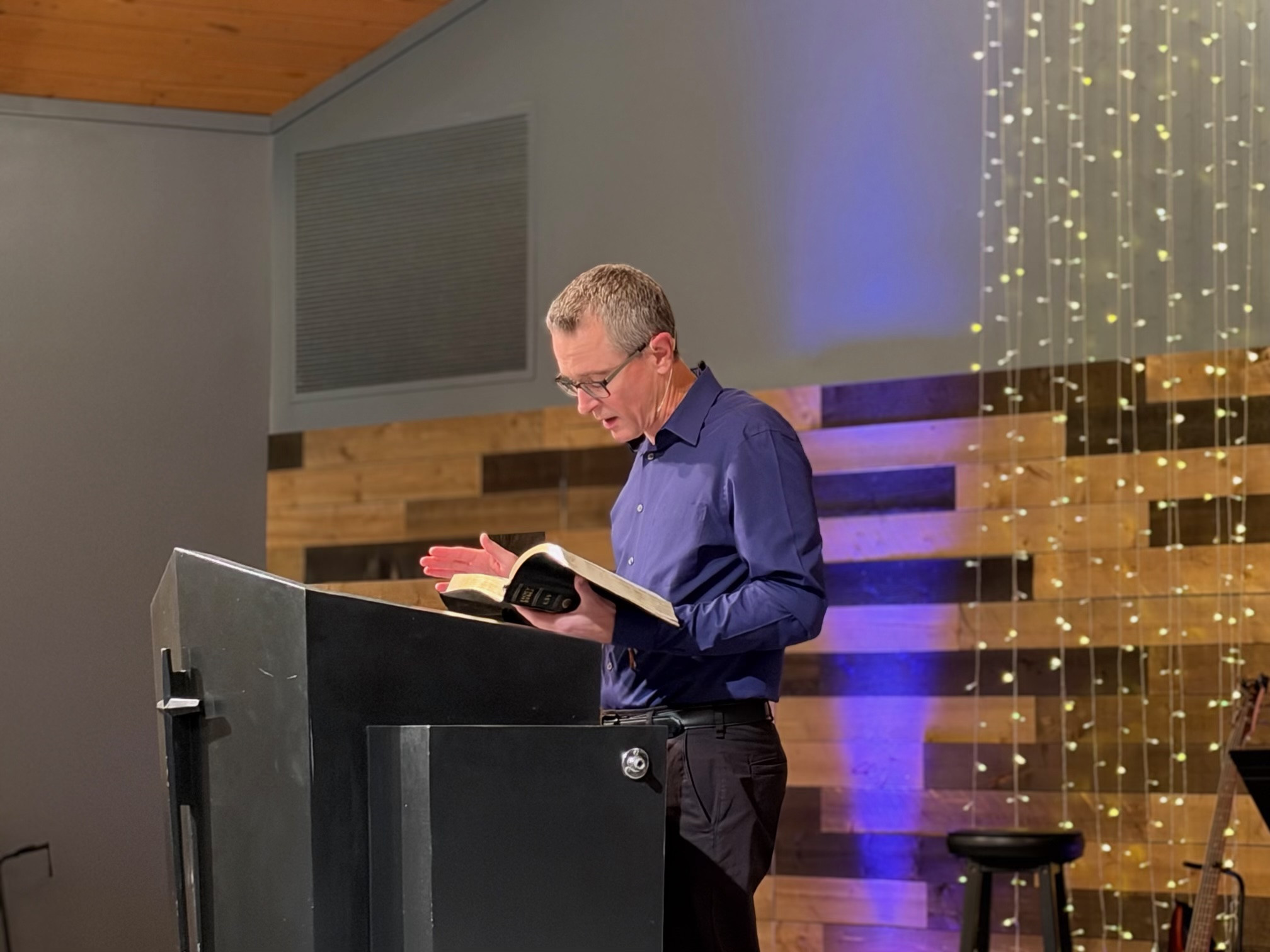
The following is a lightly edited transcript generated from the audio; it may contain small errors.
Now today we’re actually going to have a baby dedication, but before they come up and we read a charge to them, I wanted to share a little bit from the word. Now for those of you that are not parents, maybe you’re done parenting or maybe you haven’t arrived at that age yet, I think some of my remarks will be beneficial for you also, even though I want to make some specific applications to parents today. Now the title of my sermon is Gospel Centered Parenting. And it could be called Gospel-Centered Living, if you will, but I want to make, as I said, applications to parents in light of our dedication today. In the Book of Romans, in the opening, and really the salutation to the Book of Romans, the Apostle Paul says this, he says in verse 15, well, verse 14, He says, I am a debtor, both to the Greeks and the barbarians, both to the wise and to the unwise. So as much as is in me, I am ready to preach the gospel to you who are in Rome also. For I am not ashamed of the gospel, for it is the power of God to salvation for everyone who believes for the Jew first and also for the Greek. For in it, meaning the gospel, the righteousness of God is revealed from faith to faith as it is written, and he quotes the book of Habakkuk, the just shall live by faith. So before we talk about gospel-centered parenting or gospel-centered living, let’s review for a moment some of the highlights of the gospel. Now if you ask a typical Christian what’s the gospel, they might say, Jesus died for my sins so I can go to heaven. And that’s true, but as I say to my Bible students when I answer questions for homework, it’s true what you’re saying, but it’s not enough. Give me more information. I mean, students today live in the age of texting, right? So when you get an answer on a paper, it’s like, yes. It’s an essay question. No. Give me more. Give me more. So the. Gospel really, I mean, if you think about the gospel, the full or the gospel, it has, has so much depth and meaning to every area of life. Right? But let’s, let’s hit a few things. And then I want to make an application to, to how we pan our kids. The basic gospel, if you will, is that God created all things good.
God created intelligent, rational, moral beings called humans. At least some of us are intelligent. No, I’m just kidding. So that these intelligent, rational beings might enter into a relationship with God.
Of course, sin entered, and sin caused what we call the fall.
And in scripture, a lot of what we see in scripture really from the book of Genesis on is God’s response to the fall. So now, I know that today in our culture, we don’t talk a lot about sin, and I won’t talk a lot about it, but I just want to say a couple things briefly.
When we think about sin, there’s two ways of thinking about it. One is thinking about sin in relationship to God, and when we think of it in those terms it’s really an offense against his moral law. But then we can think about sin in relationship to ourselves and even others, and sin then is alienation. Sin is really harm, if you will. Objectively, sin means guilt. Subjectively, sin means what the theologians call depravity, which simply means crooked or bent. Today we call it dysfunction. It means we’re not functioning properly in our relationships with other people. So sin enters and now we have a problem. You know the difference between a problem and a predicament? A problem is something you can solve. A predicament is when you have a problem and you can’t solve it. And so man had a problem, but he also had a predicament because the problem of sin is not solvable by ourselves. Now I know that in many religions and really even many versions of what’s called Christianity, men have devised solutions to the problem of sin. These solutions involve various rituals, various moral codes, and we’re told that if we observe the rituals, then the sin problem will go away and we will be okay with God. The Bible does not teach that. The Bible does not teach that the problem of sin, which is really a predicament, can be solved by anything that we do. Now, I believe that the offense of the gospel is not that it tells people that they do things wrong. Anybody with any common sense knows that they’ve done something wrong sometime, right? Right? Of course. So we’ve all messed up, we’ve all kicked the cat, we’ve all lost our temper, we’ve all done things. You know, I say that a lot when I preach. I talk about kicking the cat, don’t I? It’s a Freudian slip. It’s because I really want to kick my cat sometimes. I never have, but I really want to sometimes. Like the other night when she was just howling for no reason. and we’re, we’re trying to sleep. Okay, I got off track, didn’t I? We all do things wrong. Wanting to kick your cat’s a bad thing. It’s an evil desire. So we all do things, think things, say things, whatever, and thus we all sin. So anybody who reads the newspaper see that man has a problem. But where people disagree is that problem or predicament. In other words, can we fix it? Can we fix it through education? Can we fix it through medicine? Can we fix it through law? Can we fix it through… Can we really fix this ourselves, the human predicament? We can do many, we meaning humanity, can do many marvelous and great things because we are created in the image of God. Many wonderful things. But this is the one thing we cannot do. The one thing we cannot do is solve the problem of sin. You cannot get outside of yourself, if you will, and nature cannot transform nature. So, thus, we need divine intervention. And so God, in His grace, and this is the key word, the first key word you could say is sin or fall. I like fall better because it implies more.
The second key word in the Gospel is grace. Grace. Let’s read a couple passages. Are you in Romans in your Bible? Go to Romans 3 for a moment. Let me just say this to those of you that are already Christians. I’ve had a lot of conversations lately with people, and it’s clear that people who are Christians, being a Christian doesn’t mean you really understand grace, at least very deeply. So you need to hear the gospel again. You need to hear the gospel again. Because it’s easier to make a profession of faith in Christ, and then say, yeah, I know I can’t really be good enough to be accepted by God and kind of do that whole little thing there that goes on. But then the way we live, the way we orient our lives toward God is really based on law and not grace. Romans 3, verse 21, but now the righteousness of God, apart from the law, is revealed, being witnessed by the law and the prophets. What he’s The Law and the Prophets, which is his summary for the Old Testament, preached the same gospel, even the righteousness of God through faith in Jesus Christ, to all and on all who believe, where there’s no difference, for all have sinned and fall short of the glory of God, being justified freely by His grace. Keyword, freely by His grace, through the redemption that is in Christ Jesus whom God set forth as a propitiation, another Old Covenant word, covering by his blood through faith. So God, because of his great love for mankind, response to man’s predicament was then to intervene into human history to solve the problem. At Christmas time, the reason we Christians celebrate and sing these wonderful hymns and carols and what are we celebrating? We’re celebrating the birth of a person whom we believe was not simply human but was also divine. Now, the more you think about that, the more you realize how crazy that is. But it is. It’s one of the mysteries of Scripture. And no one really understands it. Some theologians have written volumes and volumes on the person of Christ and the divine and human nature and how they relate and all of this. But when you get down to it, we will never fully fathom how this could be. this person born so many years ago was not just a good man and not even just a perfect man but was a man who was both fully human and fully divine. It transcends reason. There’s no question about it. But what scripture tells us is that the birth of this child, this child was truly God entering into human history in a unique way. Now when you read the Old Testament, God’s showing up all the time. Right? When he delivers Israel out of Egyptian bondage, they go to the Red Sea, he leads them to the wilderness, he plants them in the Promised Land. And all that God does for thousands of years in the history of Israel, he’s always showing up and doing things in history. But it wasn’t until this moment that we see that God enters into human history in a unique way and that He now takes on human nature. And so He passes through all the stages of the human experience, beginning with conception, and then all the way to death. So God intervenes, and the key word for that intervention is grace. Grace. God’s response to our fallenness was a response of graciousness because of his great love that he had for us. Look if you will at Ephesians chapter 2 for a moment. Ephesians chapter 2. In Ephesians 2, the first three verses talk about our fallen condition. But then in verse 4, it talks about God’s response to that condition, and it says, Let these words sink into your soul. Rich in mercy. Not just merciful. Rich in mercy. Because of his great love, not just his love, but his great love with which he loved us. Even when we were dead in trespasses, he made us alive together with Christ. By grace you have been saved. And He’s raised us up together and made us sit together in the heavenly places in Christ Jesus. Note verse 7, that in the ages to come, He might show the exceeding riches of His grace. His grace. In His kindness toward us in Christ Jesus. For by grace you have been saved through faith. Not of yourselves. It’s a gift. It’s the gift of God. Not of works, lest anyone should boast. The key word of the gospel is grace. That is God’s unmerited favor in displaying his kindness and love to us, amen? And when the Bible says that we are saved by grace, it really means from beginning to end. That everything that we receive from him is rooted in his gracious disposition and treatment of us.
Thirdly, the third key word I want to point out about is restoration. Restoration. It is a truncating of the gospel, a narrowing of the gospel to say that Jesus came to save us from being punished and therefore so we can go to heaven and just be happy forever. Amen.
I don’t know if you ever read C.S. Lewis’ book, The Great Divorce. It’s not about divorce, by the way. Excuse me. It’s about heaven and it’s about hell. And it’s about the fact that what Lewis really argues is there are people that don’t want to go to heaven. And that if they were in heaven, in the condition they’re in, they wouldn’t be happy. So what makes heaven happy? What makes the happiness of heaven isn’t the place. It’s the fact that the soul is in union with God. It’s the consummation of a relationship. It’s the union of the soul with God. Without the interference of sin. But that only works if you love God. And if you don’t love God, you don’t want to be in heaven. So what Lewis argues is that no one goes to hell against their will. They choose it because they really don’t want God. Now I don’t think any of us by nature really want God. I think God works and changes our hearts so that we want Him and we love Him. But the point I’m making is that the gospel is not simply escaping bad things to come. The ultimate, ultimate goal of the gospel is that we would come back to the point where God began. And when he began, he created man and woman. He created humanity. He created rational, moral beings who would freely and voluntarily enter into a love relationship with him. That was his design. Because God wanted to share his goodness. He wanted to share his love. That’s why we were created. He wanted to share himself. That’s the goal of the gospel, relationship. The restoration, I should say, of a broken relationship.
Now you’re probably thinking, okay, what does this have to do with parenting? Let me just make a few applications. And there are many, because the more I think about the gospel, the more I realize its implications. Let’s review these keywords, Fall, grace, and restoration in light of parenting. The fall. As parents, we need to take seriously the reality of our child’s dual nature. That they are created in God’s image, therefore they’re profoundly valuable. And as image bearers of God, our children need to be treated with respect. I have to say I am appalled to hear parents talk to their children sometime because they would never talk to anyone else the way they talk to their children. Never. The Christian home should be a place of respect and honor, not a place where derogatory comments and insults and yelling and these sorts of things are tolerated. That is not the gospel. That is not gospel-centered living. Amen.
We are to treat our children with respect because they bear the image of God. But we also need to take seriously the fact that they are fallen. That means that they have a tendency or a bias towards sin. We can err two ways in this matter. One is to take sin too lightly and not deal with it. I don’t know if any of you like gardening. Anybody here like gardening? Any gardeners? You probably know better than I do that if you do nothing, what you will get is weeds. And that applies to parenting too. To leave a child to himself, if you will, to let him go his own way means that he will go the wrong way because he is bent that way. So we need to realize that our children need discipline, and they need to be disciplined correctly and firmly, but we cannot ignore the reality of sin in their lives. Now we can go the other extreme. Some parents are obsessed with sin, and they can become preoccupied with their children’s failures. They can get into a mode of shaming, a mode of attempting to motivate children by guilt. They can become overly strict. They can develop a negative view of holiness, which means holiness is defined by what you don’t do and not by what you do. And so, there’s a balancing act here where we don’t want to ignore the reality of our child’s fallenness, but at the same time we don’t want to focus so much on that, that our children are walking around feeling shamed, feeling guilty all the time, feeling at odds with their parents because they believe their parents love them. love them. This does happen in homes, unfortunately, because the gospel is not central in the lives of the parents. Second key word, grace. God’s response to our sin was grace, not more rules.
There are many applications of parenting, but one is that if we are to parent in grace, this means we parent in graciousness, kindness, love, patience, not exasperation, not anger, not yelling, not insulting, but rather we are to treat our children with grace the same way God treats us with grace.
Our home, the keynote of our home should be one of kindness and love, kindness and love. Grace also means that we train our children and not overly emphasize rules and regulations.
Now, the key word is overly emphasized. When a child is very young, a child needs rules. They need guidelines, right? Call them what you will. Guidelines, rules, whatever. They know, don’t put, they need to know, don’t put your finger in the outlet. Anybody ever do that? I did that once. Only once. I’m a quick learner. After I got up off the ground, because I got knocked on my fanny, I never did it. So yes, children need rules, they need guidelines. But there’s a danger as parents to substitute rules for real parenting.
Because, ultimately, rules don’t affect the most important thing about a person, the heart.
Rules can control the behavior, but they can’t control the heart. So what can happen is, well, when your children are very little, of course they need to conform. Because if they don’t conform, they’re going to be in danger. And I don’t mean in danger of the parent. But they’ll do childish things and they can be in danger. They must learn obedience for their own safety. But as children get older, they should be given more freedom. should be given more freedom because they’re learning self-government, right?
And so, but some parents, as their children get older, they give more and more rules. They try to give more and more control because they’re afraid of what their kids might get into because it’s a scary place out there in the world, right?
And it’s easy to substitute external conformity for the real thing.
And so Christian kids, and I use it this way because whether they’re really Christians or not, it’s hard to say, but they grew up in a Christian environment. Christian kids learn very, very early how to say the right thing, how to do the right thing, and how to appear to be Christians, when in fact they’re not. And so, very good at lying. These young people are going, yep. Because they know, and it’s intuitive. We all do it in certain, you know, you’re at work and you do what your boss says you’re thinking, that guy’s a real jerk. Well, true, right. It happens. The point is, is that the Gospel isn’t looking for external conformity. The gospel is about a heart change. That’s what the gospel is about. The gospel is about living from this place inside of you. When you’re doing what is right, you’re doing it because you love what is right. You want to do right. It’s not because you’re being forced to do it. Now granted, children will always have to do things they don’t want to do. My kids still have to clean up their rooms and they don’t want to do it. But proper training in the Christian home should result in a place where the children are changing on the inside and they’re not just conforming to rules. Legalism focuses on rules, right? And it leads to what I call moralism, which is a substitution of behavior for relationship. And so in the Christian life, many people see the goal of the Christian life is to be good. And that is not the goal of the Christian life. Or should we be good? Yeah, but that’s not the ultimate goal of the Christian life. What’s the goal of the Christian life? Well that leads to the third point, or relationship. The goal of the Christian life, the goal of what we believe about the work of Jesus Christ, the goal of that is the restoration of a relationship. That’s what it’s about. It’s not just escaping punishment. It is about a restoration of the fallen soul to God. It is a removal of the alienation and the guilt and everything involved there. And it’s bringing the person back to knowing God in a personal way. That’s the goal of the gospel. Look at Deuteronomy 6. Deuteronomy 6 says in verse 4, Hear, O Israel, the Lord Jehovah, our God, the Lord is one. And you shall love the Lord your God with all your heart and with all your soul, and with all your strength. And these words, which I command you today, shall be in your heart. And you shall teach them diligently to your children, and shall talk of them when you sit in your house, when you walk by the way, when you lie down, and when you rise up. Notice, first of all, that the goal here. What is the goal? To love the Lord, to love the Lord your God with all of your heart, mind and soul. Jesus reiterates this in the Gospels when he is asked what’s the great commandment, he quotes Deuteronomy 6:4 and says the great commandment is not to observe all of the regulations, the great commandment is not to be good, the great commandment is love. The great commandment is that we would love God fully wholeheartedly not just conform to rules and regulations. That’s the goal of the Christian life, and that’s the goal of our parenting. We want our children to love the Lord, amen? Therefore, we need to love the Lord. They need to see our love for the Lord, and there’s many, many ways they can see that lived out, But we need to make sure that our relationship with God is right, is thriving, is growing, and that I truly, in my relationship with him, am walking in grace and walking in love.
And as they see that in my life, they will then see a model to emulate. And hopefully that will attract them to wanting to have a relationship with the God that I know. There’s one thing I’ve learned over the years, and I’ve been able to share the gospel with thousands, thousands of people really, is that no one can force another person to believe anything. And that applies to children too. You can instruct, you can teach, you can exhort, you cannot get inside that secret place of the heart. So, as parents, I believe that we are to remind ourselves and to remind our children that the Christian faith is not about rules and regulations. It’s not ultimately about being good. It’s about knowing God in a personal way. And we need to focus on that as we cultivate our children in the faith. Amen?
So this time we’re going to have a couple of families, I’m going to have Pastor Bond come up and read a charge and we’re going to pray for them.