
January 31, 2026
Fueling Our Affections for Out Fight Against Our Flesh – Foundations Conference 2026
Guest Speakers · Colossians 3:1–4
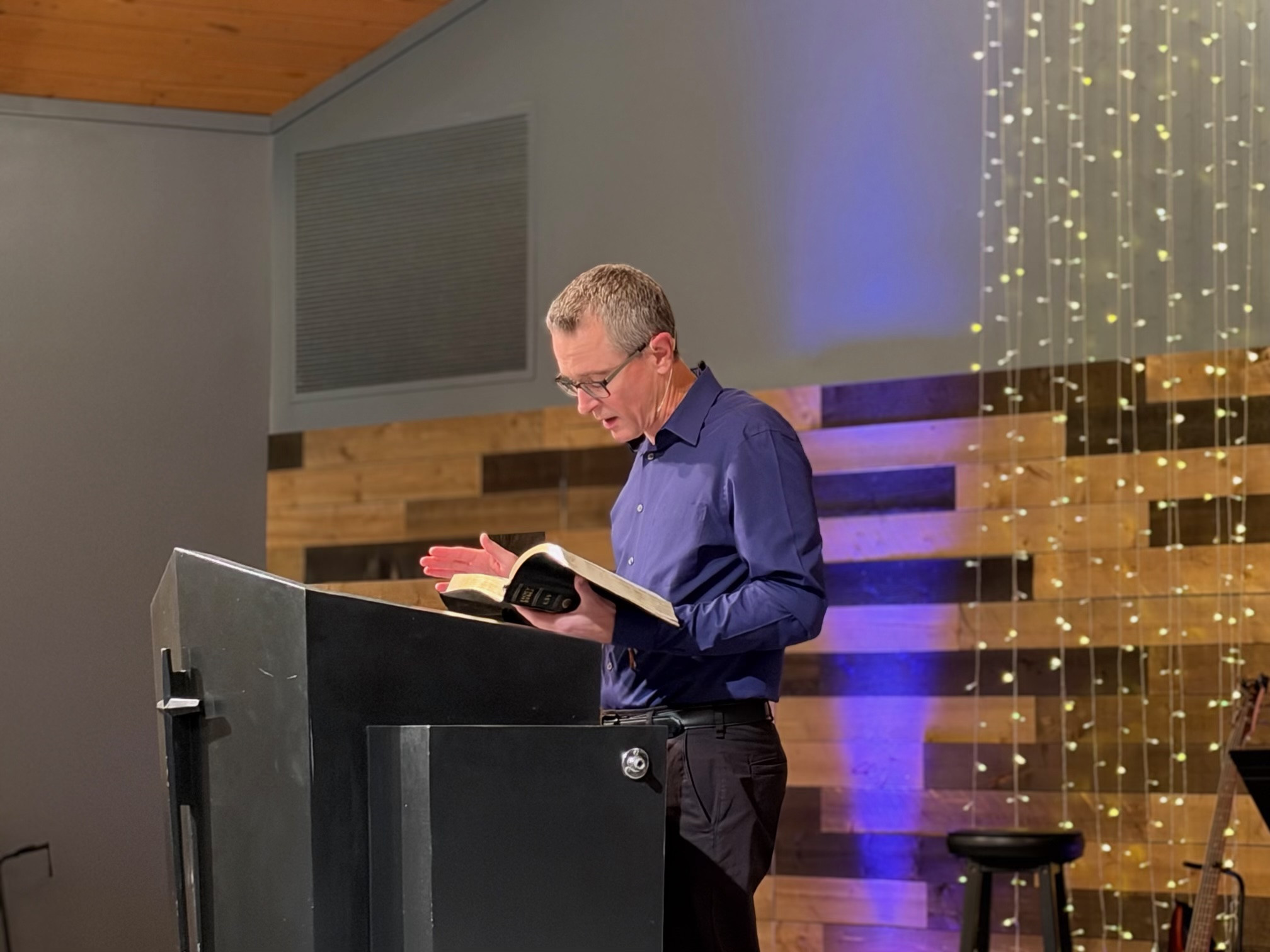
January 31, 2026
Guest Speakers · Colossians 3:1–4
Speaker – Joe Braden
The following is a lightly edited transcript generated from the audio; it may contain small errors.
How do we fuel our affections toward Christ? How do we cause our hearts to relish and delight in the Lord Jesus Christ, which is the fuel for our fight against the flesh? Before we do all of that, I want to touch just briefly and take a look at our call to fight against our flesh. So to that end, most of the Scriptures will be up on the slides, but if you would like to open your Bible, I would invite you to take your Bible and turn to Colossians chapter 3. I’m going to look at verse 5 for this first point, a brief look at our call to fight our flesh. But I want to begin at verse 1, because we’ll hopefully spend a bit more time oriented by what Paul is trying to say to us in verses 1 through 4. All right, this is God’s Word for us. And here’s what God says:
If then you have been raised with Christ, seek the things that are above, where Christ is, seated at the right hand of God. Set your minds on things that are above, not on things that are on earth. For you have died, and your life is hidden with Christ in God. When Christ who is your life appears, then you also will appear with him in glory.
(Colossians 3:1–4)
So Father, we thank you for your Word, and consider some things in relationship to your Word, that you by your Spirit would use your Word to train us. Yes, it would be a good word for us. For we are grateful that your Word is living and active. And so we would ask for your Word to be at work in our midst this morning. Father, we ask this in Jesus’ name. Amen.
Verse 5, just a brief look at the fight against our flesh.
Put to death therefore what is earthly in you: sexual immorality, impurity, passion, evil desire, and covetousness, which is idolatry.
(Colossians 3:5)
I’m amazed by the cluster of items that he mentions there in verse 5. Verse 5 is a list of matters that are to be eliminated from our lives. I would suggest to you that that list is not a random list. It doesn’t pick from here and there, but he takes terms that I think he clusters them together that are all in this context associated with sexual sins, with matters that we would maybe refer to as lust. And I think that cluster of items there is instructive for us in understanding really any category of vice, because it moves what we must eliminate from the external or the behavioral level when it says sexual immorality. But then he doesn’t just stop there. It’s not just the behaviors of sexual immorality that we are to put away. There are deeper things lurking underneath the surface that also must be put away. And I think it’s the wisdom of Scripture that helps us to know that we don’t just battle sin at the level of behavior, but we want to battle sin at the level of behavior and trace that down all the way to, if you would, in this case, the level of idolatry. So he mentions the external, the immorality, but then he traces it to wrong thoughts and wrong desires, and then he traces it all the way down to wrong worship, if you would, the worship of a wrong god. So at the heart of our sexual immorality is that we really could say that sexual immorality is a worship disorder at its heart. And so whatever level we think we are to eliminate it, we are to kill it, or the language he uses in the verses that follow that I didn’t read is we are to strip it off, get rid of it.
And so, first of all, a couple of maybe definitions. When we talk about putting to death—see, I’m already going to forget how to click this thing. So, yeah. So I’m going to need eyes in the back of my head. This, only mothers have that. So I just, I’m just not very good at this already. So first of all, just some definitions. When we talk about fighting the flesh, what are we talking about? We’re not talking about our skin. The flesh refers to, in this context at least, and what we’re using it for this morning, the flesh refers to indwelling sin that remains in the believer even after the precious new birth. The flesh’s power is broken, but its presence remains. Another term that we probably won’t use, but that Scripture uses is, it talks about deeds of the body. Romans 8 talks about putting away deeds of the body. The body is not inherently evil, but the body is quite frankly and often the place where sinfulness and evil is typically manifested. Our sinful deeds occur normally through our bodies. Yeah, I did it again. So we’re to put these things to death.
Another definition is here in Colossians, he says, put to death what is earthly in you. “Earthly” is not to suggest that we should neglect our daily responsibilities. Say, why don’t you go to work? Well, I’m putting those earthly things to death. Why don’t you pay your bills? I’m putting those earthly things to death. Why don’t you take a shower? I’m putting those earthly things to death. That would not help us, especially the shower part. But “earthly,” as the Scripture commonly uses it, is a descriptor of an entirely different sphere of reality. It is not a spatial location. In other words, we can say, over there, about three miles from here is what is earthly, but it’s really an ethical and spiritual realm that is opposed to God and the things that God loves. So “earthly” describes the realm that we lived in in Adam. We are to no longer live in that realm. Earthly is a mindset that we are to no longer have as an operating principle. Put to death what is fleshly, put to death the deeds of the body; we are to put to death what is earthly in us. We are to, in other words, get rid of whatever provokes or strengthens our sinful desires.
And that can be fleshed out in a very practical way. I had to get rid of some apps on my phone, because those apps were not helping me to get rid of my fleshly desires. So as a result, I mean, I just, I don’t know what’s going on on Instagram anymore. I don’t know when World War III is going to start. I don’t know what Trump’s been up to. I’m perfectly okay—I’ve been perfectly okay with all of that. Now, again, what I didn’t say is you must get rid of those apps from your phone. You might need to. You might need to get rid of your phone. I don’t, I’m not going to call you. But what is it? What are those things? We have to be earnest and sincere and serious about it. We want to get rid of those things. We want to be wise to whatever emotions and or situations trigger succumbing to temptation. That’s all a part of this category of putting certain things to death. We want to be aware of things that we are affirming and believing that are lies, lies that we embrace about God and ourselves and or about our sin. We want to refuse to let the eye wander or the mind contemplate or the affections run after anything that draws us from Christ. We want to reject and eliminate all residual desires and dispositions and deeds of the flesh. We want to reflect and cultivate any and every grace-infused desire and disposition and fruit of the Spirit.
We won’t go into it, but if we were to read longer there in Colossians, we know that Paul couples—he does this in Ephesians as well—he couples the call to put off or put to death alongside the call to put on. So putting off and putting on are really not separable, but I’m not dealing with that aspect this morning, so I know I could be misleading us. We are not merely to remove a sinful vice, but we are to replace it with a Christ-like virtue. We are to violently slay and decidedly strip off the vices of the flesh, but that must occur with resolutely clothing ourselves with and aggressively practicing the virtues of the Spirit. “We are to put to death, therefore, what is earthly in you: sexual immorality, impurity, passion, evil desire, and covetousness, which is idolatry.” So we are to put off and put on. But I would suggest to you, as we’ll see in a moment, that call there in verses 5 and following to put off and to put on—it has an inseparable connection to verses 1 through 4, because the charge to put off and to put on is really a charge for you and me to become who we already are. In other words, because of our identity in Christ, putting off and putting on is the practical working out in our lives that we will become in our practice what we really are, if we are, in our status or in our identity.
But the first charge, before we put off and put on, the first charge is to ruminate, it is to marinate on who we already are in Christ. We are to gladly meditate on Christ—all that he is, all that he has done, and all that he supplies us. In other words, we must first fuel our affections for our fight against the flesh, and how we fuel our [audio unclear] fuel that ignites our affections to engage in the fight against our flesh.
So for instance, there’s a right way and a wrong way to put to death the deeds of the flesh. Look back at Colossians 3 for a second, and let’s look at the very tail end of chapter 2. I find it very intriguing that as strong as Paul’s language is in 3:5 and below about get rid of this stuff, put it to death, get rid of it, strip it off, he actually critiques another, if you would, method for trying to deal with the flesh. Look at verse 20 of chapter 2:
If with Christ you died to the elemental spirits of the world, why, as if you were still alive in the world, do you submit to regulations—“Do not handle, Do not taste, Do not touch”
(Colossians 2:20–21)
—you could add what I said, get rid of your phone. Yeah. There’s a way that we could say that, that would not be in harmony with gospel change. Referring to the things, it goes back to verse 22, “referring to things that all perish as they are used—according to human precepts and teachings. These have indeed an appearance of wisdom in promoting self-made religion and asceticism and severity to the body, but they are of no value in stopping the indulgence of the flesh.” Now maybe Paul says it more simply in Romans 8. We are to put to death the deeds of the flesh. [audio unclear] And the transition then, from when he says in 3:5 that we are to put to death what is earthly in us, the fight against our flesh—the difference is what he says to us in 3:1–4. What he says to us, I would suggest to you, what he says to us about the cultivation of our affections upon the Lord Jesus Christ.
All right, so first, let me see if I could do this. Let me try to give a crash course on the affections. All right, this is probably a fool’s errand. But I’ve tried that before. Look with me at verse 1 again of chapter 3. “If then you have been raised with Christ, seek the things that are above.” Okay, so there’s a directive for us there. Seek the things that are above, where Christ is, seated at the right hand of God. And then he repeats himself. I’m not criticizing him for that. I think he’s helping us to underscore the importance of that. He says, seek the things that are above, where Christ is seated at the right hand of God. And what does he say? Set your minds on the things that are above. So Paul, which is it you want me to do? You want me to seek the things that are above, or you want me to set my mind on the things that are above? Yes. But this is an important thing to mull over, because the commands of killing and eliminating what remains of the flesh is to be grounded in what God has done in Christ. Paul uses this language, repetitive language, “seek the things that are above,” underscoring that what he is directing us to do is to first of all engage in an energetic orientation of our will. Literally he’s saying, keep seeking the things that are above. Don’t let up, don’t stop. But he doubles back around and repeats himself by saying “set your minds on the things that are above,” to give us, if you would, a call to a singular devotion of our heart and mind upon Christ and the things that are above.
So I say that the first matter in a strategy for fighting against our flesh is the matter of cultivating our affections. The orientation of our heart is to be upon Christ and the blessings that come through our union with him. We want to get our hearts happy with all that Jesus is and all that Jesus does and all that Jesus supplies. Only as our hearts are directed, filled with, and encouraged by the truths concerning what Christ has done for us, now provides to us, and will accomplish with us, can our affections be properly inflamed for the work of putting off and putting on. In other words, putting off and putting on is a long, hard, ongoing ground operation. And I’d rather take a nap. Where will I get the—from whom will I get the strength in this long protracted ground war? That’s why verses 1–4 are so important to us. Paul is addressing the necessary heart work, the cultivation of our affections.
All right? So, the best I can understand it, the soul or the heart of man operates through three prime functions. The term “heart,” as the Bible uses it, is the comprehensive term that captures the totality and the unity of our inner being. In other words, there’s an outer man, there’s an inner man. So we’re addressing the inner man. And basically, as I understand it, a synonym for the inner man would be the heart or the soul. Everything that we think and desire and choose—in other words, our cognitions, our affections, our volitions, our thoughts, our desires, our choices—they all get expressed through our body and before the world, but all of that is generated in our hearts. The heart, this is what’s so challenging about this. The heart is the hidden, quote-unquote, invisible control center of our lives. It operates control of our lives, but it’s hard to put our finger on that thing. It’s hard to tag it and identify it. But it operates in a way that that is our control center.
And these functions that I’ve listed here are functions that describe how we relate to God. That is how we can, in body and soul, live our lives as we were made to live, and made again in Christ to live, and that is God-referentially. And yet in our own natural default setting—and this is still, when we talk about the flesh, we’re still dealing with the residual vestiges or remnants of this natural default setting—the soul or the heart of man is corrupted and crooked and condemned and taken captive—I went too far—and taken captive due to man’s sinful condition. I warned you. This sinful condition in our own natural state renders our thoughts, our desires, and our choices to operate in a depraved and sinful condition. Sin disorients the thoughts of man’s heart. I don’t think straight. And connecting the dots as to why I don’t think straight is that’s because of the sinful condition that we inherit and are born with. Romans 8 reminds us that “for the mind that is set on the flesh is hostile to God, for it does not submit to God’s law; indeed, it cannot.” It cannot, and it doesn’t want to. It doesn’t want to, and it cannot. And so our thoughts are off—the thoughts of our hearts, is what I’m saying, are off. But it even goes further than that. Not only does sin disorder the desires of man’s heart. We want the wrong things. We desire the wrong things. Jesus would say in John 3, and this is the judgment: that light has come into the world, and people loved the darkness. There’s our notion of desire or affection there. People loved the darkness rather than the light because their works were evil. But sin also distorts the choices that we make. Jeremiah 5 reminds us, “But this people has a stubborn and rebellious heart; they have turned aside and gone away.” In other words, because of our default setting, we don’t think God’s thoughts after him, we don’t really like or approve or desire his thoughts, and we turn away from him, looking for a better option, looking for something else. So that’s in a generic sense something of the operation of the heart.
Now I want to press that further and maybe explore how the operations of the heart work in relationship to sin and temptation. So, sin certainly involves temptation. But sin—now hang with me for a second—sin does not come about because of temptation. Here’s what I mean by that. Temptation, I would suggest, is an external appeal. Sin comes because of something inside of us, internal desires in our hearts. James would say it this way: “But each person is tempted when he is lured and enticed by his own desire. Then desire when it has conceived gives birth to sin, and sin when it is fully grown brings forth death.” So I would press that and I would suggest to us that temptations do not produce desires, but desires produce temptation. Temptation cannot exist where a desire does not exist. I have no desire. I’ve never been tempted by liver and onions. Now, maybe that’s your inclination. That’s okay. That’s for you to put to death. But I can’t be tempted by something that I don’t have a corresponding desire for. Temptation cannot exist where desire does not exist. For temptation to exist, desire must first exist. All temptation can do is to point out the opportunity for us to fulfill our existing desires. Temptation holds up the object of our desire and seeks to make it even more desirable. Have you seen this? So only when we focus on our internal desires more than our external temptations will we address sin at a deeper level.
Now, I didn’t just say, don’t worry about those external desires. I didn’t say that. There are things even at that level that trigger us, that if we want to be earnest about putting to death the deeds of the flesh, we will be mindful about those external temptations. But what I am trying to press in terms of something of prioritizing the battle plan here is that we would understand that we could eliminate, theoretically, every single external temptation. We could move eight miles away from the nearest external temptation. And there’d still be a hot mess going on in there.
To press it deeper, let me frame it this way. We only desire what we want. Oh, thank you for getting that, so yeah. Yeah. I think we need to break and do another round of breakfast. When we lack, or when we perceive lack, that’s when we want. That’s when desire is forged. Desire exists only when we lack something that we determine that we want. When did that happen? “So when the woman saw that the tree was good for food”—I mean, she hadn’t had good food in a long time. I mean, how many trees were there in the garden? I mean, there were 10,000 trees in the garden, but none of them had what she really wanted. She lacked. [audio unclear] Only what is empty wants to be filled. When we deem that we lack or have a deficiency in something that we determine is vital to us, we desire. We want what we deem to be an essential satisfaction that we currently lack. Eve was convinced that fruit from the tree was more satisfying than anything else God had provided. We assess that we could be better provisioned for, better pleasured, better prepped for our life through better promises. We embrace these better promises when we—this is going to cut—when we lack trust in the Lord and his promises. I’m not trying to put us down. Well, actually, let me rephrase that. I’m not trying to put you down. I am trying to put us down. This is our collective struggle. When we deem that God has not and or is not and or will not provide what we lack, we shift from reliance upon the Lord’s care to self-care. I know self-care is a big word these days; I’m not trying to take a shot at that; there’s a place for that conversation. What I am saying is that we shift from trusting in the Lord to trusting in ourselves or something other than the Lord. And that’s evidenced by the fact that then we seek to take matters into our own hands. We determine that the Lord is not enough. And yet the Scripture says, “The Lord is my shepherd; I shall not want.” “Want” there, I think, wouldn’t be an interpretive mistake to say, “The Lord is my shepherd; I shall not lack.”
So the truest and deepest root of sin is our underlying problem of unbelief. Unbelief is the root of our perceived lack, which gives rise to our warped desires, which increases our susceptibility to temptation, which lures us to sin. Unbelief shapes our wants and lacking, thus our desires, therefore our temptation, hence our sin. “Therefore I tell you, do not be anxious about your life, what you will eat or what you will drink, nor about your body, what you will put on.” And then as a loving Savior would, he gently chides us: “O you of little faith.” When we do not believe in the sufficiency of God’s provision, we are not trusting in the Lord. And if we can’t trust the Lord, who can we trust? Well, Eve’s answer is the same as ours: ourselves. I will meet my needs. I will fulfill my desires. But when we try to fulfill our wants by our own devices, the only solution we will ever contrive is sin.
I would suggest to you that the Hebrews 3 passage is a word written to believers. But it’s so intriguing because I’ve just said to us that the root of our sin is unbelief. You say, I believe in Jesus. Praise God. I do as well. We who believe in Jesus, we still battle unbelief. The kind words of the writer of Hebrews: “Take care, brothers”—if you would allow me to say, take care, believers—“lest there be in any of you an evil, unbelieving heart, leading you to fall away from the living God. But exhort one another every day, as long as it is called ‘today,’ that none of you may be hardened by the deceitfulness of sin.” Even we who believe in the Lord Jesus Christ, do we not struggle to believe in the Lord Jesus Christ? Is that not a common [audio unclear]? In fact, I think the implication of the writer of Hebrews is that it’s one reason why it’s necessary for us to gather as a church: we, to encourage and exhort one another, to chase off, to put down the remaining vestiges of unbelief. You see, the battle lies in our hearts. The true battle is unbelief residing in our hearts. [audio unclear] sin, but with our new hearts we have the powerful grace of Christ to renew and to reorient and to reorder and to redirect from the inside out.
So let’s flip the trajectory here of these arrows. Faith in Christ comes through the operations of the grace and work of the Holy Spirit. The gracious work of the Spirit powerfully redirects our hearts toward Jesus. Faith in Christ launches a new trajectory originating in the heart and leading to righteousness. There’s gospel hope. But thanks be to God, Paul would say in Romans 6, that you who were once slaves of sin have now become obedient from the heart to the standard of teaching to which you were committed, and having been set free from sin, have become slaves of righteousness. The beginning of a new trajectory, a new orientation. The provision of Christ is not simply sufficient to erase our past as well as establish our future, but it is sufficient to enable us to have confidence that we will experience all that we need for the present. I know that the Lord has solved my past need. I had a guilt and a filth of sin. I know that the Lord has given me a home in heaven. I know he’s taking care of that need. But our struggle is, what’s he done for me lately? I mean, what’s he doing for me right now? Oh, we don’t know the half of it. Romans 8 reminds us, “He who did not spare his own Son but gave him up for us all, how will he not also with him graciously give us all things?” If he has given us his Son, if he has seen fit to spill the precious blood of his Son, he’s not going to go stingy on lesser things.
Faith in Christ is the beginning of that reorientation. Faith in Christ—guess what it gives rise to? A want of Christ. More Christ. It’s the operation of the Spirit in us. Paul would say in Philippians 3, “Not that I have already obtained this or am already perfect, but I press on to make it my own, because Christ Jesus has made me his own. Forgetting what lies behind and straining forward to what lies ahead, I press on toward the goal for the prize of the upward call of God in Christ Jesus.” When we sense we lack regarding Christ, we want more of Christ. And this want of Christ creates an endless desire of Christ. Indeed, Paul would say, also in Philippians 3, “I count everything as loss because of the surpassing worth of knowing Christ Jesus my Lord,” that I may know him and the power of his resurrection, and may share in his sufferings, becoming like him in his death. You see, our faith in Christ which satisfies our hearts with fresh desires undergoes [audio unclear], and such testings refine our faith, bringing us to greater maturity.
He would write in James 1 that we looked at concerning temptation, but now we look at concerning trials: “Count it all joy, my brothers, when you meet trials of various kinds, for you know that the testing of your faith produces steadfastness. And let steadfastness have its full effect, that you may be perfect and complete, lacking in nothing.” Just as a sidebar, by the way, what he says down there in verses 13 through 14 about temptations and what he says here in two through four about trials, what’s so intriguing is essentially the word for trials and the word for testing is the same word. So the very thing that is a temptation designed by our enemy, that very same thing is a trial designed for us, from the Lord, in the Lord. So such testing refines our faith and stimulates greater love for and joy in Christ. Peter would write, “In this you rejoice, though now for a little while, if necessary”—and it’s the Lord who deems when it’s necessary—“you have been grieved by various trials, so that the tested genuineness of your faith—more precious than gold that perishes though it is tested by fire—may be found to result in praise and glory and honor at the revelation of Jesus Christ. Though you have not seen him, you love him. Though you do not now see him, you believe in him and rejoice with joy that is inexpressible and filled with glory.” Those trials refine us with a faith that loves Jesus more. Faith is being refined through our trials, and yet it has a cause of loving Jesus more, of finding even greater delight in the Lord Jesus.
You see, such maturity leading to love and joy prompts us to pursue righteousness. Paul would say in Ephesians 4, “But that is not the way you learned Christ—assuming that you have heard about him and were taught in him, as the truth is in Jesus, to put off your old self, which belongs to your former manner of life and is corrupt through deceitful desires, and to be renewed in the spirit of your minds, and to put on the new self, created after the likeness of God in true righteousness and holiness.” Thus, maturing faith—I know it says “maturity faith,” but probably it’s maturing faith is what I intended to type there. Maturing faith leading to love and joy also produces righteousness through us. John would say, and now, dear little children, abide in him, so that if he appears, we may have confidence and not shrink from him in shame at his coming. [audio unclear] then you will be [audio unclear]. The upward ascendancy that leads to righteousness is the cross, an orientation of focus that seeks to learn and learn again and learn some more, and learn some more, who God is and what does he say and do in his Son. That’s the fuel for our fight against the flesh.
I’m probably going over, but let me ask the last part then of our talk. So now, finally we’ll get to this. Here is the discussion about our cultivation of Christ-centeredness for our affections. That reorients us back to the Colossians 3:1–4 passage. Before we touch on that passage again, let me give you some quotes that have been helpful to me, that maybe will be helpful to you to maybe distill even a bit more what I’m trying to encourage us to pursue, by centering our affections around Christ.
There’s a little book that’s been helpful to me, it’s called A Gospel Primer, a guy named Milton Vincent. And here’s some of the things he says in the prelim of the book. “Though saved, I am daily beset by a sinful flesh that always craves those things that are contrary to the Spirit.” Now that’s not applicable to any of us. But if it was, let’s just see what he’s got to say. “These fleshly lusts are vicious enemies, constantly waging war against the good of my soul. Yet they promise me fullness, and their promises are so deliciously sweet that I often find myself giving into them as if they were friends that have my best interests at heart.” Finally someone who loves me and understands me. He writes, “On the most basic of levels, I desire fullness, and fleshly lusts seduce me by attaching themselves to this basic desire. They exploit the empty spaces in me, and they promise that fullness will be mine if I give in to their demands. When my soul sits empty and is aching for something to fill it, such deceptive promises are extremely difficult to resist.” Yet he writes, “As I perpetually feast on Christ and all of his blessings found in the gospel, I find that my hunger for sin diminishes and the lies of lust simply lose their appeal. Hence, to the degree that I am full, I am free, when my heart is fat with the love of Jesus.” Or a simple guy like me, I would put it this way: eat before you go to the grocery store. I’m just saying. Your pocketbook will thank you.
There’s another quote, and I’m not going to read this quote, but there’s a little booklet. It was a Scottish preacher, probably 1700s, 1800s, named Thomas Chalmers, and I am just fascinated by his little sermon turned into a book called The Expulsive Power of a New Affection. And I’ll just try to read it without—I’ll just resist the temptation for the sake of time—[audio unclear]. But he writes, there are two ways in which a practical moralist may attempt to displace from the human heart its love of the world. The first option that he offers, recommends, is that either by a demonstration of the world’s vanity—in other words, we could just put down how pathetic lust is. And we all know that. There’s no innate power to deal with that just by knowing that. Either by demonstration of the world’s vanity, so that the heart shall be prevailed upon simply to withdraw its regard from an object that is not worthy of it. The other approach, he writes, is by setting forth another object, even God, as more worthy of its attachment, so as that the heart shall be prevailed upon not to resign an old affection, which shall have nothing to succeed it, but to exchange an old affection for a new one. The heart is not so constituted, and the only way to dispossess it of an old affection is by the expulsive power of a new one.
How do we fight our battle against the flesh? We fight the battle against the flesh by stirring in our heart fresh affections for the beauty and the loveliness and the delight and the satisfaction of Jesus. It requires a shift. We have to shift our focus away from our sin to Christ as our Redeemer. We have to shift our focus away from our suffering to Christ’s comfort and purposes in our suffering. We have to shift our focus off of our self-condemnation to Christ, our mediator. We have to shift our focus from self-contempt to Christ crucified and risen and ascended. We have to shift our focus off of self-righteousness to the glory of Christ. We have to shift our focus from our bondages and weaknesses to Christ, our liberator and our life. We have to shift our focus from self-absorption to the esteeming of Christ. You see, the way to liberate the heart from servitude to the fleeting pleasures of sin, as well as from the subjugation of the fierce pressure of suffering, is by cultivating a passion for the joy and the delight of beholding the beauty of Jesus. Satisfaction in Christ is the only [audio unclear], and we must become captivated [audio unclear].
[audio unclear] from Colossians 3:1–4. [audio unclear] children of God, but wait, there’s more. From Colossians 3, verses 1 through 4, we see Christ; we have a new destiny. Christ’s future is our future. Christ has already been raised, as the age to come has dawned. Christ’s resurrection ensures, and now we can live in newness of life at this moment. So we are to cultivate our affections on [audio unclear] guilt and cleanses us of our filth. We live on the basis of Christ’s merit. We have Christ’s righteousness. As a result of his life, death, and resurrection, we now have new status before God. We are God’s people. In Christ, we are remade in the image of Christ. In Christ we have been loved before we were ever born. In Christ the full measure of God’s wrath against us has been satisfied. In Christ we have been redeemed out of the slavery of sin. In Christ we have been born again to new life in the Spirit. In Christ we have been adopted to a new family as well-loved sons. In Christ we have been given an inheritance to live with God forever.
So let us remember: Christ is our portion. He is the source of satisfaction and delight. Christ is our glory. He is the desire of true ambition. Christ is our feast. He is the object of our hunger and thirst. Christ is our rest. He is the one in whom we find peace and safety. Christ is our light. In him we receive wisdom and guidance. Christ is our life. In him we find comfort and strength. Christ is our stronghold. To him we bring our afflictions. Christ is our rock. To him we flee in our troubles. Christ is our shelter. To him we turn in the storms of life. And Christ is our beautiful husband. To him we turn from our lusts and desires.
Thank you, Father, for our time together. And I pray that now by your Spirit that you would just remove anything that has not been helpful to your people. But I pray, Father, that by the power of your Spirit that these [audio unclear] Lord Jesus Christ. And may that be the fuel to help us in our fight against the flesh. For we pray this in Jesus’ name. Amen.