
April 9, 2022
Foundations Conference 2022 (When Giving is Worship)
Guest Speakers · 1 Chronicles
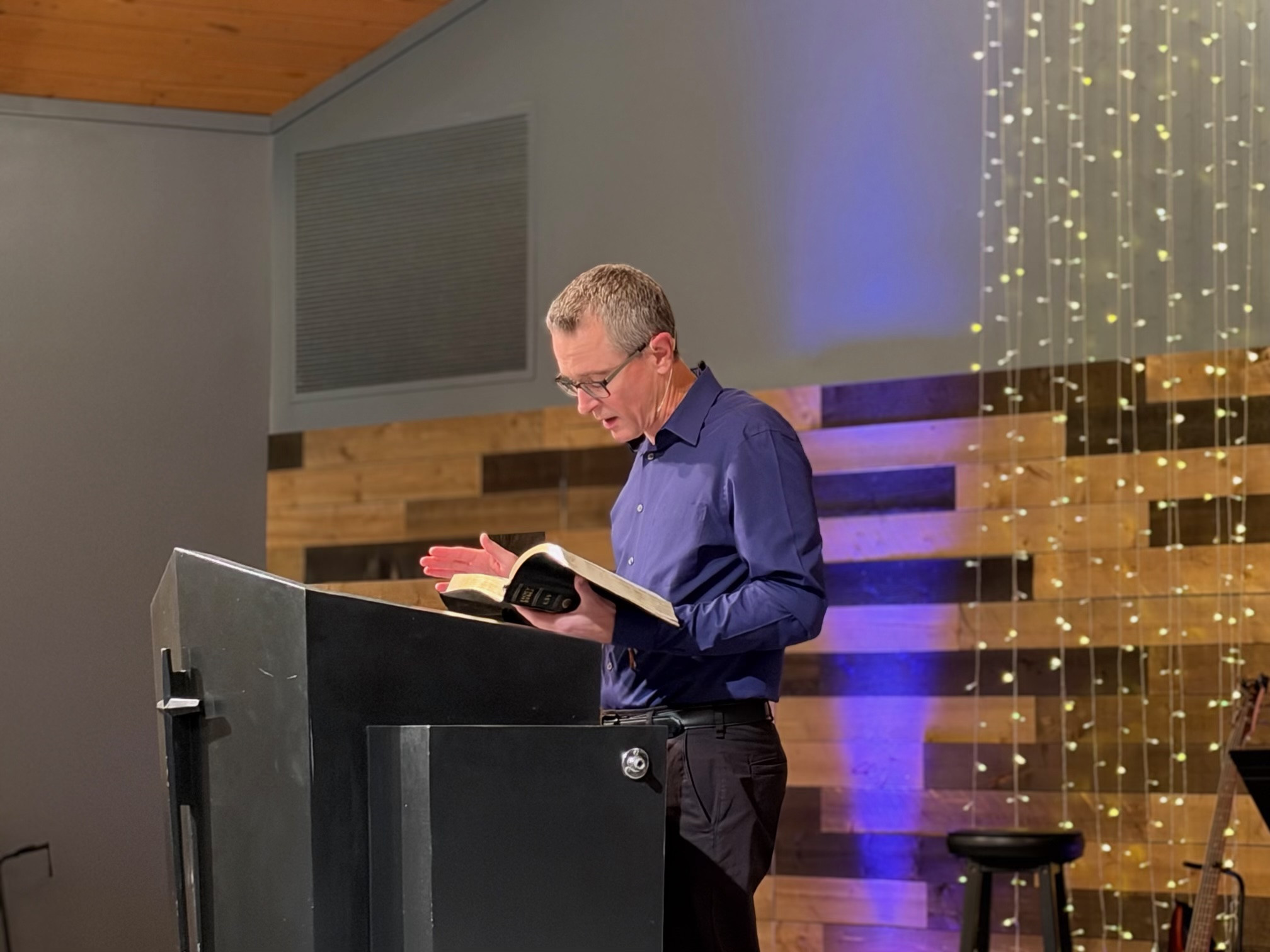
April 9, 2022
Guest Speakers · 1 Chronicles
Guest Speaker: Joe Braden, Pastor at FBC Saint Peters
The following is a lightly edited transcript generated from the audio; it may contain small errors.
That’s awesome. That’s very rare in this day and age for a pastor to be at a church for so long. Praise the Lord. He is married to his lovely wife, Diane, and they’ve been married for 41 years. Yes. They’ve been blessed with three children and nine grandchildren. Yes. And seven of those grandchildren live in this area, so that’s kind of nice. So that’s kind of nice, but a couple live in Memphis. They’re taking a trip next weekend to go see them as well. We’ve been blessed year after year, after year, after year to have Pastor Joe come and give us the word. I emailed him this last time and was telling him every time I emailed, I’m afraid that it’s going to be that one weekend, like if it would have been next weekend that we probably would have missed out on them because they’re going to see the grandkids. So I’m always nervous that he’s going to email back and be like, I can’t do it this year, but God has been gracious, always works it out because He always brings us an amazing word word. Please help me welcome Pastor Joe Braden. Thank you Pastor Bond. It is always a joy for Diane and I to come back and hang out with you guys and to be invited back.
I never assume that I will be invited back. Particularly You’ve, I’m just assuming this was the beginning of the end, you’ve asked me to preach on giving. And I think that was just kind of your subtle way of saying, you’re done. But if you would take your Bibles and turn to 1 Chronicles chapter 29. First Chronicles chapter 29 when Pastor Bond invited me to speak again this year. I just immediately said yes. I will gladly come and gather with you guys. And after I said yes, my mind went straight to First Chronicles chapter 29. And that’s where it’s been up to this point. And so we’ll spend our moments together here in this passage. I want to begin by reading verses 10 through 20 of 1 Chronicles chapter 29. And if you would like to, if you’re able, let’s go ahead and stand for the reading of God’s Word. This is God’s Word for us this morning, this hour. And God says, Therefore, David, bless the Lord in the presence of all the assembly. And David said, Blessed are you, O Lord, the God of Israel, our Father, forever and ever. Yours, O Lord, is the greatness and the power and the glory and the victory and the majesty for all that is in the heavens and in the earth is yours.
Yours is the kingdom, O Lord, and you are exalted as head over all. Both riches and honor come from you, and you rule over all. In your hand are power and in your hand it is to make, make great and to give strength to all. And now we thank you, our God, and praise your glorious name. But who am I? And what is my people? That we should be able thus to offer willingly, for all things come from you. And of your own have we given you. For we are strangers before you and sojourners as all our fathers were. Our days on the earth are like a shadow and there is no abiding. Oh Lord our God, all this abundance that we have provided for building you a house for your holy name comes from your hand and is all your own. I know my God that you test the heart and have pleasure pleasure in uprightness. In uprightness of my heart, I have freely offered all of these in uprightness, in uprightness of my heart things, and now I have seen your peace. I have seen your people who are present here offering freely and joyously to you. Oh Lord, the God of Abraham, Isaac, and Israel, our fathers, keep for… Oh Lord. forever such purposes and thoughts in the hearts of your people and direct their hearts towards you grant grant to Solomon, my son, a whole.
that He may keep your commandments, your testimonies, and your statutes, performing all, and that He may build the palace for which I have made provision. Then David said to all the assembly, Bless the Lord your God. And all the assembly blessed the Lord, the God of their fathers, and bowed their heads and paid homage to the Lord and to the King. You may be seated. Father, we thank you for your word, for there is no word like your word. Father, we’re grateful that we would have these moments together, that we could spend some time looking to you, looking to you through your word. And so our prayer is that you would show us wonderful things, that you would be at work in our midst, even as it was the Spirit who moved upon the chronicler to write these words. We would pray that now that same Spirit would be moving in our midst and in our hearts to be transformed by these words. For we pray this in Jesus’ name, Amen.
So I want to talk about when giving is worship, when giving is worship. Now I know at moments in church life, the subject of giving is often reduced down to simply the practical budgetary concerns. We’ve got to make budget this year. And that drives how we think about and how we even appeal to God’s people to give. Few years back, I think it was 26 years of pastoring is really like 106 in pastor years, I think. But a few years back, we were struggling with some budget issues and we were trying to put together a new budget for a new year. And so we called a family meeting, just kind of all the church get together and talk about this. And overall, that was just really discouraging. And one thing that stood out that probably made it very disheartening is someone said, well, The problem is we need more people, because those people need the Lord and we need their money. Oh Lord, please don’t let us look at people as mere giving units. Let us see those souls that need Jesus. But we want to think about giving in terms of worship and suspend for a moment whatever functional or practical monetary concerns that we might have on the matter of giving. Three things I want us to think about as we kind of move through giving. And I didn’t look at your notes. Did those three points make it into your notes? Yeah, okay, all right. Well, you know more than I do then.
So first, I want us to think about from our passage, giving is worship when the generosity of God forms our celebrations. So in other words, we want to talk about an awareness of God. Second, giving is worship when gratitude for the Lord informs our considerations. So we want to have an awareness of ourselves in proper relationship to the Lord. And then third, giving is worship when grace from the Lord reforms our convictions. We want to have an awareness of others, even as we have an awareness of ourselves in light of the Lord. Now the context here, Solomon is about to become king. As 1 Chronicles is wrapping up, 2 Chronicles is kicking in, we’re on the eve of Solomon becoming king. David’s successor Solomon is going to build a temple for the Lord. It won’t be David who will build it. Solomon will oversee that temple. And yet here in this passage we see something of David’s effort, the great personal sacrifice that David leads out in to get things ready. He has already secured the property site. He has acquired many of the materials that will will go into the construction of the building. He has lined up much of the work, the workers, and the supplies, so that in the hopes that Solomon’s project will come to fruition. Earlier in this same chapter, for instance, just making note of David’s giving, we’re told there in verses 2 and 3, something of the amount of giving on David’s part, verse 4 for instance, he gave 3,000 talents of gold, 7,000 talents of refined silver.
If we were to translate that out, it was probably about over 100 tons of gold. I mean, we, we, not we, people measure, I don’t have any gold, I don’t think, but people measure golden ounces, but here we’re measuring it in tonnage. So over 235 tons of refined silver. That’s not counting the other things that he had a hand in, such as precious stones and whatnot, They had a hand in compiling to have there for the building supply list. But our passage is not simply a report of a building project, nor is it simply a narrative about building a temple in order that worship might eventually occur in that temple. No, no, certainly the end result of the temple project is worship, but I would suggest to you that it is the process itself that is narrated in this passage that includes worship. There is a view to worship once the temple gets here, and yet even in the construction process for the temple
to which worship would occur. Worship is already occurring. Three things I would like to say, I’ve already noted those for you, but we’ll work our way through those one at a time. These three things I think are derived from this passage that helps us to see that worship didn’t have to wait until the building was done, that worship went into the building of the temple. And I hope that that helps me, I hope that helps you. I hope that helps us to know how we might worship the Lord through giving. For it is not the tonnage, it is not the amount of stuff that David and others, there’s other lists there as well, gave that makes this passage pertinent to worship. It is what is under the hood, if you would. It is the attitudes and the perspectives and the convictions and the commitments of the hearts of David and the people that helps inform us that this is a worship text. First, giving is worship when the generosity of the Lord forms our celebration. we see this in verses 10, 11, 12, and 13. These verses are girded with worship. Do you see that? David blessed the Lord and David said, blessed are you, O Lord, the God of Israel, our Father forever and ever. Yours, O Lord, is the greatness and the power in the heavens and all that is in the earth is yours. Yours is the kingdom, O Lord, and you are exalted as head over all, both riches. Both riches and honor come from you and you rule over all and in your hand our power and might and in your hand It is to make great and to give make great and to give strength and now we give thanks to you O Lord and praise your name.
Might we even just suggest that that there is… is an explosion of worship. You say, now, wait a minute, wait a minute, what was the tune? I mean, was that a Bethel song? I point that out, not simply because I’m I point that out, not simply because I’m snarky. Though you can ask Diane, I am. I’m still hoping that somehow it’s a fruit of the spirit, but I haven’t quite found that yet. We can. We should connect with the spirit. music, singing, songs to the worship of God. It is a distinctly Christian thing. Sing to the Lord all of the earth, sing praises to the Lord. But we must also also have a bigger definition of worship. That we see worship not just limited to or restricted to singing and songs and worship. In fact, is it doable? Is it possible that we could do this thing called worship and there’d be no music, no songs at all whatsoever? That’s what we’ve got to have a handle on. That’s what we’ve got to see from this passage. David has exploded, ignited in worship, And I don’t think there’s any lyrical arrangement to what’s going on here. It’s OK if there would be. I’m not saying that’s wrong. I’m just saying that he has a bigger category than maybe most of us. And I point that out because if you would, just doze off for a second. And well, OK, now we’re done with that. But anyway, but think back for a second as to how if you were to narrate some of your own stories.
Like, what had been the most worshipful moments in my life? And I think many of us, and that’s cool, that’s fine, but many of us would certainly inject, well, when I heard that song, or when we sing that song in that context. I think that’s great. It’s all a part of the makeup of what the scriptures say to us about R.C. about the sweet, blessed role of music and singing and songs in worship. And yet, and you don’t have to blurt it out loud, but if you were to think about the three, four, five, six, seven moments in your story that you said, now that was worship. I would suggest that probably for many of us, it just consists of worship through music and songs and singing. No, that’s not wrong. It’s just not complete. Pardon. Worship through giving. I get it. I get what we can say. Worship through singing. singing. I get that. So justice, you know, he had like the softball one this morning, you know, duh. You know. So I think you guys hate me. You gave me this one. You know, you’re like, hey, I give him this one. He won’t come back again. You know, but, and even, and even later a brother will, will talk to us about worship through preaching. Yes, in fact, we would be wise to realize that, okay, now that the singing is done, what do we do with the preaching? And sometimes we think, well, the worship has just stopped. Now this guy’s going to open the word and let there not be worship in that.
But how do we factor in to worship as giving? I would suggest to you, in fact, the first time that a cluster of words that we know to be worship is used in the Bible is actually in the account of Genesis. In Genesis, we’re taking his son up to the mountain. And his son wants to know what we’re doing. He says, we’re going to worship. What song did they sing? Okay, I beat that into the point. Let me give then what I think might be helpful, and I say this to say, I would suggest that probably all weekend long, each speaker is going to touch on this one way or the other. But let me give you something of a functional, a working definition of worship. I think if we figure that out, then we can take the next step and figure out then how giving connects with that. And I say this to say that on the one hand, my prayer is that I won’t confuse you. My prayer is that if multiple descriptions of worship are given this weekend, that that won’t confuse you. In fact, what I would suggest to you is that there’s going to be variance here. Just look for the reoccurring themes and just probably maybe hang out on the reoccurring themes. But first of all, let me give you some lines that I think would help build a perspective on worship. First of all, worship is a response to the Lord. And the word response, in my opinion, is really important.
In other words, worship is not something, something that we initiate. Worship is not something that we have to manufacture or whoop up. Worship is a, I’m gonna add to this, So worship is a response to the Lord. Worship is a response to the Lord, to that which the Lord has revealed about himself. So the initiator of worship is always the Lord. He delights in revealing himself to his people. And worship is the thing that occurs when after he delights to reveal himself to his people, his people delight in that revelation. So, worship is a response to what the Lord has revealed about Himself. Whether it be about who He is, and we see that here in this passage, in a sense, David is just mimicking here in these words 10 through 13, what the Lord has shown him about Himself. I mean, where did David get this stuff? Well, this is what the Lord has shown to him, and so he’s just responding by bringing it back up again and attributing these things, acknowledging these things, declaring these things, celebrating these things to be true because this is what God has told David he’s like. So it’s a response to what the Lord has revealed about himself, about who he is and about what he is about. It’s a response in which the, it’s a response to what the Lord has revealed about himself himself that acknowledges, that declares, and that celebrates that acknowledges, that declares, and that celebrates so that the worth or the worthiness So that the worth or the worthiness is directed toward who this God is who has revealed Himself and what it is God has revealed about what He is up to.
So worship is this interplay between revelation and response. reveals himself and we respond. When we see what God has said about himself and about what he’s up to, then that becomes, if you would, the launch code that ignites us to declare, acknowledge, and celebrate who he is and what he is about. Let me add another feature to that. So worship is a response. It’s a response to the Lord, to that which the Lord has revealed about himself. It’s a response to that which the Lord has revealed to body himself, that acknowledges, declares, and celebrates that revelation. It’s a response to the Lord in which he revealed about himself that seeks to entail all that we are. Body and soul. Remember Jesus said in Matthew 11, I believe it was, these people, they honor me with their lips, but their hearts are far from me. So that was body, but not soul, if you would be would. So true worship is a response that is, comes from the soul, but is expressed through the body. It entails our thoughts, our affections, our will, not merely an emotional thing, but it entails much more than that. It, it entails our head, our hands, our hearts, our voices. it involves whether we are here or whether we are there. Wherever there is, that can be a context, a platform for worship. In other words, worship is not restricted to a certain GPS locator on a map. Because we’re always living in response to the Lord and how he has revealed who he is and what he is about.
And it entails a whole range of emotions. When we’re happy, we can thank and praise the Lord. When we’re sad, we can thank and praise the Lord. David’s giving in that I I say that. that. David is being driven by what he has been shown. David is being driven by what he has David is driven by what he sees about who God is in a I say that David is being driven by what he has been shown. David is driven by what he sees about who God is and about what God is up to. And we see that stacked on top of each other language that acknowledges and declares and celebrates who God is and what he has done. Now, a little sidebar in our conversation. So the common question in North America is what technique should churches employ to increase giving? To which I would suggest that maybe even framing it that way is maybe built on a couple of flawed assumptions. assumption is, are you really sure that the Lord, once your church is giving to increase? I mean, have you actually sought him about that and asked him for that? I say that, not that I’m opposed to your churches, especially my church, increases the giving, especially my church, you know. But I’m saying that, we have to We need to make sure that we’re not living as citizens of this world where we just think everything is great and big and loud. So how do we know God’s at work? It’s great and big and loud.
Sometimes it’s just really ordinary and boring and mundane and routine and quiet. Second assumption to the question, what technique should churches employ to increase giving? increase giving. Second, maybe possible, flawed assumption is, are you sure that it’s a matter Second, maybe possible flawed assumption is, are you sure that it’s a matter of technique? of technique. What happened? What? What technique was manipulative, I wish I could say that word, manipulative, what technique was used to cajole David into giving? Are you kidding me? What trick was used to snooker him into giving? Really? He’s just seen God. And God has revealed to him who he is and what he’s about. And David is enthralled about that. David is captivated by that. David is compelled to give because of that. If the Lord does want our giving to increase in our churches, it’s not a matter of technique. It’s a matter of how do we hold out this God, our God. And God has revealed Himself in His Son Jesus by the Spirit, Father, Son, and Holy Spirit, this God, this God who is great and glorious and generous, and until we see that, until that then forms our hearts and souls, then we won’t know how to worship through giving. just have to go back to technique and tricks. I got to move on. Second, primarily from verses 14 through 16, giving is worship when for the Lord informs our considerations. I don’t
I don’t know if you’ve noticed it, but the focus shifts here. In verses 10 through 13, it’s been all about the Lord, his greatness, his generosity, who he is and what he’s about. And now for a minute, David’s gonna talk about himself. And yet, what is so instructive is how David talks about himself. I mean, I’m just saying that later today when the Spirit of God moves on your heart and you bring in a hundred tons of gold to this church, 235 tons of refined silver, not to mention the precious stones that you’re bringing as well. Don’t you think they ought to put a plaque up with your name on it? I’m just saying. But notice how David talks about himself. Verse 14, but who am I? Almost reminiscent of, I think of Psalm 8, you know. But who am I? And who are these guys? Who are my people? That we should be able to thus offer willingly. For all things come from you. We’re not giving you a thing that you don’t already have. We’re not giving you a thing that you’ve not first given to us. David is aware of himself, but he’s not overly impressed with himself. David doesn’t say, now, I’ve surveyed the history of the Jewish religion and the best I could figure. There’s only been three great givers in the history of the Jewish religion. And I don’t know, which one of those three do you think I am? Yeah. Yeah. One time I was talking about my preaching.
And I was just kind of ruminating that, you know, I wonder how many great preachers there are in the world, to which Diane said one less than you think. Is there a security team here? I’m going to need some support here, back up in a minute. So, it is hard to be enthralled with and captivated by the Lord and ourselves at the same time. So David is aware of himself. But David is not saying, now let’s go back and look versus three and four again. Did anyone write this down, how many tons of gold I gave? I just wanna make sure y’all got that. Cuz the last I checked, it was probably more gold than y’all gave. Just saying. Yeah, no, that’s just not even the direction that that conversation is going in. I was gonna say trajectory, but I can’t say that word. But in other words, David is aware of himself. He’s just not altogether impressed with himself. He understands that he’s the one giving, but he understands the context for that giving. He’s giving because he’s in love with and thralled by, captivated toward a God who has given him every single thing that he is now giving back to the Lord. It’s hard to promote ourselves and brag about ourselves and promote the Lord and brag about the Lord together. We really have to figure out which one’s going to be promoted and bragged about. And that’s hard because preachers are being told, man, you’ve got to build a brand. And sadly, most of the branding that preachers promote of themselves are more branding of themselves than of our great and glorious and generous God.
Listen to what Jeremiah tells us in Jeremiah 9. He says, let not the wise man boast in his wisdom. Let not the mighty man boast in his might. Let not the rich man boast in his riches. But let him who boasts boast in this, that he understands and knows me, that I am the Lord who practices steadfast love and justice and righteousness. Yes we’re to be boasters, but not of self. here on this glorious moment when the light could be shed on David and his awesomeness. David is deflecting any conversation, his own personal awesomeness. He said, what have I given that’s not been given to me? David gives worshipfully because David is giving humbly. wrote to the to try to sort out all of the arrogant prideful hubris at the church at Corinth and he says in 1st Corinthians 4-7 what do you have that you’ve not received and if you received it why do you You boast as if you did not receive it. My money, my stuff, my life, and God’s trying to snooker me out of it. If that’s where you’re at, that’s okay. Well, it’s not okay, but it’s okay for a second here. We’re just gonna take it where it’s at, which is where the Lord finds us. See, this thing about giving is not such a big deal because Jesus needs something from See, this thing about. this thing about giving is not such a big deal because You Jesus needs something from us. us. You don’t need to give anything to God to improve him or to be the lynchpin that moves his kingdom forward.
In fact, my prayer, my hope that if we money, my life, my stuff. And then you sing, we shall not be moved. That’s not a worship song. Then what you need is you need to see reality. You need to revisit who Jesus is and what he did and the difference that is to make in our life. You gather here this morning and with a notion of my money, my stuff, my life, quite honestly I say this with concern and yet with respect. You sit there and you act like an orphan who has no father to provide for you or protect you or to take care of you. So you are not seeing what you can see through faith in Jesus. That through faith in Jesus, if you were to turn to Jesus this morning, then you would see that Jesus places you in a relationship with God as your Father, a good Father who loves his sons and daughters in the love and joy of the Holy Spirit. What you are not seeing this morning is you are not seeing that God’s love is displayed in his giving, his only begotten son, while we were yet sinners, while we were unlovely to him, he initiated a love rescue. In other words, God loves you not because he finds loveliness in you, he loves you because he finds loveliness in His Son and He loves you in His Son. And the good news is, is that although He finds no innate lo when he loves us in his son, he creates the very love creates the very loveliness that he desires for us.
So turn to Jesus, just ignore what I’m saying about giving, just rejoice that we… that we have a God who is great in his generosity. generosity who gives to us so that we would become his children and who floods our hearts and souls by his spirit sheds it abroad we’re told with the very love of God through the work of the cross. God brought you here not to get you to give anything. God brought you here that you would receive eternal life through faith in the Lord Jesus Christ. that you would experience adoption, that you would be given the permanent indwelling gift of the Spirit of God, that He would love you even in your unloveliness, but refuse to leave you as unlovely. We have a God who gives. And David sees himself in all of that proportionality. He sees himself that, that yes, I’m given, but man, I’m given because my circuits are overblown. God has given richly, abundantly to me. And there’s a third thing that I want to point to before we finish up and wrap up. Giving is worship. Grace from the Lord reforms our convictions. and really this third movement, it started out with an awareness of God. He saw God as great and generous. And then an awareness of himself, not altogether impressed with that. Yeah, he’s giving, but he’s only giving that which he received, and that has informed his considerations about himself. This is not a moment in which David is promoting David. This is a moment in which David is praising the God who gives to him and now is giving through him.
And the third movement is David shifts to a third perspective here that helps inform when giving his worship. And that is David’s direction. Particularly this is seen in verse 19. His direction is toward others. seen in his prayer, but it’s seen in all of the giving that’s gone up to this praying. Who does he pray for? What does he pray about? Grant to Solomon, my son a whole heart. Grant to Solomon, my son, a whole heart that he may keep your commandments. your commandments and your statutes performing all that He may build the palace for which I have made provision. made provision. The word grace that I’ve used in this third point, third point. Let me parse that out for a second here. When we think of the word grace, and this is a good thing to think about, I hope you think about this first thing, but I want to maybe push on you and stretch you and get you to think about another thing or two as well. But when we think about grace, we think about the unearned, undeserved favor of what God
has done for me. We think of Ephesians 2, 8, and 9, for it is by grace through faith you have been saved. It’s a gift of God, not of works, lest anyone should boast. In other words, when we think about the grace of God, we think, my God in Christ by His Spirit has given me something I didn’t deserve and I haven’t earned. He has given me a grace, a salvation. And that’s good. Lock into that. You’ve got to know this one before we move on to the next one. But right after Ephesians 2 comes what chapter? Ephesians 3. You guys are tracking. Yeah, that was a pop quiz. I didn’t tell you in advance I was going to ask that. But it’s interesting, what I suggest to you is that Paul uses the notion of grace in a slightly different way, an expanding way. So on the one hand, he certainly sees in Chapter 2, grace is what God has done for me in Christ by his Spirit. But he expands on that in Chapter 3, And he uses the same notion of grace to describe not what God has done for me, unearned and undeserved undeserved, but he describes what God is now doing through him. If you would, grace is described as the task or the assignment that God has now called David to perform. Let me read Ephesians 3 verses 1 and 2. He says, for this reason I, Paul, a prisoner of Christ Jesus, on behalf of you Gentiles so here in the context in Ephesians 3 Paul is describing his ministry.
He’s not describing how he got into right relationship with God. He’s now describing the work that he’s now called to do, the task, the assignment if you would that He’s now called to do so that the Gentiles might come to understand this unearned, undeserved favor of God that brings about salvation. He says, for this reason I, Paul, a prisoner of Christ Jesus on behalf of you Gentiles, and then you can have a little side bar here assuming that you have heard of the stewardship of God’s grace that He has given to me for you. In that context, the notion of grace there, it’s something that God has given to Paul, not pertaining to Paul’s salvation, but pertaining to the stewardship of Paul’s work to bring salvation to others. So it is grace that brings you to Jesus, and it is grace that uses you to bring others to Jesus. That’s the point I’m trying to make. At the end of the day we don’t say, you know we praise Jesus that maybe I bumbled and fumbled my way through telling somebody about Jesus and they’re like yeah, I want Jesus, I want Jesus, you do, in light of what I just said, you do in light of what I just said? you know, yeah, what accounts for that, the Holy Spirit, the grace of God that he uses, He uses bumblers and fumblers. It’s all he’s got anyway. He uses imperfect, flawed people that it’s all he’s got to work with. He’s got to work with any way.
And that process by which he uses us to care for, to serve. care of to give to others is called a grace. So giving is worship when grace from our Lord reforms our convictions. In other words, so what is David’s conviction here at this moment? Oh God grant to my son, if you would, success in these purposes, faithfulness in these purposes. His focus has shifted. He’s turned toward others. He says something, I’ll mention this, I won’t be able to go, but it’s something in verse 17. I know my God, back in Chronicles 29 verse 17, I know my God that you test the heart and have pleasure in uprightness, and uprightness of my heart, I have freely offered all these things. How do we think about this test thing? What is the test? Our giving does not provide for God. How do we think about this test thing? What is the, what is not provide for God. He doesn’t need anything. The test here is how clearly we see who Christ is and what He has done and how eagerly are we to live in light of that. Again, another facet of giving, I mean another facet of worship. is not simply how loud you can sing a song, although sing it loud. Another way to demonstrate the reality of God’s grace in our life is how committed we are to care and to give aid to others. You see, we have to make sure there’s never like this psychotic break from reality where we could gather in this room and sing about the love of Jesus and then leave this room and be impervious to the needs of our brothers and sisters and the people around us.
There’s a huge disconnect on that one. This Jesus whose love we praise and sing about as we are in this room is now the praise that is to transform us so that now we are the people who are by the grace of God demonstrating the loving care of Jesus in practical, functional, earthy, down to earth, practical ways. Worship is never just a conceptual, emotional experience. Worship is a concrete commitment of way of life toward others. David’s burden here is on his son and of what’s going to happen after him and that his son has, has whatever he needs and that’s the test. The test is do I rejoice in the grace of God because it makes me feel special? Or do I rejoice in the grace grace of God because it comes to someone like me And it is so transformative that it gives me the desire to want to make other people feel special. You didn’t need any grace to want to feel special about yourself. You were born that way. I’m telling you though, it takes a great amount of generous grace to turn you and I around so that the supreme focus of our lives is not our belly button, but the concerns and needs of others. That’s when you know Jesus is in the house. I’ll wrap up with this. On the one hand when we look at this passage, I have, and this is how I’ve preached it, I’ve said that David is a giver. And really what I’ve said is you and I can learn a thing or two about David’s giving, about what happened under the hood, about his awareness of God, about his awareness of His self and about His awareness of others that He wanted to give out of a sense of worship of God.
He wanted to give because He was just flooded with gratitude for how God has given to Him and He wanted to give because He wanted to be an instrument of grace toward others, toward other causes, causes outside of Him. And so on the one hand I’m just simply saying, So go and do what David did. And that’s true. The writer of Romans tells us that these things were written, speaking of the Old Testament, to leave us an example, to know how we should live. And yet, on the other hand, the direct application of this passage is not merely David gave,
so you should give too. David gave not merely as an example, but David gave as a preview, a preview of coming glorious, wonderful attractions of things to come. His is a preview of his ultimate and final son who would come to give, who would come to give that just like David gave for the benefit of his son Solomon and for the sake of the nation of Israel. So the Lord Jesus gives not for his own sake but for the sake of his little brothers and sisters all who would turn to Christ and find in Christ all of the blessings and bounty that the Father has for the children whom He loves. That Christ is the ultimate display of this passage. That this is the God who has previewed Himself through the giving of David. That you and I worship a God who is a giver, not a taker. And even that which He requires from us. which He has given first to us. Father, thank You for this passage. Thank You for what You have showed to us, shown to us.
We thank You for the Lord Jesus Christ mostly. That while we were bankrupt and blind and broke and dead and impoverished and had no capital to get out of that enslavement. While we were cut off from a holy God, in fact, while we were at enmity with the only one true God, while we were justly condemned, while the very justice of God hung over our heads, while the very curse of God was laid upon us. We are grateful that you have given your son for us and for our salvation, that we could gather and that we could see the Lord Jesus in all of his loving, giving beauty, and that we could be enthralled and captivated by a God who gives. And so, Father, whatever Whatever it is that we give, it’s because that we are a people who have been well taken care of. And we thank you for giving us your son Jesus in whose name we pray. Amen.