
April 8, 2022
Foundations Conference 2022 (A Corporate Amen)
Dr. Michael A. Bond · Leviticus
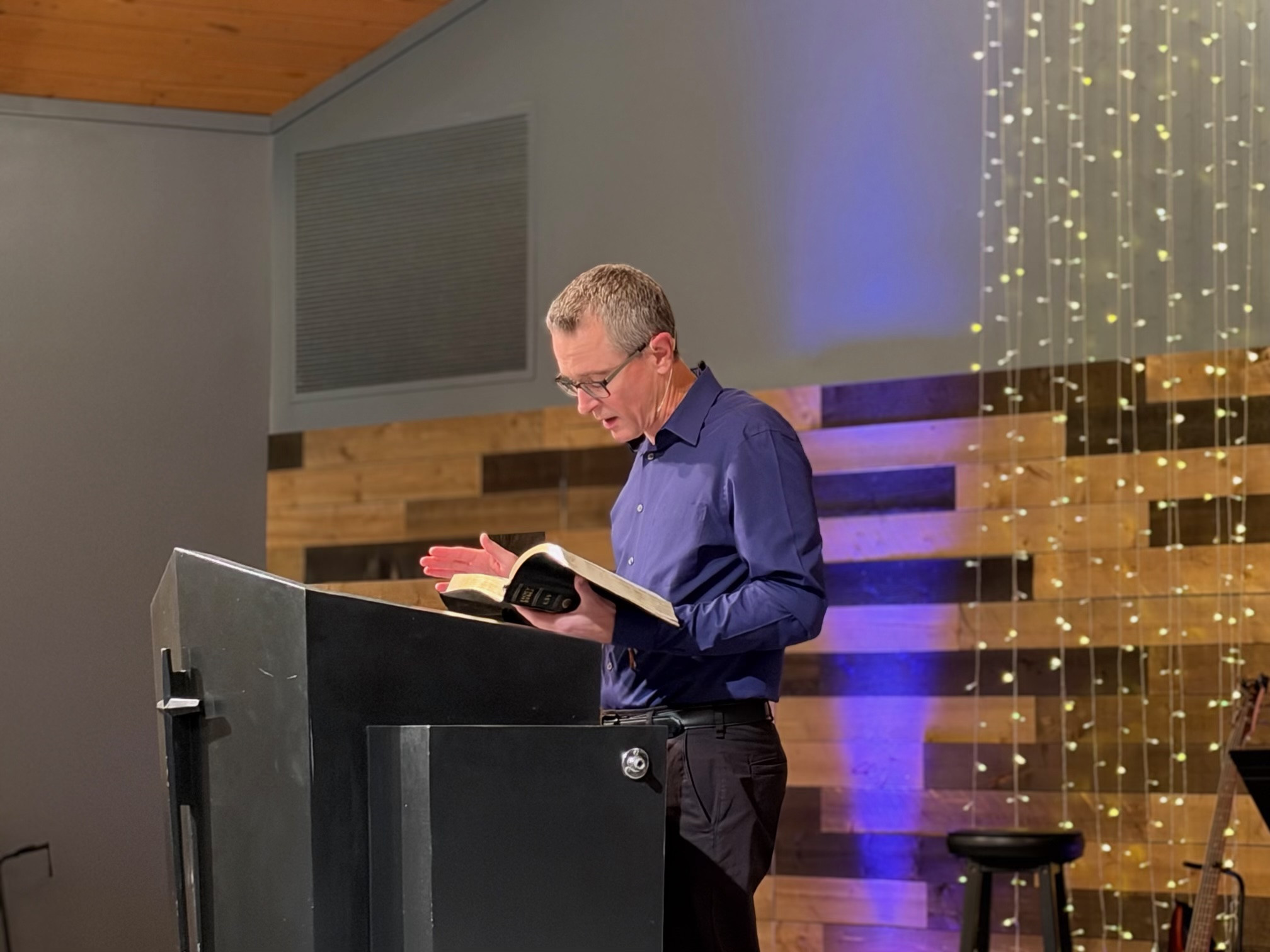
The following is a lightly edited transcript generated from the audio; it may contain small errors.
Well, Nick talked about preparation for worship. Now we’re going to get a look at some of those aspects of worship, and I’ll be addressing corporate prayer. So let’s talk about a definition for corporate prayer. I really see two aspects when it comes to corporate prayer. The real simple one is the idea is that when we gather together as a body, there’s prayer. That would be corporate prayer. We’re gathered as a body, And so we have the body praying. That’s maybe one aspect of it. But then there’s a second aspect of corporate prayer where you have one person essentially speaking for the body to the Lord. A lot of times you’ll see that when a pastor, he’ll either pray and then read the passage of scripture that he’s going to be primarily focusing on, Or he’ll read the scripture and then pray. But a lot of times, I mean, what is he doing? He’s really praying. It’s just not him in the prayer closet having a little time praying to Jesus. I mean, he’s praying on behalf of the church at that moment, really, in a sense, representing them, praying to the Lord. So that’s the other side. Sometimes we will have times of corporate prayer specifically designed where I’ll target some individuals and ask them to come up. And when they’re doing that, it’s not just like, oh, I’d like Steve Sanders to just talk to Jesus on his own, and we’re just going to kind of eavesdrop. I mean, he’s really talking to the Lord on our behalf.
No. And that’s why we’re saying amen. And yes, that’s true. And we’re agreeing with what he is saying. We see a couple aspects. So my first point is a biblical theology of corporate prayer. And when you think about the different places that Israel and the Old Testament, the church and the New Testament, how they gathered together and what their worship service looked like. You think about the different places that they gathered. So the first place they really gathered was the tabernacle, right? And when you think about all those books of the Old Testament where God is setting up the tabernacle and he’s setting up how he wants, how he wants it to look, I mean, even literally how he wants the tabernacle to look, how it’s set up. But when I was kind of researching this and preparing and reading Old Testament passages, the primary focus when you look and talk about the tabernacle and even the temple is on the sacrifices. I mean, you think about Exodus and we get about all this information about all the different sacrifices. You think about Leviticus, all this information on the sacrifices. and you think about numbers, Deuteronomy, all this information on the sacrifices. A lot of the focus is on the sacrifice, but it really makes sense, a lot of sense to believers. Because what did God want them focusing on? Why? The sacrifice, why? Because that pointed to the ultimate sacrifice, right? So a lot of that worship in the Old Testament, even though there was prayer, and even though there was singing, A lot of times what we get is a whole lot about the sacrifices because that was meant to point them.
It wasn’t just an end in of itself. Just killing the bull was not an end of itself. It was the point to Christ. That was like a shadow of the real thing to come. So you know we get a song. Moses is singing a song towards the end of his life. We actually looked at it a couple weeks ago in a sermon. Miriam sings a song after the Egyptians are totally obliterated when they cross the Red Sea. So you have these these glimpses of worship and singing. You have glimpses of prayer. We have one specific example I just want to look at in regards to the . Tabernacle turn with me to Leviticus chapter 16. And this is is dealing with the Day of Atonement. Yom Kippur, as it would be called in the Hebrew, the Day of Atonement. We’re not going to read the whole section. I’m just going to draw your attention to one specific verse. And it’s in verse 21 of Leviticus 16. It says, and Aaron shall lay both his hands on the head of the live goat and confess over it all the iniquities of the people of Israel in all their transgressions, all their sins. So, I mean, what, what is he doing there? He’s, it says, confess over it all the iniquities. So, I mean, he is speaking on behalf of the people to God. And he’s really confessing the sins of the people, right? That’s what he’s doing. And he shall put them on the head of the goat and send it away into the wilderness by the hand of a man who is in readiness.
So here we have Aaron representing really the entire nation of Israel before God confessing their sins and then those sins are placed on this goat, b really called the scapegoat. So that is really the tabernacle. Once it shifts towards the temple, we still get all the sacrificial system that is still in place, nothing changes. All the ceremonial laws there, all the moral law is there, all the civil law is still there. But we get David who wants to build the temple, and what does God tell him? He tells him no. But he also tells him what? Your son will, right? And so then David lays out all the plans for the temple, but Solomon is the one who ends up actually building the temple. And we get the dedication of the temple in 1 Kings. Look there with me at 1 Kings chapter eight. And Solomon has this prayer. In south
It’s a pretty long prayer, but I want you to notice something. Once this prayer starts off, it starts off in verse 22, then Solomon stood before the altar of the Lord. in 1 Kings 8, stood before the altar of the Lord in the presence of all the assembly of Israel and spread out his hands toward-heaven, and said, O Lord God of Israel, there is no God like you in heaven above or on earth beneath, keeping covenant and showing steadfast love to your servants who walk before you with all their hearts. So, I mean, he is setting the stage and calling God who he really is, this steadfast covenant-keeping God who’s always been there for Israel. We’re going to pick it up again in verse 27. And he says, but will God indeed dwell on the earth? Behold, heaven and the highest heaven cannot contain you. How much less this house that I have built? But then notice what he says, yet have regard to the prayer of your servant and to his plea. Oh, Lord, my God. So Lord, like people are going to be praying here, please listen to their prayer. Listening to the crying to the prayer that your servant prays before you this day. That your eyes may be open night and day toward this house, the place of which you have said, my name shall be there. That you may be listening to the prayer that your servant offers toward this place. And then notice it again in verse 30. And listen to the plea of your servant and of your people Israel when they pray toward this place. So I mean, this is the dedication of the temple And how is Solomon essentially setting the stage?
He is acting as the king over Israel. And he’s setting the stage saying, hey, this is going to be a house of prayer. And Lord, whoever comes here, we’re going to see it. Whoever comes here, and they’re praying, please listen. I’m asking that you would hear their prayers. It goes on. We’re going to pick it up in verse 33. When your people, Israel, are defeated before the enemy, Because they have sinned against you. And if they turn again to you and acknowledge your name and pray, and plead with you in this house, then hear in heaven and forgive the sin of your people Israel, and bring them again to the land that you gave to their fathers.” It goes on. 35. When heaven is shut up and there is no rain because they have sinned against you, if they pray toward this place and acknowledge your name. You see that? So there’s the location of the temple, But key to it is acknowledging God for who he really is, not just one of those other deities, like with all the other deities there, not just like a hentheism, like where there’s a lot of God, but he’s kind of a little bit above the rest. No, like true acknowledging who God is, the only one true God. So 35, if they pray toward this place and acknowledge your name and turn from their sin when you afflict them, then hear in heaven and forgive the sin of your servants, your people, Israel, when you teach them the good way in which they should walk and grant rain upon your land, which you have given to your people as an inheritance.
37, if there is famine in the land, if there is pestilence or blight or mildew or locust or caterpillar, if their enemy besieges them in the land at their gates, whatever plague, whatever sickness there is, whatever prayer, whatever plea is made by any man or by all your people Israel, each knowing the the affliction of his own heart and stretching out his aunts toward this house, And then here in heaven, your dwelling place. And forgive and act and render to each whose heart you know according to all his ways.” And then it picks it up in verse 41. And notice this. Likewise, when a foreigner… you know, underline that or circle it. When a foreigner who is not of your people Israel comes from afar country for your name’s sake, for they shall hear of your great name your mighty hand and of your outstretched arm. When He comes and prays toward this house, here in heaven your drawing place, and do according to all for which the foreigner calls to you, in order that all the peoples of the earth may know your name and fear you, as do your people Israel, and that they may know that this house that I have built is called your name.” On and on again, the prayer continues talking about praying and praying and people coming to the temple to seek God. Not just the Israelites, But here as we saw, the foreigner. The foreigner comes in and what’s important here is it’s the foreigner who comes from a far country for your namesake. Again, this person is a follower of Yahweh. He’s not just, oh, well, I got my God, but I’m in the land of Israel and I’m gonna make a little stop by that temple.
No, he knows, he’s there for God’s namesake. He knows who this God is, the great name it says, and your mighty hand and your outstretched arm. So he knows who this God is, he fears him, and he comes to pray to seek this God. So the idea is let this be a place where what? Prayer happens. What’s the focus? Prayer. I mean, did they sing worship songs there? Yes, they did. Did they sacrifice animals there? Yes, they sacrificed quite a few. But what’s the focus? Prayer. So Solomon dedicates the temple, Not just with some like kingly words, but it’s in the form of a prayer that he starts out the use of the temple. And what is he asking the Lord for? To hear their prayers. Even think when Solomon and then Israel gets off course, and then the temple is actually destroyed, right? Then in the book of Ezra, Zerubbabel comes back. A lot of people don’t even actually know that part, but Zerubbabel is the one that really starts, and he’s the one that lays the foundations of rebuilding the temple. Then Ezra comes as like the second wave of people. He brings like the second waves, Rubible is part of the first wave. But look what Ezra does, because I want you to see this in Ezra chapter nine. It’s right after 2 Chronicles, Ezra and Nehemiah, Esther, Job. So they just laid that foundation, it says in verse five, And at the evening sacrifice, I rose from my fasting with my garment and my cloak torn and fell upon my knees and spread out my hands to the Lord, my God, saying.” So it’s the evening sacrifice.
I mean, where is he at? I mean, at this temple that’s just been being really rebuilt. Oh my God, I am ashamed and blush to lift my face to you, my God, for our iniquities. Notice how it’s this collective us. It’s this collective we. I mean, he’s praying not just him and the Lord, but he is praying representing the people. Our iniquities have risen higher than our heads and our guilt has mounted up to the heavens. From the days of our fathers to this day, we have been in great guilt. And for our iniquities, we, our kings and our priests have been given into the hand of the kings of the lands to the sword, to captivity, to plundering and to utter shame as it is today. For a brief moment, favor has been shown by the Lord our God to leave us a remnant and to give us a secure hold within His holy place, that our God may brighten our eyes and grant us a little reviving in our slavery. For we are slaves, yet our God has not forsaken us in our slavery, but has extended to us His steadfast love for the kings of Persia to grant us some reviving to set up the the house of our God to repair its ruins and to give us protection in Judea and Jerusalem. And he goes on and talks again. He’s talking we, what is he doing? Representing, he’s praying with the people, for the people, but he’s praying on behalf of the people. Now when we come to the New Testament, we see the same emphasis on prayer. And my second point is, what kind of a house?
You know, God has a house in heaven. You know, Jesus. Jesus talks about John 14 and my father’s house. There are many rooms, right? And in Hebrews 8 it says, we get this verse, they serve a copy and shadow of the heavenly things. From when Moses was about to erect a tent, he was instructed by God saying, see that you make everything according to the pattern that was shown you on the mountain. Right? So what they had there with the tabernacle, the temple, it was a copy and a shadow of the heavenly things. So then Jesus comes, and in Matthew 21, he makes this interesting statement that I want to focus on for just a little bit, Matthew 21.
And we all know the story, but we’ll read it again, Matthew 21, verse 12. And Jesus entered the temple and drove out all who sold and bought in the temple, and he overturned the tables of the money changers and the seats of those who sold pigeons. He said to them, it is written, my house shall be called a house of prayer, but you make it a den of robbers. Now he’s quoting from Isaiah here. But here’s my question. What kind of a house is it? A house of prayer. Guess what the house of prayer should have? Prayer, thank you. All right. The house of prayer should have prayer, not as a side note, but as a main feature. As a main feature. Pause for a moment. What does house of prayer even mean? I mean, it’s a house that is replete with prayer. It’s filled with it. It’s well supplied with prayer. It’s an essential part of it, not a side note. Of all the different words we could use to describe God’s house. I mean, think of them. You could call it a house of worship, house of sacrifice, a house of singing, a house of God’s Word. Guess what? Only house of sacrifice appears in the Scriptures and it just appears once. All the other times we get house of prayer. It’s a house of prayer. This is how God himself, Isaiah, I mean Isaiah is right in the words but he’s like this is what the Lord says, it’s my house of prayer.
It is a house of prayer. That’s how God Himself describes his house. If we want to enter into his house, and it’s a house of prayer, what should we better be doing when we come in? We better be praying, right? We have to come with prayer on our lips. This is what we’re talking about when I title my talk The Corporate Amen. We’re all joining together Why a house of prayer because it was a place for the people to come before God? and not just to come before God but to speak to him to Seek his face and even though the priests, you know, they had to mediate Yet people could talk to God. I mean that’s what Solomon was acknowledging. Hey when they come and pray I mean they’re talking to the Lord. So the Israelites in the wilderness, they could talk to God. The Israelites in the Promised Land, they could talk to God. The Israelites in the Davidic Kingdom, they could talk to God. Guess what? How much more so now? Like how much more so now? Ephesians 2 verse 13, But now in Christ Jesus, you who once were far off talking to us Gentiles, you who once were far off had been brought near By what? The blood of Christ. The blood of Christ. So how much more now that we’ve been brought near by the blood of Christ that we can talk to God? And how much more now because back then in Old Testament Israel, what did that mean?
They had a priesthood, right? And the priests really were the ones. And then just once a year, once a year, Yom Kippur, the Day of Atonement, once a year, the Holy of Holies, the high priests could enter in to appear before God. How much more now, all of us, guess what? We’re all priests. 1 Peter 2.9, you are a chosen race, a royal priesthood. a royal priesthood. Like that’s the priesthood of believers you hear sometimes talked about right from here. We’re the royal priesthood, a holy nation of people for his own possession that you may proclaim the excellencies of him. and he called you out of darkness into his marvelous light. Who is he talking about? He’s talking about us. You and you and you and you and you, you’re priests. We’re not even Catholic. But what’s the idea behind this? You can enter into the presence of God. And you can enter the presence of God to intercede on behalf of others. You can speak the word. You can pray. You can intercede for others. – There’s no barrier any longer. You don’t need the priest to go on your behalf. And it’s not just one man once a year. Not just the day of atonement. No, it’s every believer. Every day of the year. And the Lord wants people entering into his presence. Doesn’t he want people entering into his presence? And he wants us to know that he is approachable. That you can talk to him, that you can present your request to him.
Think of Philippians. Chapter four, verse six, do not be anxious about what? Anything. But in what? But in everything by prayer, right? Everything. How many things? Everything. How many things is everything? It’s everything. Yeah, that’s right. But in everything by prayer in supplication with thanksgiving. Let your requests be known to God. Everything. So even when you think about, so Jesus is here, I mean, he’s just quoting his dad, right? And that’s why he’s upset because he saw that the place of prayer had been turned into like a marketplace, right? Making money when what should have been going on? I mean, they’re exchanging money and selling stuff, but what should have been going on? I mean, it’s hard enough to pray when it’s just like quiet, you know what I’m saying? I mean, think of if people are exchanging money and there’s all sorts of activity, it’s kind of hard to pray. Jesus was upset about that, rightfully so. But when you think about Jesus with his disciples even, and he’s trying to instruct them, and sometimes they have some challenges getting that through their head, just like we do, right? Like Jesus tries to get stuff through us, it doesn’t always work so well. He’s so gracious to us. But he’s instructing them, and look how he instructs them how to pray. Matthew chapter six, turn there. I mean in Matthew 6, I mean we call it the Lord’s Prayer. He is verbally laying out for them how to pray. He gives us some instructions in the beginning, verse 5, and when you pray you must not be like the hypocrites for they love to stand and pray in the synagogues and at the street corners that they may be seen by others.
Truly I say to you they have received their reward. But when you pray, go into your room and shut the door and pray to, your father, who is in secret and your father who sees in secret will reward you. I mean, now he’s really talking about like our quiet time prayer. Like don’t be saying it so everyone can hear you. I mean, I don’t know if you’ve ever been where someone’s praying and they’re really praying, like to impress you with how good they’re praying. That’s not cool. Like the Lord’s not down with that. And when you pray, do not heap up empty praises as the Gentiles, empty phrases as the Gentiles do, for they think that they will be heard for do not be like them for your father knows what you need before you ask him. their many words. Pray then like this. And here’s where I want you to notice. Look how he starts. Our father. Notice the corporate aspect to it. Our. This entire prayer has a majorly strong emphasis on the corporateness of prayer.
Our father in heaven, hallowed be your name. your kingdom come, your will be done on earth as it is in heaven. Give who? Us. Give this day our daily bread and forgive who? Us. Forgive us our debts as we also have forgiven our debtors and lead who? Us. Not in temptation but deliver us from evil. Listen, this mediator of a new covenant, our Savior Jesus taught not just individuals how to pray, but he’s teaching here a people how to pray. After all, they are united under one Father, our Father, and were to ask, think about it, they’re not just asking for their own bread. Give us, they’re asking for other people’s bread to be given to them too, right? And they’re asking for other temptations to lead us not into temptation, they’re asking for other people also to not be led into temptation. I mean, you see the corporateness to it, right? Not just praying me for me, but praying us for us. So they weren’t to ask just for their own bread and deliverance, but for one another’s. So when we get to the early church, we see them keep with this same practice. That makes sense. They’re disciples of Jesus, they follow after him. And we see here that the prayer is not cursory, meaning it’s not hasty, and therefore not thorough or detailed. No, it’s not cursory. We see that prayer is key.
Prayer was never, never, never cursory in the New Testament. It was key and central to the New Testament church. Not just individually, but corporately. We’ll see a few instances of this in Acts. Look at Acts chapter one. We’ll pick it up in verse nine, Acts one. And when he, talking about Jesus, and when Jesus had said these things, as they were looking on, he was lifted up and a cloud took him out of their sight. And while they were gazing into heaven as He went, behold, two men stood by them in white robes and said, men of Galilee, why do you stand looking into heaven? This Jesus who was taken up from you into heaven will come in the same way as you saw Him go into heaven. Then they returned to Jerusalem from the Mount Calvat, which is near Jerusalem, a Sabbath day’s journey away. And when they had, they went up to the upper room where they were, staying. Peter and John and James and Andrew, and Thomas, Bartholomew, and Matthew, James the son of Alphaeus and Simon the zealot and Judas the son of James. All of these with one accord were devoting themselves. What were they devoting themselves to? To prayer. Now I mean don’t miss the congruity of this narrative that’s just been laid out for you. Like Jesus, like just I mean maybe 15 minutes ago, had been raised up into heaven.
What did they return to Jerusalem from the Mount called Olivet, which is near Jerusalem, a Sabbath day’s journey away. Guess what? A Sabbath day’s journey, it’s really short. According to the Pharisees, you couldn’t go very far without breaking the Old Testament law of doing work on the Sabbath. So they had a definition of how far you could go on the Sabbath. So, it was a Sabbath day’s journey, meaning it was a short journey. So, they go back, Jesus writes up, they go back. And when they had entered, so we’re still in the story, still in the same narrative, they went to the upper room, and then it gives all the people there, And all these with one accord were devoting themselves to prayer together with the women and marry the mother of Jesus and his brothers. Like right away, boom. Jesus goes up into heaven, where do they go? They’re praying. They’re praying. They don’t waste any time. So it’s not like they weren’t doing other things, but this was primary. It wasn’t secondary. It wasn’t like attack-on. In fact, the only thing this passage specifically mentions they devoted themselves to was… was prayer. So they’re gathered together. About 40 verses later, Acts chapter 2,
And it says I’m in Acts 2 verse-. and the prayers that this word about and vote about in, to be devoted to, and it has a sense of wholeness, a persevering in something of continual of continuing on. And it’s interesting, if you just look a couple verses… couple of verses earlier and actually just one in verse 41 it says so those who received his word were baptized and there were added that day there were added that day about 3000 souls. That word baptized is just like boom, they were baptized one time deal, it’s over. Same with the added. Okay, boom, they were added to the rolls of the Book of Life, right? Boom, it’s over. But once we get to, and they devoted them. Devoted themselves. It’s not just like oh boom one time. They devoted themselves. No, it gives the idea in the Greek of this continual continual devotion over and over and over. That was how they were characterized. That’s what they did. That’s what they did repeatedly. They devoted themselves to the apostle’s teaching and the fellowship, to the breaking of bread. the breaking of bread and the prayers. About five verses later, we keep reading chapter 3, verse 1. Verse 1, Now Peter and John were going up to the temple at the hour of prayer, the ninth hour. They’re going up to the temple at the hour of prayer. Why? It’s time for us to pray. They get an opportunity there and they use it as a witnessing opportunity and this person gets healed.
But Luke connects this, I mean ninth hour, that’s like three o’clock and if you study some of the of the Talmud, you can see that, you know, they had like a morning sacrifice in an afternoon or in an evening sacrifice and this is when they’re going up to partake in it. Already within like the first 75 verses of Acts we’re just in like the first two chapters plus one verse like we’re like we’re seeing this emphasis on seeing this emphasis on prayer. One more chapter look at Acts chapter 4. One more chapter. Thank you. This is right after they get released. It says in verse 23, chapter 4, When they were released, they went to their friends and reported what the chief priests and the elders had said to them. And when they heard it, they lifted their voices together to God and said. I mean, notice the pluralness there, right? They lifted their voices. Is this just one of the apostles praying? No. This is them, corporately, lifting their voices. They lift their voices together to God and said, sovereign Lord, who made the heaven and the earth and the sea and everything in them, who through the mouth of our father, David, your servant, said by the Holy Spirit, why did the Gentiles rage in the people’s plot and vein? The kings of the earth set themselves and the rulers were gathered together against the Lord and against his anointed. For truly in this city, there are gathered together against your holy servant Jesus, whom you anointed both Herod and Pontius Pilate along with the Gentiles and the people of Israel to do whatever your hand and your plan had predestined to take place.
And now Lord, they’re still praying, and now Lord look upon the threats and grant to your servants to continue to speak your word with all boldness. while you stretch out your hand to heal and signs and wonders are performed through the name of your Holy servant Jesus. And then how does it wrap it up? And when they had prayed, okay, they’re all praying. They’re praying it corporately. And when they had prayed, the place in which they are gathered together was shaken and they were all filled with the Holy Spirit and continue to speak the word of God with boldness. That’s corporate prayer. It characterized the life of the early church. It wasn’t cursory, wasn’t just a side note, but it was key. It wasn’t just a believer at home by himself praying in his closet, that’s good, you should do that. But it was the church gathered praying to the Lord. When they gathered, guess what? They prayed. It really was that simple. And guess what? It really is that simple. When we gather, we pray. One last passage we’ll look at, 1 Timothy chapter three.
Actually, we’re gonna start in chapter two. Verse one, 1 Timothy 2. First of all, then I urge that supplications, prayers, intercessions, and thanksgivings be made for all people, for kings and all who are on high positions, that we may lead a peaceful and quiet life, godly and dignified in every way. This is good and it is pleasing in the sight of our God, our Savior. Now, that’s awesome and you might be like, hey, that’s something that we should do, you know, but I’m gonna submit to you right now without going into it too far, because I don’t think I have to prove the point, that what Paul is doing here and writing to Timothy as he is setting up how he wants the worship of God to occur when they gather together. He’s like, how do you know that? Okay, well it’s real simple. Look at chapter three, chapter three, chapter three, this is Paul writing, I hope to come to you soon, but I am writing these things to you so that if I delay, you may know how one ought to behave the household of God. Which is the church of the living God, a pillar and buttress of the truth. Now, if we don’t really have time to go through it all the way, But if you read chapter two and chapter three, I mean, it just makes perfect sense. What’s he doing in chapter three? He’s saying, hey, here’s the qualifications for deacons and elders, okay? What’s he doing? He is setting up the church and the church service.
What’s he laying out in chapter two? Hey, first of all, that’s what I think is key for us right here tonight. First of all, hey, I’m setting it up. Here’s how I want, when you’re gathered together, here’s how I want that service to flow. First of all, first of all, and then he’s just like, I want you to pray. No, I mean, listen. I mean, and I, and I, and I think, with change the globe years ago, but first of all then I urge that supplications, prayers, intercessions, and thanksgivings be made for all people. I mean, those are all different types of prayers. But guess what the point is? I really want you praying, right? I want supplications, and prayers, and intercessions, and thanksgivings, right. And it’s not just, not you’re not just praying for yourself, we need to do that. I mean, he gives us a much broader picture here and a much higher picture for kings and all who are in high positions. And part of the reason is that we may lead a peaceful and quiet life, godly and dignified in every way. I mean, but he is setting it up. That’s why he gets all the way down to the, oh, that really unpopular verse that some people don’t like. But when he gets down to, I do not permit a woman to teach or exercise authority over a man. I mean, what’s he doing there? He’s talking about in the congregated assembly. Who’s the teaching to? It’s given to the man, okay?
What’s the woman? The woman has a role. It’s a beautiful role. He goes on and he I mean the woman the woman gets more attention here than the man does. Okay? And we won’t look into it but he gives some reasons why God has set it up that way. But the whole point is is what he’s laying out is when the church is gathered what does he want to occur? And then he tells us first of all, first of First of all, he wants, first of all, he wants prayer. all. He wants prayer. That’s what he wants. This is the That’s what he wants. This is the command. command for us. So it didn’t just characterize the life of the early church, which it did. But Well, characterize the life of the early church, and guess what brothers and sisters courage as well. Now, if we want to talk about our prayer lives, they say if you want to humble someone, just ask them how their prayer life is, right? Why do we fail to pray so well? We pray a little because we believe little. That’s the truth. You want God to do a work in your church, you want God to do a work in your life, It will happen when we become a people of prayer. Not just a formality of prayer, but an intentionality of prayer. Not just something that is required, but something that is desired. We want to come before the Lord with hearts set on Him, corporately together.
When you think about the disciplines, even just for a moment, this is almost like a side note, but I mean, think about the Christian disciplines that were commanded to do, you know, read the the word, right, gather together, Nick had the verse from Hebrews 10 up there, prayer. I mean, we talk about it, but I think it’s the most neglected discipline. And just think for a moment how key it is. Are we told to read always? No. Are we told to sing always? No. But what are we told to always do? Pray always, right? First Thessalonians five, right? Then even Paul says it again in Ephesians 6, 18, praying at all times in the Spirit with all prayer and supplication. I mean, both these passages, he’s praying at all times in the Spirit I mean, it’s like he can’t emphasize it enough. with all prayer and supplication. Praying at all times with all prayer and with all supplication, like hey, make sure you’re praying. That’s how key it is. It’s very integral to who we are as believers. Now some will ask, like if God is sovereign, friends, that is pray. Because God is sovereign. I mean, he can actually do something about our requests. What’s the point in praying if God is sovereign? Some people will ask. I mean, he’s just gonna do his own thing, right? I mean, no, no, no, no, no. Like, what’s the point in praying if God isn’t sovereign? Think about that. If he’s not in control, like, why bother praying?
If he can’t do anything about it? If he’s not sovereign? If he’s just helpless and hopeless? No, I pray because he is in control, because he is over all things, because he is on the throne. He has all power and authority. about whatever situation that you’re dealing with. So go to the one who has the authority and all power to do something about it. That’s why we pray. And why is it so integral? Because it is us prospective God to come among us, to hear our prayer. It’s us asking God for something. Guess what that requires of us? That requires us to humble ourselves. That’s hard to do. Maybe that’s one of the reasons we don’t pray so much. It is humbling. But we humble ourselves before God, and we’re like, Lord, we can’t do it, but we know you can. Lord, I’ve totally screwed up this situation, but I know you can walk me through it. So we go to the one who has the answers. Lord, please hear me and answer me. And listen, we can have a worship service about God, and we can have a worship service for God, and we can have a worship service with God. But listen, if he’s here, then then we need to talk to him. Yes, acknowledge his presence. Yes, sing his praises. Yes, bow before him. But we also commune with him. To the very first greeting, to the very final amen, prayer should be woven throughout this service. The worship team should model it.
The worship leader should model it. The pastor and the members should model it. It is not something that we do perfunctory. That just means we carry it out with minimal effort. I was just like, okay, we gotta pray here. No, I try to be very intentional with my prayers. I hope you’ve realized that. It can be challenging at times, especially if you’re maybe in my position your weekly and maybe more than praying publicly, not just to fall into like the same old prayer. But that takes intentionality. It also takes being really in communion with the Lord so that you are praying according to His will. And you’re not just praying the same thing, that can fall into a rut and then it ends up perfunctory. You’re just tacking it on. No, from the beginning to the end, the entire service should be inter-woven with prayer, and there needs to be prayer in the service. Okay, you’ll notice, I hope, that my prayers aren’t just off the cuff and bless this service, and a lot of times I don’t just pray. Sometimes I do, because that’s what I feel like but it’s usually not just like a 30-second prayer the Lord’s leading me to do, before I pray. No, because I feel like anyone who, definitely anyone who’s picking up the microphone on a Sunday and saying, Lord, I mean, you’re speaking for all of us. You don’t want to, I mean, that should feel a little bit of a heavy weight. I definitely feel the weight.
And so we want to make sure that whatever we’re praying is according to his will. And it’s not just something, oh, I got to say a little prayer before I start my sermon. That’s not how I’m thinking whatsoever. So I’m looking and I’m trying to think more of the big picture that Paul commands us in 1 Timothy for kings and all who are in high positions. So that’s why I will pray for different key positions in this in this United States. Or we’ll pray for Ukraine or we’ll pray for Belize or we’ll pray for the church that had that horrible tragedy happen in South Carolina years ago. Like we’ll take time as a church to intercede for our brothers and sisters. We’ll take time as a church to intercede for ourselves even. But we’re coming and it’s not just an off the cuff thing. Here’s the picture of corporate prayer. It is us coming together. It’s the hand, the foot, the arm, the leg. Those parts are unified as one body. Unified in thought, unified in action, and unified in voice. So we sing with one accord. Sometimes a little bit off pitch, that’s okay. But we sing with one accord. but we pray as one voice. And when someone is praying and you say yes, which we should, and you say amen, which we should, and you say that’s right, which we should, I mean, to what they’re praying, you’re joining them in the prayer. I mean, you don’t have to say something but the point is you shouldn’t be like, to join them in the prayer,
And that’s Justus on Sunday morning with the call to worship justice on Sunday morning with the call to worship praying on our behalf. So you should very much say yes and agree in prayer whether it’s verbal or not. There should be a yes and amen and that’s right. Praying on our behalf So, you should very much say yes and agree in prayer, whether it’s verbal or not. There should be a yes and Amen and that’s right. Because it is us praying. It’s us praying. You’re praying with them and they’re praying on your behalf., it is very much a corporate act. So my heart for us, you know, when, however long our service is, it starts at whatever 10 30 a.m. Sunday mornings and we, about an hour and 15 minutes or so, like we don’t just want prayer woven throughout. But I mean, I hope, I hope there’s just prayer. It’s just saturated in prayer. So thick we could cut it with a knife. And what I mean is like even when I’m up here preaching and I know some of you and you let me know and it greatly encourages me that you’re praying for me. And it means a lot, I appreciate it, okay, because when people are like, you know, man, that was a really good sermon that spoke to me, I realized that that that is all God, first of all, but it’s the prayer of the saints and God’s answering that prayer.
Because y’all have taken time out of your week, or even in the service, which I really appreciate, is you’re interceding before the throne for me. You’re interceding before the throne for the worship team. You’re interceding before the throne for our worship leader, right? That’s what we’re doing. And when we’re praying and there’s moat pauses between songs, you know, feel free to pray. Feel free to do that, to intercede before the Lord. From beginning to end. We don’t just want it to be something that we feel like we gotta tack on here or there, but we want an intentionality to it. Friends, we are privileged to come before the living God. And whatever word you wanna speak to him, whatever word, he will listen to it. He will listen and sometimes we’ve come and and and let’s just be honest We’ve been pretty upset and mad and frustrated and we’ve said things to the Lord and and and when then we’ve had to repent of those Things right because we’ve been upset But if you’re gonna be upset with God at least go to God with that upsetness Please go to him because he’s the one that can deal with it and a lot of times at least I’ve noticed in the times That where I’ve been at that place like as I’m praying and frustrated and sometimes even yelling like you working on my heart and I can feel it, right, I’m sometimes resisting.
But the idea is like we are privileged to come and bring anything we want. And guess what? He can answer that. He can answer it. He can answer it. Nothing is too big for him. I mean, what does Jesus tell his disciples? Nothing is impossible with God. Nothing’s impossible, right? And I say pray big. Pray big, because we serve a God, we serve a really big God. Yes, we do. And you can’t pray bigger than who God is. So pray big, believe big. Okay, we pray little because we believe little. Let’s start believing big and let’s beseech God for things that we know please his heart, for miracles that we want to see happen, for hearts that we want to see change. Because friends, I mean, that’s what he’s, Justice and I were talking just earlier, probably just a couple hours ago, which I could tell you the story, it’s not time to yet. But someone years and years and years and years and years ago that he and I ministered to that was in a rut of a rut of a rut of a rut. And God got ahold of that person. And God had them do like a 180 and save them and they are walking with Jesus. And it just, I mean, even to this day, it’s like, man, like that’s one of those people, like if God can save that person, like he can save anybody.
I mean, seriously. And here’s a walking testimony to what God can do in someone’s life. I mean, he’s like a walking miracle. And friends, that is the God that we serve. He touches lives. He changes lives. He answers prayer. So let’s come before him corporately and pray. Let’s pray. Lord, we do come before you. I come on behalf of this church, on behalf of the people here. First, what a privilege just to talk to you, the creator of the universe, and we don’t even just address you as creator, or God, or Lord, all appropriate titles, but we are privileged to call you Father. And we’re your children. Thank you for adopting us into your family. Thank you that you are an amazing Father that longs to hear us speak to you. you want to commune in fellowship with your children. Thank you for being our amazing God who loves us, who created us, who sent his son for us, and that we can come into your presence. It says in Hebrews, approach the throne with confidence. Not a self-confidence, but a confidence that comes from the blood of Christ. We thank you that you’re here right now. Lord renewing us a desire to pray, a spirit to pray, a desire to come into your presence. Forgive us for at times not believing that you can do certain things. For not believing you can follow through on what you’ve said, God.
Thank you that it says in Timothy that even when we are faithless, you are faithful. You are a faithful God time and time again, even when your own children are faithless. You are there, you pick us up, you walk with us, you carry us when needed, which is a lot, you are always there. Lord, I pray even now, whatever’s going on in different people’s lives, you’d minister to the hurt that is present in this room. That you’d speak to people’s hearts, reaffirm your love for them, that wherever they’re at, whatever they’re going through, you promise to never leave them nor forsake them. and that as dark as it might get, you are the bright shining light. Remind them of that and let them see it. Thank you for the privilege of calling you our father. Thank you for your love, your mercy, your grace that you shower upon us time after time after time, you truly are a good and gracious father. We love you. Amen.