
February 20, 2022
Defending Basic Biblical ProLife Principles
Dr. David J. Vaughan, Guest Speakers · Genesis
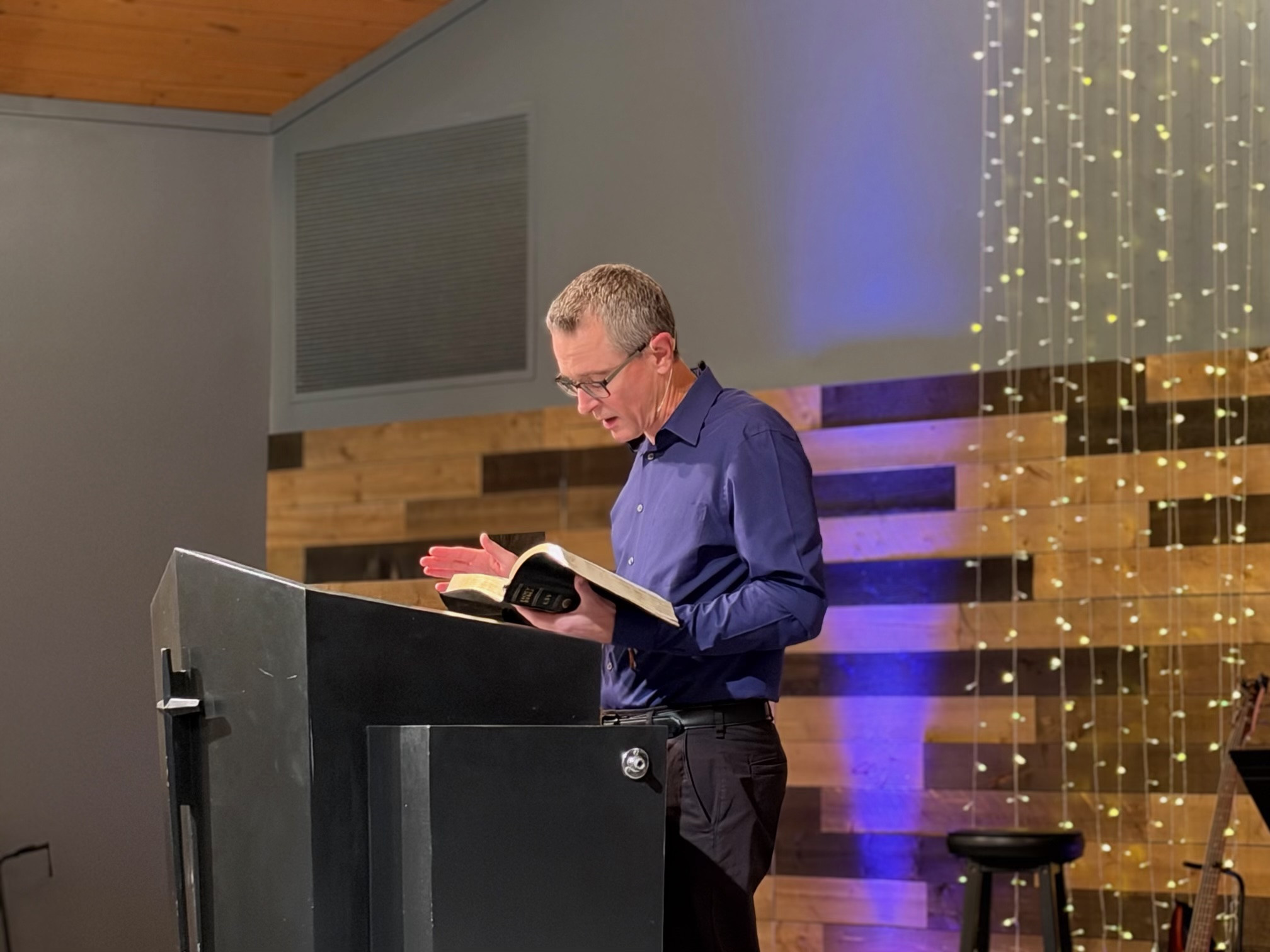
The following is a lightly edited transcript generated from the audio; it may contain small errors.
As you can tell by the video, the topic this morning that David [audio unclear] I want you all to hear David’s sermon. My daughter, Hannah, has been single-parenting it the past several weeks. Her husband is abroad, and he’s helping with a film in Nepal. So I’ve been trying to help my daughter a lot, checking in on her a lot. And the past several days, she’s had sick kids, not getting a lot of sleep, and I checked in with her this morning: how was last night? And she said to me, “Well, it was awful. The baby just wouldn’t sleep, but I have coffee, so life is good.” And I said to her, I texted her and I just said, “Hannah, you are living your best pro-life life.” And I meant it. I meant it.
The length of a generation averages about 25 years, from the birth of a parent to the birth of a child. I turned 10 years old when the highest court of the land declared it lawful to abort a human child in the womb. I was 10. How old were you? Think about it. That was in 1973. I think I just gave my age away. [audio unclear] that abortion is not only something that unbelievers do. Statistics show that many Christian women go through an abortion. We all fall, and we all have sinned, and there is compassionate forgiveness in Christ Jesus. And if you are out there and you ever want to talk to someone, [audio unclear] One obvious impact in our nation since that time is the great loss of human life. It’s a great loss. It’s estimated that over 62 million human lives have been lost since 1973. And those are the reported cases. That’s a lot of lost life. Were those humans less valuable than you or I? Were those humans created in a lesser image than that of God? And there’s many—how did their loss impact each of their lives? I’ve shared throughout the years different reasons, but if you ever want to know why, I’d be happy to share my story with you over a cup of coffee. Just let me know. But it has been one of the best decisions of my life. And I am a changed person, and I’m certain that I was created to stay and fight on this and be available to God to let Him use me as He saw fit.
I have been involved with a ministry called Thrive St. Louis for about 13 years, and it’s just one of the thousands of pregnancy centers all across America who help women. I began as a volunteer. I was a nurse sonographer, and I began in 2009. The organization grew and became more medical. I then became the regional manager. Every year since then I’ve had the opportunity to share about the growth of Thrive and just my service there, and I’ve been so appreciative of this church allowing that opportunity. And as I said, this year I’m going to keep my remarks short so you can hear David. But if I could tell you two things, I would tell you that I believe that the very, very best place that a woman with an unplanned pregnancy can go—the very best place, and I mean that with all my heart. She’s going to get great medical care. She’s going to get great compassionate understanding. She’s going to get actual accurate medical information. She’s not going to be deceived or lied to. She’s going to get the opportunity to hear the gospel, to hear how Jesus can save her life. She’s going to be offered a Bible. It is the very, very best place for a woman in this community who is unsure what to do with their pregnancy to go to. And if you know someone and they need help, let me know, I will connect her.
The second thing that I will tell you about Thrive is, helping women choose life for their babies—I’ve seen it happen with my very own eyes. And it’s been incredible and humbling. God works miracles, amazing things. I was going through some files at my house and I came across the St. Louis Metro Voice from February of 2012. I don’t know if you ever heard of St. Louis Metro Voice, but it was a Christian news and events publication back in the day, and it’s not in print anymore. But in February 2012, so 10 years ago this month, I wrote an article called “The Plunge Into Pro-Life Waters at Thrive St. Louis.” And I had just got hired on a staff position, and I wanted to share a couple things from the article that I wrote. Serving at Thrive St. Louis has had an incredible impact on me, and it all began a few years ago when I thought I would make the plunge into pro-life waters, or in other words put feet on my pro-life profession. As I made my way to volunteer at the pregnancy center on a weekly basis, I became a small but practical part of the solution to see abortion come to an end in my city. Ten years ago, I wrote about seeing an end of abortion in my city. Little did I know that seeing abortion come to an end in my city was something that I would see nearly 10 years into the future. February 2012—did I even believe that that was possible? I’m not sure, but I know I was working for that. And it’s astounding when I think that in 2009, back when I started as a volunteer, just alone in the state of Missouri there were 6,500 abortions that took place in our state at various abortion facilities. And by the year 2020, do you know how many abortions were recorded from only one existing abortion facility? Eight. Eight. Eight.
Pro-life lawmakers, some of whom I was privileged to testify in front of at several congressional committee hearings, courageous pastors willing to preach from the pulpits on the sin of abortion and the forgiveness found in Christ, a pro-life presence in front of abortion clinics praying and pleading, people giving financially to the cause, obviously also helped to make Missouri the safest place, and the safest state, for a baby in the womb. The ending of abortion requires all of these different types of influences and help. It’s all of them. And while we have made some progress, our nation is in need of what the president of Thrive calls the American miracle, [audio unclear] try to help make that happen. I often wonder what would have happened if the founder of Thrive, her name was Mary Nelson, if she never said, “Here I am, Lord, I’m available,” after being shaken by the film Whatever Happened to the Human Race? by Francis Schaeffer. But she did say it, she said, “Here I am, Lord, I am available.” Since 1983, when Thrive started—and back in the day it was called Crisis Pregnancy Center, and then it changed its name to Pregnancy Resource Center, and now it is Thrive St. Louis Express Women’s Healthcare—listen to this number. Since that time, 36,218 human lives have been rescued from abortion. [audio unclear] Whether it’s someone who can give financially. Some of you young people, God is calling you to get involved. And I believe that abortion, this battle, this great evil, I believe it can come to an end. Would you be willing? [audio unclear] I am beyond grateful. I want to thank my husband for his faithfulness to [audio unclear] Ultimately, I just want to thank the Lord, because God entrusted me to take a particular post in this battle. And it’s been an incredible adventure and experience. I’ve been able to do so many things, see so many things, help so many women. I’m just incredible that God gave me a willing heart to say, “Yes, Lord, I’m available.”
I want to close with these verses. And I also want to just encourage everyone, for the next several weeks if you could bring some diapers. We’re going to do a diaper drive for Thrive, for the St. Charles location that is on River Drive. If you could bring the size 2, 3, and 4 diapers, and then I’ll take them to the facility. That would be great. That’s a great practical way. Of the services that Thrive offers, they’re at no cost to women. We offer parenting classes for moms who choose to keep their babies, and they earn what we call baby bucks, and they can take those baby bucks and buy [audio unclear]
O Lord God, to whom vengeance belongs—O God, to whom vengeance belongs, shine forth! Rise up, O Judge of the earth; render punishment to the proud. Lord, how long will the wicked, how long will the wicked triumph? They utter speech, and speak insolent things. They slay the widow and the stranger, and murder the fatherless. Yet they say, “The Lord does not see, nor does the God of Jacob understand.” For the Lord will not cast off His people, nor will He forsake His inheritance. But judgment will return to righteousness, and all the upright in heart will follow it. Who will rise up for me against the evildoers? Who will stand up for me against the workers of iniquity?
(Psalm 94:1–3, 6–7, 14–16)
I hope and I pray that those of you who have been involved will continue, and those of you who maybe never have been involved would get involved. Thank you.
Is my wife awesome, or what? The only problem with that talk is, you know, you’re probably now, how old I am—that’s really—some of you have—that wasn’t the point of using a music stand. One of you need to go up. That’s good. Some of you who sat in my preaching for years—anybody here that sat in my preaching for years? Some of you don’t even know me. So today I struggled a lot. I actually came up to the pulpit with two sermons. And I feel like the Lord wants me to, in some ways, give a review for those of you who may not know some of the basics about the Bible’s pro-life message. But then I want to make an application, which I believe would be good for all of us to hear.
The premise of this sermon and all the sermons I give is that the Bible is the Word of God. If you believe that, say amen. That’s my premise. If you don’t believe that, I’m sorry, we’re not going to be tracking today. That’s the foundation. The Bible is the foundation of everything that the church believes and everything the church practices. Or should I say it’s the foundation of everything the church should believe and everything the church should practice, because they’re not the same thing, right? If you would have asked me 15 years ago, would Christians be getting abortions at the rate of unbelievers, I would have said no way. But we now know through statistics, surveys, that women going into abortion clinics, according to Planned Parenthood statistics, 62% claim to be evangelical Christians. And did you hear what I said? 62% of the women seeking an abortion are professing Christians. I’ve read other statistics a little bit lower, but it’s fair to say on average that half of the women seeking an abortion are professing Christians. That clearly tells you that the biblical teaching on life is not being expounded [audio unclear] still today, in spite of abortion being legal all these years, in spite of 60-something million abortions just in America, not the world, that the majority of evangelical churches today still do not and will not discuss abortion from the pulpit. So there is still today a tragic silence on the issue of life. And we’re seeing the terrible results in the lives of the church.
Of course, you all know how babies are produced, right? Not the stork. So if half of the women seeking abortion are professing Christians, they’re professing Christians that they’re being [audio unclear] studies have also shown that about 50% of Christian young people are having sexual intercourse before marriage. We know that I’ve heard about 50% of evangelicals have been divorced at least once. We know that 50 or 60% or more of evangelical men are involved in pornography, and I can go down the list of all of the things that are called social indicators that tell us that in many ways the church morally is not very different from the world. So the church is in need of great Reformation, great revival. But the place to begin is always with the Word preached in its purity. And sadly it will offend some people. It’s inevitable. It doesn’t matter how you say something. The Word of God cuts against the sin of the culture. It will be offensive. As a matter of fact, Paul speaks of the offense of the cross, does he not? Well, why is the cross offensive? Well, for two reasons. One, it tells us we’re sinners, but that’s not the real offense. That’s not the deepest offense. The deep offense of the cross is that it says not only are we sinners, but there’s absolutely nothing we can do to redeem ourselves. Because you see, if I say to you you’re a sinner, but do this, this, and this and you’ll be fine, you can go do that and you can admit you’re a sinner and you can be proud of saving yourself. But the gospel is we can do absolutely nothing to save ourselves. We are in a hopeless condition, and if God does not choose to save us, then we will be lost forever. So it strikes at the root of our pride. The root of our pride.
So the life message that I want to talk to you about today, it will sound familiar to some of you, you’ve heard me preach, because I want to reiterate some basic teachings from Scripture, fundamental teaching from Scripture on the issues of life. And one of the reasons is because we know that these issues are not being heard, and we know that if they’re being heard, they’re not being implemented in the life of the church. So I want to speak about some basic principles. Now, I’ve read articles by evangelical Christians [audio unclear] abortion. Even saying, you know, the Bible actually never uses the word abortion. Well, the Bible never uses the word house fire either, but I don’t think it promotes burning your house down. It actually doesn’t use the word Trinity, but the concept is everywhere in Scripture. So, that’s playing with the word, okay? Actually what the Bible does, it does something better. It does something better than just picking out particular sins to condemn. What the Bible does, it promotes an ethos, an ethic, a worldview, which is profoundly pro-life. And when you have that worldview, then abortion becomes unthinkable for you. Not because you can find a verse that said abortion is wrong, but because you find all the verses that talk about life is good, right? And that’s the way the Bible approaches children, approaches family, approaches many issues in Scripture. So I’m going to review some basics today, then I’m going to make an application to the life of the church.
The first point I want to make, I call these the pillars, the pro-life pillars of the church. And the first is found in the doctrine of creation. Go to Genesis 1. I know you know this verse and you’ve read it before, but let us read it again. In Genesis chapter 1, we read this. After saying,
Then God said, “Let Us make man in Our image, according to Our likeness; let them have dominion over the fish of the sea, over the birds of the air, and over the cattle, over all the earth and over every creeping thing that creeps on the earth.” So God created man in His own image; in the image of God He created him; male and female He created them.
(Genesis 1:26–27)
This is one of the most important pillars, maybe the most foundational pillar of the pro-life message, the Bible’s pro-life message. Because here in the text, humans are distinguished from animals, from what we call nature, although we’re part of nature. We’re a different order, if you will. The trees were not made in the image of God. The fish, the birds were not made in the image of God. But we, man, meaning mankind, we are made in the image of God. There is a sanctity in regards to all other created things. And the distinguishing prerogative of being a human being is that we have a soul. That’s part of the image and likeness of God: we have a soul, and because we have a soul we can communicate with our Creator. We can fellowship with our Creator. So this is the foundation.
Now I’ve been around long enough to have seen the progression in the evangelical church where the Word of God has been attacked or discredited even by professing believers. And it began, you know, I won’t go through the history of higher criticism and all these things. But basically, on a popular level, what happened is that many pastors began to lose faith in the early chapters of Genesis. Mainly, the doctrine of creation. And they imbibed Darwinism and accepted the theories—the theory or theories, there are many—of evolution, and concluded that the early chapters of Genesis regarding creation of the universe or our world was inaccurate. So they devised different theories. It’s mythological. It’s a framework. It’s this, it’s that. I won’t get into all that. But now we have leading evangelicals—you would know their names if I mentioned them—who not only have rejected the early chapters of Genesis in terms of meaning that evolution is true, some form of evolution is true, but now they don’t even believe that Adam and Eve were historical beings. Now we don’t have time to dig into this, but let me just tell you this. If Adam is not a historical being, we have real problems with the New Testament. Because Paul draws a direct parallel between the first man, Adam, and the last man, Jesus. The first man brings in sin, the last man brings in justification. Just read Romans 5, it’s there. And that’s just one passage. So we’ve gone from saying early chapters of Genesis weren’t literal regarding nature, but now it’s not literal regarding man. And it has struck at the very foundation of the pro-life ethic in the Bible. Because if we were not directly created by God, as the Scripture says, in His image, then why is our life any more valuable than a snail? You can’t come up with the pro-life ethic apart from the revelation of creation. It’s simply not possible.
And so now we have people, we have movements, worldwide movements to save the planet by killing people. Well my question is, well who are you saving the planet for if not people? But the point is, mankind has been now reduced to the level and in some cases below the level of what we call nature. Because nature is pure but we sin. So we’re the parasite on the earth. And that is a very common view in the environmental movement. But the Scripture says we were created in the divine image. We have an eternal soul. We can commune with God and we will live either with Him forever or apart from Him forever.
But the second mandate, the second pillar is what I call the family mandate. After the Lord creates them, He tells them to have dominion over the earth. It says in verse 28:
Then God blessed them, and God said to them, “Be fruitful and multiply; fill the earth and subdue it; have dominion over the fish of the sea, over the birds of the air, and over every living thing that moves on the earth.”
(Genesis 1:28)
Then it goes on and said, God saw everything that He made, and indeed it was very good. So this family mandate is a mandate to be fruitful and to multiply. It is a value statement about human nature. It’s a value statement about children, about the beauty of having children. But it’s also connected to the command to have dominion, because dominion requires that each generation takes its intellectual and financial capital and it hands it to the next generation and they build on that. And then this generation, after acquiring that, builds something better and they pass it on to this generation. And on and on it goes. And so by doing that, cultures rise, they develop, they explore, they grow. The cultures that do not do that, they die. So God is saying in effect that human life is a positive good. Make more humans like yourself. That’s what He’s saying. Be fruitful. Make more humans. That’s a good thing. Fill the entire earth with My image. With My image.
Thirdly, what is called the Noahic covenant is the third pillar. If you go to Genesis—notice all of this is in the early chapters of Genesis, which many evangelicals have now rejected. Genesis chapter 9, verse 1:
So God blessed Noah and his sons, and said to them: “Be fruitful and multiply, and fill the earth. And the fear of you and the dread of you shall be on every beast of the earth, on every bird of the air, on all that move on the earth, and on all the fish of the sea. They are given into your hand. Every moving thing that lives shall be food for you. I have given you all things, even as the green herbs. But you shall not eat flesh with its life, that is, its blood. Surely for your lifeblood I will demand a reckoning; from the hand of every beast I will require it, and from the hand of man. From the hand of every man’s brother I will require the life of man. Whoever sheds man’s blood, by man his blood shall be shed; for in the image of God He made man. And as for you, be fruitful and multiply; bring forth abundantly in the earth and multiply in it.”
(Genesis 9:1–7)
The striking thing about this reiteration of what we call the family mandate, the dominion mandate, is this is after the fall and after the flood. And even though God has wiped out humanity, except for Noah and his family, He still reiterates the same command to be fruitful and multiply again. But then He adds something about protecting human life through capital punishment. He’s saying, My image is so valuable that it shall not be destroyed without cause. In other words, you shall not take innocent life, because if you take innocent life, then your life will be taken. The harsh penalty is because of the value of that which is destroyed, which is the image of God itself.
Fourthly, the Decalogue, or the Law, is a pro-life statement. Go to Exodus 20. And God spoke all these words, saying, “I am the Lord your God who brought you out of the land of Egypt, out of the house of bondage. You shall have no other gods before Me. You shall not make for yourself a carved image.” Verse 7: “You shall not take the name of the Lord your God in vain. The Lord will not hold him guiltless who takes His name in vain.” Verse 8: “Remember the Sabbath day, to keep it holy.” Verse 12: “Honor your father and your mother, that your days may be long upon the land which the Lord your God is giving you.” 13: “You shall not murder.” 14: “You shall not commit adultery.” 15: “You shall not steal.” 16: “You shall not bear false witness against your neighbor.” And number 17, in verse 17: “You shall not covet your neighbor’s house,” or his goods or his wife. What we see here in the Decalogue is hedges, if you will, put around the family. God has established human government, and He provides in His law supports for the pro-life position. God values human life, and here in the law He forbids the destruction of an innocent individual human person by murder. He says, “Thou shalt not murder.” It doesn’t matter what the murder is, how the murder is. It just says, “Thou shalt not murder.” This text does not need to say, “Thou shalt not have an abortion.” It says, “Thou shalt not murder.” It also prohibits the destruction of the corporate family life, either by rebellion or covetousness, adultery and things of that nature. Why? Because the family is the nursery, the nurturer of life, of children.
I read an amazing quote I want to read to you. One of the leading pro-life spokespersons in my generation was a French geneticist who’s worldwide known, called Jérôme Lejeune—I’m not sure if that’s the right pronunciation. And he reports that at a conference he met a prominent pro-abortion advocate, and this is what the person said to him. He says, “We are fighting to destroy Judeo-Christian society and civilization. To destroy it, we have to destroy the family. And we have to destroy its weakest point, and the weakest point of the family is the unborn child. Hence, we are for abortion.” This is simply Marxism. And Marx said in 1848, around there, one of the pillars of the Communist Manifesto was the destruction or the abolition of the family. And so we see all these movements today of various tribes, and the one thing they all have in common is the destruction of the family. Why? Because the family is established by God to produce and protect life. Life. Destroy the family and what happens to children. What we’re seeing what’s happening to children today, not just abortion, the rise in child abuse, the rise in child poverty, the rise in child trafficking, the rise in child sexual exploitation, on and on and on and on it goes. Destroy the family, you destroy children; destroy children, you destroy the family. But God establishes His law to guard the family and protect the family.
Next we have, really, the life and death of Jesus, and this is really the ultimate witness to the value of life. When we think about the incarnation, the fact that God took upon humanity, then we really begin to see how profoundly important this was to God. That God would become a man to rescue humanity from its sin. Wow. That He would not only become a man, but in His humanity He would suffer and He would die in our place that we might know Him. What kind of value statement is that on us? Of course, God ultimately does everything for His glory, and He is glorified in His acts of redemption, incarnation and redemption. But nevertheless, it’s a profound statement about us. In spite of our fallenness, God sees the divine image, and it is that which He rescues through the work of Jesus Christ. So this is foundational, and I could pull up other texts, make other points. But what I want you to see is that the life message, actually the biblical message, is a pro-children message. It is a pro-husband and wife message. That’s what it is. And so if all this is true, and if you all said earlier, you believe this is the Word of God, well, I didn’t say anything that isn’t in there. So if this is true, the application is how ought that to affect our lives and affect our church community.
You know, I appreciate the video. I appreciate the work that people are doing on the front line of abortion. I appreciate—I can’t tell you how much I respect my wife for all that she has done and will continue to do for life, for rescuing unborn children. But what I want to say is that part of the problem, a big part of the problem that we’re seeing is not just the secular humanistic ideologies, the Marxist ideologies. A lot of the problem is the church has lost its passion for life. The church no longer celebrates marriage. The church doesn’t celebrate fatherhood as it’s taught in the Bible. It doesn’t celebrate mothers being at home with their children. It doesn’t celebrate the biblical view of marriage. It doesn’t celebrate having a large family. You know what’s funny is that the populations of the world that are growing are not Christian. It is in Christendom—Europe, Canada, US, Australia—Christendom has now given up on life, and we don’t have children anymore. Muslims have children. I believe I read the average was six. If that’s the average, that means some are more. They say that by 2050, Europe will have more Muslims than non-Muslims. That’s called dominion. That’s our mandate. That’s our mandate.
So, if we really believe what the Scripture says about life, not just about abortion, but about life, the divine image, the beauty of children, the beauty—do you realize what a Christian marriage symbolizes? It says it symbolizes the relationship between Jesus and His church. What a glorious thing. What a glorious thing to be married. What a glorious thing to live out that symbol, to strive to bring glory to Jesus and His church, to live out the gospel in our marriages. What a glorious calling. These things need to be celebrated in the church. We need to talk about fatherhood and the glory of it, the glory of fatherhood, the glory of motherhood. We need to hear about the importance of the older woman teaching the younger woman, to love their husbands and to love their children, Titus chapter 2. Men need to be trained how to discipline and raise their children. And we need to celebrate what it means to be a Christian, what it means to believe in life, life. Now we have a whole task in confronting the world, but I’m not addressing that today. Because I think the great need is in the heart of the church. The great need is that we in the church truly live out what we say we believe. We really live it out. Don’t just nod your head and say I believe that. Live it out. Walk in it. Walk in the ways of life. Jesus is the way, the truth, and the life. Jesus is not a set of doctrines and a set of principles. It’s a life. It is the life of God working in us to produce more life. And so we who believe in the life message need to walk it out in faith, demonstrating our faith. Because as Jesus said, how do you know the true and the false? You know them by their fruit. Not by their words, but by their fruit.
So my exhortation is that as a church, we don’t simply hold a theoretical life position, but that we begin to evaluate ourselves and our lives in light of what we profess. And if I’m pro-life, if I believe in the creation mandate, how do I treat other people that are made in God’s image? If I believe in the family mandate, what does that mean about growing my family? If I believe in God’s law protecting marriage, what does that mean about whether I look at pornography or flirt with somebody at work? I mean, so many applications, right? So many applications. So we need to be pro-life people before we can really be an anti-abortion people. And this is the thing that I believe is missing in the church today. That’s why ministries are always underfunded, understaffed. Why? Because the church isn’t embracing the biblical message of life. I would like to propose that we here at Liberty Church be different, amen? Not be conformed to the world, but renew our minds according to the teaching of Scripture and then live it out in our lives individually, but also as a community. I remember when I pastored here, as senior pastor, how often guests would come and they’d say, gee, there’s so many kids around here. And it was always a positive statement. It was wonderful to see the children. That is a legacy we need to carry on. Amen?
Let’s stand and pray. Lord, I want to thank You for the opportunity to share today. I know that I didn’t say anything that was, that many people knew, or exciting. But if we will allow Your Word to really sink in our hearts, if we’ll meditate upon it, if we will understand, really understand what Your Word is saying regarding life, how it will transform us. It will transform our marriages, our parenting, it will transform our communal life. And I pray for this church, really all churches, but today I pray for Liberty, that this would be a community which is just teeming with life. We know that apart from Your work in us, we can do nothing. So we do pray, Lord, for the fullness of Your Spirit, the life of Your Spirit, to be freely released in this community. That we would not quench Your Spirit nor grieve Your Spirit. But He would have His way in our lives and in our church. And we do pray, Lord, finally, as I close, that there may be some women here who’ve had an abortion. Maybe they’ve just kept it to themselves. I ask that Your Spirit would draw them to the healing power of Jesus. And I pray that they would know that if they will step out of the shadows into the light, they can be set free from guilt and shame and pain. You are the Restorer of life. And so we do pray for them, Lord, that You would touch them and draw them to the healing of Jesus. All God’s people said, Amen.