
March 11, 2018
The Day of Small Things
Dr. David J. Vaughan · Haggai, Zechariah
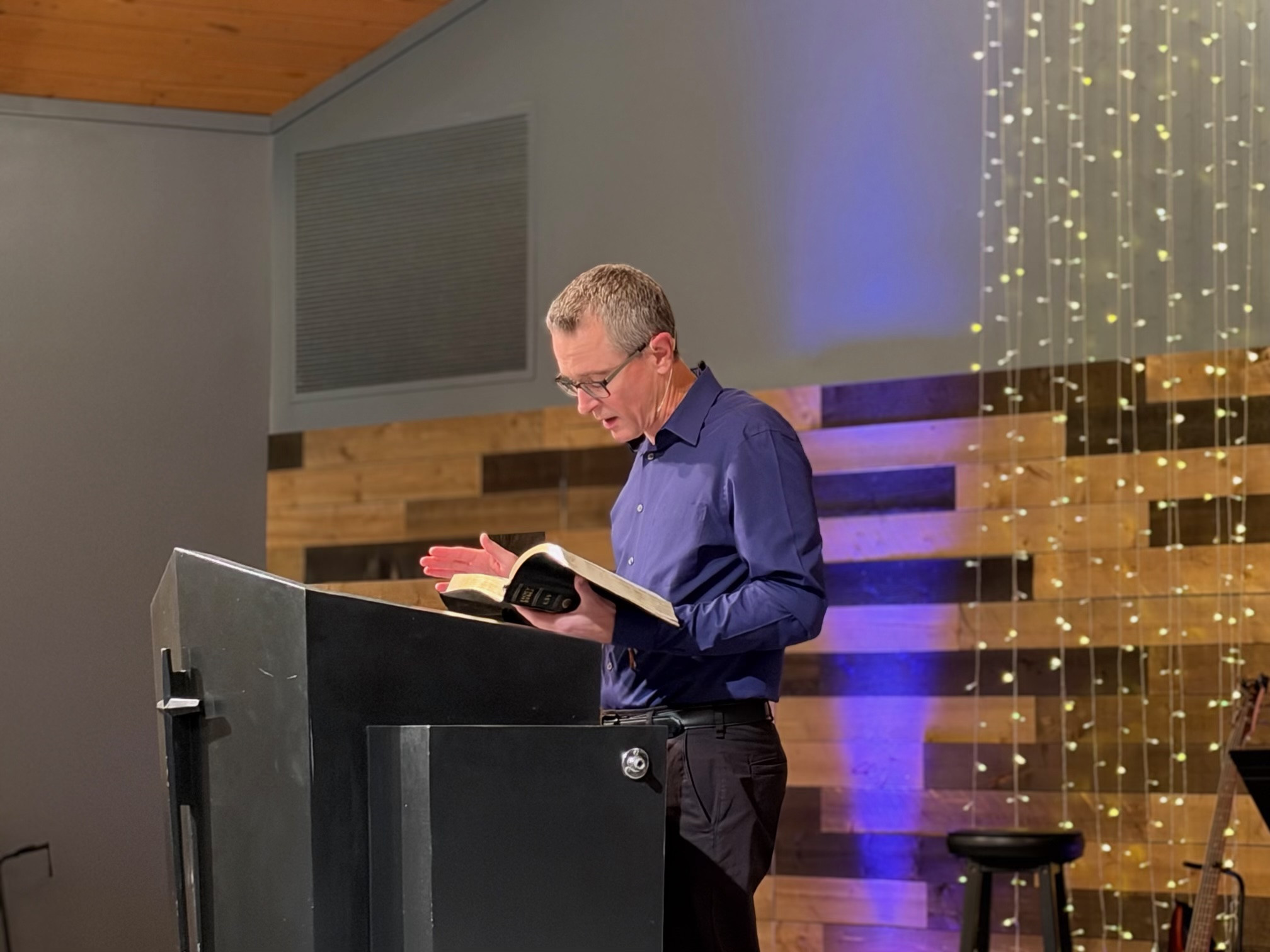
The following is a lightly edited transcript generated from the audio; it may contain small errors.
Good morning, how are you? Good. I’m good, you’re good. God is good. This is an important one, right? God is good. Yeah, we had a great conference. I’m going to be talking about hospitality, but not today. Soon, since we’re going through it in life group, some of you are in the group, some not, but I will be talking about that shortly. But today, I wanted to continue our discussion. We’ve been talking about faith the past few weeks. So I want to talk to you again today about faith. Open your Bible and this time to the Old Testament, to the book of Zechariah chapter 4. We’re going to look at Zechariah and Haggai both. Zechariah is right before Malachi and Malachi is the last book of the Old Testament. Zechariah 4 says, “Now the angel who talked with me came and wakened me”—I think an angel woke me up this morning. Was everybody tired this morning? Lost that hour, man. Bad weekend to lose that hour when we had the conference this weekend. I’m like, literally, I got up a half hour later than I should have. Anyway, okay, that’s not in the text. “The angel who talked with me came and wakened me, as a man who is wakened out of his sleep. And he said to me, ‘What do you see?’ So I said, ‘I am looking, and there is a lampstand of solid gold with a bowl on top of it, and on the stand seven lamps with seven pipes to the seven lamps. Two olive trees are by it, one at the right of the bowl and the other at its left.’” I’m reading New King James. “So I answered and spoke to the angel who talked with me, saying, ‘What are these, my lord?’ Then the angel who talked with me answered and said to me, ‘Do you not know what these are?’ And I said, ‘No, my lord.’ So he answered and said to me: ‘This is the word of the Lord to Zerubbabel: “Not by might nor by power, but by My Spirit,” says the Lord of hosts. “Who are you, O great mountain? Before Zerubbabel you shall become a plain! And he shall bring forth the capstone”’”—meaning of the temple—“‘with shouts of “Grace, grace to it!”’ Moreover the word of the Lord came to me, saying: ‘The hands of Zerubbabel have laid the foundation of this temple’”—your version may say house. It’s God’s house, the temple. “‘His hands shall also finish it. Then you will know that the Lord of hosts has sent Me to you. For who has despised the day of small things? For these seven rejoice to see the plumb line in the hand of Zerubbabel. They are the eyes of the Lord, which scan to and fro throughout the whole earth.’”
Now hold your place there and go to Haggai, which is right before Zechariah, excuse me, Haggai chapter 2. Haggai and Zechariah were contemporaries; they were both preaching at exactly the same time, addressing the issue of the rebuilding of the temple after the captivity. Haggai 2. In the seventh, verse 1, “In the seventh month, on the twenty-first of the month, the word of the Lord came by Haggai the prophet, saying: ‘Speak now to Zerubbabel’”—there he is again—“‘the son of Shealtiel, governor of Judah, and to Joshua the son of Jehozadak, the high priest, and to the remnant of the people, saying: “Who is left among you who saw this temple in its former glory? And how do you see it now? In comparison with it, is this not in your eyes as nothing? Yet now be strong, Zerubbabel,” says the Lord; “and be strong, Joshua, son of Jehozadak, the high priest; and be strong, all you people of the land,” says the Lord, “and work; for I am with you,” says the Lord of hosts. “According to the word that I covenanted with you when you came out of Egypt, so My Spirit remains among you; do not fear!”’” Amen.
So we see the similarity in the message here between Haggai and Zechariah addressing the remnant that came back from the Babylonian captivity. God had restored Israel to the land by His grace, and He commanded them to rebuild the temple that had been torn down during the captivity, that He might dwell in their midst. So the work began, the foundation of the temple was laid, yet the people halted construction. God sent His prophets to them, both Haggai and Zechariah, to exhort the people to complete the divine commission to build the temple. Why had the work ceased? Well, we learned from both of these texts that the work had ceased because both the Jews and those surrounding them despised the day of small things. Or as it says in Haggai, the work was contemptible in their sight. In other words, because the commencement of the work had a small beginning and because the new temple would appear small compared to Solomon’s former glory, the great Solomon temple, the people therefore viewed the work with contempt. And some thought the work could not or should not be finished. The real root problem was the sin of unbelief. The sin of unbelief. So God sent His prophets to the people to exhort them, to challenge this contempt and unbelief, to encourage them to finish the work and to tell them that the work would be finished by His agency and by His Spirit. So next week or so, I’ll unpack more about the symbolism here in the text in Zechariah, but today I want to address the problem that God was addressing. And it was basically this problem of unbelief. They thought the work was useless, the work was contemptible, and the work would not be finished. They despised the day of small things. So today, I want to encourage you not to despise the day of small things, not to engage in the sin of unbelief.
The first part I want to make is this, that God’s work often has a day of small things, or it appears to be small. In other words, there are seasons in our life and in the life of an individual or community or an institution where things look unpromising, if you will. Sometimes it’s at the beginning. You know, everything large begins small. My son sent me a picture of one of these huge trees out in Yosemite with, you know, cut out in the middle, cars driving through. Well, when that tree began, guess how big it was? Right? Small little seed. Now it’s a huge tree. So in nature, all of these large things we see begin as very small things. We see it in providence. We see it in the history of nations. Abraham was an individual with a family. He was barren, a barren individual, if you will, a barren marriage at this point in his life. And God says to him, you will be the father of many nations. Well, being barren is a pretty unpromising beginning if you’re going to give birth to many nations, right? That’s why Abraham’s faith is talked about so much in the New Testament, because the staggering size, if you will, of the promise versus his condition at the time demonstrated how great his faith really was. So every great institution begins small. When you think of some of the greatest universities in the United States they began as one simple class. Jonathan Edwards went to, was it Yale or, I get confused. I always confuse those two. Anyway, when he began, they didn’t even have a building. They would meet in a teacher’s home. Now Yale and Princeton, Harvard, these are all some of the greatest institutions in the world, but they all began in someone’s home. They began in a log cabin. We see it with some of the greatest people that have ever lived, right? Some of the greatest philosophers, musicians, artists, they were all at one point babies. They were little, they were ignorant. But we see this in the work of God’s grace also. I already referred to Abraham. Now God began His Old Testament church, if you will, through Abraham and his faith. He was an impotent old man, and yet he becomes the father of many nations. We see it in the New Testament church, God takes a handful of people who are, from all appearances, unqualified. From all appearances would not be the kind of people you would pick if you were building a successful organization. You tracking with me? They didn’t have the best resumes from a human perspective. So the prospect of success was very dim. Matter of fact, when Jesus died from an earthly point of view, you would have to argue that His mission had been a failure. His disciples were scattered. Some had denied Him, and one had betrayed Him. From an earthly point of view, this was a tragic failure. Yet that was the seed that was the beginning of the church, which we now see is worldwide in its impact and how many millions and billions of souls have been saved, right? From that small band of unqualified men. So the Lord often does great things, but they don’t appear to be great, either at the beginning or sometimes even in the middle. So here with Israel, because the temple didn’t look so good compared to Solomon’s temple and even when they imagine it being rebuilt they really didn’t think it would live up to the former glory, they’re like, ah, what’s the point of this? Why are we doing this? We have to understand that God works in such a way that even though things may appear to be unpromising, if we believe, then we’ll see God work. If we believe, right? Today might be a day of small things in your personal life. Maybe you’re having personal struggles with sin. Maybe you have problems in your marriage, problems in your finances. You may feel that you have little talent or little gifts, little knowledge, but if you do not despise the day of small things, if you don’t despise the talent God has given you, then He can do great things in you and through you. I need an amen. Remember that God’s work often has a day of small things. That may be your day at the moment, but you are called to faith. You’re called not to despise what God has given you, not to despise His work in you, but to believe and to work.
Secondly, God, as I’ve already implied, God uses small things and small people. And I’ve said this many times from the pulpit, and He does so because He delights in it. He delights in it. Yesterday in one of the presentations, the speaker addressed the issue of how we see, how we see things. And the problem is that we see things, unless we’re walking by faith, we see things from a human perspective. Okay? And we say, that’s not possible because, and then we insert the human reason. You understand what I’m saying? That’s not possible because, or that will never happen because. And we see things from a human perspective. And we think, well, God would never use so-and-so because he’s such an idiot. God would never use Trump because he’s immoral. Well, guess what? Guess what happened? Here we have a man who’s never professed Christ, and yet is doing more than many Christian presidents have ever done. How is this possible? By the grace of God? That He would get the glory, right? If He can use Balaam’s ass, He can use Donald Trump. God takes small things and small people and we see this pattern all throughout the Scripture, all throughout the Scripture from beginning to end. You read the book of Judges, you have judge after judge after judge and they were small people. Some of them reluctant. Gideon didn’t want to be a judge, right? But you see how God takes these men and when the Spirit is upon them, they accomplish great things for Him. Shamgar, you probably don’t remember him, but he took an ox goad and he slew 600 people. Samson, who’s the thirteenth judge, he took a donkey’s jawbone and slew a thousand. And of course David, the famous warrior, killed Goliath with a stone. A stone. He didn’t have the armor or the helmet, the bow, the sword, but he had a stone. But more than that, he had faith in God. He had faith in God. And it wasn’t the power of the rock. It was the power of God. So God uses small things and small people. Many of the heroes of the Bible were just contemptible people in their own day, outcasts in their own day. We read the biography of the Bible wrongly because we extol these people and we imagine that somehow in their own day they were reputable and they were popular or they were famous. They were despised very often. Moses was an ex-con, if you will. He was a fugitive from justice. He lived in the desert. He took care of sheep. That’s when God called him. If you think of Rahab, she was a prostitute, a despicable profession, and yet God chose her to help rescue His people. Many of the people in the Bible were people that in their own time would have been the least likely person God would have chosen. And that’s the person God chose. Because God delights to take foolish people and do great things through them.
You see this not only in biblical history, you see it in human history. Read some biographies of the saints and just see what God does with the ordinary people. I read about D. L. Moody recently. D. L. Moody was a big fat shoe salesman. That’s the truth. One day his Sunday school teacher was at home and God impressed upon him, go where he works and share the gospel with him. This unknown Sunday school teacher went to where Moody worked. There he was selling shoes and he pulled him aside and he shared the gospel of Jesus Christ with him. And Moody got on his knees and got saved that day. And as a result of that conversion, hundreds of thousands of people came to Jesus Christ during the Civil War. Amazing. Not only that He used Moody, but that He used his teacher. See, unknown, not famous, nothing special about him. He just believed the gospel. Charles Spurgeon turned England upside down when he was 17 years old, attracting crowds of 25,000 people. Never went to Bible college, never went to seminary. Think of John Bunyan, he was a tinker. He’s called the Tinker of Bedford. He was thrown into prison for preaching without a license in England at the time. It’s just really strange, England was a Christian nation and they’re throwing people in prison for preaching the gospel. He didn’t have a license. So he got saved and got on fire for Jesus. Jesus transformed his life and he just began to have a Bible study and people came to his house and more and more people came and then they’d say, come to my house and a bunch of people would come and basically he was having like church services, if you will. And so the government wanted to shut him down. They threw him in prison. Have you ever been at the Tower of London? I’ve been there. No, I wasn’t thrown in there. I know. I may be someday, but not yet. It’s a dank, cold place. The rooms are small, cold, dreary. So we were, my wife and I, when we were there, toured the Tower of London and saw some of these prison cells. He was thrown in one of these cold, stony cells for 12 years. 12 years. Now, that’s a day of small things. That’s a long day, isn’t it? Long day. He wasn’t famous. He wasn’t a renowned author. He was a nobody languishing in a prison, forgotten, except perhaps by a few friends. So what did he do? Did he murmur? Did he complain? Did he despair? No, he believed God. That’s what he did. So in spite of the fact that he was there, not just days or weeks or months, but yes, even 12 years, what he did was that he wrote one of the greatest classics in Christian literature, history, The Pilgrim’s Progress. [audio unclear] wishing he had been born with a silver spoon in his mouth, instead of penning that classic. Think, how impoverished we’d be if Paul, when he was in prison, [audio unclear] impossible situations. [audio unclear] God doesn’t. So His work has a small beginning, unpromising prospect, it’s small people and small things, it’s underfunded. Yet God Himself says, do not despise the day of small things. Because God knows that His operating procedure is to take the foolish things and confound the wise. The weak things and to confound the strong and the mighty. I’m sure you’re saying, well I’m not a Spurgeon or a Bunyan, I’m a nobody. Indeed you are a nobody. And the problem isn’t that you believe that, the problem is that you don’t really believe that. You say that, you don’t believe it. If you really believed you were a nobody, you would realize how qualified you are. God uses nobodies. God uses the unknown, the unnamed, the weak, the foolish, the broken. That’s who God uses. If you’re really a nobody and you believe that, then you are eminently qualified to be used by God. And the only thing limiting your use is your unbelief. Your unbelief. It’s not because of who you are, it’s because of who you are not, that God can use you. The world’s educated are immersed in folly. Are they not? I mean, the most educated people around now are telling us that men and women are interchangeable. I mean, we are immersed in a profound intellectual darkness in our culture, and yet these are the ones who are the qualified ones. Yeah, we’re not qualified from a human perspective, but we are divinely qualified if we’re nothing, because then God becomes everything, you see. God becomes everything. So God doesn’t despise the day of small things and neither should we. Because when we do, what we’re doing is we are indulging in ingratitude and unbelief.
Unbelief always hinders growth. Let me say it again. Unbelief hinders growth. Let me say it one more time. Unbelief hinders growth. Whether it’s in your individual life, your church life, your ministry life, it doesn’t matter. Unbelief hinders growth. When Jesus went to His hometown, Jesus, the Son of God, goes to His hometown, it says He could not do mighty miracles there because of their unbelief. Now could He have overridden their unbelief? Sure. But generally, God does not do that. And because they believed little, thus they would see little. Unbelief is a self-fulfilling prophecy. Do you understand what I’m saying? It is a self-fulfilling prophecy. When you expect the worst, you usually find it. Right? And so the people of Israel, ah, what is this temple? It’ll never be glorious. So they quit working. Their unbelief stopped their hands. Because as I said last week, unbelief leads to action, I mean, belief, faith leads to action, well, unbelief leads to inaction. I mean, what’s the point if it’s going to fail, right? What’s the point? Who wants to labor for that which they know will fail? Well, no one, of course. So when you’re dealing with the ministry, you have to labor by faith. You labor believing in spite of what at the moment you may see. If I quit every time something appeared grim to me, I would have quit probably the day after I got saved. I’m serious. And that’s the problem is how we see. We think that what we’re doing isn’t important because it’s a little insignificant thing. And because of that attitude, it stays a little insignificant thing. Because we do not see through the lens of what God is able to do. What God is able to do.
I’ve mentioned before two of the greatest soul winners of the 20th century, both named Bill, who they are. One just died. Billy Graham and Bill Bright. I don’t know how, how many Billy Graham preached to, billions, they’re saying. Just a lot of people, a lot of people. Bill Bright influenced probably millions through his college ministry. And they both came to Christ through a female Sunday school teacher. Now, what if the teacher said, you know, I don’t really need to prepare because these are just a bunch of little kids. I don’t need to pray for their souls. What I’m doing isn’t really important. I’m just babysitting. But that wasn’t her attitude. She poured her soul into the work. She poured her soul into the ministry. She poured her soul into those kids, and there are many others that she impacted. You see, she didn’t despise the day of small things, and in that case literally small, because they were small people, right? But she ministered in faith, believing, and God honored that faith and then did great things through her work. And that’s the way God always works. Believe little, receive little, believe much, receive much. And the reason is because faith isn’t the power. Faith is the channel or the means. God is the power. You see, when we look at things from a human perspective, we’re like, well, we don’t have enough people, and we don’t have enough money, and our building isn’t nice enough, or these people don’t care, and this and that, and that, and that, right? Purely human, carnal perspective. And as I said before, when you do an equation and you leave God out of the equation, you will always get the wrong answer. Always get the wrong answer. God is able to do exceedingly abundantly beyond what we think or ask. He did it with Spurgeon. He did it with Bunyan. He did it with Graham. He did it with Bright. He did it with Paul. He did it with Abraham. He does that. That’s what God does. Because God is able to do that. That’s the part we need to put in our equation. God is able to do that. God is able to change people, amen. God is able to provide resources, amen. God is able to defeat our enemies, amen. God is able, put that in your equation, what do you think? Whether it’s your job, your family, your marriage, your ministry, your church. God is able. And we, the people of God, in this church, in this nation, need to start believing God. Not just saying we believe it, not just singing about it, but believing God in how we live, in how we put our hand to the plow, how we pray, how we donate. We need to believe God.
Because finally, I’ll conclude, small things and small people and unpromising prospects become great things by God’s agency, God’s agency. God intentionally uses the small and the unpromising because He wants to demonstrate His power in our weakness. His power in our weakness. I’m going to keep on saying it until I get an amen. His power in our weakness. God isn’t in the business of propping up human flesh. God isn’t in the business of making you strong in yourself. And the way He makes you strong is He tears you down. He destroys the power of your flesh. He destroys confidence in yourself. He destroys confidence in your friends. He destroys confidence in everything but in Him. And He turns you solely to Him. And then you begin to believe because you’re desperate to believe. You have nowhere else to turn but God. You’ve tried everything else, and that’s what we usually do. We try everything else until finally we’re going to trust God because we have to. God wants to demonstrate His power in our weakness and through our weakness. We have this treasure of the gospel in earthen vessels, clay pots. We have this power in an earthly, weak, despicable, as an old pot. Why? That the excellency of the power may be of God and not of us. That when people are changed through the gospel message, no glory goes to us, no glory goes to man, no glory goes to Billy Graham, no glory goes to Bill Bright, no glory goes to Spurgeon, no glory goes to Bunyan, no glory goes to Paul, the glory goes to Jesus Christ. As the Lord said to Israel here, He says to us today, and He says to a church in every generation, not by power and not by might, but by My Spirit, says the Lord. It is His Spirit that does the work. It is His Spirit that changes lives. It is His Spirit that transforms, that frees, that conquers. His Spirit.
Let’s stand together and pray. Lord God, I thank You that You have given us Your Spirit and that if we’re born again Your Spirit dwells in our hearts, and Lord Your Spirit dwells in our midst. I pray, God, that we would repent of unbelief. I pray, God, that we would not limit You by unbelief. I pray that we would stop saying that can’t happen, that will never be. I thank You, Lord, for the trials that different people are experiencing. I thank You that it is Your hand in their life. [audio unclear] the power to be which You have called us to be. And I pray, Lord, that You would give us a new vision of what You are able to do with each one of us, what You’re able to do, and that we would not limit that vision by unbelief. I pray, God, we would not despise the day of small things, that whatever we put our hand to do, we would do with all of our might. I pray that everyone here that’s doing ministry, whether it’s catechism, whether it’s life group, whatever they’re doing, that they would see it through the eyes of faith. And say, God wants to do a great work right here, right now. And we would not limit You, Lord, through our unbelief. We thank You, God, that with You all things are possible. And we thank You that You use broken people, broken things, foolish people like us, so that You get all the glory. And we pray, Lord, that as we walk in faith, the name of Jesus would be glorified in our midst. And we pray in His name, amen.